REVIEW · HAVELOCK ISLAND
Ancient Lava Stream Trek through dense Tropical forest.
Book on Viator →Operated by Seashell Habitat Institute Activity Centre · Bookable on Viator
Strap in for a slippery forest workout. I love the dense tropical forest feel and the plant-and-geology explanations that put the islands into context, piece by piece. The main drawback is that the route gets slippery and includes rope-assisted climbing and rappelling, so it’s not a good match if you have back, knee, or cardio issues.
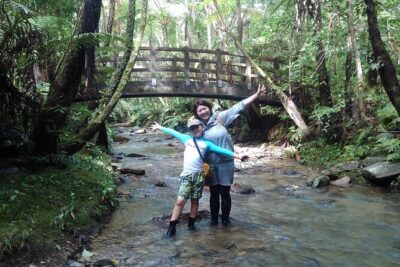
This trek on Havelock Island runs about 2 hours 30 minutes and caps at 15 people, which keeps it personal. You’ll start at 1:00 pm (meet back where it begins), hike through coastal forest, pass an areca nut plantation, then move deeper into dense forest toward a freshwater stream—timed for good light and an active afternoon.
In This Review
- Key highlights you’ll actually care about
- Why Havelock’s “lava stream” trek feels more meaningful than a standard hike
- The trek route: coastal forest, areca nut plantation, dense jungle, freshwater stream
- Rope-assisted climbing and rappelling: when “easy” stops being easy
- Areca nut and beetle nut: more than a quick photo stop
- Flora, fauna, and geology: the guide’s explanation is the main event
- Price and logistics: $33.56 worth it depends on how you hike
- Start point and timing: make it easy on yourself at 1:00 pm
- Who should book this trek, and who should skip it
- Should you book the Ancient Lava Stream Trek on Havelock?
- FAQ
- What is the duration of the Ancient Lava Stream Trek?
- What time does the tour start on Havelock Island?
- How much does the tour cost?
- What is included in the price?
- What is not included?
- Is the trek suitable for everyone?
Key highlights you’ll actually care about
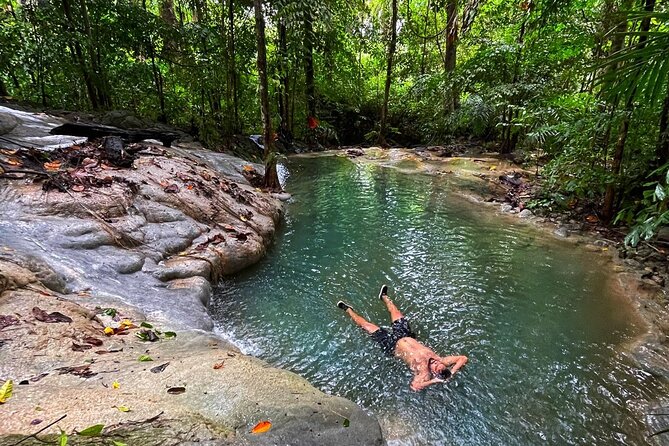
- Ancient lava stream clues in the geology talk: you’ll see evidence of how the islands formed and how wildlife adapted over time
- Areca nut (beetle nut) plantation life in plain view: you get a look at planting and harvesting as a living landscape
- Rope-assisted sections when the ground gets slippery: this is not a casual stroll, even if it’s short
- Endemic flora and fauna, explained: you’ll learn what’s adapted to the island’s conditions as you walk
- Small group size: with a max of 15, it feels guided rather than crowded
- Weather matters for your route: the experience is described as requiring good conditions
Why Havelock’s “lava stream” trek feels more meaningful than a standard hike
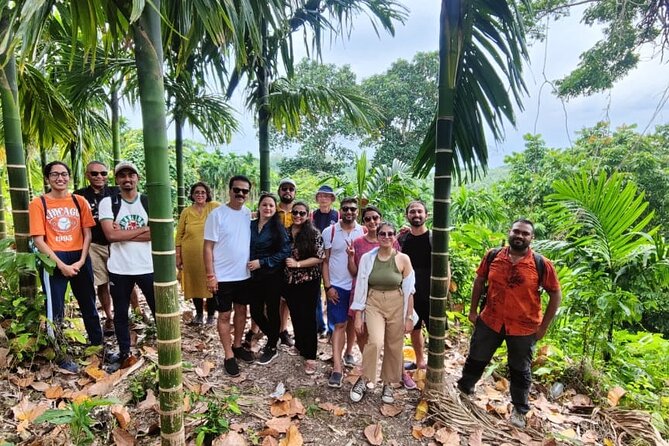
Havelock Island isn’t just green cover—it’s a living geology lesson. This trek is built around the idea that you’re moving through coastal forest and dense tropical habitat while getting pointed at the evidence for how the islands formed long ago. If you like your nature walks to come with real explanations (not just where you are, but why it looks that way), you’ll get good mileage here.
I also like how the tour doesn’t treat people as an afterthought. You’ll get a peek into the daily life around areca nut plantations, including how beetle nut is grown and harvested. That matters because it frames the forest and the farming as part of the same island story, not separate worlds.
The trade-off is physical. The route can get slippery, and at points it uses rope-assisted climbing and rappelling. That turns the experience from a scenic stroll into a hike where balance and steady effort matter.
The trek route: coastal forest, areca nut plantation, dense jungle, freshwater stream
Here’s the walking sequence you should expect, and what makes each part worthwhile.
First comes the coastal forest. You’ll be moving through tropical greenery near the shoreline zone, which is a good setup for spotting how plants handle salt air, wind, and shifting moisture. This is also where your guide’s context starts to land—what you’re seeing is not random, it’s adapted.
Next is the areca nut plantation area, including time to observe beetle nut planting and harvesting activities. This stop is valuable because you see agriculture as part of the island ecosystem. The plantation isn’t presented as a distant museum piece; it’s a working landscape, and that gives the plants you’ll see later in the forest more meaning.
Then you push into tropical dense forest. This is the stretch where the environment tightens up—more shade, more humidity, and more chance the footing feels slick. The tour description calls out rope-assisted climbing and rappelling here, which strongly suggests some uneven ground and steeper moments. If you’ve ever felt confident on dry trails but less so on wet rock or roots, this is the part to respect.
Finally, the trek ends with a freshwater stream moment. It’s a natural place to slow down and reset: you get a clearer contrast with the coastal area, and freshwater is often where you notice different plant behavior and micro-habitat clues. The walk finishes back at the starting point, so you’re not signing up for a half-day of logistics.
Rope-assisted climbing and rappelling: when “easy” stops being easy
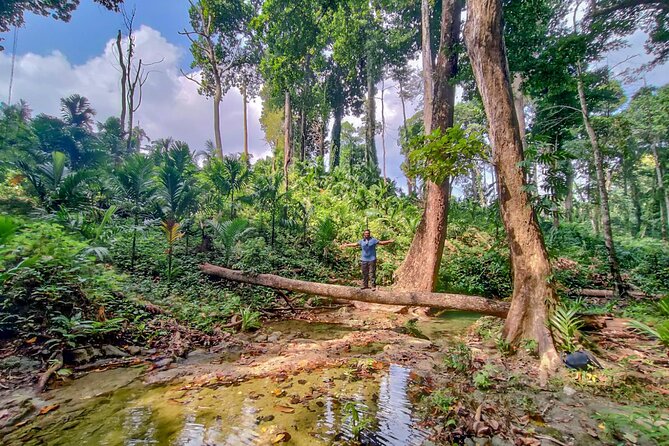
This is where I’d put your decision-making brain to work early. The trek description is direct: it includes rope-assisted climbing and rappelling, and it can be slippery at times. Even if you’re generally active, the combination of wet footing and controlled descents changes the kind of effort you’re using.
So who should sit this one out? If you have any physical issues, the tour says it’s not recommended for people with back, knee, or cardiovascular problems or weakness. That’s not the kind of “maybe you can” situation. Rope sections tend to require sudden balance corrections and stable core and legs.
Practical mindset tip: plan for careful steps rather than speed. If you like trails where you can wander and daydream, this one asks for attention. You’ll likely appreciate having a guide who can steer you through the tricky parts.
Also, keep expectations realistic about duration. At 2 hours 30 minutes, you might think it’s short enough to ignore risk—but shorter trails can still be intense if the route includes technical segments and slippery ground.
Areca nut and beetle nut: more than a quick photo stop
I like cultural stops that help you read the landscape. Here, the plantation portion is designed to do exactly that. You’ll see a peek into the life of people involved in beetle nut plantation and harvesting. That’s useful even if you’re not interested in farming as a hobby, because it explains how island communities use and manage land close to the forest.
You can also use this stop as a learning anchor. After you see how areca nut is grown and harvested, you’ll start noticing how plant types cluster and how forest edges behave. The tour is built around that rhythm: walk → observe work in progress → push deeper into habitat → compare what the island looks like when it’s undisturbed versus cultivated.
One more detail that makes this segment worth your time: the tour description connects plant life with island formation and wildlife history. In other words, you’re not just looking at a field. You’re learning how the island’s conditions shaped what thrives—then you move into dense forest to see that lesson play out.
Flora, fauna, and geology: the guide’s explanation is the main event
This trek has an educational backbone. The route is framed to help you observe unique and endemic flora and fauna adapted to the island’s conditions. You’re not just passing through green space—you’re getting a guide-led read on how species survive in a specific environment.
The most praised element here is the depth of the plants, trees, and geology explanation. That combination matters because the “why” ties the whole hike together. Instead of treating geology as a separate science lesson, the trek uses it to explain what you’re walking past: evidence of how the islands formed, plus clues about how wildlife ended up adapted to these conditions.
A small group helps. With a maximum of 15 travelers, you’re more likely to get clearer guidance and not just a hurried walk-through. If you like asking questions and getting direct answers, this format tends to support that.
Price and logistics: $33.56 worth it depends on how you hike
At $33.56 per person, the price is on the low side for a guided trek that includes rope-assisted sections. You’re paying for time in a protected natural setting, guide-led explanations (plants, trees, geology), and access to mixed terrain that most people can’t navigate confidently on their own.
What’s included is simply stated: All fees and taxes. What’s not included: an air-conditioned vehicle. That last point is mostly about comfort on the way to/from—nothing to do with the hike itself. Still, if you dislike long, warm rides, you should plan your day accordingly.
The schedule also matters. It starts at 1:00 pm and lasts about 2 hours 30 minutes, which is ideal if you want something active without losing your whole day. It’s also booked fairly ahead on average (about 6 days in advance), so if you’re traveling in peak season, don’t wait until the last minute.
Weather is a real factor. The experience requires good weather, and if it’s canceled for poor conditions, you’ll be offered a different date or a full refund. That’s a big deal for a trek that can get slippery.
Start point and timing: make it easy on yourself at 1:00 pm
The meeting point is listed as 7M3JXXM5+63HXXM5+63H Govind Nagar, Andaman and Nicobar Islands, India. The activity ends back at the meeting point, so you don’t need to solve end-of-day transport after the hike.
You’ll get a mobile ticket, and confirmation is received at booking. That makes it simpler for planning, especially when you’re bouncing around Havelock and want minimal paperwork.
My best advice: arrive with time to get oriented, use the restroom if available, and take a moment to review how you feel physically. This trek’s not described as casual, and the slippery rope sections mean you’ll want to be in a focused, stable headspace—not rushing.
Also, since this experience is capped at 15 people and runs for a compact 2.5 hours, you’ll feel the rhythm quickly. If you’re late, you can easily end up feeling rushed at the exact part where careful footing matters most.
Who should book this trek, and who should skip it
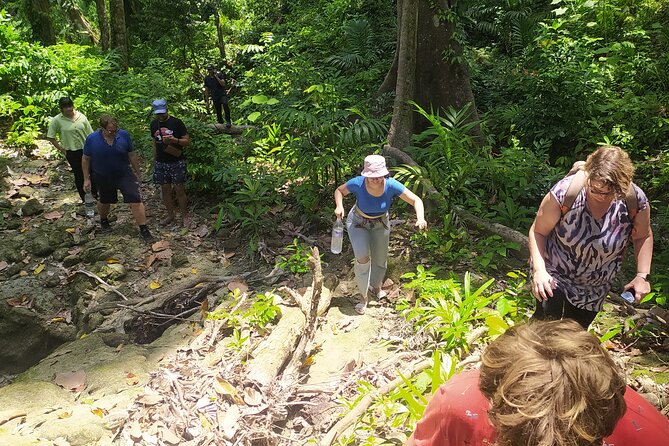
You should book this if you want a nature walk with substance: dense tropical forest, a working areca nut plantation look, and a guide who explains plants and geology in a way that makes the island feel understandable. It’s also a strong fit if you like hikes where you learn while you move, not just after you stop.
You should skip it if you have any of the stated concerns: back, knee, or cardiovascular issues, or weakness. The description also warns against physical limitations, and the rope-assisted climbing and rappelling make that warning practical rather than theoretical.
If you’re an active traveler who’s comfortable with uneven, potentially slippery terrain, you’ll probably enjoy how short the trek is relative to how much it packs in—forest, plantation, freshwater, and geology talk in one guided loop.
Should you book the Ancient Lava Stream Trek on Havelock?
I’d book it if your ideal Havelock day looks like this: a guided walk with a clear education focus, time in dense tropical forest, and a plantation stop that connects people and land. The strongest selling point is the guide-led explanation of plants, trees, and Andaman geology, paired with a hike that actually has some technical moments.
I wouldn’t book it if you’re hoping for a relaxed scenic stroll. The route can be slippery and includes rope-assisted climbing and rappelling, so your comfort hinges on physical readiness and willingness to move carefully.
If you’re weighing risk versus reward, here’s the shortcut: if you can handle a short but strenuous, technical-feeling trail, this is a good value at $33.56. If not, you’ll enjoy Havelock more with a calmer option.
FAQ
What is the duration of the Ancient Lava Stream Trek?
The trek lasts about 2 hours 30 minutes.
What time does the tour start on Havelock Island?
The start time is 1:00 pm, and the activity ends back at the meeting point.
How much does the tour cost?
The price is $33.56 per person.
What is included in the price?
The tour includes all fees and taxes.
What is not included?
An air-conditioned vehicle is not included.
Is the trek suitable for everyone?
No. It is not recommended for anyone with physical issues, especially back, knee, or cardio vascular issues or weakness, and it requires moderate physical fitness and good weather.