A short walk in the Dolomites can still feel like a full day. This experience is built around a simple idea: gentle up, scenic down, finishing at an alpine lake, with legendary sights like Cinque Torri and Tre Cime Di Lavaredo along the route. I especially love the mix of one main hike and multiple high-impact viewpoint stops, and I also like the option to pause at a mountain hut to eat local food and reset your legs before the final descent.
The main thing to think about is difficulty and exposure. The route is described as adjustable to your skills and desires, but the Dolomites can still mean steep, rocky footing and crowds near the most famous landmarks—so plan to move confidently and listen to your guide’s judgment.
In This Review
- Key highlights before you go
- Why this Cortina Dolomites trek delivers big views fast
- Price and group size: is $603.44 good value?
- Meeting at Cortina d’Ampezzo and how the schedule works
- The circular lake hike: what you’ll feel on the trail
- Cinque Torri, Tre Cime, and Drei Zinnen: the Dolomites in one sweep
- Lago di Sorapiss and Lago Lagazuoi: two lakes, different payoff
- Alta Badia, Val Gardena, Val Duron: valley scenery you can actually use
- Alpe di Siusi and Rifugio Passo Principe: high-meadow energy
- Protected parks: Puez Odle, Karersee (Carezza), and Sciliar-Catinaccio
- The UIAGM/IFMGA guide: why it matters for a short trek
- What to pack (so the hut stop is a treat, not a trap)
- Best fit: who will love this Dolomites day
- Should you book this Dolomites trekking experience?
- FAQ
- What is the duration of the Dolomites trekking experience?
- Where does the tour start and where does it end?
- What language is the tour offered in?
- How much does it cost?
- What is included in the price?
- Are trekking poles included?
- What happens if the weather is poor?
Key highlights before you go
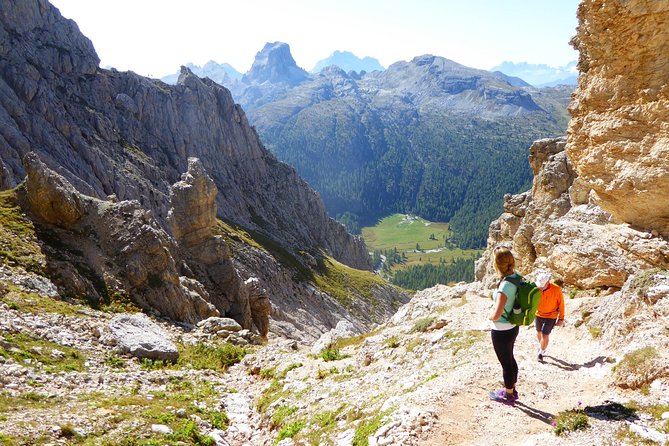
- Cinque Torri and Tre Cime Di Lavaredo: classic Dolomites icons packed into a tight schedule
- A circular hike to an alpine lake: one continuous loop feel, with the best views near the finish
- Mountain hut stop option: local food time that also functions as a real break
- Drei Zinnen National Park stops: landscapes tied to the region’s wartime story
- Multiple protected areas: Puez Odle, Sciliar-Catinaccio, and more, seen on the same day
Why this Cortina Dolomites trek delivers big views fast
If you’re basing yourself in Cortina d’Ampezzo, you’re already in a smart spot. This tour works well when you want serious Dolomites scenery without committing to a full day of logistics. In about 5 hours, you get a walk component plus a string of famous stops—so the time doesn’t feel wasted.
I like that the day has a clear rhythm. First, you’ll move from the meeting point to the parking area and start hiking on a loop path. Then you spend the later part of the day collecting panoramic sights, including alpine lakes, valley viewpoints, and protected park scenery.
And yes, you’ll likely do some walking that adds up. The tour description talks about hiking uphill on a gentle slope and returning down the other side, so it’s not only a viewpoint shuttle. The pacing is the big reason people enjoy this kind of format: you get to be outside for real, then you still see the highlights.
Price and group size: is $603.44 good value?
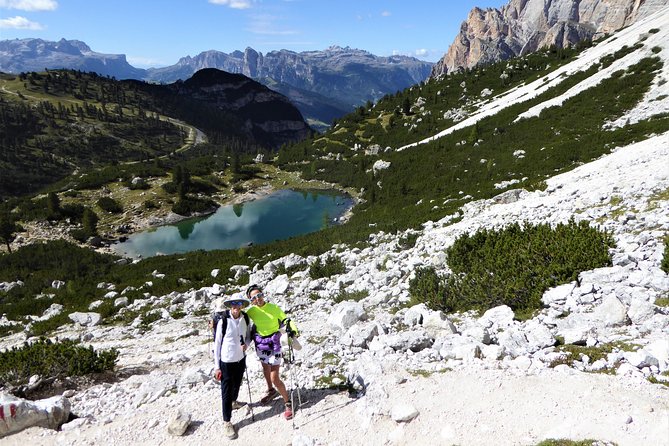
The price is listed as $603.44 per group, up to 10 people. Even with that per-group pricing, the experience also notes a maximum of 15 travelers, so you’re not looking at a huge crowd tour bus situation.
What you’re paying for is not just access to views. You’re paying for a guide service with UIAGM/IFMGA Mountain Guide credentials. In the Dolomites, that matters because even “normal” hiking can involve exposed sections, changing conditions, and route decisions that should not be guessed by guessing.
Will you feel it in the first 10 minutes? Probably not. But you’ll feel it when the route is adjusted to your group’s skills and when the hike moves from sightseeing mode to real walking mode. If your goal is to spend money on a guide-backed day rather than doing a self-drive scramble, this is the kind of value that makes sense.
Meeting at Cortina d’Ampezzo and how the schedule works
The tour starts in 32043 Cortina d’Ampezzo, Province of Belluno, Italy, and it ends back at the meeting point. It runs during the listed opening window of 9:00 AM to 2:00 PM (within the seasonal validity dates).
The description is also clear about the structure. You meet, then the group drives shortly to the parking lot, and the main hiking portion happens from there. After the circular walk and the lake area, the day folds back into sightseeing and returns you to the meeting point.
Because this is offered in English and uses a mobile ticket, it’s easy to fit into a vacation schedule without heavy paperwork. If you like to travel light and keep things moving, this is a practical setup.
The circular lake hike: what you’ll feel on the trail
The heart of the experience is a circular track. You’ll hike up on a gentler slope and come down on the opposite side, finishing at an alpine lake with views that feel worth the effort. That loop design is more than marketing: it naturally prevents the day from turning into an out-and-back slog.
Expect a hike that’s challenging enough to feel satisfying. The reviews you have here include comments that this kind of trekking can be physically challenging, and that maps well to a loop with elevation. At the same time, the tour is also described as adjustable based on participants’ skills and desires, which usually means the guide will help you choose the right approach for your group.
One detail I really like in the description: on the final way down, there may be a stop at a typical mountain hut. That’s not just food—though local food can be a big payoff—it also gives you a chance to recover energy before you finish the descent and wrap up the day. If you’re the type who gets grumpy when there’s no planned break, this hut option is a real advantage.
Practical tip: wear shoes you trust on uneven rock and bring layers you can adjust quickly. Dolomite weather can shift, and the tour is clear that good weather is required.
Cinque Torri, Tre Cime, and Drei Zinnen: the Dolomites in one sweep
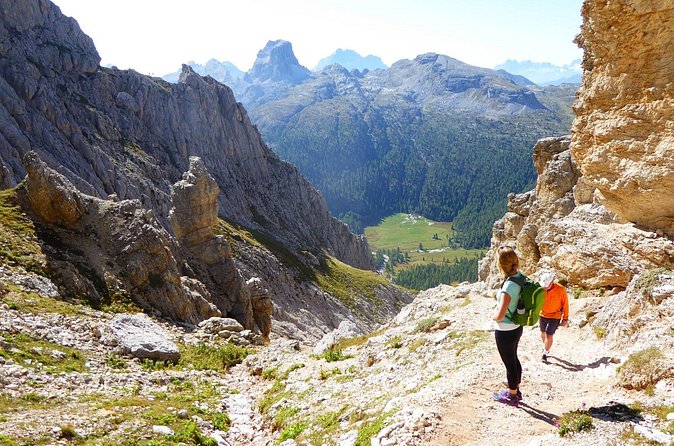
The day includes stops for Cinque Torri, Tre Cime Di Lavaredo, and the National Park Drei Zinnen. These aren’t random names—they’re the Dolomites’ “you’re really here” landmarks.
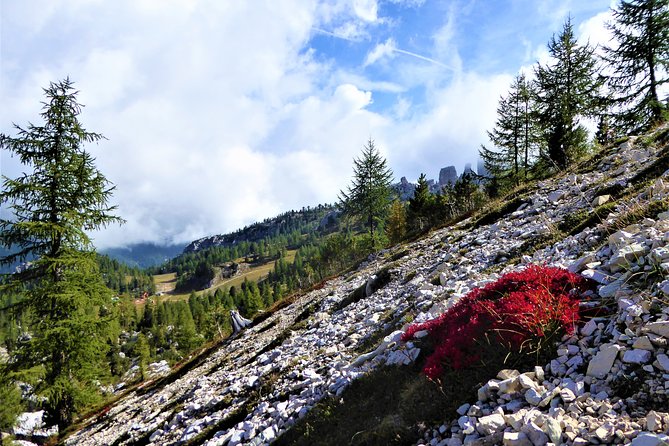
Cinque Torri is a powerful spot because of how the formations rise above you and how the area has a strong wartime connection. One of the supplied experiences notes that circling the 5 towers reveals traces of Great War trenches—a reminder that these cliffs weren’t only scenery; people fought and lived here.
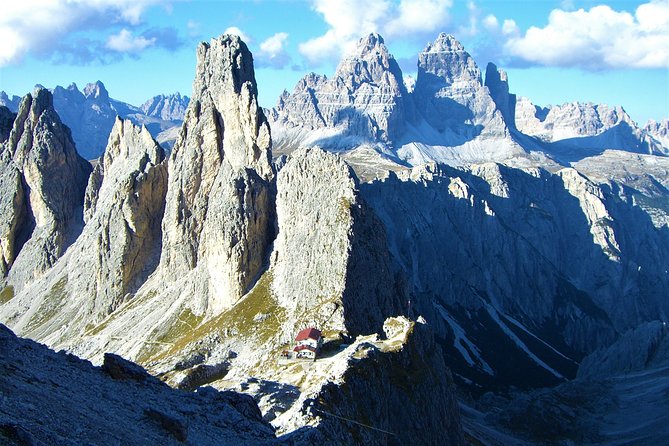
Then you move toward Tre Cime Di Lavaredo and the Drei Zinnen National Park area. This is where you feel the classic Dolomites scale: big rock walls, dramatic vertical shapes, and a sense that the terrain is the main event.
A consideration: crowds can cluster around the most famous viewpoints. The tour does help by keeping you in a guided format with route choices, but you should still be prepared for people at popular spots. If you want quiet, plan to stay focused on your own pace and on what the guide is pointing out rather than waiting for an empty horizon.
Lago di Sorapiss and Lago Lagazuoi: two lakes, different payoff
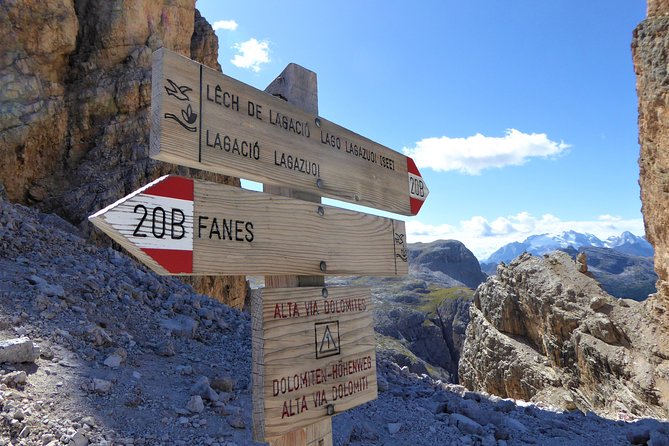
This tour lists Lago di Sorapiss and Lago Lagazuoi as stops. That matters because Dolomites lakes can vary a lot in how they feel, even when the water is the star.
What you can count on is that the lakes are part of the day’s payoff sequence. The tour description also promises that the circular hike finishes at a wonderful alpine lake, so one of these lake moments is likely tied to the main walking segment and not only a viewpoint photo.
Sorapiss is often talked about for its striking presence, and Lagazuoi tends to feel more dramatic in its setting. The key for you is to treat them as moments: pause, take in the scale, and don’t rush the photos. With a tight 5-hour structure, it’s easy to blow through the best part of the day if you’re focused only on your watch.
Alta Badia, Val Gardena, Val Duron: valley scenery you can actually use
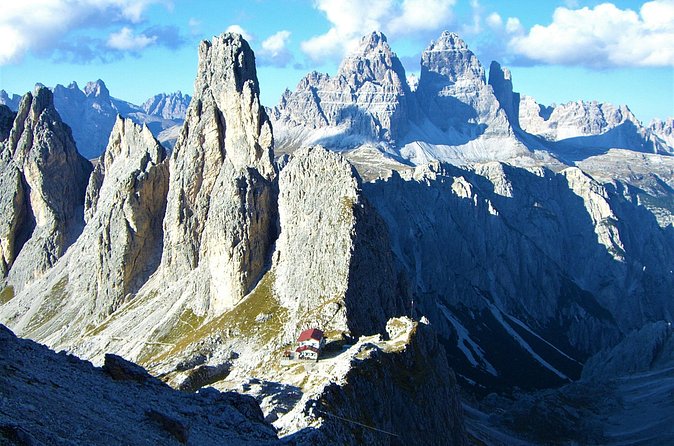
Between the rock-and-lake hits, the tour also moves through Alta Badia, Val Gardena, and Val Duron. I like these stops because they show you the Dolomites beyond the “postcard cliff” look.
Valleys are where you see the human side of the region—how communities sit under mountain walls, and how the road network connects major trekking zones. Even if you’re not doing long hikes in every valley today, these stops help you understand where the walking routes fit into the broader area.
If you’re planning future hikes after this day, these valley stops are useful orientation. They give your brain a map, so later you know which valleys lead toward which famous hiking areas.
Alpe di Siusi and Rifugio Passo Principe: high-meadow energy
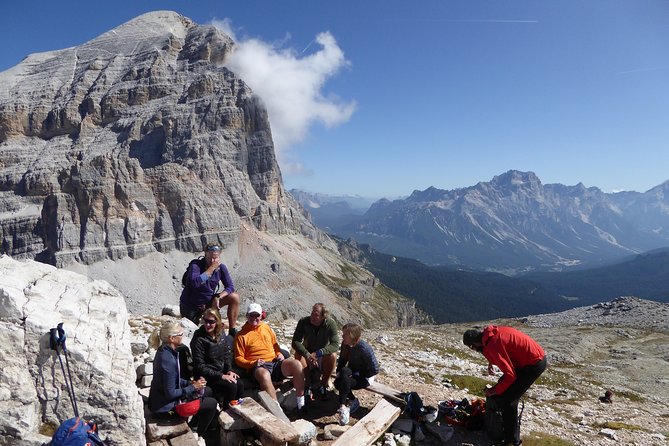
Alpe di Siusi appears in the itinerary, along with a stop at Rifugio Passo Principe. Alpe di Siusi is known for its open high-meadow feel, and adding a rifugio stop makes the day feel more like a trekking experience than a pure drive-and-stop tour.
The description already highlights a mountain hut rest option, and the inclusion of a rifugio stop supports that. This is where you’re most likely to feel the benefits of a planned break: sit down, eat something local, and keep the rest of the day enjoyable instead of turning it into a survival walk.
One word of advice: if hut food is on offer during your stop, don’t just grab a quick snack and then sprint away. If you take the time to recover, you’ll get more out of the viewpoints afterward. That’s the whole point of that pause.
Protected parks: Puez Odle, Karersee (Carezza), and Sciliar-Catinaccio
The tour includes Parco Naturale Puez Odle, Karersee – Lago Di Carezza, and Schlern-Rosengarten / Sciliar-Catinaccio Nature Park. When a tour mentions multiple protected areas, it usually means you’re going to see variety: different rock settings, different meadow or forest edges, and different lake-and-valley combinations.
Karersee (Lago Di Carezza) is included by name, so you can expect it to be more than a passing glance. This kind of lake stop works best when you treat it as a slow moment—watch the light, notice the setting, and give your eyes time to adjust to the scale.
As for the nature parks, think of them as the reason the Dolomites look so distinct. The protected status helps preserve the shape of the terrain and the way trails and viewpoints are managed. You get to enjoy it without the area feeling like random development.
The UIAGM/IFMGA guide: why it matters for a short trek
This experience includes a UIAGM/IFMGA Mountain Guide Service, and that’s not a small detail. A guide with mountain credentials can handle the two biggest real-world issues in the Dolomites: route decisions and condition changes.
The tour description says the walk can be chosen according to the participants’ skills and desires. In plain terms, that means you’re not locked into one “everyone suffers the same way” plan. When conditions are not ideal—wet rock, changing weather, or group pacing needs—the guide can often make the day safer and more satisfying without ruining the itinerary.
You might also see names of guides connected with other high-effort Dolomites trekking experiences, including Roberto Iacopelli in one supplied example. Even without assuming who you’ll have on your day, seeing that kind of name linked to Dolomites guiding is a signal that the operation takes competence seriously.
What to pack (so the hut stop is a treat, not a trap)
The itinerary is short, but the terrain can still punish bad footwear. Here’s what I’d bring based on what this kind of Dolomites trek typically requires and on the practical notes provided.
- Good hiking shoes with traction for rocky ground
- A light rain shell or wind layer, because good weather is required and conditions can change fast
- Trekking poles: rental is available on request, so if you use poles, ask ahead
- Daypack with water and a snack you enjoy, even if you eat at a hut
- Sunglasses and sun protection, especially around lake viewpoints
Also, bring a calm mindset for crowds at famous landmarks. If you arrive with patience, the Dolomites deliver. If you arrive with frustration, crowds will steal your energy.
Best fit: who will love this Dolomites day
This tour is described as something most travelers can participate in, and it’s adjustable to your skills. That’s a good combination for people who can handle a few hours of walking but don’t want a full-day endurance grind.
You’ll probably enjoy it most if you:
- Want a guided day with major Dolomites names like Cinque Torri and Tre Cime
- Like the idea of finishing at an alpine lake rather than doing only viewpoint stops
- Appreciate a planned break at a mountain hut
- Prefer small-group pacing over large tour crowds
You should think twice if you’re looking for an easy stroll with no elevation. Even when the hike includes a gentle uphill and a downhill return, the Dolomites still have real footing and real effort.
Should you book this Dolomites trekking experience?
I’d book it if your priority is to experience the Dolomites around Cortina d’Ampezzo in a guided, well-structured format with a meaningful hike. The combination of a circular lake hike, top-tier viewpoints, and the chance for a mountain hut stop makes this feel like a complete day, even though it’s only about 5 hours.
Don’t book it if you want guaranteed emptiness or if you’re not comfortable hiking on rocky terrain. Also, keep an eye on weather—this experience requires good weather, and poor conditions can cause the day to be moved or refunded.
If you match the moderate hiking mindset and you’re excited by the big-name spots—Cinque Torri, Tre Cime, Sorapiss, Lagazuoi, and the park scenery—this is a strong value way to spend a half-day in the Dolomites.
FAQ
What is the duration of the Dolomites trekking experience?
The duration is listed as about 5 hours.
Where does the tour start and where does it end?
It starts at 32043 Cortina d’Ampezzo, Province of Belluno, Italy, and it ends back at the meeting point.
What language is the tour offered in?
The tour is offered in English.
How much does it cost?
The price is $603.44 per group (up to 10 people).
What is included in the price?
The included item is the UIAGM/IFMGA Mountain Guide Service.
Are trekking poles included?
Trekking poles are not included, but rental is available on request.
What happens if the weather is poor?
The experience requires good weather. If it’s canceled due to poor weather, you’ll be offered a different date or a full refund.