REVIEW · BANYUWANGI
From Banyuwangi: Day Trip to Ijen Volcano with Guided Trek
Book on GetYourGuide →Operated by YKExplore · Bookable on GetYourGuide
Blue fire at Ijen feels unreal. This day trek takes you up to Ijen’s crater rim for a turquoise acid-lake view and, when conditions allow, the rare blue flames glow at night. It’s one of those trips where the early start makes sense the moment you see the crater.
I like two things a lot. First, the logistics are genuinely helpful: pickup and drop-off from Banyuwangi Train Station, ferry terminal, or your hotel, plus a smooth handoff to the local trek team. Second, the experience is guided in real-world terms, with English support and gear you actually need, like a flashlight and gas mask.
One consideration: the tour notes that blue flame viewing is not available until further notice. So you’re signing up for the crater hike and sunrise either way, but you should treat the flames as a bonus, not a guarantee.
In This Review
- Key things to know before you go
- How an Ijen Day Starts Before Your Alarm Is Even Useful
- Banyuwangi Pickup to Ijen: A/C Comfort, Clear Handoffs, and Coffee Time
- The Midnight Hike: Flashlight, Gas Mask, and Sensible Pacing
- The Turquoise Acid Lake: Your Viewpoint Game Plan
- Blue Flames at Night: A Rare Glow With a Big If
- Guides and Safety: What “English-Speaking” Really Means Here
- Price and Value: Why $43 Often Feels Fair for Ijen
- Who Should Book This Ijen Hike (and Who Should Skip It)
- Should You Book This Guided Ijen Tour?
- FAQ
- How long is the Ijen crater day trip with guided trekking?
- Where does pickup and drop-off happen in Banyuwangi?
- Are the blue flames guaranteed on this tour?
- What’s included in the tour price?
- What should I bring for the hike?
- Is the trek suitable if I have respiratory issues?
Key things to know before you go
- Early departure: expect a start around 2am–3am timing so you’re in position for sunrise and night views
- Crater lake at the rim: you’ll see the largest acidic crater lake in the world
- Blue flames depend on conditions: the provider states blue fire may be unavailable until further notice
- Gear included: flashlight and gas mask make the night climb more manageable
- English guidance: you’ll hike with an English-speaking guide, and the local team helps with the safety steps
- Moderate fitness required: the climb can be physically challenging, and it’s not for people with respiratory issues
How an Ijen Day Starts Before Your Alarm Is Even Useful
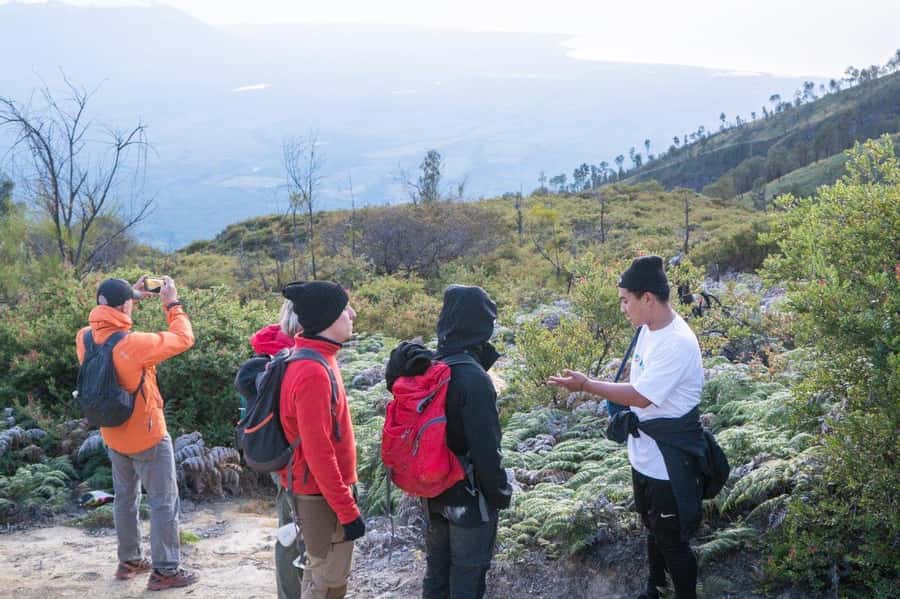
Ijen is one of those places that only makes sense when you’re awake enough to appreciate it. The tour starts very early in the morning, and in real departures you may be picked up around 3am, with the hike beginning closer to 2am. That means you’re not rolling in for a casual stroll. You’re going for the night-to-sunrise arc, where the crater changes from dark to electric light.
Why that timing matters: the crater scene is a visual story. In the dark, the attention goes to what’s happening at the base—when blue flames are visible. Later, your eyes adjust to the landscape around you and the crater rim becomes your viewpoint for the turquoise acid lake and the slow reveal of sunrise.
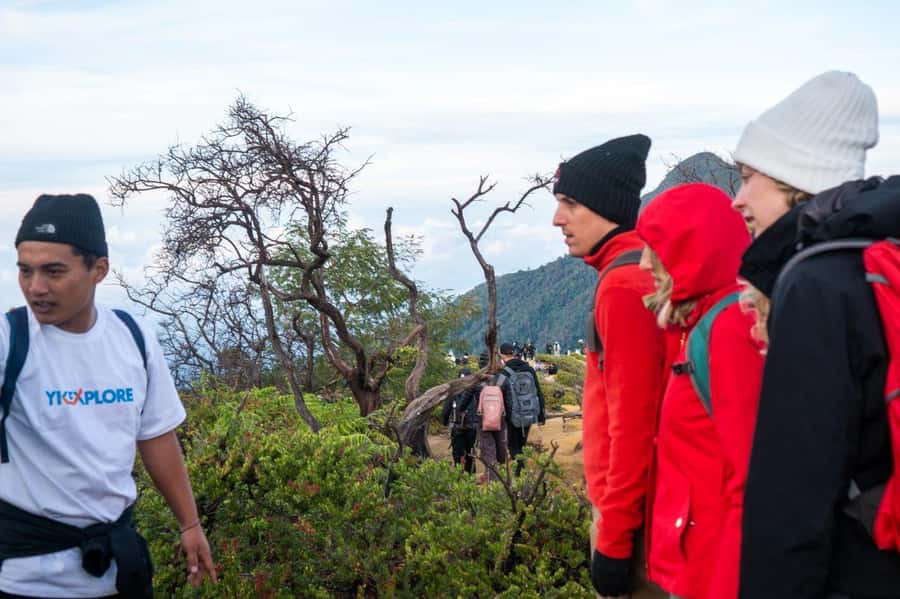
The tour also specifically flags that you should bring a jacket. Early starts in East Java can feel colder than you expect, especially at night when you’re standing still while the group regroups. You don’t need hiking heroics. You need warmth and steady effort.
You can also read our reviews of more tours and experiences in Banyuwangi.
Banyuwangi Pickup to Ijen: A/C Comfort, Clear Handoffs, and Coffee Time
Your day starts in Banyuwangi, and the pickup options are practical: Train Station, ferry terminal, or hotel. That choice matters because it reduces the stress of coordinating transport on your own while you’re half-awake. You’ll ride in an A/C car, and the tour includes pickup and drop-off back to your selected Banyuwangi point after the hike.
The schedule is set up to move you efficiently from road travel to the crater team. A good part of the experience is the handover: you’re not just dropped off and left to figure out the rest. You’re guided onto the next step with an English-speaking guide, and the local trek guide plays a direct role too.
One detail I find reassuring: at the base camp, you may get something to drink before the climb. In some runs, groups are offered coffee or tea at the start point, which is exactly what you want when you’re about to spend hours walking in the dark.
Practical tip: confirm your pickup point clearly and be ready early. The tour notes you should wait in the hotel lobby about 10 minutes before pickup. If you can’t do that, you lose time. And on Ijen, time is part of the viewing.
The Midnight Hike: Flashlight, Gas Mask, and Sensible Pacing
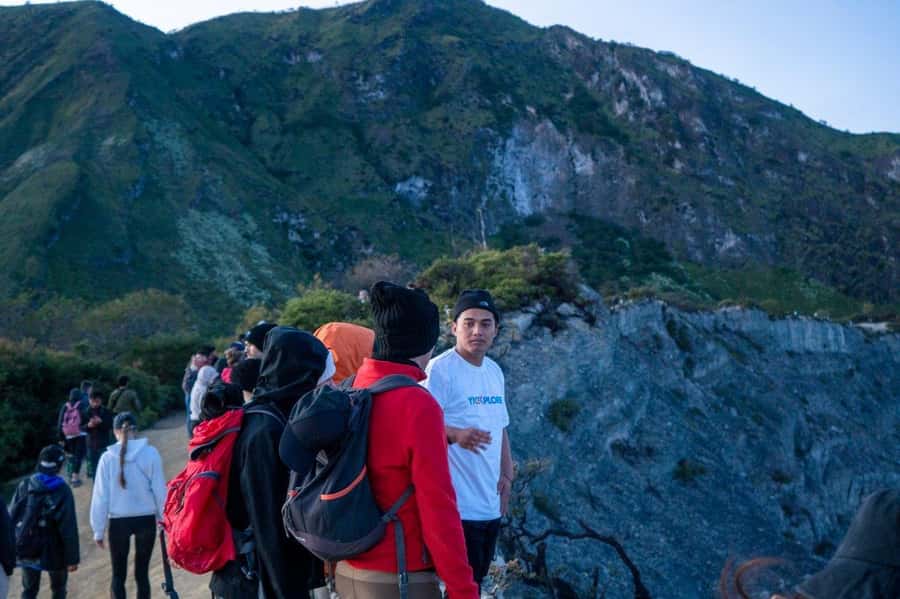
The guided portion is about 5 hours within an overall 8-hour tour window. That’s long enough to feel the climb, and the tour is honest about it being physically challenging for people with only light fitness. The good news: you’re not tackling it alone, and you’re not guessing how to handle the risk area.
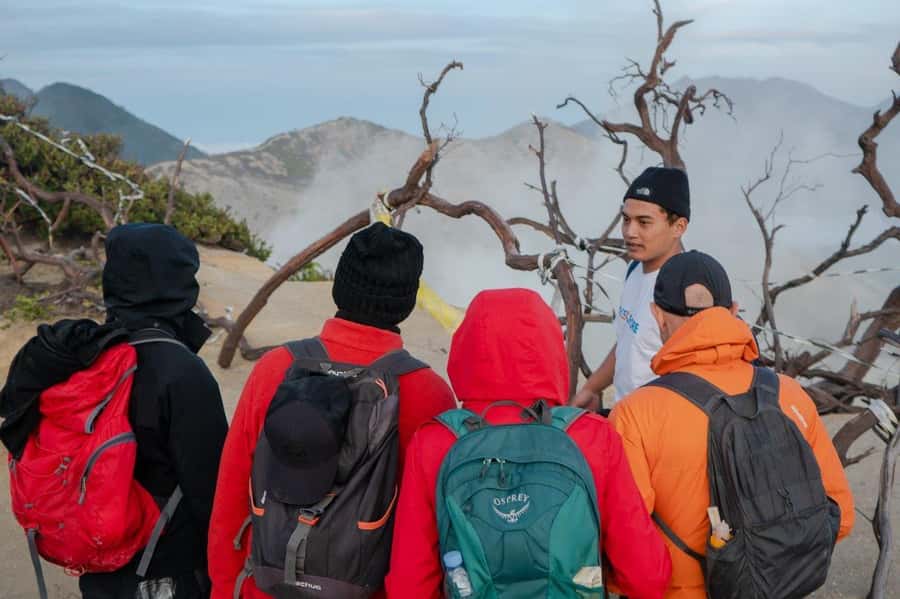
You’ll be given key equipment: a flashlight and a gas mask. The mask isn’t just a prop. The tour’s purpose is to show you vents and the sulfur gases connected to the blue flames. Knowing when to put the mask on, and getting help during the descent into the crater area, is part of what a strong guide does.
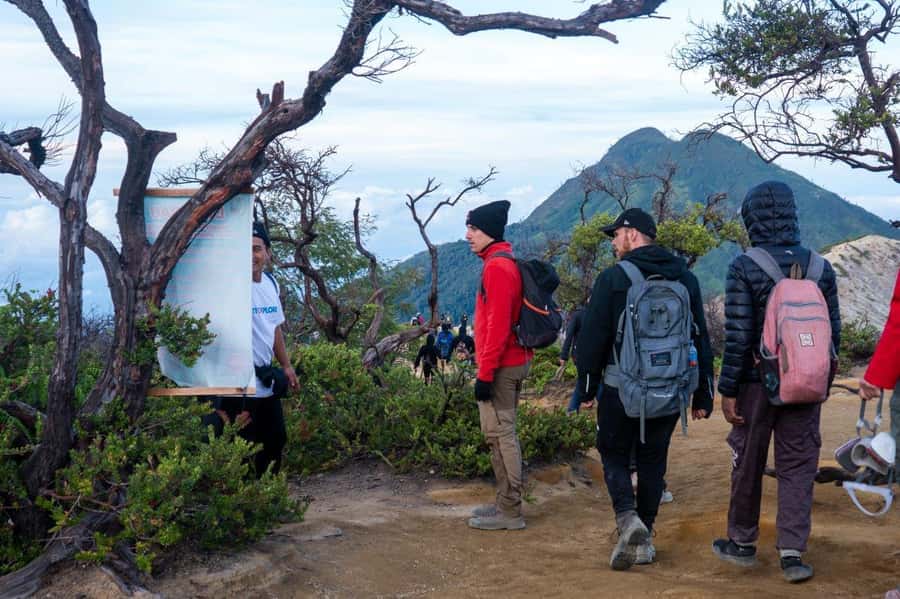
From what’s been shared by recent groups, the guidance can include coaching on timing—when to use the mask and how to move safely near the crater. In one trip, the tour guide Fendi led the pace and supported the group with clear English, including helping everyone through the steps around the crater area.
Pacing matters on Ijen. Even if you’re fit, you’ll still feel the night climb. The tour context is physical effort plus low-light conditions. Expect breaks if the group needs them, and go at a steady rhythm rather than trying to sprint uphill.
What to bring is simple and specific: a jacket. Also, wear clothing that keeps you warm at night. The tour doesn’t list other gear, so I’m keeping this practical: your goal is heat management and basic comfort for hours of walking.
The Turquoise Acid Lake: Your Viewpoint Game Plan
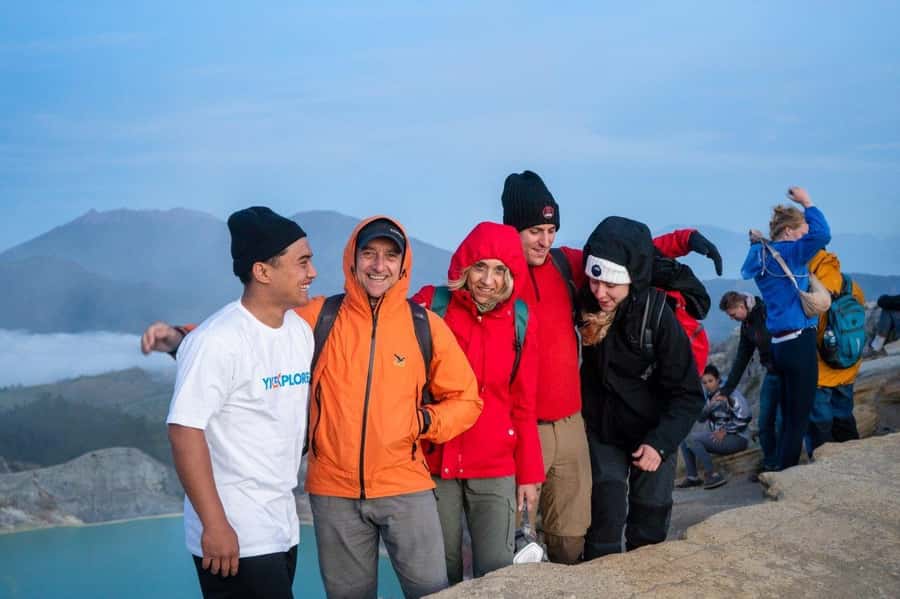
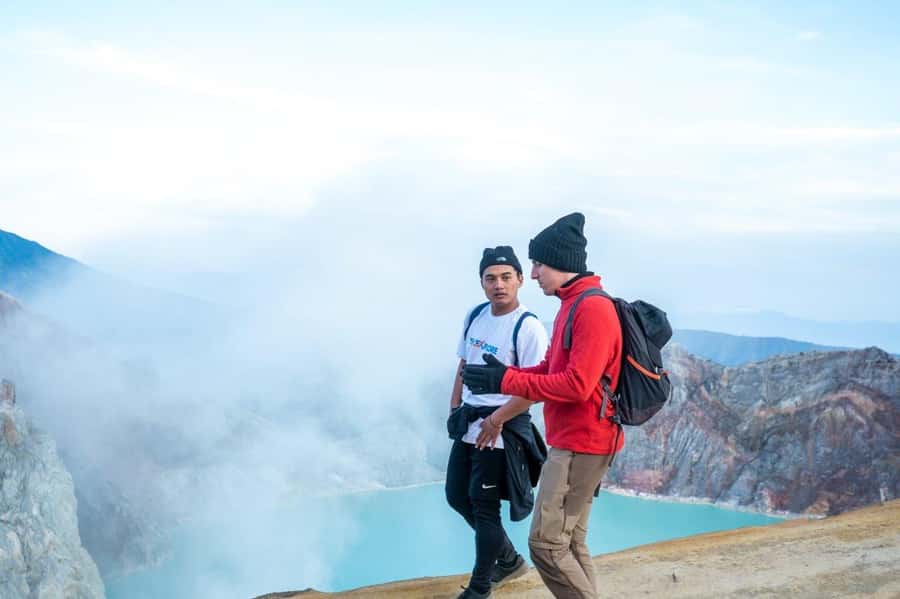
Once you get up to the crater rim, the big visual payoff is the acid lake. The tour frames it as the largest acidic crater lake in the world, and that scale changes how you see the crater. You’re not looking at a small pond next to a hike. You’re looking at an industrial-looking landscape, powered by geology, with a color that’s hard to describe until you’re there.
The lake is described as turquoise, and the rim viewpoint is the whole reason this hike is worth getting up for. Sunrise turns the crater into a brighter, more readable scene. You start to see the edges more clearly, understand where the vents might be, and connect the night-time flame story to what you’re looking at during daylight.
One important note: Ijen is an active sulfur environment. So the “view from the rim” isn’t the same as a normal scenic overlook where you stay clean and safe without thinking. The fact that the tour includes a gas mask and emphasizes safety steps means you should expect a crater environment that asks for respect.
If you’re hoping to take photos, think like this: plan to shoot during the moments when the group pauses and the guide gives you room to move. On a climb with safety gear and masks, you’ll be happiest if your camera work fits the flow, not the other way around.
Blue Flames at Night: A Rare Glow With a Big If
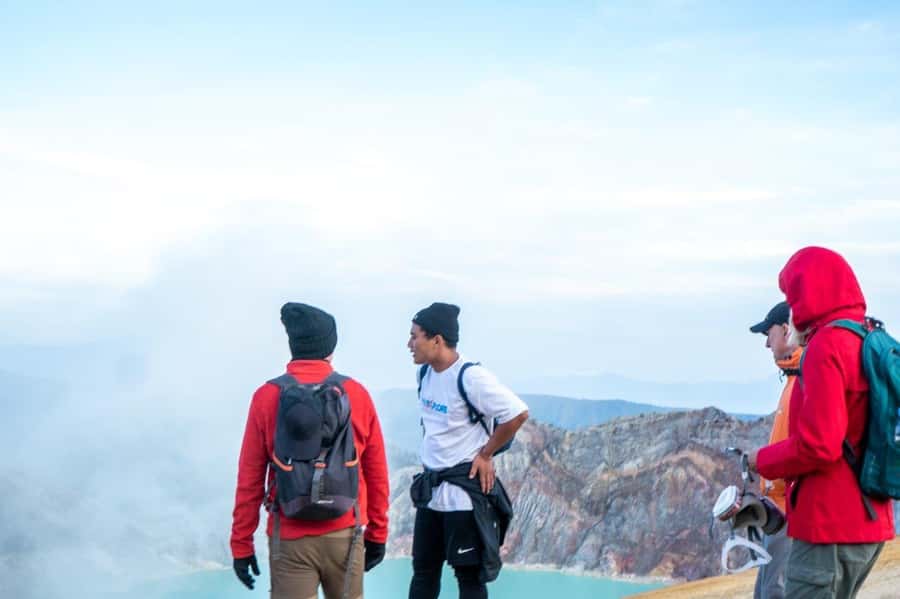
The headline attraction is the blue flame—and the tour is clear about the mechanism: the blue color comes from combustion of sulfuric gases emerging from the vents. In the dark, that glow can look almost like someone spilled electricity at the crater base.
Here’s the key reality check: the tour provider states that Ijen Blue Flame is not available until further notice. That’s not a small footnote. It changes your expectations. I’d plan this day as a crater hike with sunrise, and treat blue flames as a conditional bonus.
How do tours handle that uncertainty? One practical detail from actual operations: when someone booked a very early departure, they received a message to confirm whether blue fire would be visible, and the pickup time could be adjusted to improve the chances. If you want the best shot at the flames, you should follow the provider’s advice to share your WhatsApp number for better communication.
So what should you do if blue flames aren’t happening on your night? Stay focused on the other win conditions:
- the crater rim experience itself
- the unique sulfur-lake setting
- the sunrise view from the top of the crater
Even without flames, Ijen’s crater energy is the point.
Guides and Safety: What “English-Speaking” Really Means Here
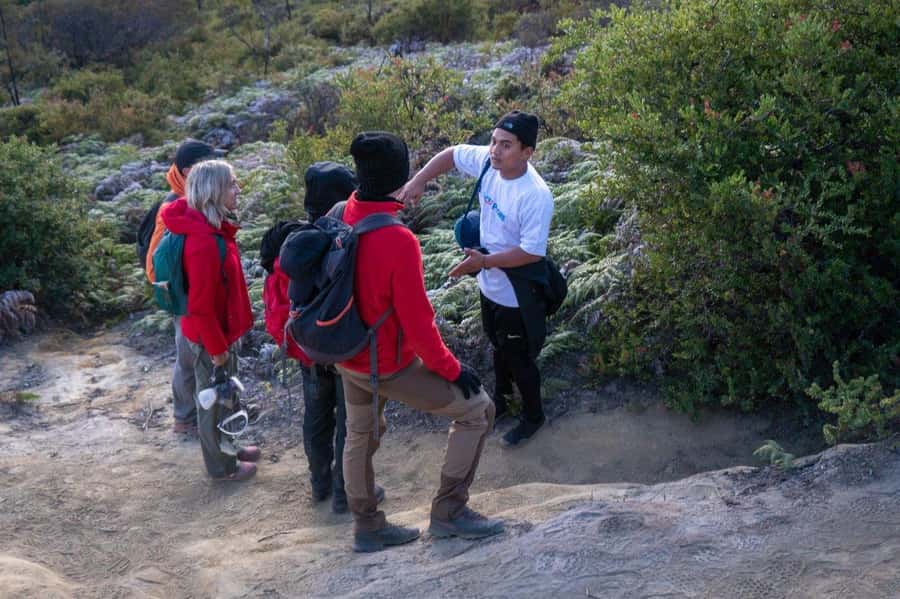
This tour leans hard on guided support. You get an English-speaking guide, and the safety piece is more than generic. The tour notes that guides ensure safety and provide information about flora and fauna, plus local culture and traditions in the area.
That might sound like normal tour talk, but here it matters. When you’re dealing with an active crater environment, you don’t want vague answers. You want instructions you can follow quickly—especially at night.
The gas mask guidance is the clearest example. Groups have been helped with when to put on the gas masks and how to handle the crater steps during the descent. If you’re someone who gets anxious with confusing gear or unfamiliar environments, this is a strong reason to book a guided version rather than trying to piece together a solo plan in the dark.
And about language: English support is specifically included. In one trip, the tour guide Fendi was described as having very good English, and the local trek guide also communicated well. That gives you more than survival-level directions; it makes the hike feel understandable and less like a forced march.
Price and Value: Why $43 Often Feels Fair for Ijen
The listed price is $43 per person. For Ijen, that’s not just paying for a guide. You’re paying for the stuff that makes the experience work:
- pickup and drop-off from major Banyuwangi points
- an A/C car for the road portion
- an English-speaking guide
- Ijen entrance ticket
- flashlight and gas mask provided
- a setup that includes skipping the ticket line
If you were to plan this yourself, the cost adds up quickly: local transport, entrance fees, and the time and hassle of coordinating a safe night trek. Here, the price bundles those pieces into one day.
Also, the value isn’t only monetary. It’s time and confidence. The early start could be frustrating if you’re handling coordination on your own while sleepy. This tour is built around removing that friction.
One more value signal: the reviews show smooth timing, on-time pickups, and guides who help with the hard parts like pacing and safe mask use. That’s what you want to pay for.
Who Should Book This Ijen Hike (and Who Should Skip It)
This tour fits best if you’re:
- willing to start extremely early (2am–3am style timing)
- comfortable with a moderate fitness level for a challenging climb
- looking for sunrise views plus the chance at a night spectacle
- okay with following safety gear instructions (especially around the gas mask)
It’s not suitable for people with respiratory issues. That’s a big deal. The tour environment involves sulfur gases, and you shouldn’t gamble with breathing comfort.
If you’re traveling with friends and want control, there’s a private group option. If you prefer a smaller dynamic, private can feel more comfortable for pacing and photo stops, though the exact setup would depend on the operator’s availability.
Finally, if you tend to run cold, don’t underpack. The tour specifically calls out bringing a jacket, and I’d treat that as a must-have, not a suggestion.
Should You Book This Guided Ijen Tour?
I’d book this if you want an organized Ijen experience that focuses on getting you to the right places (crater rim, sunrise viewpoint, and the night area when possible) while handling the heavy lifting of coordination.
Book it for the crater itself, and for the way the tour supports you with flashlight + gas mask and guided safety steps. The inclusion of entrance tickets, plus pickup and drop-off across Banyuwangi transport nodes, makes it feel like a good value for a long day.
Don’t book it thinking blue flames are guaranteed. The provider clearly states they may be unavailable until further notice. Instead, plan your mindset around sunrise and the crater lake, and let the blue-fire chance be the extra treat if it happens.
If you do book, send your WhatsApp number during booking so you’re in the communication loop for early timing updates about blue flames. Then show up ready for the cold, walk steady, and let the crater do the talking.
FAQ
How long is the Ijen crater day trip with guided trekking?
The total duration is listed as 8 hours, including about 5 hours on the guided tour at Ijen. Starting times vary, so you’ll need to check availability.
Where does pickup and drop-off happen in Banyuwangi?
Pickup and drop-off are available from Banyuwangi Train Station, ferry terminal, or your hotel.
Are the blue flames guaranteed on this tour?
No. The tour information states that Ijen blue flame viewing is not available until further notice. You may still be able to see them depending on current conditions.
What’s included in the tour price?
The tour includes pickup and drop-off, an air-conditioned car, an English-speaking guide, the Ijen entrance ticket, a flashlight, and a gas mask.
What should I bring for the hike?
You should bring a jacket, and the tour notes that warm clothing is advised because the start is very early in the morning.
Is the trek suitable if I have respiratory issues?
No. The tour is listed as not suitable for people with respiratory issues.