REVIEW · TETEBATU
Mt Rinjani Trekking 4 Days and 3 Nights
Book on Viator →Operated by HaLoMi Trekker · Bookable on Viator
Rinjani is a volcano with a personality. This 4-day, 3-night trek from Lombok takes you from waterfall stops to crater-rim camping at Sembalun and Senaru, with sunset views that make the effort feel real. I especially love the hands-on local guiding and the way guides like Dani, Hadie, Mul, Edy, and Irsyad tend to look after timing and safety so you don’t feel like you’re guessing on a steep mountain.
The trade-off is the pace. The start time is 5:00 am and the big days are physically serious, so you’ll want strong hiking fitness and to show up with key gear the tour doesn’t provide, like a headlamp and trekking shoes.
In This Review
- Key things to know before your Rinjani trek
- Why this 4D/3N Mt Rinjani plan feels like a real adventure
- Day 1: Waterfalls first—if you’re early enough for sunset
- Day 2: Trekking starts from the trailhead, then camp on Sembalun Crater Rim
- Day 3: Summit push to Mt Rinjani, then Segara Anak Lake and hot springs
- Day 4: Relax by the lake, then move to Senaru Crater Rim for the best lake views
- Day 5: Still on the rim—then you finish your Rinjani trekking experience
- Guides and porters: the difference between hard and unsafe
- Gear check: what’s included vs what you must bring yourself
- Food, water, and camp comfort that keeps the trek moving
- Price and value: is $469 per person a fair deal?
- Bonus boat transfer to Gili Island: plan your next chapter
- Who this trek suits best—and who should think twice
- Should you book this Mt Rinjani 4D/3N trek with HaLoMi Trekker?
- FAQ
- What time does the trek start?
- How long is the Mt Rinjani trekking experience?
- What’s included in the tour price?
- What do I need to bring since it’s not included?
- Is the tour private?
- Can I request vegetarian meals?
- What is the cancellation/refund policy?
Key things to know before your Rinjani trek
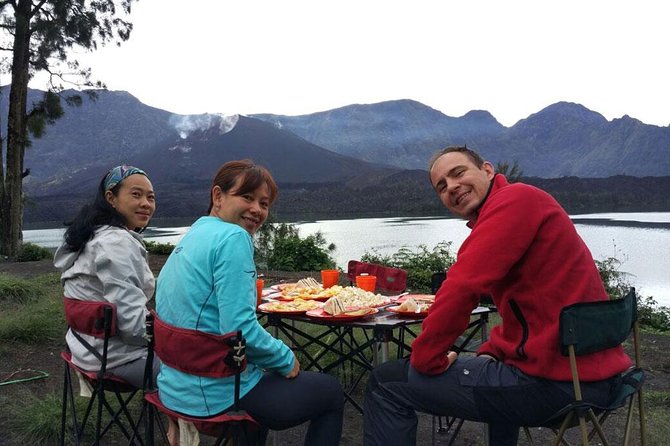
- Crater-rim nights at Sembalun and Senaru give you prime viewpoints of Segara Anak and the surrounding caldera.
- Summit + lake day is long: you’ll go for the peak and then spend hours around Segara Anak and the hot springs.
- You’re not hauling everything: porters handle luggage, while you carry only what your group asks you to keep on you.
- Water and meals are handled with full-board meals, snacks, coffee or tea, and about 3 liters of water per day.
- Waterfall timing matters: Sendang Gile and Tiu Kelep work only if you arrive at least 2 hours before sunset.
- Private-group format means only your group participates, with hotel pickup and drop-off included.
Why this 4D/3N Mt Rinjani plan feels like a real adventure
This isn’t a rushed “see it and leave” volcano trip. You get multiple nights on the crater rims, plus a proper chunk of time by Segara Anak Lake and the hot springs. That’s a big deal on Rinjani, because the best moments often come when you’re not sprinting between milestones.
I like that the tour is designed around camps and views, not just checking boxes. On days 3 and 4, the “destination” becomes the mountain itself—steam, lake edges, dark-sky camp nights—rather than only the summit photo.
You can also read our reviews of more tours and experiences in Tetebatu.
Day 1: Waterfalls first—if you’re early enough for sunset
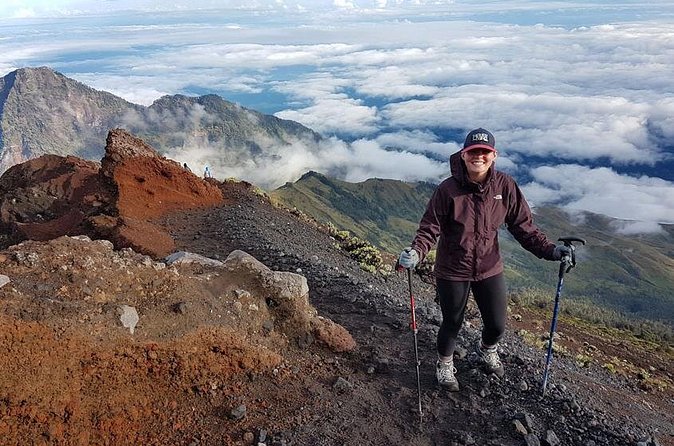
Day 1 starts with two classic waterfall stops: Sendang Gile and Tiu Kelep. The catch is timing. You can visit these only if you arrive minimum 2 hours before sunset, so your day lives or dies by that early start.
You get a short window here (about 30 minutes per stop, with admission included). It’s not meant to be a long wandering day—more like a warm-up that lets you stretch your legs and still feel like this trip is already doing something special.
Practical takeaway: if your travel to Lombok is messy, protect your first day. Even a minor delay can squeeze this part out.
Day 2: Trekking starts from the trailhead, then camp on Sembalun Crater Rim
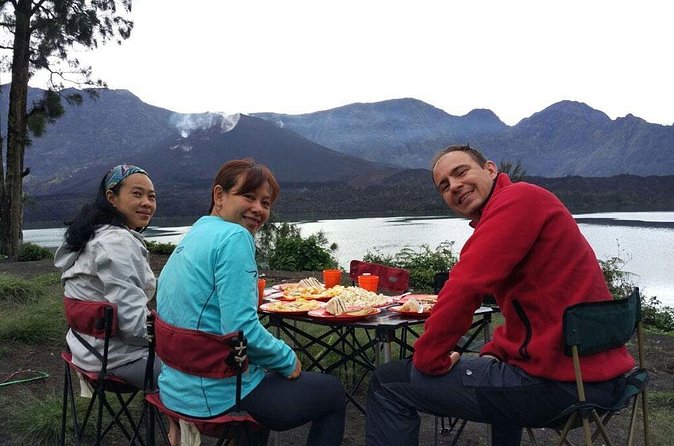
On day 2, you begin trekking from the starting point (the group assembles and you start the climb toward the crater rim). This is the day that sets your rhythm. You’ll be earning that calmer feeling you get later at camp.
At the end of day 2, you spend the night at the Sembalun Crater Rim. This matters because crater rims aren’t just “where you sleep.” They’re the viewpoint platforms. The tour is built around sunrise/sunset atmospheres and the surrounding nature beyond the trail.
If you want a trekking experience that feels layered—trail, camp, then views—this Sembalun night is where it starts to click.
Day 3: Summit push to Mt Rinjani, then Segara Anak Lake and hot springs
Day 3 is the headline day.
First comes the climb to Mt Rinjani. The schedule gives you a short summit window (about 30 minutes for the peak moment), and you’ll want to treat that time like it counts—because it does. Rinjani can be exhausting even when you pace well, so the “top moment” is less about time and more about focus.
Then the day shifts gears: after walking down from the top, you head to Segara Anak Lake and the hot springs. This portion is long—around 10 hours—and that’s exactly why it feels like value. You’re not only climbing; you’re also recovering and enjoying the volcanic chemistry that makes the area famous.
You can do either or both:
- Swim at the lake (when conditions allow)
- Soak in the spring water
This is also where the trip becomes memorable in a different way. Hot springs after a summit effort turns the whole day from “survive the mountain” into “feel the mountain.”
You end day 3 by spending the night at the lake side, which is a great place to catch the calm after the hardest push.
Day 4: Relax by the lake, then move to Senaru Crater Rim for the best lake views
Day 4 starts with downtime—some hours to stay relax for a few hours at the lake side. I like this kind of pacing because it lets your body catch up. You’re still hiking later, but you’re not forced into motion the minute you wake up.
After that, you continue toward the Senaru Crater Rim. The tour calls this one of the best spots to see Segara Anak Lake, and the crater-rim setting is exactly why: higher vantage points make the lake’s color and scale feel bigger, and you get more dramatic angles than you’d have from ground level.
You spend the night at Senaru Crater Rim. Those rim nights are where the trip stops feeling like a “day by day itinerary” and starts feeling like you live inside the caldera for a while.
Day 5: Still on the rim—then you finish your Rinjani trekking experience
On day 5, you remain at Senaru Crater Rim and then finish the trek. The final day is usually quieter than the climb-heavy days, which is good. When you’ve already done the peak, this part is more about closure—taking in the last long views and letting your legs finish their argument with gravity.
If you’re planning your next steps after the trek, this is also the day that sets you up to move on without feeling like you must rush out the door.
Guides and porters: the difference between hard and unsafe
This trek stands or falls on guiding. The people behind the plan matter, and you can see a pattern in the way guides are described: they stay close to timing, keep you feeling safe, and help with morale when the terrain gets tough.
Names that show up include Dani, Hadie, Mul, Edy, and Irsyad. What I like about this is not celebrity-guide vibes. It’s the practical stuff: organizing when you leave and arrive, carrying the right load so you’re not overloaded, and keeping the group steady.
Porter teams also come up again and again in a positive light, with names like Aria, Ahmad, Addi, Adi, and Sana. In a volcano camp setup, porters are more than “hands.” They’re the logistics that make meals, cooking gear use, and camp reality possible while you focus on trekking.
Because this is a private tour/activity, your group gets the attention of your guide team rather than blending into a crowded mass.
Gear check: what’s included vs what you must bring yourself
The tour includes a lot of camp logistics, but it does not provide the small essentials that keep you comfortable and moving well.
Included:
- All necessary camping equipment
- Cooking gears
- Headlamps are listed as not included, so don’t assume you’ll get one
- Small backpacks/day pack are not included
- Trekking shoes are not included
- Trekking jacket is not included
- Long pants/trousers are not included
Also not included:
- Tips for guide and porters
- Any extra porter if you bring extra luggage for yourself
- Airplane ticket
- Head lamp/hand torch
- Ticket airplane
My practical advice: treat this as a “camping + hiking” trip, not a casual stroll. Bring shoes you trust for uneven ground and a day pack sized for what you personally need on-trail. And seriously—bring the headlamp. Crater rim nights are not the place to improvise.
Food, water, and camp comfort that keeps the trek moving
The tour is full-board, meaning you’re fed without needing to hunt for meals between trail segments. You’ll get:
- Breakfast (4), lunch (4), dinner (4)
- Snacks
- Coffee and/or tea
- Waters (3 liters a day)
That 3 liters figure is important. Volcano trekking can dry you out fast, and water logistics become part of safety. Having water handled by the crew lets you focus on steady movement.
Meals and snacks are also part of morale. When you’re hiking hard, having predictable food timing helps you avoid the “hangry spiral” that turns steep climbs into grudges.
Price and value: is $469 per person a fair deal?
At $469 per person, this tour doesn’t position itself as cheap. But value here isn’t just the mountain view. It’s the amount of what’s organized for you.
What you’re paying for includes:
- Hotel pickup and drop-off
- Local guide
- Local porters
- All necessary camping equipment and cooking gear
- Full-board meals and drinks plus snacks
- Waters (3 liters a day)
- Waters included daily
- Admission ticket included for Sendang Gile and Tiu Kelep (with the right timing)
- Coffee/tea
- A private group setup (only your group participates)
- Bonus boat transfer to Gili Island after the trek
What you still pay for yourself:
- Core hiking gear like shoes, jacket, and a headlamp
- Tips for guide and porters
So the question becomes: are you the type of person who wants the mountain experience handled end-to-end? If yes, this price can feel reasonable. If you’re trying to travel ultra-budget and already own the right gear, you might compare deals—but you’d also be comparing how much camp logistics and guiding are included.
Bonus boat transfer to Gili Island: plan your next chapter
One of the nicest add-ons is the free bonus boat transfer to Gili Island after the trek. That matters because it reduces friction. You can finish the volcano experience and move toward the beach without spending your last energy figuring out transport.
Just keep in mind that Gili Island comes after day 5. If your schedule is tight, build a little buffer.
Who this trek suits best—and who should think twice
This experience is listed as Most travelers can participate, but Mt Rinjani is still a real hike. You’ll do a summit day and long walking segments, including the time out to hot springs and Segara Anak Lake.
You’ll likely enjoy it most if:
- You want crater-rim camping nights
- You’re okay with early starts (5:00 am)
- You want a guided experience with porters handling a lot of logistics
- You want time to enjoy Segara Anak Lake, not just pass through it
You should think twice if:
- You don’t have trekking shoes or you’re not willing to buy/borrow them
- You struggle with steep, long days
- You want a casual, low-effort nature walk
Should you book this Mt Rinjani 4D/3N trek with HaLoMi Trekker?
I’d book it if you want the full Rinjani feeling: summit + lake + hot springs, plus two crater-rim camping nights that make the views part of your story, not just the background.
I’d pass or adjust expectations if your plan is built around comfort and flexibility more than effort. This trek asks for physical commitment, and you’ll feel it most on day 3.
If your gear is ready and you can show up early enough for the waterfall timing, this is the kind of trip that keeps its shape in your memory long after the trail dust dries.
FAQ
What time does the trek start?
The start time is 5:00 am.
How long is the Mt Rinjani trekking experience?
It’s a 4-day trekking tour with 3 nights of camping, and the overall duration is listed as about 5 days.
What’s included in the tour price?
Included items cover hotel pickup and drop-off, a local guide and local porters, all necessary camping equipment and cooking gear, full-board meals (breakfast, lunch, dinner), snacks, coffee or tea, and waters (3 liters a day). Admission for the Sendang Gile and Tiu Kelep stops is also included when you meet the timing requirement.
What do I need to bring since it’s not included?
You’re expected to bring a head lamp/hand torch, a small daily backpack, trekking shoes, a trekking jacket, and long pants/trousers.
Is the tour private?
Yes. It’s described as a private tour/activity, with only your group participating.
Can I request vegetarian meals?
Yes, a vegetarian option is available. You should advise at the time of booking if you need it.
What is the cancellation/refund policy?
The experience is non-refundable and cannot be changed for any reason. If you cancel or request an amendment, the amount you paid is not refunded.