REVIEW · GHANDRUK
Pokhara: 7 Day Annapurna Base Camp Trek
Book on GetYourGuide →Operated by Linkage Tour & Travel · Bookable on GetYourGuide
One week, and the Himalaya grab you. This 7-day Annapurna Base Camp trek from Pokhara threads together Gurung village culture and big Himalayan views that start early and keep coming right up to 4,130m. I like that it’s guided by government-certified guides, and I like the way the route mixes terraced farms, forests, and dramatic peak scenery.
The main drawback to plan for is altitude. You gain height quickly across a short schedule, so breathing harder is part of the deal, and weather can add friction—some seasons bring snow near Annapurna Base Camp, and the monsoon can bring steady rain. I’d also keep expectations realistic about pacing: if you push early, you’ll pay later.
The good news: the trek is designed so you don’t have to micromanage details. You’ll be moving with private transport, staying in standard tourist lodges, and using a support system that can help you slow down when your body asks nicely.
In This Review
- Key takeaways before you go
- Why this 7-day ABC trek feels focused (not frantic)
- Day 1: Pokhara to Nayapool and Ghandruk’s first big views
- Day 2: Rhododendron forests, Modi Khola bridges, and Lower Sinuwa
- Day 3: Up to Deurali through bamboo, oak, and tighter air
- Day 4: The push to Annapurna Base Camp at 4,130m
- Day 5: Sunrise over Annapurna I, then a downhill day that still counts
- Day 6: Jhinu Danda hot springs for sore-leg recovery
- Day 7: Jhinu to Nayapool and back to Pokhara’s lakeside
- Price and value: what $215 covers (and what you should budget)
- The guide factor: why people keep praising pacing and safety
- What to pack, and how to handle weather and altitude
- Who this trek is best for
- Should you book this Annapurna Base Camp trek?
- FAQ
- What is the duration of the Annapurna Base Camp trek?
- Where does the trek start and end?
- What’s included in the price?
- Is food included?
- Do I need a porter?
- What language will the guide speak?
- Is free cancellation available?
Key takeaways before you go
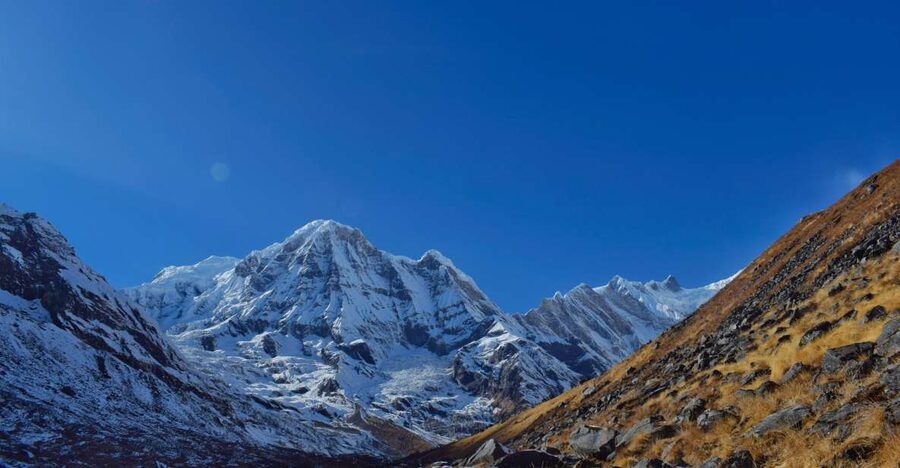
- Ghandruk first, then peak views grow bigger every day
- Suspension bridges and the Modi Khola corridor keep the trail interesting
- Deurali to ABC is the altitude test in a tight 7-day window
- Sunrise and the amphitheater of peaks at Annapurna Base Camp are the payoff
- Jhinu Danda hot springs are a smart recovery stop, not a random detour
- Guides like Pratiksha, Deepak, Hari, and Narayan show up in the feedback for safety and pacing
Why this 7-day ABC trek feels focused (not frantic)
Annapurna Base Camp in seven days is a classic idea for one reason: it compresses the experience. You get a full week of trekking without spending your whole holiday on logistics. That matters if you’re traveling with limited time, or if you want the emotional payoff of reaching ABC without turning it into a month-long project.
I also like the structure. The trek starts with lower-altitude village life—Gurung settlements, terraces, and forest paths—then gradually steepens. By the time you’re near Deurali and headed for Base Camp, you’re mentally ready for the harder air. It’s still tough, but it feels earned.
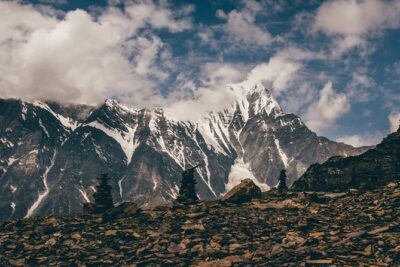
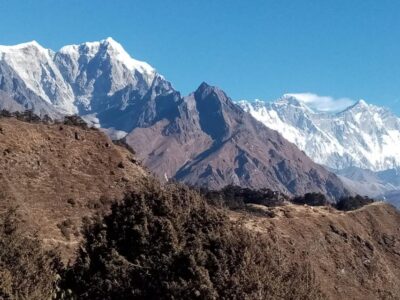
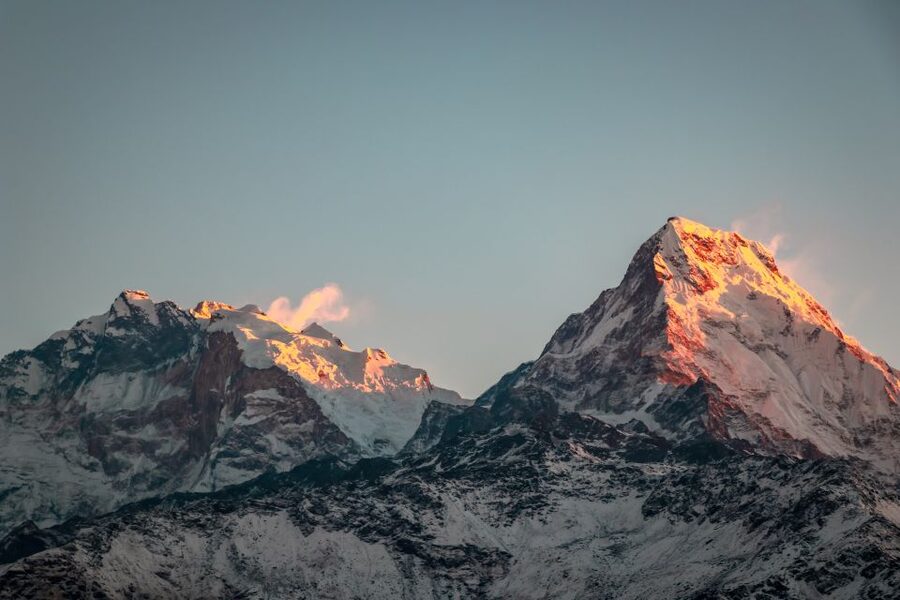
One more value point: the itinerary gives you multiple view moments, not just the single postcard scene. You pass places that frame Machhapuchhre (Fishtail), you see the Annapurna massif from different angles, and you reach a high point where the peaks feel close enough to notice details like ridgelines and the shape of the amphitheater.
You can also read our reviews of more tours and experiences in Ghandruk.
Day 1: Pokhara to Nayapool and Ghandruk’s first big views
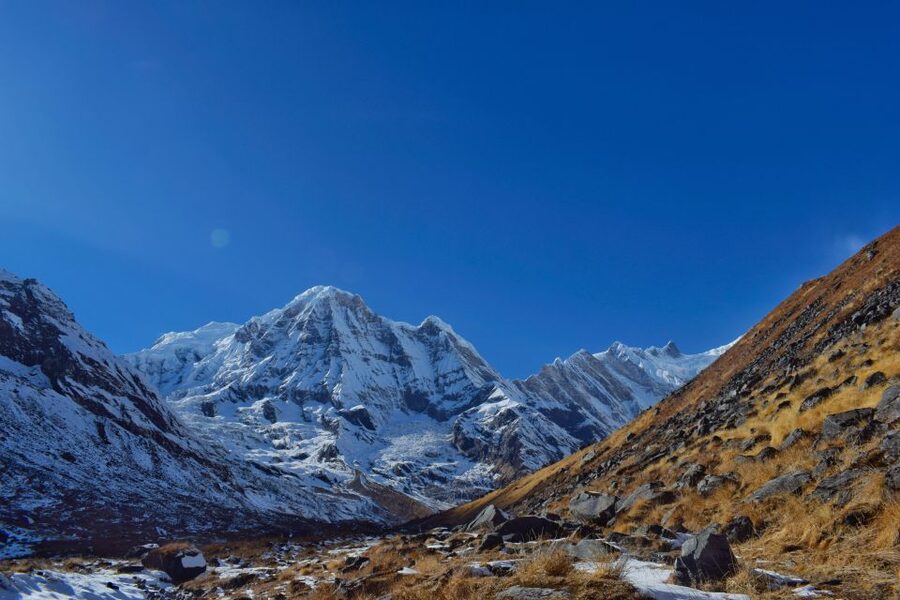
Day 1 begins with a drive from Pokhara to Nayapool, then you start walking through villages and terraced fields. This is the day to get your body into rhythm. You’re not rushing to the highest point yet—you’re building your legs and your confidence on real trail conditions.
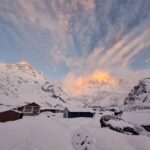
Your first overnight is in Ghandruk (about 1,939m / 6,360 ft). Ghandruk is known for its traditional Gurung village vibe, and it’s a strong visual intro. You’ll have views of Annapurna South and Machhapuchhre (Fishtail) early enough that the trek feels like more than a climb.
A practical thought: the early incline can catch people who think they’ll be warmed up by walking. I’d go out slow on purpose. Let your guide set a pace that you can hold for 30–60 minutes at a time, not just for the first ten.
Day 2: Rhododendron forests, Modi Khola bridges, and Lower Sinuwa
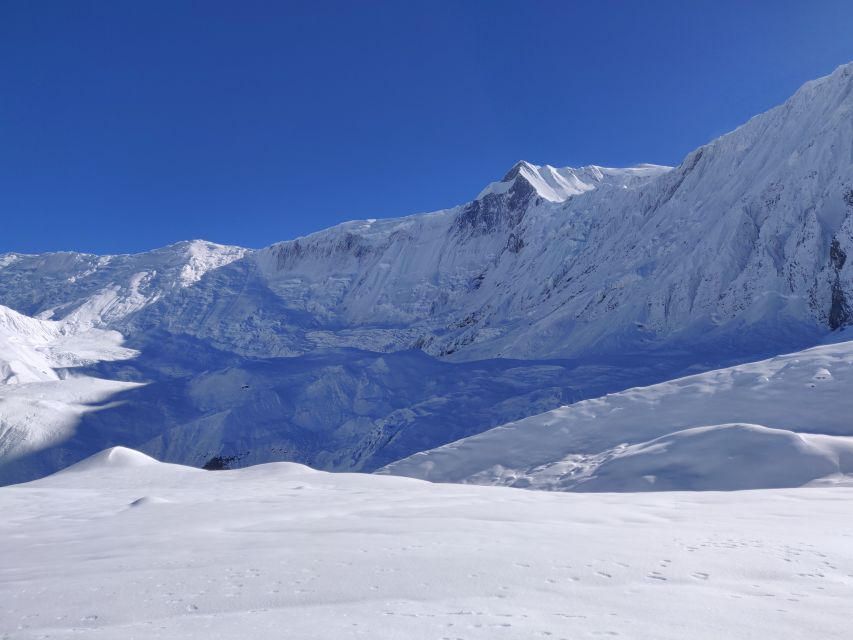
Day 2 takes you from Ghandruk to Lower Sinuwa (about 2,249m / 7,380 ft). The scenery shifts in a way that keeps you paying attention: rhododendron forests, small settlements, and crossings over suspension bridges.
That bridge moment over the Modi Khola isn’t just scenic. It also breaks up the monotony of steady climbing and gives your mind a new focus each time the river comes into view. You’ll finish the day in Lower Sinuwa, where the trail energy settles into longer, steady walking.
This is also a day where tea house food becomes part of your strategy. If your guide has a good relationship with the places along the route, it usually means quicker ordering and better odds of getting what you need when you’re tired. That kind of behind-the-scenes comfort is one of the reasons people rate this trek so highly.
Day 3: Up to Deurali through bamboo, oak, and tighter air
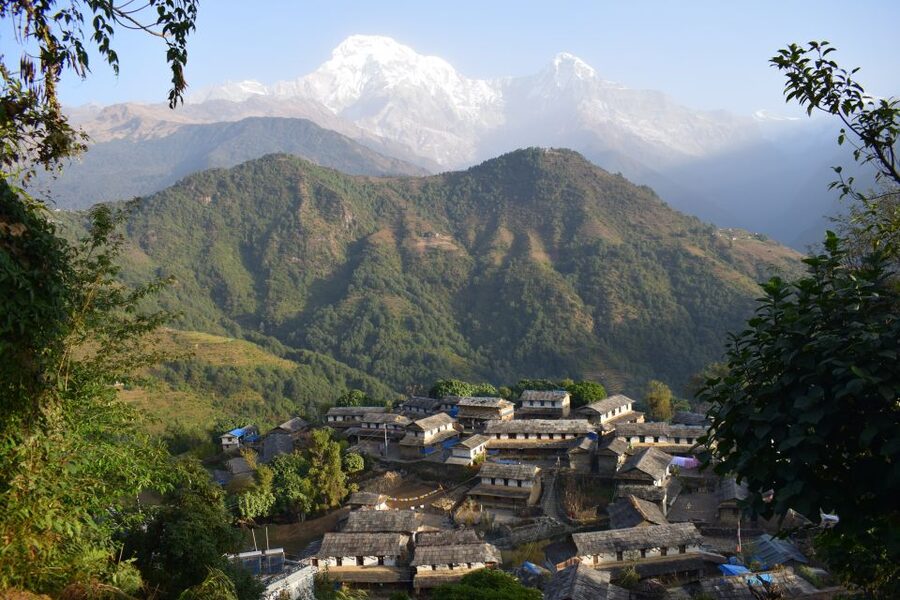
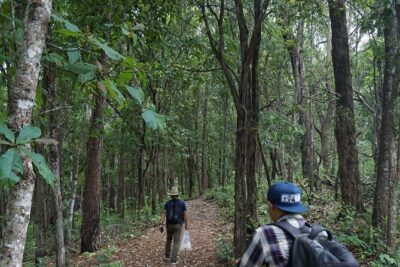
Day 3 goes from Sinuwa to Deurali (about 3,230m / 10,595 ft). The path continues along the Modi Khola gorge area, and the forest mix keeps changing—dense bamboo and oak, plus the feel of climbing toward dramatic cliffs.
This day often becomes the mental turning point. You’re higher now, and the effort starts to feel heavier even if the distance is manageable. Passing areas like Dovan and Himalaya (on the route) adds variety, but the bigger change is how your breathing reacts to the altitude.
If you’re worried about altitude, here’s the practical lesson: take breaks that you control, not rests that your body forces. The best guides in the feedback—people like Deepak, Hari, and Narayan—are praised for adapting rhythm to your level. That’s not a luxury. It’s how you protect tomorrow’s legs and your oxygen intake today.
Day 4: The push to Annapurna Base Camp at 4,130m
Day 4 is the big summit day without calling it a summit. You go from Deurali to Annapurna Base Camp (about 4,130m / 13,550 ft). This is where the itinerary turns from forest walking into alpine meadows and exposed mountain terrain.
You’ll pass Machhapuchhre Base Camp, and the views of Fishtail and the broader Annapurna range become more than a distant idea. Then you keep climbing until you reach ABC and stand in what feels like an amphitheater of peaks.
A quick reality check that helps: reaching Base Camp at 4,130m isn’t just about legs. It’s about coping with the air. Some seasons bring snow near the time you arrive and depart Base Camp, so traction and slow footwork matter. If you’re visiting when it’s colder, plan on taking your time on any icy or slushy sections.
Once you arrive, treat Base Camp like a museum. Look around, feel the moment, take photos, then conserve your energy. The best experience is seeing the mountains clearly, not sprinting around because you think you should.
Day 5: Sunrise over Annapurna I, then a downhill day that still counts
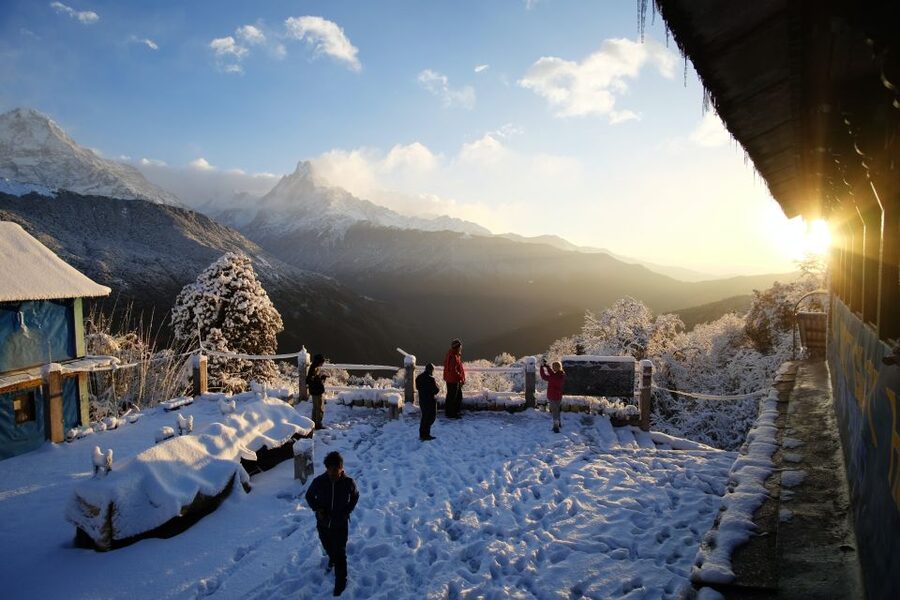
Day 5 starts with an early morning payoff: sunrise over Annapurna I. After breakfast, you begin retracing your steps downhill toward Sinuwa (back to about 2,249m / 7,380 ft).
Downhill sounds easier, but don’t fully relax. Your legs still work—just differently. Stony steps and long descents can irritate knees and ankles if you don’t use a controlled stride. If your trek includes trekking poles (some are provided if needed), use them right away on the way down.
You’ll pass through bamboo and rhododendron forests again, and that makes this day emotionally satisfying. You see the same route from a new altitude perspective, and the return feels like you’re closing the loop on the story of the week.
Day 6: Jhinu Danda hot springs for sore-leg recovery
Day 6 takes you from Sinuwa down to Jhinu Danda (about 1,760m / 5,770 ft). This is the reward day for people who want their efforts acknowledged by warm water.
At Jhinu Danda you can relax in the natural hot springs by the river. The hot spring stop isn’t just a nice extra; it’s a smart way to reduce recovery friction when you still have one more long day of hiking and driving ahead.
Bring a swimsuit if you can. At least one guest specifically called out that this detail matters. If you forget, you’ll spend your evening making choices, not soaking.
Day 7: Jhinu to Nayapool and back to Pokhara’s lakeside
On Day 7, you descend gradually from Jhinu to Nayapool and then drive back to Pokhara. You finish the trek with farmlands and villages in your path, and that’s a nice change from the more dramatic terrain higher up.
A practical note that came up in the feedback: ending in Jhinu often feels better because after that, it’s mostly road. You get to transition from hiking mode to life mode without another long grind.
When you reach Pokhara, you’ll likely feel that strange mix of happiness and heaviness in your chest—happy because you made it, heavy because your body is finally allowed to stop working. Plan a relaxing evening after you arrive.
Price and value: what $215 covers (and what you should budget)
This trek lists a price around $215 per person. For a 7-day Annapurna Base Camp trip, that’s mainly meaningful because it includes the things that usually cost money and time to organize:
Included items you should appreciate:
- Hotel pickup and drop-off in Pokhara
- Private roundtrip transportation
- Annapurna Conservation Area (ACAP) permit and government permits
- Private accommodation in standard tourist lodges
- Government-certified guides
- First aid kit
- Luggage storage in Pokhara
- Duffel bag and trekking poles if needed
Not included:
- Food and drinks (you purchase along the way)
- A porter (optional at about $15 per day)
So the real value question is this: are you getting help where it matters? With a certified guide and private transport, yes. You’re paying to reduce uncertainty, keep the route smooth, and get support for pacing and safety.
My advice: budget for meals separately and consider a porter if you want less load and more energy for altitude management. Even if you’re reasonably fit, taking some weight off can turn a tiring week into a manageable one—especially on the tougher climbs.
The guide factor: why people keep praising pacing and safety
Guides show up again and again in the feedback, and it makes sense. On this trek, “walking” is only part of the job. The rest is decision-making: when to slow down, how to read trail conditions, and how to keep everyone safe in thinner air.
I like that this trek runs with English, Hindi, or Nepali-speaking guides, so you’re not stuck guessing what’s happening next.
More importantly, the guides are described as flexible with rhythm and needs. That includes stories like:
- Pratiksha being patient with pace and helping guests feel comfortable with tea house choices.
- Deepak adapting the trekking rhythm for a solo guest and looking after them.
- Hari being praised for safety and for explaining the Annapurna mountains and Nepal.
- Narayan handling altitude sickness by adjusting the plan and arranging jeep transport, then shifting to another hike option like Poon Hill.
Those are not small details. On a route where you gain height fast, the guide’s ability to adjust can be the difference between pushing through and ending the day feeling confident.
Also, a couple guides were noted for extra touches like taking photos/videos during the trek and sharing them afterward. That’s not essential, but it’s a pleasant bonus when you’re too busy focusing on your breath to think about capturing the moment.
What to pack, and how to handle weather and altitude
The trek asks for the basics: you should bring a passport or ID card. Past that, think in layers and plan for variation.
Weather reality check:
- In colder months, you might encounter snow near or around Annapurna Base Camp.
- In monsoon season, you can get a good amount of rain and a quieter trail.
So pack like you’re walking in a place where conditions change fast:
- Rain protection you’ll actually wear
- Warm layers for mornings and higher altitude
- Sun protection (even when it’s cool)
- A swimsuit for Jhinu hot springs
- Simple, reliable daypack organization
- If you’re concerned about your legs, trekking poles can be a big help
Altitude reality check:
- Don’t treat every uphill section like a race.
- Plan to take breaks that feel calm, not frantic.
- If you feel symptoms of altitude sickness, listen early. A good guide will respond quickly, not argue with the mountain.
Your goal on days like Deurali to ABC is steady effort. Your goal is not finishing early.
Who this trek is best for
This works well for:
- First-time trekkers who want a structured plan with certified guidance
- People who want a real Himalayan experience in a limited week
- Couples or small groups who prefer private support rather than a crowded group feel
- Travelers who value village culture and forest scenery, not only peak photos
You might want to rethink the timing or bring extra support (like a porter) if:
- You have knee issues on descents
- You’re very sensitive to altitude or you know you fatigue fast
- You’re traveling during heavy rain seasons and don’t have good rain gear
Should you book this Annapurna Base Camp trek?
If your dream is Annapurna Base Camp without spending weeks managing logistics, this is a strong pick. The price stacks up best because it includes the permits, certified guides, private transportation, and lodge stays—things that can otherwise add up and create stress.
I’d book if you want:
- A clear 7-day route with daily structure
- Support that emphasizes pacing and safety
- The combination of Gurung villages, forest variety, and the high-altitude payoff at ABC
- A recovery stop that actually helps (Jhinu hot springs)
I’d hesitate if you’re aiming for a super-fast, minimal-effort hike. This trek can feel demanding in a short time window, especially the altitude jump toward Deurali and Base Camp. But if you go slow on purpose—and let a patient guide manage the rhythm—your chances of enjoying the week go way up.
FAQ
What is the duration of the Annapurna Base Camp trek?
The trek runs for 7 days.
Where does the trek start and end?
It starts in Pokhara, with a drive to Nayapool on Day 1, and it returns by driving back to Pokhara after Nayapool on Day 7.
What’s included in the price?
The price includes hotel pickup and drop-off in Pokhara, private roundtrip transportation, ACAP permit and government permits, private lodge accommodation, government-certified guides, a first aid kit, and luggage storage in Pokhara. Duffel bag and trekking poles are available if needed.
Is food included?
No. Food and drinks are not included, but you can purchase them along the trek.
Do I need a porter?
A porter is optional. If you want one, it’s available to hire for $15 per day.
What language will the guide speak?
The live tour guide speaks English, Hindi, and Nepali.
Is free cancellation available?
Yes. You can cancel up to 24 hours in advance for a full refund.