REVIEW · SPECIAL REGION OF YOGYAKARTA
Yogyakarta: Selogriyo Temple Tour & Java Rice Terrace Trek
Book on GetYourGuide →Operated by Jogja Borobudur Tour & Travel · Bookable on GetYourGuide
Rice fields and a quiet temple win today. This Selogriyo Temple trek is built for people who want real countryside time in Java, with a guide-led walk through working rice terraces before you reach a secluded Hindu site on the hillside. It’s also easy to fit in because you get roundtrip transfer from your Yogyakarta (or Borobudur) area base, without the hassle of figuring out rides.
I love that the day balances scenery with meaning: you’re not just walking, you’re learning what’s growing there—paddy plus other crops—and how the place is used by local people. I also love the small-group feel (up to 15), which keeps the pace human, plus the guides’ storytelling often turns plant-spotting into a full conversation. The one possible drawback is simple: it involves moderate walking, and the path can get muddy depending on conditions.
In This Review
- Key things that make this day trip worth your time
- How the remote Selogriyo Temple sets the tone for your day
- The 6-hour “sweet spot” (and what it means for your schedule)
- Pickup and the drive: where good guides quietly add real value
- Walking into Selogriyo: the approach matters more than you expect
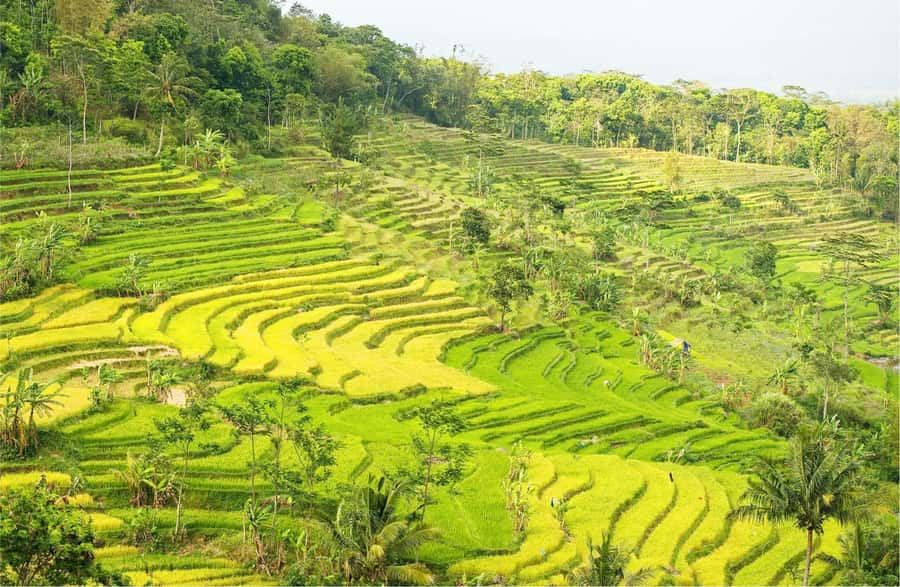
- The rice terrace trek: what you’ll actually see in the fields
- Selogriyo Temple visit: small site, calm pace, and guide-led meaning
- Photo strategy: how to get shots without feeling like a robot
- Tea, coffee, and local snacks: why it’s optional (and worth planning for)
- Value check: $55 for 6 hours, pickup included, and what you’re really paying for
- Who this Selogriyo trek is best for
- Possible downsides: when to set expectations in advance
- Should you book this Selogriyo Temple & Java Rice Terrace trek?
- FAQ
- Where do you get picked up for the Selogriyo Temple and rice terrace trek?
- How long is the tour?
- Is this a small-group tour?
- How long is the drive from Yogyakarta city or from Borobudur?
- What’s included in the price?
- Is there a lot of walking?
- What should I bring?
- Is an English guide provided?
- Do I need cash if drinks or snacks are sold at the stop?
- What’s the cancellation policy?
Key things that make this day trip worth your time
- Selogriyo’s hilltop calm beats the usual crowd pattern in central Java.
- Rice terrace trek goes beyond photos, with practical farming and plant questions answered.
- Small group size (15 max) helps you move at a comfortable pace and ask real questions.
- Pickup from Yogyakarta or Borobudur area keeps the day from feeling like a logistics project.
- Guides who teach often share local life details on the drive, not only on the hike.
How the remote Selogriyo Temple sets the tone for your day
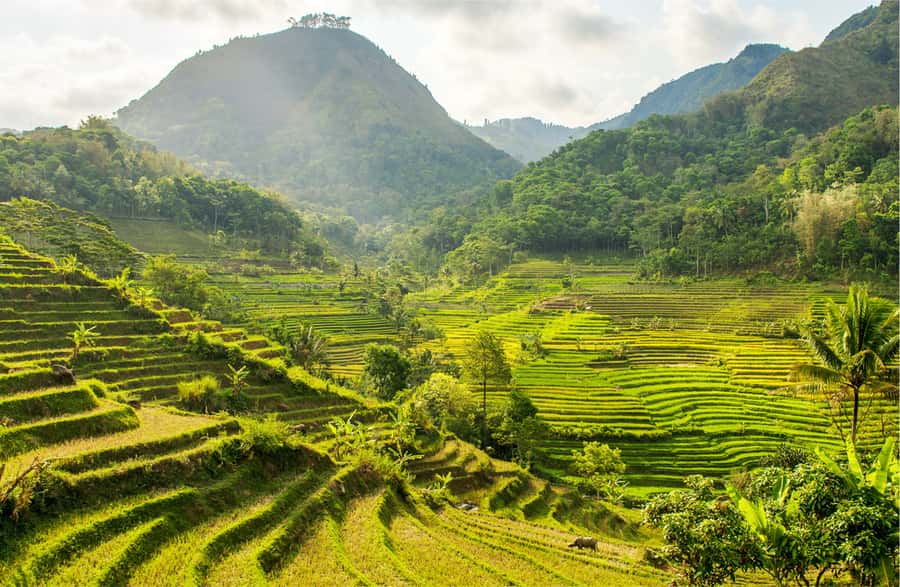
The big win here is the location vibe. Selogriyo is not one of those places where you immediately feel funneled into a crowd. Instead, you approach the temple by foot after a drive inland from Yogyakarta, and the hills start to feel quieter as you go. That shift matters. When the day begins in traffic and ends in farmland silence, you notice it.
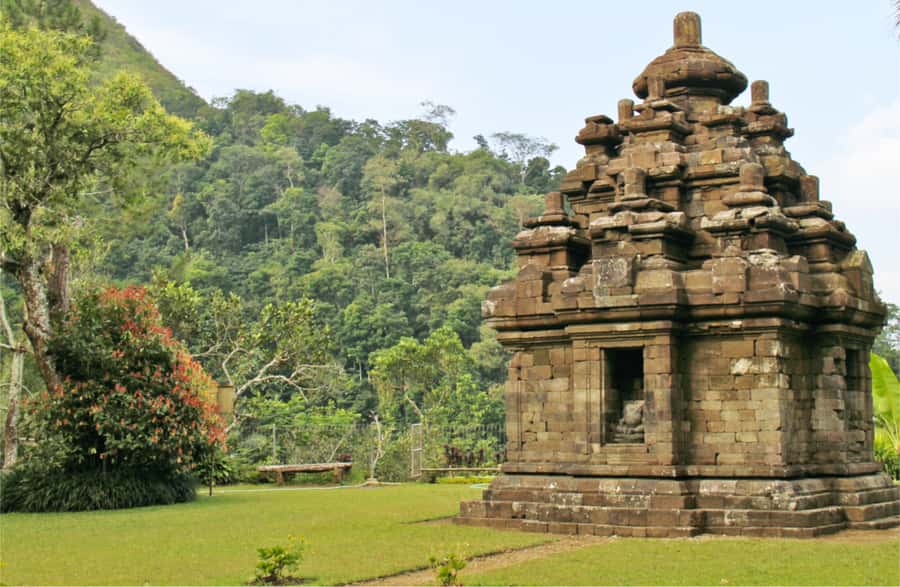
Selogriyo itself is a small Hindu temple, and that size is part of the charm. You’re not spending your time fighting for angles. You can slow down, look at details, and listen while your guide explains the temple’s structure and setting. One review mentioned specific attention to Hindu sculptures, and that kind of detail is exactly what makes a smaller temple feel like more than a stop on a checklist.
The 6-hour “sweet spot” (and what it means for your schedule)
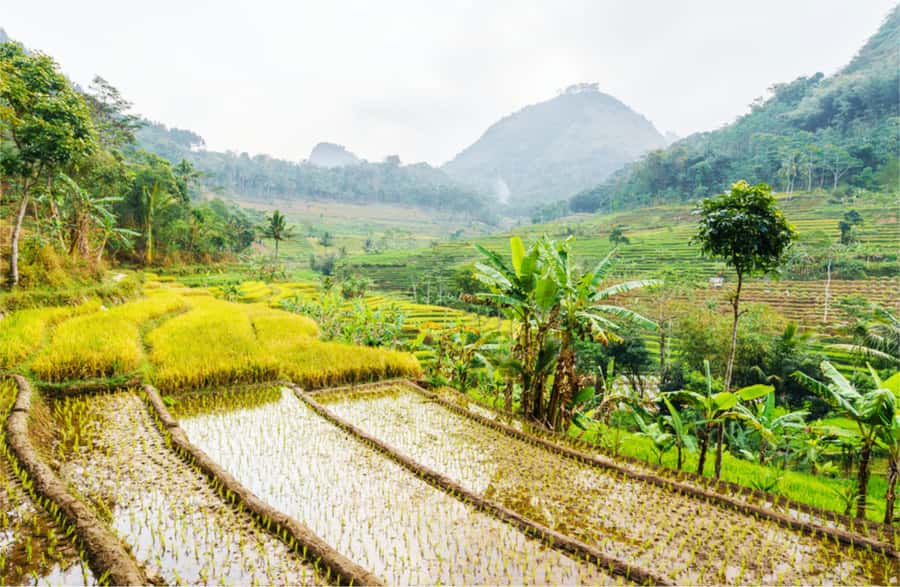
This trip lasts about 6 hours, which is a practical length for Yogyakarta. It’s long enough to feel like a real outing—temple visit plus a trek—but short enough that you don’t lose your whole day. The tour also includes hotel pickup and drop-off, so you’re not burning time on transfers after you’re already tired.
Timing depends on where you start:
- From Yogyakarta city, plan about a 2-hour drive each way.
- From the Borobudur area, it’s closer to 1 hour.
That matters because a 6-hour day can feel either relaxing or rushed. Starting from Borobudur area is likely the easier rhythm. If you’re based in central Yogyakarta, you’ll spend more time on the road, but you gain the countryside approach into Java’s interior.
Pickup and the drive: where good guides quietly add real value
Even before you reach Selogriyo, this tour can feel worthwhile because the guides often use the car time to set context. In past days, guides like Yuni and Atok are described as friendly storytellers who explain Javanese life, plants you’ll see later, and the local culture along the route. That turns the drive from dead time into a warm-up.
This is also where you’ll learn what kind of day you’re getting. Your guide can usually point out what to watch for on the walk—crops, herbs, and small signs of how farming works here. And if your group is smaller than the cap of 15, the guide’s attention tends to be more personal.
Practical note: bring cash (more on that soon). Guides often recommend or stop at a tea or coffee spot during the hike or afterward, and that’s not listed as included—so it’s your choice.
Walking into Selogriyo: the approach matters more than you expect
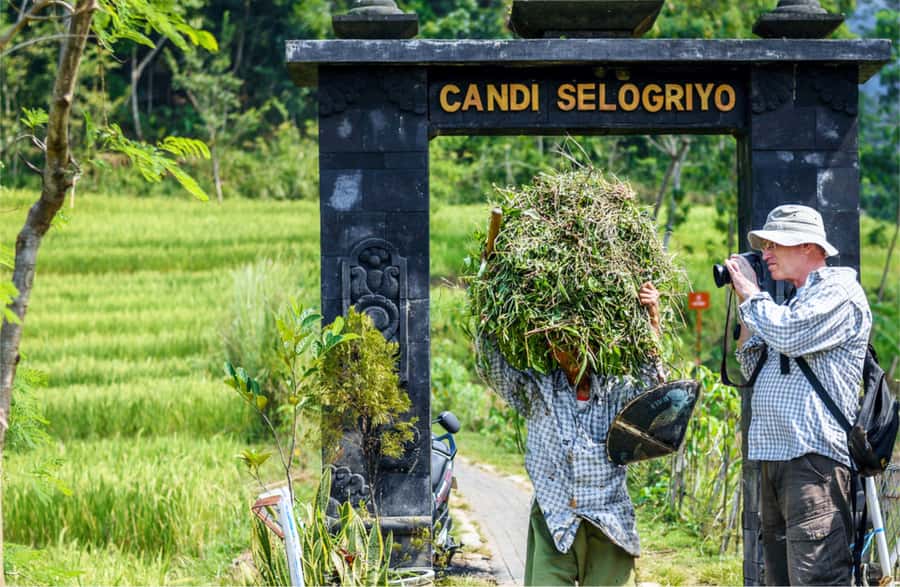
The trek isn’t a straight line from parking lot to viewpoint. You’ll get to the temple area by foot through pathways that lead you toward a fairytale-style hillside setting. As you hike, you’ll get that gradual reveal—first the terraces, then the greenery thickening around the hillside, and finally the temple itself.
This is where guides make the hike feel purposeful. They’re not just counting steps. People like Haidar and others have been praised for taking time to explain the plants near the terraces and the meaning of the temple’s location. In other words: the hike becomes a guided nature lesson plus a cultural one.
What to know about effort: the trip involves a moderate amount of walking. One review even said the climb is worth it, but also framed it as a hike. If you’re used to casual strolls only, you might feel it. If you already handle uneven paths, it should feel manageable.
The rice terrace trek: what you’ll actually see in the fields
If you’re coming to Java for rice terraces, you’ll probably like the scenery. But the best part is what you’ll learn while you’re there.
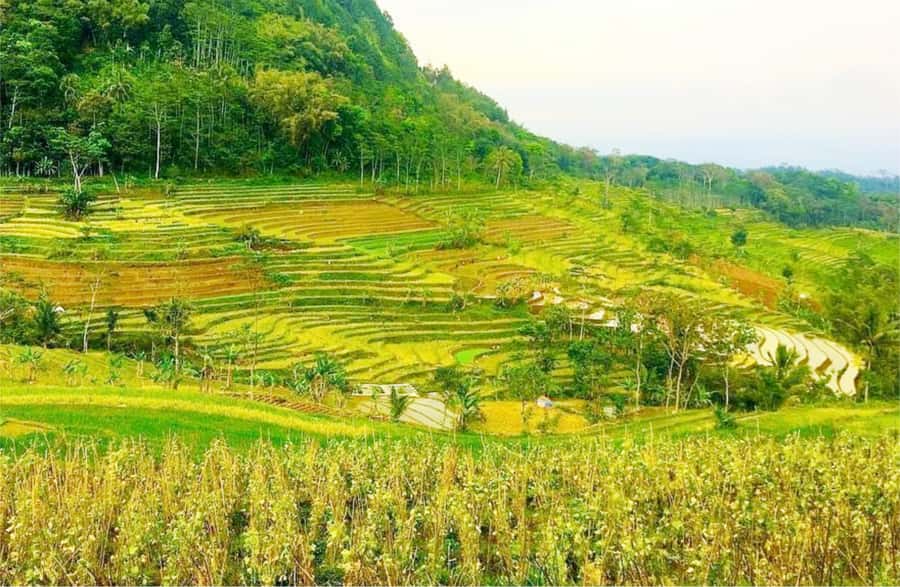
The route through the terraces includes lots of different crops, not just one uniform “rice carpet.” Expect to hear about paddy and other plantings such as beans, corn, and more. Guides have been praised for pointing out vegetation details and explaining what farmers do across seasons. Some guides also focus on how plants differ in dry versus wetter periods, and why you notice different growth patterns as you walk.
You’ll also get close to working farmland. That changes your photos. It’s not the same as standing at a lookout miles away. You’ll feel like you’re walking through the daily setting of the people who live here.
One realistic drawback: be ready for muddy shoes. That’s not theory—it’s been mentioned by people who went in rainy season conditions. Even if it’s not raining, paths can be damp. Bring comfortable shoes with grip, and don’t wear brand-new anything you can’t afford to get scuffed.
Selogriyo Temple visit: small site, calm pace, and guide-led meaning
Once you reach Candi Selogriyo, you’re in hilltop territory. The temple is described as peaceful and calm, and the “few tourists” factor shows up repeatedly in guide-led experiences. If you hate feeling rushed or surrounded by tour groups, this is where that preference pays off.
Your guide will explain the temple’s distinctive structure and the Hindu context. People have also noted that guides took time for discussions rather than speeding past details. Since Selogriyo is smaller than the mega-famous Java temples, the experience doesn’t rely on scale. It relies on setting: hillside views (when weather allows), gardens around the temple, and the quieter feeling of a place that’s not a constant photo factory.
If the weather is rainy, don’t panic. Several accounts mention that mountain views can get washed out. The upside: the hills still feel alive, and the temple still gives you a quiet, human-scale stop.
Photo strategy: how to get shots without feeling like a robot
You’ll likely take photos, but you’ll enjoy the day more if you don’t treat it like a checklist. The terraces create layered views, and walking paths give you natural angles—wide shots when you need them, close-ups when the guide points out a specific plant or crop.
A small pro tip: let your guide know when you want photo pauses. Many guides are willing to slow down so you can frame things properly. Also, if you’re offered a slightly off-path trail, only take it if you’re comfortable. Some routes can be more uneven, especially after rain.
And yes, you may get a chance for a tea/coffee break at a hilltop café during the hike or at the end. That moment is great for photos too, but keep it relaxed. The point is the quiet.
Tea, coffee, and local snacks: why it’s optional (and worth planning for)
This tour doesn’t list tastings as included, but it does encourage you to bring cash, and multiple guide experiences include stops for coffee or tea along the path back to the car. People mention things like redwood tea, lemongrass or blue pea tea, and paired snacks such as cassava.
So here’s the practical way to handle it: treat food and drinks as a bonus, not the core value. If you do buy something, you’re supporting the local stop that the guide is using as a rest point. And it’s a good way to sit down briefly without ending your day early.
If you’re a coffee person, keep expectations realistic. You’re not being handed a menu at a hotel. This is a local café stop in the hills, and it’s more about the setting and conversation than fancy branding.
Value check: $55 for 6 hours, pickup included, and what you’re really paying for
At $55 per person for about 6 hours, the value comes from what’s bundled:
- Hotel pickup and drop-off
- Entrance fee
- English-speaking guide
- Parking fee
- Donation fee
What that means for you: you’re paying for a guided day that solves the biggest friction points—getting there, getting in, and having someone explain what you’re seeing. Many independent day trips in Indonesia can balloon once you add guide + vehicle + entry fees. Here, those basics are handled, so your money goes mostly toward the human part: learning in the field.
The small group size (up to 15) is also part of the value. Even if you don’t get a fully private day, you’re not stuck in a large crowd where questions go unanswered and walking pace feels fixed.
Who this Selogriyo trek is best for
This is a strong match if you:
- Want to explore Yogyakarta beyond the headline temples
- Prefer fewer crowds and calmer hilltop stops
- Enjoy a walking day that isn’t extreme
- Like learning about plants, farming, and local culture from a guide
It’s also a good first-day activity after you arrive, because guides often share context on the drive and help you understand how the region works. One review even described how the guide adapted explanations based on personal curiosity, which is exactly what you want if you’re the type who asks why things are planted the way they are.
Possible downsides: when to set expectations in advance
The main consideration is the moderate walk. If you’re dealing with knee issues or you dislike uneven paths, think carefully about your comfort level.
Second, Selogriyo is small compared to Java’s biggest temple names. That isn’t a problem if you come for the experience of the place—quiet, setting, and guide-led meaning. It can feel underwhelming if you’re expecting a large monument spectacle.
Third, weather can affect what you see from the hills. If rain blocks mountain views, you’ll still get the walk and temple visit, but the view payoff might be reduced.
Should you book this Selogriyo Temple & Java Rice Terrace trek?
Yes, if you want a calm, countryside Java day that mixes a small temple visit with a real hike through working rice terraces. The pricing feels fair when you factor in pickup, entrance, and guide time, and the small-group structure helps keep it personal. This is also a smart choice if you’re tired of the biggest-tourist rhythms and you’d rather spend your morning learning from the fields.
Book it especially if you’re the type who enjoys asking questions mid-walk. Guides like Yuni, Haidar, and Atok are repeatedly described as conversational and attentive, and that’s the difference between seeing a place and understanding it.
FAQ
Where do you get picked up for the Selogriyo Temple and rice terrace trek?
Pickup is included from your accommodation in Yogyakarta, and the tour also mentions pickup from the Borobudur area.
How long is the tour?
The duration is 6 hours.
Is this a small-group tour?
Yes. It’s limited to 15 participants.
How long is the drive from Yogyakarta city or from Borobudur?
It’s about 2 hours from Yogyakarta city and about 1 hour from the Borobudur area.
What’s included in the price?
The price includes hotel pickup and drop-off, entrance fee, an English-speaking guide, parking fee, and a donation fee.
Is there a lot of walking?
There is a moderate amount of walking, including the trek through the rice terraces.
What should I bring?
Bring comfortable shoes, sunscreen, comfortable clothes, and cash.
Is an English guide provided?
Yes, the guide is English-speaking.
Do I need cash if drinks or snacks are sold at the stop?
Cash is recommended to cover small purchases during the day, since the tour includes cash as a bring item and includes time around local spots.
What’s the cancellation policy?
You can cancel up to 24 hours in advance for a full refund.