REVIEW · NICOLOSI
Etna Central Crater Trekking Tour with cable car & jeep
Book on GetYourGuide →Operated by ETNA TOURING DI PIETRO LA ROSA · Bookable on GetYourGuide
Etna on foot feels like stepping onto another planet. This tour gets you up toward the central crater quickly, then lets you walk across real lava terrain with an expert guide.
I love the mix of comfort and adventure here: you start with a cable car and a jeep climb, and you’re not scrambling for gear because boots, helmet, jacket, sticks, and socks are provided. My one big caution is that Etna is active and weather changes fast, so the route and what you see from the top can shift.
In This Review
- Key things that make this Etna crater trek worth it
- Getting to Etna fast: La Baita 3L Ski-Lab and the morning flow
- Cable car up: why that ride changes the whole hike
- The 4×4 jeep climb to 2850 m: preparing for the Mars feeling
- On foot: lava flows, fractures, and crater-country at a smart pace
- Cratere Centrale dell’Etna: the break, photos, and guided crater time
- Ancient eruptive cones and Valle del Bove: what the guide points out matters
- Cable car back down: end the day without turning it into a slog
- What’s included (and what you should bring) for comfort at altitude
- Price and value: what $56.94 buys you—and what it doesn’t
- Weather and volcano reality: your plan should be flexible
- Who this tour fits best (and who should skip it)
- My call: should you book this Etna central crater trek?
- FAQ
- Is the tour group small?
- What languages is the guide available in?
- How long is the Etna Central Crater Trekking Tour?
- What equipment is provided?
- Where does the tour meet and end?
- What should I bring for the hike?
- What type of guests is this not suitable for?
Key things that make this Etna crater trek worth it
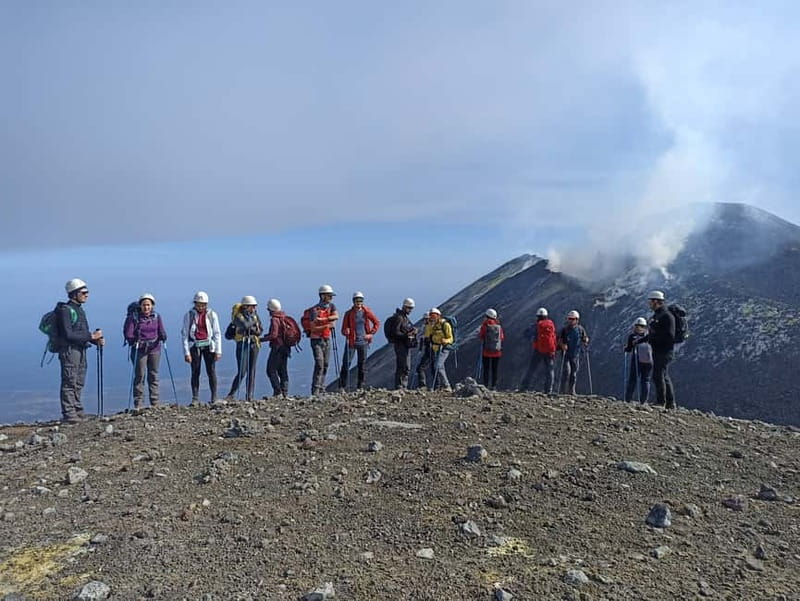
- Small group (up to 10): easier pace control and more guide time
- You reach the summit craters area (about 3300–3345 m): the payoff is the altitude and views
- Real volcanic terrain on foot: recent lava flows, lava fractures, and eruptive-cone areas
- Guide-led geology experience: you’re not just walking; you’re understanding what you’re stepping on
- Valle del Bove viewpoint: a big Etna depression with eruptive cones below
- Gear included for high-altitude hiking: helmet, jacket, boots, socks, and sticks
Getting to Etna fast: La Baita 3L Ski-Lab and the morning flow
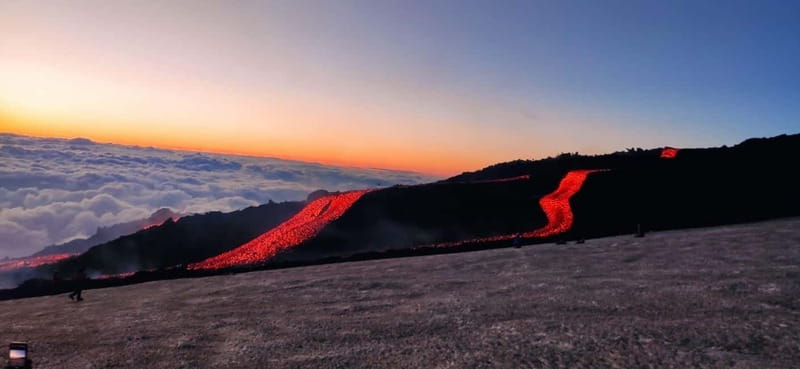
Your day starts at La Baita 3L Ski-Lab, where the guide Pietro La Rosa (or another Etna Touring staff member) meets you inside. This is a big part of the value: you’re not hunting around for the right pickup spot, and you get oriented right away.
You’ll start around 9:30 a.m., but the actual tour start depends on when everyone is fitted with trekking equipment. Translation: show up a little early so you’re not rushed into boots and layers. At this altitude, comfort matters from minute one.
The best advice I can give for the first hour is simple: dress in layers you can adjust quickly. You’ll be moving, sitting in vehicles, and then switching to hiking mode. If you run hot, you’ll want to shed a layer fast; if you run cold, you’ll want to keep your head and neck covered.
You can also read our reviews of more tours and experiences in Nicolosi.
Cable car up: why that ride changes the whole hike
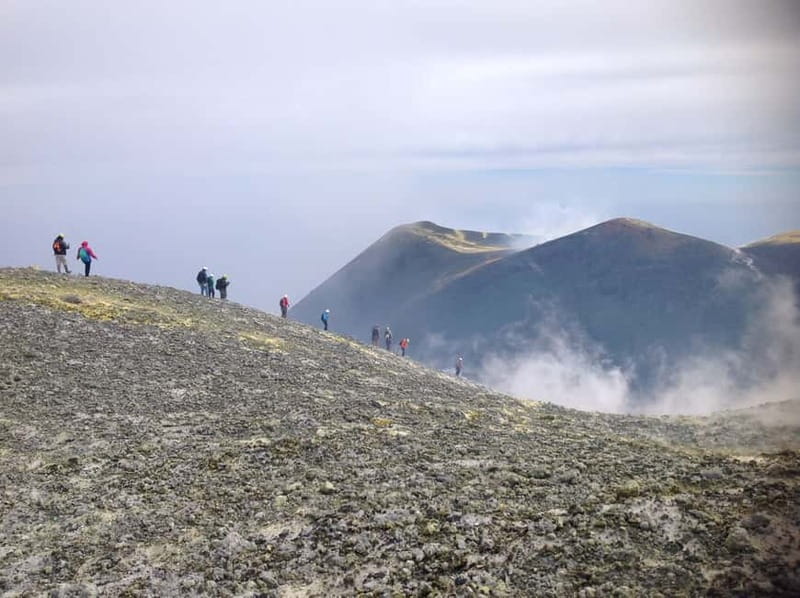
After meeting at the ski-lab, you take the cable car for about 20 minutes. This does two things for you.
First, it saves your legs. By the time you’re hiking, you’re spending your energy on the volcanic terrain, not on a long approach climb. Second, it helps you feel the altitude gradually. That matters because you’re heading toward the central crater area around 3300 m.
You’ll likely be taking photos from the way up, but the main point is practical: getting higher sooner makes the walking time feel more focused. It also keeps the day within the 5-hour window the tour runs.
The 4×4 jeep climb to 2850 m: preparing for the Mars feeling
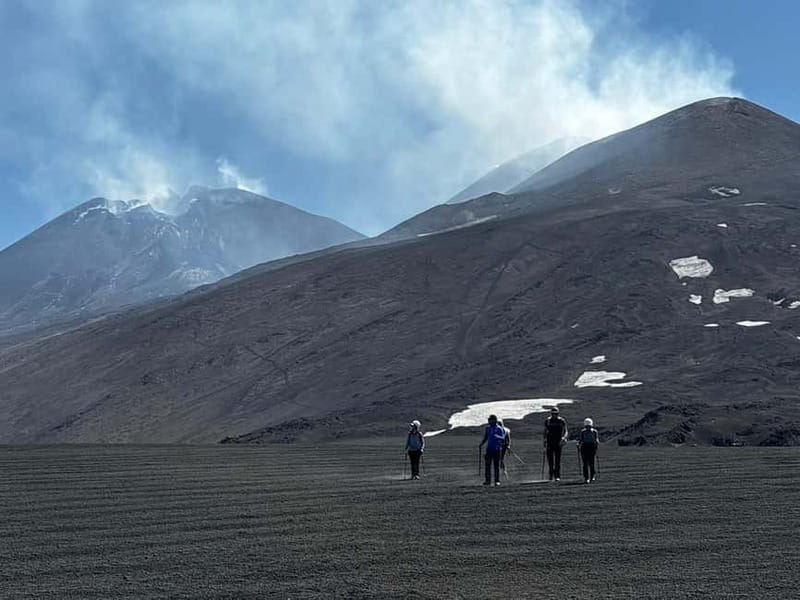
Next comes the jeep/SUV ride for about 20 minutes to roughly 2850 meters, where the trek begins. This is where the experience shifts from travel mode to serious hiking mode.
From here, the terrain is clearly volcanic. You’re moving across ground shaped by eruptions, not typical hiking trails. The jeep portion also gives the guide a chance to explain what you’re about to do and what you should pay attention to: lava textures, fracture lines, and signs of older eruptive activity.
And yes, you really do get that walking on Mars feeling when you’re out there. It’s not just dramatic scenery. It’s the combination of color, rock form, and how the ground breaks and flows—very different from a normal mountain trail.
On foot: lava flows, fractures, and crater-country at a smart pace
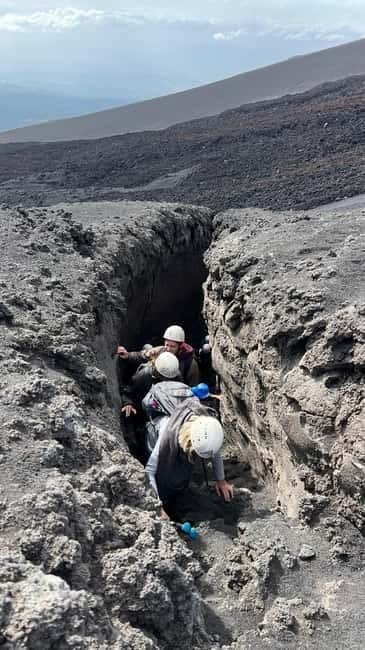
Once the trek begins, you’ll be walking for about 100 minutes on foot before the crater stop. This is the heart of the tour: you’re crossing areas with recent lava flows, then moving through sections where the rock can be fractured and uneven.
Here’s what makes this part work for most people: you’re not doing it alone and you’re not guessing. An alpine/volcanologic guide is with you, and the pace is built for a small group (limited to 10 participants). That matters because lava terrain doesn’t always behave like a sidewalk or a standard trail.
What I’d focus on while walking:
- Watch your footing, because lava can shift, crack, or feel less stable than it looks.
- Keep your eyes up, too—your understanding of Etna improves when you connect what you’re seeing with what the guide explains.
- Pace yourself. You’re at altitude, moving on uneven ground. You don’t need to sprint to enjoy it.
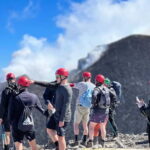
One more practical thing: the tour provides boots, socks, sticks, and a jacket, plus a helmet. You still bring your own long pants and daypack. I like this setup because it reduces the chance someone shows up under-equipped and slows the whole group down.
Cratere Centrale dell’Etna: the break, photos, and guided crater time
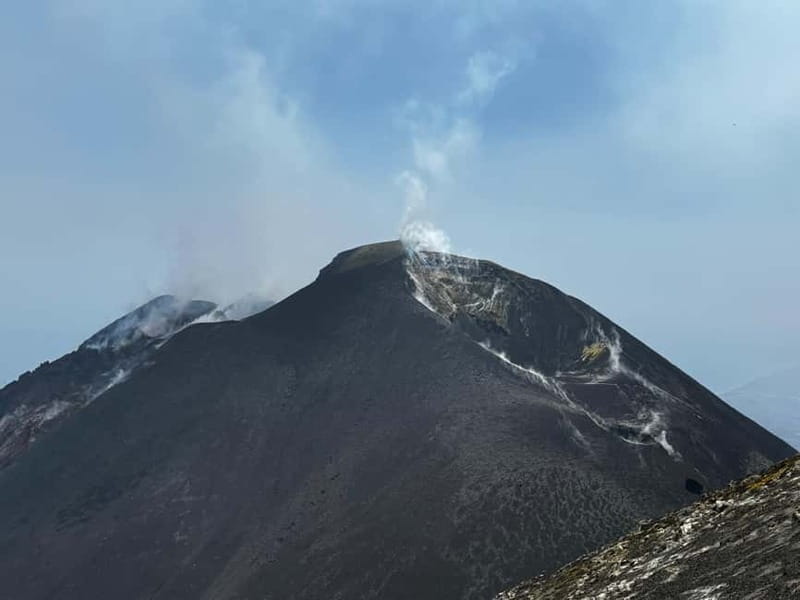
The first major crater stop is at Cratere Centrale dell’Etna. Plan on a break with photo time, then a guided visit before you head back on foot.
This is where the tour earns its reputation. At these heights, the view and the feeling are strong, and the guide helps you read the terrain instead of just staring at it. A good guide makes the crater stop feel like a lesson you can stand inside.
You’ll also learn the difference between walking through a volcanic area and walking through active volcanic history. The tour includes time to walk and observe around the summit craters area (around 3300 m, with the experience reaching the summit-craters zone up to about 3345 m). That altitude is the difference between seeing Etna as a distant mountain and seeing it as a living, changing system.
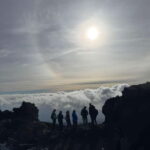
If weather is clear, you’ll get a standout payoff from the summit area: views out over Sicily, including a splendid glimpse of the Ionian coast.
Ancient eruptive cones and Valle del Bove: what the guide points out matters
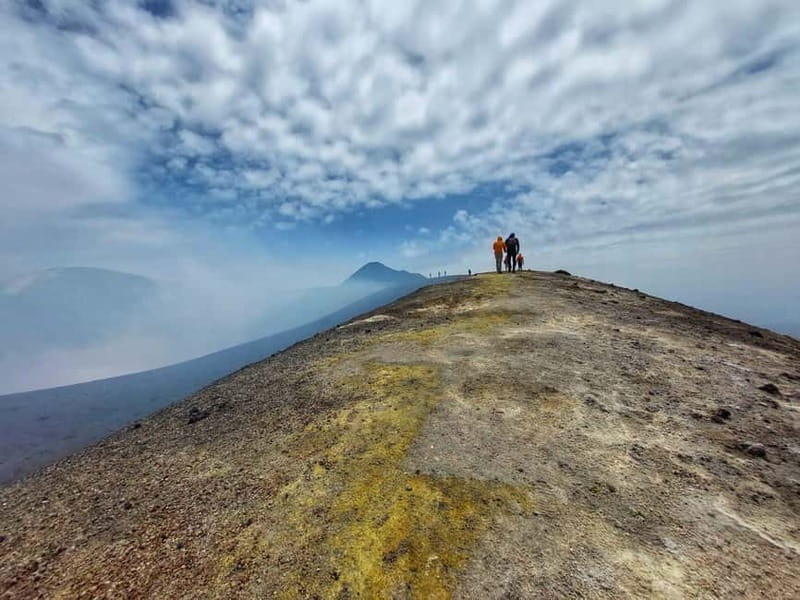
After your crater stop, you’ll walk again for about 100 minutes on foot. Before the second half of the day winds down, the tour includes a passage through areas that connect the modern-looking lava terrain to older volcanic structures.
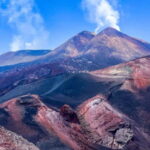
You’ll cross and visit ancient eruptive cones and huge lava expanses, plus a panoramic area where you can admire Valle del Bove. Valle del Bove is a large depression on Etna with eruptive cones inside. Even if you don’t know volcanic geology, you’ll notice the shape: it looks like a giant bowl carved into the mountain, with volcanic features arranged across it.
This section is valuable because it gives your walk context. Without that, Etna can feel like random dramatic rocks. With the guide’s explanation, it starts to feel like a readable story—one eruption building on another.
Cable car back down: end the day without turning it into a slog
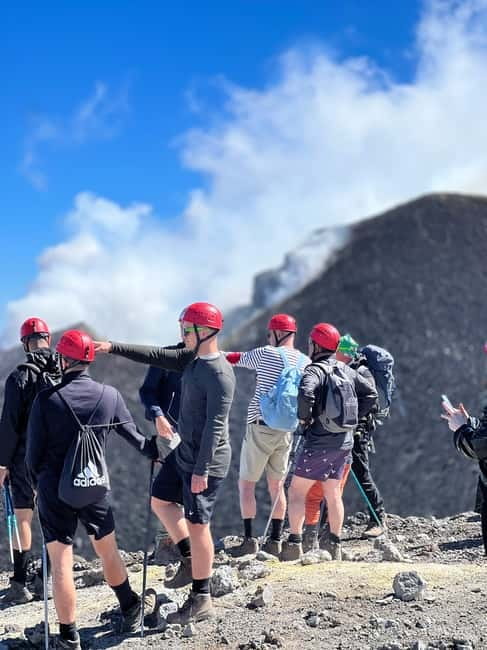
After the second walking segment, you take the cable car back down again for about 20 minutes, returning to La Baita 3L Ski-Lab.
The best part about ending with the cable car is that you don’t have to keep grinding down on foot. Your legs might be tired, but you’re not spending extra time fighting gravity after you’ve already climbed to the crater area.
When you’re back at the meeting point, you’re done. No complicated transfers. No extra waits.
What’s included (and what you should bring) for comfort at altitude
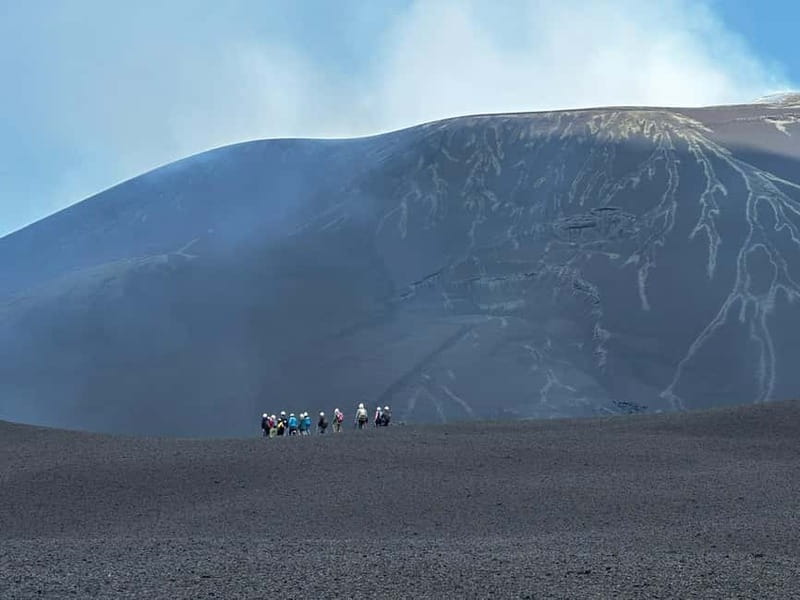
This tour handles a lot of the hard logistics for you. Included items:
- Alpine/volcanologic guide
- Helmet
- Jacket
- Sticks
- Boots
- Socks
That’s a smart setup for two reasons. One, Etna hikes can be cold or windy depending on the conditions. Two, having the right boots and support reduces the chance of blisters or sore ankles on uneven lava terrain.
What you bring:
- Sunglasses
- Packed lunch, plus food and drinks
- Long pants
- Socks (you’ll still want them, even with provided socks—plan based on what you prefer)
- Daypack
- Headscarf
My practical take: pack lunch like this is an active day in the hills. Eat early enough that you have energy for the crater stop and the second walk back. And bring more water than you think you need, because altitude hiking and wind can dry you out fast.
Price and value: what $56.94 buys you—and what it doesn’t
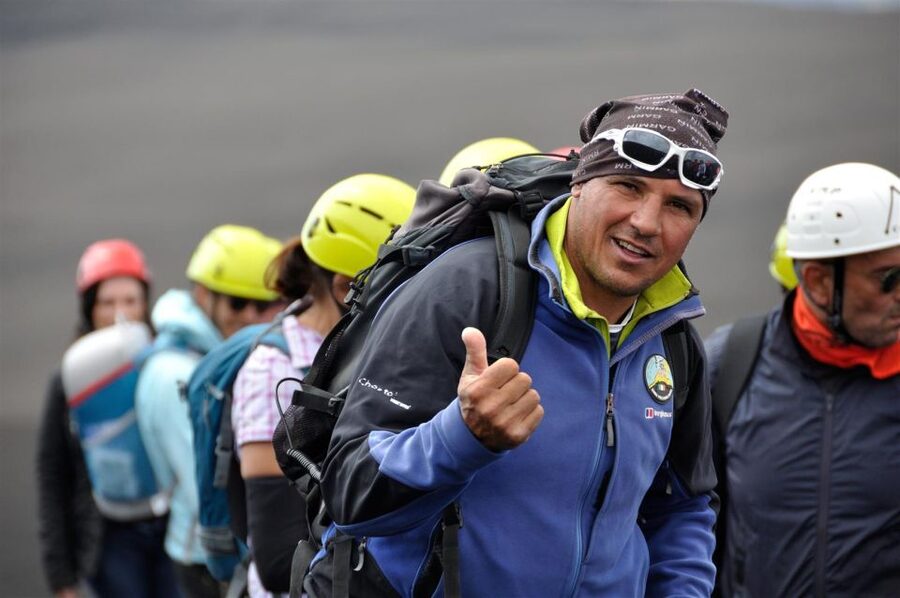
At $56.94 per person for a 5-hour guided crater trek, this is priced like a serious outdoor experience, not a casual sightseeing tour. The value comes from the combination of:
- A volcanology guide
- Small group size (limited to 10)
- Equipment provided for hiking on volcanic ground
- Getting up via cable car and jeep
What’s not included:
- Cable car and 4X4 minibus round-trip tickets
- Food and drinks
- Hotel pickup and drop-off
So the all-in cost depends on those tickets and what you bring for lunch. Still, I like this pricing model because you’re paying for the experience you actually need: guide + gear + access to the crater area. If you’re already arranging your own transport to La Baita 3L Ski-Lab, you’ll keep costs under control.
Also note the tour advertises skip the ticket line, which can matter on busy days.
Weather and volcano reality: your plan should be flexible
The itinerary is subject to volcano and weather conditions. That isn’t a marketing line—it’s the nature of hiking around a living volcano.
On clear days, the views over the Ionian coast can be stunning. In rough weather, you might still get the guided walking experience, but visibility from the summit craters can be limited. The good news is that the tour is built around knowledgeable guiding and careful movement across terrain, not just the view at one exact moment.
If you hate uncertainty, Etna is the wrong place. If you can handle flexibility, Etna is exactly the right place.
Who this tour fits best (and who should skip it)
This is not a casual walk. It’s a high-altitude hike on volcanic terrain, with a crater stop at around 3300 m.
You should strongly consider it if:
- You want to hike Etna’s central crater area with an expert guide
- You like small groups and clear pacing
- You want lava terrain and geology context, not just a viewpoint
You should avoid it if you have any of these conditions listed for the tour:
- Children under 8
- Pregnant women
- People with mobility impairments
- People with heart problems
- People with vertigo
- People with respiratory issues
In plain terms: if you’re worried about steep, uneven ground or heights, don’t gamble. Etna’s terrain is dramatic, and the tour is designed for active hikers who can handle it.
My call: should you book this Etna central crater trek?
If you’re going to Etna and you want more than a quick stop, I’d book this. The mix of cable car + jeep + guided crater walking, plus the provided gear and small group size, is a strong formula for getting to the right altitude without wasting half your day struggling to reach it.
Book it especially if:
- You want to understand what you’re walking on
- You value a guided crater stop and volcanic context
- You’re okay with the fact that weather on Etna can change your views
Just go in with one mindset: this is an active volcano experience. The best days are incredible, and even less-perfect days are still about learning the mountain up close.
FAQ
Is the tour group small?
Yes. The group is limited to 10 participants.
What languages is the guide available in?
The live tour guide works in Italian, English, and French.
How long is the Etna Central Crater Trekking Tour?
The duration is listed as 5 hours.
What equipment is provided?
The tour includes trekking equipment such as helmet, jacket, sticks, boots, and socks.
Where does the tour meet and end?
You meet inside La Baita 3L Ski-Lab, and the tour ends back at the same meeting point.
What should I bring for the hike?
Bring sunglasses, long pants, headscarf, a daypack, and food and drinks/packed lunch.
What type of guests is this not suitable for?
It is not suitable for children under 8, pregnant women, people with mobility impairments, heart problems, vertigo, or respiratory issues.