REVIEW · NICOLOSI
Mount Etna: Trek to 3000m with cable car and 4×4
Book on GetYourGuide →Operated by Etna Guides · Bookable on GetYourGuide
Etna feels close enough to touch. This trek takes you from the cable car drop-off to a guided walk reaching the 3,000m area near Torre del Filosofo, with stops at craters and the inside of a lava channel. I like that it gets you high fast without burning hours on the climb, and I like the emphasis on what the volcano is doing right now, not just past photos. The main drawback is the altitude and top-of-mountain cold/wind, so dress warm and hike with care.
Guides like Michele keep things organized and safety-focused, even when the weather turns cloudy. Expect 3–4 hours of walking, and that means rocky footing, real steps, and plenty of time to look closely at the ground beneath your boots.
In This Review
- Key things I’d plan for on this Etna 3,000m trek
- From Sapienza Meeting Point to 2,500m: the “get high, then hike” approach
- The crater-and-lava walk to 3,000m (and why it’s more than a summit photo)
- Entering the lava channel: what makes this part unforgettable
- Lateral craters and black sand: the “boots-on” geology lesson
- Descending toward the cable car: Bove Valley and the wide-view payoff
- Gear that’s actually useful at 3,000m
- Guides and group management: why Michele, Antonio, and Giuseppe matter
- Timing, pace, and the reality of cable cars
- Price and value: the $65 tour + the €45 onsite transport
- Who should book this 3,000m Etna trek (and who should skip it)
- Should you book it?
- FAQ
- How high does this tour go on Mount Etna?
- How long is the total experience?
- Where do I meet the group?
- How much does it cost in total?
- What equipment is included?
- What should I bring for the day?
- Is it suitable for kids or people with mobility issues?
- What languages are the guides?
Key things I’d plan for on this Etna 3,000m trek
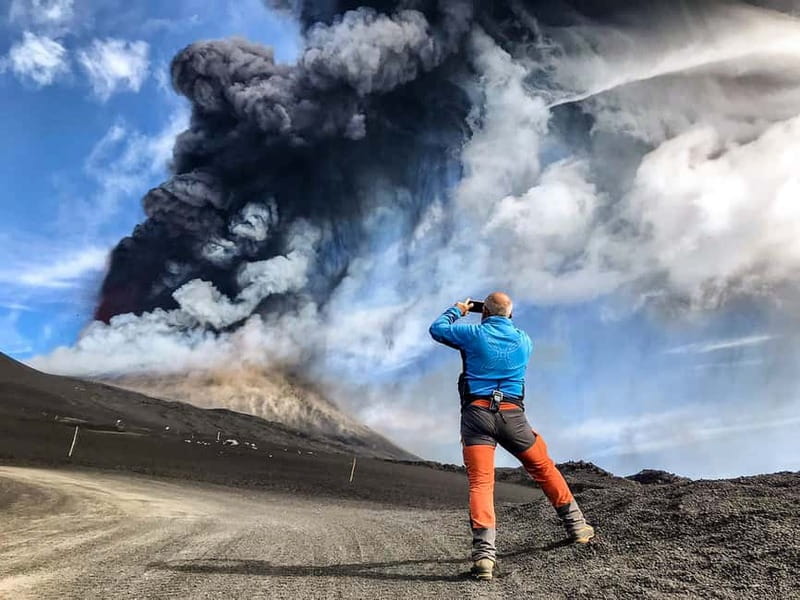
- Cable car to 2,500m, then 4×4 up to 2,800m: you trade long road time for a quicker start on crater terrain.
- A crater stop around 2,900m (Barbagallo): it’s a purposeful pause at a lateral crater, not just a pass-by.
- Inside a lava channel: you’ll go from viewing lava rock to seeing how lava flows carve paths.
- An effusive vent tied to the 2002 eruption: the guide connects today’s formations to a specific eruption timeline.
- Bove Valley viewpoint at the end: on clear days, the view stretches toward the Ionian coast and inland Sicily.
- Hiking gear included: boots, thick socks, helmet, kway jacket, backpack, plus poles in limited numbers.
From Sapienza Meeting Point to 2,500m: the “get high, then hike” approach
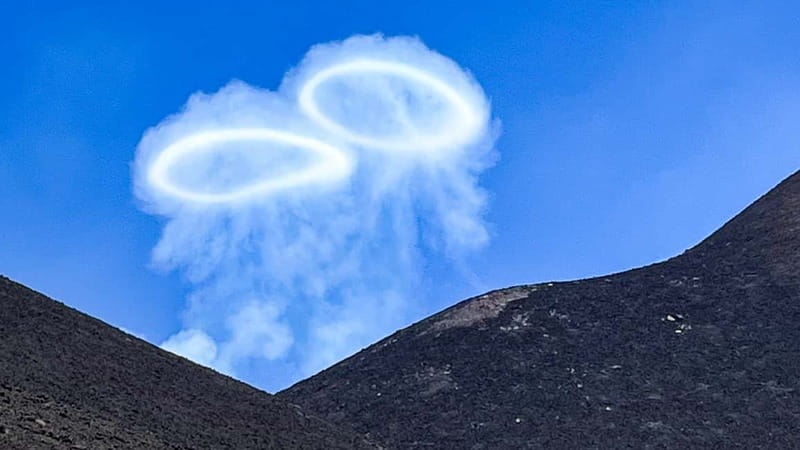
This tour is built around a smart rhythm: lift first, hike second. You meet at the Etna Guides Etna Sud shelter (next to Rifugio Giovanni Sapienza), and the timing matters because you’ll be issued gear and grouped before you move.
You go up by cable car to about 2,500 meters in roughly 20 minutes. Then you switch to a 4×4/SUV for another short lift, about 20 minutes, to around 2,800 meters. That step-up is the tour’s biggest practical advantage: it reduces the amount of time you spend on the long, gradual slog and keeps the walking focused where the geology gets more interesting.
The one catch: your body still has to adjust to altitude. Even though you’re not hiking from sea level, you’ll feel it once you’re high up, especially during the first stretch on foot. I’d plan your effort like you’re doing a steady workout, not a sprint for photos.
You can also read our reviews of more tours and experiences in Nicolosi.
The crater-and-lava walk to 3,000m (and why it’s more than a summit photo)
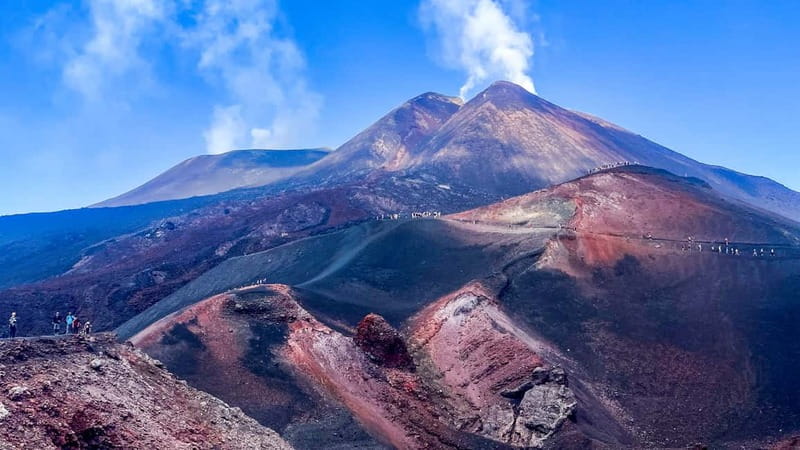
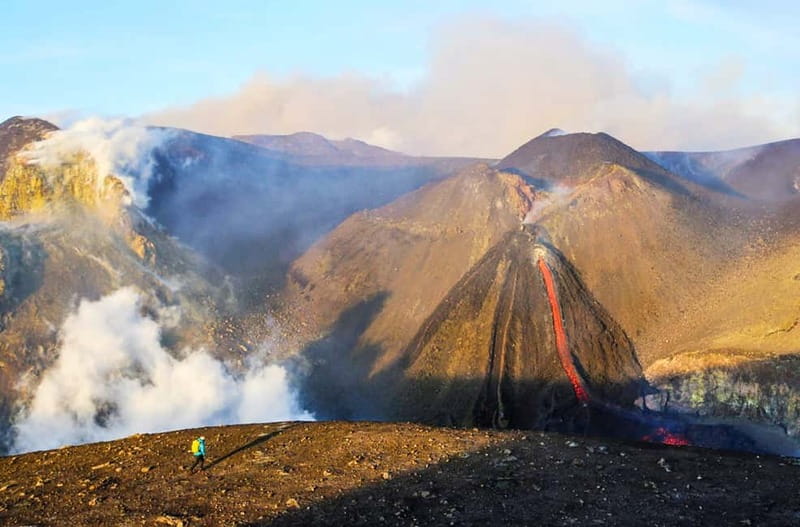
Once you’re near 2,800 meters, the guided walking starts toward the 3,000m goal near Torre del Filosofo. This is where the tour earns its name. Instead of aiming only for summit views, the route brings you across lateral craters, black sand, and areas showing recent lava flows.
Along the way, you’ll get to see summit craters in the general area, then you’ll stop at a lateral crater—Barbagallo at roughly 2,900 meters. That’s a key detail for your expectations. Lateral craters teach you how an eruption can spread and open side pathways, rather than just blasting upward.
Then comes the highlight most people remember: the walk into an area connected to a lava channel. You’re not just looking at dark rock. You’re going inside the kind of feature lava creates as it streams, cools, and leaves behind carved “tunnels” or pathways. You’ll also visit an effusive vent associated with the 2002 eruption, which helps the guide connect what you’re seeing to a named event, not vague geology.
The walking portion is guided for about 4 hours, and the tour notes that you’ll be on foot roughly 3 hours. In real terms, that means frequent stops, regrouping, and short bursts of effort across uneven ground. The terrain can include loose gravel and steeper, narrow edges. That’s why the tour provides trekking boots, helmets, and poles (when available).
Entering the lava channel: what makes this part unforgettable
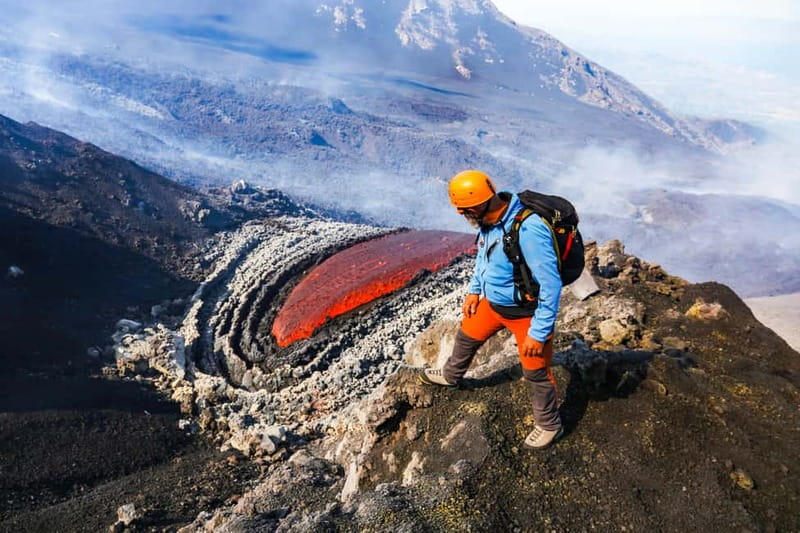
Walking on Etna lava features can feel like being on another planet for a reason: the ground is uneven and the forms are literal, physical evidence of how eruptions behave. The lava channel part makes that lesson tangible.
Here’s what I think you’ll appreciate most:
- It changes your perspective. From the outside, lava rock looks like “black stone.” Inside a lava channel area, you see flow paths and structure that explain how the eruption moved.
- The guide can point out clues fast. Since the group is moving at a controlled pace, you get time to observe small details—textures, breaks, and how surfaces differ.
- You’ll likely connect it to the 2002 eruption story. The tour includes an effusive vent linked to that eruption, so you’re not just sightseeing in darkness—you’re learning the timeline behind the scenery.
The practical side: this part can feel exposed if you’re nervous around heights or uneven edges. The tour is not suitable for people with mobility impairments, heart problems, or respiratory issues, and it’s also not designed for motion sickness. If you’re unsure about your comfort on rocky ledges, I’d treat this section as the deciding factor.
Lateral craters and black sand: the “boots-on” geology lesson
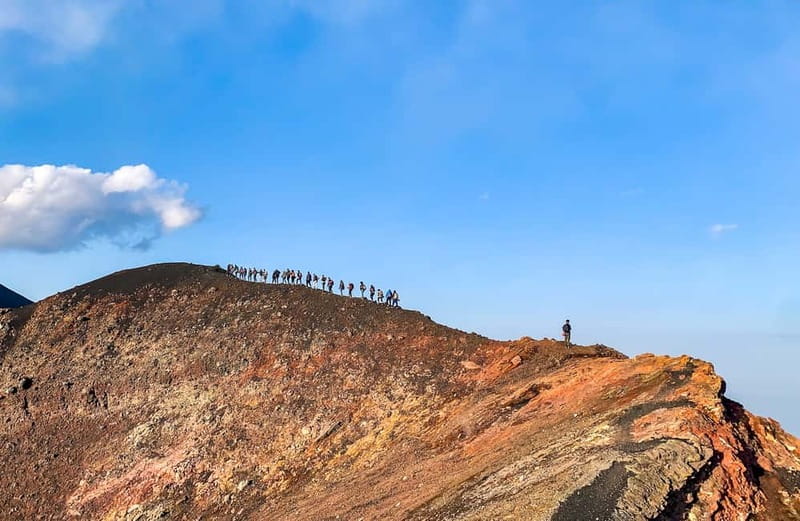
After the higher crater views, you’ll spend time on and around lateral craters and black sand terrain. This is not a casual stroll over flat ground. Black sand and volcanic ash can shift underfoot, and the rocks can be sharp or unstable.
In a good tour, that’s handled with two things: route planning and guide attention. The tour’s setup helps by starting you in groups and using helmets plus proper boots. In some trips, conditions can include fog, and the guide typically keeps the group close together to maintain safety and hearing clarity.
The upside of this geology segment is that it teaches you how Etna doesn’t erupt in one simple way. You’ll see evidence of different activity styles: explosive material, flowing lava paths, and crater structures that show where magma found openings over time.
Descending toward the cable car: Bove Valley and the wide-view payoff
On the way back, the tour descends on foot to reach the cable car station. You’ll walk along sandbanks toward a mound used as a viewpoint. This is where many people relax a bit after the more intense parts of the crater walk.
Bove Valley is the named payoff here. On fine days, you can get a view that sweeps from the Ionian Riviera toward the interior of Sicily. If the weather is clear, that long horizon makes everything you walked through earlier feel real and grounded.
If the day is cloudy or foggy, the viewpoint still matters, but the emphasis shifts to what the guide can show close-up at the edges of visibility. Either way, your descent is guided and structured, so you’re not just trying to follow footprints.
Gear that’s actually useful at 3,000m
This is one of the areas where the tour’s value shows clearly. Included equipment covers the basics that matter for comfort and safety:
- Ankle trekking boots
- Long thick socks
- Helmets plus disposable under-helmet liner
- Kway jackets
- Backpacks
- Trekking poles (limited number)
That’s a big deal if you’re visiting Sicily without bringing hiking boots. Several guides also fit people on arrival, including in colder conditions when you need layers fast.
Still, bring what the tour explicitly asks for: sunglasses, sunscreen, rain gear, and long pants. Shorts are not allowed. On cold or late-season days, I’d also plan for wind chill—even if the tour provides jackets, you’ll likely want warm layers and possibly gloves depending on the weather that day. Some participants have noted that the supplied kit may not be enough in strong cold and snow conditions.
Guides and group management: why Michele, Antonio, and Giuseppe matter
This isn’t just about where you go. It’s about how the day runs when altitude, wind, and uneven terrain force everyone to move carefully.
The guide names I saw repeatedly include Michele, Antonio, Giuseppe, and others. The common thread: they’re actively managing the group—keeping people together in fog, explaining features in a way that sticks, and stopping often enough to make the hike doable without turning it into a slow shuffle.
You’ll also get live guiding in English, French, and Italian. If you’re traveling with mixed language comfort, this matters more than it sounds. Clear explanations help you understand what you’re standing on, and that makes the lava rock feel like knowledge instead of just dark ground.
One more real-world point: group size can vary. Some trips have run with small groups, others get larger. Either way, you should expect a paced hike with regrouping, not a race.
Timing, pace, and the reality of cable cars
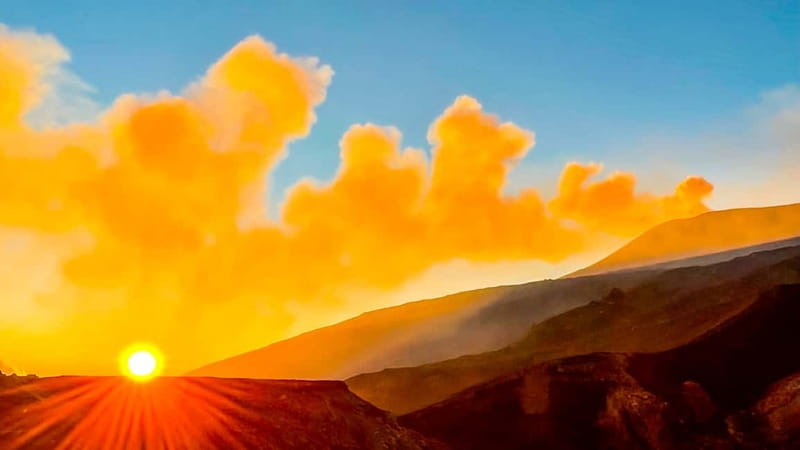
The tour duration is around 5 hours total. It includes approximately 3 hours walking, plus cable car and 4×4 transfers.
Departures run at 9:30 and 10:30. You meet about 45 minutes before departure time at the shelter next to Rifugio Sapienza. That buffer isn’t random. It’s when you get kitted (boots, socks, helmet, jacket), meet your guide, and organize the day so you’re not scrambling at altitude.
Cable car operation can affect the exact flow. In at least one recorded case, cable car wasn’t running and the team drove participants uphill using unimogs. The important takeaway for you: don’t build your entire day around the idea that every minute will follow a perfect script. Bring some flexibility so any operational changes don’t ruin your schedule.
Price and value: the $65 tour + the €45 onsite transport
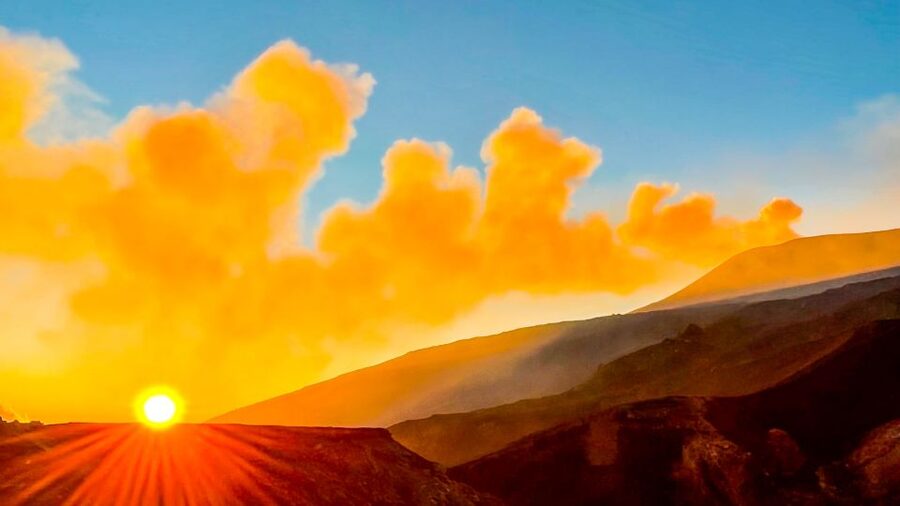
The listing price is $65 per person for the guided excursion framework (guide and trekking gear). But the cable car and 4×4 bus cost is separate: €45 per person paid onsite at the meeting point, preferably cash to speed up check-in.
So is it good value? In my view, it can be, because you’re paying for more than a short viewpoint. The paid portion includes a guided hike up to 3,000m with time on craters, black sand terrain, and a lava channel area—plus safety equipment that would cost you money and effort to assemble yourself (boots, helmet, socks, and more).
Still, do the math before you book:
- Base tour price: $65
- Transport add-on: €45 onsite
- Total in practice: you’re buying a full half-day volcanology hike, not just a bus trip.
If you’re already carrying your own hiking boots and you’re confident in cold-layering, the extra value shifts toward the guide and route planning. If you don’t have boots, the included equipment becomes a bigger part of the value equation.
Who should book this 3,000m Etna trek (and who should skip it)
This is a hike with real climbing effort and altitude effects. It is not suitable for:
- Children under 6
- Pregnant women
- People with mobility impairments
- Wheelchair users
- People with heart problems
- People with respiratory issues
- People with motion sickness
- People over 95
- People who are visually impaired
If you have a basic hiking fitness level and you can handle uneven volcanic ground, you’ll likely enjoy it a lot. The first part of ascending on foot can feel harder because your body is adjusting to thinner air around the 2,900–3,000m zone.
This is also best for people who want something active and educational: not just looking at Etna, but walking through features shaped by eruptions and learning how the mountain changes.
Should you book it?
Book this tour if you want a high-altitude Etna day that feels hands-on: craters, black sand, and the chance to explore inside a lava channel, all with helmets and proper hiking gear included.
Skip it if you’re not comfortable with rocky footing, exposure on narrow ledges, or you know altitude and cold wind are likely to hit you hard. Also, if you’re trying to keep your day very rigid, remember the cable car and transport system can have operational changes—so give yourself a little buffer.
If you book, do two things: pack warm layers even when Sicily seems sunny, and bring cash for the €45 onsite transport so check-in goes smoothly.
FAQ
How high does this tour go on Mount Etna?
You’ll reach the 3,000m area near Torre del Filosofo, using a cable car up to around 2,500m and then a 4×4 up to about 2,800m before the walking portion.
How long is the total experience?
The total tour time is about 5 hours, including around 3 hours of walking.
Where do I meet the group?
You meet at the Etna Guides Etna Sud shelter, next to the hotel Rifugio Giovanni Sapienza.
How much does it cost in total?
The tour price is listed as $65 per person, and the cable car and 4×4 bus cost is €45 per person paid onsite at the meeting point (preferably cash).
What equipment is included?
You’re provided trekking boots, long thick socks, helmets (with a disposable under-helmet liner), kway jackets, backpacks, and trekking poles in limited number.
What should I bring for the day?
Bring sunglasses, sunscreen, rain gear, and long pants. Shorts are not allowed.
Is it suitable for kids or people with mobility issues?
It’s not suitable for children under 6, wheelchair users, or people with mobility impairments.
What languages are the guides?
The live tour guide is available in English, French, and Italian.