REVIEW · TBILISI
Trekking Tour from Tusheti to Khevsureti via Atsunta Pass
Book on Viator →Operated by TrekGeorgia · Bookable on Viator
Two valleys, one hard pass at 3431m. I like how this trek trades Tusheti’s fortified stone villages for hut-free shepherd-trail days, and I like that it rewards your effort with Atsunta Pass views from over 3,400 meters. The route also lines up medieval places like Omalo and Shatili, so you’re not just walking—you’re reading the mountains like a history book.
The one real catch: this is not a stroll. You’ll cover about 72 km, you need strong fitness, and part of the trip is camping with no huts and no real human setup around you.
In This Review
- Key things that make this trek special
- Tusheti to Khevsureti: the story you’ll walk through
- Tbilisi to Omalo: the 4WD start that sets the tone
- Omalo and Keselo Towers: your first taste of Tusheti stone defenses
- Dartlo and Kvavlo: hiking into Tusheti’s ruined towers
- The Pirikiti Alazani gorge: Parsma, Chesho, and Girevi
- The big shift: from Tusheti villages to wilderness camping
- Atsunta Pass (3431m): the day your legs tell the story
- Dropping into Khevsureti: Khone, Mutso, and the fortress detour
- Shatili: narrow gorges and medieval tower life to end the hike
- Price and value: is $1620 worth it for this specific kind of trek?
- Who should book this trek (and who should think twice)
- Small-group guidance: why the guide names matter
- Packing and gear: what the trek provides versus what you must bring
- Should you book this Tusheti to Khevsureti trek via Atsunta Pass?
- FAQ
- How long is the trek from Tusheti to Khevsureti via Atsunta Pass?
- What’s the highest point on the route?
- Where do you meet and when does it start?
- What’s included for meals and lodging?
- What camping gear is included, and what do I need to bring?
- How many people are in the group, and what fitness level is required?
Key things that make this trek special
- Atsunta Pass at 3431m: high point, big panoramas, and a proper “you earned this” moment
- Three days with no huts: you’ll be on shepherd trails and camping in remote country
- Tusheti tower villages first: stone defenses and narrow gorges start the story before you climb
- Khevsureti’s medieval complexes: Mutso’s fortress detour and Shatili’s tower town closing chapter
- Small group size (max 15): easier pace control and guide attention on rougher sections
- Horses for luggage: helps you keep your hiking load realistic when terrain turns serious
Tusheti to Khevsureti: the story you’ll walk through
This trek is built like a mountain novel. You begin in Tusheti with villages perched in dramatic settings—stone houses, defensive towers, and that unmistakable feeling of communities designed for cold seasons and hard weather. Then the plan shifts: you take a shepherd trail into the high country where you’re truly out there, and you camp instead of relying on huts.
By the time you drop into Khevsureti, the vibe changes again. The walking gets easier for stretches, roads start to appear, and medieval architecture takes center stage—especially around Mutso and Shatili, with views down narrow gorges.
If you’re the type who likes your travel to feel authentic (not staged), this route hits that sweet spot: real remoteness in the middle, and real village life at the edges.
You can also read our reviews of more tours and experiences in Tbilisi.
Tbilisi to Omalo: the 4WD start that sets the tone
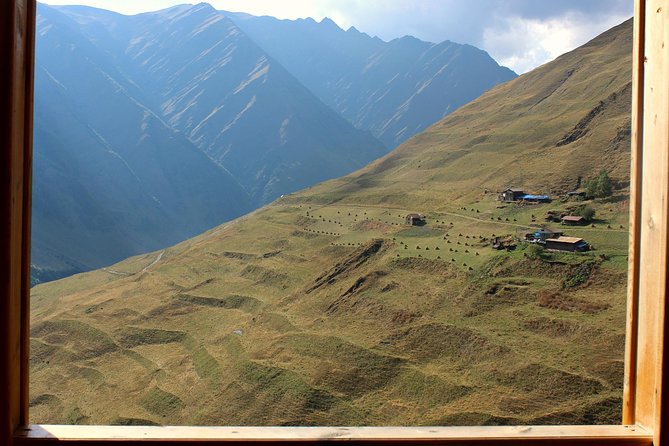
Day one begins with a drive from Tbilisi, starting at the Giant Bicycle monument by Rose Revolution Square at 9:00 am. You’ll ride in a 4WD vehicle as far as Alavani and then continue to Omalo, with a mountainous pass crossing at about 2850m along the way.
I like this kind of start because the roads don’t just transport you—they build anticipation. Tusheti’s remoteness is part of the experience, and the drive helps you understand why these villages stayed distinct for so long.
Once you arrive, you’ll explore Omalo and Keselo Towers and settle into your first overnight at a guesthouse with private facilities.
Practical note: the tour includes a hotel meet-and-drive setup, so you’re not piecing together public transport. It’s one less stress before you start walking.
Omalo and Keselo Towers: your first taste of Tusheti stone defenses
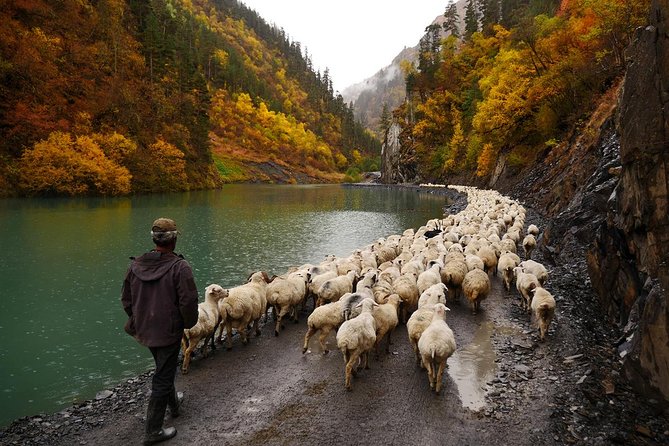
Omalo is the kind of place where towers aren’t a tourist accessory—they’re part of how the village protects itself. The route gives you time to wander and look at the stonework and defensive layout before hiking days take over.
Keselo Towers add context fast. Even if you don’t know the local details yet, you’ll immediately see why these structures matter: this region has steep terrain, quick weather shifts, and natural chokepoints.
This first day also matters because your body is still fresh. I’d treat this as your “set your eyes and pace yourself” day. Look around, hydrate, and don’t rush into the next big step.
Dartlo and Kvavlo: hiking into Tusheti’s ruined towers
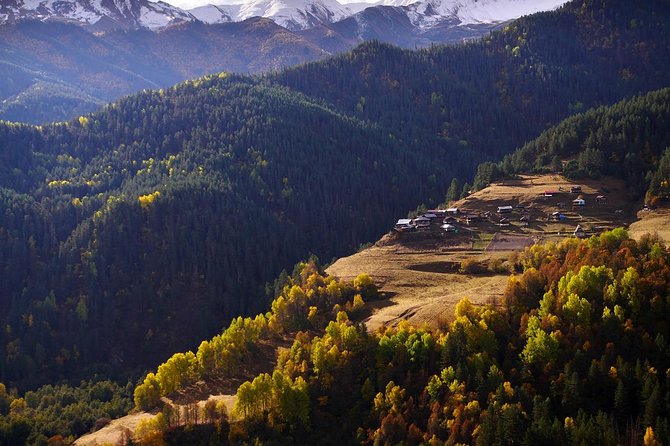
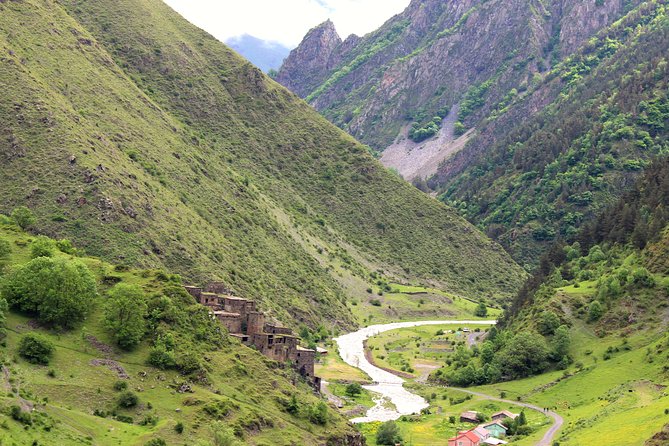
The next morning, you hike into Dartlo in the Pirikiti Tusheti valley. Dartlo is described as recently renovated, with typical Tusheti medieval stone houses and defensive buildings—so you get both beauty and a sense of continuity.
Then you move toward Kvavlo, a village known for mostly ruined towers and houses overlooking the Alazani river and surrounding mountains. Kvavlo is the kind of stop where you’ll want to slow down and look, not just walk through. The views and the decay together tell a stronger story than either would alone.
This section includes an explicit effort profile: a one-way walk of about 3.2 km, climbing roughly 400m (from around 1833m to 2182m), with a one-way time around 2 hours. That’s a manageable hike, but it’s still a real uphill, so good footwear and a steady pace pay off.
You’ll spend the night in Dartlo at a guesthouse with shared facilities.
The Pirikiti Alazani gorge: Parsma, Chesho, and Girevi
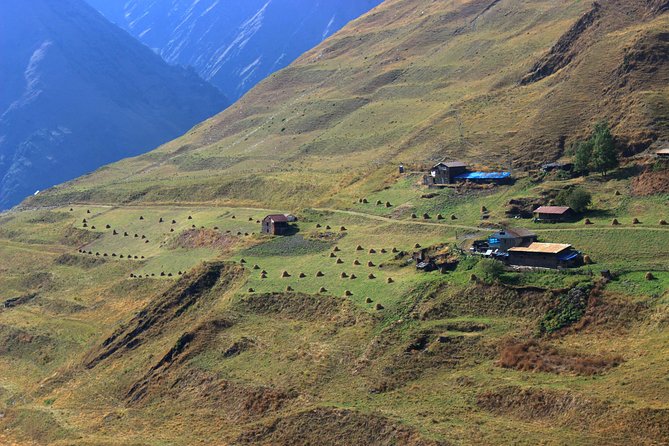
After Dartlo, you continue through Tusheti by following upstream the Pirikiti Alazani river. The tour frames this as a narrow gorge setting, which is exactly what you want if you like mountain hiking that feels enclosed and dramatic rather than open-and-empty.
Along the way, you visit Chesho and Parsma, with beautiful houses and stone towers. Then you reach Girevi, after taking a narrower walking path.
This part is valuable because it’s not only about a destination. The gorge walking is the experience: the rhythm of the river valley, the change in views as you move, and the way villages seem to appear where the terrain allows life.
One drawback to consider here: gorge trails can feel slower than the distance suggests, and they can be harder on knees if you rush. Let the guide’s pace control do the work.
You’ll overnight in Girevi in a guesthouse with shared facilities.
The big shift: from Tusheti villages to wilderness camping
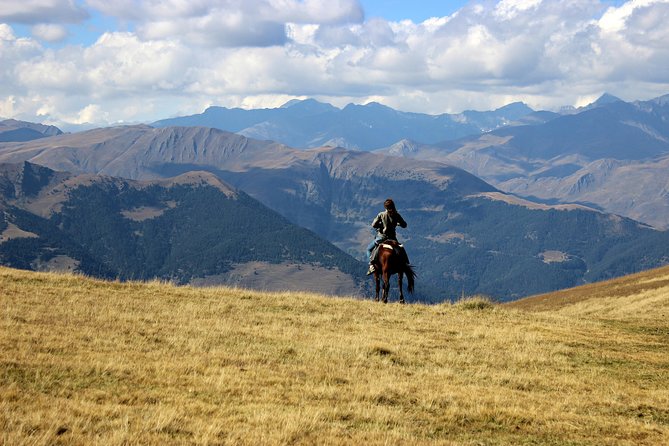
Days four and five are where the trek earns its reputation. After breakfast, you start the toughest stretch, moving along a narrow gorge above Girevi. You cross small mountainous rivers and pass the ruined village Chontio, then stop near Kvakhidi.
Kvakhidi is your camping setup zone—open green fields and alpine meadows with rock stones. This is when the tour turns into the classic expedition style: tents go up, dinner happens, and you sleep in the mountains with far less structure than at the village guesthouses.
The experience is described as having no huts and very little human presence during the wilderness stretch. That’s a major reason people remember this trek: the mountains feel big because your normal expectations of nearby shelter don’t apply.
In practical terms, your comfort here depends on how you handle camping basics. The tour includes tents, sleeping bags, and sleeping mats, plus cooking gear, so you’re not left scrambling for essentials—but you still need to prepare for cold nights and simple living.
Atsunta Pass (3431m): the day your legs tell the story
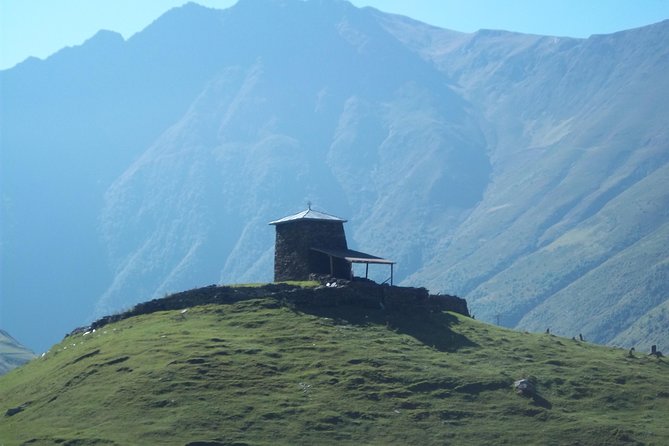
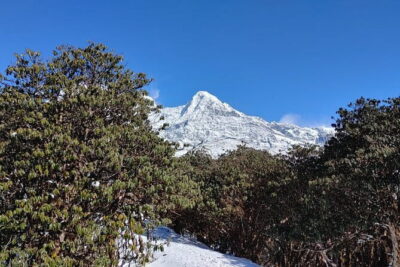
You start early and hike up to the highest point of the trip, reaching Atsunta Pass at 3431 meters. There are snacks at the pass, and the payoff is panoramic views over alpine meadows and surrounding mountains.
Then you descend toward the Khido tani ridge, stopping in an alpine meadow area for camping again. This second night in the high country is part of why the “no hut” element stands out—it’s not just one push day. It’s a sustained wilderness experience across multiple days.
This is also the day where you’ll appreciate the tour’s overall pacing. The trek includes 10-hour days in the plan, and while you won’t necessarily hike every minute of that, it tells you the schedule assumes steady movement and time for breaks.
A tip that keeps you happier: treat the pass as a marathon, not a sprint. Even if the ground looks manageable, altitude makes steady breathing your best friend.
Dropping into Khevsureti: Khone, Mutso, and the fortress detour
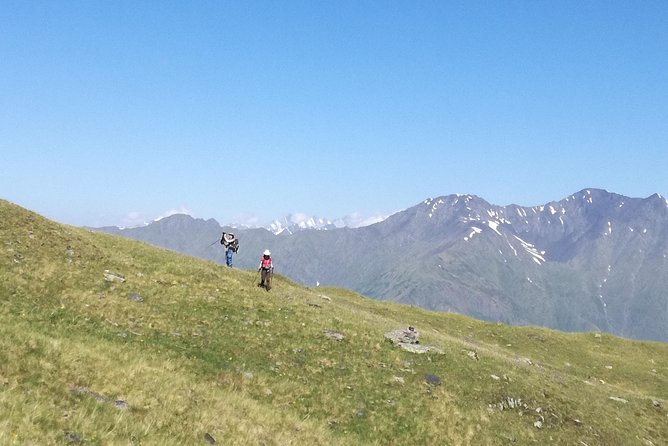
After wilderness camping, you move downhill into Khevsureti. The tour has you reach the first inhabited areas after breakfast, including walking down to a narrow gorge and reaching Khone.
Then you hike to Mutso, which is largely abandoned but still draws attention for its surroundings, towers, and architectural type. The key bonus here: the Mutso fortress complex has been renovated, and there’s a detour of about 2 km to reach the fortress area.
I like this structure at the end of a trek. By day six, you’ve already earned the effort. Having a renovated fortress as a final “look up close” moment helps the route land in a satisfying way rather than just fading into logistics.
Your transport driver waits near Mutso, and you shift to vehicle time from there.
Shatili: narrow gorges and medieval tower life to end the hike
From Mutso, you drive to Shatili and then back toward Tbilisi. Shatili is described as spectacular, with stone towers and stone houses built on rocky mountain settings, overlooking narrow gorges.
This is where medieval defensive architecture makes full sense. Even without formal explanations, you can stand in the right spots and see how these places control movement through steep terrain.
You’ll have an overnight in Shatili at a guesthouse with shared facilities, then you return to Tbilisi by comfortable transport. The tour ends back at the original meeting point.
Price and value: is $1620 worth it for this specific kind of trek?
At $1620 per person for about 6 days, this isn’t a budget day-hike. But it’s also not a barebones trek where you supply everything and guess at logistics.
Here’s the value math I’d use:
- Guides and safety in remote terrain: expert leadership from experienced adventure guides across the tougher sections
- Transport that actually gets you into the start zone: 4WD transfer from Tbilisi to Alavani and onward to Omalo, plus end transport from Mutso to Shatili and back to Tbilisi
- Lodging mix included: private facilities once (Omalo) and shared guesthouses multiple nights, plus camping gear in the wilderness stretch
- Meals: breakfasts, lunches, and dinners are included (with drinks not included)
- Luggage support: horses for luggage transportation helps keep you focused on hiking rather than hauling heavy loads uphill
What you still have to budget for: drinks, plus your own trekking gear like your backpack and trekking poles (these aren’t included).
If you want the kind of remote experience where food, beds, and camp setup are handled for you, the price becomes easier to justify. If you’re the type who already has gear and prefers total independence, you might feel it’s costly—but that isn’t what this tour is built for.
Who should book this trek (and who should think twice)
This trek suits you if:
- you’re comfortable hiking in mountains and want a route with real elevation effort
- you like remote camping days and can handle basic guesthouse stays
- you want small-group guidance with a cap of 15 travelers
- you care about seeing how people live in Tusheti and Khevsureti through stone villages, towers, and fortress towns
Think twice if:
- you don’t have strong fitness for about 72 km of walking
- the idea of no huts and night camping in the wilderness feels stressful rather than exciting
- you require lots of comfort and want more “infrastructure” day-to-day
Also, the minimum age is 14, so it’s set up for teens and adults who can manage long days.
Small-group guidance: why the guide names matter
From the experience of guides leading similar routes in the region, you’ll want someone who understands both the trail and the tone of these places. In the shared feedback, guides such as Dito, Tato, Dimitri, and others like Nutsa and Misha come up for strong organization and local knowledge.
What matters for you: good guides keep the hiking efficient, but they also help you notice details—how towers sit on cliffs, why gorges funnel travel, and why the wilderness stretch feels so isolated once you’re away from villages.
If you’re a solo traveler, this kind of structure is a plus too. The group setting means you’re not navigating alone, but the remote nature still gives you that “I’m really away from it all” feeling.
Packing and gear: what the trek provides versus what you must bring
The tour includes basic camping equipment: tents, sleeping bags, and sleeping mats, plus cooking gear. That’s a big help because it lowers the weight and decision-making on your packing list.
But you’re expected to bring your own trekking kit like:
- backpack
- trekking poles
Because the tour has a luggage limit—1 suitcase and 1 carry-on—plan to keep things tight. Oversized luggage can have restrictions, so if you’re traveling with special gear, ask ahead.
Also remember the practical stuff: you’ll need a current valid passport on the day of travel, and the booking requires passport details.
Should you book this Tusheti to Khevsureti trek via Atsunta Pass?
Book it if you want a mountain route that balances stone village culture with a genuinely wilderness-style middle. The Atsunta Pass high point, the camping days with no huts, and the medieval finish in Shatili make this feel like a complete Georgia mountain story.
Skip it if you’re looking for a comfortable, hut-to-hut walk or if long hiking days and camping stress you out. This trek rewards people who like effort, weather, and honest simplicity.
If you’re ready for steep moments, you want strong guiding, and you don’t mind that the middle of the trip is raw and remote, this one is a strong match.
FAQ
How long is the trek from Tusheti to Khevsureti via Atsunta Pass?
It’s listed as 6 days (approx.), with walking that totals about 72 km over the full route.
What’s the highest point on the route?
The tour crosses Atsunta Pass at about 3431 meters above sea level.
Where do you meet and when does it start?
You meet at the Giant Bicycle monument at Rose Revolution Square in Tbilisi. Start time is 9:00 am.
What’s included for meals and lodging?
Meals include breakfasts (5), lunches (6), and dinners (6). Lodging includes guesthouses in Omalo, Dartlo, Girevi, and Shatili, plus camping with included basic equipment during the wilderness stretch.
What camping gear is included, and what do I need to bring?
Camping equipment such as tents, sleeping bags, and sleeping mats is included. You still need to bring trekking gear including a backpack and trekking poles.
How many people are in the group, and what fitness level is required?
The tour has a maximum of 15 travelers and requires a strong physical fitness level. The minimum age is 14.