REVIEW · MARRAKECH
5 Days Desert Trekking from Marrakech
Book on Viator →Operated by Sahara Vibe · Bookable on Viator
The Sahara starts with a mountain road. This 5-day trek from Marrakech strings together Tichka Pass panoramas, UNESCO Ait Benhaddou, and guided walking through Morocco’s south, finishing with camel-and-tent desert nights.
I love how the desert part is led by a nomad Professional Guide, not just a driver with a playlist. When I read about the experience, I keep seeing the same names come up for the human touch: Abdellah (the owner), plus Chef and Said, who make it feel like you’re learning how people actually live out here.
One possible drawback: this is moderate physical trekking, and the schedule includes long road days before and after the walking. Also, tips are not included, so you’ll want to budget a little extra.
In This Review
- Key highlights worth planning for
- Marrakech to the Atlas: why this day sets the tone
- Ait Benhaddou stop: what to watch for (and what to remember)
- M’Hamid start: palm grove tea and Sidi Naji’s quiet pull
- Trek day 2-1/2: what you should expect from the walking
- Erg Zahar: golden dunes and that edge-of-Algeria feeling
- Kraat Jamal and the Lahdybat lunch: tamarisk shade and Draa Valley views
- Camp life: tents, meals, and what makes the nights worth it
- Guides make the trip feel local, not scripted
- Price and what you actually get for $569.33
- Who this trek suits best (and who should think twice)
- Tips, timing, and small practical decisions
- Should you book this 5-day desert trek from Marrakech?
- FAQ
- Where do I meet for this tour?
- Does the tour include pickup from my hotel or riad?
- How long is the trek, and what happens on the last day?
- What’s included in the price?
- Are meals vegetarian?
- Is there camel travel and desert camping?
- What level of fitness do I need?
- What is the cancellation policy?
Key highlights worth planning for
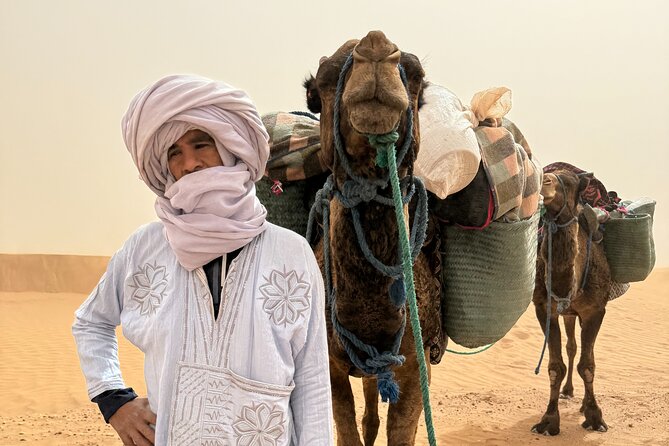
- Tichka Pass to Ait Benhaddou before the desert: the route goes over Morocco’s highest road pass and includes a UNESCO Kasbah stop.
- Learning built into the trek: guides share how people survive with oases, wildlife, and nomadic traditions.
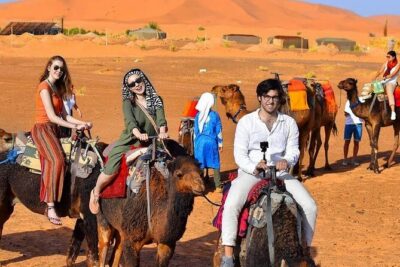
- Camel caravan + on-foot walking: you trek in the dunes while camels help carry things at key moments.
- Bivouacs and desert nights in tents: star watching and quiet nights are part of the point.
- Private tour format: only your group joins, with pickup and private transport included.
Marrakech to the Atlas: why this day sets the tone
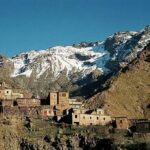
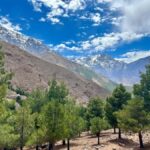
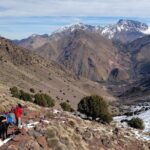
Day 1 starts early from your riad or hotel area, with a pickup that aims to get you out of the city while the light is still soft. You’ll head across the High Atlas Mountains via the Tichka Pass (2260 m). Expect big mountain views, winding roads, and villages that feel like real life rather than a staged stop.
A major win here is the mix of scenery and culture. You’ll pass by Kasbahs along the way, including Tamnougalte, and then make time for Ait Benhaddou. This UNESCO site is famous for its architecture and its role in film-making, but the practical benefit is simpler: it’s a strong visual anchor for understanding what came before the desert route.
After the mountains, the drive drops into a warmer, palm-lined feel along the Draa River valley. You continue toward Zagora, often called the capital of dates, then push on to the gate of the Sahara area around M’Hamid. Night one is in a nomadic-style camp with dinner included and tents set up for you.
You can also read our reviews of more tours and experiences in Marrakech.
Ait Benhaddou stop: what to watch for (and what to remember)
If Ait Benhaddou is on your route, go with the right mindset: this is less about ticking a box and more about spotting how the built environment works in a harsh climate. Even if you don’t know Moroccan architecture terms, you’ll quickly see how the Kasbah design helps with heat, wind, and everyday survival.
The plan lists Ait Benhaddou as admission ticket free, which is handy. Still, you should plan to move at a comfortable pace. Stairs, uneven ground, and the sun can add up, especially if you’re coming off a long morning drive.
This stop also changes the story of the trip. Without it, the desert can feel like it arrives out of nowhere. With Ait Benhaddou in your rearview mirror, the desert feels connected to the same human patterns: trade routes, travel needs, and communities built for survival.
M’Hamid start: palm grove tea and Sidi Naji’s quiet pull
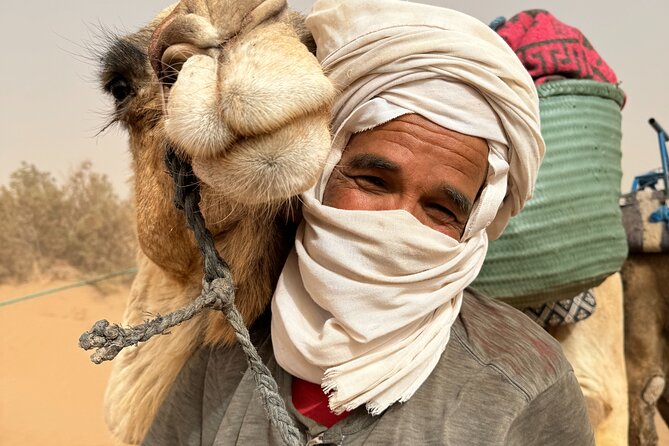
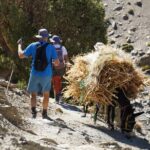
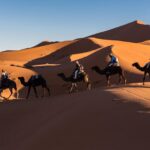
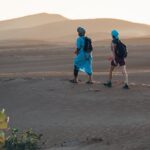
Day 2 is where the trip turns into trekking. After breakfast at camp, you leave M’Hamid on foot with your guide and a camels caravan. That detail matters. You’re not just marching with no purpose; the caravan approach keeps you moving while reducing the burden of carrying everything yourselves.
Your first major reset is the Palm Grove. You get tea and lunch in the shade of tamarisk trees, and you’ll have time to rest before continuing. This is a smart rhythm for the desert days: shade, food, conversation, then walking again.
Next comes the sanctuary of Sidi Naji. The legend says a marabout lived there, and that story is part of why the stop feels more than scenic. You’re seeing how locals place meaning in the desert, not only how the dunes look in photos.
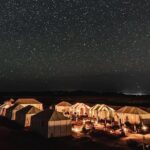
Then you reach the bivouac at the foot of the sand dunes. You’ll get free time until dinner, and the night is built around silence and stargazing. The phrase star bath gets used here for a reason: the sky is the entertainment, and it’s often the cleanest you’ll see on this whole trip.
Trek day 2-1/2: what you should expect from the walking
This tour is designed for people with at least moderate fitness, so don’t plan on a casual stroll. The good news is that the guide-led pacing and scheduled breaks make it manageable.
You’ll likely feel the desert more through your senses than your muscles: heat, wind shifts, and sand texture change hour to hour. The breaks under shade and the meal timing help a lot, so you’ll want to drink when offered and keep snacks accessible if you bring them.
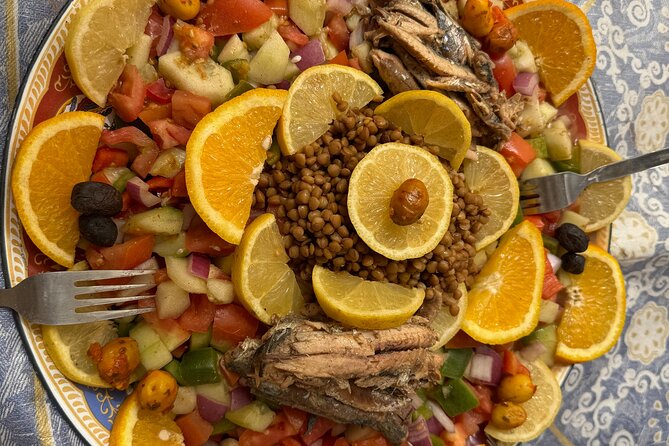
One practical note: the tour includes vegetarian food, so your meals will be planned that way. If you have specific dietary needs beyond vegetarian, the data doesn’t say, so you should confirm ahead of time.
Erg Zahar: golden dunes and that edge-of-Algeria feeling
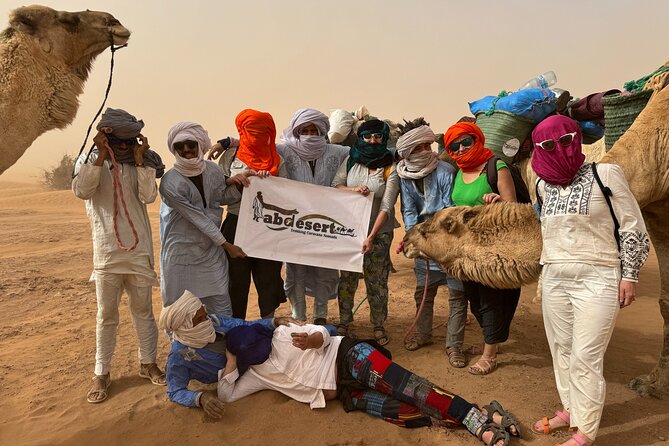
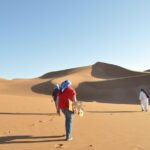
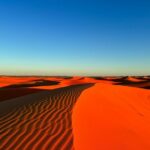
Day 3 pushes you from camp toward Erg Zahar. After breakfast you walk for around four hours before the terrain opens up into golden dunes and widening views. The plan notes you’re close to the Algerian border, and even without crossing it, that sense of remoteness changes the emotional tone. The horizon looks less crowded, and it’s easier to understand why people measure survival in water, shade, and timing.
You set up camp and meet around the campfire. The experience here is about slowing down. Food and conversations tend to shape the evening more than activities do, and you’ll probably find yourself watching light change on the dunes while you wait for dinner.
This is also a day where the guide’s desert knowledge can feel especially valuable. It’s one thing to see dunes. It’s another to hear how oases form, what animals rely on, and how communities interpret wind patterns and seasonal changes.
If you want the desert to feel authentic, this is the day where the tour’s educational angle starts doing real work.

Kraat Jamal and the Lahdybat lunch: tamarisk shade and Draa Valley views
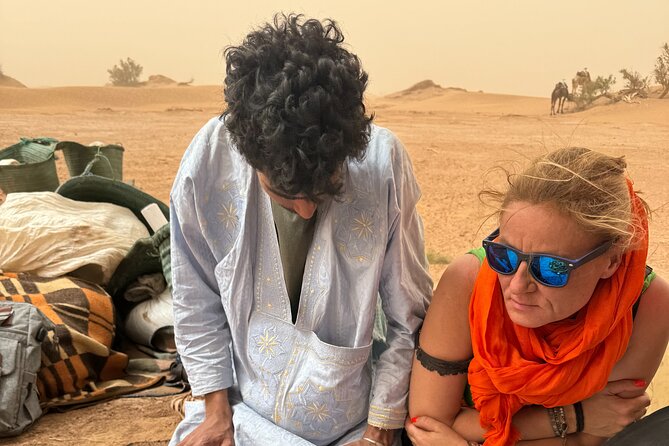
Day 4 keeps the trekking energy going but with a different backdrop. You move from Erg Zahar toward Kraat Jamal, and you pass by Lahdybat where lunch is included. The plan also notes tamarisk trees along the route, and that matters because tamarisk shade often signals the water story of the area.
After lunch you continue trekking in a setting surrounded by the Draa Valley. Even when you’re walking, you’ll get long sightlines that make it feel like the desert is part of a larger system, not an isolated void.
You’ll spend your last night in the desert, with dinner and tent accommodation included. This last night is usually when people remember the silence most. The dunes become quieter, sounds carry differently at night, and you’ll likely feel the trip turning into memories instead of a schedule.
Camp life: tents, meals, and what makes the nights worth it
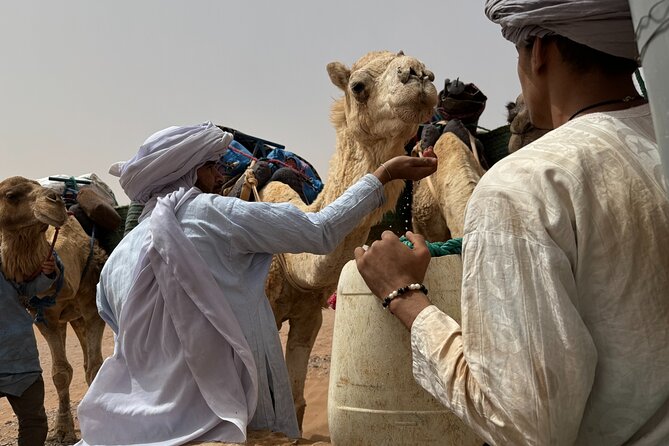
You’ll have 4 nights accommodation in tent as part of the package. The tour is described as nomadic standard camp, with dinners and breakfasts included, plus tea and coffee. In other words, you’re not paying extra for meals once you’re already out in the desert.
What tends to make or break desert camping is comfort and routine. You have scheduled meal times, a guide who can handle the flow, and sleeping arrangements already organized. That helps you focus on the big stuff: the night sky, the quiet, and the slow rhythm of desert life.
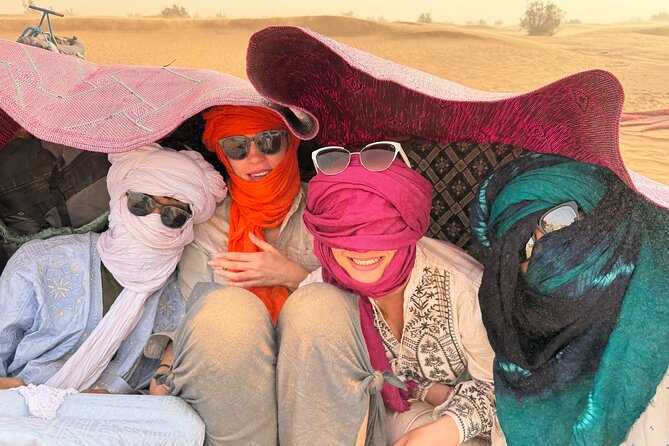
Still, this is a practical outdoor experience. You should expect cold at night or temperature swings depending on the season, even if the itinerary doesn’t spell it out. I’d plan layers and a warm sleep setup. If you’re someone who hates wind, bring a simple face covering too.
Guides make the trip feel local, not scripted
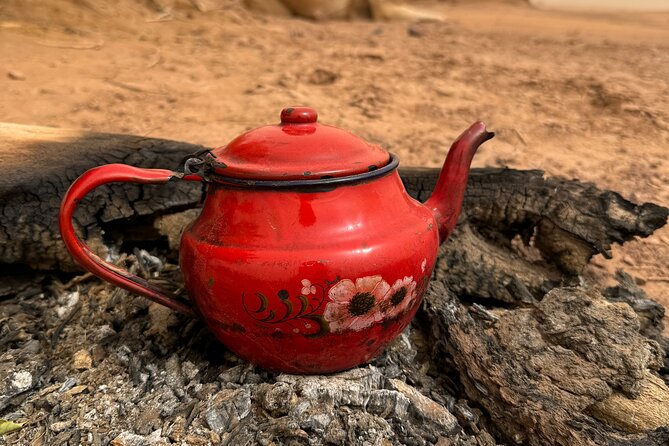
This is one of the most praised parts of the experience. The guide team is described as friendly, attentive, and focused on sharing knowledge. Names that come up include Abdellah (owner/organizer) and guides such as Chef and Said, and that repeated emphasis on personable care is a big deal in remote travel.
A good desert guide doesn’t just point the way. They explain why the land looks the way it does and how people live with constraints: limited water, harsh days, and shifting seasons. The tour description also highlights hidden oases and thriving wildlife as topics you’ll learn about during the trek.
I also like that this tour is private. You’re not blending into a big group. That usually means questions get answered faster, and the pace feels more natural for your group.
Price and what you actually get for $569.33
At $569.33 per person for about 5 days, you’re paying for a full package: private transportation, 4 nights in tents, camels, a nomad professional guide, meals (vegetarian food), and local taxes. Tips and some lunches on the way are not included, which is common in this kind of tour.
Here’s the value logic I’d use: you’re combining long-distance driving (Marrakech across high mountains down to the Sahara zone) with multiple walking days and multiple nights in camp. That’s harder to replicate on your own, especially if you don’t already have local transport and desert logistics lined up.
Also, the itinerary includes important cultural stops like Ait Benhaddou and planned meals with tea breaks. If you’re comparing to cheaper desert trips that only offer a short camel ride and a photo stop, this has more time actually moving through the desert world.
If you’re traveling solo, the private format can feel expensive. But the trade-off is control: your group, your pace, and less time waiting around.
Who this trek suits best (and who should think twice)
This tour suits you if you want a real desert trekking experience rather than a quick ride. The walking days and the calm of bivouacs are the point, and the guide-led teaching fits travelers who like context, not only views.
You should also be comfortable with the idea of moderate physical activity. The plan says most travelers can participate, but it specifically calls for moderate fitness. If you have knee issues or you know you fatigue fast on long days, consider whether 4+ hours of walking at a steady pace is realistic for you.
This isn’t described as an accessibility-focused itinerary. If accessibility matters, the tour notes you can ask questions directly using code 328217P1. That’s the right move if you need clarification.
Tips, timing, and small practical decisions
Two small things to plan for:
- Bring a little extra for tips, since tips aren’t included.
- Expect a long total travel day rhythm. Day 1 starts early, and Day 5 returns you to Marrakech around 6 PM, so don’t schedule anything else that evening.
Also, you’ll be dealing with sand and sun. You might want sunscreen, a hat, and breathable layers. If you’re the type who likes to keep your hands free, bring a small crossbody or pack that won’t get in the way during walking.
Should you book this 5-day desert trek from Marrakech?
I think you should book if your goal is to experience the Sahara with guided trekking time, not just watch it from a bus window. The route’s strength is that it starts with real Morocco—High Atlas driving and Ait Benhaddou—then transitions into a guided desert journey with camels, tents, tea breaks, and quiet nights.
I’d skip it if you want totally hands-off comfort with minimal walking, or if you’re not ready for a more physical day even with breaks. And if you’re very sensitive to outdoor sleep conditions, you’ll want to pack for warmth and wind.
If your travel style is curious, calm, and okay with spending time on the ground, this is a solid value play for a private desert trek.
FAQ
Where do I meet for this tour?
The meeting point is Hôtel AliRue Moulay Ismail, Marrakech 40000, Morocco. The activity ends back at the meeting point.
Does the tour include pickup from my hotel or riad?
Pickup from your riad or hotel in Marrakesh is offered, with early departure on Day 1.
How long is the trek, and what happens on the last day?
It’s approximately 5 days. On Day 5, the car returns you to Marrakech, and you’re seen in your riad at around 6 PM.
What’s included in the price?
The tour includes 4 nights accommodation in tents, camels, a nomad professional guide, a driver/guide, local taxes, coffee and/or tea, vegetarian meals, private transportation, plus 3 lunches, 4 breakfasts, and 4 dinners.
Are meals vegetarian?
Yes. Vegetarian food is included.
Is there camel travel and desert camping?
Yes. Camels are included, and you’ll sleep in tent accommodation for 4 nights during the trek/camping.
What level of fitness do I need?
The trek is for people with a moderate physical fitness level.
What is the cancellation policy?
Free cancellation is available up to 24 hours in advance for a full refund. If you cancel less than 24 hours before the experience’s start time, the amount you paid will not be refunded.