REVIEW · POKHARA
6 days Annapurna Basecamp Trek
Book on Viator →Operated by iTour Nepal Private Day Tours · Bookable on Viator
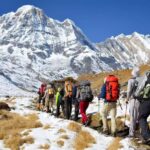
Snow peaks in six days is a real thing. This Annapurna Basecamp Trek balances big views—especially a 360-degree sunrise moment—with the practical stuff you care about: licensed guide, teahouse stays, and transport from Pokhara.
What I like most is the blend of dramatic scenery and classic village trekking. You get standout viewpoints like Chhomrong at 2,150 m, plus the Jhinu Danda suspension bridge (285 m long, hanging 135 m above the river). The second big plus is how organized the trip feels: licensed, experienced, insured guide, and practical gear support like sleeping bag/anti-slip crampon as needed.
One consideration: the trek only includes breakfast, so you still need to budget for lunch and dinner in the teahouses (plus drinks/coffee, which can cost extra). If you hate surprise costs, plan your daily food budget before you go.
In This Review
- Key highlights that matter on the trail
- Six days on the Annapurna Base Camp trail: what you’re really signing up for
- Pokhara to the trail: the practical start that keeps your day calm
- Day-by-day walkthrough: Chhomrong to sunrise at Annapurna Base Camp
- Day 1: Chhomrong views, then Jhinu Danda suspension-bridge adrenaline
- Day 2: foothills swings, then entry into the Annapurna Sanctuary feel
- Day 3: rhododendron forest climb in the Modi River valley
- Day 4: the scenic push to Annapurna Base Camp
- Day 5: sunrise at base camp with 360-degree peak color
- Day 6: back to greenery and civilization, with a calmer view of the return
- Gear, teahouses, and what you don’t want to forget
- Safety isn’t a slogan here: it’s the way the plan is structured
- Price and value: what $450 covers (and the costs you still control)
- Who should book this 6-day Annapurna Basecamp trek
- Final call: should you book this Annapurna Basecamp trek?
- FAQ
- What’s included in the trek price?
- Are lunch and dinner included?
- Do I need a porter?
- How long is the trek?
- What’s the maximum group size?
- Can I cancel and get a full refund?
- Is travel insurance included?
Key highlights that matter on the trail
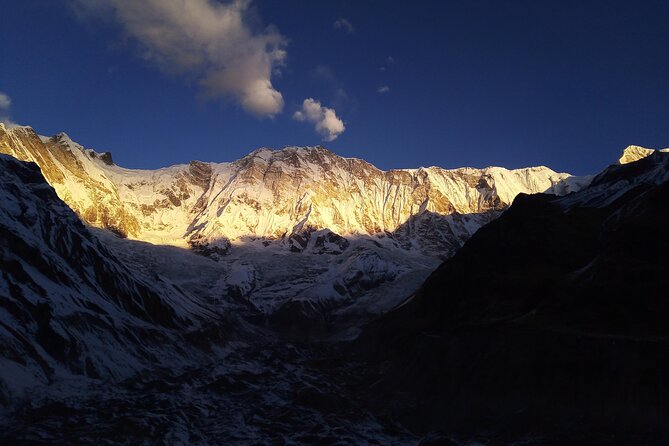
- 360-degree sunrise at Annapurna Base Camp, with the popular color change of Annapurna I in early light
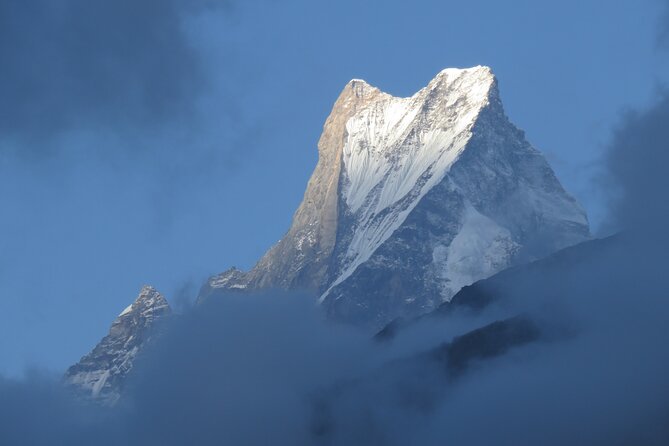
- Chhomrong viewpoint (2,150 m) for Annapurna South, Huinchuli, and Mt Fishtail
- Jhinu Danda Suspension Bridge at 285 m long and 135 m above the river
- Rhododendron forest trekking through areas described as having 30+ species
- Modi River valley route, with steady upstream walking and frequent mountain sightlines
- Teahouse accommodation + breakfast included, so mornings and evenings feel simpler
Six days on the Annapurna Base Camp trail: what you’re really signing up for
Annapurna Base Camp is a bucket-list trek for a reason. But here’s the honest tradeoff: doing it in about 6 days (not a long, slow grind) means you spend more time moving and less time lingering at any one altitude level. If you’re short on vacation time or you want a tighter plan, this schedule makes sense.
If you’re hoping for a super-casual hike where every day feels light and flexible, you might find the pace more focused than you’d like. The itinerary is laid out as full trekking days (the days listed as roughly 12 hours each), and that’s the point of the shorter route: you get in, you see the sunrise, and you get back to Pokhara without turning this into a two-week project.
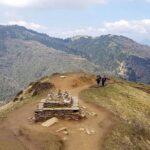
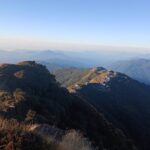
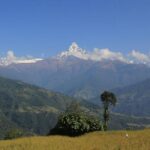
The payoff is real. Even before you reach base camp, the route is built around viewpoints and big scenery: Chhomrong’s wide view angles, rhododendron forests during a climb, and then the final stretch where multiple peaks show up in the same frame.
You can also read our reviews of more tours and experiences in Pokhara.
Pokhara to the trail: the practical start that keeps your day calm
This trek starts from Pokhara, Nepal, and you can get pickup offered. That matters more than it sounds. Treks can go sideways when travel logistics eat your energy. Here, the plan includes private transportation, and the experience provider includes all fees and taxes plus a mobile ticket, which helps reduce the number of things you have to manage day one.
Also, the trek being near public transportation is a quiet convenience. You’re not stuck with complicated last-minute transfers if your own schedule doesn’t line up perfectly with a hotel shuttle.
Bottom line: you should feel set up on Day 1, not frazzled. That first “get your bearings” feeling tends to be the difference between enjoying the hike and feeling behind from the start.
Day-by-day walkthrough: Chhomrong to sunrise at Annapurna Base Camp
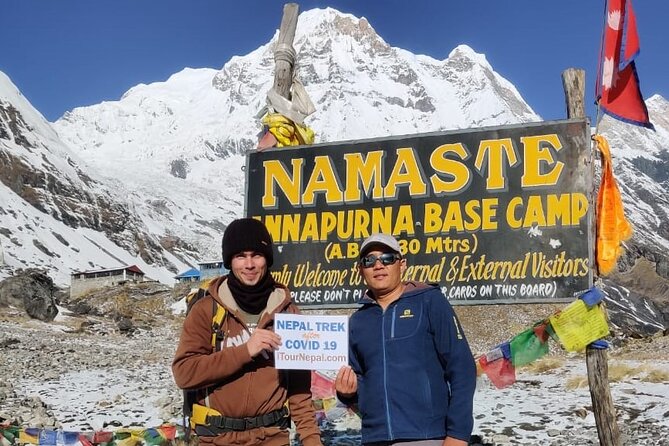
Below is what you can expect each day, and what to watch for so you arrive mentally ready.
Day 1: Chhomrong views, then Jhinu Danda suspension-bridge adrenaline
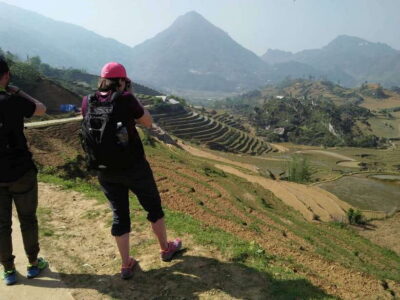
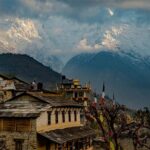
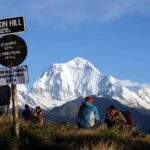
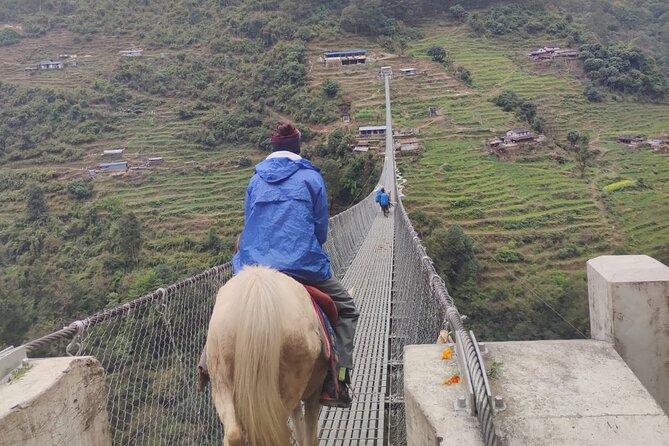
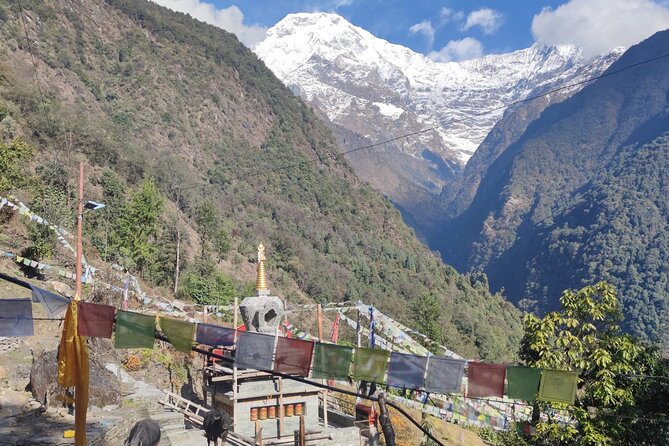
Day 1 connects a drive near Jhinu Danda with viewpoint time at Chhomrong (2,150 m). Chhomrong is described as a closest view area for Annapurna South (7,219 m), Huinchuli (6,441 m), and Mt Fishtail. In plain terms: you get early mountain payoff without having to wait until the last two days.
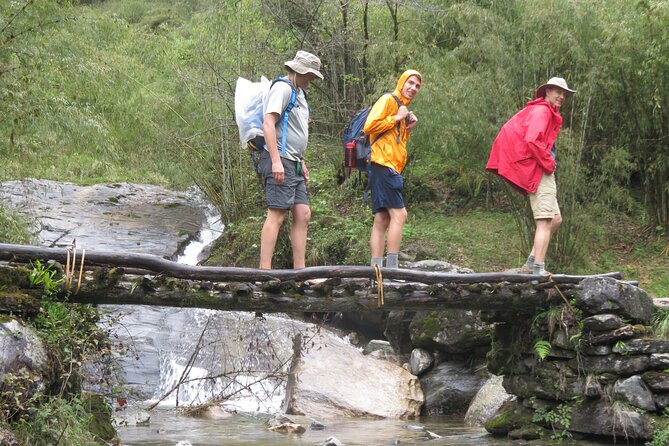
Jhinu Danda is where the route earns its thrill. The Jhinu Danda Suspension Bridge is listed at 285 m long and 135 m above the Kimrong River, which makes it a big, memorable crossing. If you’re the kind of person who worries about heights, this is the day to stay present and slow your pace across the bridge. It’s scenic, yes—but it’s also physically and mentally a “pay attention” moment.
Potential downside: because the bridge is high and long, it can feel more intense than a normal trail crossing. Wear stable footwear and don’t rush.
Day 2: foothills swings, then entry into the Annapurna Sanctuary feel
Day 2 is set up around morning views and then a walking day that “swings up and down” the foothills before entering the Annapurna Sanctuary area. From Chhomrong you descend (the itinerary text is cut off, but the direction is clear), and the big experience is the shift: you move from village-view vantage to deeper valley trekking.
You’ll also get a morning view described as including Annapurna South and Mt Fishtail. That kind of start matters because it keeps the day from feeling like “just hiking” before anything looks dramatic.
What to expect: a long day that alternates effort—up-and-down terrain rather than one steady climb.
Day 3: rhododendron forest climb in the Modi River valley
Day 3 focuses on Machhapuchchhre as a named highlight, but the experience described is really about walking the Modi River valley basin. Dovan is described as wedged between Hiunchuli and Mardi Himal, and the trek gradually climbs upstream through thick rhododendron forest.
The overview says the rhododendron forest includes over 30 species, which is exactly the kind of detail that’s fun on a trek because it means the trail isn’t just “brown ground and stones.” Even if flowers aren’t at peak bloom the whole time, the forest texture and seasonal colors often change the mood from day to day.
What to watch for: forest trekking can be damp and slower. Don’t measure success by speed; measure it by steady foot placement and pacing.
Day 4: the scenic push to Annapurna Base Camp
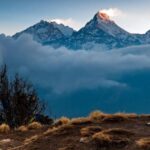
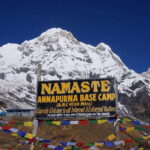
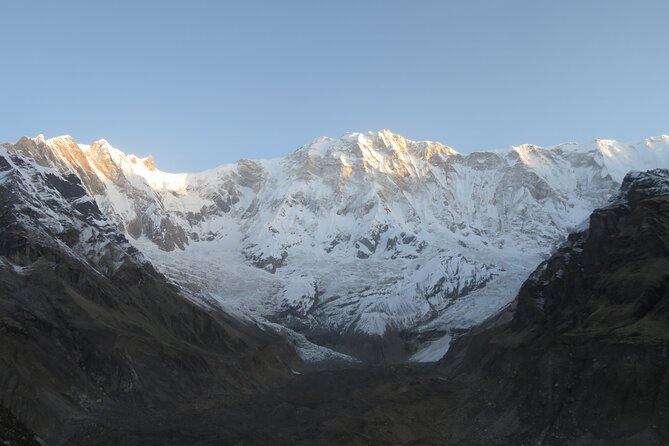
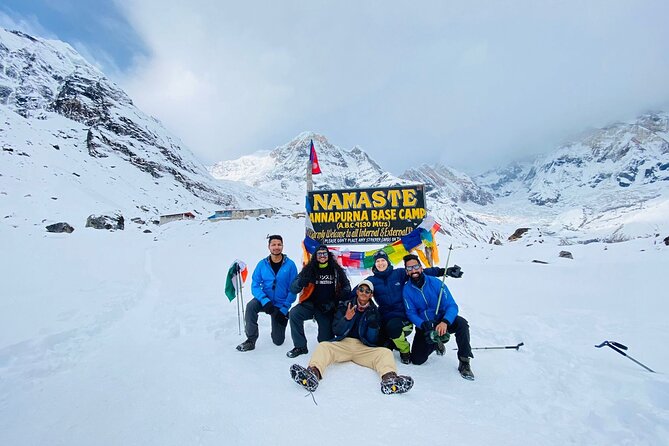
Day 4 is your main move into Annapurna Base Camp. The itinerary describes the walk from Deurali to Annapurna base camp as scenic with undisturbed views of Mt Fishtail, Annapurna III, Annapurna South, and Annapurna I, plus many other peaks.
You also follow the Modi Khola upstream. That river-following effect matters because it keeps the route legible: valleys guide you, and you’re not constantly guessing which way the mountains want to point today.
The itinerary notes an admission ticket included for this day, so base camp access shouldn’t be an extra line item.
Potential drawback: if you’re expecting a “quick hike and then relax,” this is not that day. It’s a big day built for reaching the destination and soaking in the views once you’re there.
Day 5: sunrise at base camp with 360-degree peak color
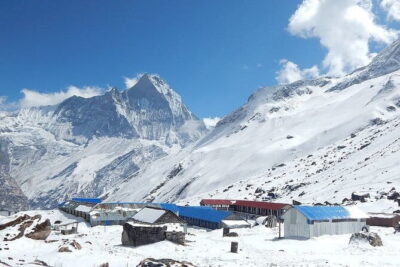
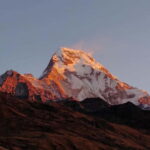
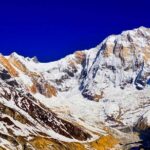
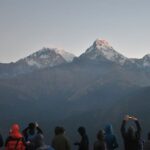
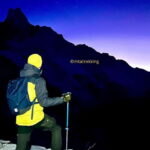
Day 5 is the money day for photographers and early risers. It’s specifically described as a time to capture the moment when early rays of sun hit the snow peaks in 360 degrees—with the “most popular” detail being Annapurna I’s color change during sunrise.
That means you’ll want to plan your morning like you plan a flight: phone charged (or at least power-smart), layers ready, and you’re awake before you feel sleepy. The teahouses might offer charging and WiFi for small extra charges, so don’t count on easy plug-and-play for the last evening.
The itinerary says you’ll spend an easy morning at the base camp area afterward. That’s important because sunrise viewing can be intense. You want time after the show.
Day 6: back to greenery and civilization, with a calmer view of the return
Day 6 is about the shift—coming back from cold valley trekking to more “normal” human rhythms. The plan notes that returning to greenery and civilization feels better and different after a few days deep in the valley and cold weather.
You also get a breakfast moment with a far-reaching view of layered hills and the Modi River valley. That’s a nice way to close the trek: instead of rushing straight down with no pause, you get to look back at what you just earned.
Gear, teahouses, and what you don’t want to forget
The included items are genuinely useful for a trek like this:
- Teahouse accommodation
- Breakfast x 5
- A licensed, experienced, insured guide
- Support gear described as duffle bag / sleeping bag / anti slip crampon as required
That means you’re not arriving with zero tools and hoping for the best. The “anti slip crampon as required” part is especially practical. Even when the forecast isn’t dramatic, mountain footing can get slick.
What’s not included is where you need to think ahead:
- Lunch and dinner are not included
- Bottled drinks and coffee from a machine may cost extra
- Toiletries, WiFi, and charging gadgets can have small extra charges in teahouses
My simple advice: plan to eat most of your day from what’s available at the teahouses, but don’t treat every meal cost like a small surprise. Also, keep a little cash for optional add-ons if you can. Mountain villages don’t always operate like your city wallet expects.
Safety isn’t a slogan here: it’s the way the plan is structured
Safety on a trek is partly the route, partly the pace, and partly the people. Here, the structure leans on having a licensed, experienced, insured guide. That doesn’t erase weather or altitude challenges (no tour can), but it helps you avoid the biggest risks: wrong turn decisions, bad pacing, and weak judgment.
One more thing: the itinerary explicitly includes a long suspension-bridge crossing. That’s not a “danger every second” situation, but it is a reminder that trekking isn’t just about views. It’s about attention. Your guide’s role is not only navigation; it’s also helping you cross confidently and keep the group moving in a way that feels steady.
The wider theme from the operator’s feedback is care. The company is repeatedly praised for making sure everything goes according to plan and taking safety seriously. The owner Rabi also comes up in feedback as responsive and hands-on, and guides like Saroj and Ajaya are mentioned for being friendly, patient, and good at explaining what you’re seeing.
You don’t need to think of this as a lecture trek. You want calm competence behind you.
Price and value: what $450 covers (and the costs you still control)
This trek is priced at $450.00 per person and is described as booked on average 40 days in advance. With treks, the price tells you how much is bundled versus what you’ll still pay locally.
Here, the big bundled costs include:
- All fees and taxes
- Private transportation
- Licensed, insured guide
- Teahouse accommodation
- Breakfast for 5 days
- Some essential gear support (sleeping bag/anti-slip crampons as required)
What you’ll likely pay separately:
- Lunch and dinner
- Optional porter at $30/day
- Insurance for clients (explicitly not included)
- Extras like bottled drinks, coffee, WiFi, and charging
Is $450 “cheap”? Not automatically. But it looks like the price is doing its job: it packages the services and essentials that usually cost real money on mountain itineraries. Your personal value question comes down to whether you’re comfortable adding lunch/dinner and bringing (or purchasing) your own insurance.
Who should book this 6-day Annapurna Basecamp trek
This trek fits best if:
- You have limited time and want a shorter plan
- You have moderate physical fitness (that’s the stated requirement)
- You want a guided experience with teahouses instead of camping
- You like classic trekking highlights: viewpoints, forests, river valleys, and sunrise spectacle
It may not fit as well if:
- You want a slow, flexible hike with minimal long days
- You get irritated by extra costs for WiFi/charging/drinks and meals beyond breakfast
- You strongly prefer to avoid suspension bridges (the Jhinu Danda crossing is part of the route)
If you’re a solo hiker, a couple, or a small group, the max group size of 20 travelers suggests it won’t feel like a huge stampede. It’s still group trekking, but with enough structure to feel organized.
Final call: should you book this Annapurna Basecamp trek?
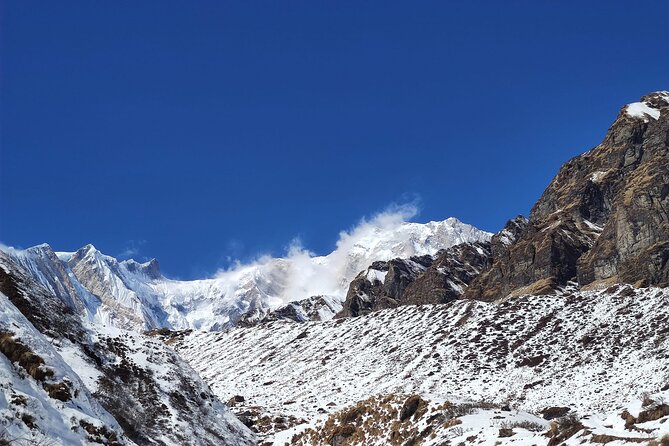
I’d recommend booking this trek if your top priority is seeing Annapurna Base Camp and being on time for the sunrise with 360-degree views. The route is built around those moments, while still covering the memorable intermediate scenes: Chhomrong’s big peak angles, the Jhinu Danda suspension bridge, and rhododendron forest hiking in the Modi River valley.
Before you say yes, sanity-check two things: your budget for lunch and dinner, and your plan for insurance (not included). If you handle those upfront, this looks like a straightforward, well-supported way to do Annapurna Base Camp without stretching your trip too long.
If you want the peace-of-mind version, this operator also has a track record in feedback for careful coordination and safety-minded guiding, which is exactly what you want on a mountain itinerary.
FAQ
What’s included in the trek price?
The price includes all fees and taxes, private transportation, 5 breakfasts, teahouse accommodation, a licensed experienced insured guide, and gear support like a duffle bag/sleeping bag/anti-slip crampon as required.
Are lunch and dinner included?
No. Lunch and dinner are not included, and you’ll pay for meals beyond breakfast at the teahouses.
Do I need a porter?
A porter is optional. It’s available for $30/day if you choose to add one.
How long is the trek?
It’s listed as 6 days (approximately), with each day shown as about 12 hours.
What’s the maximum group size?
The tour has a maximum of 20 travelers.
Can I cancel and get a full refund?
You can cancel up to 3 days in advance for a full refund. If you cancel less than 3 days before the start time, the amount paid is not refunded, and changes within 3 days are not accepted.
Is travel insurance included?
No. Insurance for clients is not included.