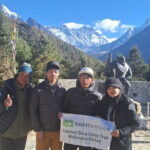
REVIEW · KATHMANDU
Annapurna Base Camp Trek
Book on Viator →Operated by Green Valley Nepal Treks & Research Hub Pvt Ltd · Bookable on Viator
Few hikes feel this big in two weeks. This Annapurna Base Camp trek is built for comfort and confidence, with a small-group size (max. 10) and meals covered on the trek so you can spend your energy on altitude, trails, and views. I also like that you get a real guide-led plan with route timing and teahouse logistics handled, not something you cobble together day by day. One consideration: it’s a moderate high-altitude trek, so you’ll want a steady fitness base and patience if you feel breathless.
You’re looking at about 14 days total, with hiking typically 4 to 7 hours a day. The route mixes classic mountain trail days with calmer recovery-style segments, plus highlights like Poon Hill and Machhapuchhre-area scenery. In Kathmandu and Pokhara, you’ll also get included lodging (teahouses in the mountains, hotels/guesthouses around the cities), which keeps the trip from turning into an unplanned scavenger hunt.
If you’re trying to keep things simple while still getting the real Himalayan experience, the value is the structure: pickup/transfer support, a professional guide, and most meals handled. The only costs to mentally budget for are lunch and dinner in Kathmandu/Pokhara (not included), plus your personal trekking supplies and snacks.
In This Review
- Key Points at a Glance
- How This ABC Trek Fits Together (and Why the Small Group Feels Better)
- Price and Logistics: What You Pay For (and What You Should Budget)
- Starting in Kathmandu: Thamel, Jet Lag, and Getting Oriented Fast
- The Kathmandu to Pokhara Transfer: A Scenic Reset for Your Legs
- From Pokhara to Nayapool to Birethani: The Trek Starts with River Views
- Ulleri to Banthanti to Ghorepani: Forest Trails and the Classic Rhododendron Season
- Poon Hill Morning: One Hike, One Big Payoff View
- Tadapani to Gurjung to Chhomrong: Climb, Crossings, and Village Life
- Chhomrong Khola to Sinuwa to Bamboo: Suspension Bridge and Steep Switchbacks
- Dovan to Himalaya: The Temple Rule in the Jungle
- Deurali to Machhapuchhre Base Camp: River Bed Climb and Big Mountain Views
- ABC Sunrise and the Return: Same Trail, Easier Legs
- Chhomrong to Jhinu Danda: Views First, Then Hot Springs
- Malekhu and the Final Run Back: Fish Lunch Stop and Pashupatinath Photos
- The Guides and Care Behind the Scenes (Why This Trip Likely Feels Smooth)
- What Your Daily Hiking Routine Will Feel Like
- Should You Book This Annapurna Base Camp Trek?
- FAQ
- Where does the trek start?
- What is the maximum group size?
- Is pickup or airport help included?
- How long is the Annapurna Base Camp trek?
- What kind of fitness level do I need?
- Are meals included on the trek?
- What accommodation is included?
- Is Poon Hill included?
- Is there a hot spring stop on the trek?
- Is there free cancellation?
Key Points at a Glance
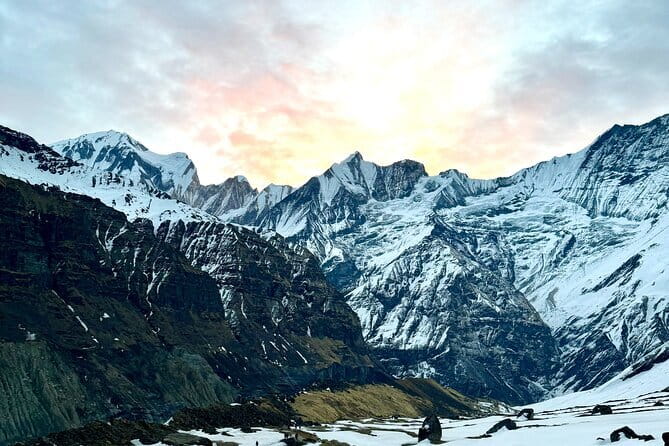
- Max 10 trekkers means quieter, easier pacing and more attention from your guide.
- All meals on the trek plus some city meals lowers daily decision fatigue.
- Teahouse stays on the route help you keep moving without hunting for a place to sleep.
- Pro guide support reduces the stress of logistics at high altitude.
- Poon Hill and Machhapuchhre Base Camp deliver two of the trail’s big view moments.
- Kathmandu and Pokhara lodging included makes arrival and recovery days smoother.
How This ABC Trek Fits Together (and Why the Small Group Feels Better)
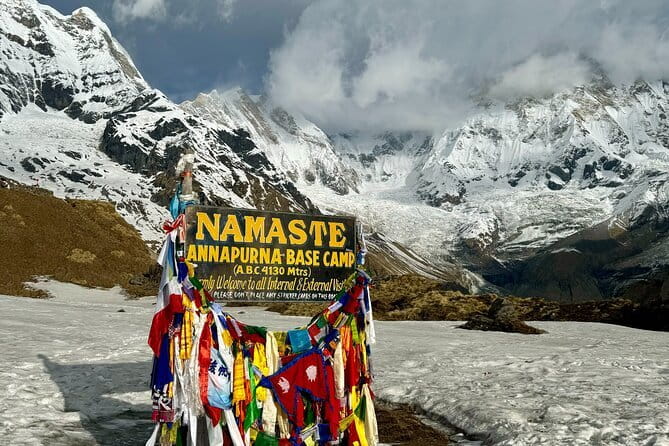
This trek’s big promise is simple: I like that the trip is set up so you’re not solving problems every day. When your guide and team handle the practical stuff, you hike more like you came for hiking and less like you came to manage paperwork. With a group size capped at 10, you also avoid the chaos that can happen when too many people hit narrow trail sections or shared dining rooms at the same time.
From a value standpoint, the price ($925 per person) is easier to justify because so many core costs are bundled: guide service, round-trip shared transfers, lodging in Kathmandu/Pokhara, teahouses on the trek, and a lot of meal coverage. The exclusions are mostly straightforward: lunch and dinner in Kathmandu and Pokhara.
What I’d flag as the one real trade-off is altitude pace. This is described as a moderate high-altitude trek, and the itinerary includes climbs and descents that can feel longer when the air thins. If you’re the type who pushes hard to “make up time,” you’ll want to soften your pace early and let your body catch up.
You can also read our reviews of more tours and experiences in Kathmandu.
Price and Logistics: What You Pay For (and What You Should Budget)
At $925, you’re paying for a packaged trek experience rather than a DIY plan. Based on what’s included, you can expect coverage for:
- Accommodation as per itinerary (teahouses on the trek; hotels/guesthouses in Kathmandu/Pokhara)
- A professional guide
- Round-trip shared transfer
- Most meals on the trail: dinner 10 times, breakfast 13 times, lunch 10 times
- Local airport support (pickup offered, and an airport representative meeting you)
What’s not included is equally important for budgeting:
- Lunch and dinner in Kathmandu and Pokhara
That means your first and last city days may include meal choices on your own, so it’s smart to keep some extra cash handy for those meals. Also plan for trekking snacks, bottled water or purification (not specified here, so you’ll likely need your own preference), and basic gear if you don’t already have it.
One more thing I like: you get a mobile ticket, which makes entry and handoffs more efficient when you’re moving between buses, hotels, and trail starting points. And with confirmation received at booking, you’re not left guessing.
Starting in Kathmandu: Thamel, Jet Lag, and Getting Oriented Fast
Day 1 is all about getting you from the airport into Kathmandu with minimal friction. Your airport representative meets you at Tribhuvan International Airport, then arranges a drop to your hotel in the Thamel area using a private tourist vehicle. You can rest, or you can stop by the office to get the details you’ll want before the trek begins.
Thamel is a practical choice for this kind of trip because it’s set up for travelers and you’ll usually find what you forgot (or realized you need) before heading out. If you’re arriving tired, that built-in rest time matters. High-altitude treks reward an organized start, and day 1 is designed to let you settle in rather than sprint into a hike.
The Kathmandu to Pokhara Transfer: A Scenic Reset for Your Legs
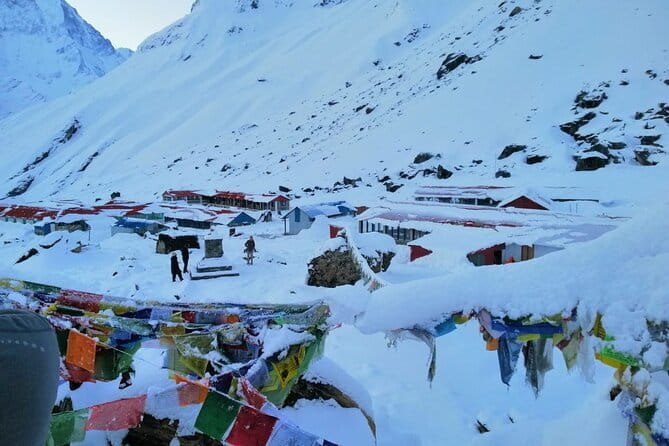
On Day 2, you take a tourist bus from Kathmandu to Pokhara. The drive is about 200 km and roughly six hours, with lunch taken during the trip. You’ll overnight in a guesthouse in Pokhara.
This day does two jobs:
- It gets you close to the trailhead so you don’t spend your energy later.
- It acts like a gentle buffer between your city life and multi-day hiking.
Also, if you’ve had travel stress, this bus day gives you a predictable rhythm. You don’t have to figure out directions, tickets, or timing. You just show up and let the plan do the heavy lifting.
From Pokhara to Nayapool to Birethani: The Trek Starts with River Views
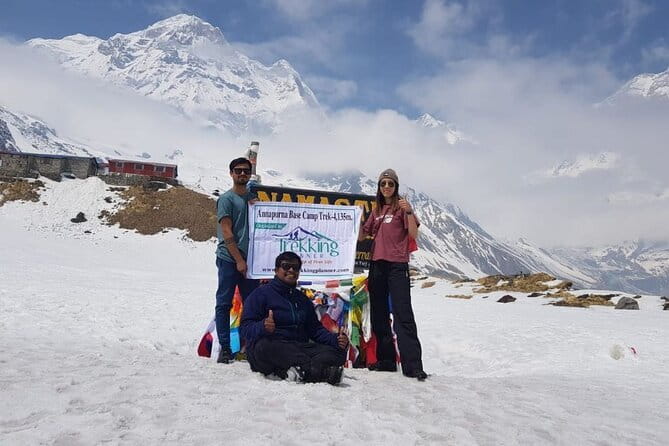
Day 3 begins with a short drive from Pokhara to Nayapool (about an hour). Your trek starts from there after a walk along the banks of the Modi River, reaching Birethani along the way.
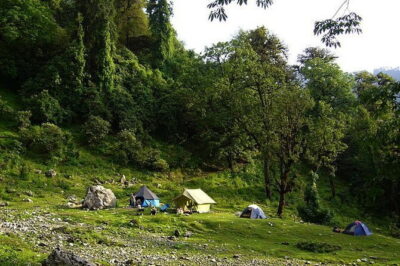
The key advantage of this early segment is pacing. It’s not an all-out push day. River-adjacent walking is the kind of terrain that helps your legs warm up and helps you practice a steady hiking rhythm. The description also notes that small teahouses are in plenty along the route, which signals that you’re not walking into the wilderness without support. You’re building momentum.
If you tend to get overly excited and go too fast, this is where you want to resist. Save energy for the later climb days and the final approach.
Ulleri to Banthanti to Ghorepani: Forest Trails and the Classic Rhododendron Season
Day 4 has you moving from Ulleri with a gentle ascent through rhododendron and oak forests, reaching Banthanti, then continuing a couple of hours to Ghorepani.
This is one of those days where the trail does some of the work for you: forests naturally slow the hike and keep the views from being the only thing you focus on. If you love steady climbing with frequent little pauses, this kind of route is ideal. It also sets you up for the next morning’s big viewpoint push.
Practical thought: forest trekking often means cooler shade and damp patches in season. Wear shoes that handle it, and if you’re sensitive to cold, bring layers that you can shed and re-add quickly.
Poon Hill Morning: One Hike, One Big Payoff View
Day 5 is built around Poon Hill, one of the trail’s top viewpoint moments. You start with a short hike to Poon Hill, reaching the top after about 45 minutes. The viewpoint is at 3210m, and the itinerary calls it the best viewpoint on the trail and a photographer favorite.
This is a smart design choice. It’s not a huge athletic day; it’s a short effort that rewards you with broad mountain sightlines. If you’re worried about whether you’ll get enough “wow” before the tougher Base Camp days, this is your answer. It also gives you a taste of what higher altitude feels like without committing to a long, draining climb in one go.
Expect early timing and cold mornings if conditions are clear. Plan to be dressed for temperature swings even if the afternoon feels warm later.
Tadapani to Gurjung to Chhomrong: Climb, Crossings, and Village Life
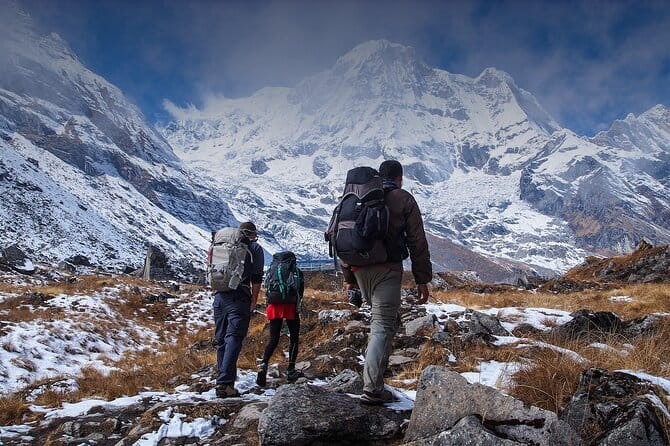
Day 6 starts after breakfast in Tadapani, then moves down gradually through rhododendron forests. You cross the Kimsung River and ascend to Gurung village called Gurjung. From there, there’s a straight climb to Chhomrong, described as a bea… (the description cuts off, but it clearly points to Chhomrong as a major scenic stop).
This segment is important because it transitions you from valley walking into the more iconic settlement-and-ridge sections of the route. Village days also tend to feel more human: you see small teahouses, familiar routines, and a rhythm that doesn’t require you to be adventurous every single hour.
Potential drawback: straight climbs can feel stubborn at altitude. Don’t judge your pace by your flat-ground speed. Short, consistent steps win.
Chhomrong Khola to Sinuwa to Bamboo: Suspension Bridge and Steep Switchbacks
Day 7 begins with stone steps down from Chhomrong to Chhomrong Khola, where you cross a suspension bridge. Then comes a steep climb to Sinuwa, followed by easy downhill walking through jungle, reaching Bamboo.
This day has variety, which is good for your brain and your legs. You get down to a river crossing, you get your lungs working on the steep ascent, and then you get an easier stretch. It’s also a classic reminder that on treks, not all work is constant work. Some days include one hard section that you can mentally prepare for.
If you’re nervous about steep trail sections, this is where a guide’s pacing advice matters most. With a small group, it’s easier for the leader to spot who needs extra breaks.
Dovan to Himalaya: The Temple Rule in the Jungle
Day 8 is described as a quieter walk from Dovan to Himalaya. Big noises are not allowed in the jungle regarding a temple on the way, and the route shifts from bamboo forests to rhododendron forests.
I love how this detail changes your experience. It’s not just scenery; it’s etiquette. Even when you’re tired, you’re encouraged to slow your volume, slow your pace, and pay attention. That kind of cultural rhythm makes the trek feel more respectful, more grounded, and less like a checklist.
Also, shifting forest types means the air and light feel different hour to hour. Keep hydrated, because forest days can trick you into underestimating how much you’re sweating.
Deurali to Machhapuchhre Base Camp: River Bed Climb and Big Mountain Views
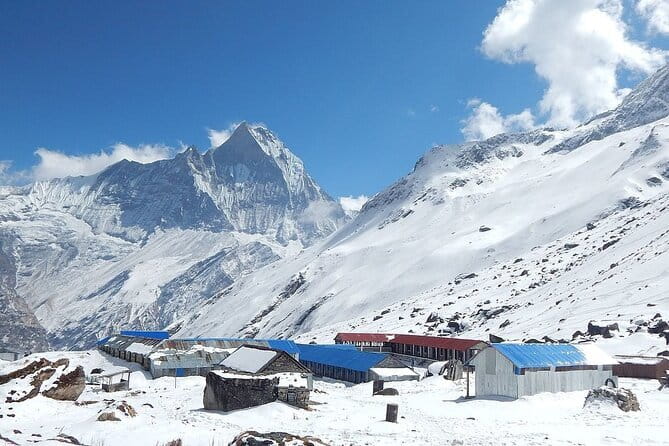
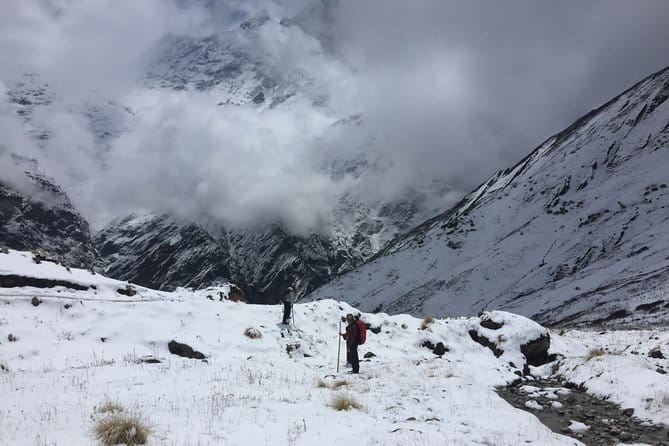
Day 9 moves from Deurali, passing through a river bed, then tackling a tedious climb to Machhapuchhre Base Camp. The reward is scenery: mountains all around, with views called out for Annapurna, Machhapuchhre, Gangapurna, Himchuli, and more.
This is the day where the “backcountry feeling” really kicks in. A river bed and a tedious climb typically mean traction and foot care become top priorities. Take smaller steps. Watch your footing. Your guide can also help manage pace and rest stops so you don’t burn out too early.
When you reach Base Camp, you’re not just seeing one peak. You’re surrounded. That matches the trek’s theme: you don’t come for one photo angle. You come for a full mountain bowl feeling.
ABC Sunrise and the Return: Same Trail, Easier Legs
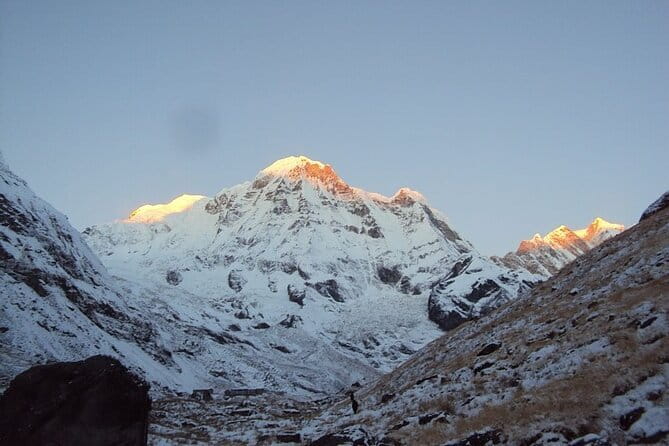
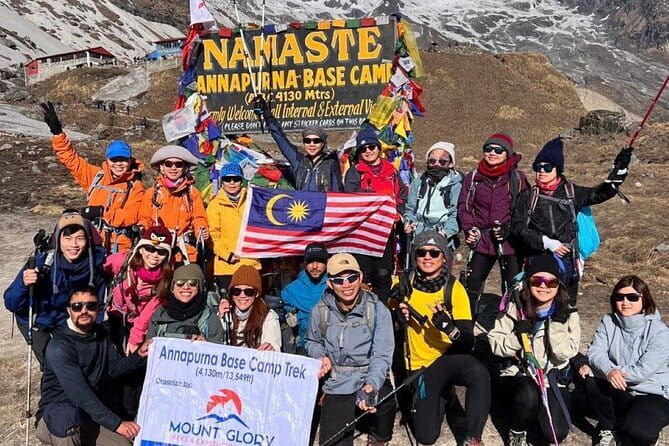
Day 10 starts with sunrise viewing from Annapurna Base Camp, then you head back the way you came through Machhapuchhre Base Camp (MBC), Deurali, Himalaya, Bamboo, ending at Sinuwa. It’s mostly downhill, described as an easy walk.
This day is both emotional and physical. First you take in the sunrise moment, which is the big highlight for most people. Then you get the advantage of downhill terrain. That means less uphill strain, though your knees will still notice the descents.
Tip for the practical side: downhill can be harder than it looks. Shorten your stride, use trekking poles if you have them, and treat your feet gently. You’ll be happier tomorrow.
Chhomrong to Jhinu Danda: Views First, Then Hot Springs
Day 11 brings you back to Chhomrong. The village is spread over a hillside with stunning views of the Annapurnas and Machupachare (Machhapuchhre). You stop for lunch in Chhumrung.
Day 12 shifts into recovery mode with Jhinu Danda. There’s a natural hot spring with ponds where you can take a bath. It’s about a 20-minute walk from your hotel in Jhinu Danda, and it’s side-by-side with the Modi River.
This is one of the smartest pacing choices in the itinerary. After days of stairs, climbs, and altitude, your body will welcome a hot soak. And because you’re not starting another high-intensity hike immediately, you can actually enjoy the recovery instead of rushing past it.
If you’re going for a bath, plan for a dry change of clothes, and be realistic: hot springs won’t magically erase soreness, but they can help you feel human again.
Malekhu and the Final Run Back: Fish Lunch Stop and Pashupatinath Photos
Day 13 includes a stop at Malekhu for lunch for about 30 minutes. It’s noted as famous for various types of fish species and fish products.
Day 14 is the finish, with a drive via Pashupatinath Temple. You can stop for a few minutes for photos. The rest of the day is essentially returning from the trek to Kathmandu life.
This final transition matters more than people think. A scenic cultural stop at the end helps your brain switch gears. You’re not still in hike mode. You’re back in city time.
The Guides and Care Behind the Scenes (Why This Trip Likely Feels Smooth)
One theme that shows up in guide names shared by trekkers is that Green Valley Nepal Treks & Research Hub has staff people trust. You’ll see names like Suvi, Tulsi, Anil, Sumon (as a porter), Krishna, and Arjun. Different personalities, same focus: making sure you’re taken care of and helping you adjust plans when you need to.
In a trek like this, the guide isn’t just for directions. They help with:
- pacing so you don’t overdo it early
- route-day decisions and check-ins
- keeping the group together at a comfortable rhythm (especially with a max group size of 10)
- being practical when someone feels unwell
If you’re a first-timer to long trekking days, a good guide can also give you confidence in how to interpret your body. You’re not guessing if you’re behind schedule or pushing too hard. You’re following a plan.
What Your Daily Hiking Routine Will Feel Like
The itinerary description says 4 to 7 hours each day. That range is important. It usually means you’ll have days with more time on your feet and other days that feel more like long walks than hard hikes. Combined with teahouse stops, it keeps the trip from feeling like you’re constantly moving without breaks.
Also, accommodation is not something you’re figuring out on your own. The plan includes teahouses along the route, and it includes lodging in Kathmandu and Pokhara. That removes one common source of trekking stress: arriving tired and then spending mental energy searching for rooms.
You’ll still want to be realistic about the basics:
- bring layers (temperature swings are common on high-altitude routes)
- plan for early starts when sunrise viewing is involved
- accept that downhill takes care of your knees
Should You Book This Annapurna Base Camp Trek?
You should book if you want:
- a guided Annapurna Base Camp trek with small-group size
- most meals and accommodations handled so you can focus on hiking
- classic viewpoint moments like Poon Hill and Machhapuchhre Base Camp
- a plan that feels active but not reckless, with moderate high-altitude framing
You might pass if:
- you’re not comfortable with altitude and longer hike days in general
- you hate structured itineraries and want total freedom day-to-day
- you’d rather control every meal decision in cities (since lunch and dinner in Kathmandu/Pokhara are not included)
If you like a trip that runs on a clear schedule, with logistics handled by a pro team, this is a strong fit.
FAQ
Where does the trek start?
The start point is Tribhuvan Airport in Kathmandu, Nepal.
What is the maximum group size?
This trek has a maximum of 10 travelers.
Is pickup or airport help included?
Yes. A representative meets you at the airport, and pickup is offered, with a round-trip shared transfer included.
How long is the Annapurna Base Camp trek?
The duration is 14 days (approx.).
What kind of fitness level do I need?
The tour recommends a moderate physical fitness level and notes it is a moderate high-altitude trek.
Are meals included on the trek?
Yes. All meals on the trek are included, plus some meals in Kathmandu/Pokhara. Lunch and dinner in Kathmandu/Pokhara are not included.
What accommodation is included?
You get accommodation as per the itinerary, including teahouses on the trek and hotels/guesthouses in Kathmandu and Pokhara.
Is Poon Hill included?
Yes. The itinerary includes a short hike to Poon Hill (3210m) with viewpoint time.
Is there a hot spring stop on the trek?
Yes. On the way, you stop at Jhinu Danda, where there is a natural hot spring with ponds for bathing.
Is there free cancellation?
Yes. Free cancellation is available up to 24 hours in advance for a full refund, and weather issues can trigger a date change or refund.