REVIEW · MARRAKECH
Trekking 8 days in the Moroccan desert from Marrakech
Book on Viator →Operated by Bivouac Erg Chegaga Nomademoi · Bookable on Viator
Sahara walking, but your heavy gear rides. This 8-day trek from Marrakech hikes you through Mhasser Canyon and out to the dunes of Erg Chegaga, with a native desert team and bags transported by camel between camps. You’ll finish with a calm, comfortable night at a fixed bivouac in the dunes under stars.
I love the day-to-day change of scenery: stony desert walking one day, then soft dunes and a chance to climb the highest Chegaga dune. I also like the camp setup and food rhythm—breakfasts, dinners, and traditional meals served across nomadic camps and a fixed bivouac, plus music and songs by the fire.
The only catch is practical: you should expect about 6 hours of moderate walking most days, and the tour doesn’t include hiking gear. If you’re not used to long days on sand and rock, you’ll want to train a bit and bring the right shoes.
In This Review
- Key highlights you’ll feel in your boots
- 8 days from Marrakech to Erg Chegaga: the real deal
- Getting to the start in Marrakech (and your airport options)
- Leaving Ouarzazate and heading toward Zagora: the Atlas-to-desert transition
- Day-by-day walking: Mhasser Canyon, reg desert, then Chegaga dunes
- Day 1: Arrive in Marrakech and get positioned
- Day 2: Drive over the Atlas toward Ouarzazate
- Day 3: Zagora region and Mhasser Canyon mineral decor
- Day 4: Stony reg desert walking to Erg Chegaga
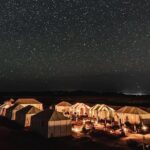
- Day 5: First night in the fixed Nomademoi bivouac (Chegaga)
- Day 6: Free time, camel ride, and the highest dune moment
- Day 7: Leaving the dunes via Iriki lake track and arriving in Ouarzazate
- Day 8: Back to Marrakech and airport transfer
- Camps, tents, and why the sleeping part is not just a detail
- Food and water rhythm: what you’ll actually eat
- Pace and fitness: what moderate walking really means
- Camel-borne bags: the genius idea that saves your back
- Gear and what’s not included (so you don’t show up unprepared)
- Price and value: does $763.46 make sense?
- Who should book this trek (and who should think twice)
- Should you book the Marrakech-to-Chegaga trek?
- FAQ
- Where does the trek start and end?
- How long is the trek?
- Is pickup available from Marrakech?
- How much walking should I expect each day?
- Are meals included?
- What’s provided for sleeping?
- Is hiking gear included?
- What’s the group size limit?
- What’s the cancellation deadline for a full refund?
Key highlights you’ll feel in your boots
- Mhasser Canyon mineral decor on the way southwest of Zagora gives you a dramatic first desert punch
- Camel-borne baggage keeps your day pack lighter as you move between bivouacs
- Erg Chegaga dunes finale includes free time, a camel ride, and a high-dune climb
- Nomadic camps every evening mean you’re sleeping with the desert, not just touring it
- Nomademoi fixed bivouac adds a more comfortable last-night base before you head back out
8 days from Marrakech to Erg Chegaga: the real deal
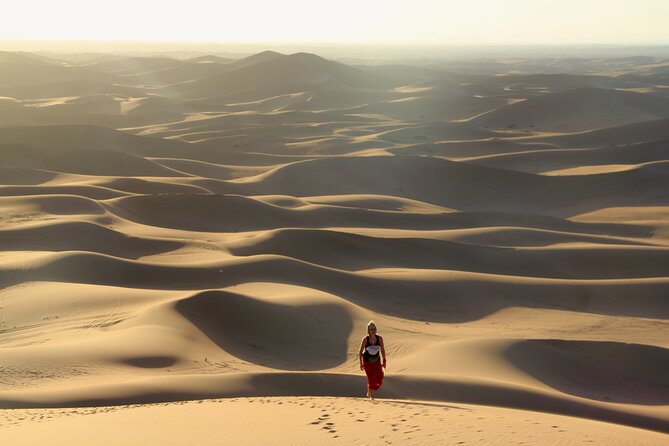
This is a true desert trekking experience, not a quick drive-and-photo stop. The core idea is simple: you walk for a moderate stretch each day (around 6 hours), you meet the desert with a local team, and you sleep at camps that gradually shift from nomadic-style setup to a more fixed bivouac for the last night.
You also get a route that moves beyond the usual “Marrakech to dunes” formula. You cross the Atlas region toward Ouarzazate, reach Zagora, hike through stony terrain and canyons, then spend the last part of the trek in the bigger dune country of Erg Chegaga.
Group size is capped at 12, so your experience stays closer to a small adventure than a cattle-car tour. And because private transportation is included, you’re not bouncing around in shared transfers as much as on many budget desert options.
You can also read our reviews of more tours and experiences in Marrakech.
Getting to the start in Marrakech (and your airport options)
Your trek starts at Jemaa el-Fnaa in Marrakech, and the experience is designed to pick you up and bring you where you need to be. That matters because Marrakech arrivals are chaotic, especially if you land late or you’re juggling riads, taxis, and language barriers.
There’s also a useful flexibility note: if you arrive in Ouarzazate instead, you can consult the team for that option. That can save time if your flight patterns don’t line up cleanly with Marrakech logistics.
The tour uses a mobile ticket, which is generally easier than handling paper confirmations. Just make sure your phone is charged, because in Morocco that’s often your “one device holds all details” tool.
Leaving Ouarzazate and heading toward Zagora: the Atlas-to-desert transition
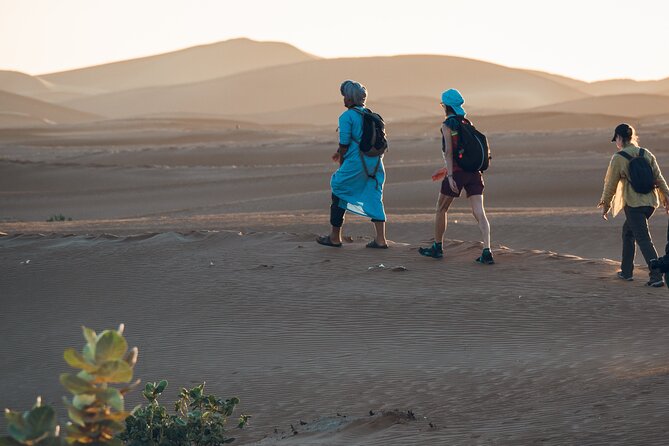
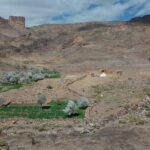
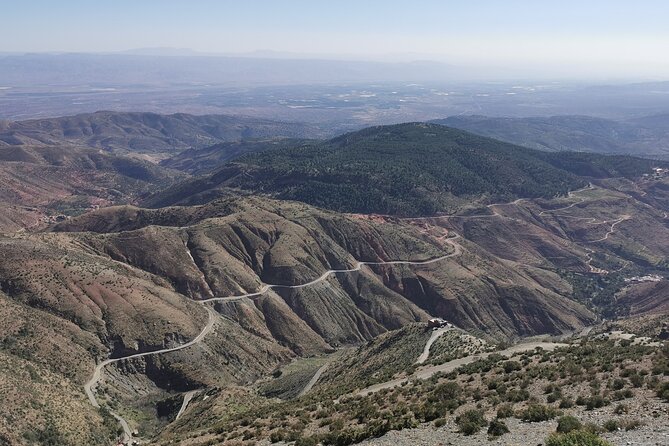
On your road day, you’ll cross the Atlas and pass Berber villages. Even when it’s “just driving,” that section sets expectations. You’re not jumping from city life into dunes overnight—you’re watching the terrain and settlement patterns change as the day moves on.
You stop in Ouarzazate for lunch time on the way. The trip notes say lunch there is not included, so budget a little extra if you arrive hungry. This isn’t a weakness; it’s just the reality of a long road day. You’ll still get all your breakfasts and dinners included as the trek begins.
Then the adventure reaches the Zagora area, and the trek proper starts with a move toward the southwest beyond the last foothills of Djebel Bani. That’s where the canyon and canyon-like terrain makes its first big appearance.
Day-by-day walking: Mhasser Canyon, reg desert, then Chegaga dunes
Here’s how the walking story unfolds, and why each section is worth your attention.
Day 1: Arrive in Marrakech and get positioned
You’re received on arrival and transferred from Marrakech airport. The schedule gives you time to settle in before you start moving. That first day is about getting your head straight and your bags accounted for.
Day 2: Drive over the Atlas toward Ouarzazate
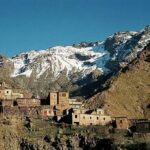
This is the transition day, crossing the Atlas and passing Berber villages. You stop in Ouarzazate for lunch time, and then you continue toward the desert region.
Why this matters: it keeps the trek from feeling like one big shock. You acclimate in stages.
Day 3: Zagora region and Mhasser Canyon mineral decor
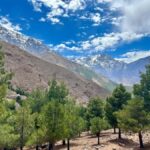
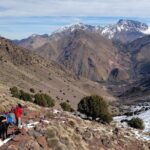
You head to the southwest of Zagora, beyond Djebel Bani, then trek through Mhasser Canyon. The highlight here is the mineral decor—rock patterns and colors that look different as the light shifts. This is a great “start strong” day because the canyon makes you pay attention with your eyes, not just your legs.
The walking time target is about 6 hours of moderate daily walking. If you want a desert trek that doesn’t demand marathon fitness, this is designed with that in mind.
Day 4: Stony reg desert walking to Erg Chegaga
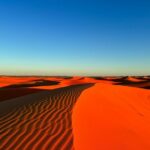
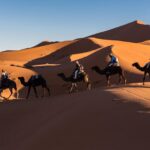
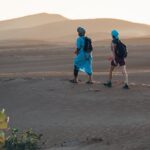
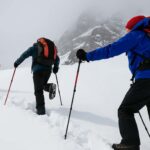
This is where the trek starts feeling more classic “Sahara walking.” You walk in a stony desert (reg) southwest of Zagora to reach the dunes of Chegaga (part of Erg Chegaga).
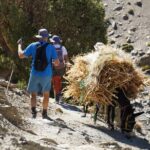
This day is also where you’ll really feel the benefit of having people who know the area. You’re accompanied by a team native to the desert plus a guide focused on natural areas. Your bags are transported by camel from one bivouac to another, while you walk.
The trip also notes a chance to see wildlife like gazelles, dromedaries, and fennecs, plus nomadic life via oases and wells. Animals in the Sahara aren’t guaranteed on any single day, but the setup here is built to look for them.
Evening ends with a nomadic camp setup.
Day 5: First night in the fixed Nomademoi bivouac (Chegaga)
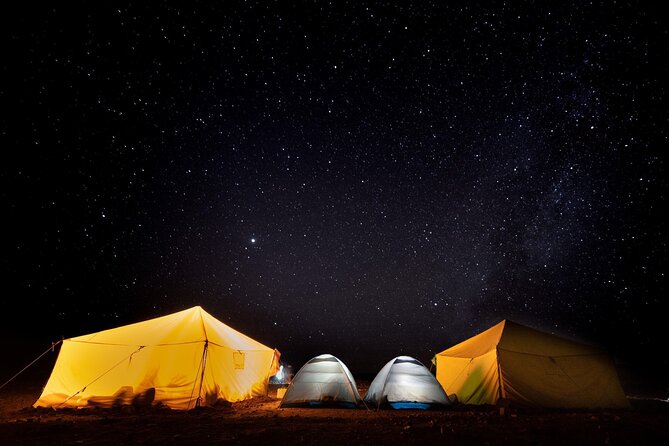
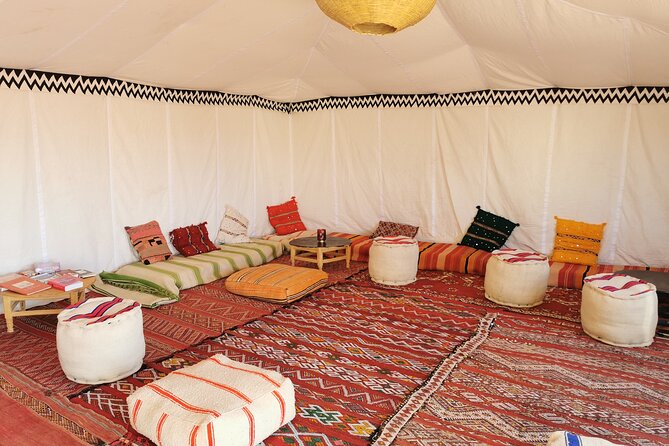
After your walk, you reach the fixed Nomademoi bivouac in Chegaga. Dinner and night happen in a traditional caidal tent. This is your “comfort step up” compared with fully roving setups—still desert-authentic, but less gear juggling.
This night matters because you’re now in the wider dune country where Erg Chegaga feels huge. The night under stars is part of why people do this trek at all.
Day 6: Free time, camel ride, and the highest dune moment
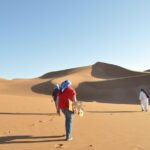
Breakfast is followed by free time at the bivouac. In the afternoon, you can take a camel ride and even climb the highest dune of Erg Chegaga, if you’re up for it.
Then the evening becomes social: traditional time around the fire with songs and music. This is the desert version of a campfire story hour—just without the s’mores.
Day 7: Leaving the dunes via Iriki lake track and arriving in Ouarzazate
After breakfast, the route takes you along the Iriki lake track toward Foum Zguid to exit the desert. You have a lunch stop described as free time on the road (and it’s flagged as not included), so plan to handle your own lunch here unless your operator confirms otherwise.
You arrive in Ouarzazate early afternoon and can rest at a hotel or riad. The notes mention the option of a riad with a swimming pool, plus free time in town.
This is a smart final reset before your return to Marrakech. Your body will appreciate the “real bed and real shower” factor, even if you don’t get carried away.
Day 8: Back to Marrakech and airport transfer
After breakfast, you return to Marrakech so you can extend your stay or catch your flight. Arrival is early afternoon, and airport transfer is included.
It’s a clean exit: the desert trek ends, and you transition straight back into a city day.
Camps, tents, and why the sleeping part is not just a detail
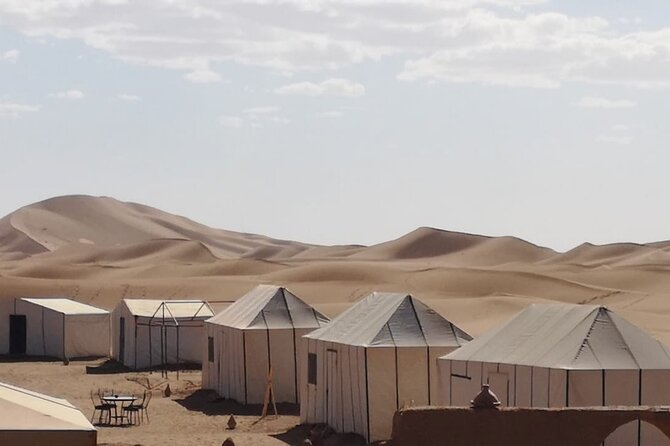
Sleeping arrangements are where desert treks can feel either smooth or miserable. Here, the trek provides a tent and mattress, which is a big deal because it controls comfort more than people expect.
You’ll spend evenings in nomadic camps during the trekking phase, then have your last night in a fixed bivouac in the dunes at Nomademoi. That shift is practical: roving camp life is more about moving and setting up, while the fixed bivouac is about resting properly after you’ve done the harder walking days.
One extra note from real-world conditions: your schedule can face storms. In extreme weather, the experience still leans on good organization and warm meals. That’s worth valuing because desert weather can be chaotic, and your crew’s ability to keep things functioning is part of the trip quality.
Food and water rhythm: what you’ll actually eat
Meals include breakfast (7), dinner (7), and lunch (4). The trip describes meals as mostly fresh local products and traditional cuisine.
That combination matters because trekking food isn’t just about taste—it’s about energy and timing. You’ll be walking long days, so having reliable meal windows helps you keep a steady pace without turning dinner into a frantic scramble.
Tips aren’t included, so if you’re happy with the food and guide support, you’ll likely want to budget for that separately.
Pace and fitness: what moderate walking really means
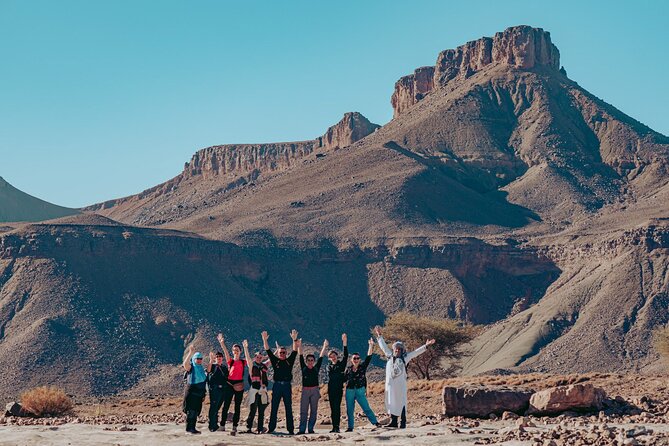
The trip is built around about 6 hours of moderate walking per day. That’s not “casual stroll” territory, especially when the ground turns stony and the final days involve dune walking.
But it’s also not an ultra-challenge trek. This is positioned as ideal for beginners or occasional walkers who want the desert experience and don’t want a death march.
A helpful detail from actual trek dynamics: one report included a family with kids around 6, 7, and 10, and the pace was described as adapted to the group. That doesn’t mean every group will match that exact situation, but it does suggest the guide team is used to managing mixed fitness levels.
If you can walk for an hour without stopping every few minutes, and you’re willing to take it slow on sand and uneven rock, you’re in the right zone.
Camel-borne bags: the genius idea that saves your back
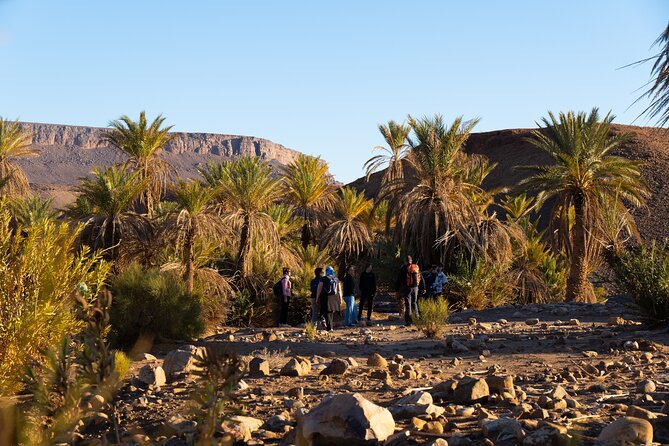
One of the best parts of this trek is also one of the simplest: your bags travel by camel from bivouac to bivouac.
What that means for you: you don’t have to carry everything in your day pack. Your personal burden becomes focused—water, a layer, snacks, and whatever you need to stay comfortable for the day.
Yes, your legs still do the work. But saving your back and shoulders is the difference between arriving sore and arriving done.
Gear and what’s not included (so you don’t show up unprepared)
The tour says hiking gear isn’t included, so plan on bringing your own essentials. That’s the big “consider this before you book” factor.
At minimum, I’d strongly consider bringing:
- supportive shoes for rocky and sandy ground
- a warm layer for nighttime (desert temperatures can drop)
- a head covering and sunscreen
- a reusable water bottle (you’ll rely on your guide and team for water logistics)
Also remember: you’ll be sleeping in tents, so pack with airflow, dust, and nighttime warmth in mind.
If storms roll in, a hood or light rain layer can help. The trek’s organization seems capable even in rough weather, but your personal comfort still depends on what you bring.
Price and value: does $763.46 make sense?
At $763.46 per person, you’re paying for a lot more than just walking routes. This cost bundles private transportation, tent and mattress, and a full set of meals across multiple days.
Let’s break down the value in plain terms:
- You’re not just sightseeing—you’re getting scheduled support with a native desert team and a natural-area guide.
- The overnight component is handled—your sleeping setup is provided, including the basics you’d otherwise have to rent or buy.
- Camel transport of baggage reduces the physical cost of the trek and keeps your packing realistic.
- You’re getting multi-day structure: nomadic camps, then a fixed bivouac, then a clean return to Ouarzazate and Marrakech.
What you’re paying extra for yourself:
- tips
- personal expenses
- hiking gear
- any lunches that are flagged as not included during road days
So yes, it’s not a bargain-basement price. But when you compare it to the cost of building this yourself (transport, guides, desert camps, meals, and camels), it starts to look more like a fair bundled adventure than an inflated markup.
Who should book this trek (and who should think twice)
This is a great fit if you:
- want an 8-day Sahara trekking experience with guided support
- like a moderate pace around 6 hours of walking
- want a mix of canyon walking, reg desert, and big dunes
- value sleep arrangements that include a tent and mattress, not just a sleeping bag fantasy
It may not be the best fit if you:
- can’t handle long walking days or uneven ground
- expect hiking gear to be provided
- need constant hotel-style comfort (this is desert camping, even on the fixed bivouac night)
If you’re traveling with kids or a mixed group, the adjusted pace style is encouraging. If you’re traveling solo, the small max group size (12) also helps you feel included without the group feeling too big.
Should you book the Marrakech-to-Chegaga trek?
I’d book this if you want the desert experience to feel organized but still real. The big strengths are the guided trekking structure, the way camps evolve from nomadic evenings to the Nomademoi fixed bivouac, and the “this is why you’re here” finale at Erg Chegaga.
I would think twice if you’re shopping only for scenery by car, or if you’re missing the walking shoes and basic gear. This trek works best when you show up ready for a moderate walking challenge and you’re comfortable with tent sleeping.
If you want one practical check before paying: confirm what hiking gear you’re expected to bring and clarify which lunch days are included for your specific departure.
FAQ
Where does the trek start and end?
It starts back at Jemaa el-Fnaa in Marrakech, and the experience ends back at the same meeting point.
How long is the trek?
The duration is listed as 8 days (approx.).
Is pickup available from Marrakech?
Yes—pickup is offered, and the tour includes reception and transfers from Marrakech airport.
How much walking should I expect each day?
The trek includes walking at a rate of about 6 hours of moderate daily walking.
Are meals included?
Yes. The package includes breakfast (7), dinner (7), and lunch (4), with meals described as mostly fresh local products and traditional cuisine.
What’s provided for sleeping?
You get a tent and mattress provided for the bivouac nights.
Is hiking gear included?
No. Hiking gear isn’t included, so you’ll need to bring your own.
What’s the group size limit?
The tour has a maximum of 12 travelers.
What’s the cancellation deadline for a full refund?
You can cancel up to 6 days in advance for a full refund, meaning you must cancel at least 6 full days before the experience start time.