REVIEW · CHIVAY
2 day 1 night trek / Colca Canyon
Book on GetYourGuide →Operated by Exploor Trip E.R.L · Bookable on GetYourGuide
Condors wake up your morning in Colca. This 2-day, 1-night trek strings together the Cruz del Cóndor viewpoint, long canyon walking, and a memorable night at Sangalle. The schedule starts before sunrise, then moves through classic Colca Valley stops like Chivay, Cabanaconde, and viewpoints above the terraces.
What I like most is the way the walking actually follows the canyon. You go down to the canyon bottom for about 6 km, then later climb back up (about 3 km) at altitude, which makes the views feel earned. I also really appreciate the built-in downtime: you get lunch and dinner included, plus an evening swim at Sangalle’s pool to help your legs recover.
One thing to consider: this is an early, high-altitude hiking plan, and the costs can creep up because the tourist ticket is not included and you’ll likely want extra water and maybe hot springs. If you’re sensitive to altitude or you hate early mornings, plan extra care.
In This Review
- Key things to know before you go
- Cruz del Cóndor and the Colca Canyon: why this trek is worth your time
- Day 1: the 3:30 a.m. start, Chivay breakfast, and going down to the canyon bottom
- San Juan de Chuccho lunch break and the towns of the walk
- Sangalle at 2,225 m: pool time, dinner, and why the night matters
- A note about guide vibe and personal comfort
- Day 2: sunrise climb to Cabanaconde and the Antahuilque viewpoint
- From Cabanaconde back to Chivay: terraces at Antahuilque and a colonial church in Maca
- Yanque hot springs: relaxing time with an optional extra cost
- Price and what it really covers in a 2-day, 1-night trek
- Who this Colca Canyon trek suits best
- Should you book this 2-day Colca Canyon trek?
- FAQ
- What time is the pick-up in Arequipa?
- How long is the trek?
- What meals are included?
- Are hot springs included?
- Do I need to pay a tourist ticket?
- Where do I return at the end of the trip?
Key things to know before you go
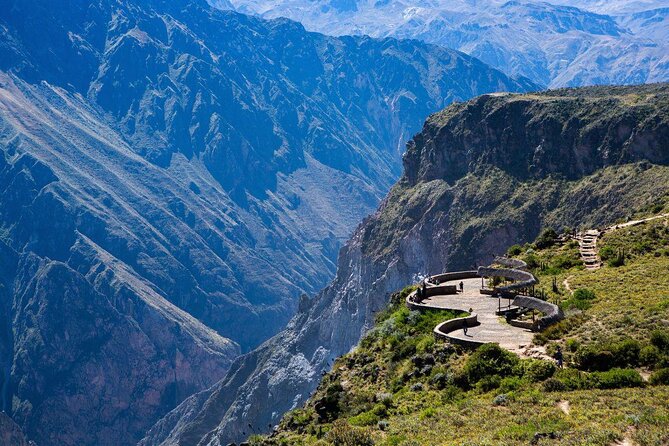
- Cruz del Cóndor timing: you head to this 3,800 m viewpoint as part of the main route so you can watch for condors.
- Real hiking distances: about 6 km walking on Day 1 bottom-of-canyon and about 3 km uphill on Day 2.
- Sangalle (2,225 m) is your night base: a canyon-side oasis with a pool and a proper dinner.
- Meals are partly handled for you: breakfast (2), lunch, and dinner are included, so you’re not constantly hunting food.
- Small group size: limited to 15 participants, which usually keeps things more manageable on busy trails.
Cruz del Cóndor and the Colca Canyon: why this trek is worth your time
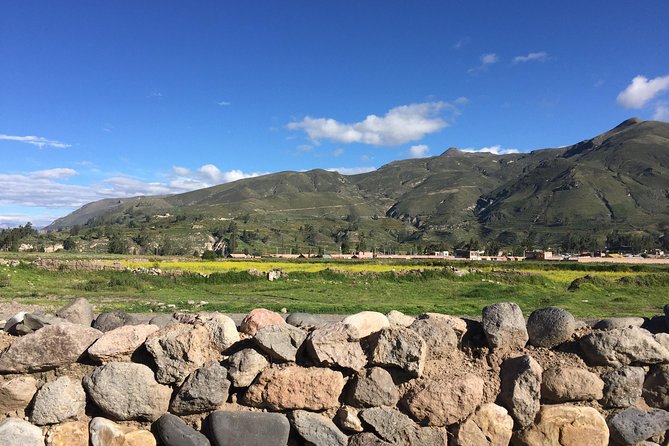
Colca Canyon is famous for being one of the deepest canyons in the world, and the trek format makes you feel that scale. You’re not just taking photos from a bus window. You actually move through the canyon system—down, across small towns, and then back up—so the terrain stops being abstract.
The big “wow” moment is the flight of the condors at Cruz del Cóndor (3,800 m). Condors ride thermal winds, so you’ll want to be patient and ready to look upward. This stop isn’t long, but it’s structured where you can watch the airspace and the valley curves—exactly the kind of setting where the birds make sense.
Then there’s the rest of the canyon experience that people remember after the condors fade: the long descent, the walking through small communities, and the shift from dry heights down to a warmer-feeling oasis at Sangalle (2,225 m). It’s a “from high to lower” trip, and your body will notice.
You can also read our reviews of more tours and experiences in Chivay.
Day 1: the 3:30 a.m. start, Chivay breakfast, and going down to the canyon bottom
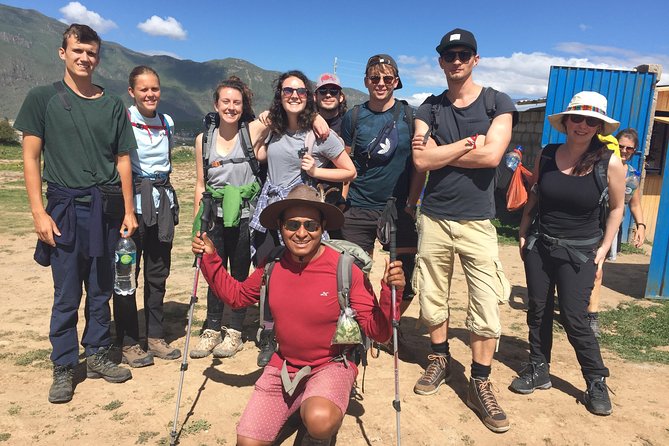
Your day begins early. The pick-up is typically between 3:00 and 3:30 a.m., and you roll out so you can start at 3:30 a.m. That doesn’t sound romantic, but it’s practical: Colca’s best viewpoints and main walking segments run on tight timing, and early departures help avoid wasting daylight.
You’ll travel to the Colca Valley (about 3 hours from Arequipa). There’s a brief breakfast stop in Chivay, which matters because your later walking is at altitude. After that, you continue to Cruz del Cóndor to contemplate the condor flight, then head to Pampas of San Miguel (3,300 m).
From San Miguel you begin the most physically demanding stretch of the trip: walking along the bottom of the canyon for 6 km (around 3 hours). This part is the heart of the “deep canyon” feeling. The air and light change as you move lower, and the canyon walls frame your path in a way that makes the distances feel real.
San Juan de Chuccho lunch break and the towns of the walk
After the 6 km segment, you reach San Juan de Chuccho, where you rest and enjoy lunch. This pause is more than food. It’s your chance to reset before continuing the next walking section.
Next you continue through the towns of Cosñirhua and Malata for an additional 3 km (about 2.5 hours). This is where the trek stops being only scenic and becomes more human-scale. You’re moving at a walking pace through real local settlement patterns, not a showpiece trail.
One practical note: snack and water are not included. If you’re the type who gets low-energy when you wait, you’ll want to plan ahead so the breaks feel relaxing, not stressful.
Sangalle at 2,225 m: pool time, dinner, and why the night matters
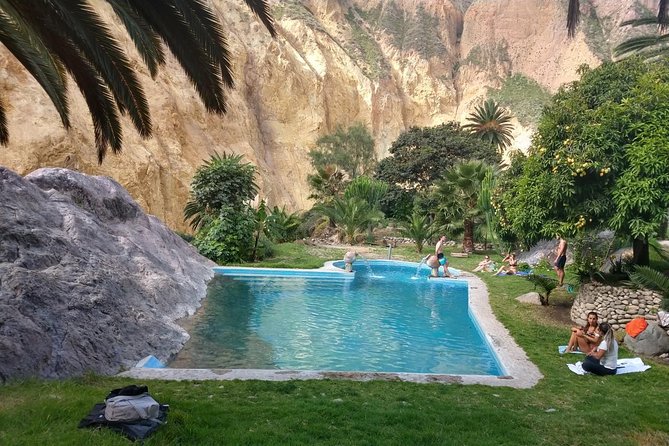
By late Day 1, you arrive at Sangalle (2,225 m), described as a spectacular oasis. Even if you don’t know the details of the microclimate, you can feel what a “drop” in altitude and a lower canyon position means: the environment often feels different than the high starting points.
This is also where the trip gives you a real recovery tool. You spend the night in Sangalle and you get the chance to swim in the pool, followed by dinner. That pool isn’t a luxury you can skip. If you’ve just done a long descent and then walked through towns, soaking your legs can make the next day’s climb much more doable.
I also like that dinner is included. With tours like this, the worst-case scenario is being too tired to manage food. Here, you avoid that problem because you’re not forced into decision fatigue.
A note about guide vibe and personal comfort
Your guide is listed as English-Spanish, and that’s helpful for clarity on routes and timing. Still, comfort matters. One person shared a concern about a guide named Paul being physically familiar during a private moment. Nobody should feel unsafe or pressured on a trip like this.
So here’s your practical move: if anything feels off, keep your boundaries firm and communicate calmly. If it doesn’t improve quickly, talk to the provider right away. You’re on a paid hiking experience, not a personal situation.
Day 2: sunrise climb to Cabanaconde and the Antahuilque viewpoint
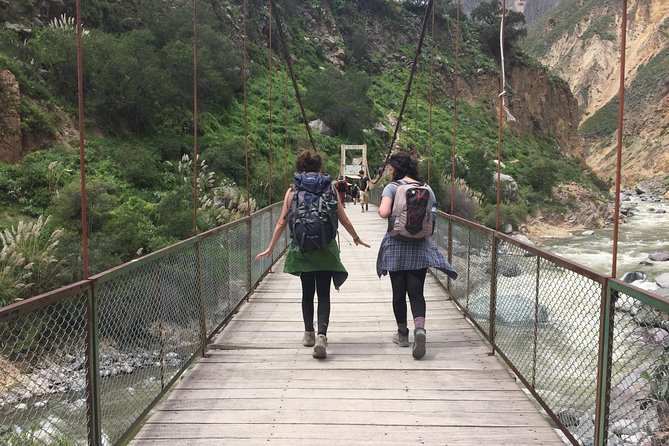
Day 2 is another early start. The plan is to get up early and begin a 3 km ascent along the side of the canyon for about 3 hours, with sunrise and views along the way until you reach Cabanaconde (3,230 m).
This uphill is the steep payoff. After spending Day 1 in the canyon’s lower sections, climbing back up forces you to slow down and control effort. You’ll be at a similar high range again, so take it steady and don’t treat it like a race.
The sunrise timing is a major reason to book this format. Even if you’re not a “sunrise person,” there’s something about seeing the canyon change color while you’re moving uphill. It turns the views into a moving reward, not a static photo moment.
From Cabanaconde back to Chivay: terraces at Antahuilque and a colonial church in Maca
After reaching Cabanaconde, you travel back toward Chivay with brief stops at the Antahuilque viewpoint. You’ll get views of the Andean terraces and the Colca Valley, which help you understand how people have used these slopes for agriculture over time.
Then you visit Maca, including a panoramic visit to its colonial church. This is a nice palate cleanser after the hiking focus. It also gives you a grounded sense of Colca Valley life beyond the canyon edge.
These stops aren’t meant to replace the walk, but they do make the day feel like more than transit. They also add contrast: terrace views, a village setting, then back to Chivay for your final options.
Yanque hot springs: relaxing time with an optional extra cost
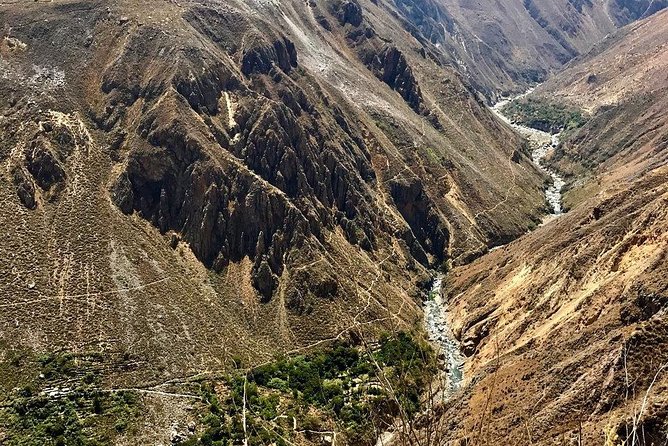
From Chivay, you can take time for Yanque hot springs. The pools are described as having powerful hot water, with both relaxing effects and healing properties. That’s the pitch, and I treat it the practical way: it’s a recovery moment after two big days at altitude.
The hot springs are optional, and there’s an extra charge listed for the activity. If you’re tempted, weigh one question: do you want your last hours in a soaking chair, or do you want to keep momentum for extra sightseeing in Chivay? Either way can work, but don’t ignore your body.
You’ll also have an optional lunch in Chivay. If you skip hot springs, you may feel hungrier earlier, since dinner is already behind you from Day 1.
Price and what it really covers in a 2-day, 1-night trek
The price you’ll see for this experience is $90 per person for a 2-day trip. For many people, the value comes from what’s included: transportation (one-way into the start area from Arequipa and return from Cabanaconde), an English-Spanish guide, and key meals (breakfast (2) plus lunch and dinner).
That meal coverage is a big deal on a trek like this. When you’re hiking at altitude, you don’t want to be making constant snack runs or bargaining with roadside options. You show up, eat, and keep moving.
Now for the costs that can add up. The tourist ticket is not included, and the price depends on where you’re from: it lists s/. 40 for Latin foreigner and s/. 70 for the rest. Hot springs also cost extra (s/. 15). And basic items like waters and snacks are not included, so you should budget for that.
So is $90 good value? Usually, yes, because you’re paying for logistics: early pickup, a guide, meals, and the structured walking segments with night base in Sangalle. But your real total depends on tickets and extras. If you’re trying to keep costs tight, the main lever is skipping optional hot springs and bringing your own water/snacks.
Who this Colca Canyon trek suits best
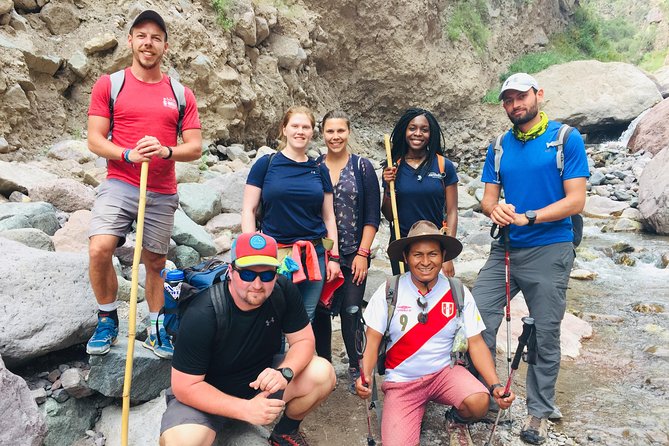
This is a solid fit if you want a guided, structured way to see Colca Canyon with a real walking component. The itinerary balances adrenaline canyon views with downtime: lunch rests, a pool night, and a sunrise climb.
You’ll also like it if you appreciate small-group pace. Limited to 15 participants, it’s easier for the guide to manage timing, especially around viewpoint stops like Cruz del Cóndor.
It may be less ideal if you dislike early starts or you’re not comfortable with altitude. You’ll hit high points like 3,800 m at Cruz del Cóndor and then climb again near 3,230 m. If altitude makes you feel anxious, go slow and don’t try to prove anything on the uphill.
Finally, plan for personal comfort with your guide. The experience is supposed to be professional and safe. If someone’s behavior crosses a line, you should be ready to ask for a change.
Should you book this 2-day Colca Canyon trek?
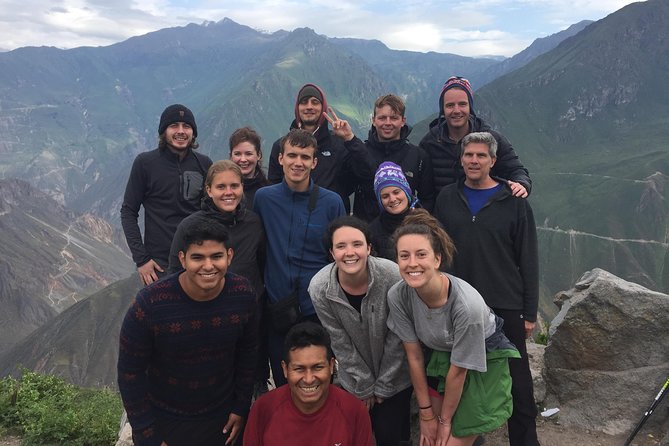
I’d book this trek if your priority is a guided Colca Canyon experience that includes the main natural highlights: condor viewing at Cruz del Cóndor, a meaningful canyon walk, and a recovery-friendly night at Sangalle with dinner and pool time. The included meals and transport make it easier than doing everything independently.
I wouldn’t book it if you want a relaxed day trip, dislike early mornings, or you’re sensitive to high-altitude effort. Also take note of extra costs like the tourist ticket, plus optional hot springs, water, and snacks.
If you do book, come prepared: bring water/snacks, dress for cold early mornings, and walk the ascent like you have time. Colca is at its best when you slow down enough to see what the canyon is showing you.
FAQ
What time is the pick-up in Arequipa?
Your pick-up is between 3:00 and 3:30 a.m. from the square, so the trek starts around 3:30 a.m.
How long is the trek?
It’s a 2-day trip with 1 night included.
What meals are included?
Breakfast is included twice, plus lunch and dinner.
Are hot springs included?
Yanque hot springs are optional, and there is an additional cost.
Do I need to pay a tourist ticket?
Yes. The tourist ticket is not included and costs s/. 40 for Latin foreigner or s/. 70 for the rest of the countries.
Where do I return at the end of the trip?
You can either take a regular bus transfer from Chivay to Puno (departing at 1:00 p.m. and arriving at 7:00 p.m.) or return to Arequipa. If you return to Arequipa, you’ll be left two blocks from the Plaza de Armas.