REVIEW · SAPA
2 days private Wildland Trek in Sapa
Book on Viator →Operated by Vietnam Nomad Trails · Bookable on Viator
Sapa can be touristy fast, but this trek keeps you moving through quieter trails. You’ll walk through terraced rice fields and small village paths while your guide brings you up close to Hmong and Red Dao life. Expect hard walking, big views, and a real overnight in a local home.
I especially love the private, flexible feel of the trip. You’re not stuck on a rigid script, and guides like Nhu and Su have a reputation for friendly energy and clear English, plus they’ll adjust the route when it makes sense for your group. I also like that the itinerary builds in proper breaks—picnic meals at scenic spots and time with families, not just nonstop hiking.
One consideration: this is a long, tough trek and the trails can be slippery. The tour provider asks for strong physical fitness, so if you’re looking for an easy stroll, you might feel it by day two.
In This Review
- Key highlights worth planning for
- The feel of a 2-day private Wildland trek in Sapa
- Price and what you’re really buying for $110
- Day 1: Ta Phìn direction, Hmong village trail, and a waterfall picnic
- The Hmong Village approach: why it matters
- Two-and-a-half hours to a waterfall lunch
- Sa Xeng (Tả Phìn) village by late afternoon
- Night in a local family home: the homestay experience you’ll remember
- Day 2: rice terraces, a salmon farm break, and Ban Khoang culture
- Salmon farm stop: learning about fish raising
- Picnic lunch with a Dao family
- Ban Khoang village and the cultural ending
- Guides: the difference between a trek and an experience
- Fitness, footing, and what “hard trek” means in real life
- What to pack for a two-day Sapa trek (without overthinking it)
- Timing, weather, and why “good weather” is non-negotiable
- Who this trek is perfect for (and who should skip it)
- Should you book this 2-day private Wildland Trek in Sapa?
- FAQ
- What does the 2-day private trek in Sapa cost?
- Where do we meet, and when does the tour start?
- Is this a private tour?
- What meals are included?
- How long are the walking days?
- What are the main stops during the trek?
- What’s not included in the price?
- What happens if the weather is bad or I need to cancel?
Key highlights worth planning for
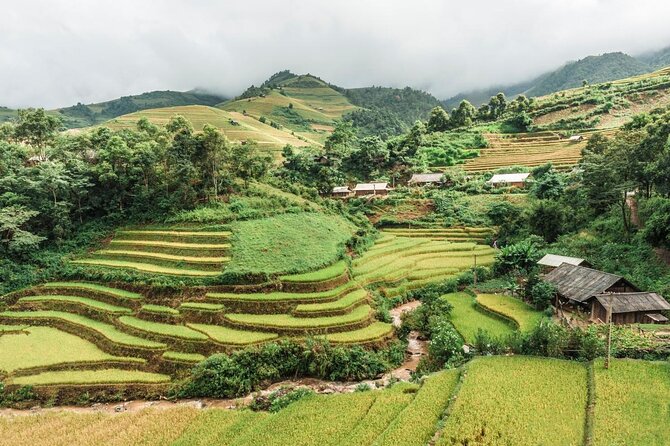
- Private group trekking through less-crowded paths on the way
- Ta Phìn / Sa Xeng village homestay experience with dinner overnight
- Waterfall picnic on day one and a salmon farm stop on day two
- Guides who communicate well (Nhu, Su, Lam, Li are repeatedly mentioned for great guidance)
- Two included lunches plus breakfast and dinner so you won’t spend the trek hunting food
- Full return to Sapa by bus after the Ban Khoang village visit
The feel of a 2-day private Wildland trek in Sapa
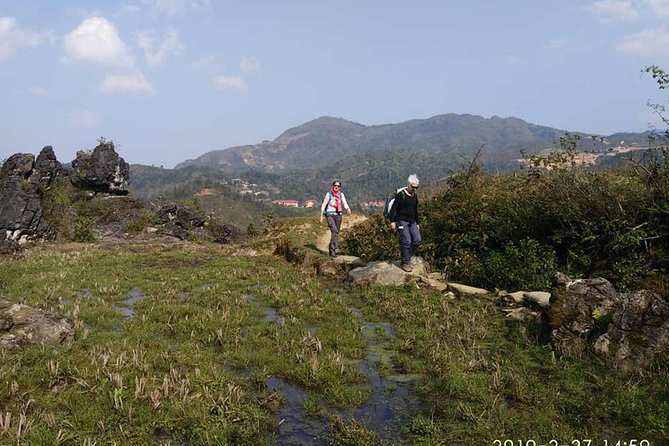
This is the kind of Sapa trip you choose when you want more than quick photo stops. You get two full days of walking through the rice-terrace country and village trails around Ta Phìn, with fewer people on the way than you’ll see around the most famous viewpoints.
What makes it work well is the pace. You’re not just going from one landmark to another. You’re moving along paths that connect farmland, rivers, and homes, and your guide gives context as you go. The best part is that the tour isn’t only about nature. It’s also about how people live here—how communities like the Hmong and Red Dao organize daily life, and how that shows up in villages like Sa Xeng and Ban Khoang.
Price and what you’re really buying for $110
At $110 per person for two days, the value comes from the combo of (1) private guiding, (2) an overnight with dinner, and (3) meals built into the route. If you try to piece this together on your own, you’ll quickly feel the cost of arranging a qualified guide, transport, and a homestay that fits the walking plan.
Here’s what’s covered:
- Breakfast, dinner
- Lunch two times
- Some admissions are handled (day one notes admission free; day two notes admission included)
- A private experience, meaning it’s just your group
What’s not covered:
- Travel insurance
- VAT
One practical note: the tour uses a mobile ticket, so you’ll want to keep your phone charged and easy to access on pickup day.
Day 1: Ta Phìn direction, Hmong village trail, and a waterfall picnic
You meet at Nomadtrails Boutique Sapa at 15 Tuệ Tĩnh. The start time is listed as 9:30am at the meeting point, and your day-one walking plan runs from the morning with a driver transferring you to the area where the trek begins.
From there, you start trekking on a smaller trail where the goal is to see less of the crowds. The walking is routed through forested mountain sections and into the wide open patterns of the terraced fields.
The Hmong Village approach: why it matters
That first stretch matters because it sets your expectations for the whole trip. Instead of beginning at a viewpoint and walking downhill, you start on paths that feel like they belong to locals. It’s where you start seeing how terraces shape movement—how the land creates steps, curves, and narrow routes.
Two-and-a-half hours to a waterfall lunch
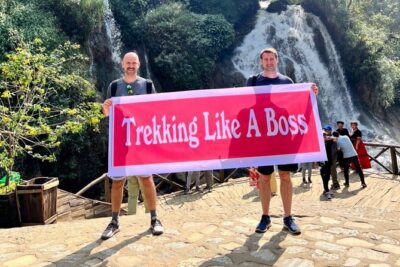
After about 2.5 hours of walking, you reach a waterfall area for a picnic lunch next to the falls. This is a highlight moment for two reasons. First, it gives you a real reset break—food, rest, and a chance to stretch your legs. Second, it turns the day from walking-only into a more varied experience: sounds of water, photo-friendly scenes, and in some cases the chance to cool down if conditions are right (one guide experience even mentioned enjoying the cascade area).
Sa Xeng (Tả Phìn) village by late afternoon
After lunch, you continue through a valley area with more rice terraces and move toward Sa Xeng village (Tả Phìn). This is where the tour shifts from scenery to people.
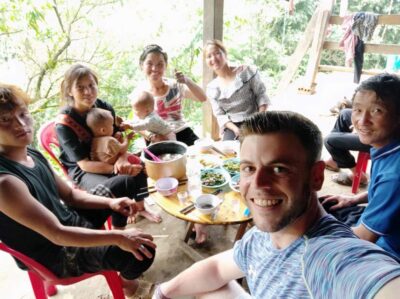
You’ll arrive and have dinner and overnight at a local family. You’ll also hear about the cultural life of Hmong and Red Dao minorities, two major ethnic groups in the area. Even if you only catch a few key ideas, this overnight turns the “visit” into a conversation rather than a one-time look.
Night in a local family home: the homestay experience you’ll remember
The overnight portion is what makes this trek feel different from many “walk and return” tours. You’re not just changing locations—you’re staying where someone lives.
What you can reasonably expect:
- Dinner and overnight with a local family
- Time to learn about daily life and cultural routines
- A chance to talk and ask questions (translation support is a recurring theme in guide feedback)
From the guide experiences, one pattern shows up again and again: guides like Nhu and Su tend to make these interactions easier. People repeatedly highlight clear English and patient explanations, plus help translating with locals. That makes a big difference. Without that bridge, homestays can feel like you’re watching from the outside. With it, you get to participate in the moment—asking about customs, hearing stories, and learning what everyday life actually looks like.
Day 2: rice terraces, a salmon farm break, and Ban Khoang culture
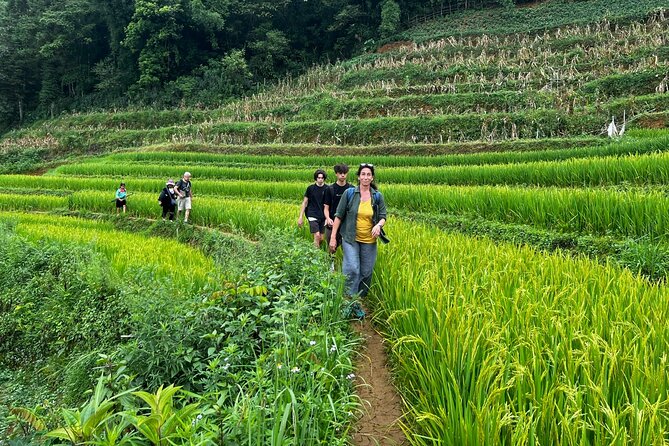
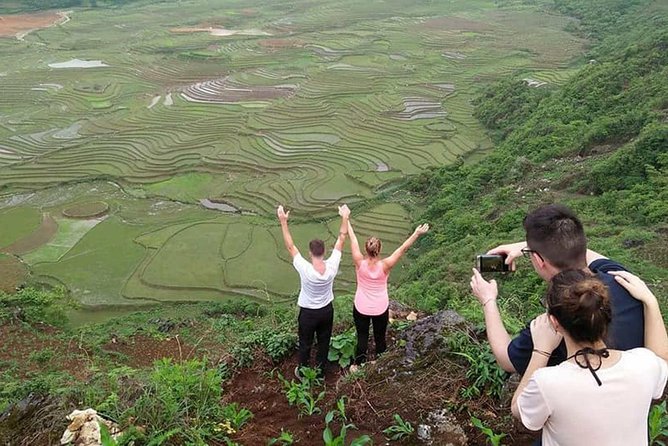
Day two starts with trekking through rice terraces again, this time with views across mountain range and valley. This is where day-one effort starts paying off: your legs may complain, but the scenery has a way of turning effort into momentum.
Salmon farm stop: learning about fish raising
You’ll take a short break at a salmon farm. The focus here is educational—learning about the raising technique for the fish (described as a special fish). Even though it’s only a stop, it breaks up the usual rhythm of rice-terrace scenery and gives you a look at how locals manage food production.
This is a smart pacing choice for a trek day. It adds variety when your body might otherwise be stuck in “walk, stop, walk” mode.
Picnic lunch with a Dao family
Lunch is a picnic in a cozy Dao family setting. Like day one, it’s part of why the meals matter: you don’t just eat, you eat in a place connected to the landscape and community.
If you’re picky about food, don’t assume it will be identical to home meals. But the tour’s meal planning is one of the strongest points—multiple guide-focused experiences praise how good the food is, not just how it’s served.
Ban Khoang village and the cultural ending
In the afternoon, you keep trekking along a nice river, then arrive at Ban Khoang village. This is a cultural stop centered on traditions and daily life.
After that, you head back to Sapa by bus. That return matters because it keeps day two from turning into an endurance marathon. You get a defined ending after the village time rather than “walk until you give up.”
Guides: the difference between a trek and an experience
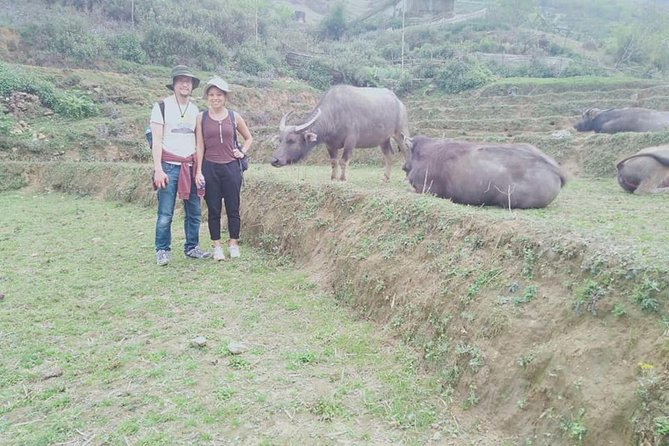
The walking plan is good, but the human piece is what consistently earns strong feedback. Several guides are named directly—Nhu, Su, Lam, and Li—and the common thread is friendly energy, strong communication, and genuine curiosity about you and the places you pass through.
Here’s what to look for when you connect with your guide:
- You want someone who can explain what you’re seeing (not just point and walk)
- You’ll appreciate route flexibility if weather, footing, or your group’s pace needs adjusting
- Translation support makes a homestay and village time feel meaningful instead of awkward
More than once, guide experiences mention adjusting the route based on what people wanted. That’s practical: if you’re fit and want harder paths, you may get it. If someone in the group needs a gentler pace, a good guide tries to steer you toward the right balance.
Fitness, footing, and what “hard trek” means in real life
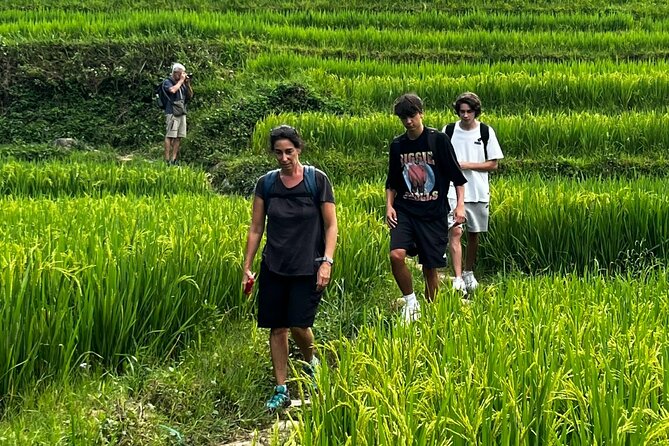
The tour description asks for travelers with strong physical fitness. In plain terms, you’re dealing with:
- Long walking days (about 7 hours on day one and 5 hours on day two)
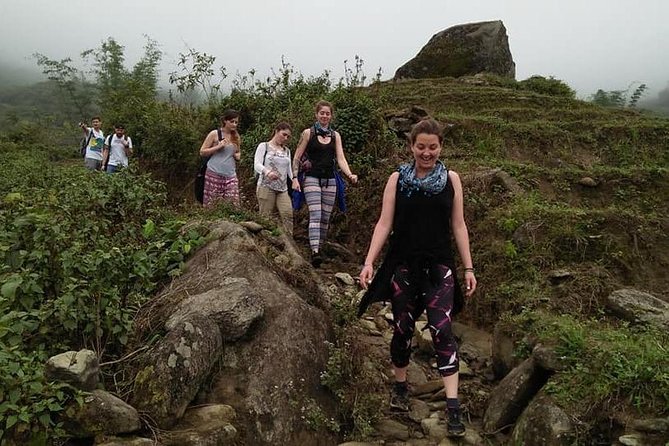
- Narrow trails and uneven ground
- Mud and slippery sections
You don’t need to be a mountain athlete, but you do need comfort with hiking that keeps going. One guide experience specifically calls out helping people down slippery tracks, which is exactly the kind of support you want on day one’s later village approach and day two’s river sections.
My practical advice:
- Wear shoes you trust on wet, uneven ground.
- Bring layers for misty conditions and damp air.
- Assume you’ll get muddy even if the weather starts fine.
What to pack for a two-day Sapa trek (without overthinking it)
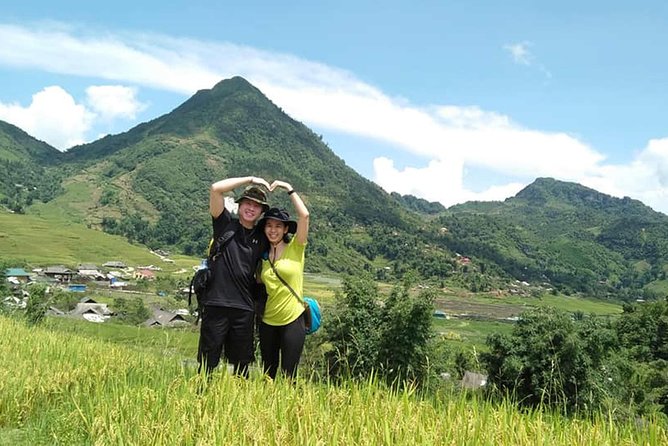
The tour data doesn’t list gear requirements, so you’ll want to pack like you’re doing a real hiking overnight:
- Sturdy hiking shoes or boots with grip
- Rain layer (light but real)
- Daypack for water and snacks
- Extra socks (your feet will thank you after muddy trails)
- A small towel or wet wipes
- Any basic meds you rely on
Also, keep a charged phone. You’ll use a mobile ticket, and it’ll help with communication while you’re on the move.
Timing, weather, and why “good weather” is non-negotiable
This experience requires good weather. That makes sense because trekking and village paths depend on footing and visibility.
If poor weather happens, the operator says you’ll be offered a different date or a full refund. That’s the best-case scenario. So if you’re planning around tight dates in Sapa, I suggest you leave some buffer time before you book this, just in case.
Who this trek is perfect for (and who should skip it)
This is a great match if you:
- Want a private Sapa trek rather than joining a large group
- Prefer fewer crowds and more village-to-village walking
- Like cultural learning that happens through conversation, not a staged show
- Enjoy the idea of an overnight homestay experience
You might want to choose something easier if:
- You’re looking for mostly flat walking or short stops
- You don’t feel comfortable with slippery trails
- Your idea of Sapa is more about viewpoint rides than hours on foot
Should you book this 2-day private Wildland Trek in Sapa?
If you’re choosing between a “see Sapa” package and a real trek with village time, I’d lean toward booking this one. The mix of private guiding, two full trekking days, included meals, and an actual night with a local family makes the price feel reasonable rather than inflated.
Book it if your priority is:
- rice terrace walking that feels away from crowds
- guides who connect you to the places you’re in (especially the named favorites like Nhu, Su, Lam, and Li)
- a homestay dinner and village cultural time that feels personal
Skip or rethink it if:
- you don’t have strong hiking stamina
- you want a gentle itinerary
- you’re traveling when weather might make trails risky
FAQ
What does the 2-day private trek in Sapa cost?
It costs $110.00 per person.
Where do we meet, and when does the tour start?
You meet at Nomadtrails Boutique Sapa, 15 Tuệ Tĩnh, Sa Pa, Lào Cai, Vietnam. The start time is listed as 9:30am.
Is this a private tour?
Yes. Only your group participates.
What meals are included?
The tour includes breakfast, dinner, and lunch twice (two lunches total).
How long are the walking days?
Day one is listed as about 7 hours, and day two is listed as about 5 hours.
What are the main stops during the trek?
You’ll visit areas including Ta Phìn and Sa Xeng village on day one, then return through rice terraces with a salmon farm stop and a picnic lunch, ending at Ban Khoang village before heading back to Sapa.
What’s not included in the price?
Travel insurance and VAT are not included.
What happens if the weather is bad or I need to cancel?
The experience requires good weather. If it’s canceled due to poor weather, you’ll be offered a different date or a full refund. You can cancel for a full refund up to 24 hours in advance of the start time. Confirmation is received within 48 hours of booking, subject to availability.