Rome history shows up in 3D. This urban trek blends an archaeologist-led walk with phone augmented reality, so you see how places likely looked long ago while you move through today’s streets. I like that it mixes famous landmarks with lesser-walked corners, and I love that the pace gives you time to ask questions and take photos.
One thing to keep in mind: it is mostly outdoors and includes uphill and downhill sections, so plan for a moderate walking effort and comfortable shoes.
You also get real value for the price. At about $3.61 per person for a 3 to 4 hour guided walk in English (small group, max 10), this feels like a smart way to understand Rome without paying big-tour prices. The only real drawback is that it can be weather-dependent, since the guide may change the route or cancel if conditions are poor.
In This Review
- Key Things That Make This Rome Trek Different
- Why This Rome Walk Works: AR + Archaeology Without the Stress
- Starting Point Near the Circus Maximus Area
- The 9-Stop Route: What You See, Why It Matters, and What to Watch For
- Teatro di Marcello: Amphitheater Vibes, Theater Logic
- Ghetto Ebraico di Roma: The Jewish Quarter as a Living Time Capsule
- Isola Tiberina: Where Legends Get Physical
- Bocca della Verità and Santa Maria in Cosmedin
- Foro Boario: Early Temples and a Marble Surprise
- Giardino degli Aranci (Aventine Hill): Panoramas and a Tricky Optical Illusion
- Buco della Serratura: The Keyhole View and Malta’s State Within a City
- Testaccio: Trade, Everyday Rome, and an Ancient Secret Hill
- Piramide Cestia: A Rare Egyptian-Style Landmark in Rome
- Augmented Reality in Rome: How to Get the Most From Your Phone
- Price and Value: Why This Feels Like a Smart Buy
- Pacing, Fitness, and What to Wear
- Who This Tour Is Best For (and Who Might Want Another Option)
- The Bottom Line: Should You Book This Rome Archaeologist Trek?
- FAQ
- What is the duration of the tour?
- How much does it cost?
- Is the tour offered in English?
- How big is the group?
- Where does the tour start, and what time does it begin?
- Does the tour include admission fees?
- What physical effort should I expect?
- What should I bring for the tour?
Key Things That Make This Rome Trek Different
- Augmented reality on your phone brings ancient Rome into 3D as you stand in modern locations
- Archaeologist-led, small group (10 max) means more time to ask questions instead of watching from afar
- A strong mix of must-sees and under-the-radar spots, like the Jewish Ghetto and Testaccio
- A practical route design with frequent short stops (about 15 to 30 minutes) so you are not stuck in one long line
- Fun “Rome facts” get woven in, including stories like a fish tax and the recycling of marble
Why This Rome Walk Works: AR + Archaeology Without the Stress
Rome can feel like a blur of ruins and selfies. This tour cuts through that by pairing what you see with what it used to be. You walk city streets that still hold layers of the past, then your phone overlays 3D views so you can connect the stones in front of you with the Roman structures they point to. The result is not just sightseeing. It is pattern recognition: you start to read Rome.
The other part I appreciate is the archaeologist angle. You are not only getting dates and names. You are getting context for why a place looks the way it does today. That matters on a city like Rome, where buildings have been rebuilt, reused, and repurposed for centuries.
Finally, the group size helps a lot. With a limit of 10 travelers, you are not shouting to hear your guide. If you like asking questions as you go, this setup supports that style.
You can also read our reviews of more tours and experiences in Rome.

Starting Point Near the Circus Maximus Area
The meeting point is at Gusto Massimo Bar Bistrò di TIZIANO DI M. E. F. S.r.l, Via del Circo Massimo, 5a, 00153 Roma. Start time is listed as 10:00 am. The tour ends in a different location, so you should plan for a finish that is not at the same spot.
Since it is near public transportation, you can usually get there easily from many central areas. Still, do yourself a favor: arrive a bit early so you are not rushing through the first briefing. Rome streets can be slower than you expect, especially if you are also juggling your phone for the AR features.
The 9-Stop Route: What You See, Why It Matters, and What to Watch For
Teatro di Marcello: Amphitheater Vibes, Theater Logic
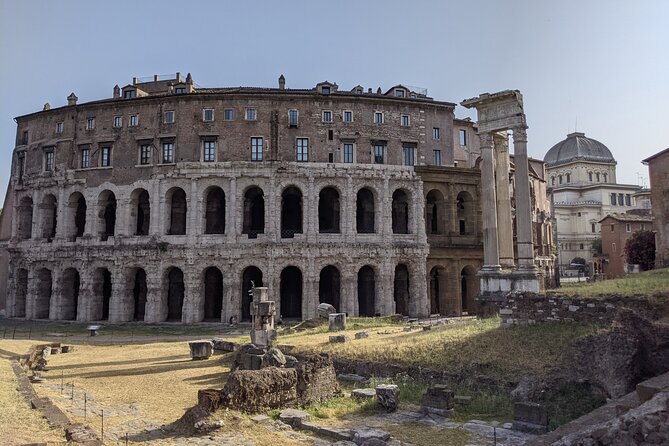
You start at Teatro di Marcello, a place that feels familiar if you already know Roman amphitheaters and gladiator stories—yet it is a theater, built for actors and stage decoration, not just arena spectacle. One reason it catches attention is how it can read like a medieval castle from certain angles. Rome does that: it keeps old bones, then dresses them in later centuries.
What you will like here: it sets up a theme for the whole walk—Roman entertainment spaces, but seen through a lens of architecture and reuse.
Watch for: this stop is short (about 20 minutes). If you want extra photos, keep your pace so you do not lag behind the group.
Ghetto Ebraico di Roma: The Jewish Quarter as a Living Time Capsule
Next comes Ghetto Ebraico di Roma. This is where the stories shift from stone-only history to a neighborhood you can actually feel. You get ancient roots, unique architecture, and a medieval charm that still shapes the streets. Food is part of the picture too, and you are likely to pass places where a quick snack feels like it belongs.
What you will like here: you get history that is not frozen behind ropes. It is urban life layered over time.
Possible drawback: this stop is also about 20 minutes, so think of it as orientation plus key context, not a long wander. If you want to eat, consider grabbing something after the tour.
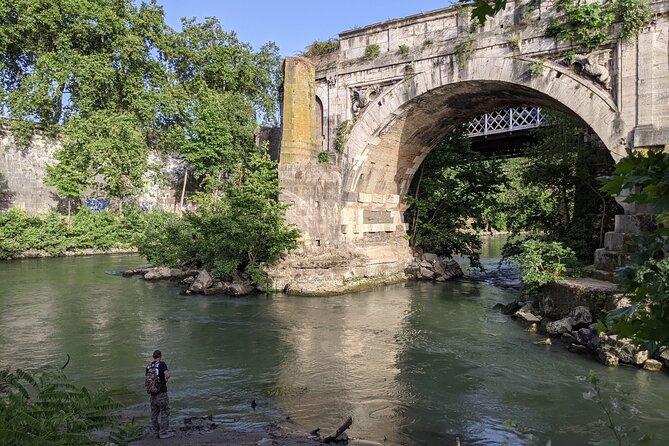
Isola Tiberina: Where Legends Get Physical
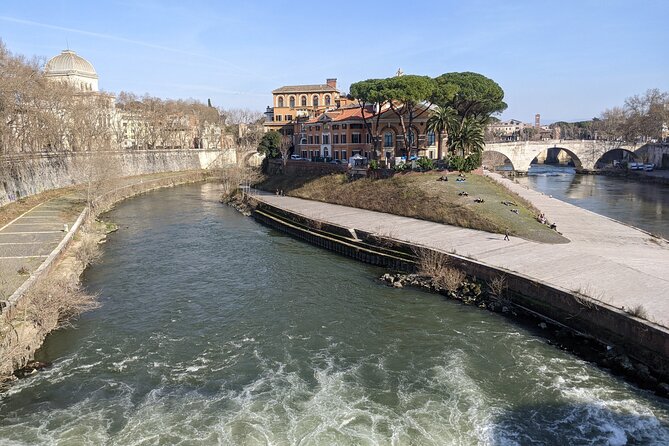
Isola Tiberina is a small island in the Tiber River, and the guide uses that geography to explain legends and significance for Rome’s early inhabitants. You will also hear the playful line about new true Romans being born every day—Rome loves a little myth seasoning.
What you will like here: the mix of place-based storytelling and the way water changes how you experience a site.
Watch for: river areas can be cooler or breezier. Wear layers, even if Rome looks sunny at first.
Bocca della Verità and Santa Maria in Cosmedin
At Bocca della Verità, you meet a medieval church setting at Santa Maria in Cosmedin, where the relics of St. Valentine rest. This is the kind of stop where the medieval church gives you a different viewpoint than the strictly Roman sites. It also connects to how later Rome kept certain objects and traditions alive.
What you will like here: the contrast. One moment you are thinking Roman urban myth and stone faces; the next, you are in a church context tied to a famous relic tradition.
Practical note: this is another 20-minute stop, so use it for understanding and photos, then move on.
Foro Boario: Early Temples and a Marble Surprise
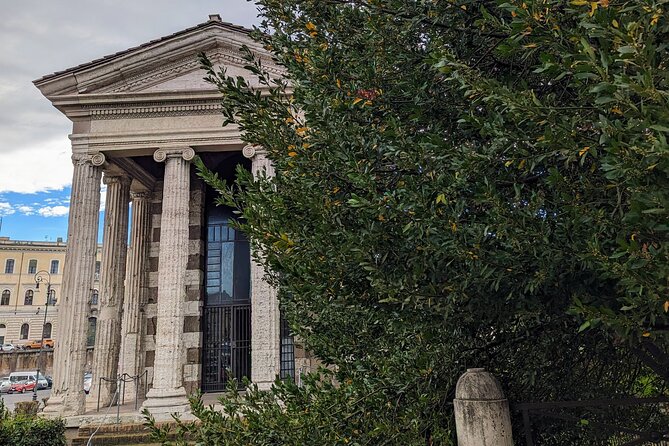
Foro Boario shifts the focus to early Roman temples. You will learn about typical temple forms, and you also get to admire a first marble temple that is still well preserved. The tour hints that the reason it is in such good shape will surprise you—this is the kind of detail an archaeologist can explain without turning it into a lecture.
What you will like here: the “why it lasted” angle. It helps you understand preservation, reuse, and what makes certain materials survive.
Watch for: this stop can feel like it moves fast because the architecture does the talking. If you want slow, take notes and let the guide know you want a little extra time.
Giardino degli Aranci (Aventine Hill): Panoramas and a Tricky Optical Illusion
Now you climb to Aventine Hill and the Orange Garden viewpoint. The big payoff is the panorama of Rome’s skyline. You will also get a specific optical illusion: St. Peter’s Basilica seems to shrink as you approach. That is the kind of weird Rome fact you will remember long after you leave.
What you will like here: views plus a story you can test with your eyes, not just a photo stop.
Watch for: this is one of the places where the tour’s “moderate physical fitness” requirement becomes real. Bring comfortable shoes and plan for a steady pace.
Buco della Serratura: The Keyhole View and Malta’s State Within a City
At Buco della Serratura, you peer through the keyhole of the Priory of the Knights of Malta. The guide explains what you are seeing, including the idea of the Sovereign Military Order of Malta maintaining its own sovereign territory within Rome—a state within a state.
What you will like here: the contrast between everyday Rome street life and this extremely specific, almost secretive perspective.
Practical note: the stop is short (about 20 minutes). If your phone AR battery is low, prioritize the keyhole moment and worry about AR later.
Testaccio: Trade, Everyday Rome, and an Ancient Secret Hill
Then you get to Testaccio, one of the best areas for escaping the heaviest tourist pressure. This is where the tour emphasizes an authentic Roman neighborhood feel—market energy, street art, and the sense that people still live the place. It also points out a mysterious hill that hides a secret connected to Rome’s ancient past.
What you will like here: it is not only history. It is Rome as a functioning city, with archaeology as a background layer instead of the whole show.
Possible drawback: if you are expecting only monuments and big-ticket ruins, Testaccio can feel more “street-focused.” That is actually the point, but calibrate your expectations.
Piramide Cestia: A Rare Egyptian-Style Landmark in Rome
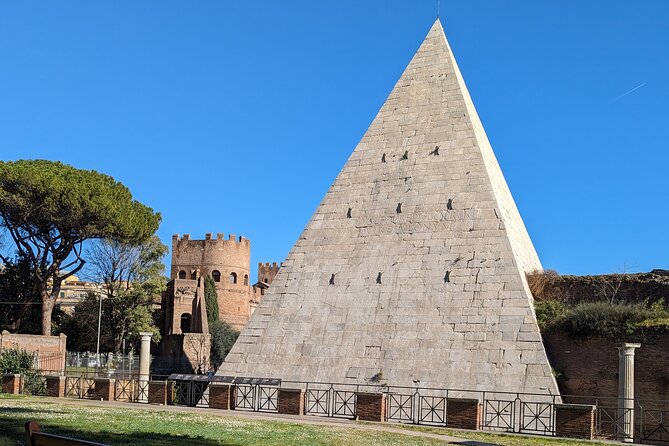
The tour ends with Piramide Cestia (Pyramid of Cestius), described as one lone survivor of Rome’s Egyptian-influenced fascination. You will learn that similar structures once existed in greater number, and you will get a sense of the eclectic tastes of a wealthy Roman magistrate and the city’s architectural range.
What you will like here: it breaks the usual Rome script. Instead of only classic Roman forms, you see how foreign styles turned up in Rome’s skyline.
Watch for: the time here is brief (about 15 minutes). Be ready to take your photos quickly and then listen for the story that makes it click.
Augmented Reality in Rome: How to Get the Most From Your Phone
The tour’s headline is phone augmented reality. That means your device is not a distraction—it becomes your lens. Here is how to make it work in real-world conditions:
- Use a charged phone and consider a power bank if you have a battery that runs hot.
- Bring headphones only if you already know you will use them; the tour is led in English and you likely want to hear clearly.
- Keep screen brightness reasonable. Rome sun glare can kill AR visuals fast.
- Treat AR as a guide, not the entire experience. Look first with your eyes, then confirm with the phone overlay.
The payoff is being able to picture ancient Rome in 3D while you stand in the real place. You also get AR references to the Colosseum and Forum, even if those are not the only stops on the walking segment. That helps you connect big-ticket landmarks to the smaller “supporting cast” streets you walk through.
Price and Value: Why This Feels Like a Smart Buy
At $3.61 per person, this tour is priced like a budget-friendly add-on, but it includes a real human expert: an archaeologist-led walk, with a group limited to 10 and a set route with multiple stops. For most first-timers, that combination is the value sweet spot.
You are not just buying access to a few landmarks. You are paying for interpretation—how to read architecture, why certain structures survived, and how later Rome shaped what you see today. That is the part that often costs more when you book larger guided tours.
Also, the admission for each listed stop is marked as free. That means you are not hit with surprise entrance fees at the places on the route (though you should still expect normal walking and observation).
Pacing, Fitness, and What to Wear
This is a 3 to 4 hour walking tour with uphill and downhill sections, and it asks for moderate physical fitness. Flat, comfortable shoes are mandatory. Rome stone can be slick and uneven, and you will be happier if your feet are supported from start to finish.
Layered clothing is recommended, plus sun protection in warmer months: sunglasses, a hat, and sunscreen. Bring a bottle or cup for water. Even if the stops are short, you will be outside long enough for hydration to matter.
Who This Tour Is Best For (and Who Might Want Another Option)
This works especially well if you:
- Want a Rome overview that is more than a checklist
- Like architecture and want the story behind what you see
- Prefer small groups and question time
- Enjoy viewpoints and short fact-heavy stops
It might be less ideal if you:
- Want long, unstructured wandering without walking effort
- Hate hills or are looking for a fully flat route
- Are only interested in the biggest monuments, with no time spent on church sites, viewpoints, and neighborhood streets
The Bottom Line: Should You Book This Rome Archaeologist Trek?
I think you should book it if you want to understand Rome as a layered city, not just a set of impressive ruins. The small group size, the archaeologist guidance, and the 3D AR approach make this a practical, low-cost way to feel like you are getting answers as you walk.
If you are physically ready for moderate hills and you can handle a few short stops in quick succession, you will get a lot out of it—especially the mix of classic landmarks plus places like Testaccio and Ghetto Ebraico di Roma, where Rome feels lived-in rather than staged.
FAQ
What is the duration of the tour?
The tour lasts about 3 to 4 hours.
How much does it cost?
The price is listed as $3.61 per person.
Is the tour offered in English?
Yes, it is offered in English.
How big is the group?
The group is limited to a maximum of 10 travelers.
Where does the tour start, and what time does it begin?
It starts at Gusto Massimo Bar Bistrò di TIZIANO DI M. E. F. S.r.l on Via del Circo Massimo, 5a, and it starts at 10:00 am.
Does the tour include admission fees?
The listed stops show admission ticket free for each stop.
What physical effort should I expect?
You should have a moderate fitness level because the route includes uphill and downhill sections. Flat, comfortable shoes are required.
What should I bring for the tour?
The guidance recommends layered clothing and sun protection in summer, and you should bring a bottle or cup for water.