REVIEW · KETCHIKAN
Private Ketchikan Mountain Lake Extended Trek to Alpine Overlook
Book on Viator →Operated by Tongass Teague LLC · Bookable on Viator
1100 feet up, then 360 degrees back down—Ketchikan style. This private hike in the Tongass National Forest is one of the few guided mountain options in Ketchikan, with about 1100 feet of elevation gain to a high point around 1600 feet—then a big payoff of lake-and-mountain views over Tongass Narrows below. I especially love the small-group feel and the way the guide keeps the tempo matched to your hiking level. One heads-up: you do not get the mountain summit, and the whole outing depends on solid weather and your ability to handle a real uphill.
Another thing I like a lot is the guide, owner/operator Tongass Teague. He talks about trees, plants, berries, and local mountains, and he also brings in a mindfulness angle that makes the hike feel calmer than the usual sightseeing slog. In other words, it is not only about getting to the view.
This is also practical in the best way. You get an air-conditioned vehicle, bottled water, and hiking basics like trekking poles and binoculars. The tradeoff is simple: there is no WiFi on board, and you should plan on no restroom access during the hike.
In This Review
- Key points to know before you go
- A 1100-Foot Climb to a True Alpine View Above Ketchikan
- Meeting Sockeye Sam’s and Settling Into a Private, Low-Stress Start
- Tongass Teague Sets the Tempo, Talks Trees, and Adds Mindfulness
- The 5.5-Mile Tongass National Forest Hike: Gravel, Roots, and Big Rainforest Trees
- Alpine Overlook at the 1600-Foot High Point: Where the Views Take Over
- What You Get With the Tour (and What You Should Plan to Handle)
- Price and Value: Is $476.45 Worth It?
- Who This Private Alpine Trek Suits Best
- Should You Book This Private Ketchikan Mountain Lake Extended Trek?
- FAQ
- How long does the private trek last?
- Where does the tour start?
- Is pickup included?
- How far do we hike and how much elevation do we gain?
- What is the highest point on the route?
- Can you reach the very top of the mountain?
- What gear is included?
- Is there WiFi or a restroom during the tour?
- What happens if weather is poor or I need to cancel?
Key points to know before you go
- Small group of up to 7 people for a more personal pace and time to ask questions
- About 1100 feet of elevation gain to an alpine overlook near 1600 feet
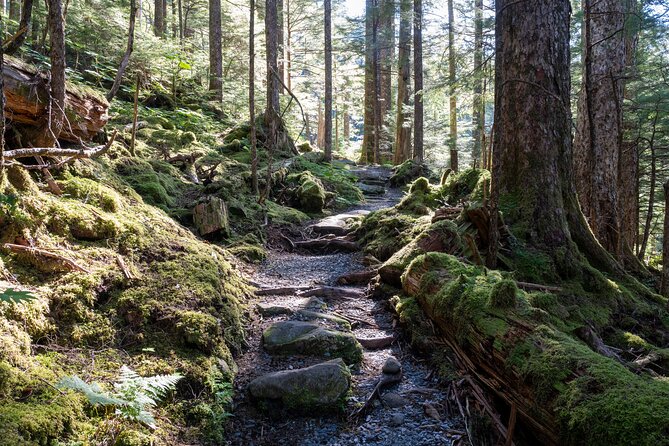
- 5.5-mile roundtrip with an improved gravel start, then more natural footing with rocks and roots
- 360-degree views over surrounding mountains, the lake, and Tongass Narrows below
- Tongass Teague leads the trek, with talk about old-growth forests, plants, and how to hike with mindfulness
- Gear included: trekking poles, backpacks, and binoculars (plus bottled water)
A 1100-Foot Climb to a True Alpine View Above Ketchikan
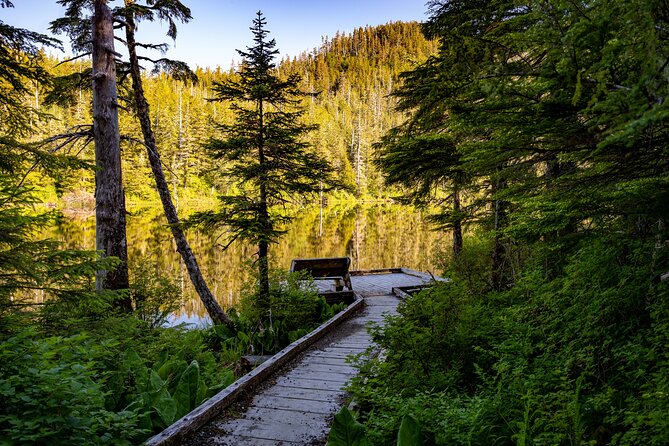
Ketchikan is famous for water, mist, and rainforest trails that look gorgeous even when you barely move. This hike adds a different kind of reward: elevation. You are gaining roughly 1100 feet and ending around 1600 feet at an alpine high point reached via an improved trail. So yes, you will work for it, but you will also get a payoff that feels specific and earned.
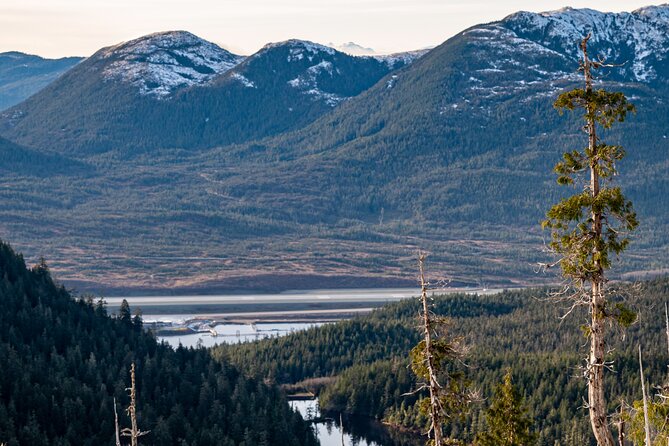
At the top end of the hike, you get that alpine moment: open air, wide sightlines, and 360-degree views. That means you can look across mountains, see the lake, and spot Tongass Narrows below. It is a rare way to see the region without staying locked into town-level views.
One important limitation: you are not permitted to go the very top of the mountain. For me, that actually helps manage expectations. You should think of this as an “alpine overlook” hike, not a summit scramble. Your goal is the high point at the end of the trail that is designed for guided access, with incredible views right where the route allows.
Also, this outing is only allowed once a day. That usually translates into a more controlled, focused experience rather than a stampede of hikers. You will feel like you got a time slot into a special area that is protected and managed.
You can also read our reviews of more tours and experiences in Ketchikan.
Meeting Sockeye Sam’s and Settling Into a Private, Low-Stress Start
The day starts at Sockeye Sam’s at 425 Water St, Ketchikan. You return back to this same meeting point at the end, which keeps logistics simple.
Pickup is offered, and the tour includes private transportation. Translation: you are not trying to coordinate buses or taxis with a group. It just works. The vehicle is air-conditioned, which matters in Alaska when the weather changes fast and you still want a comfortable ride between town and the trail area.
The group size is capped at 7 people. That small number changes the whole feel of the hike. You get fewer pauses, fewer bottlenecks, and more chances to ask questions. It also makes the pacing more flexible. If you are moving more slowly, you are not stuck behind a crowded line.
A practical note: confirmation comes at booking, and you use a mobile ticket. That is handy if you like to travel light and keep everything on your phone.
Tongass Teague Sets the Tempo, Talks Trees, and Adds Mindfulness
The hike is led by Tongass Teague, the owner/operator behind Tongass Teague LLC. He is not just a guide who points and moves on. He connects the trail to the wider story of Southeast Alaska, especially the Tongass National Forest and its old-growth character.
From the way he explains things on the trail, you can expect education that actually sticks. You will learn about trees and plants, including berries, and you will also hear environmental context—how old-growth forests are worth protecting. That kind of background matters on hikes like this, because you are not just looking at scenery. You are noticing species, patterns, and changes in the forest as you climb.
The other vibe I like here is mindfulness. The guide talks about how to practice it on the hike and how to bring it into your life off the trail. I find that combination works well on physically demanding hikes: it gives you a mental “handle” so the uphill feels more like a steady rhythm than a push.
Pace-wise, he checks your capabilities and sets the tempo accordingly. That makes the outing feel less like a fitness contest and more like a guided climb that respects different levels. For a solo hiker, or anyone who prefers not to get swept along, that personalized pacing is a big deal.
The 5.5-Mile Tongass National Forest Hike: Gravel, Roots, and Big Rainforest Trees
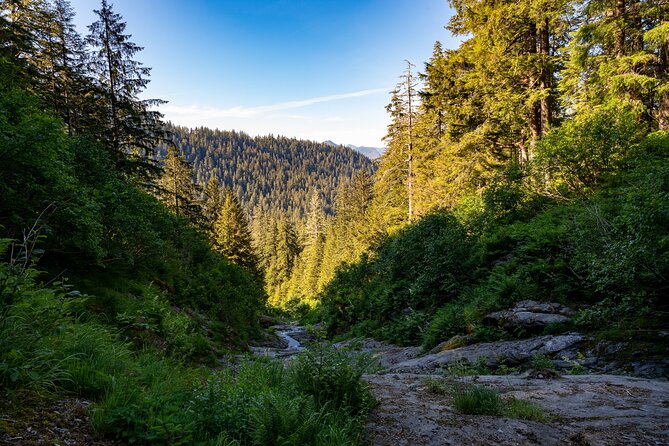
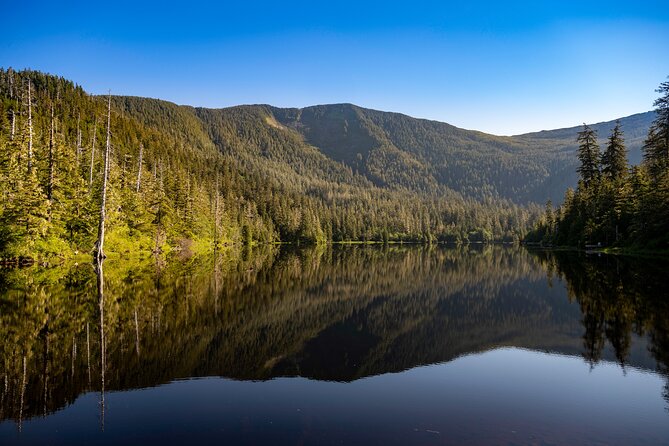
Your trail begins on an improved gravel path alongside a forested lake below the mountain. In other words, you get a gentler ramp-up before the steeper sections. It is also a nice setup for photos. Even early on, you have water views through the trees, and plenty of spots to stop without feeling like you are holding up a massive group.
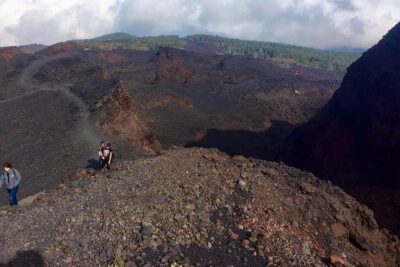
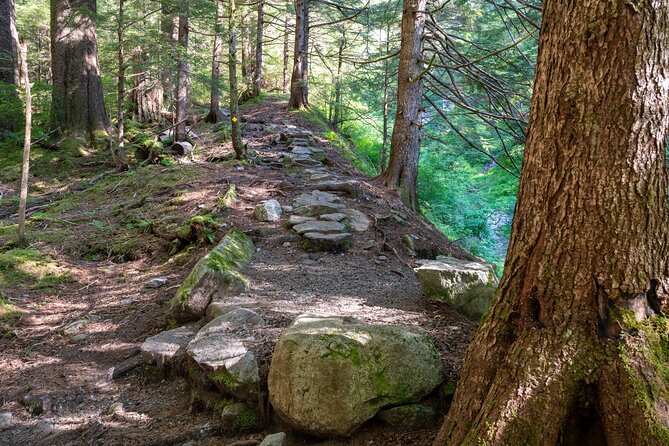
After the first stretch, the trail becomes more natural underfoot. That is where you should expect gravel mixed with larger rocks and roots as you ascend. If you have hiked in rainforests before, this type of footing will feel familiar, but it still counts as a real climb. It is not technical, but it is not a flat walk either.
As you gain elevation, the forest changes with your effort. You are moving through old-growth rainforest, with big specimens like Sitka spruce and other mature tree species in the mix. This is the part where paying attention pays off. The guide’s explanations help you see the forest as a system, not just a wall of green.
The route is about 5.5 miles roundtrip, and the hiking time is around 3.5 hours. That is enough time to make it meaningful, but not so long that you feel totally cooked after one event. Still, the elevation gain is substantial, so treat it as a workout day—even if you take pauses to photograph and breathe.
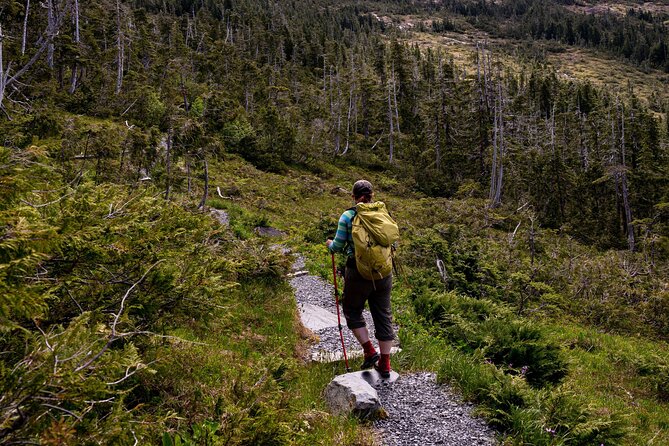
One consideration: the better your shoes and trekking technique, the more enjoyable this feels. If you tend to slip on rocks, bring solid footwear and use the trekking poles that are included. They make a big difference on rooty, uneven stretches.
Alpine Overlook at the 1600-Foot High Point: Where the Views Take Over
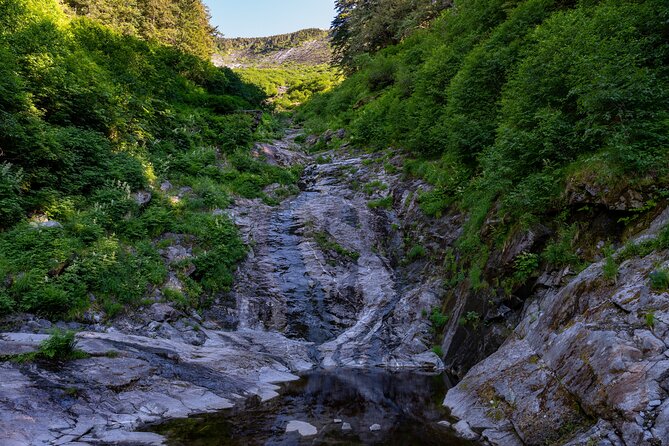
The main goal is the alpine high point reached at the end of the improved trail. This is where the rainforest gives way to openness, and the air feels different. The views are the star: mountains circling you, the lake, and Tongass Narrows below.
It is not just pretty from a single angle. You can rotate and keep finding new sightlines. That is why the 360-degree description matters. You are not stuck with one postcard frame.
This is also the place where your body catches up with your eyes. The effort of the climb turns into a calmer kind of payoff. The guide’s talk often fits this stage too—questions about trees and old-growth make more sense when you can see the broader terrain and understand how these protected forests sit above the water.
You should also know this: because you are not permitted beyond the allowed endpoint, the hike feels controlled. The view is still huge, but you are not left wondering why you cannot push further. You just get the right view at the right altitude, within the rules that keep the area managed.
And yes, the whole outing is weather-dependent. If you get clouds or fog, views can be muted. If you get breaks in the weather, you’ll be glad you showed up.
What You Get With the Tour (and What You Should Plan to Handle)
Included items are genuinely useful here:
- trekking poles
- backpacks
- binoculars
- bottled water
- air-conditioned vehicle and private transportation
- admission ticket for the hike
That bundle matters because it reduces what you need to bring. Trekking poles especially are a “smart add” for uneven trail. Binoculars are a great way to make long-distance viewing more rewarding once you reach the alpine. Even if you do not spot wildlife, you can still scan mountain and shoreline details.
What is not included:
- WiFi on board
- a restroom on board
So, plan like a grown-up hiker: hydrate, go before you leave any facilities you have access to, and do not count on a convenience stop mid-hike. If you are the type who needs WiFi constantly, treat this as time without it. It is part of the point.
One more practical detail: service animals are allowed. If you travel with one, this kind of small-group hike can be easier than big group excursions.
Price and Value: Is $476.45 Worth It?
At $476.45 per person for a private extended mountain trek, this is not a budget activity. But value is not just the sticker price. Here is what you are paying for, in real-world terms:
First, you are getting a private outing with a small group cap of up to 7 people. That matters when you want pacing adjusted and time for questions. It is also a guided hike in an area that has access limits, including only one guided slot per day and restrictions on going to the very top.
Second, you get practical included gear. Trekking poles, binoculars, and backpacks are not always provided on guided hikes. That reduces your need to rent or pack extra items, and it also means the guide can run the route comfortably with the right equipment.
Third, the elevation-to-view payoff is strong. About 1100 feet up to around 1600 feet, ending with 360-degree views over mountains, the lake, and Tongass Narrows below. In Alaska, that kind of viewpoint access usually requires either self-guiding tough terrain or paying for a guide who knows how to manage the hike within regulations.
So who gets the best value? People who want more than a casual trail walk, and who like guided context—tree and plant learning, plus old-growth forest protection themes. If you want the cheapest way to get outside, you might choose something else. If you want a structured climb with a guide who talks and adapts to you, this price starts to make sense.
Who This Private Alpine Trek Suits Best
This is for hikers with a strong fitness level. The tour calls for that clearly, and the elevation gain backs it up. If your hiking style is steady and you do well on uphill routes with uneven footing, you will probably enjoy it.
It also fits well if you:
- want small-group attention rather than a large crowd experience
- like learning about plants, trees, and the forest environment
- prefer a guide-led rhythm with time to pause and take photos
- appreciate mindfulness or reflective conversation on a hike
If you are prone to ankle trouble on rocks and roots, I would still recommend it, but with extra caution. Use the trekking poles and take your time on the natural sections.
If you are chasing the highest summit possible, this is not that. It is an alpine overlook within permitted access, which is still spectacular, just not a “to the very top” mission.
Should You Book This Private Ketchikan Mountain Lake Extended Trek?
I think you should book it if you want a guided mountain hike with a real viewpoint payoff and a guide who connects the trail to the living forest around you. Tongass Teague’s approach—paced for your capabilities, loaded with practical plant and tree knowledge, and folded with mindfulness—turns this from a scenic walk into a memorable experience.
Skip it if you are looking for an easy stroll, if you cannot handle uphill routes with rocks and roots, or if weather limits are a big concern for your schedule. This hike needs good conditions for the alpine views to really land.
If you land in the middle—curious, fit, and ready for a workout that ends with broad-open views—this is one of the best ways to see Ketchikan from higher ground.
FAQ
How long does the private trek last?
It runs for about 4 hours.
Where does the tour start?
You meet at Sockeye Sam’s, 425 Water St, Ketchikan, AK 99901.
Is pickup included?
Pickup is offered, and the tour includes private transportation.
How far do we hike and how much elevation do we gain?
It’s about a 5.5-mile roundtrip hike with roughly 1100 feet of elevation gain.
What is the highest point on the route?
The hike reaches a high point around 1600 feet.
Can you reach the very top of the mountain?
No. The route is restricted and does not allow going to the very top of the mountain.
What gear is included?
Trekking poles, backpacks, and binoculars are included, along with bottled water.
Is there WiFi or a restroom during the tour?
There is no WiFi on board, and there is no restroom on board.
What happens if weather is poor or I need to cancel?
The experience requires good weather. If it’s canceled due to poor weather, you’ll be offered a different date or a full refund. You can cancel for free up to 24 hours in advance for a full refund.