REVIEW · POKHARA
Pokhara: Annapurna Base Camp Trek Multi-Day Guided Tour
Book on Viator →Bookable on Viator
Eight days to the Annapurna giants. This trek is interesting because it runs on a guide-led route plan with permits handled, so you spend your energy on the trail instead of paperwork and logistics. You start from Pokhara, get picked up and dropped off, then follow a set path through villages, forests, and big mountain views with someone leading the way.
I also like the built-in payoff of the Poon Hill sunrise and the Jhinu hot springs stop. The one possible drawback to plan around is simple: meals and drinks aren’t included, so you’ll pay along the way in the tea houses.
In This Review
- Key things that make this Annapurna Base Camp trek worth your time
- Why this trip feels smoother than a DIY Annapurna Base Camp plan
- Price and value: what $480 includes (and what it doesn’t)
- Day-by-day: what you’ll actually experience on the Annapurna Base Camp route
- Day 1: Pokhara to Hile via Nayapul (first walking day)
- Day 2: Ulleri stone steps to Ghorepani through rhododendron forests
- Day 3: Poon Hill sunrise, then onward to Tadapani
- Day 4: Forest descent, Kimrong Khola suspension bridge, and Chhomrong views
- Day 5: Bamboo, Deurali, and more forest walking
- Day 6: Along the Modi Khola to Machhapuchhre Base Camp and Annapurna Base Camp
- Day 7: Sunrise over the mountains, down to Bamboo, then Jhinu Danda hot springs
- Day 8: Trek to Nayapul, drive back to Pokhara, and hotel transfer
- Tea-house nights: what “small tea houses / guest houses” really means for you
- Your guide and the kind of help that matters on this trek
- Who this trek suits best (and who should think twice)
- Practical prep checklist for a smoother trek
- Should you book this Annapurna Base Camp trek?
- FAQ
- How many days is the Pokhara to Annapurna Base Camp trek?
- Where does the trek start?
- Are permits and national park fees included?
- What kind of accommodation is included?
- Are meals included?
- Is hotel pickup and drop-off in Pokhara included?
- Do I need to provide passport information before the trip?
- Is this tour private or shared with other groups?
- What is the cancellation refund timeline?
Key things that make this Annapurna Base Camp trek worth your time
- Permits and park fees are taken care of, which removes a big chunk of stress before you even start walking
- Tea-house and guest-house nights keep the experience practical and close to the trail
- Early-morning Poon Hill gives you a dramatic sunrise moment over Annapurna and Dhaulagiri
- Hot springs at Jhinu Danda add a rare recovery reward after days of climbing
- Guide leadership and commentary help you understand what you’re seeing, not just where you’re going
Why this trip feels smoother than a DIY Annapurna Base Camp plan
Annapurna Base Camp is the kind of trek where small planning mistakes can snowball. This tour fixes that by running with a professional guide from start to finish and taking care of TIMs and permit requirements for you. That means fewer last-minute questions and less time chasing documents in Nepal.
I also like the “you don’t have to think about it” rhythm of this itinerary. You’re given a pre-planned route, plus pickup and drop-off in Pokhara. Even the first drive has a clear start point: a ride from Pokhara to Nayapul (about 1.5 hours) before your first walking day begins.
A quick note on guides: in past trekkers’ accounts, management and guides have been credited for smooth runs. Names like Sunil Dahal (management) and guides such as Dadhi and Ramu show up with praise for making the trek feel organized and memorable. That lines up with what you want in a multi-day mountain walk—someone who can keep things moving when weather, timings, or simple logistics get unpredictable.
You can also read our reviews of more tours and experiences in Pokhara.
Price and value: what $480 includes (and what it doesn’t)
At $480 per person for about 8 days, this is not a bare-bones bargain—but it also isn’t just paying for a sticker price. Here’s what you get included:
- 7 nights in small tea houses / guest houses
- National park permits and fees (TIMs and permits)
- Professional guide
- Hotel pickup and drop-off in Pokhara
- Private tour (only your group participates)
- Taxes and handling charges
What you don’t get:
- All meals and drinks (you purchase them along the way)
So the value is really in the package: lodging near the route, a guide to keep you on track, and the “paperwork” part handled in advance. If you’ve tried to coordinate permits and route logistics on your own, you already know that those tasks can take more energy than you’d expect.
One more practical detail: the tour summary notes group discounts and a mobile ticket. If you can travel with friends or family, your per-person cost may improve. If you’re going solo, this price is still fair for what’s included, but do expect to pay separately for food every day.
Day-by-day: what you’ll actually experience on the Annapurna Base Camp route
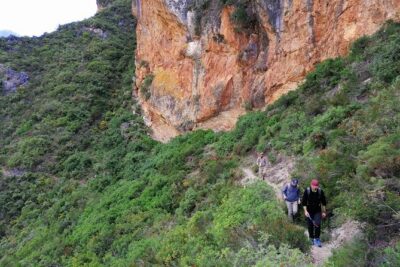
This trek builds day by day: villages first, then thicker forest, then deeper mountain country, ending with the base camp itself and a descent that finishes with hot springs before returning to Pokhara.
Day 1: Pokhara to Hile via Nayapul (first walking day)
You’ll drive from Pokhara to Nayapul (about 1.5 hours). Then the trek starts through Birethanti, a village stop, before you head uphill and follow the Bhurungdi Khola (river).
You finish the day at Hile. Plan for a longer first day: the walk is listed at about 7 hours. The “value” of this day is not dramatic views the whole time—it’s the warm-up. You’re getting your legs working, learning the pace, and settling into the rhythm of stair-like uphills and valley walking before the bigger climbs later.
Day 2: Ulleri stone steps to Ghorepani through rhododendron forests
Day 2 is the classic uphill entry: you climb the stone steps known as Ulleri, then trek through rhododendron forests, with a stop near Banthanti.
You end in Ghorepani, a picturesque village, after about 6 hours. This is a good day for hikers who like movement with nature around them. Rhododendron forests also signal that you’re moving through a lively mix of plants and wildlife zones compared with lower, drier paths.
Day 3: Poon Hill sunrise, then onward to Tadapani
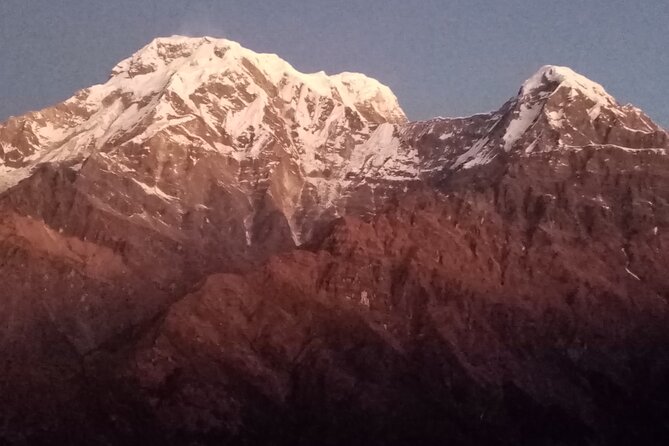
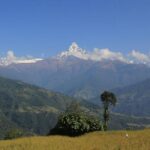
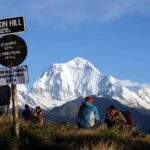
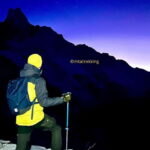
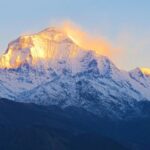
If you love a big payoff, this is the day. You wake early and hike to Poon Hill for sunrise over the Annapurna and Dhaulagiri ranges. Then you come back down to Ghorepani for breakfast and keep trekking toward Tadapani.
It’s listed at about 7 hours for the walking portion of the day. The drawback to consider is timing: sunrise treks mean early starts and you’ll want to be ready for cold morning air. The upside is that the Poon Hill moment is one of the most memorable parts of the broader Annapurna circuit.
Day 4: Forest descent, Kimrong Khola suspension bridge, and Chhomrong views
Today mixes work with reward. You descend through dense forest, with glimpses of the mountains. Then you cross a suspension bridge over the Kimrong Khola, and after that you climb up to Chhomrong.
Chhomrong is a Gurung village, and it’s a highlight because the mountain views are strong from there. Expect a full day of about 7 hours. Suspension bridge crossings always feel like a small mental reset: suddenly you’re switching sides, looking down at the river below, then gearing up for the next uphill.
Day 5: Bamboo, Deurali, and more forest walking
This is another “bridge + climb + forest” day. You descend to the Chhomrong Khola, cross another suspension bridge, then head uphill to Sinuwa. From there you trek through rhododendron forests again, reach Bamboo, and continue onward to Deurali.
The itinerary lists about 7 hours. I like this day’s structure because it keeps you moving through different sections of vegetation—forests can feel different from one valley stretch to the next. It also sets you up for the bigger final approach days.
Day 6: Along the Modi Khola to Machhapuchhre Base Camp and Annapurna Base Camp
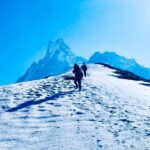
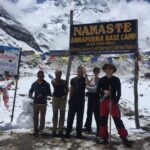
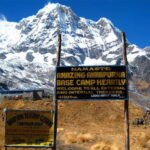
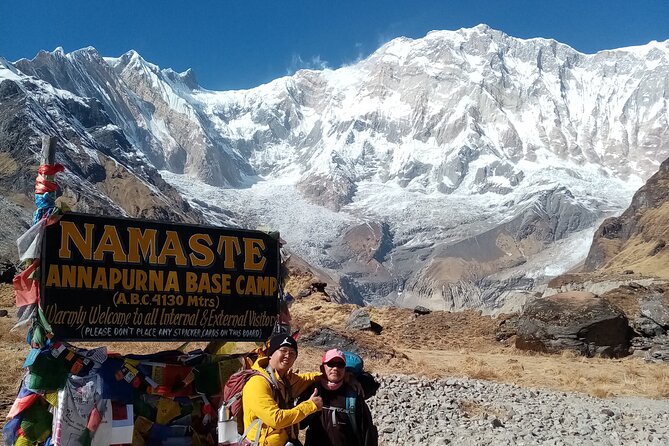
Day 6 is your “go higher” day with serious scenery. You trek along the Modi Khola, with snow-capped peaks all around. You pass Machhapuchhre Base Camp (3,700m), then continue toward Annapurna Base Camp.
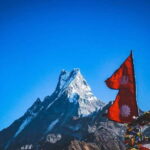
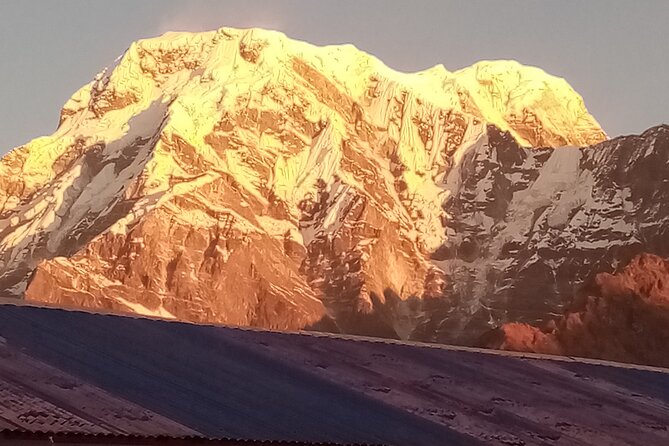
You reach base camp after about 6 hours. This day matters because it’s where the trek stops feeling like just a hike and becomes the real goal. You’ll see Annapurna I, Annapurna South, Hiunchuli, and other peaks from this area.
Also, base camp days often come with a lot of standing around for photos and views. Having a guide helps keep you moving at the right pace and prevents wasted time.
Day 7: Sunrise over the mountains, down to Bamboo, then Jhinu Danda hot springs
This day is a different kind of satisfaction. You wake early for another sunrise view, then begin a descent back to Bamboo, retracing part of the route. After that, you keep descending to Jhinu Danda.
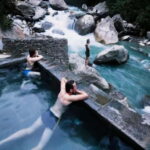
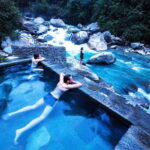
Finally, you relax at the natural hot springs at Jhinu Danda. The trekking portion is listed at 7 hours. Hot springs are a smart reward on a route like this: after repeated downhills and uneven steps, your legs can feel overworked. Even a short dip can make the last day feel more doable.
Day 8: Trek to Nayapul, drive back to Pokhara, and hotel transfer
On day 8, you trek further down to Nayapul. Your driver then drives you back to Pokhara, and you’re transferred to your hotel to wrap up the trip.
This is a true “finish strong” day. If you’ve been pushing your pace, this is where you’ll feel the difference between conserving energy earlier and trying to rush. Keep your steps light and controlled, and you’ll reach the end feeling proud instead of wrecked.
Tea-house nights: what “small tea houses / guest houses” really means for you
This tour includes 7 nights in small tea houses or guest houses. That typically translates to simple rooms and a practical setup. You’re not here for luxury. You’re here for function: sleep, warmth where possible, and getting ready to walk again.
Because meals and drinks aren’t included, you’ll buy food on the mountain. That’s not a dealbreaker. It also gives you flexibility. On tough days, you can choose what sits best in your stomach. On easier days, you can enjoy a warmer meal without worrying that your plan already “paid for” it.
One more useful tip: since food is separate, you’ll want to budget for daily costs. Even if your guide organizes most things, you’re still the one paying at meal time.
Your guide and the kind of help that matters on this trek
A guide isn’t only about route finding. On a trek like this, guide help shows up in small, practical ways:
- pacing you through long walking blocks
- keeping timing workable for early starts like Poon Hill
- pointing out what you’re seeing in villages, forests, and mountain areas
- handling the permits portion before you step onto the trail
In past accounts, guides and management have been credited for making the overall experience run smoothly. When names like Dadhi and Ramu come up alongside Sunil Dahal as part of the management team, it suggests a real focus on coordinating the trek end to end—not just leaving you with a map.
Who this trek suits best (and who should think twice)
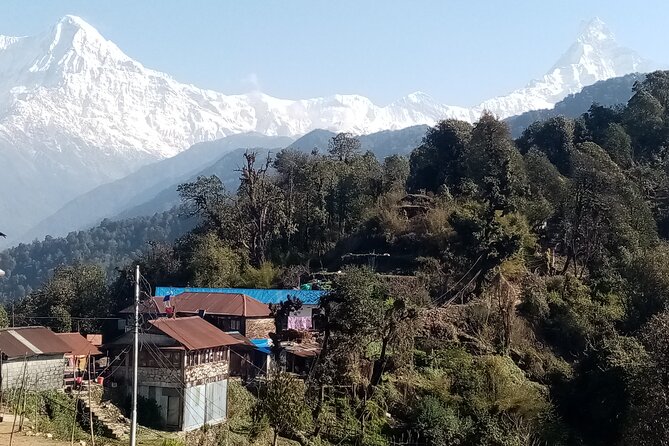
This is listed for people with a strong physical fitness level. There’s also a minimum age of 5, with children required to be accompanied by an adult. That tells you the organizer expects capable walkers who can handle multi-day trekking.
This tour is a great fit if you want:
- a clear plan with guide leadership
- the “big sights” that anchor the Annapurna story (Poon Hill, Chhomrong, base camp, and Jhinu hot springs)
- permits and fees handled instead of DIY
You might think twice if you hate early mornings. Sunrise starts are part of the itinerary, and early hikes are non-negotiable if you want those views.
Practical prep checklist for a smoother trek
You can’t control mountain weather, but you can control how ready you are.
- Send the required passport scans and a digital passport-size photo before the trip. Confirmation happens at booking, but they require those documents in advance.
- Pack for long days of hiking. Even when the walk is “only” 6 hours, it’s still hours of uphill and downhill stepwork.
- Budget for meals and drinks each day. Tea-house dining is part of the experience here.
- If you’re traveling with kids, plan for adult control and pacing since the trip is still demanding and has a minimum age rule.
Should you book this Annapurna Base Camp trek?
I’d book this if you want an organized, guide-led trek that hits the essentials: Pokhara logistics, tea-house nights, Poon Hill sunrise, Annapurna Base Camp, and the calming finish at Jhinu hot springs.
Skip it—or at least ask tough questions—if paying for meals and drinks daily would stress your budget, or if you’re not comfortable with a multi-day itinerary that includes early starts and several days around 6–7 hours of walking.
If you’re ready for a classic Annapurna approach with solid support and a set plan, this one looks like a strong choice.
FAQ
How many days is the Pokhara to Annapurna Base Camp trek?
The tour runs for 8 days approximately.
Where does the trek start?
You start from Pokhara and drive to Nayapul (about 1.5 hours), then begin trekking from Nayapul.
Are permits and national park fees included?
Yes. The tour includes TIMs and national park permits and fees.
What kind of accommodation is included?
You get 7 nights in small tea houses or guest houses, as per the itinerary.
Are meals included?
No. Meals and drinks are not included, and you can purchase them during the trek.
Is hotel pickup and drop-off in Pokhara included?
Yes. Pickup and drop-off in Pokhara are included.
Do I need to provide passport information before the trip?
Yes. You need to send scanned copies of each passport and a digital passport-size photo in advance.
Is this tour private or shared with other groups?
It’s private. Only your group participates.
What is the cancellation refund timeline?
You can cancel up to 6 days in advance for a full refund, 2–6 days for a 50% refund, and less than 2 days before won’t be refunded.