REVIEW · KATHMANDU
Upper Mustang Trekking
Book on Viator →Operated by Everest Trekking Routes Pvt. Ltd. · Bookable on Viator
Upper Mustang feels like time travel. This 18-day trek takes you through ancient villages and the walled city of Lo Manthang, where Tibetan Buddhist monasteries and everyday local life sit right next to big, dramatic mountain views. I especially like the way the route keeps things demanding but manageable, with long days of walking offset by lodge/tea house stays and a clear rhythm. One thing to plan for: you’re in a restricted-area system, so permit timing and entry checks can affect your day-by-day flow.
What makes this experience stand out is how well it’s put together around real trekking needs: private transfers, a government-licensed guide, and porter support with the ratio 1 porter for every 2 people. I also like that you get both cultural highlights (monasteries, King Palace in Lo Manthang, gompas around Dhakmar) and trekking variety (climbs, a big downhill toward the Kali Gandaki River, then easier hiking into Jomsom). The possible drawback is simple: this is a physically solid trek, and the high winds in the Mustang region can turn the afternoon stretch into slow work.
In This Review
- Key Highlights Worth Your Attention
- Upper Mustang’s Real Appeal: Walled Cities, Old Trails, Fewer Crowds
- Price and Value: What $2,400 Covers (and What You Still Pay)
- Getting There Smoothly: Kathmandu to Pokhara to Jomsom
- Entering Restricted Mustang: Kagbeni, Chhusang, and the Paperwork Reality
- Trek Days That Build Your Legs (and Your Views): Syangboche, Tsarang, and the Road to Lo Manthang
- Lo Manthang Day: Monastery Quiet and the King Palace Visit
- Looping Through Dhakmar and Ghami: Gompas, Valley Life, and Apple Country
- The Big Downhill and the Wind Factor: Chhusang Back to Kagbeni
- Final Walking Days: Jomsom Check, Flight Timing, and the Pokhara Reset
- Lodges, Meals, and Daily Rhythm on the Trek
- Logistics That Make the Trek Feel Supported (Not Managed)
- Who Should Choose Upper Mustang Trekking
- Should You Book Upper Mustang Trekking?
- FAQ
- Do I need a permit for Upper Mustang?
- How do I travel from Kathmandu to the trek start?
- What’s the altitude when you fly to Jomsom?
- Where do you stay during the trek?
- How many nights are in Kathmandu and Pokhara?
- Is there a guide and porter included?
- What meals are included?
- What cancellation window is offered?
Key Highlights Worth Your Attention
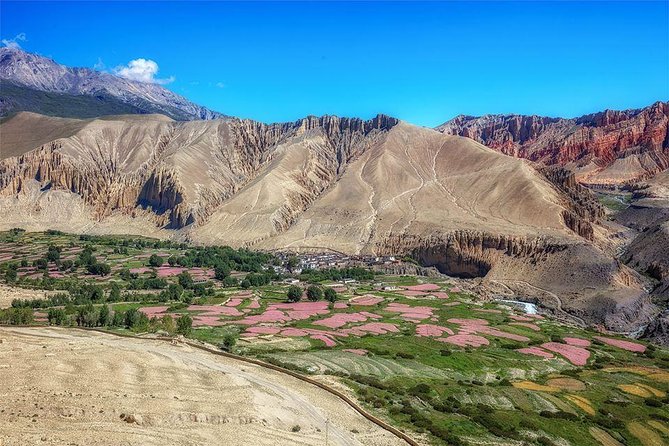
- Lo Manthang access through the Kagbeni entry gate, with the special Upper Mustang permit checks built into the schedule
- Walled city day with visits to the monastery areas and the King Palace in Lo Manthang
- Route variety: steady climbs to Syangboche, valley walking through Tsarang, then a big downhill toward Kagbeni
- Moderate altitude pattern: in planning, expect most hiking to stay under about 4,000m, while major peaks stay visible
- Practical support: government-licensed guide plus porters so you can focus on your steps
- Jomsom reset: a shorter final hike and time to check flights before you fly to Pokhara
Upper Mustang’s Real Appeal: Walled Cities, Old Trails, Fewer Crowds
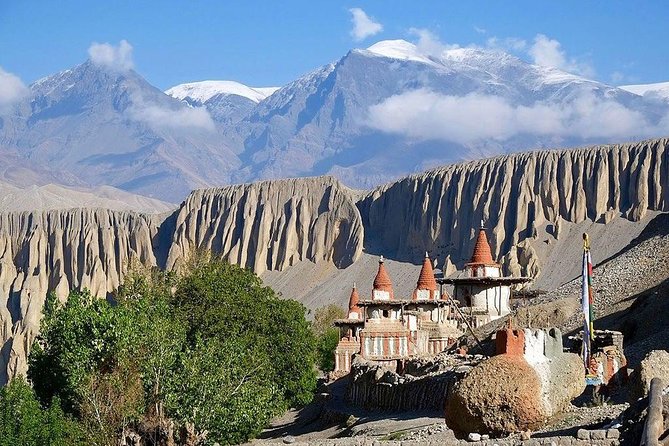
Upper Mustang sits in a special corner of Nepal where Tibetan Buddhist culture is visible in daily life, not just as a side-note. You’ll feel that on the ground: carved stone walls, monastery buildings, and villages arranged around old routes. It’s also one of the trek regions where you’re less likely to feel packed in, which makes your time in places like Lo Manthang feel more personal.
Even the walking pattern supports the vibe. This isn’t a summit scramble. Instead, you move through the Mustang valley system day by day—switching between climbs, flatter stretches, and the kind of long descent that changes how your legs feel by the afternoon. That balance is part of why people choose this trek: it’s about the place, not chasing a peak.
One more honest note: the Mustang region can be dusty. If you’re sensitive to dust or want lots of fresh, clean air moments, plan on covering up some skin and using sunglasses. You’ll still enjoy the views, but you’ll earn them.
You can also read our reviews of more tours and experiences in Kathmandu.
Price and Value: What $2,400 Covers (and What You Still Pay)
At $2,400 per person, this trip is not cheap, but it also isn’t just “basic trekking.” You’re paying for a full package that includes major cost drivers that are hard to recreate independently:
- Permits: ACAP trekking permit is included, and the Special Upper Mustang Permit is $500 per person for 10 days
- Transportation: private pick-up and drop, Kathmandu to Pokhara by tourist bus, and domestic flights Pokhara to Jomsom and Jomsom to Pokhara
- Lodging during the trek: tea house/lodge accommodations are included
- Meals: 16 lunches and dinners, plus breakfast 17 times
- Guides and porters: a government-licensed trekking guide and porter support (1 porter for 2 people) are included
Where the price starts to make sense is the permit + flights combo. Upper Mustang access requires a special permit, and the trekking itself relies on getting into the region through defined entry points. Then you add domestic air travel to Jomsom, which saves time and keeps the route realistic for an 18-day itinerary.
What’s not included is also clear. You’ll need to budget for personal expenses and tips for the guide, porters, and drivers. If tips matter to you, you can plan ahead rather than having to guess at the last moment.
Getting There Smoothly: Kathmandu to Pokhara to Jomsom
This trek begins in Kathmandu with a simple, useful setup. On arrival, representatives of Everest Trekking Routes Pvt. Ltd. meet you at TIA and transfer you to a hotel. That matters because the day you land is not the day you want to figure out transport.
Day 2 is also practical. If you want the Upper Mustang permit sorted in advance, you’ll go after breakfast for the process to obtain the special permit using your original passport with your Nepal visa. The permit takes a day, and you also get time for Kathmandu Valley sightseeing before another overnight.
Then comes the transit rhythm. You take a tourist bus in the morning (departing around 7:00 AM) along the Prithivi Rajmarg highway toward Pokhara, with a breakfast stop after about 2 hours. This isn’t glamorous, but it’s efficient and gets you positioned for the next step.
From Pokhara, you fly to Jomsom at 2,715m. That altitude is not the extreme part of Mustang trekking, but it’s high enough that you’ll want steady pacing right away. From Jomsom, you trek to Kagbeni in about 4–5 hours, following the famous Mustang route toward Muktinath.
Entering Restricted Mustang: Kagbeni, Chhusang, and the Paperwork Reality
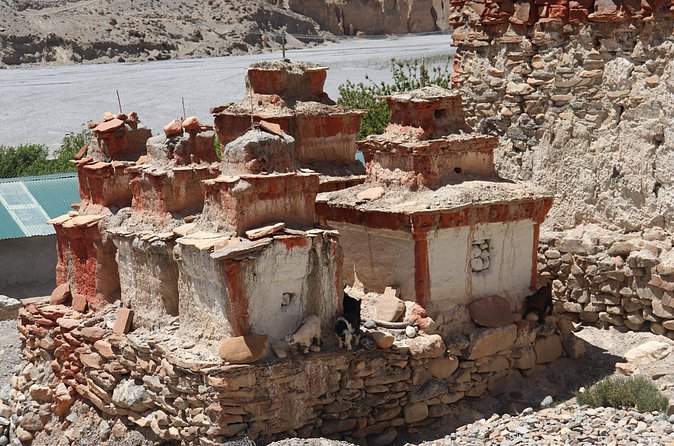
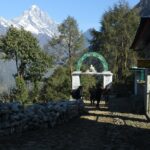
Kagbeni is more than just a village stop. It’s the main entry gate for the restricted Upper Mustang area. Your schedule includes the key reality check: Kagbeni’s permit and entry processes cost $500 per person for 10 days, and you need time for checking.
So on day 5, after reaching the Kagbeni area, you descend and handle the entry check, then continue onward into Upper Mustang. This is one place where being patient pays off. You’re not just walking through a scenic spot—you’re going through a controlled access area.
After that “gatekeeping” day, the trek starts to feel more like the classic Upper Mustang experience. You’ll move from Chhusang to Somare, where the trail includes stretches that are flatter with a few step-like parts, then you’ll climb toward Syangboche. You’re aiming for long days that build a steady endurance level rather than day-after-day max effort.
Trek Days That Build Your Legs (and Your Views): Syangboche, Tsarang, and the Road to Lo Manthang
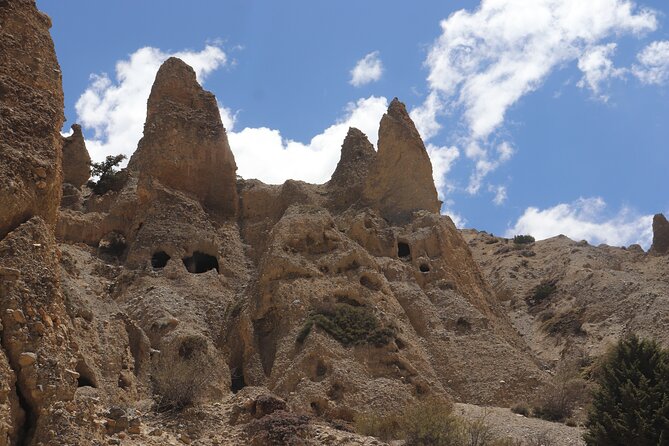
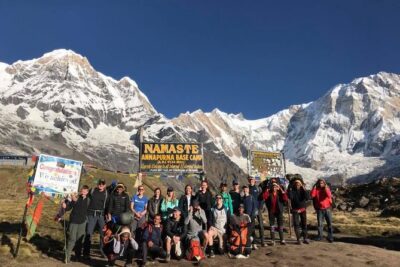
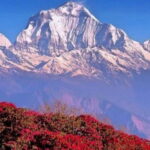
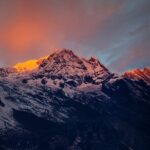
The climb to Syangboche is one of those days that changes your pace. Expect mostly uphill trekking, about 5–6 hours, with breaks for lunch and rest. The reward is the kind of view that makes you stop without meaning to. On clear days, the white ranges of mountains like Dhaulagiri and Annapurna are described as visible from this area, and that fits the Mustang reputation for long, clear lines of sight.
Day 8 adds more village texture. If the weather is clear, you’ll see farms and pass Ghiling village, plus old monasteries along the route toward Tsarang. Tsarang is a bigger stop in the mix of villages, which means you get a stronger sense of how the valley community functions—less like a series of remote waypoints, more like a connected living place.
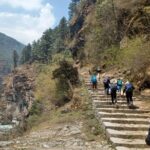
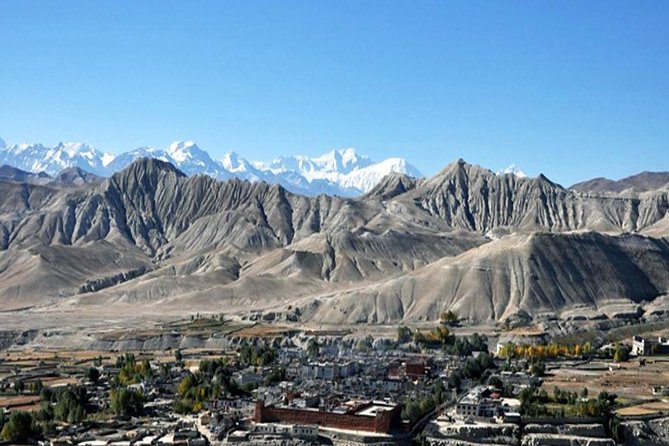
Then day 9 pushes you toward the goal: Lo Manthang. The walk takes 5–6 hours, with river crossings and bridges along the way and some sections that feel deserted and quiet. That quiet is part of the magic. You’re not rushing through a busy tourist corridor; you’re walking into the walled city’s orbit.
Lo Manthang Day: Monastery Quiet and the King Palace Visit
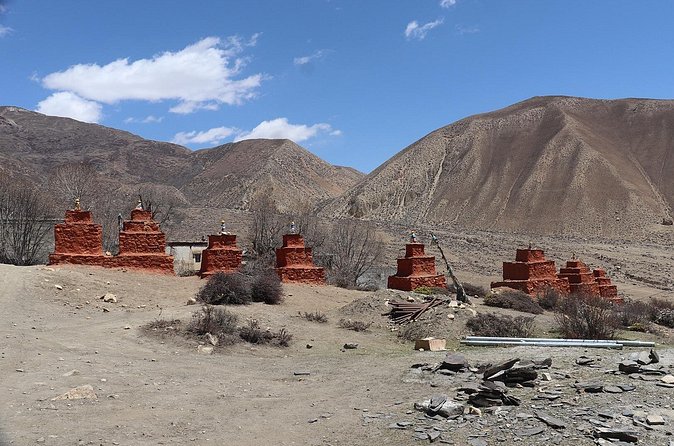
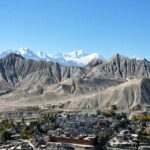
Reaching Lo Manthang is the moment Upper Mustang starts to feel cinematic—but still grounded. After you arrive, you spend a day exploring the walled city and its key cultural sites.
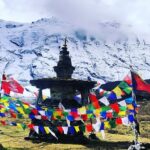
Your day includes visits to the Monastery areas and the King Palace. This is important to plan for mentally. In many trekking regions, the main attraction is scenery. Here, the main attraction is a built heritage system—stone, walls, religious buildings, and the way these spaces shape daily life.
Even if you’re not an expert on Tibetan Buddhism, you’ll get something useful: a sense of how the city was designed for stability in a remote environment. The focus on monasteries and palace areas helps you understand the region as more than a hiking route.
Looping Through Dhakmar and Ghami: Gompas, Valley Life, and Apple Country
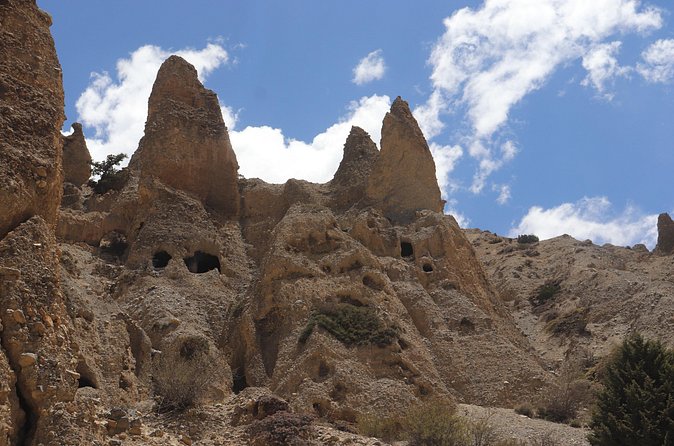
After Lo Manthang, the trek continues through other settlements that keep the route interesting.
On day 11 you head toward Dhakmar, and the beginning includes an uphill to a gompa. The route here is described with history around gompas, which is exactly the kind of detail you want on a trek like this. It turns you from a walker into a reader of the landscape of buildings.
Day 12 continues to Ghami, including the idea that Ghami has a big village and monastery presence and is a popular route stop. You’ll also see farming life and apple gardens referenced in the itinerary notes. That’s another reason I like this trek: you get more than stone and religion. You also see how people survive in a dry, high valley system—through crops, small farms, and long seasonal rhythms.
The Big Downhill and the Wind Factor: Chhusang Back to Kagbeni
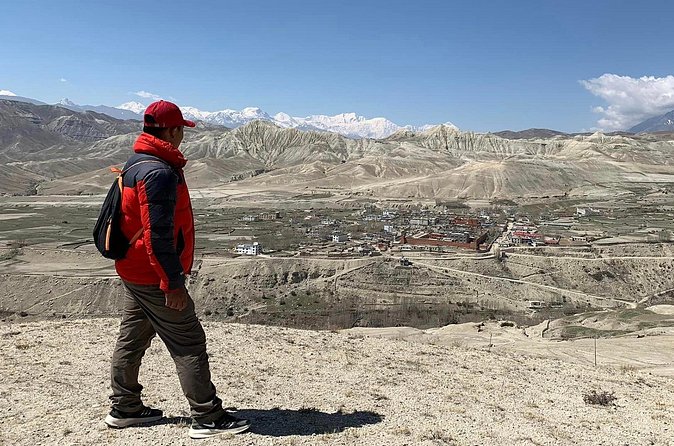
When you head back, the itinerary shifts your body. Day 13 includes a big downhill from Syangboche to Chhusang, and you’ll descend roughly 1,000 meters toward the Kali Gandaki River area. You also pass villages such as Samar, Bhena, and Chele. Expect this day to affect your knees and ankles more than your lungs.
Day 14 is where logistics meets the weather. You travel from Chhusang to Kagbeni and you leave a little early so you can avoid the worst wind. The notes are direct: after around 12:00 PM, strong winds can make the walk tougher until you reach the Kagbeni side. That’s why early starts matter here. If you’re the type who likes a slow breakfast, this is the day you may want to tighten your routine.
Final Walking Days: Jomsom Check, Flight Timing, and the Pokhara Reset
Day 15 takes you from Chhusang/Kagbeni area to Jomsom in an easier, shorter hike. Once you reach Jomsom, check your flight schedule for the next day. This is one of those small steps that prevents last-minute stress. You’ll also have some free time for Jomsom city wandering and shopping, with apple brandy mentioned as a locally made item from apple producers.
Day 16 is the flight day back to Pokhara. Your timing depends on the flight schedule, so you might eat breakfast in Jomsom or leave early to the airport. The flight is short (around 25 minutes), then you transfer to your Pokhara hotel. The trek structure also helps: your backpack can be left while you move on.
Day 17 brings the final land transfer. You take a short drive to the Pokhara bus park, then ride a tourist bus back to Kathmandu for about 7 hours. That long bus segment is a good time to do what you should do after a trek: hydrate, rest, and reset your thinking for the home stretch.
Day 18 ends simply. You’ll be dropped at TIA for your final departure, which is exactly what you want after 18 days of walking and adapting.
Lodges, Meals, and Daily Rhythm on the Trek
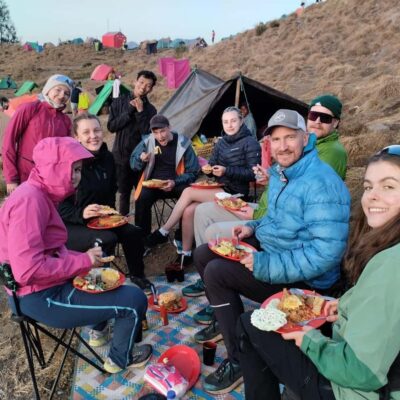
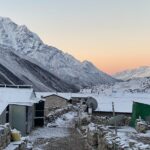
Your overnight plan is based on tea houses/lodges during the trek. That means you’re not camping, and you’re not switching sleeping setups every day. The trade-off is that you’ll live with lodge norms: basic rooms, shared dining spaces, and typical high-altitude heating realities.
Meals are a big part of comfort on this route. With lunch and dinner included for 16 days, you don’t have to hunt for food between villages. Breakfast is included 17 times, which helps because many of the early-start days depend on your energy staying steady.
Hydration and pacing are still on you. The trek offers strong cues—climbs toward Syangboche, downhill to the river system, and wind-heavy sections near Kagbeni. When you feel your pace slow, don’t fight it. In Mustang, the win is consistent movement.
Logistics That Make the Trek Feel Supported (Not Managed)
One reason people rate this trek highly for organization is the combination of planning plus discretion. This tour is private, meaning only your group participates. That reduces the annoying parts of group travel and makes it easier to keep your pace aligned with your own comfort level.
You’ll also have:
- A government-licensed guide
- A porter system with 1 porter for 2 people
- Airport/hotel transfers by private car/van/bus
- Lodging included in Kathmandu and Pokhara, with 3 nights in Kathmandu and 2 nights in Pokhara, both with breakfast
Mobile tickets are mentioned too, which is a small detail but often useful when schedules shift slightly.
Who Should Choose Upper Mustang Trekking
This trip is a good fit if you want:
- Tibetan Buddhist culture tied to real village life, not just a museum stop
- A trek that feels remote without requiring technical climbing
- Moderate altitude hiking that often stays under about 4,000m while still offering high-peak visibility
It’s also a solid choice if you value friendly, helpful support—the itinerary’s porter and guide setup gives you real assistance where it counts.
If you’re easily discouraged by wind, have knee issues that struggle with steep descents, or you prefer very low-effort vacations, you may find parts of this route challenging.
Should You Book Upper Mustang Trekking?
If your goal is a trek that blends Lo Manthang’s walled-city heritage, monastery visits, and a walking route that stays dramatic without being technical, this is a strong booking. The value looks especially good when you factor permits, domestic flights, guided support, and included meals and lodge stays.
I’d book if you can handle early starts, at least moderate physical effort, and the reality of restricted-area entry checks. I’d think twice if you’re not comfortable with wind-prone afternoons or long downhill days.
In plain terms: Upper Mustang is for people who enjoy being in the place, not just passing through it. If that sounds like you, this itinerary is built to get you there.
FAQ
Do I need a permit for Upper Mustang?
Yes. You need the ACAP (Annapurna Conservation Area Project) trekking permit included, plus a Special Upper Mustang Permit that costs USD 500 per person for 10 days. Permit checks are associated with the Kagbeni entry gate and can also be arranged in Kathmandu using your original passport with your Nepal visa.
How do I travel from Kathmandu to the trek start?
You transfer from Kathmandu by tourist bus (departing around 7:00 AM) toward Pokhara, then fly from Pokhara to Jomsom. After the trek, you fly Jomsom to Pokhara and return to Kathmandu by tourist bus.
What’s the altitude when you fly to Jomsom?
The trek begins from Jomsom at 2,715 meters.
Where do you stay during the trek?
You stay in lodge/tea houses throughout the trekking portion of the trip.
How many nights are in Kathmandu and Pokhara?
You get 3 nights in Kathmandu (3-star accommodation with breakfast) and 2 nights in Pokhara (accommodation with breakfast).
Is there a guide and porter included?
Yes. The trek includes a government-licensed trekking guide and porters with a ratio of 1 porter for 2 people.
What meals are included?
The trip includes 16 lunches and dinners plus breakfast 17 times. (Your exact number of meals aligns with the 18-day schedule.)
What cancellation window is offered?
You can cancel up to 6 days in advance for a full refund. A 50% refund applies if you cancel 2 to 6 days before the experience start time. Less than 2 days before the start is not refunded.