REVIEW · KATHMANDU
Private Nepal round trip including Ghorepani Poonhill trek
Book on Viator →Operated by Asian Heritage Treks and Travels · Bookable on Viator
Hiking Poon Hill starts with a sunrise gamble. That’s why this Nepal mix works so well: you get Kathmandu culture, Chitwan National Park wildlife, and then a classic Ghorepani Poon Hill trek that’s built around early-morning mountain light. It’s an easy-to-follow route, with private vehicles, an English-speaking guide, and hotel nights kept comfortable for the non-trek days.
What I like most is the pair of hands-on cultural touches. In Thamel, you’ll join a Tibetan momo cooking workshop and then eat your own dumplings for dinner. And at Lumbini, you get the rare chance to stay in a guesthouse inside a monastery, close to the birthplace sites.
One consideration: mountain views and sunrise color depend on weather, and the trek is scheduled for early starts. Also budget for extra costs like sightseeing entry fees (about $60 per person) and tipping, since those aren’t included.
In This Review
- Key things to know before you go
- Kathmandu starts with a smooth landing and first-class logistics
- UNESCO Kathmandu Valley: Swayambhunath, Boudhanath, and Pashupatinath
- Thamel’s momo cooking class: a real cultural activity, not just photo stops
- Bhaktapur Durbar Square and Pottery Square: craft-focused Kathmandu Valley day
- Chitwan National Park: canoe on the river, then jeep for the big chances
- Lumbini’s monastic night: staying inside the monastery grounds
- Pokhara lakeside: your reset after the cultural stretch
- Sarangkot sunrise and the mountain view circuit
- Optional paragliding over Fewa Lake: add-on you’ll feel in your gut
- Ghorepani Poon Hill trek Day 1: Ulleri and the lodge dinner vibe
- Ghorepani village Day 2: rhododendron country and big-peak views
- Poon Hill sunrise Day 3: early start, rhododendron forests, and Tadapani
- Ghandruk and Landruk: Gurung villages between Tolka and the views
- Australian Base Camp to Kande: finishing the trek with a downhill payoff
- Back in Pokhara then Kathmandu: rest days you’ll appreciate
- Price and what you’re buying for $1,829.12
- Who this tour suits best (and who should think twice)
- A note on guides and real human service
- Should you book this private Nepal round trip with Ghorepani Poon Hill?
- FAQ
- How long is the trip?
- Where does the tour start?
- Is airport pickup and drop-off included?
- What trekking is included?
- Are national park fees and trekking permits included?
- What meals are included during the trip?
- Are sightseeing entry fees included?
- Is paragliding included?
- What is the cancellation/refund timeline?
Key things to know before you go
- Private transfers by A/C vehicle between Kathmandu, Chitwan, Lumbini, Pokhara, and back again
- Thamel momo cooking workshop plus a guided rhythm through UNESCO Kathmandu sites
- Chitwan safari mix: canoe ride for river life, then a jeep safari for bigger sightings
- Monastery guesthouse at Lumbini for a quieter, more spiritual night
- Ghorepani Poon Hill sunrise trek with rhododendron forests and Gurung village walks
Kathmandu starts with a smooth landing and first-class logistics
If you’re tired after flying, good. Day 1 is handled that way. You’ll meet an Asian Heritage Treks and Travels representative at Tribhuvan Airport with a sign showing your name, get help with luggage, and head straight to your hotel by private vehicle.
Along the drive you’ll pass major landmarks, including the Pashupatinath Temple (UNESCO) and a glimpse of the Royal Palace Museum, known as Narayanhiti, from the outside. You’ll also catch the Garden of Dreams area as you approach Thamel. For me, this matters because it helps you get your bearings fast before you start climbing temple steps the next day.
Hotels here are described as cozy deluxe, and breakfast is part of the package, which makes it easier to keep mornings moving without extra spending.
You can also read our reviews of more tours and experiences in Kathmandu.
UNESCO Kathmandu Valley: Swayambhunath, Boudhanath, and Pashupatinath
Day 2 is a proper Kathmandu Valley highlight run, with three UNESCO stops that each feel different.
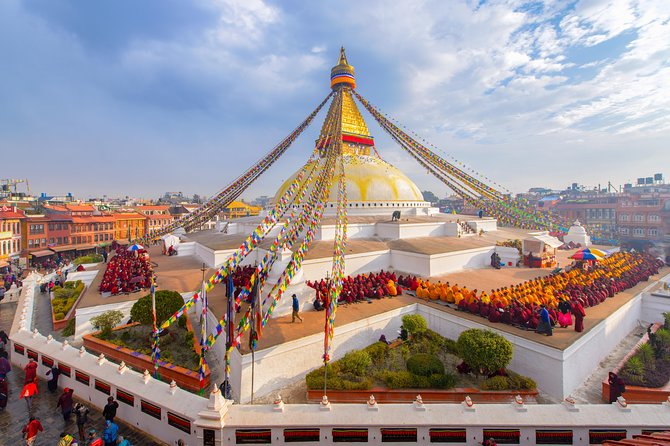
First is Swayambhunath Temple, often called Monkey Temple. It sits on a hill, so you’ll get serious city and valley views. You’ll also see the stupa complex with prayer wheels and colorful prayer flags. Yes, the monkeys are entertaining. Just keep your stuff zipped up—those little characters are fast.
Then it’s Boudhanath Stupa, one of the world’s largest spherical stupas. The route includes a clockwise walk around the stupa, called kora, where the pace slows down and the area’s energy turns more meditative. You’ll also have time to grab lunch around the stupa area, and a rooftop restaurant with views is a great option.
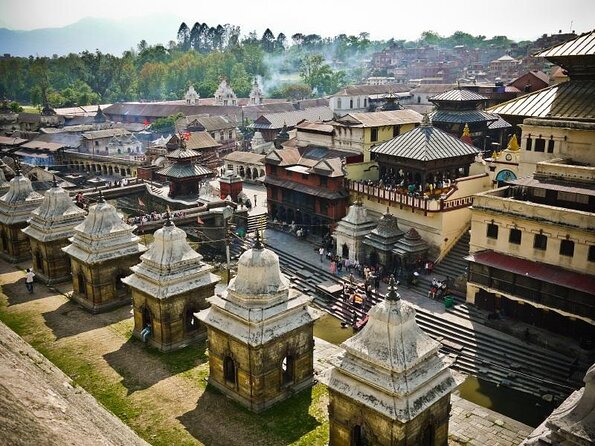
Finally, Pashupatinath Temple brings the Hindu spiritual side. You’ll see priests and devotees during rituals, and the Sandhya Aarti (evening worship ceremony) near the Bagmati River is typically the standout moment—lights, hymns, and that hard-to-replicate atmosphere in the temple precinct.
A small practical note: sightseeing entry fees aren’t included (budget about $60 per person for the full set), so carry some cash just for temple gates and similar costs.
Thamel’s momo cooking class: a real cultural activity, not just photo stops
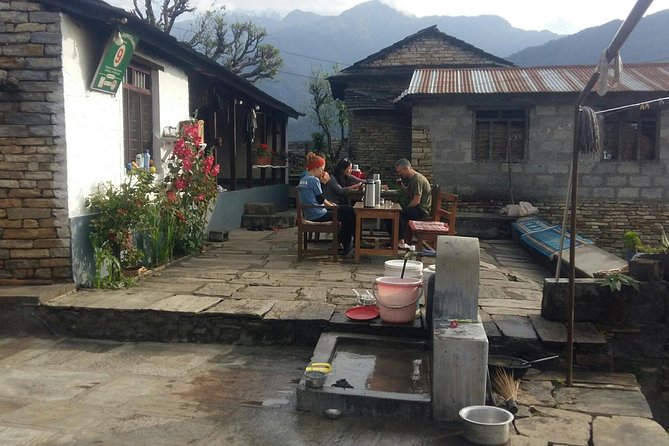
After UNESCO day, you’ll land in Thamel for a different kind of immersion: a traditional Tibetan momo cooking workshop. A local cook teaches you the dumpling method, and you eat what you make during a local dinner.
This is the kind of activity that actually sticks with you. Temple days can blur together. Cooking gives you a tangible souvenir you can redo at home. It also nudges your Nepal trip in a friendlier direction, toward kitchens, markets, and conversation.
Thamel is also the easiest place to shop for handicrafts and souvenirs. The market lanes are busy enough to keep things interesting, but still manageable if you’re ready to bargain a bit.
Bhaktapur Durbar Square and Pottery Square: craft-focused Kathmandu Valley day
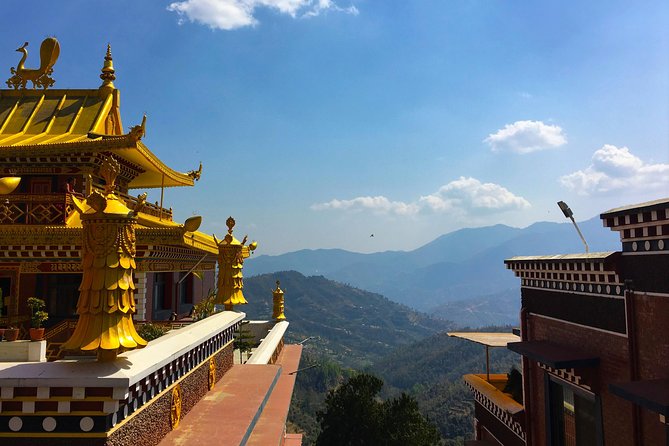
Day 3 moves out of central Kathmandu into Bhaktapur Durbar Square, one of the three royal squares in the Kathmandu Valley. The goal isn’t just to see temples; it’s to understand what you’re looking at, with your guide explaining the site’s history and layout.
Then you get a street-food lunch stop. The idea here is simple: you’re in a place where the food culture is part of daily life, so you don’t have to hunt for it alone.
Later you’ll stop at Pottery Square, where craftsmen work with clay. You’ll join a workshop where a local potter shows you how to make your own clay pot. Even if you end up with a lopsided souvenir, you’ll understand the process—and that makes the whole valley feel more real.
You’ll also pass by Namo Buddha, plus the monastery and stupa area, and continue on toward Dhulikhel, a quieter valley town. This adds a calm reset between the busier heritage sites.
Chitwan National Park: canoe on the river, then jeep for the big chances
Chitwan is where Nepal shifts from stone temples to river and wildlife. Day 4 starts with an early drive from Dhulikhel down to the park. The hotel serves lunch on arrival, so you don’t lose momentum to hunger.
In the afternoon you’ll meet the Tharu village side of Chitwan life. You’ll learn how local residents traditionally lived, and you’ll also attend a performance at the Sauraha Tharu Cultural House. It’s music and dance, with the option to join in. This is one of the better types of cultural programming because it’s not just a staged show—you’re seeing local styles tied to community life.
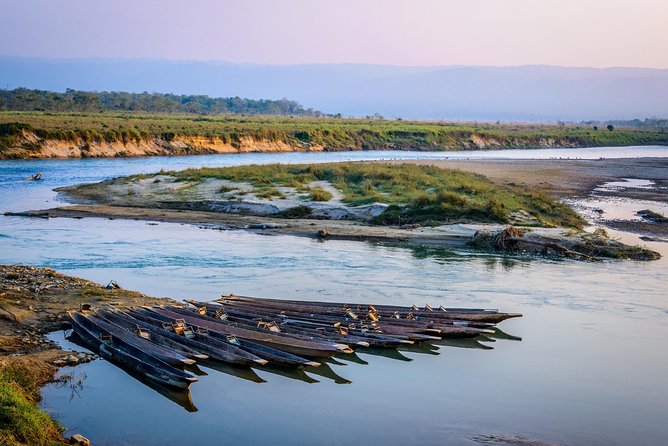
Day 5 is the wildlife day with two modes. First is a canoe ride along the river toward the start of a jungle walk. Expect a slower, watch-the-banks-from-the-water approach. Then after lunch, you switch to a jeep safari, which is where rhinos, elephants, birds, and—if luck is on your side—tiger sightings can happen.
One consideration: Chitwan is wildlife-first, so sightings aren’t guaranteed. But the schedule gives you two chances: river scouting plus jeep searching.
Lumbini’s monastic night: staying inside the monastery grounds
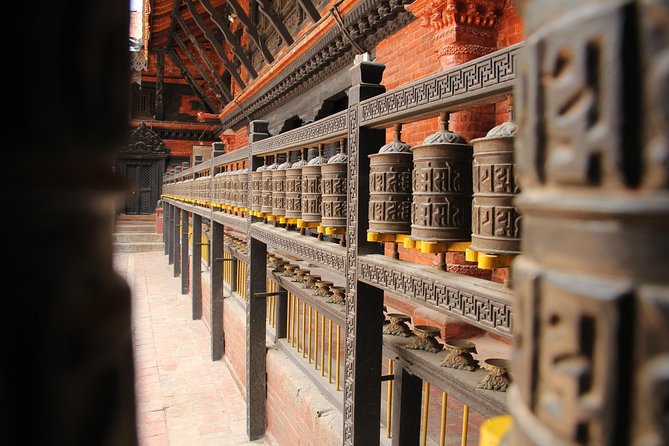
Day 6 is built around Lumbini, the birthplace of Buddha and a UNESCO World Heritage site. Your local guide will take you through the temple clusters and special places across the area, and you’ll focus on the birthplace highlight.
What makes this day stand out is the overnight option. You’ll stay in a guesthouse inside a monastery, which changes the tone from sightseeing-day mode to quiet rhythm. It also makes early morning reflection easier, since you’re already in the space.
Practical note: you’ll likely want to bring modest clothing for temple areas, and plan for some walking once you’re inside the monastic and temple zones. This part is calm, but it’s not a sit-and-watch only experience.
Pokhara lakeside: your reset after the cultural stretch
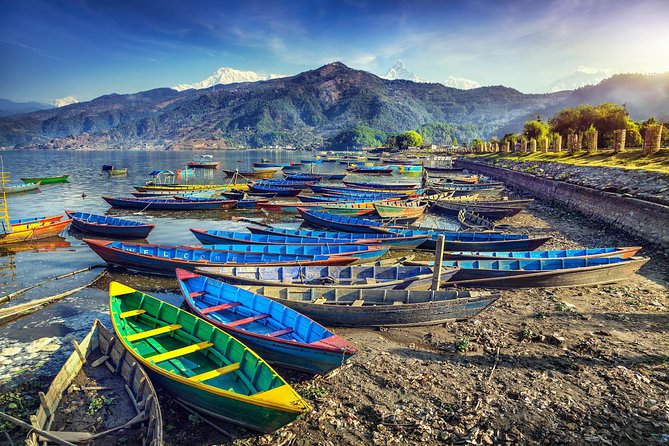
Day 7 is a travel day from Lumbini to Pokhara, handled by private transport. When you arrive, you get free afternoon time on the lakeside with views over Lake Fewa. This is one of the smartest parts of the itinerary: after temples and a park, you get a decompression window.
The lakeside is packed with restaurants, bars, and shops, so you can keep the evening flexible. If you want a slower night, you can do that. If you want to walk and people-watch, you can.
Sarangkot sunrise and the mountain view circuit
Day 8 starts early for Sarangkot, a short drive away. You’re going for panoramic views with sunrise rays hitting the mountain background—think Annapurna range views plus key peaks like Fishtail and Dhaulagiri.
This matters because Pokhara can sometimes feel like a “town with views.” Sarangkot makes it feel like a launchpad for the Himalaya—especially when the morning light hits cleanly.
Later you’ll visit the International Mountain Museum (admission not included), which helps you frame Nepal’s mountaineering culture and famous peaks/climbers in a more organized way. Then you’ll tour Devi’s Fall, which disappears underground, and cross to Gupteshwor Mahadev Cave, where a Shiva lingam is worshipped inside.
For the sunset mood, the day includes the World Peace Pagoda, above the lakeside with a long view over Lake Fewa and the mountain backdrop. It’s a good payoff after a full day of movement.
Optional paragliding over Fewa Lake: add-on you’ll feel in your gut
One activity day 8 includes is paragliding over Fewa Lake. You can do a 30-minute tandem flight with views toward the Annapurna range. The surcharge listed is $100 per person.
This isn’t a small add-on, so I treat it like a decision point: if you’re okay spending extra for maximum views with minimal effort, paragliding is a strong match. If you prefer to save money for the trek days, you can skip it and still have a full day of sightseeing.
Ghorepani Poon Hill trek Day 1: Ulleri and the lodge dinner vibe
Day 9 is trekking kickoff. You’ll drive from Pokhara to Nayapul, then start hiking toward Ulleri.
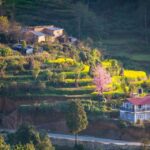
The route includes classic village scenery and terraced fields. You’ll have a lunch stop in Hile, then continue toward Ulleri via Thikhedhunga. When you arrive, you check in to a lodge. The program also mentions dinner at the lodge—so expect a cozy evening routine after a day of steady walking.
This day is a nice on-ramp. You’re not suddenly at the highest elevation immediately. Still, take it easy and keep hydration in check.
Ghorepani village Day 2: rhododendron country and big-peak views
Day 10 brings the climb to Ghorepani. You start with breakfast at the lodge in Ulleri, then trek toward Ghorepani with chances to learn about local mountain life along the way.
The view credits are clear in this part of the route: Machhapuchhre (6997m), Huinchuli (6441m), and Annapurna South (7219m). You’ll also pass through a rhododendron forest, which becomes part of the trek identity as days go on.
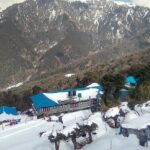
When you arrive in the afternoon, you check in and then get time to stroll the village and interact with locals and other trekkers. The earlier you go on the trail in the morning, the more this day feels like village life rather than just transit.
Poon Hill sunrise Day 3: early start, rhododendron forests, and Tadapani
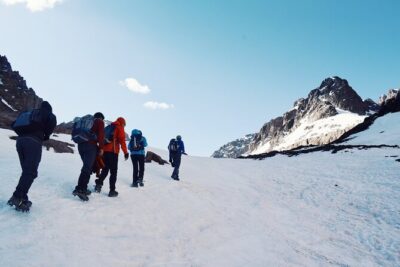
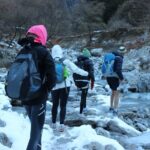
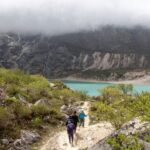
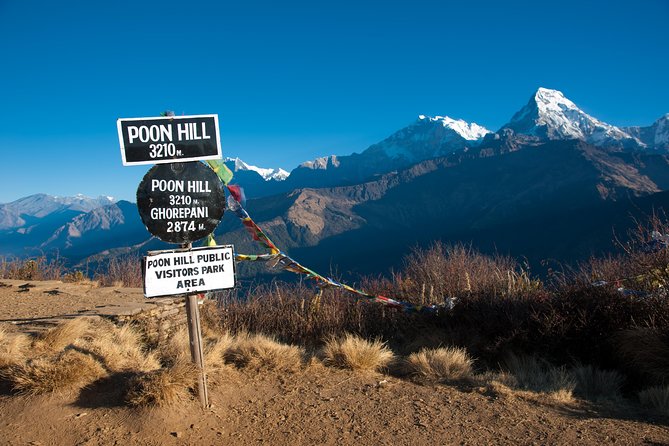
Day 11 is all about sunrise at Poon Hill (3210m). You’ll start early from Ghorepani to catch the first light. This section is described as passing through culturally rich villages against a mountainous backdrop.
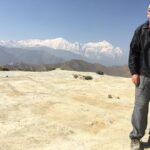
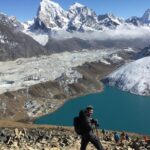
Once you reach Poon Hill, you get panoramic views over Annapurna and Dhaulagiri. Then the schedule has you return to Ghorepani for breakfast before continuing to Tadapani (2650m). The later part of the walk includes thick rhododendron forest, which is one of the best “feels like Nepal” transitions between sunrise tourism and proper walking.
Ghandruk and Landruk: Gurung villages between Tolka and the views
Day 12 is a longer hiking day. You start after breakfast with a walk through jungle areas, villages, and streams, and after about 3 to 4 hours you reach Ghandruk, a Gurung village.
You’ll have lunch and rest there, then continue to Tolka via another Gurung village, Landruk. By the time you reach Tolka, you’re in a spot where the itinerary promises views of Annapurna South, Hiunchuli, Gangapurna, and surrounding ranges.
This is the day where the trek shifts from “get to the next lodge” into “you’re really moving through communities.” The extra walking time is the tradeoff.
Australian Base Camp to Kande: finishing the trek with a downhill payoff
Day 13 is the walk back toward Pokhara. After breakfast in Tolka, you’ll hike via Australian Base Camp, then move downhill to Kande.
At Kande, your driver is waiting, and you head back to Pokhara. This is the satisfying end to a trek that doesn’t feel like it ends with exhaustion—because the program builds in that smooth transition from hiking to transport.
Back in Pokhara then Kathmandu: rest days you’ll appreciate
Day 14 brings a hotel breakfast in Pokhara, then the drive back to Kathmandu. You’ll arrive in the late afternoon and check into your hotel for the night.
Day 15 is departure day. About 3 hours before your flight, you’ll be transferred to Tribhuvan Airport, and guided through the check-in hall.
Those “buffer” moments matter. Trekking fatigue is real. Having real hotel time on both sides of the mountain days keeps this from feeling like a nonstop grind.
Price and what you’re buying for $1,829.12
At $1,829.12 per person for roughly 15 days, you’re paying for a package that bundles the hard-to-organize parts: multiple regions, private land transport, an English-speaking guide, hotel nights with breakfast, plus permits and fees.
The included value pieces are strong:
- Deluxe hotel stays and daily breakfast during the non-trek stretch
- A guide for the sightseeing program
- Private A/C vehicles with a professional driver for the long hops
- National Park fees and trekking permits
- Trek support: during the trek, there are two clients per one porter, and the porter can carry up to 18 kilos of luggage
- Some meals are included: breakfast (9), lunch (2), and dinner (2)
What’s not included (so you’re not surprised):
- Food and drinks outside the listed meals
- Tipping for guide, drivers, and supporters
- Nepal visa fee and international flights
- Travel insurance
- Sightseeing entry fees (about $60 per person)
- Optional add-ons like paragliding (listed surcharge: $100 per person)
- Donations at temples/monasteries
In plain terms: this price makes sense if you want one organized path that keeps you moving without doing paperwork or logistics yourself. If you love fully independent travel and have no interest in guided temple days, you could spend less by going simpler. But for most people, the time saved is the real value.
Who this tour suits best (and who should think twice)
This fits best if you want a first-time-to- Nepal-friendly route that still includes real walking. The trek is listed as requiring moderate physical fitness and includes early starts, multiple hiking days, and altitude up to 3210m at Poon Hill.
It also fits solo travelers or small groups who appreciate structure. The tour has a maximum group size of 10 travelers, and you’ll still have private vehicles for the region-to-region travel.
Think twice if:
- You strongly prefer sleeping in late (the sunrise schedule is built in).
- You’re trying to keep the budget razor-tight, since entry fees, tips, visa, and optional activities add up.
A note on guides and real human service
The program leans on an English-speaking guide throughout the sightseeing sections, and that can make or break the experience in Nepal. Names I’ve seen tied to good service include Nabaraj (Narresh) and Shiva, both mentioned as guides who helped families and couples get the most out of the days.
On the trekking side, the porter arrangement is clear: two clients per porter with a max carrying limit. That’s practical. You’re not expected to haul everything up and down steep trails.
Should you book this private Nepal round trip with Ghorepani Poon Hill?
I’d book it if you want a smart Nepal “greatest hits” route plus one memorable trek segment. Kathmandu’s UNESCO trio, a Thamel cooking class, Chitwan’s canoe-and-jeep wildlife style, Lumbini’s monastery night, and Pokhara’s sunrise view circuit create a trip with variety that doesn’t feel random.
You should consider alternatives if you hate early mornings, want zero extra costs beyond the base price, or don’t care about guided sightseeing. The mountain views are weather-dependent, and this plan is designed around mornings, not afternoons.
If you’re comfortable with that tradeoff, this is a solid value package: it handles the logistics, covers the key permits and fees, and leaves you free to focus on the stuff you came for—temples, villages, wildlife chances, and that Poon Hill sunrise moment.
FAQ
How long is the trip?
It runs for about 15 days, with a 4-day Ghorepani Poon Hill trek included.
Where does the tour start?
The meeting point is Tribhuvan Airport in Kathmandu, Nepal, with a start time of 9:00 am.
Is airport pickup and drop-off included?
Yes. You’re met at the airport on arrival and transferred to the airport for departure at the end of the trip.
What trekking is included?
The package includes the Ghorepani Poon Hill trek route, including early morning sunrise at Poon Hill (3210m) and walks between Ulleri, Ghorepani, Poon Hill, Tadapani, Ghandruk/Landruk, Tolka, and down toward Kande.
Are national park fees and trekking permits included?
Yes. National Park fees and trekking permits are included.
What meals are included during the trip?
Breakfast is included 9 times, lunch is included 2 times, and dinner is included 2 times. Other food and drinks are not included unless listed.
Are sightseeing entry fees included?
No. Sightseeing entry fees are listed as approximately $60 per person.
Is paragliding included?
Paragliding is not listed as included. It’s an optional activity in Pokhara with a surcharge of $100 per person.
What is the cancellation/refund timeline?
You can cancel up to 6 days in advance for a full refund. Cancel 2–6 days before for a 50% refund, and cancel less than 2 days before with no refund.