REVIEW · CATANIA
Catania: Etna Morning or Sunset Trek with Lava Tunnel & Gear
Book on GetYourGuide →Operated by Etna periperi Excursion · Bookable on GetYourGuide
Walking Etna feels like another planet. You start in Catania, roll up to the volcano, then hike across lava deserts and secondary craters with a guide who explains what you’re seeing on UNESCO Etna. It’s the kind of morning or sunset outing that makes Sicily’s scale and power feel real fast.
I love the combo of above-ground walking and going underground. You get a helmet-and-flashlight pass into a lava tube, plus hands-on guidance about how these tunnels form and what’s happening in the volcanic landscape around you. The main drawback is weather: the higher you go, the colder and windier it gets, and if conditions don’t cooperate you may miss the exact sunset look you planned for.
In This Review
- Key things I’d highlight before you go
- Etna’s power, up close: why this trek is different
- Morning vs sunset: picking the light you want
- Getting to the volcanic start: what the Catania leg is like
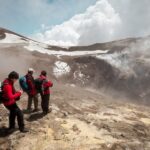
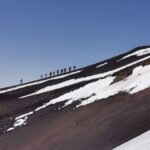
- The hike on Etna: craters, lava deserts, and a steady pace
- The 2001 eruptive theater stop: where the story gets specific
- Walking sticks and black sand: small gear details that matter
- Going inside the volcano: the lava tube experience
- What I’d wear and pack to feel comfortable the whole time
- Price and value: is $70 a fair deal?
- Who should book (and who should skip this hike)
- Should you book the Etna morning or sunset trek with lava tube?
- FAQ
- Where is the meeting point in Catania?
- How long is the tour?
- Is morning or sunset available?
- What gear is included?
- Is food or drinks included?
- Who is this tour not suitable for?
Key things I’d highlight before you go
- Morning or sunset timing changes the whole mood of the crater colors and photos
- Gear is included: walking sticks, helmet, and flashlight (you won’t scramble last-minute)
- Comfortable pace, max altitude ~2100 m makes this doable for most hikers who are steady on their feet
- You’ll learn Etna-specific nature (plants and animals found on the volcano) while you walk
- A lava-flow cave stop lets you see the “inside story” of eruptions
- Guides like Andrea and Christopher bring humor and frequent stops so you don’t rush the meaning
Etna’s power, up close: why this trek is different
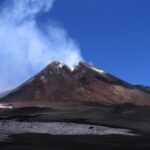
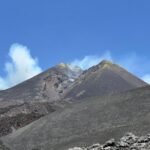
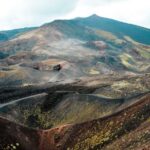
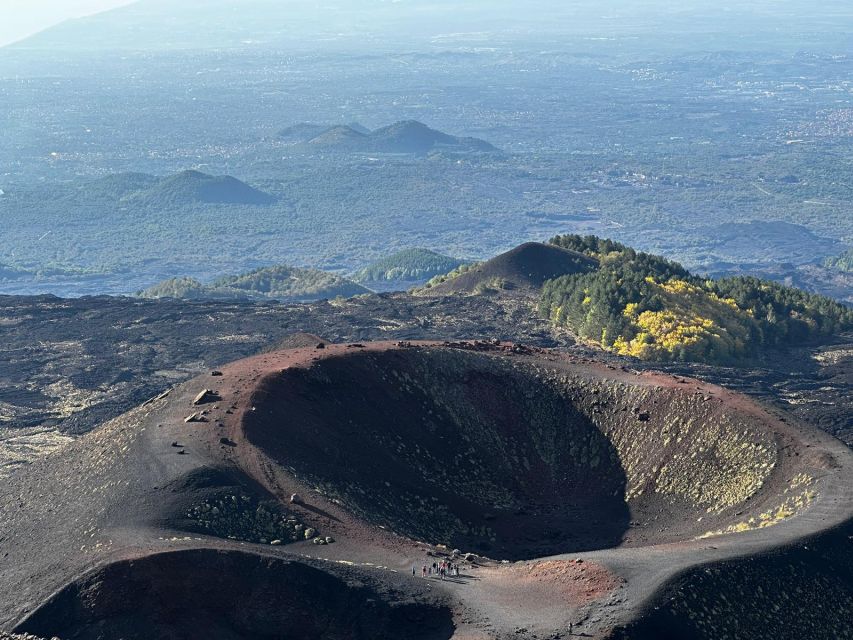
This isn’t a sightseeing drive where you stare out the window and hope for the best. This is walking-focused time on Etna, with enough stops that you understand what you’re standing on. You move through the volcano’s lunar-like terrain—lava deserts, recent flows, and secondary craters—so the “wow” stays grounded in real geology.
The UNESCO angle matters, too, because it’s not just dramatic scenery. Etna is an active, living system. When your guide points out the volcanic shapes, the colors, and the way lava cooled, you start noticing patterns instead of just textures. That shift is why this kind of hike feels more valuable than a quick photo stop.
You can also read our reviews of more tours and experiences in Catania.

Morning vs sunset: picking the light you want
The tour gives you a real choice: go in the morning or time it for sunset. Either works, but you’re choosing what kind of experience you want.
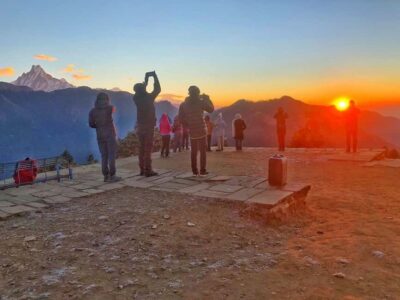
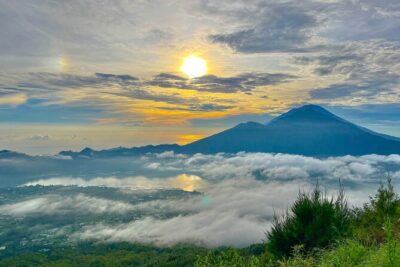
Morning usually feels crisp and clear, especially if you like calmer light for walking and photos. Sunset adds a layer of drama when the colors warm up—perfect for that “Etna is glowing” moment your camera always seems to miss on flat days.
One practical warning: the top of Etna can be about 10°C cooler than Catania, and the wind can be strong. That means sunset plans can be more sensitive to weather. Even if you don’t get the exact cinematic view you hoped for, you still get the full hike and the lava tube visit.
Getting to the volcanic start: what the Catania leg is like
You meet your guide at McDonald’s in Piazza Borsellino, Via Alcalà 13–15, Catania. From there, you head out by van for about 1 hour toward Etna. Expect a straightforward transfer and then a transition from city sounds to volcanic quiet.
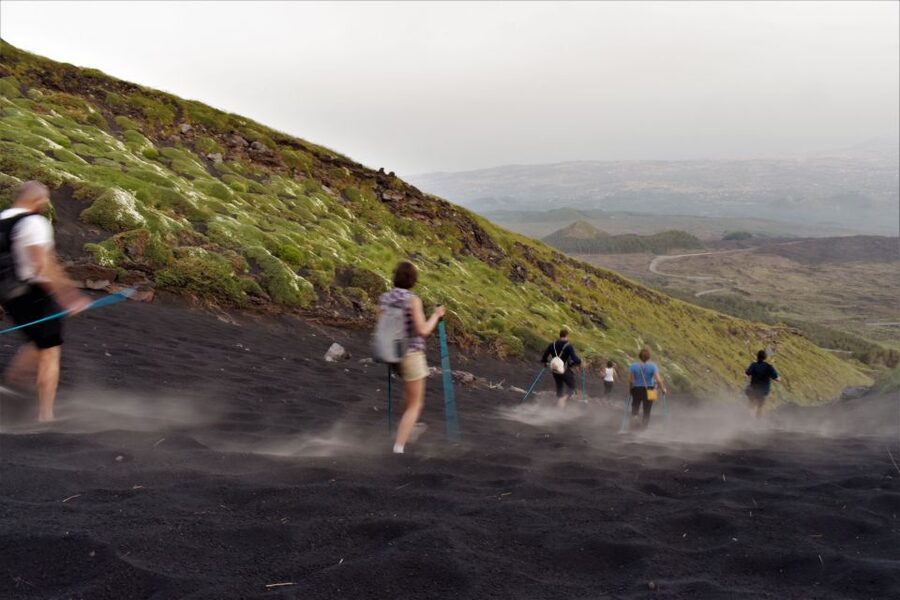
There are additional van legs during the route (short hops between walking segments), so you’re not just marching nonstop from one end of the mountain to the other. That pacing helps keep the hike comfortable, especially when your footwear is sinking into loose black volcanic sand.
This is also where I’d set expectations: you’re trading the freedom of independent travel for a guided flow. The upside is you don’t waste time guessing where to look or what to ask about.
The hike on Etna: craters, lava deserts, and a steady pace
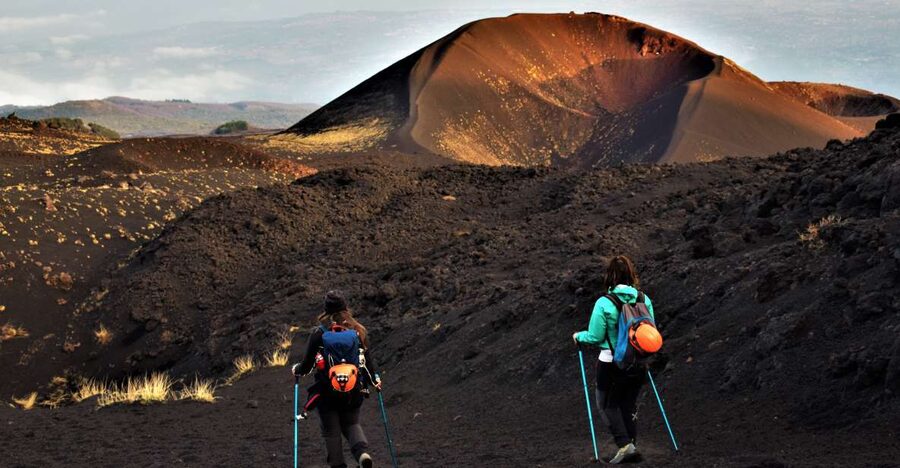
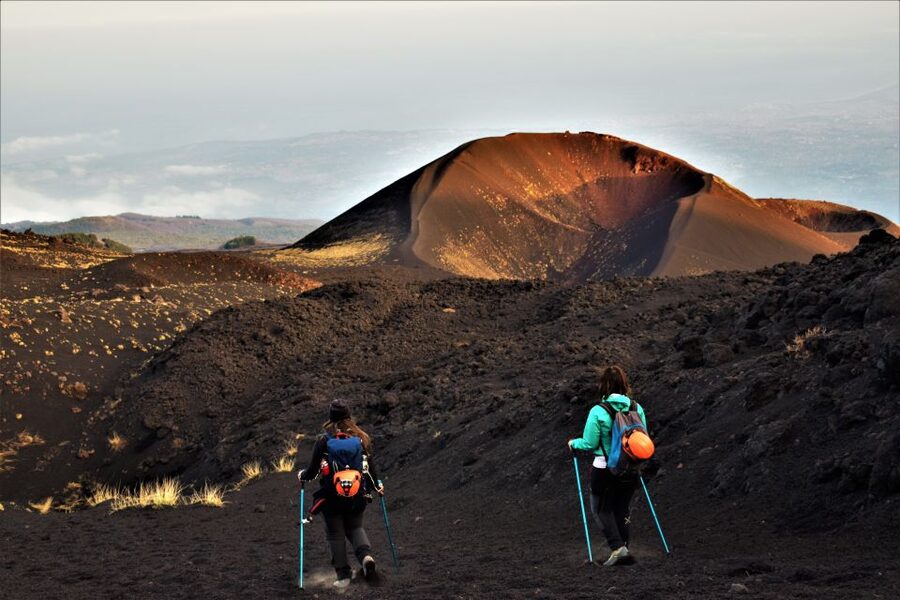
The main walk is built around a comfortable pace and a high point around 2100 meters. You’ll hike for about 3 hours at Mount Etna, plus a couple of shorter walking stretches later in the route.
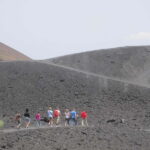
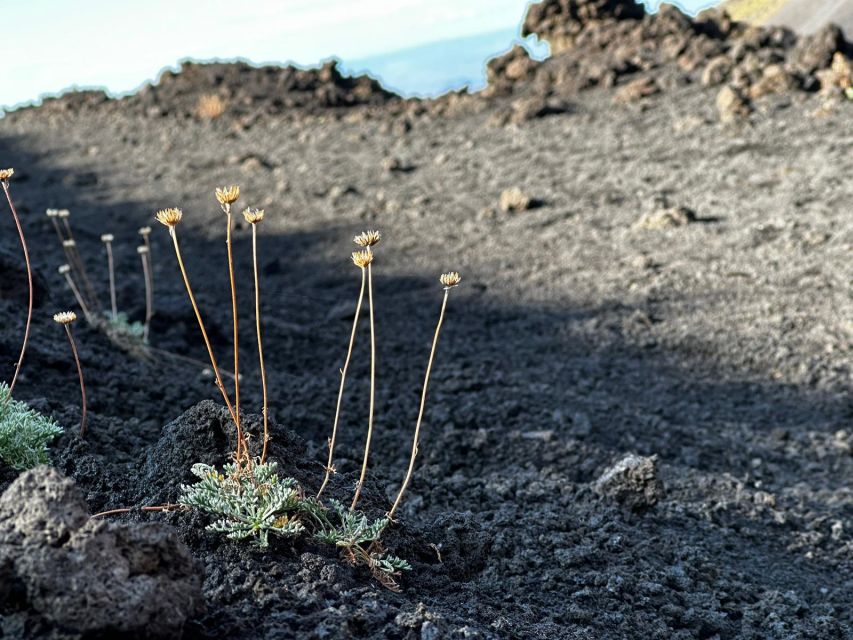
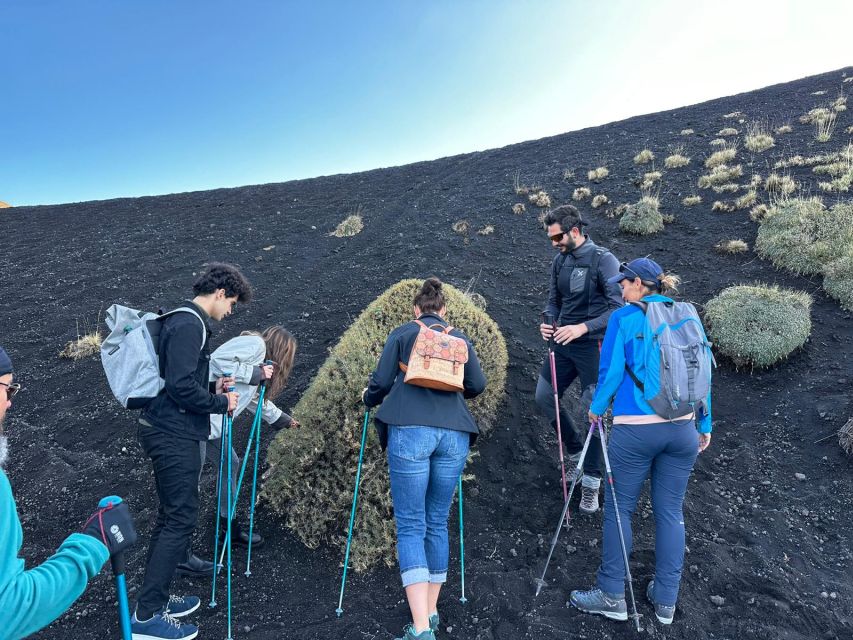
What makes this walk worth it is the variety. One moment you’re moving through a broader volcanic plain with black lava grit underfoot. Next you’re heading through areas tied to past activity, including secondary craters and sections of recent lava flows. The terrain isn’t a gentle trail—it can be uneven, and feet may sink into the loose dark material. That sounds minor until you step into it and realize traction matters.
In the better moments, you’ll also get those clear viewing pauses where your guide interprets what you’re looking at—why certain formations exist, how the volcano reshapes itself, and how time changes what lava turns into.
Practical tip: go slower than you think you need to. If you keep a steady rhythm, you’ll feel better on the slopes and enjoy the explanations instead of battling your breath.
The 2001 eruptive theater stop: where the story gets specific
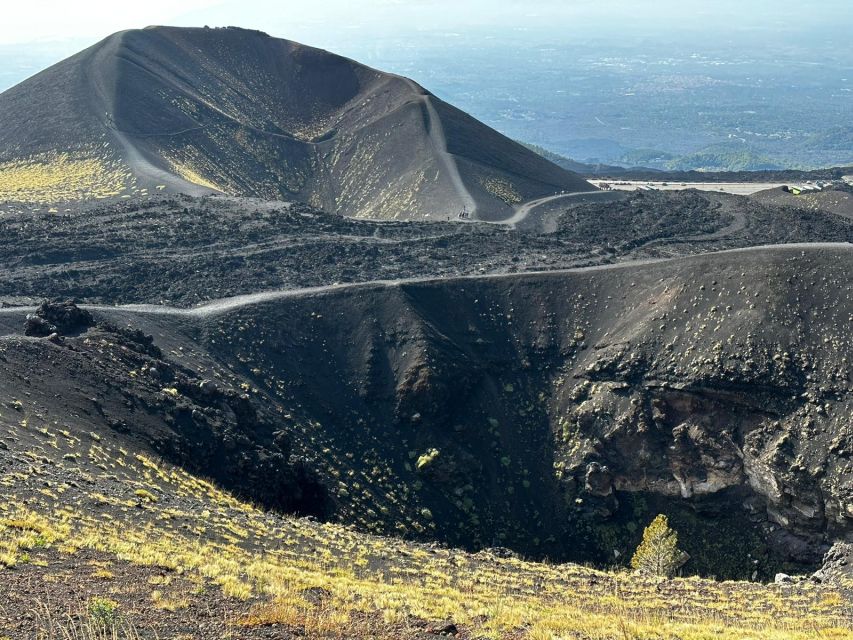
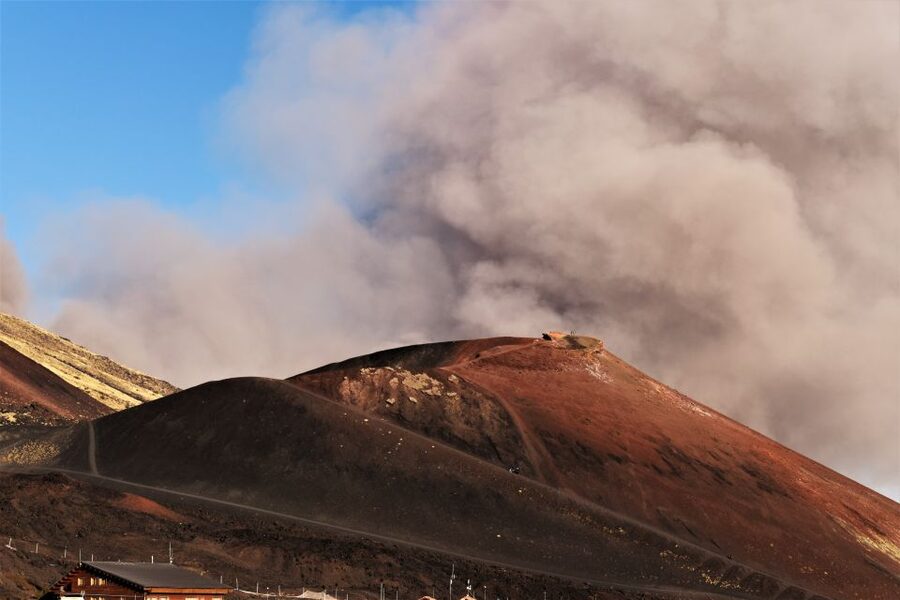
A standout part of the experience is the stop at the eruptive theater of 2001. This is one of those places where Etna stops being an abstract giant and becomes a timeline you can visually follow.
Your guide helps connect the dots—how eruptions create distinct areas, how lava patterns reflect what happened, and why secondary craters matter when you’re trying to read the mountain. If you like “cause and effect,” this stop is the point where the hike feels the most educational.
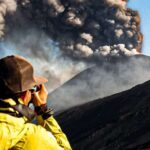
It’s also typically where you slow down for pictures. Even when the sky isn’t perfect, these are strong photo moments because the volcanic shapes are so graphic.
Walking sticks and black sand: small gear details that matter
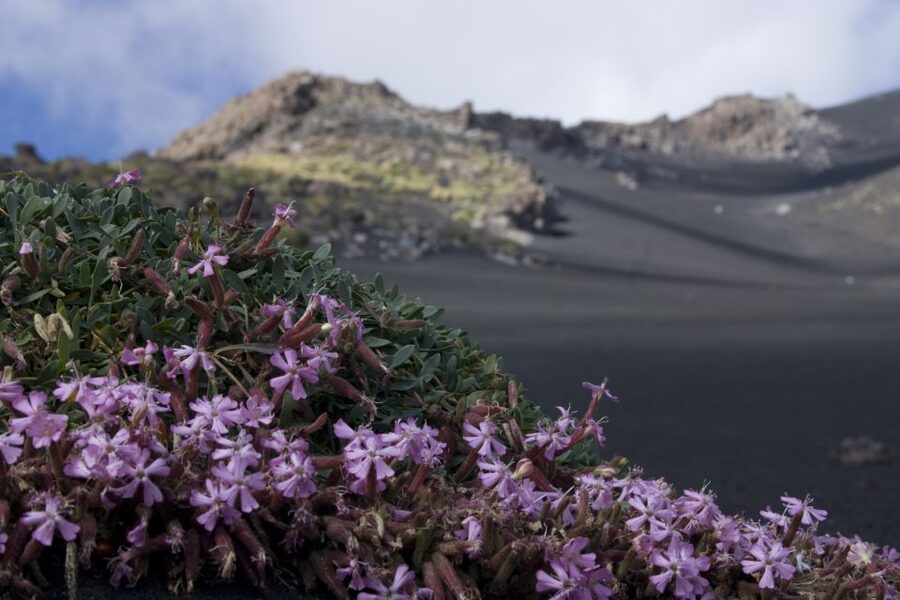
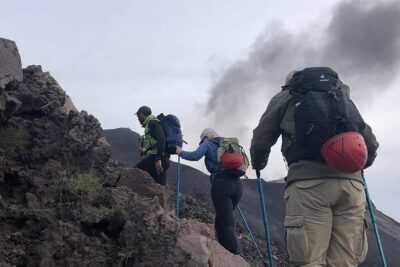
This tour includes walking sticks, which I’m genuinely grateful for on Etna-type ground. The sticks don’t just help comfort—they help you stay balanced when the surface is loose. People sometimes underestimate how quickly traction affects enjoyment on volcanic sand.
You’ll also want proper footwear. The experience calls for comfortable or hiking shoes (high heels are not allowed). Based on the way this terrain behaves, you’ll be happiest with shoes that grip well and feel stable when your foot lands in uneven ground.
Beyond shoes, the weather reality is real. Dress for wind and cold at altitude:
- long layers you can adjust
- something windproof
- a hat and ear protection if you get cold easily
- sunglasses and sunscreen (even on cooler days)
And yes, bring water. Food and drinks aren’t included, so plan for a snack to have when you’re done.
Going inside the volcano: the lava tube experience
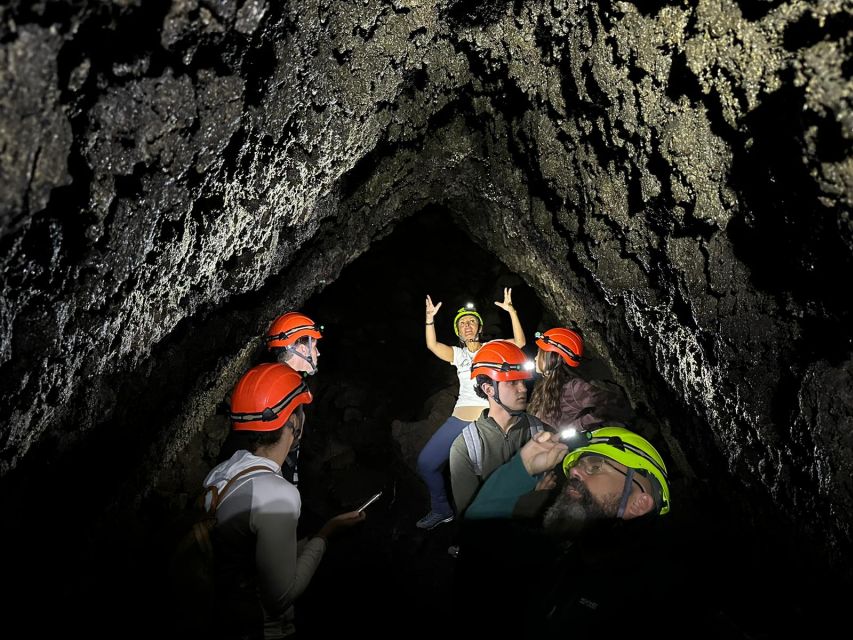
After the surface hike, you switch gears. You’ll put on a helmet and flashlight and enter a lava tube (a lava-flow cave formed during past eruptions). This is the part that changes the way you picture a volcano. From the outside, lava looks like a blanket of rock. Underground, you see how it moved and how the tunnel shaped itself as conditions changed.
Your guide explains how these tunnels form and what you’re looking at as you walk inside. That explanation matters because it turns a dark, cool chamber into a readable “eruption snapshot.” You’re not just walking through; you’re learning how the volcano built the space around you.
This section also tends to be memorable for another reason: it’s physical in a different way. The ground inside can feel slick or uneven compared to the outside, and you’re operating with a light source. Having the flashlight and helmet already sorted removes a lot of hassle.
What I’d wear and pack to feel comfortable the whole time
The basic packing list is simple, but I’d treat it like a checklist you don’t skip.
Bring:
- comfortable hiking shoes
- sunscreen
- water
- weather-appropriate clothing (windproof layers help a lot)
Optional but smart (based on typical Etna conditions):
- a warm layer for wind at altitude
- sunglasses
- socks you’re comfortable hiking in for a few hours on uneven ground
What the tour says not to bring or do:
- pets
- intoxication, alcohol, and drugs
- high-heeled shoes
- insect repellent (listed as not allowed)
- baby carriages and explosive substances
Also: children under 5 aren’t suitable, and there are several health limitations.
Price and value: is $70 a fair deal?
At about $70 per person for roughly 5.5 hours, the value depends on what you want from Etna. If you want a self-guided viewpoint experience, you can spend less. But you won’t get the built-in structure, the interpretation, and the gear.
Here’s what you’re paying for:
- pick-up and drop-off in central Catania
- a live guide (English and Italian)
- walking sticks, helmet, and flashlight
- time on the volcano’s walking route plus a lava tube entry
For this price, the “sweet spot” is that you’re doing two modes of experience—surface hike and cave exploration—without planning, equipment hunting, or guessing. If you care about learning while you walk, it’s a strong value.
Who should book (and who should skip this hike)
This tour fits best if you:
- like guided explanations of geology and nature
- are comfortable hiking several hours on uneven terrain
- can handle cool, windy conditions at altitude
- want a morning or sunset option, not just a single time
It’s not suitable for people with:
- mobility impairments or wheelchair use
- back problems, heart problems, epilepsy
- altitude sickness concerns
- motion sickness
- visual impairments
- children under 5
- and it has a weight limit of 309 lbs / 140 kg
If you fall into any of those categories, it’s worth choosing a different Etna format that matches your needs.
Should you book the Etna morning or sunset trek with lava tube?
I’d book this if you want Etna to feel hands-on—walking through volcanic terrain and then stepping into the inside story of a lava tube. The included gear helps, the guide-led pacing prevents you from rushing the experience, and the route is set up to make the volcano’s features understandable.
I’d think twice only if you’re very sensitive to wind/cold, or if you’re the type who needs perfect conditions to enjoy a sunset. Otherwise, even when the sky isn’t cooperative, the hike and the cave part still deliver.
If you can go in the morning, you might also reduce the odds of missing out on the moment you planned for—though both options are clearly designed to show Etna’s best angles.
FAQ
Where is the meeting point in Catania?
You meet your guide in front of McDonald’s in Piazza Borsellino, Via Alcalà 13–15, Catania.
How long is the tour?
The duration is about 5.5 hours.
Is morning or sunset available?
Yes. The tour offers an Etna morning option or an Etna sunset option, so you can choose based on the light you want.
What gear is included?
The tour includes walking sticks, a helmet, and a flashlight.
Is food or drinks included?
No. Food and drinks are not included, so plan to bring water and consider a snack for after.
Who is this tour not suitable for?
It’s not suitable for children under 5, people with back problems, mobility impairments, heart problems, epilepsy, visual impairments, altitude sickness, high blood pressure, motion sickness, and for wheelchair users. There’s also a weight limit of 309 lbs / 140 kg.