REVIEW · CATANIA
Trekking at 3000 meters on Etna
Book on GetYourGuide →Operated by ETNA QUAD E TREKKING · Bookable on GetYourGuide
Etna’s 3,000 meters feels like stepping into time. This day trek turns the volcano into a hands-on lesson, starting with a cable car ride, then moving onto real recent lava paths and crater edges where you can see how eruptions write the landscape in layers.
I love that this hike gives you high-altitude access without wasting the whole day getting there. I also love the mix of walking and volcanology taught by qualified alpine and volcanological guides, with an emphasis on reading what the ground is telling you.
One thing to plan for: the summit and crater areas can get windy, and the altitude makes the day feel more demanding than a casual trail hike.
In This Review
- Key things to know before you go
- First impressions: why Etna’s crater hike feels different at 3,000m
- Getting up fast: cable car to 2,500m and what it changes for your day
- Walking the 2002 lava flows: where the crater story starts
- Entering the 2002 effusive crater: walking inside a lava channel
- Reaching the explosive craters on the southern slope: close-up crater edges
- Lunar paths to Belvedere: seeing the Valle del Bove caldera
- Skirting Laghetto and returning by cable car terminal
- The guide team: why volcanology matters on a lava hike
- Gear and clothing: what’s provided, what you should bring anyway
- How hard is it, really: pacing, wind, and altitude reality
- Price and value: $59 is the headline, but plan for the cable car ticket
- Who should book this Etna Craters trek (and who should not)
- Should you book the ETNA Craters Excursion at 3,000 meters?
- FAQ
- How high do you trek on Etna?
- Do I need to buy a cable car ticket?
- How long is the excursion?
- Is the tour guided by volcanology professionals?
- What languages are offered?
- What hiking gear is included?
- What should I wear or bring?
- Is it suitable for children?
- Is the tour available for people with mobility issues?
- What’s the meeting point?
- FAQ
- Can I cancel and get a refund?
- Is pay later an option?
- What is the minimum fitness level?
Key things to know before you go
- You start with a cable car that lifts you from 1,900m to 2,500m, so the hike actually hits the craters fast.
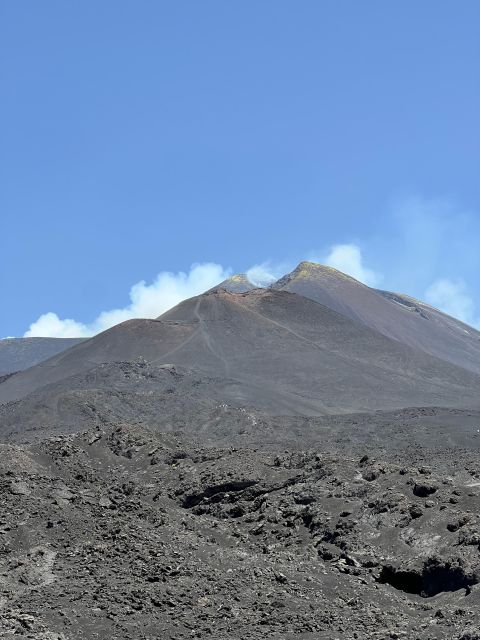
- Most of the walking connects to the 2002 eruption, including lava flows and an effusive crater walk inside a lava channel.
- You reach both crater edges and summit craters, with close views and big-scale caldera overlooks.
- Belvedere della Valle del Bove and Laghetto Crater add variety beyond the 2002 story.
- Guides keep it safe and teach as you go, with pacing that can help groups stay together.
First impressions: why Etna’s crater hike feels different at 3,000m
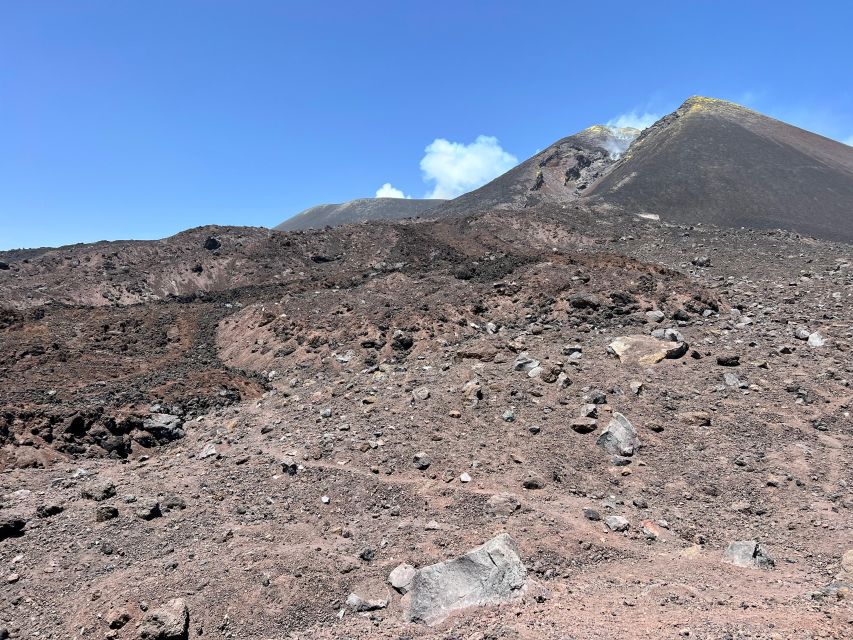
If you’ve done “volcano hikes” before, you might know the pattern: you walk a bit, you look at a view, and you call it a day. This one is different because you’re not just looking at Etna—you’re moving across the aftermath. The route is built around recent eruptions, so the ground is fresh, black, angular in places, and full of clues about how lava behaved when it was still hot enough to reshape everything.
At around 3,000 meters, the air also changes the way you feel the hike. Even if your legs are fine, your body notices the altitude. That’s part of the point. You’re high enough to feel exposed to the elements, yet you’re guided closely enough that the day stays manageable. The best moments come when you stop being “a visitor” and start behaving like a careful observer—watching the way the terrain slopes, where lava cooled in channels, and how crater edges offer a close-up scale you don’t get from the valley.
Etna also rewards curiosity. As the hike shifts from lava flow surfaces to crater interiors and then to panoramic overlooks, you keep getting new “chapters.” One segment is about lava flow behavior, another is about explosive crater form, and another is about older eruptive centers seen from a dramatic viewpoint.
You can also read our reviews of more tours and experiences in Catania.
Getting up fast: cable car to 2,500m and what it changes for your day
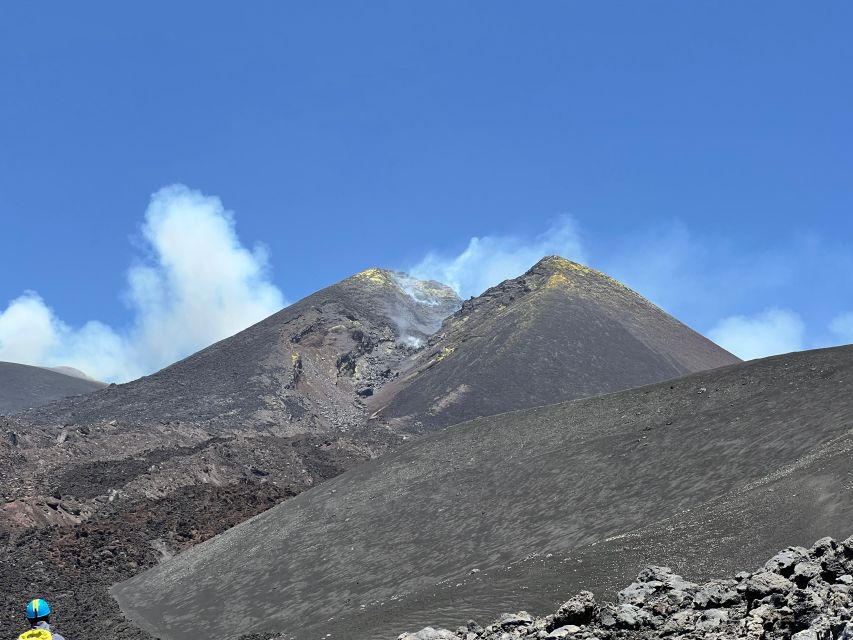
The excursion begins with the Etna cable car, taking you from 1,900m to 2,500m. That single detail improves the whole experience. You’re not burning energy just to reach a view. Instead, you’re already at altitude when the guided learning and hiking start.
It also changes the rhythm. You begin the day more alert and less fatigued, which matters on a route that can include uneven lava surfaces and steep-ish terrain. After you step out around 2,500m, the hike heads north-west over lava from the 2002 eruption. In other words: the first part of the trek is immediately about geology, not about “warming up to the good stuff.”
One practical note for your planning: the cable car going up is part of the experience, but you should budget for the return cable car ticket. The return journey costs €52 (not included). That’s not a reason to avoid the tour, but it is a budget item that affects the true cost of the day.
Walking the 2002 lava flows: where the crater story starts
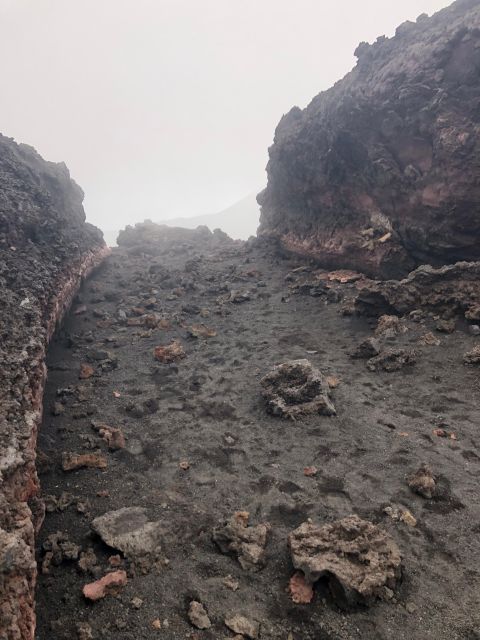
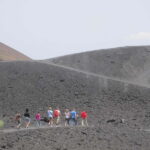
Around 2,500m, you’re dropped into a living history of Etna’s recent past. The hike moves over lava erupted during the 2002 eruption, and the surfaces you walk on help you understand why guides care about route selection and footing.
This part is not just “black rock scenery.” Lava from a specific event tends to tell a tighter story: how it moved, where it pooled, and how it cooled. As you climb, you’re also gradually changing your viewpoint. The higher you go, the more you can connect the ground texture to the big picture of crater geography.
The hike also makes you pay attention to small physical things:
- footing on rough surfaces
- how your breath responds at higher altitude
- why you might slow down on uneven sections
This is where the guide’s role becomes real. A good volcanological guide doesn’t just point; they explain what you’re standing on and why it matters.
And yes, the pace matters. In past groups, guides like Giuseppe have been praised for adjusting tempo so everyone could reach the summit area without feeling crushed. That’s a big deal when you’re on lava and altitude at the same time.
Entering the 2002 effusive crater: walking inside a lava channel
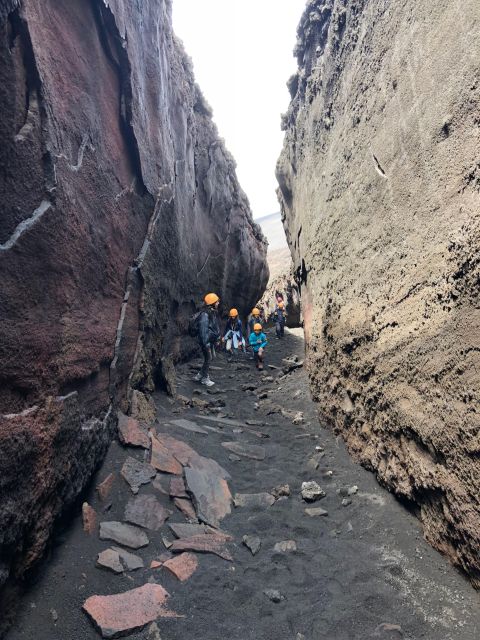
At about 2,700m, the experience gets more intense and more memorable. You’ll enter an effusive crater of 2002, and the walk includes a lava-flow channel created during that eruption.
This segment is special because it’s spatial. You’re not just above the event; you’re moving through the kind of feature that lava leaves when it runs like a moving river. A lava channel also tends to feel more enclosed than an open ridgeline, which can make you slow down, look up and around, and notice the shape of the route.
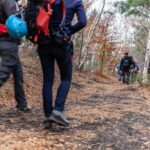
It’s also where your gear helps. The excursion provides hiking shoes with high collars, new socks, trekking poles, and a protective helmet. Even if you already hike often, those items reduce stress so you can focus on the geology and the walking rather than on constant caution.
Also, plan mentally for the fact that “inside a crater channel” can feel different from a normal trail. Wind can change suddenly. Light can shift. You might feel more exposed when you step back into open air. That’s not a problem—it’s part of why this day feels so cinematic without being fake.
Reaching the explosive craters on the southern slope: close-up crater edges
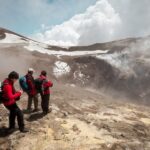
After the break, the climb continues until you reach the highest point of the explosive craters formed in 2002 on Etna’s southern slope. This is the payoff zone.
From here, you get two kinds of “close up”:
1) walking along crater edges
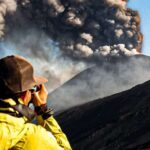
2) admiring the Summit Craters up close, including the latest lava flows
This is the part where the volcano stops being a distant landmark and becomes a place you’re practically standing beside. Crater edges give you scale in a way photos can’t. You also get better context for the earlier lava surfaces—because from higher ground, you can see how different features relate.
The walking at this stage also clarifies who the hike is for. If you’re expecting a flat nature stroll, you’ll be disappointed. If you like steep moments, strong views, and the sense that you’re tracing real volcanic cause-and-effect, you’ll feel at home.
Past participants have also highlighted guide skill here. Antonio has been noted for being welcoming and deeply passionate about Etna, with lots of learning built into the climb. That kind of guiding helps the strenuous parts feel worth it because you’re not just pushing your body—you’re gathering information with your eyes.
Lunar paths to Belvedere: seeing the Valle del Bove caldera
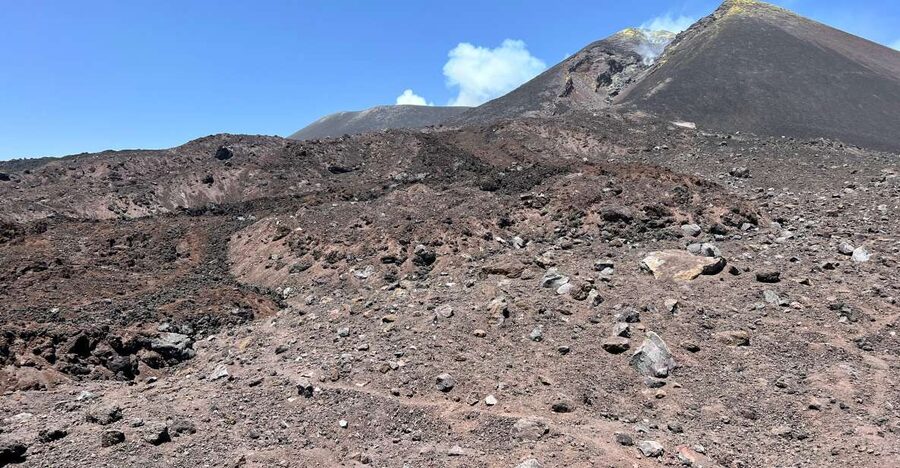
After the summit crater time, the route turns into a long stretch of lunar landscapes. You continue walking and you start looking outward, not only upward.
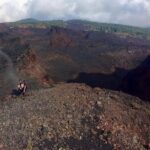
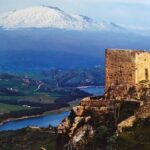
A key moment comes when you overlook the extraordinary caldera of Belvedere della Valle del Bove, which belongs to the ancient eruptive centers. This is where the day widens. You’ve been focused on the 2002 and 2001 stories, but now you’re given a view that ties into older volcanic structure.
A caldera overlook changes your understanding. Lava flows you walked across make sense as part of a larger system. You begin to see that Etna isn’t one eruption—it’s repeated activity over time, layered and connected.
There’s a quiet skill to good crater guiding: the guide helps you connect what you’re looking at with how the volcano evolved. In past experiences, guides like Edo have been praised for sharing interesting facts about Vulcano and keeping the explanation lively rather than textbook-y. Even if you don’t remember every term, you’ll feel the difference because your viewing becomes structured.
Skirting Laghetto and returning by cable car terminal
Near the end, the hike skims the imposing eruptive cone of the Laghetto Crater, born with the 2001 eruption. This helps keep the day from feeling like one long loop around a single event.
After you’ve absorbed the 2001 feature from the right side of the cone, you reach the cable car terminal. From there, the cable car takes you comfortably back toward the starting area.
This final return matters more than you might think. After several hours of altitude walking, getting off your feet is a relief. It also means the experience ends before you feel wrecked—so you can still enjoy a meal afterward instead of collapsing.
The guide team: why volcanology matters on a lava hike
This is not a self-guided walk. It’s guided by either a volcanological or mountain guide service, and the guides are also described as alpine and volcanological. That’s exactly what you want on lava terrain—because the challenge isn’t just distance, it’s uncertainty: where’s safest, what features are you seeing, and what’s the story behind them.
You can feel the difference between a guide who just leads and a guide who teaches. Past participants specifically named Mario as a friendly, professional guide who made the experience feel smooth and well-handled. That points to a common theme: good guiding doesn’t only manage safety; it manages your attention. You spend less time guessing and more time understanding.
Guides also list English and Italian. That matters if you’re not fully comfortable with Italian. You can follow the explanations, ask questions, and still enjoy the pace without feeling lost.
Gear and clothing: what’s provided, what you should bring anyway
The excursion includes a solid kit:
- high-collar hiking shoes
- new socks
- windbreaker
- trekking poles
- protective helmet
That’s helpful because it reduces “what if I forgot the right gear” stress. You can show up and be properly outfitted.
But don’t stop there. The recommended equipment list includes:
- long pants
- a cap
- gloves
- sunglasses
- protective creams
- a scarf
On Etna, wind and sun can both be intense, even when the hike feels cold at altitude. Sunglasses and sun protection aren’t optional “nice-to-haves.” They affect comfort, focus, and whether you can enjoy your stops at crater edges.
Also, think about comfort with poles. Even if you like trekking poles, make sure you’re ready to use them actively on lava surfaces. They help you stay stable and reduce fatigue when the ground gets uneven.
How hard is it, really: pacing, wind, and altitude reality
The day is described as a hike with a safety briefing and scenic drive, and it’s often framed as moderately exhausting. One detailed comment noted it needs a good physical shape and proper clothing because of altitude and often strong wind.
That fits the nature of the route. You’re moving across lava where traction can be tricky. You’re also climbing at altitude, which makes everything feel more effortful. Even if you’re fit, the combination means you should pace yourself early.
If you tend to sprint at the start, slow down. You want your breathing to settle before you reach higher points around the crater zones. The best strategy is to move steadily, take short breaks when offered, and let the guide’s pacing keep the group together.
Price and value: $59 is the headline, but plan for the cable car ticket
At $59 per person for the excursion, the day can be good value, especially because you get a guide team with volcanology/alpine expertise and a full hiking kit. Included gear is not just symbolic. Shoes, poles, helmet, and a windbreaker remove costs and reduce uncertainty.
But the math isn’t just the headline price. The return cable car ticket costs €52 and isn’t included. So your real day cost will be higher than $59 once you add that.
Is it still worth it? Often, yes, because the cable car drops you into the 2,500m range quickly and the trek itself focuses on the most dramatic crater-related terrain. If you tried to stitch this together independently, you’d likely pay more in time, transport coordination, and guide expertise.
Also, because the hike is structured around specific eruption features like 2002 lava flows and Belvedere della Valle del Bove, you’re paying for direction and interpretation. That’s what makes the day feel like more than walking.
Who should book this Etna Craters trek (and who should not)
You’ll likely love this if you want:
- a guided hike focused on craters and recent lava
- a day where geology is part of the experience, not a sidebar
- strong views at high altitude and crater edges close up
You’ll want to be comfortable with a hike that can feel moderately exhausting, especially due to wind and altitude.
It’s not a good fit if you’re dealing with the listed constraints, including:
- children under 6
- pregnancy
- mobility impairments
- heart problems
- vertigo
- respiratory issues
- epilepsy
- high blood pressure
- low fitness
- altitude sickness risks
- over 95 years
- people with low visual ability
If any of those apply, it’s smart to pass. Crater edges and high-altitude conditions are not where you want to “test yourself.”
Should you book the ETNA Craters Excursion at 3,000 meters?
Book it if you’re excited by real volcanic terrain: 2002 lava flows, a lava channel walk, and panoramic moments over Valle del Bove and Laghetto. The included gear and the volcanology-forward guiding make it feel like a guided education you can walk through.
Skip it if you dislike altitude or wind, or if your health situation makes high-elevation exertion a gamble. Also, budget properly once you account for the €52 return cable car ticket.
If you fit the target profile—curious, reasonably fit, and ready for crater terrain—this is one of those Etna days that gives you a story you’ll retell for years. You’re not just seeing Etna. You’re walking where it happened.
FAQ
How high do you trek on Etna?
You start with a cable car to about 2,500 meters, then hike up through crater areas and reach around 3,000 meters.
Do I need to buy a cable car ticket?
A return cable car ticket is not included. It costs €52 for the return journey. The tour uses the cable car going up as part of the experience.
How long is the excursion?
The guided experience is listed as lasting about 1 day, with around 4 hours of guided tour elements including scenic drive and walking.
Is the tour guided by volcanology professionals?
Yes. The tour includes a volcanological and/or mountain guide service, with qualified alpine and volcanological guides.
What languages are offered?
The live guide is available in English and Italian.
What hiking gear is included?
You receive high-collar hiking shoes, new socks, a windbreaker, trekking poles, and a protective helmet.
What should I wear or bring?
Wear long pants and bring a cap, gloves, sunglasses, protective creams, and a scarf.
Is it suitable for children?
No. It is not suitable for children under 6 years old.
Is the tour available for people with mobility issues?
No. People with mobility impairments are not suitable for this activity.
What’s the meeting point?
You meet inside the bar.
FAQ
Can I cancel and get a refund?
Yes. Free cancellation is available up to 24 hours in advance for a full refund.
Is pay later an option?
Yes. You can reserve now and pay later.
What is the minimum fitness level?
It is not suitable for people with low fitness, and the hike can be moderately exhausting due to altitude and wind.