REVIEW · CATANIA
Piano Provenzana: Guided Mt. Etna Snowshoeing Trek
Book on GetYourGuide →Operated by Guide Vulcanologiche Etna Nord · Bookable on GetYourGuide
Snow can turn Etna into science fiction.
This guided Mt. Etna snowshoeing trek is built for contrasts: deep snow over dark volcanic rock and the eerie scale of old lava damage. I also like that it’s run by a volcanology-focused guide service (Guide Vulcanologiche Etna Nord), so the walk feels like more than just scenery. One drawback to consider: it’s a winter hike with real cold and a bit of climb, so if you’re not comfortable outdoors in snow, you’ll feel it fast.
You start high on Etna and end the same way, with a route that’s short on paper but never boring underfoot. You’ll walk about 5 km round trip with a +300 m total height gain in roughly 3 hours, then spend time at crater viewpoints when the sky is clear. The setup is simple and practical, but you’ll want to plan for cold-weather clothing and possible gear rentals.
In This Review
- Key things to know before you go
- From Chiosco Bar Mareneve to Piano Provenzana at 1,800m
- What the snowshoe trek feels like: 5 km, +300 m, and crater-level drama
- Lava flows to lateral craters: why the route is so memorable
- Sea views, Taormina, and the Calabria possibility
- The crater viewpoint at 2,200m: panorama and volcanic gases
- Price and value: what your $44 actually buys
- What to pack (and what not to): your comfort checklist for Etna snow
- Who this snowshoeing hike is best for (and who should skip it)
- Should you book Piano Provenzana Mt. Etna snowshoeing?
- FAQ
- FAQ
- How long is the Mt. Etna Piano Provenzana snowshoeing trek?
- What is the total walking distance and elevation gain?
- Where do I meet the guide?
- What’s included in the tour price?
- What snow gear and clothing costs extra on site?
- Is a snack or water included?
- What languages is the live guide available in?
- Who should avoid this tour?
Key things to know before you go
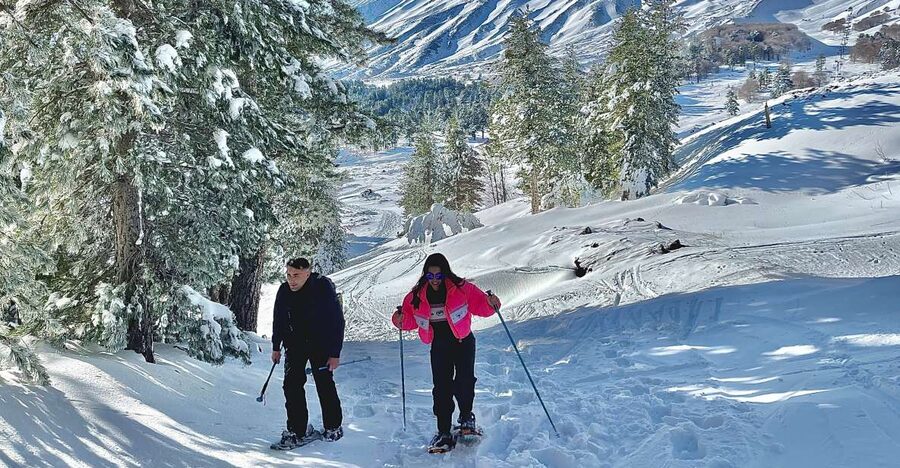
- Volcanology-led, not just a walk: you get a volcanological guide to explain what you’re seeing on the north side.
- Snow meets lava: the route mixes snowy forest with crossings of old lava flows and damaged structures.
- Sea views from altitude: you’ll look out toward Giardini Naxos and Taormina, with Calabria possible in good visibility.
- Crater time for photos and understanding: expect stops built around viewpoints, photo breaks, and guided explanation.
- Short distance, real winter effort: it’s only 5 km round trip, but snowshoes + cold change the effort level.
- Bring your own thermal basics: hats and gloves aren’t included, so plan your layering.
From Chiosco Bar Mareneve to Piano Provenzana at 1,800m
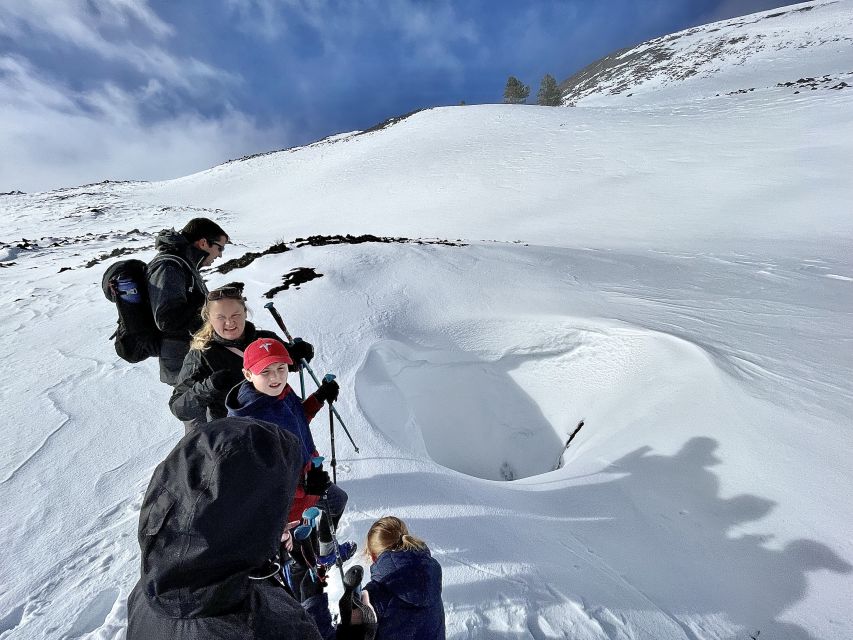
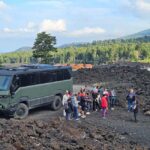
The day begins at CHIOSCO BAR MARENEVE DI FERRARO, in the parking area near the active chairlift at Etna Nord in winter. It’s a straightforward meeting point, and you’re not waiting around in town. You’re already in the Etna winter zone, where the air feels sharper and the terrain becomes part of the experience.
After you check in, you’ll get a 15-minute safety briefing and a bit of free time before moving on. That briefing matters here because you’re walking on uneven volcanic ground under snow conditions. You’re also moving at elevation—starting around 1,800 meters in Piano Provenzana—so warm layers aren’t optional comfort items. They’re how you keep enjoying the views instead of fighting chills.
A small practical note: the meeting time may shift earlier (often toward 8:45–9:00) to help you find parking. I’d plan like you’ll arrive early rather than late, because Etna winter can attract a lot of skiers.
You can also read our reviews of more tours and experiences in Catania.
What the snowshoe trek feels like: 5 km, +300 m, and crater-level drama
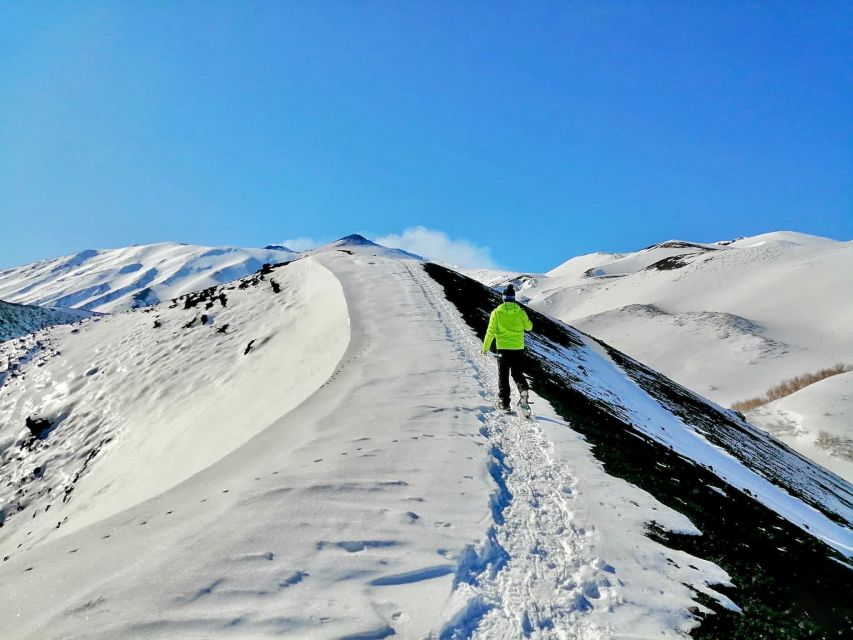
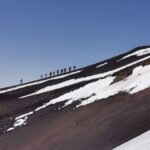
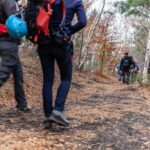
This is a guided loop-type experience, and the total route is about 5 km round trip with a total positive elevation gain of 300 meters. That’s not a long hike distance. But the combination of snowshoes, winter footing, and volcanic terrain changes everything. You’ll feel it more than a summer stroll.
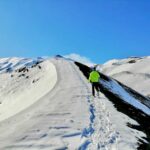
The excursion starts in a snowy forest context on Etna. That’s your first mood shift: trees and snow create a winter hike feeling—quiet, slow, and steady—before the volcanic story takes over. Then, as you progress, you move into areas tied to past eruptions.
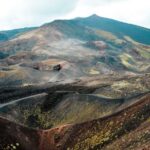
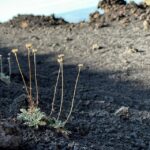
At a certain point you’ll be crossing lava flows from eruptions on Etna’s north side, along with remnants and structures associated with what was destroyed by lava. This is one of the reasons the hike works so well for most people: it’s visual learning. You can literally connect what the guide says about eruptions to what you see at ground level.
There’s also time for a 10-minute photo stop early on, plus a 20-minute guided tour segment. These pauses are useful because they keep the energy up and help you catch details you’d miss if the group just kept marching forward.
Lava flows to lateral craters: why the route is so memorable
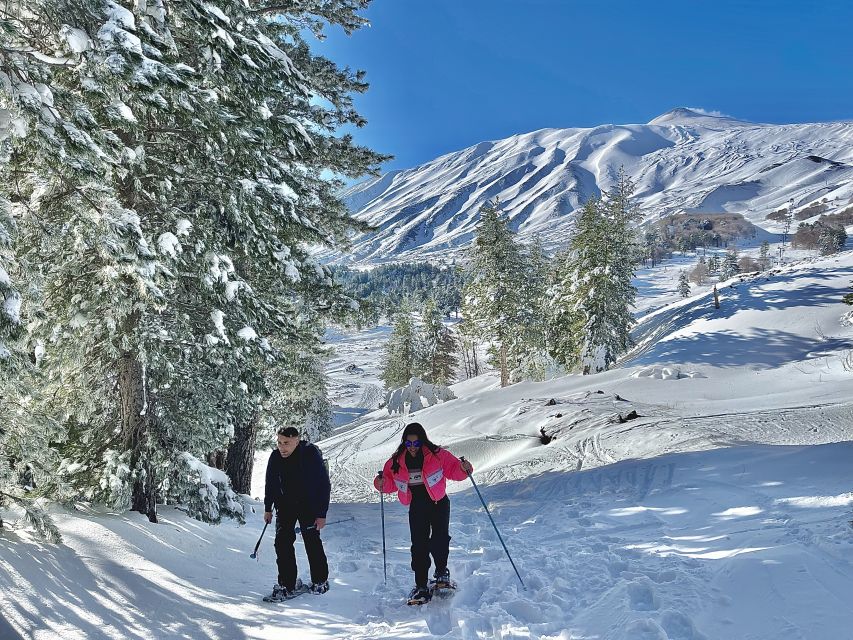
The most compelling part of the walk is the way it strings together different volcanic features in a single journey. You’re not just viewing one thing from afar. You’re walking through a chain of evidence: snowy ground, black rock, fractures, lava paths, and crater-related terrain.
You’ll reach zones linked to the large craters that destroyed the tourist resort of Piano Provenzana. That name is important because it turns the geology into a place people once visited. Instead of abstract volcano talk, you get a physical map of how eruption effects reshape a real human landscape.
The experience also references massive craters from the 2002 eruption. Standing in the vicinity of large crater formations gives you scale: the ground looks “cut” in ways that don’t feel natural, and the volcanic shapes force your brain to slow down. It’s oddly peaceful once you adjust to it.
And the contrast is the whole point. Snow makes the dark volcanic rocks look sharper and more dramatic. The white surface also changes how light moves across the scene, so the same area can look different at different moments of the day. That’s why the photo stops are baked into the plan rather than added on at the end.
Sea views, Taormina, and the Calabria possibility
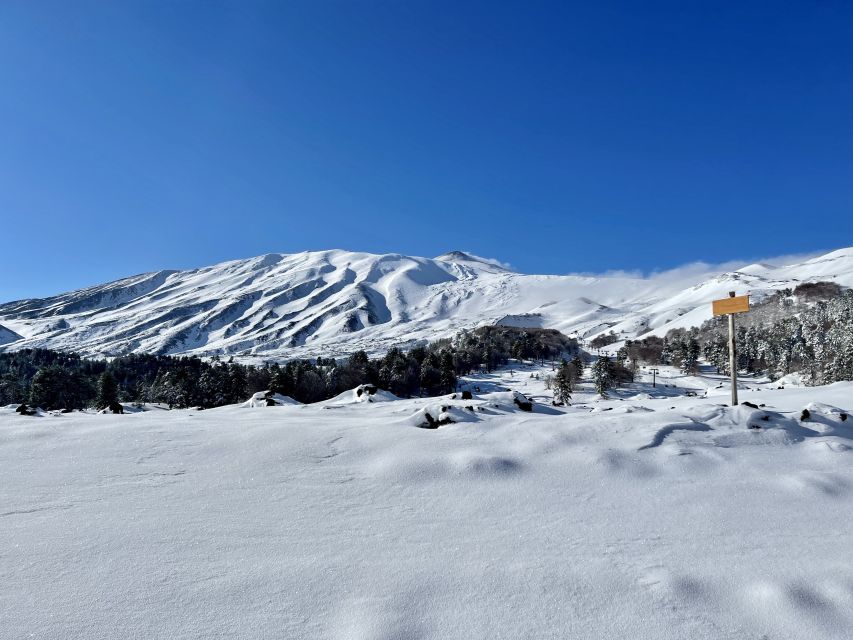
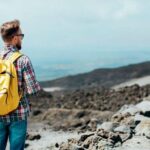
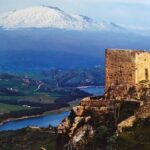
One of my favorite angles of Etna isn’t the volcano itself—it’s what you can see from it. Along the route you’ll admire the sea and the area of Giardini Naxos and Taormina. In conditions of good visibility, you can even see Calabria.
This matters because it balances the hike’s intensity. When you’re in snow and volcanic terrain, it can feel like you’re inside a closed world. Looking outward—toward coastlines and distant land—reminds you Etna is a giant in a much bigger system. You get the best of both worlds: science right under your feet and the wider Mediterranean picture opening up.
There’s also a built-in 30-minute window that includes a mix of photo stop, visit, guided tour, free time, and sightseeing. That pacing is smart. You’ll likely want that time to switch from “listen to the guide” mode into “slow down and look around” mode.
The crater viewpoint at 2,200m: panorama and volcanic gases
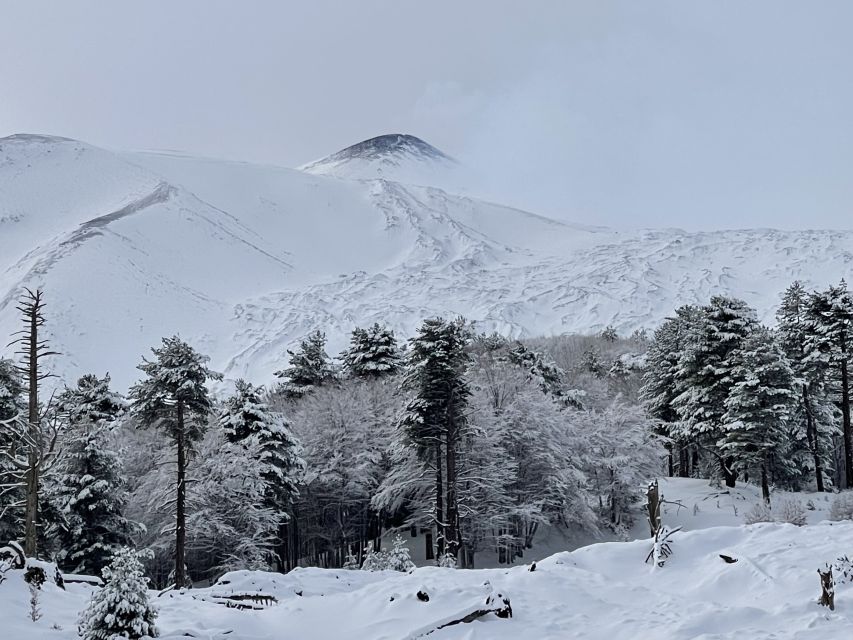
At the top of the large side craters you reach an altitude around 2,200 meters. This is the moment the hike stops being only about walking and starts being about reading the volcano.
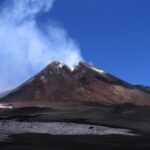
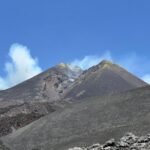
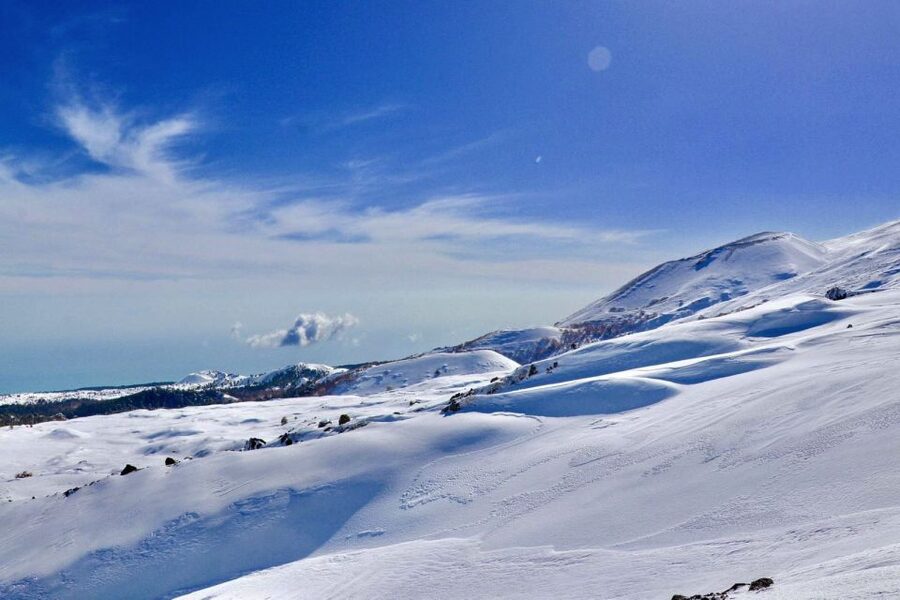
From here you’ll have the opportunity to admire a panorama of the snow-covered Etna volcano up toward its top. One key detail is that Etna is described as always active, with emission of volcanic gases. That doesn’t mean you’re in danger during the hike—what it does mean is that this is a living environment. You’re not visiting a museum of a dead eruption. You’re walking in a place where the volcano is still working.
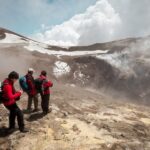
The crater viewpoint time is where the guided explanation tends to click. You can see how lava flow paths, crater shapes, and the broken geology connect. It’s also where the views are most rewarding if the weather cooperates. If you want photos, this is where you aim your camera.
Price and value: what your $44 actually buys
The tour price is listed around $44 per person, and the big value point is that it includes the volcanological guide service. In other words, you’re paying for interpretation—someone helping you understand what the terrain means.
But several crucial winter pieces aren’t included:
- Snowshoes + trekking poles: €12 per person
- Trekking shoes (if you need rentals): €5 per pair
- Windbreaker: can be rented on site for €5
- Jacket: not included
- Snack and bottled water: not included
You’ll also want to budget for the parking ticket (€5 weekdays and €8 Sundays/public holidays), since you’re meeting in a car-access area.
So is it good value? For many people, yes—because Etna’s geology is hard to “get” without context, and this is built around a guided volcanology experience. If you already own proper cold-weather layers and trekking footwear, your extra costs can stay modest. If you need most gear, the total climbs. Either way, the guide service is the core reason to book.
What to pack (and what not to): your comfort checklist for Etna snow
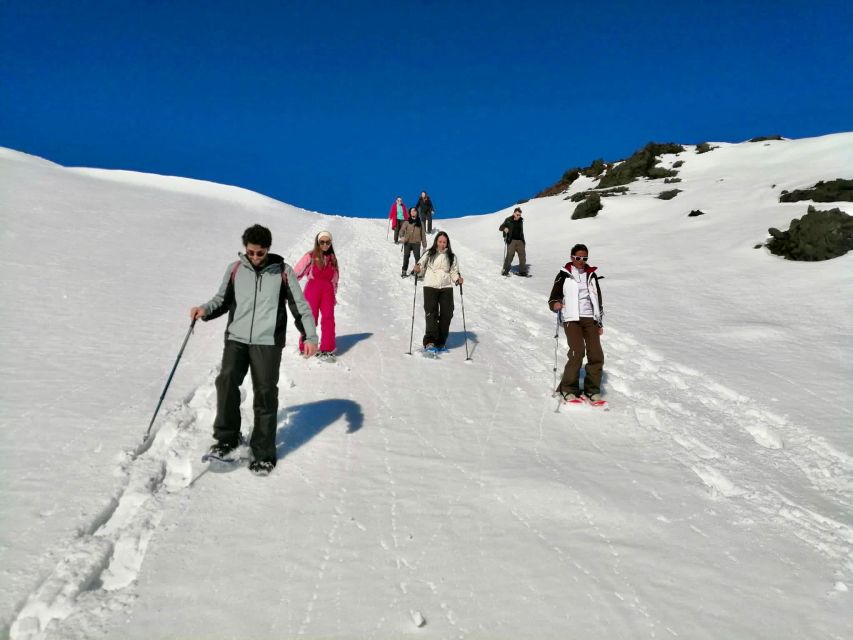
This hike is only 3 hours, but you’re at winter altitude. Your goal is to stay warm enough to enjoy the pauses.
Bring:
- Warm clothing, long pants, and breathable base layers
- A jacket and rain gear (winter weather can shift)
- Gloves and a hat (gloves and hats are not included)
- Sunglasses and sunscreen (snow glare is real)
- Hiking shoes (or plan to rent trekking shoes on site)
- Change of clothes (you’ll feel better after)
- Trekking gear suitable for snow conditions
Know what’s not allowed: high-heeled shoes, sandals/flip-flops, or open-toed shoes. In practice, you want sturdy footwear for snowy, uneven volcanic ground.
Who this snowshoeing hike is best for (and who should skip it)
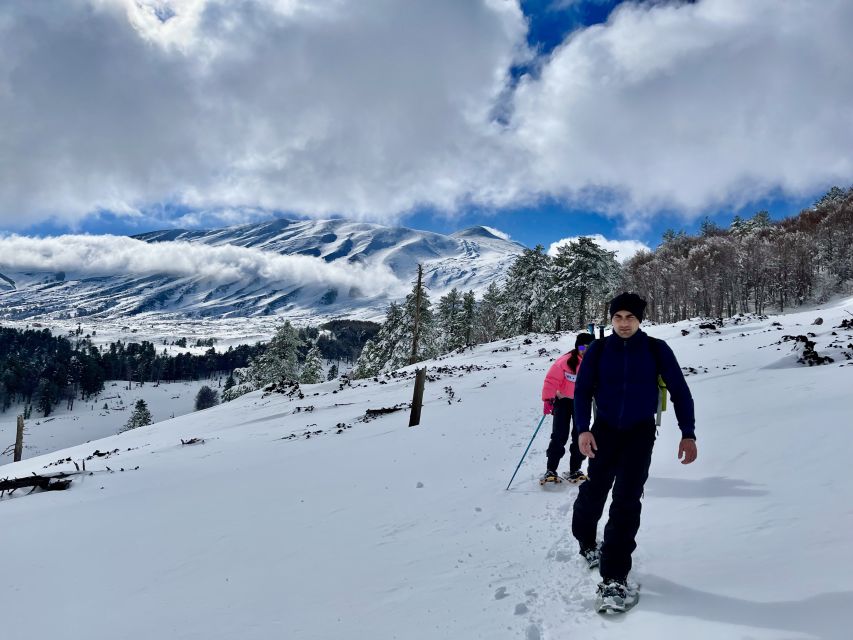
This experience is best for people who:
- Enjoy outdoor winter walking
- Can handle a moderate climb at altitude (+300 m) and snowshoe effort
- Are comfortable standing still for viewpoints and listening to a guide for short stretches
It’s not suitable for people with back problems, mobility impairments, heart problems, people afraid of heights, respiratory issues, epilepsy, pre-existing medical conditions, high blood pressure, recent surgeries, or generally low fitness.
Also consider how you handle cold. Even if you’re fit, the wrong clothing can turn a fun hike into a miserable one. For me, that’s the biggest “hidden variable” on Etna winter: your clothing sets the tone for the entire day.
Should you book Piano Provenzana Mt. Etna snowshoeing?
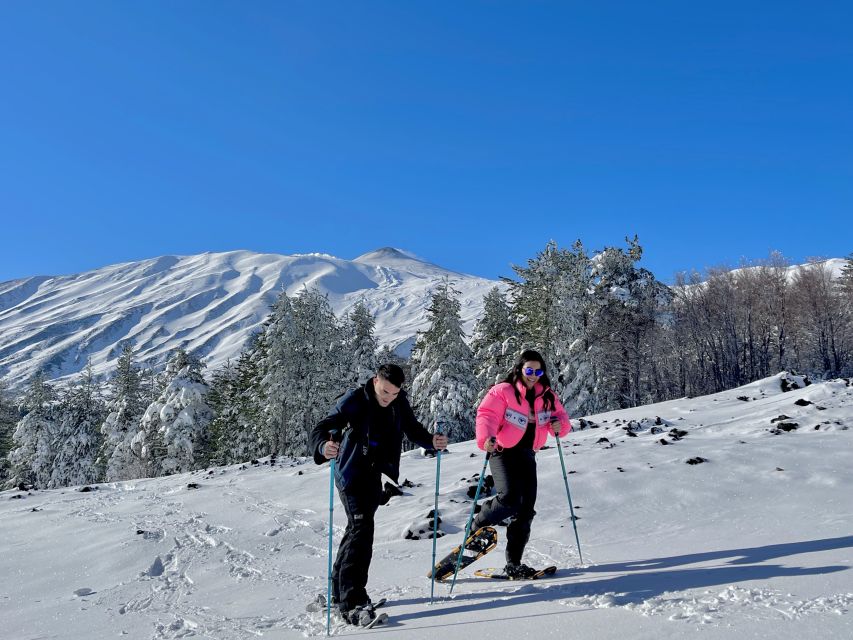
If you want Etna in a way most people don’t see—snow over volcanic scars, guided by volcanology, with sea and crater views—then yes, it’s a strong pick. The route format also helps: a short loop, built-in photo and guided stops, and a clear payoff at around 2,200m.
I’d skip it if you hate cold-weather hikes, you’re not comfortable with winter footing, or you fall into the health categories listed for unsuitability. Also, if you don’t want any extra gear rentals or you’re traveling with very light packing, you may find the add-ons frustrating—though the core guide service is included.
FAQ
FAQ
How long is the Mt. Etna Piano Provenzana snowshoeing trek?
The duration is 3 hours.
What is the total walking distance and elevation gain?
The route is about 5 km round trip with a total positive elevation gain of 300 meters.
Where do I meet the guide?
Meet your guide in the parking lot near the active chairlift at Etna Nord in winter, outside Chiosco Bar Mareneve (CHIOSCO BAR MARENEVE DI FERRARO).
What’s included in the tour price?
The tour includes volcanological guide service.
What snow gear and clothing costs extra on site?
Snowshoes + trekking poles rent for €12 per person. Trekking shoes can rent for €5 per pair. A windbreaker can be rented on the spot for €5. A jacket is not included.
Is a snack or water included?
No. Snack and bottled water are not included.
What languages is the live guide available in?
The live tour guide offers Italian, French, and English.
Who should avoid this tour?
It’s not suitable for people with back problems, mobility impairments, heart problems, respiratory issues, epilepsy, high blood pressure, recent surgeries, low fitness, or anyone afraid of heights, plus other pre-existing medical conditions listed by the provider.