REVIEW · MOUNT ETNA
Etna South: High Altitude Winter Trek with an Alpine Guide
Book on GetYourGuide →Operated by Ashàra Etna & Stromboli Guides · Bookable on GetYourGuide
Mount Etna in winter feels unreal. You’ll hike snowy volcanic ground with authorized alpine and volcanological guides, high above Sicily’s everyday noise. I love the contrast of snow and black lava and the way the guides connect what you see to Etna’s history and crater geology. One drawback to plan for: this is for experienced hikers only, and conditions can shift for safety, including route changes or cancellations.
The trip is built around one simple idea: get high fast, then walk where the volcano’s drama shows up in the landscape. You’ll ride the cable car from Rifugio Sapienza up to about 2,500 meters, then trek toward roughly 3,000 meters, aiming for the eruption cone area and big crater viewpoints. I also like the small-group feel, since it supports safety on icy ground.
Before you go, consider the price math and the logistics of cold. The tour price is $106, but the cable car ticket is not included and is paid on the spot, so your real budget depends on that day. Still, you get serious support on the walk: boots, helmet, walking sticks, and the snow gear you need.
In This Review
- Key highlights you should care about
- Winter Etna: what makes this trek feel different
- Getting there: Ashàra at Rifugio Sapienza and the cable car jump
- The Etna route: from viewpoints to Valle del Bove and Barbagallo crater
- Safety on snow and why this hike is for experienced hikers
- Gear and clothing: what you’ll get versus what you must bring
- Price and value: what $106 really buys on Etna South
- The day can change: weather, ice, and volcanic conditions
- Should you book Etna South: who it fits and who should skip
- FAQ
- How long is the Etna South winter trek?
- Where do I meet the guide?
- How high do we go during the tour?
- Is the cable car ticket included in the price?
- What’s included with the tour?
- What language is the live guide?
- What should I bring for a winter trek on Etna?
- Who is this trip not suitable for?
Key highlights you should care about
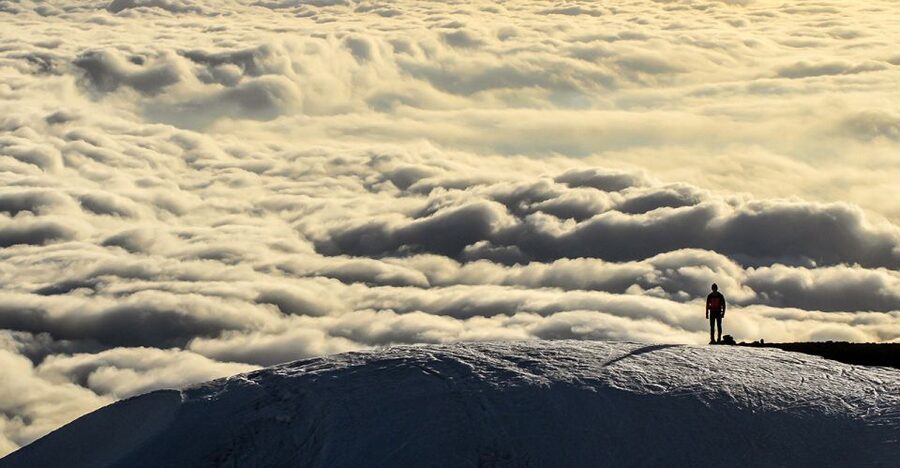
- Cable car lift to around 2,500 meters so you spend more time walking near Etna’s crater zone
- Authorized volcanological + alpine guides who can explain what you’re looking at as you hike
- Valle del Bove and Barbagallo crater stop built into the route for strong views and variety
- Winter safety kit included: boots, helmet, walking sticks, crampon/snow equipment
- Small groups for a safer, more personal pace on uneven snow and ice
- Possible lava channel visit if snow conditions allow on the day
Winter Etna: what makes this trek feel different
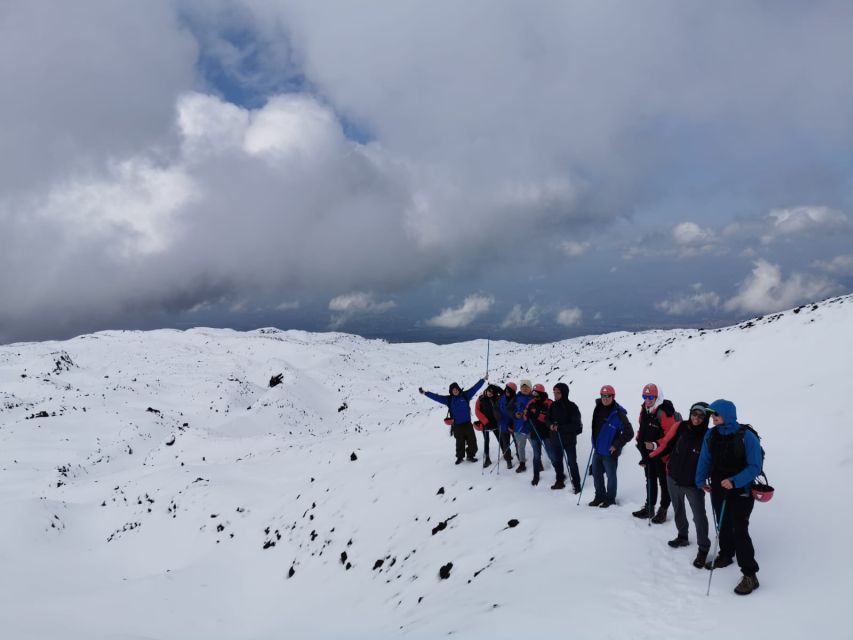
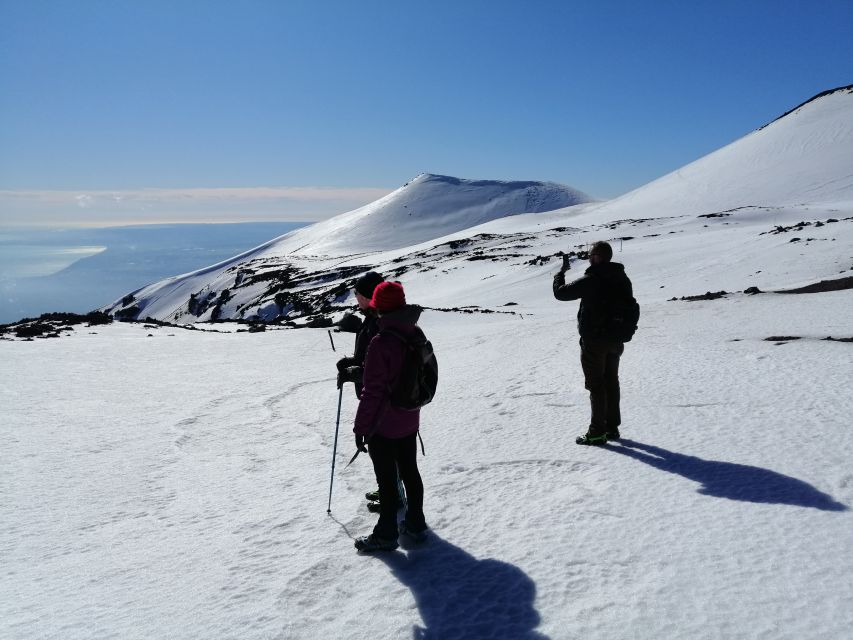
A winter Mount Etna hike isn’t just scenery. It’s Etna stripped down to essentials: rock, ice, wind, and those hard-edged crater lines that look carved rather than grown. You’re up at altitude, so light and visibility can change quickly, but when it’s clear, the views can feel almost too big to take in.
What I like most is that the day mixes three different kinds of Etna experience. First is the height—getting to the crater area without spending half the day slogging uphill. Second is the geology lesson—your guide points out the volcanic features you’re standing beside. Third is the winter challenge: snow and ice make the hike more technical than a summer stroll, but the trip comes prepared for that.
This is also not a walk in the park in the sense of distance or difficulty. You’re on long stretches of snow, and the route can involve uneven ground when snow cover thins or shifts. If you’re the kind of hiker who enjoys careful footing and staying alert, this trip will feel satisfying instead of stressful.
Guides matter here. In past groups, people have mentioned guides such as Massimo, Fabio, and Antonio for clear explanations, good pacing, and lots of Q&A. You’ll want that kind of communication when the terrain is icy and your brain is working double-time.
You can also read our reviews of more tours and experiences in Mount Etna.
Getting there: Ashàra at Rifugio Sapienza and the cable car jump
Your day starts at Ashàra’s info point at Rifugio Sapienza, close to Terrazza dell’Etna. That location matters because it puts you near the infrastructure that lets this trek stay efficient: you’re not waiting around for long transfers or building your route from the valley floor.
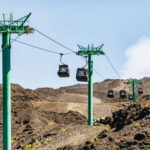
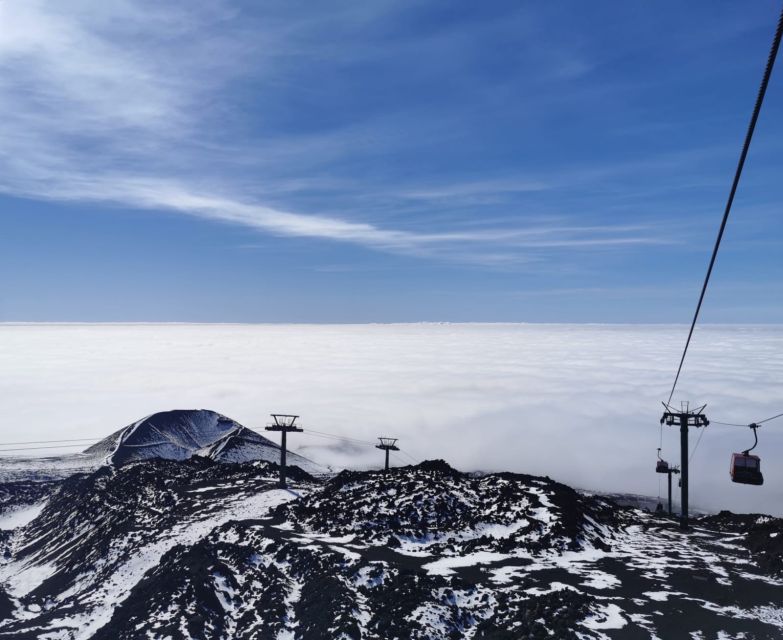
Then you take the cable car for about 20 minutes to roughly 2,500 meters. This lift is one reason the tour feels so focused. Instead of spending hours climbing to the Etna zone, you get to the altitude portion quickly, and you can apply your energy to the actual hike.
At the upper area, you’ll get a guided viewpoint stop before heading into the route. This is where you start reading the terrain. Even if the volcano is partially obscured, your guide can point out directions, crater shapes, and what the route is aiming for so the trek feels purposeful rather than random.
One practical note: cable car tickets are not included in the base tour price. You pay €50 per person in cash on the spot, so bring cash ahead of time. That extra step is the main logistical catch in an otherwise straightforward plan.
The Etna route: from viewpoints to Valle del Bove and Barbagallo crater
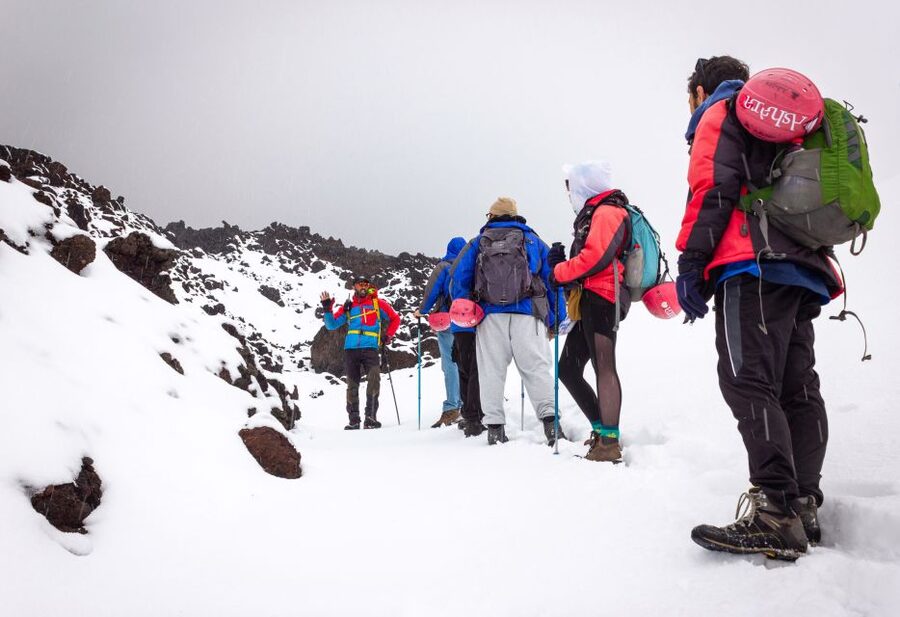
The trek has a clear rhythm, and each stop has a job.
After the initial viewpoint, you head into Valle del Bove for about 40 minutes. This is the kind of volcanic landscape you can’t fully grasp from a photo. In winter, the snow flattens some shapes and sharpens others, so the valley’s structure reads differently. Your guide’s job here is to help you connect the ridge lines and crater geography to how Etna behaves.
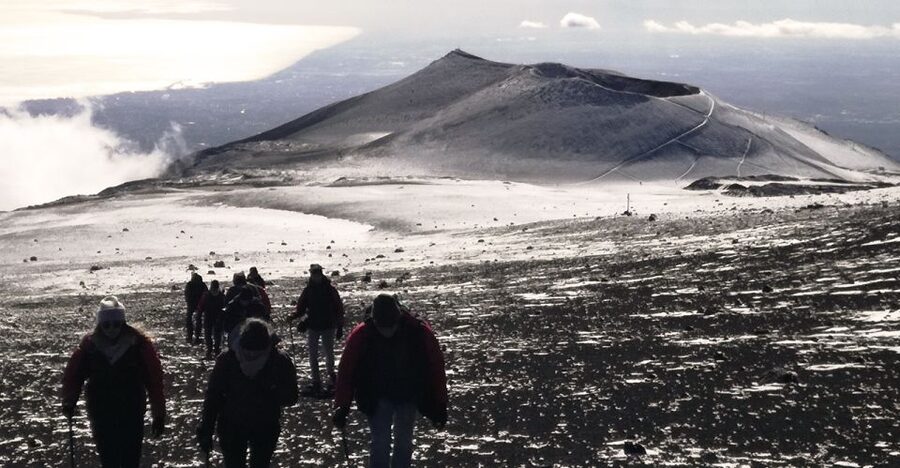
Next comes Barbagallo Crater, with about an hour of walking and exploring. This is your chance to get up close to a specific volcanic feature rather than only following a route line in the distance. Expect walking on snowy ground with traction gear that keeps you steady. The payoff is that you’re not just watching the volcano from afar—you’re walking through part of its story.
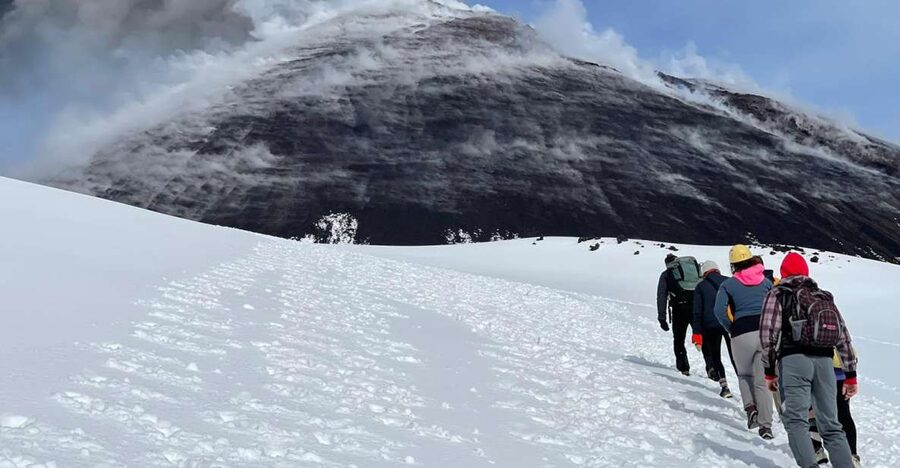
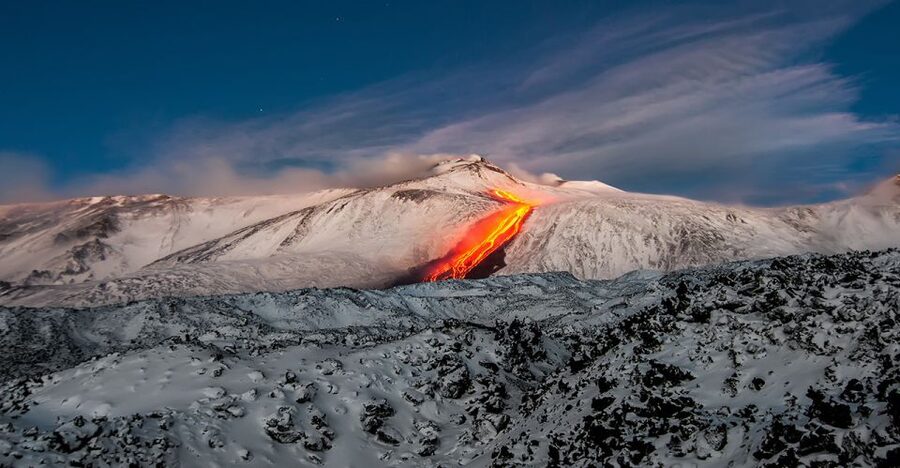
Then you move toward the Etna summit area at a safe distance for crater views, followed by about 30 minutes of walking. In some winter conditions, groups have reported reaching around 3,050 meters and spotting active-zone activity in February, which shows you the real potential of the day when weather and safety align. The exact focus can vary day to day because volcanic conditions and ice presence aren’t predictable.
If the snow conditions allow, there’s also a possibility of visiting a lava channel area before heading back. That kind of add-on is why this is a winter trek rather than a fixed museum circuit. When it’s feasible, it gives the day an extra “only Etna” element.
Safety on snow and why this hike is for experienced hikers
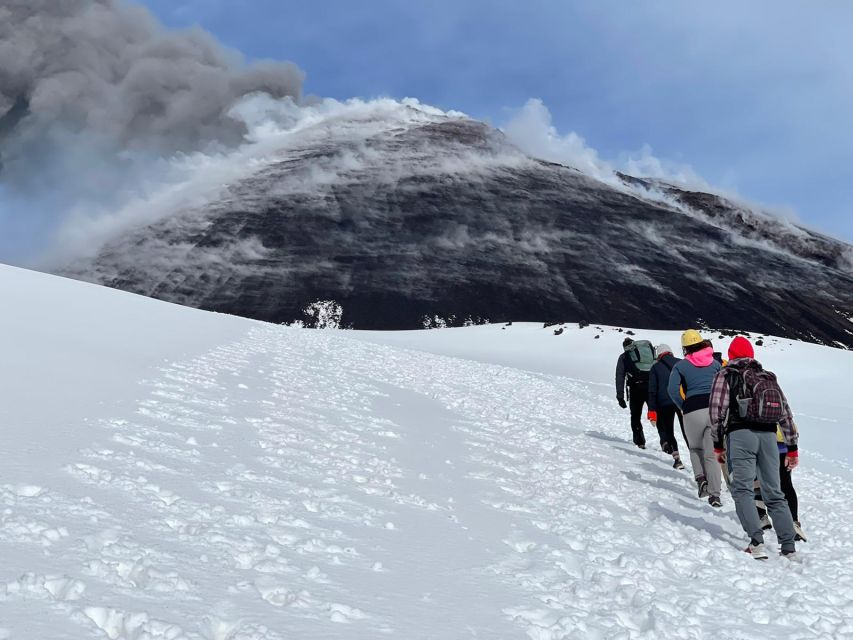
The tour is meant for experienced hikers. That’s not just marketing language; it’s built into how the day is designed. You’re moving at high altitude—up to about 3,000 meters (and sometimes higher depending on conditions)—and winter snow turns “uneven” into “uneven and slippery.”
You’ll walk long stretches of snow, and ice can change the footing fast. Your guide has the right to stop the excursion or adjust the itinerary if volcanic activity or safety conditions require it. That flexibility is a good thing, even if it means the day’s plan shifts.
Also, plan for the reality that volcanic activity is continuous and unpredictable. Even with excellent planning, Etna can change the rules. I’d treat your day like a living plan: you’re there to hike safely and see what you can, not to force one exact route no matter what the mountain says.
From a comfort standpoint, the hike isn’t presented as a gentle snowshoe walk. One past participant described the trek as tough for a young and able body, with the hardest moments coming from uneven sandy ground at times. So even if your fitness is solid, expect some sections that test balance and endurance.
If you have vertigo, respiratory issues, epilepsy, heart problems, back problems, high blood pressure, mobility impairments, or you’re pregnant, this isn’t a match. Same for children under 10 and anyone without hiking experience.
Gear and clothing: what you’ll get versus what you must bring
Good winter traction and insulation are the difference between enjoying the hike and thinking about your car keys. The tour includes hiking boots, a helmet, walking sticks, and the necessary snow equipment (the idea is you’re not showing up with the wrong kind of footwear).
You still need to bring your own layers and cold-weather basics. Pack warm clothing and a windbreaker. Bring gloves, warm socks, a scarf, and a hat. Long pants are required, and you’ll want weather-appropriate clothing that you can move in without overheating.
Footwear rules are strict: open-toed shoes aren’t allowed. Shorts and sleeveless shirts are also not allowed. And you can’t bring luggage or large bags, so travel light.
Food and drinks are not included, so bring your own. At altitude, your body can get colder faster than you expect, and you’ll want energy during breaks. Keep it simple: warm drinks if you can manage it, plus snacks you already know you tolerate when it’s cold.
Price and value: what $106 really buys on Etna South
The listed price is $106 per person for a 5-hour experience. That sounds like a bargain until you do one quick add-up: the cable car ticket is €50 per person, paid in cash on the spot. After that, your total climbs, and the cable car cost becomes part of the value equation.
So where’s the real value? It’s in the combination of guidance quality and included winter gear. You get an authorized guide team (alpine and volcanological) and the equipment to make the winter conditions manageable: boots, helmet, walking sticks, and snow gear. That’s the difference between a safe guided hike and a DIY idea that could go wrong on ice.
The small-group setup also matters. Fewer people usually means more attention on footing and pacing, especially when visibility changes and snow texture shifts underfoot.
If you’re already an experienced winter hiker and you want serious Etna geology with real traction support, the price becomes easier to justify. If you’re unsure about your winter hiking ability, the safety focus can also make this feel expensive, because you may need to pass on it.
The day can change: weather, ice, and volcanic conditions
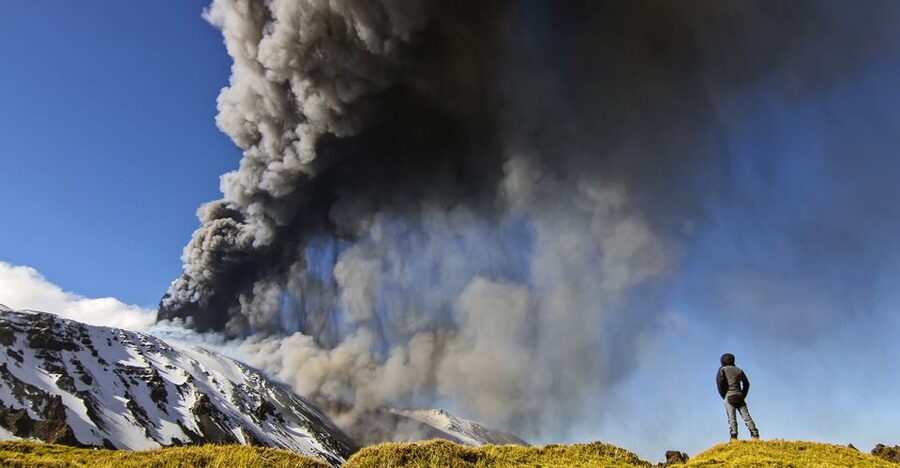
Winter on Etna comes with moving parts. Visibility can improve or disappear, and ice presence can affect whether certain sections are safe. Your guide can change the itinerary or stop the excursion if anything could compromise safety.
This is where having an alpine/volcanological guide helps beyond explanations. When the ground is slick or the route is icy in an unexpected way, guidance becomes practical decision-making: pacing, where to step, and what to skip.
It also explains why you might hear about different altitudes and outcomes. Some days are clear enough to push up toward active-zone areas, while other days mean a more conservative route that still gives strong crater viewpoints from safe distances.
What you should do is keep your plans flexible. Wear layers that work in sudden wind and keep a positive attitude if your exact targets adjust. The main goal is safe hiking and meaningful Etna views, not checking off a single summit-style objective.
Should you book Etna South: who it fits and who should skip
Book it if you’re a fit, experienced winter hiker and you want a guided Etna experience that goes beyond a cable-car viewpoint. You’ll like the mix of crater geology, Valle del Bove scenery, and the Barbagallo crater walk, plus the fact that traction and snow safety equipment are handled for you.
Skip it if you don’t handle cold and uneven winter ground well, or if you’re in any of the non-suitable categories listed for health and mobility reasons (including children under 10, pregnancy, vertigo, heart problems, respiratory issues, epilepsy, and more). Also skip if you lack hiking experience—this trek is not designed as a first winter outing.
If you do book, come ready with cash for the cable car (€50 per person), eat before you start (since food isn’t provided), and dress like wind is guaranteed. It often is.
If you want Etna in winter, with real structure and real safety, this trek is a strong bet—especially when the day is clear and the volcano is visible.
FAQ
How long is the Etna South winter trek?
The experience lasts about 5 hours.
Where do I meet the guide?
You meet at Ashàra’s info point at Rifugio Sapienza (Etna South), near the Terrazza dell’Etna restaurant.
How high do we go during the tour?
You ride the cable car up to about 2,500 meters, then trek to about 3,000 meters. Some days may reach higher areas depending on conditions.
Is the cable car ticket included in the price?
No. Cable car tickets cost €50 per person and must be paid in cash on the spot.
What’s included with the tour?
You get a volcanological or alpine guide, hiking boots, a helmet, walking sticks, and necessary snow equipment.
What language is the live guide?
The live guide is available in French, Italian, and English.
What should I bring for a winter trek on Etna?
Bring warm clothing, a windbreaker, gloves, socks, a scarf, long pants, and a hat. Also bring food and drinks, plus cash for the cable car.
Who is this trip not suitable for?
It’s not suitable for children under 10, pregnant women, people with back problems, mobility impairments, wheelchair users, vertigo, respiratory issues, epilepsy, people without hiking experience, and people with high blood pressure.