REVIEW · KATHMANDU
12 Days Annapurna Base Camp Trek
Book on Viator →Operated by Everest High Pass Adventures · Bookable on Viator
One good sunrise changes your whole week. This 12-day Annapurna Base Camp trek mixes classic Himalaya viewpoints with teahouse life and a steady plan up to 4,130 meters. You also get real cultural stops through Gurung and Magar villages—not just mountain scenery.
I like that the pacing is built for people who want a moderate challenge without chaos. I also like the logistics support: a guide briefing in Kathmandu with permits prepared, plus a private group so you’re not sharing the ride or decisions with strangers.
The main drawback to plan for is altitude and weather. If conditions are poor, your trek may need a different date, and at higher elevations you’ll want to take acclimatization seriously.
In This Review
- Key highlights you’ll feel on this trek
- Entering the Himalaya from Thamel, not from chaos
- Kathmandu to Pokhara: gateway city and your first view
- Ulleri’s stone steps: the trek starts with honest effort
- Ghorepani and the rhododendron climb
- Poon Hill sunrise: a payoff that’s worth the early start
- Chhomrong: Gurung village views with a sense of place
- Bamboo, Dovan, and Himalaya: where the trail quiets
- Annapurna Base Camp day: the forest changes, the peaks get closer
- The descent: easier on paper, long on legs
- Jhinu Danda hot springs: the reward you can actually use
- Pokhara wrap-up: lakeside time and normal life again
- Back to Kathmandu: finish with breathing room
- Price and value: what $1,200 actually buys you
- Who this trek fits best (and who should reconsider)
- What to expect from Everest High Pass Adventures
- FAQ
- FAQ
- What altitude does the trek reach?
- Is this trek for beginners or experienced hikers?
- How do I get from Kathmandu to Pokhara?
- Does the itinerary include sunrise views?
- Is there any hot spring time during the trek?
- What’s included in the price?
- Is cancellation free if weather is bad?
- Should you book this Annapurna Base Camp trek?
Key highlights you’ll feel on this trek
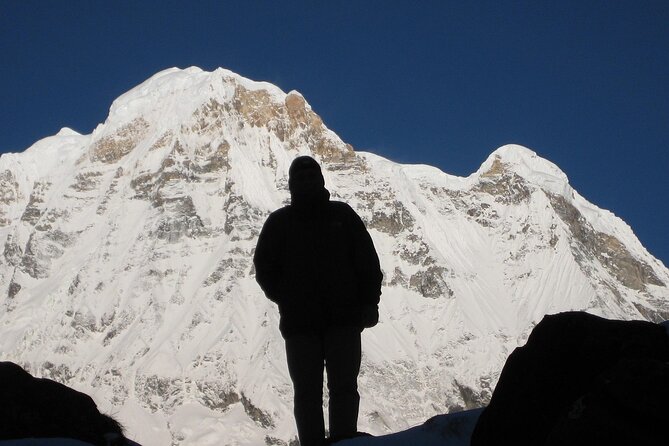
- Poon Hill sunrise: an early hike for big mountain views, then you re-fuel in Ghorepani
- A full Annapurna Base Camp day: climb in changing scenery and watch the sunset from camp
- Gurung and Magar villages: more than scenery, you’ll pass through traditional communities
- Hot springs at Jhinu Danda: a very practical reward for sore legs
- Private tour setup: your group only, with a guide managing key details
- A well-timed return route: descent follows the same trail so you know what’s coming
Entering the Himalaya from Thamel, not from chaos
Most Annapurna trips succeed or fail based on how calm your first day feels. Here, you arrive in Kathmandu and get transferred to a hotel in the Thamel area. That matters because Thamel is where you can get your bearings fast: you’re not stumbling around a new city while your trek starts mentally in the background.
After that, you meet your guide for a trek briefing and permit preparation. I like this approach because it removes one of the biggest head-spins of trekking in Nepal. You’re not scrambling later for paperwork while everyone else is already moving.
And since pickup is offered, the start feels less like a scavenger hunt. Your trip begins with you being met, transferred, and introduced to the plan, which sets the tone for the long walk ahead.
You can also read our reviews of more tours and experiences in Kathmandu.
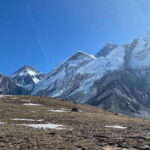
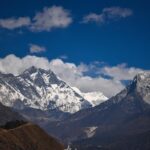
Kathmandu to Pokhara: gateway city and your first view
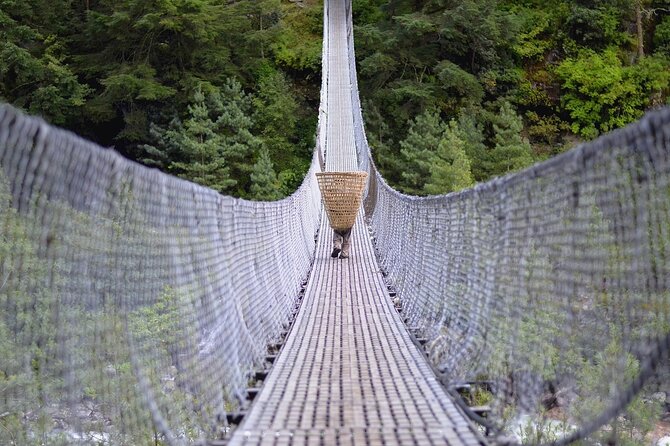
On day two, you go to Pokhara, your practical launch point for the Annapurna region. You can take either a 6–8 hour overland drive or a quick 25-minute flight. Choose based on how you like to travel: the drive gives you time to relax and watch Nepal roll past; the flight saves energy for your legs and breathing once hiking starts.
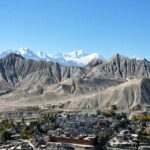
Pokhara sits beside Phewa Lake with views of the Annapurna range in the background. Even if you’re not trekking yet, that first look matters. It turns the mountains from an idea into a destination you can aim at.
Also, the itinerary includes a WiFi-on-board perk. It’s not a reason to book alone, but it’s handy for keeping family in the loop during the transit days.
Ulleri’s stone steps: the trek starts with honest effort
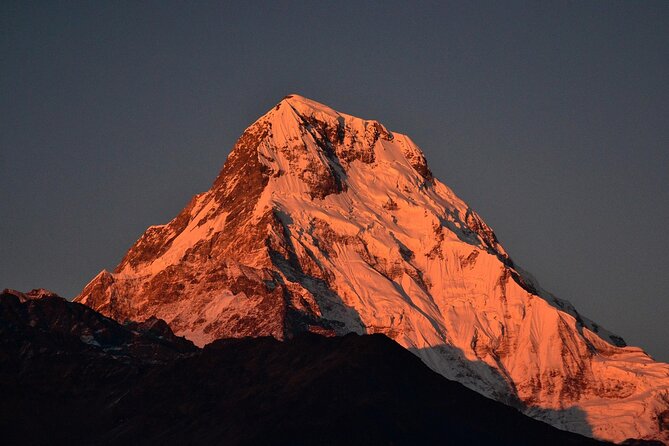
Day three is the beginning of the uphill climb that people talk about after the fact. You drive about 1.5 hours to Nayapul, then walk along a gentler route toward Birethanti and Tikhedhunga. It’s a good warm-up: your body gets used to moving, and your mind settles into the rhythm of trekking.
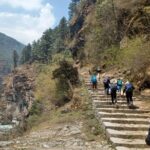
Then comes Ulleri village, reached via a steep ascent of over 3,000 stone steps. That’s not a “warm and scenic stroll” kind of day. I like this kind of start because it sets expectations early: you learn quickly where your effort needs to go, and you can pace accordingly rather than trying to sprint.
If you’re the type who wants to control your energy, this is a good day to keep it slow. Save the bravado for higher up, where you’ll need it less and steadiness more.
Ghorepani and the rhododendron climb
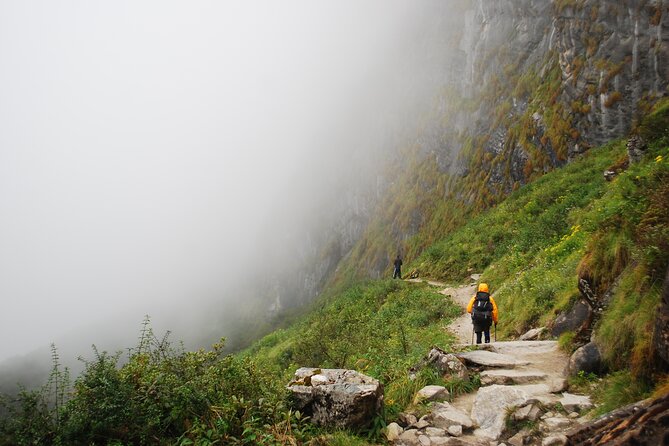
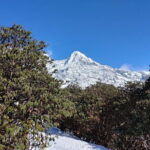
By day four, you’re moving uphill through dense rhododendron and oak forests, passing waterfalls and Magar villages. This section feels like the trek’s “story chapter” before the big sunrise day—less about one single peak photo and more about constant visual changes.
Ghorepani is where you arrive: a popular village with cooler alpine air and strong panoramic views. It’s also a smart base for what comes next. Early mornings work better when you’re already positioned instead of hiking in the dark.
Poon Hill sunrise: a payoff that’s worth the early start
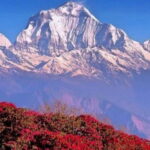
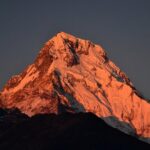
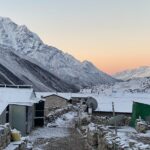
Day five is your early-morning mission to Poon Hill. The plan is simple: wake up early, hike to a viewpoint, and catch sunrise over the region’s major peaks—Dhaulagiri, Annapurna, and Machapuchare all get attention from this vantage.
Then you descend back to Ghorepani for breakfast before continuing through the forests. This is one of the best value parts of the whole trek because you’re rewarded with views that feel bigger than the effort required to reach the viewpoint.
One practical note: sunrise days can be mentally tough even if the physical part is fine. I’d treat this as a “weather and timing” day—pack and plan so you don’t rush, because rushing ruins the magic.
Chhomrong: Gurung village views with a sense of place
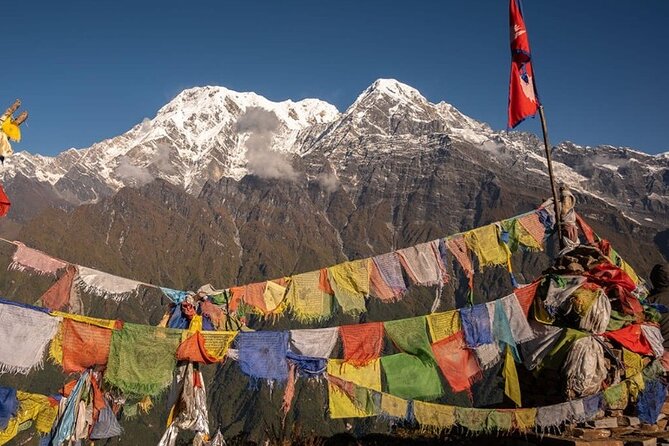
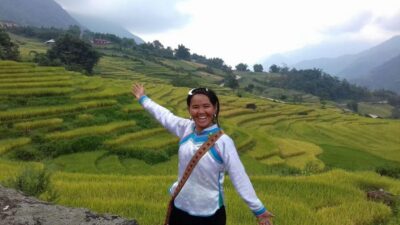
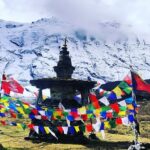
On day six, the route descends steeply to a stream and then climbs again through terraced farmland and forests to reach Chhomrong. This is a large Gurung village, and it’s known for strong views of Annapurna South and a sacred area in the village setting.
This matters because you’re not just passing through. You’re entering a living place where people farm, host trekkers, and navigate mountain life. Even with basic trekking infrastructure, the cultural stops are what make this feel like Nepal beyond the postcard.
As always, pace is king. Terraces and village paths can look straightforward but often feel more intense once you’ve already done a couple of big days.
Bamboo, Dovan, and Himalaya: where the trail quiets
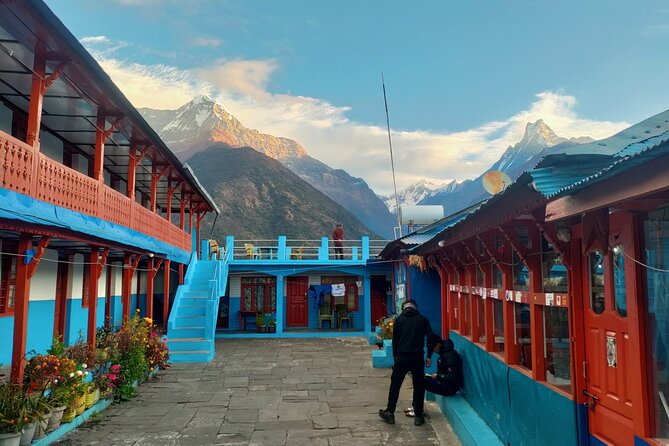
Day seven moves you from Chhomrong’s village world into more remote trekking country. The plan goes from descending to the river and climbing back up to Sinuwa, then continues through bamboo forests and calmer terrain.
You pass through Bamboo and Dovan, then reach Himalaya in a quiet gorge area. I like days like this because you get less “traffic” feeling and more of that steady, focused trekking rhythm. You’ll also notice the scenery shifting as you go from lower forest patterns into more open, high-mountain character.
This is the day where you start to understand that Annapurna Base Camp is not just an endpoint. It’s a slow transformation of air, sound, and view.
Annapurna Base Camp day: the forest changes, the peaks get closer
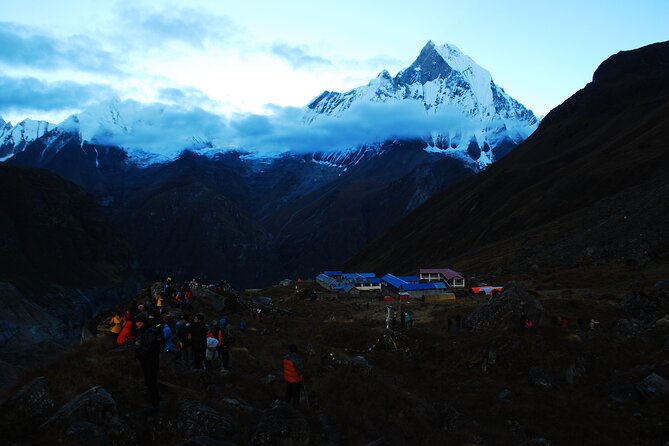
Day eight is the big one: arriving at Annapurna Base Camp. The route ascends past Deurali and MBC (Machhapuchare Base Camp), and the views are described as breathtaking as the trail moves upward.
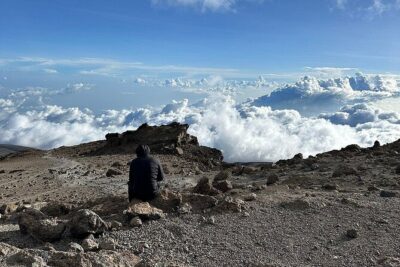
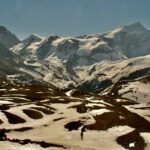
You’ll move from forest into open alpine meadows, then make a gradual climb into camp. At the base camp, you’re surrounded by towering peaks, and you’ll be there for sunset—a timing choice that tends to create some of the strongest “I remember this” moments on the trek.
If you’re trying to choose the right mindset for this day, here it is: don’t treat it like a finish line. Treat it like a place you arrived to observe—because when you’re at altitude, your best memories come from slowing down inside the rush to reach the viewpoint.
The descent: easier on paper, long on legs
Day nine brings an early sunrise over the Annapurna range, then a return descent following much of the same route: MBC, Deurali, Dovan, and back toward the forested area of Bamboo.
The description calls the descent easier but long. That’s exactly the reality most people underestimate. Descending uses different muscles than climbing, and it can still beat you up over time, especially if you step fast to “get it over with.”
So yes: take your time. This is a good day to focus on steady footing rather than speed. Your goal is to arrive in the next stop feeling like you still have control, not like you’re just trying to survive the hours.
Jhinu Danda hot springs: the reward you can actually use
Day ten is a mix of trekking and relief. You trek uphill to Chhomrong, then descend steeply to Jhinu Danda. In the afternoon, you unwind with natural hot springs by the riverside.
I love this kind of recovery stop because it’s not just a cute add-on. It’s a practical way to loosen tired legs and reset your body before the final transit days. It also breaks up the emotional flat line that can happen when you’re nearly done and still have one more chunk of travel to close the trip.
If you’re even slightly worried about soreness, this is the day you want to remember to hydrate and go easy with the downhill.
Pokhara wrap-up: lakeside time and normal life again
Day eleven returns you toward Pokhara. The plan is a short trek to Siwai or Nayapul, followed by a drive back to Pokhara.
You’ll then have a celebration option: a lakeside dinner, a massage, or just relaxing as you reflect on what you finished. I find this important: ending the trek without decompression time can make the trip feel unfinished.
Pokhara gives you enough comfort to do the “I made it” part without jumping right back into Kathmandu stress.
Back to Kathmandu: finish with breathing room
Day twelve brings you back to Kathmandu. You can fly or drive depending on your schedule, and your trip ends back at the meeting point.
This day is often overlooked, but it’s where your trip either feels like a clean ending or a rushed one. If you have the flexibility, I’d plan it so you’re not racing to catch up on emails the second you land. After 12 days of altitude and walking, you deserve a calmer finish.
Price and value: what $1,200 actually buys you
At $1,200 per person, this trip is priced for a supported trek rather than a DIY experiment. The biggest value signals from the details you’re given:
- Meals included, which matters over 12 days when budget and convenience both add up
- Government fees and entrance fees included, which reduces paperwork headaches
- Excess baggage included, which is a real relief if you’re traveling with more than a bare-bones hiking pack
- Private tour setup, so you’re not negotiating around strangers in tight transitions
- Pickup offered, which keeps your start smooth rather than uncertain
What’s not included is also clear: public transportation and airport/departure tax. So you should still expect a few extra costs tied to local transit and airport charges.
If you want a trek where your biggest decisions are pacing and gear—not permits and logistics—this price can feel fair. If you’re the kind of traveler who plans everything independently, you might compare costs and decide what support is worth paying for.
Who this trek fits best (and who should reconsider)
This is described as a moderate trek with a required moderate physical fitness level. That’s a useful signal: it’s not pitched as casual, but it’s also not advertised as technical mountaineering.
It’s also built for people who enjoy:
- early mornings for views
- long walking days with real descent
- cultural village routes through Gurung and Magar communities
- a clear trail plan up to Annapurna Base Camp at about 4,130 meters
Consider reconsidering if altitude worries you a lot or if you’re not comfortable with long walking and steep segments like the Ulleri steps and the downhill stretches.
What to expect from Everest High Pass Adventures
Your provider is Everest High Pass Adventures, and the trip is rated 5 based on 4 reviews. The praise that stands out is about service tone and responsiveness—people noted quick replies, professionalism, and a friendly, helpful guide.
One guide name that shows up in their broader feedback is Mandip Ji, described as especially caring and knowledgeable with a calm, upbeat presence. You might not have the exact same guide, but the point is consistent: they place emphasis on how the trip feels day-to-day, not just the route on paper.
A private setup means you should also expect quicker problem-solving when something small goes sideways—timing, gear, or just needing clarity fast.
FAQ
FAQ
What altitude does the trek reach?
The trek is described up to about 4,130 meters at Annapurna Base Camp.
Is this trek for beginners or experienced hikers?
It’s presented as a moderate trek and is best for travelers with a moderate physical fitness level.
How do I get from Kathmandu to Pokhara?
You’ll go either by a 6–8 hour overland drive or a 25-minute flight to Pokhara.
Does the itinerary include sunrise views?
Yes. There’s an early hike to Poon Hill for sunrise, and there’s also an early sunrise in the Annapurna region on the way down.
Is there any hot spring time during the trek?
Yes. On day ten, you reach Jhinu Danda and can enjoy natural hot springs in the afternoon.
What’s included in the price?
Meals, admission fees/government fees/entrance fees, WiFi on board, and excess baggage are listed as included. Pickup is also offered.
Is cancellation free if weather is bad?
The experience allows free cancellation up to 24 hours in advance, and it’s also stated that poor weather can trigger a different date or a full refund.
Should you book this Annapurna Base Camp trek?
I’d book this trek if you want a supported, well-paced Annapurna route with built-in highlights like Poon Hill sunrise, a full Annapurna Base Camp day, and the practical relief of hot springs at the end. The included fees and meals make it easier to budget, and the private setup keeps the experience from feeling crowded or rushed.
I’d pause if your main goal is total flexibility or if you’re very anxious about altitude and steep parts. The mountains don’t care about plans, and this route does take you to real elevation—so go in with respect for the trek, not just excitement for the photos.