REVIEW · STROMBOLI
Stromboli: Sunset Trekking at Sciara del Fuoco
Book on GetYourGuide →Operated by Ashàra Etna & Stromboli Guides · Bookable on GetYourGuide
Volcano fireworks start at sunset. This guided hike to Sciara del Fuoco turns Stromboli into a glowing theatre in the big blue sea. I especially love the lava-lit eruptions you can watch right as the sky goes dark, and the pro volcanological guides who explain what you’re seeing in plain language. One heads-up: the climb and the dark descent are not casual strolling.
You’ll meet your guide in town, get safety gear, then hike up toward the summit areas that are open to visitors with guides. Expect real-time focus on safety, lots of viewing breaks, and enough time at Sciara del Fuoco to watch the show build. Guides you may hear from include people like Giuseppe, Giovanni, Federico, Nino, and others who run the route at a steady pace for the whole group.
In This Review
- Key things I’d pencil in for your Stromboli sunset hike
- Why Sciara del Fuoco is the best sunset volcano show
- Getting to your meeting point on Stromboli (and why you might sleep there)
- What’s included in the hike: helmet, headlamp, and a real volcanology guide
- The uphill trek: timing, the 400-meter rule, and the cemetery stop
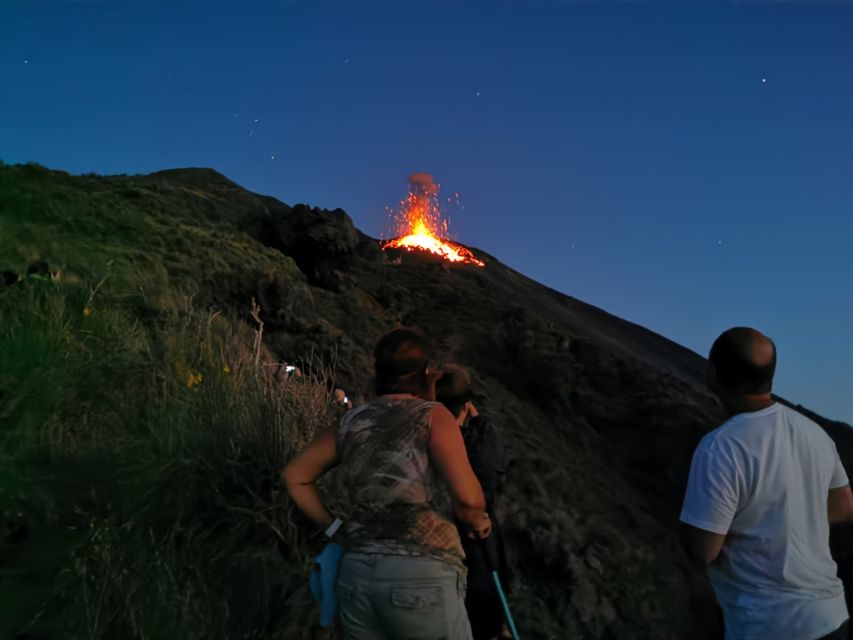
- Sciara del Fuoco at sunset: what eruptions look like in real life
- The descent in darkness: headlamp work, steep bits, and dusty air
- How hard is this hike, really (and who should skip it)
- Price and value: why $35 makes sense here
- What to pack so you don’t suffer unnecessarily
- Smart advice from guides to help you enjoy the climb
- Should you book Stromboli sunset trekking at Sciara del Fuoco?
- FAQ
- Where is the meeting point for the sunset trekking tour?
- What’s included with the tour price?
- What should I wear and bring?
- How high do you hike on this tour?
- Is food or drink included?
- Why do I need to stay overnight on Stromboli?
- Is this tour suitable for everyone?
Key things I’d pencil in for your Stromboli sunset hike
- Sciara del Fuoco is the main event: you’re hiking for the best angles on the active volcano
- Helmet + headlamp are included so you don’t show up underprepared
- 400-meter limit with a guide keeps the route controlled and safer than going higher on your own
- Breaks with story stops include a visit to the old island cemetery
- Descent in the dark with strong lighting means you need sure-footed attention
Why Sciara del Fuoco is the best sunset volcano show
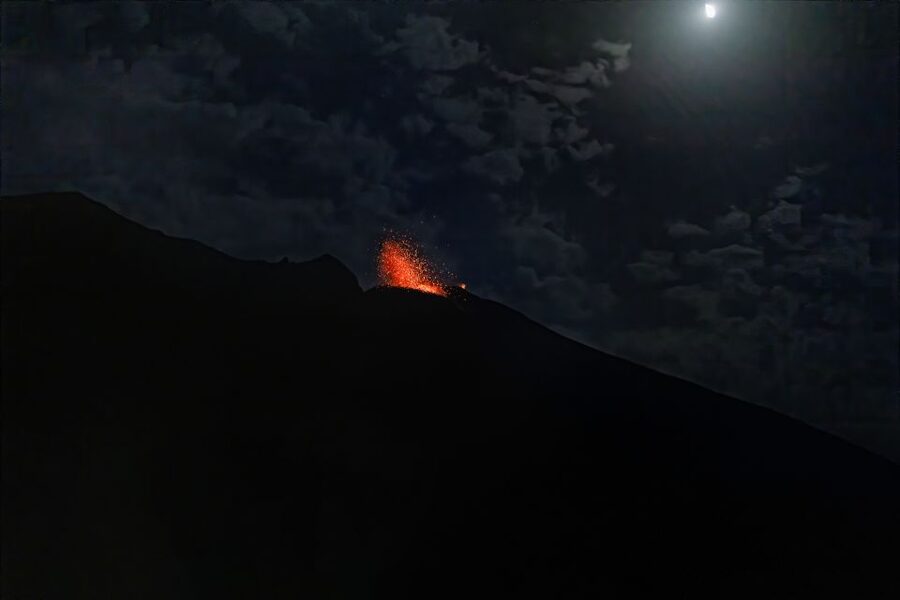
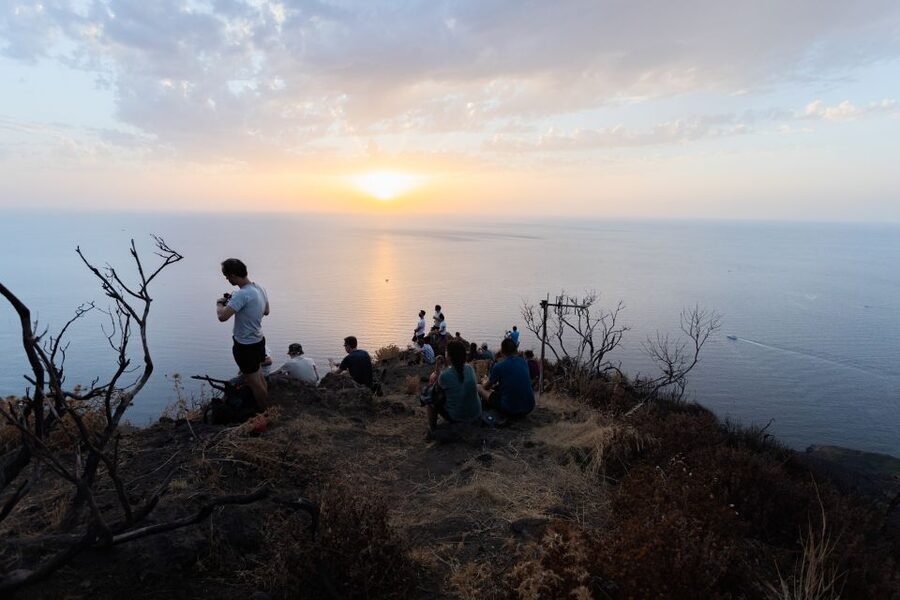
Sciara del Fuoco is Stromboli’s dramatic slope—where the volcano’s activity lights up the dark like a giant stage. As sunset slides into night, the Aeolian archipelago can turn reddish with the glow and the changing sky, and you get the feeling that the island is alive in a way photos can’t fully capture.
What makes this experience land so hard is timing. You’re not just arriving to watch the volcano sometime that day—you’re hiking while the light changes, then settling into place as the active eruptions become more visible against the dark. That “golden hour to night sky” transition is the magic.
The guides also matter. People running this route (including Giuseppe and Giovanni in past groups) tend to focus on what you’re seeing and why it happens, not just facts dumped fast. The vibe stays calm even when you’re getting close to something that’s genuinely powerful.
You can also read our reviews of more tours and experiences in Stromboli.
Getting to your meeting point on Stromboli (and why you might sleep there)
Your meeting point is Ashàra Etna & Stromboli Guides info point, in Via Vittorio Emanuele / Piazza San Vincenzo, behind the church. Plan to arrive with time to find it, use the toilet, and top up water before your safety briefing.
The big logistics twist: the tour finishes late. Because of that, you need to stay on Stromboli overnight. There are no late return ferry boats, so don’t book a last-possible departure from the island based on hope and wishful timing.
Starting time is built around sunset. You’ll begin about two hours before sunset, so you’re hiking while the light still works in your favor, then using headlamps for the return when it turns black.
What’s included in the hike: helmet, headlamp, and a real volcanology guide
The operator includes a headlamp flashlight, a rock helmet, and a volcano guide. That’s a practical bundle: you’ll want bright light for the descent, and a helmet matters when you’re walking on volcanic terrain.
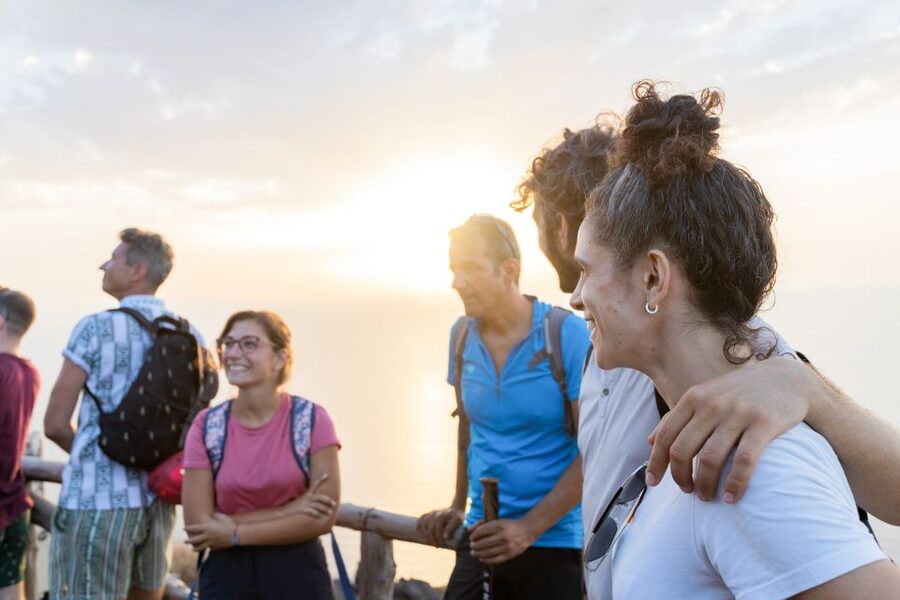
Most important, the guide role isn’t just “lead and follow.” This is where you benefit from volcanological guidance: you get help reading the terrain and understanding the activity safely from permitted areas. Past groups have described guides who keep pace steady, explain the route and risks clearly, and give you breaks to catch your breath and look.
If you’re worried about the group moving too fast, you’ll likely feel better once you’re on the path. The route is set up with pauses and a pace that lets everyone stay together, even when the terrain gets steep.
The uphill trek: timing, the 400-meter rule, and the cemetery stop
After your safety briefing, you start from a nature trail and work up toward 400 meters, which is the maximum altitude allowed for this guided route. This limit exists because summit craters close up to visitors beyond what guides are allowed to access. It also changes the hike’s feel: you’re working toward viewpoints and angles that give you strong sightlines without crossing into closed areas.
Along the way, expect a lot of “pause-and-look” moments. The route is designed so you can take in dramatic summit craters from the open viewpoint sections, not just suffer through a single long climb.
One of the more memorable stops is the old island cemetery. It’s a quieter, historical break that grounds the experience—this isn’t just a hike for a spectacle, it’s tied to the people who’ve lived with Stromboli’s moods for generations.
You’ll also keep seeing Strombolicchio in the background. That skinny sea stack becomes a kind of visual anchor while the island horizon shifts around you.
Sciara del Fuoco at sunset: what eruptions look like in real life
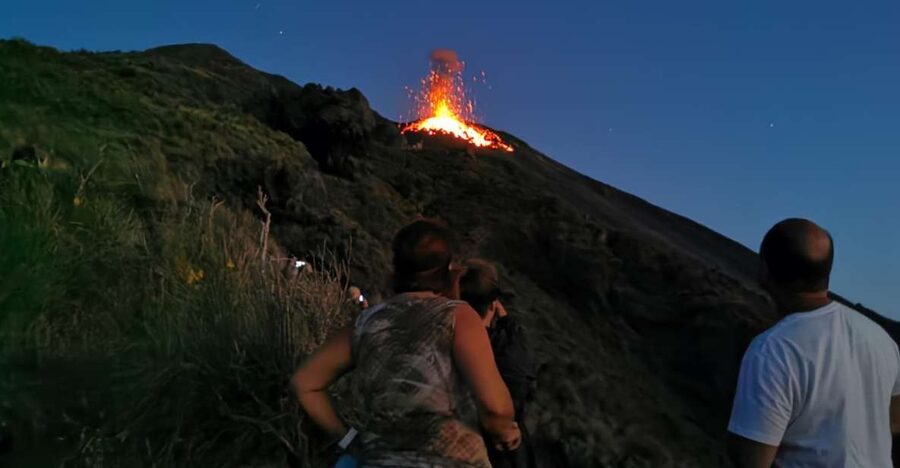
When you arrive at Sciara del Fuoco, the main show begins in earnest. You’ll watch sunset color the sea-and-islands view, then you’ll see the volcanic eruptions light up the night sky.
A key expectation check: eruptions can vary. Some groups get multiple eruptions with solid viewing time, and one guest noted activity with eruptions roughly every 15 to 20 minutes during their hike. Other times, you might get fewer moments, or conditions like clouds can reduce how much you see.
Also, don’t count on lava flowing down the slopes the way social media images imply. The experience is often more about bursts and illumination rather than dramatic continuous streams. You’ll still get plenty of “did that just happen” moments, especially once the sky is fully dark.
You’ll typically stay at the viewing spot long enough to settle in and watch the pattern develop. That’s the point of the whole planning: you’re there during the light transition when visibility and color are at their best.
The descent in darkness: headlamp work, steep bits, and dusty air
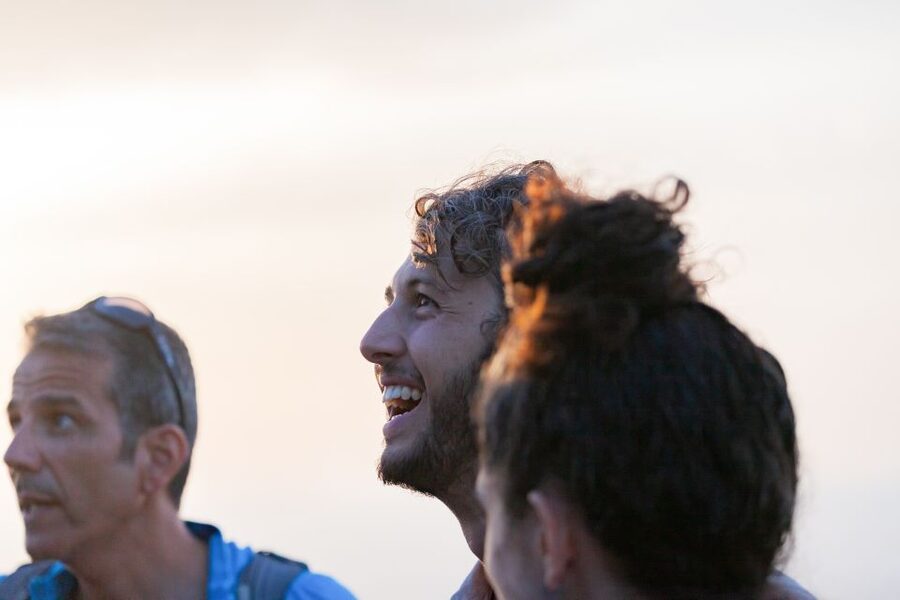
The return is downhill in the dark. You’ll be equipped with torches and/or a headlamp setup, but you still need to treat this like a real hike, not a walk-off.
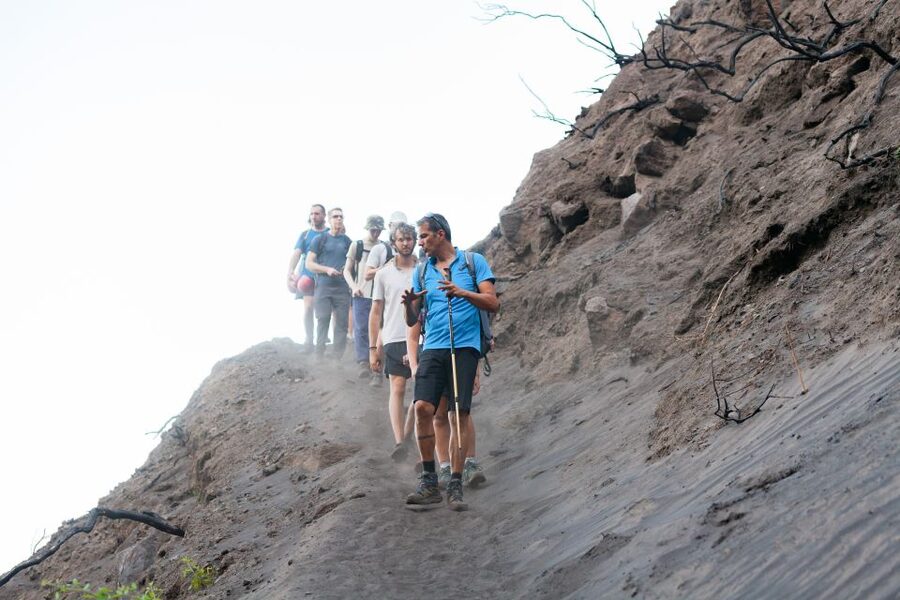
The descent can be steep, and the footing can include cobbled sections. Pay attention to loose stones and uneven patches. One practical note from past hikers: the return can get dusty, and some people ended up with volcanic dust on their faces and clothes.
If you’re sensitive to dust, bring a simple face covering (or plan one if you’re prone to irritation). It’s not required by the operator info, but it’s a smart personal safety move because volcanic dust can ride the air as groups move.
Despite the dark, the route is managed so you’re not alone. Guides keep everyone together, and the headlamps help you keep your footing while you focus on the path.
How hard is this hike, really (and who should skip it)
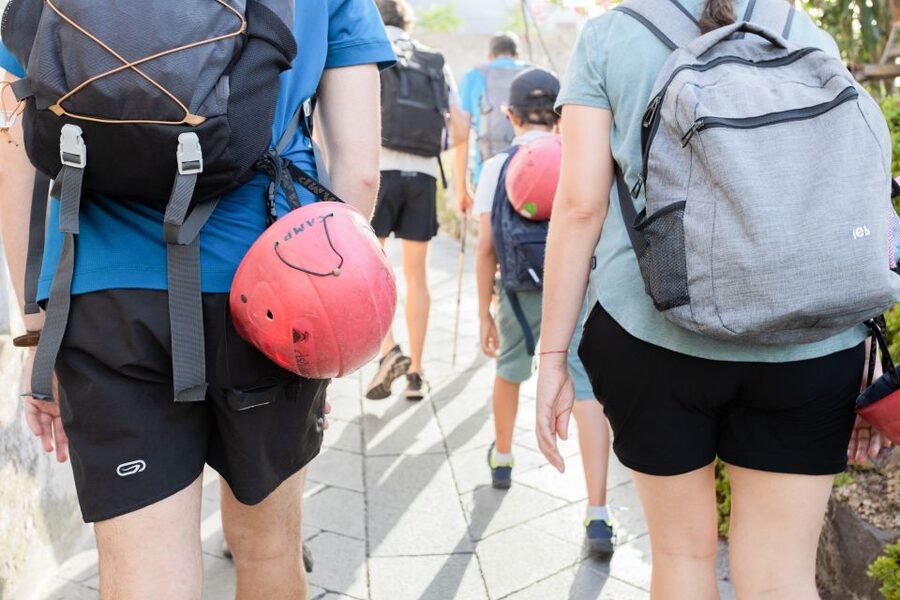
This is a 5-hour guided experience, and you should assume real effort. Several guests describe it as a hike around 9 km total, with steep uphill sections and a return that’s physically tiring even when downhill.
Terrain matters: the last push to the permitted area can feel more hiking-like than walking-like, with narrow, careful sections. You’ll likely get sweaty and dusty, and you should plan for that honestly.
Who should not book: the tour is not suitable for pregnant women, people with back problems, mobility impairments, wheelchair users, vertigo, heart problems, or respiratory issues. If you have any condition that makes steep, uneven ground or darkness risky, this probably isn’t the right Stromboli activity for you.
If you’re fit and comfortable on uneven paths, it’s doable. Past groups included a mix of ages, and guides reportedly set a pace that let everyone keep moving with breaks.
Price and value: why $35 makes sense here
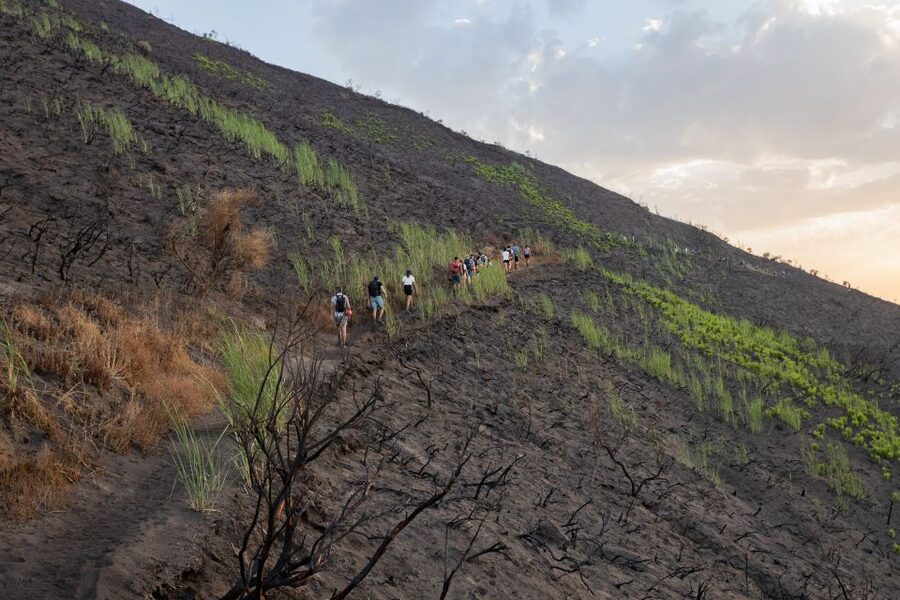
At about $35 per person for a 5-hour guided volcanology trek, the value is in the total package: guide expertise plus essential safety gear. Many similar “see a viewpoint” tours charge more for less time on the ground.
You’re also getting a very specific target: Sciara del Fuoco at sunset. That’s not a random hike where you hope the volcano cooperates; the schedule and route are designed around the best viewing window.
What you bring (food, water, shoes, jacket layers) is on you. But you’re not paying extra for a guide and the core safety gear. For a night-viewing volcano event, that’s a strong deal.
What to pack so you don’t suffer unnecessarily
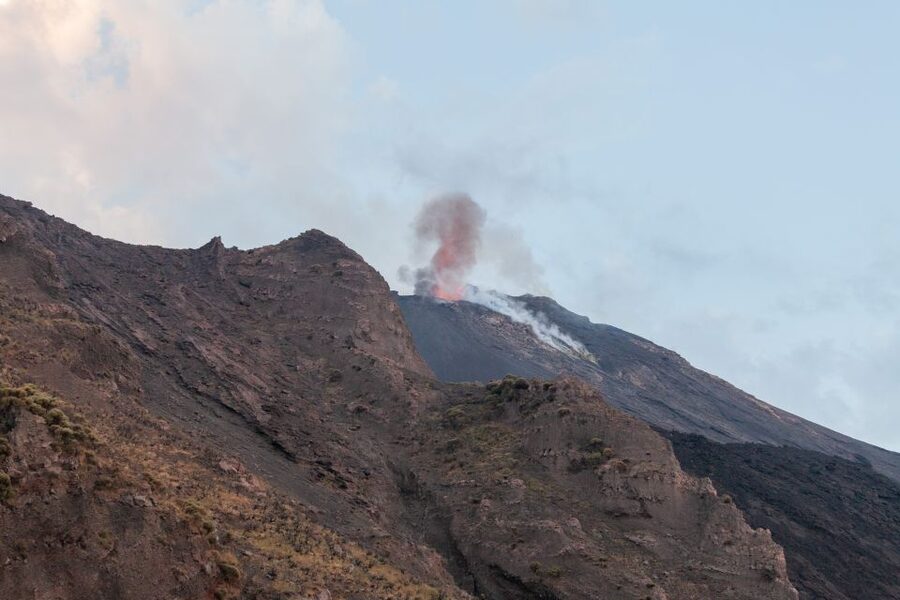
Bring snacks and water. You’ll want daypack space and enough fuel for the whole 5-hour outing, especially since food and drinks are not included.
Wear hiking shoes, not open-toed footwear. If you don’t have good shoes, there are on-the-spot rentals, and one past hiker reported boots rented for about 8 euros.
Layers matter because conditions shift fast. Bring a jacket and a T-shirt, plus shorts and socks for comfort while you climb. Past hikers also reported a light breeze that can cool you while you work uphill, but the air turns cooler fast once the sun is gone.
In your bag:
- water
- snacks
- jacket + shirt layers
- socks and sportswear
- daypack
Optional but smart if you’re dust-sensitive: a face covering.
Not allowed: oversize luggage and baby strollers, plus open-toed shoes. Keep it simple.
Smart advice from guides to help you enjoy the climb
Go slow. That sounds boring until you realize why it works: the hike is steep enough that slow pacing reduces panic, fatigue spikes, and the urge to “rush ahead and hope.” Several groups noted guides helping people who got nervous during the trek by keeping everyone safe and guided through tough moments.
Also, take the breaks seriously. The route includes stops designed for viewing and breathing room, and the guide’s explanations can make the eruptions feel less like random fireworks and more like a pattern you can understand.
If the volcano activity is active during your visit, you’ll have more chances to see bursts. But even on quieter nights, the sunset colors and the unique terrain make the walk worthwhile.
Should you book Stromboli sunset trekking at Sciara del Fuoco?
Book it if you want a true volcano-and-sunset combo with real guide support, not a generic scenic walk. The included helmet, headlamp, and volcanology guide make this a safer and more informative experience than doing the route on your own. And if you’re excited by the idea of watching eruptions light up the night sky as the islands shift color, this is exactly that moment.
Skip it if you’re not comfortable with steep uphill terrain, uneven footing, or a late-evening return in the dark. If vertigo, back issues, heart or respiratory concerns, or mobility limits apply, choose a different Stromboli activity. And if you hate dust, plan for it in advance.
If you’re a reasonably fit hiker who can handle a 5-hour effort and you’ll be staying overnight on Stromboli, this is one of the best ways to experience the island’s raw power in a time window that really matters.
FAQ
Where is the meeting point for the sunset trekking tour?
You meet at Ashàra’s Info Point in Via Vittorio Emanuele / Piazza San Vincenzo, behind the church.
What’s included with the tour price?
The tour includes a headlamp flashlight, a rock helmet, and a volcano guide.
What should I wear and bring?
Bring hiking shoes, snacks, water, and a jacket. Also bring socks and sportswear, plus a daypack. Shorts and a T-shirt are fine for comfort while hiking.
How high do you hike on this tour?
The hike stops at 400 meters due to the closure of the summit craters.
Is food or drink included?
No. Food and drink are not included, so plan on bringing your own snacks and water.
Why do I need to stay overnight on Stromboli?
The tour finishes late in the evening, and there are no return ferry boats late at night.
Is this tour suitable for everyone?
No. It’s not suitable for pregnant women, people with back problems, mobility impairments, wheelchair users, people with vertigo, or people with heart or respiratory issues.