REVIEW · GONDER
4 Days Trekking to Simien Mountain National Park
Book on Viator →Operated by Ethio Target Tours · Bookable on Viator
Four days, jaw-dropping Ethiopian ridgelines. I like how the trek lines up big Simien Mountains scenery with real wildlife moments, starting with gelada baboons early on, and continuing to the ridgeline viewpoints that make the 4,000m peaks feel close. This is also a serious altitude-minded outing, so the main drawback is you’ll need to take the pace slow and accept that your legs might be talking back by Day 3.
What makes this trip extra practical is the way it’s handled on the ground: you’re picked up in Gondar, driven to Debark, permits are arranged at the park headquarters, and you travel with a small team (max 8). The guidance from Solomon and Jon is repeatedly described as friendly and flexible, which matters when trails and weather don’t follow a perfect script.
In This Review
- Key things that make this trek worth your time
- Entering the Simien World: Getting from Gondar to Debark
- Day 1: Debark and your first escarpment walk (plus gelada time)
- Day 2: Sankaber → Kaba Valley → Gich Abyss and the Jinbar River fall
- Day 3: Giant Lobelia, Imet-Gogo cliffs, and a vertical escarpment line
- Day 4: Buwahit (4430 m), Walia ibex chances, and the Ras Dejen viewpoint
- Trails, altitude, wildlife: how to set expectations
- Price and logistics: what $275 gets you in real terms
- Who should book this trek, and who should skip it
- Should you book Ethio Target Tours for Simien?
- FAQ
- Where does the trek start?
- What time does the experience start?
- How long is the trek?
- Is pickup included?
- What’s the maximum group size?
- What age range is allowed?
- Is the trek suitable for beginners?
- Are admission tickets included?
- What if weather is bad?
- When will I receive confirmation?
Key things that make this trek worth your time
- Small group size (max 8), so the pace and trail flow stay human.
- Permit help at Debark, with a scout added before the walking starts.
- Wildlife highlights like gelada baboons and (on the right day) Walia ibex.
- High-elevation scenery tied to specific named stops like Imet-Gogo and Buwahit.
- Cultural pause in Gich, including a traditional coffee ceremony.
- A clear, four-day arc: escarpment views → abyss + waterfall → lobelia + cliffs → summit day and return.
Entering the Simien World: Getting from Gondar to Debark
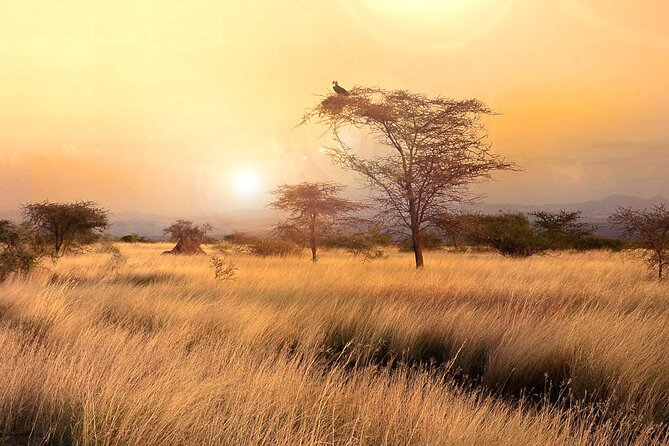
Most people think of Ethiopia as churches and cities. This trek flips that. You start in Gondar and head to the Simien Mountains National Park area through Debark, where the logistics matter more than you’d expect.
You’re picked up from Gondar Airport or your hotel and driven about 100 km (roughly 2 hours) to the park headquarters in Debark. At the HQ, you get permits arranged and pick up a scout before you begin walking. That scout step is one of those details that quietly improves the whole experience. It helps you move through terrain with more confidence, and it reduces the chance of time-wasting confusion.
After permits and prep, you still get a bit of driving—another about an hour—before Day 1 even starts. So even though this is “only” four days, it feels like you’re properly handed off from the city to the mountains rather than dropped in cold.
You can also read our reviews of more tours and experiences in Gonder.
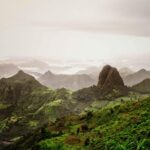
Day 1: Debark and your first escarpment walk (plus gelada time)
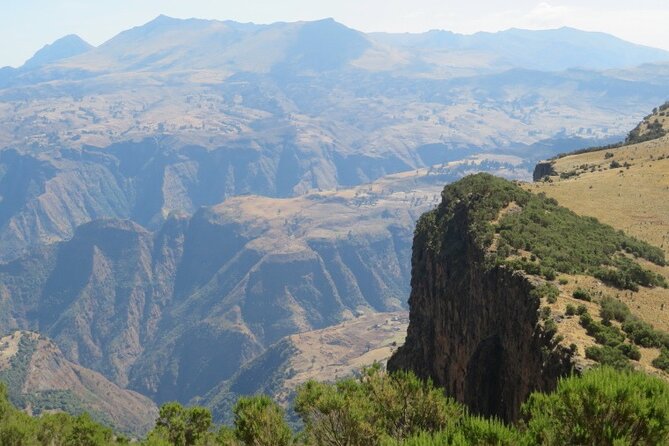
On Day 1, the goal is not exhaustion. It’s orientation: an easy introductory walk along the northern edge of the escarpment with viewpoint angles over northern Ethiopia’s foothills and plains.
This is a smart first move. You’re walking with a view, not just climbing for climbing’s sake. And the early success here is wildlife: you may encounter gelada baboons, and the plan includes overnight at Sankaber after this day’s walking.
Why this matters for you: if you hit the altitude too hard on Day 1, the trek can feel like a battle. An “easy hike with huge payoff” is exactly what you want early, because it lets your breathing adjust before the steeper days arrive.
Potential drawback: even the easy walk can feel long if you’re arriving tired from travel. Keep your water up and don’t treat the first day like a normal stroll.
Day 2: Sankaber → Kaba Valley → Gich Abyss and the Jinbar River fall
Day 2 is where the Simien story turns dramatic. You follow the northern escarpment eastward, dip into the Kaba Valley a bit, then climb again. This rhythm—go down, then up—keeps your body working while you collect views from different angles.
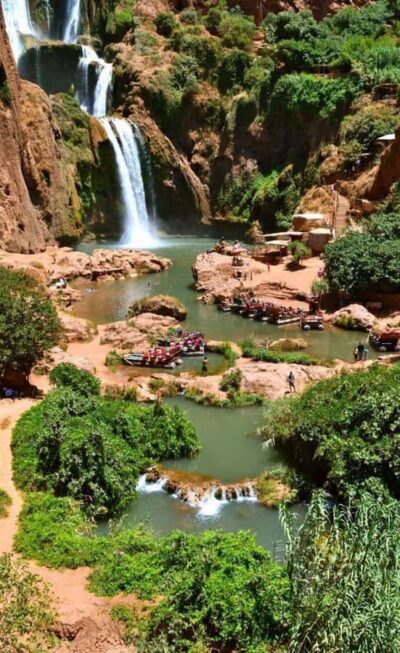
A key stop comes at Gich Abyss. From a cliff viewpoint, you get a “how is that even down there?” perspective over the abyss toward the Simien foothills. There’s also a major waterfall moment: the Jinbar River plunges about 500 meters into the abyss. It’s the kind of feature that makes photos feel almost too flat.
After roughly two hours, you have lunch at the Jinbar River. Then you shift scenes again by walking through fields of barley before reaching the village of Gich.
What you’ll do in Gich makes the day feel more human. You can enjoy a traditional coffee ceremony in a hut and learn more about local farm life. That break matters because it gives you a reset from the constant “watch your footing” attention.
Then it’s onward to Gich camp for your night. One practical tip: even if your day feels scenic, treat the camp approach like part of the trek. Your footing can get sloppy when you’re tired and daylight is fading.
Day 3: Giant Lobelia, Imet-Gogo cliffs, and a vertical escarpment line
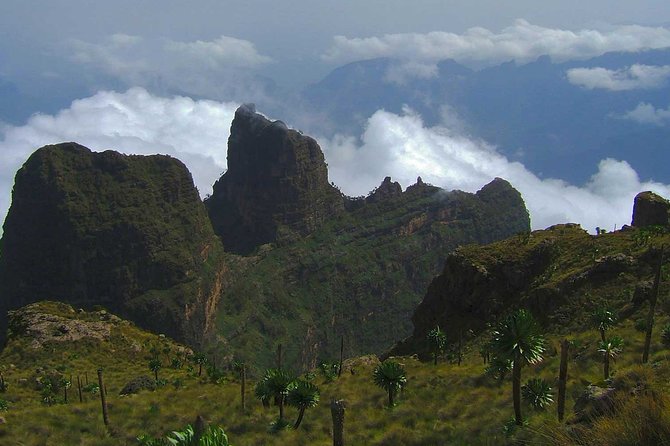
Day 3 is for people who like their hiking with a side of science and weird plant life. You start from Gich camp and stroll through fields of Giant Lobelia. This is one of those Simien signatures—plants that seem custom-built for the altitude.
Then you reach Imet-Gogo (3926 m), where the cliffs rise and the views open over the valleys below. The distant scenery includes strange-shaped dome forms, and the route brings those shapes closer so you can see what you’re actually looking at instead of just admiring from far away.
After soaking in the views, you descend into the Jinbahir River Valley. The trail position helps you read the terrain: here, Imet-Gogo can look like large chunks of mountain have been blown away—a volcanic-looking effect caused by how the landscape has been shaped.
A major “pay attention to your ankles” moment follows. The trail edges the escarpment where the drop is completely vertical for several hundred meters. You’ll want to slow down and keep your focus on balance, especially if the ground is uneven.
The day also includes a climb to a summit around 4070 m. That’s high enough that even if you’ve hiked mountains before, you should expect a slower pace and some breath adjustment. This is also where you’ll feel why the trek is described as challenging, even with good trail quality.
If you get motion sickness or feel woozy at altitude, don’t push through it. Stop, drink, and let your body catch up. You’ll thank yourself before Day 4.
Day 4: Buwahit (4430 m), Walia ibex chances, and the Ras Dejen viewpoint
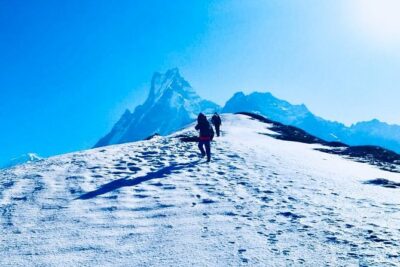
Day 4 is the big finale: the climb to Buwahit (4430 m), described as the second-highest peak in the Simien Mountains.
This is also where wildlife odds can rise. The trek specifically mentions a chance to see Walia ibex, an endemic goat family animal known from the Simien area. No guarantee is promised in the information you have, so treat it like a real possibility—not a checkbox.
The reward isn’t just the summit. From the top and surrounding viewpoints, you may also catch sight of Ras-Dejen (4543 m), which is Ethiopia’s highest point. Even if clouds roll in, the day’s ridgeline views are the kind that make you feel the scale of the country in your bones.
After Buwahit, you descend back to Chenek camp, where the car meets you and drives you back toward Gondar for about 4 hours. It’s a clean finish: a summit day plus a ride home, rather than an extra long hike to end the trip.
Practical note: your last day is both physically demanding and mentally intense. Pace smart on the climb so your descent doesn’t turn into a stumble-fest.
Trails, altitude, wildlife: how to set expectations
This trek is built on an “extensive network of trails,” and that phrase matters. Good trail networks mean you’re not constantly guessing routes, and you can spend more energy on enjoying the views instead of negotiating chaos.
Still, altitude is the star of the show. The trip is labeled as requiring moderate physical fitness, with an age range of 12 to 70. That doesn’t mean it’s easy. It means the route is possible for a wide range of hikers if you walk steadily and don’t sprint the climbs.
Here’s what you should plan for in your body:
- Slower walking on higher ground, especially around Day 3’s high points.
- More breaks than you think you need—take them early, not after you’re gasping.
- Water and food timing. When appetite drops from altitude, little snack stops become more important.
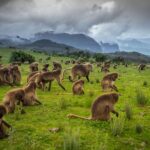
Wildlife is another part of the expectation set. You should be prepared for gelada baboons early, since they’re specifically tied to Day 1’s hike. For Walia ibex, you’re looking for the chance, especially on the Buwahit day. If you don’t see them, you still get the mountains and named viewpoints—but if animals are your top reason for coming, bring patience.
Price and logistics: what $275 gets you in real terms
At $275 per person for about four days, the value comes from the fact that you’re not just paying for walking. You’re paying for the mountain system to work smoothly for you.
Here’s what’s clearly included or supported in the experience data:
- Pickup from Gondar Airport or your hotel
- Transportation from Gondar to Debark and later back toward Gondar
- Permits arranged at park headquarters in Debark
- A scout pickup after permits
- A small group limit (max 8), which reduces delays and helps the pace stay controlled
- A mobile ticket
- The schedule lists admission tickets as free, and permits are arranged on your behalf at the HQ
Also, the trip includes a schedule that supports a steady mountain rhythm: introductory walk on Day 1, abyss and village culture on Day 2, lobelia and high cliff terrain on Day 3, and the Buwahit summit day on Day 4.
Is it cheap? Not really in a “bargain” sense. But for a four-day high-altitude trek with permit support, transport, and a small guided group, it looks like a fair price. You’re paying for competence and time saved.
Who should book this trek, and who should skip it
This trek is best for:
- Hikers who can handle altitude and keep a steady pace on steep sections.
- People who care about named scenery like Gich Abyss, Jinbar River, Imet-Gogo, and Buwahit—not just “somewhere in the mountains.”
- Anyone who wants a mix of wildlife and daily texture, including the coffee ceremony in Gich.
It may not be the best fit for you if:
- You’re looking for a flat, easy hike with zero altitude stress.
- You dislike cliff-edge walking where the terrain can drop steeply (Day 3 is described that way).
- Your plans don’t leave room for weather-dependent changes, since this trek requires good weather.
Should you book Ethio Target Tours for Simien?
If your dream includes Simien Mountains National Park at a real working pace—plus the chance at gelada baboons and the special Simien ending of Walia ibex potential—this is a strong match. The small group size (max 8) and the permit-and-scout handling at Debark make it feel more reliable than many “just show up and hike” options.
I’d book it if you’re honest about altitude and you’re willing to walk slower than usual. I would hold off if you’re determined to move like you’re on a city sidewalk. The Simien rewards calm steps.
One more reason to feel good about the decision: the guidance style is described as friendly and knowledgeable, and the owner Solomon and guide Jon are specifically mentioned as helpful and flexible. In a place where weather and timing matter, that kind of responsiveness counts.
FAQ
Where does the trek start?
It starts in Gondar, Ethiopia, with the meeting point listed as Gondar Airport.
What time does the experience start?
The start time is 8:00 am.
How long is the trek?
The duration is 4 days (approx.).
Is pickup included?
Yes. Pickup is offered from Gondar Airport or your hotel, then you drive to the park area.
What’s the maximum group size?
The trek has a maximum of 8 travelers.
What age range is allowed?
The listed age range is 12 to 70.
Is the trek suitable for beginners?
It says moderate physical fitness is required, so it’s best for people who are comfortable with trekking and altitude.
Are admission tickets included?
The itinerary shows Admission Ticket Free for the days listed, and permits are arranged at the park headquarters in Debark.
What if weather is bad?
The experience requires good weather. If it’s canceled due to poor weather, you’ll be offered a different date or a full refund.
When will I receive confirmation?
Confirmation is received within 48 hours of booking, subject to availability.