REVIEW · LOMBOK
3D 2N Mount Rinjani Trekking Tour To Summit And Lake
Book on Viator →Operated by Bas Rinjani · Bookable on Viator
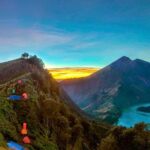
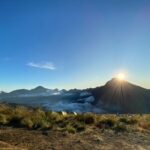
Early-morning Rinjani feels like another planet.
This 3D 2N climb in Lombok is built around a summit push and a longer trekking arc through the Rinjani National Park, with routes designed to match what you want (Sembalun, Senaru, or Torean). What makes it especially interesting is the “whole package” feel: you get a professional team, a scheduled early departure, and a route that’s meant to be more than just walking uphill.
I really like two things here. First, the plan starts with real pacing: you’re in Sembalun by late morning on Day 1 for the early legs, then you’re up at 02:30 on Day 2 to target the summit during cooler hours. Second, you’re not stuck figuring out meals on your own—guides and porters are set up to handle food in camp, so you can focus on breathing and footing.
One consideration: this is a moderate-fitness trek with a very early wake-up and a steep, cold-feeling summit window. If your knees and ankles aren’t in good shape, or you don’t train even a little on inclines, you’ll feel it.
In This Review
- Key highlights worth planning for
- The real draw: sunrise summit at 3,726 m
- How Day 1 sets you up: registration, Sembalun start, and early legs
- Day 2 logistics: a cold start, summit time, then camp rhythm
- Day 3 descent to Senaru: finish strong and reset
- The team you’re paying for: guides, porters, and camp food
- Gear and comfort reality check: shoes, gloves, poles matter
- Route choice matters: Sembalun, Senaru, and Torean options
- Price and value: what $235 actually covers
- Who this trek suits best (and who should reconsider)
- Quick FAQ: what you can count on
- FAQ
- How long is the Mount Rinjani trek?
- Where does the trek start and end?
- What time do you start the summit hike?
- What’s included in the price?
- What gear should I bring?
- Is the tour private?
- Can I cancel for a full refund?
- Should you book this 3D2N Rinjani tour?
Key highlights worth planning for
- Sembalun-to-summit timing: early registration and steady hiking legs before the 03:00 summit start.
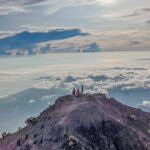
- Sunrise summit window: wake at 02:30, leave around 03:00, summit at 3,726 m, with views of Lombok, Bali, Sumbawa, and Segara Anak.
- A guided team with communication skills: guides are described as communicative, with the “atmosphere” kept lively during the climb.
- Food support by porters: you’ll be relying on the team for meals in camp, which helps make the trek feel organized.
- Private group option: it’s set up as a private activity for your group.
The real draw: sunrise summit at 3,726 m
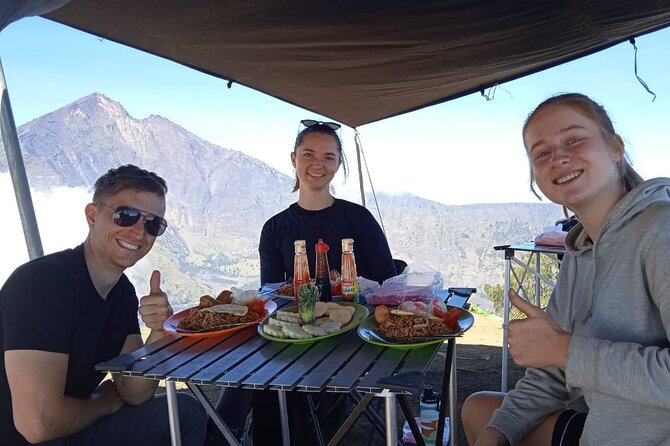
If you’ve got only one Rinjani trek on your radar, the summit timing is the centerpiece. You’ll wake at 02:30 for light breakfast, then leave around 03:00 so you’re climbing during the colder, calmer hours. The walking time for the summit push is about 3 hours 20 minutes, which is short on paper but still serious on the body at high elevation.
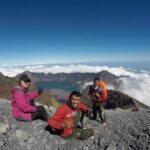
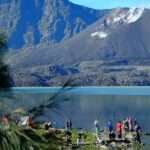
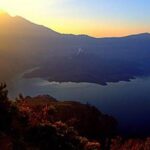
What you’re aiming for is a viewpoint from the top of Mount Rinjani at 3,726 m. From there, the view is described as spanning Lombok and even across toward Bali and Sumbawa, plus Segara Anak below. That’s why this kind of tour gets booked again and again: you’re not just trekking in the clouds—you’re planning a specific moment at altitude.
One practical note: sunrise climbs tend to feel colder than you expect. Even if you’re wearing layers that feel fine earlier in the day, your body cools fast during a pre-dawn start. I’d treat warmth as a gear priority, not an afterthought.
You can also read our reviews of more tours and experiences in Lombok.
How Day 1 sets you up: registration, Sembalun start, and early legs
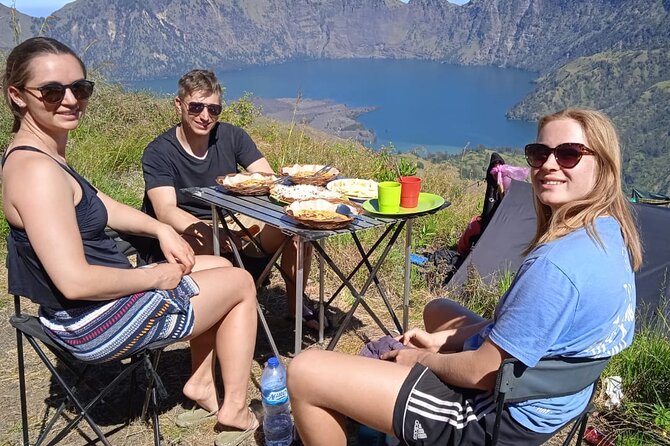
Day 1 begins with pickup and transfer to Sembalun Village. You’ll leave around 07:30, and the drive is typically 45–60 minutes. Getting to Sembalun early matters because registration takes time, and you’ll want your legs to warm up before the first climb.
You’ll register at the Rinjani Information Center (RIC), listed at 1,051 m. Then you start trekking toward POS 1 (Pos Pemantauan at about 1,300 m). The first segment is about 2 hours, with a short 10-minute rest at POS 1. After that, you walk to POS 2 in about 1 hour.
Here’s why this first day is more important than it looks. The way Day 1 is paced—two-and-a-bit hours to the first checkpoint, then another hour onward—helps you avoid the classic mistake: going out too hot and paying for it later at altitude. If you’ve ever blown your energy in the first 60 minutes of a hike, you’ll appreciate this structure.
Also, Sembalun isn’t just a launching pad. It gives you a chance to begin the trek in an organized way, with the team handling the rhythm of breaks and meals later.
Day 2 logistics: a cold start, summit time, then camp rhythm
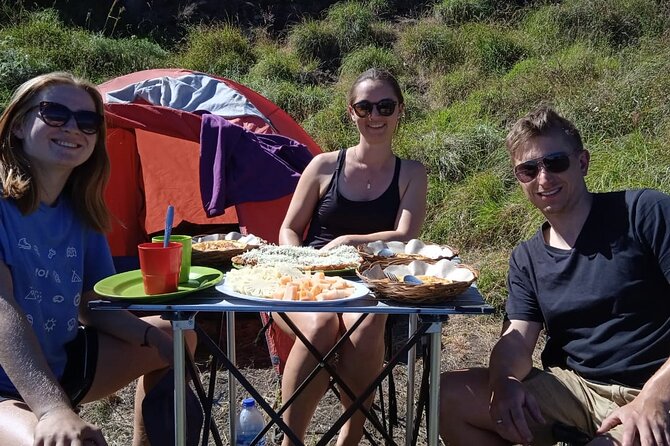
Day 2 is the summit day—and it’s run on a strict schedule. Wake at 02:30, light breakfast, then depart around 03:00. You’re looking at roughly 3 hours 20 minutes of walking to reach the summit at 3,726 m.
From the summit, you’re rewarded with big-picture visibility: Lombok, Bali, Sumbawa, and Segara Anak. That’s the kind of view that makes the early cold start feel worth it, even if your legs don’t feel convinced yet.
What you should expect after summit depends a bit on your exact camp plan, but this type of 3D2N tour generally keeps you moving from the high point back down into the trekking circuit. The included meals on Day 2 are part of that recovery—your tour includes breakfast (3), lunch (3), and dinner (3) across the whole trek.
The main drawback on Day 2 is also the most obvious: the effort is concentrated. You’ll be tired in a way that feels mental, not just physical. Plan for that. I’d keep snacks simple and use your guide’s timing for when you eat and drink.
Day 3 descent to Senaru: finish strong and reset
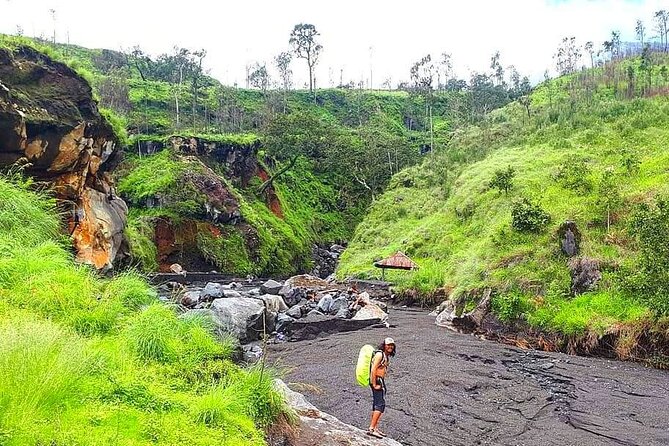
By Day 3, the vibe shifts from “climb mode” to “descending done right.” After breakfast and enjoying sunrise, the plan is to walk down toward Senaru Village.
Lunch is prepared along the way between POS 2 or POS extra (the exact point can vary). The schedule shows arriving at the Senaru Rinjani Trekking Centre around 13:00. Then you’ll prepare yourself at the office for the next transfer.
This last day is shorter than summit day, but don’t let that fool you. Descents can be harder on knees and ankles than the ascent. If you’ve ignored training for downhill walking, this is where you feel it.
What I like about this Day 3 structure is that you’re not left hanging. You’ve got a clear arrival target in Senaru, and the tour finishes with an organized handoff back to the area’s base logistics.
The team you’re paying for: guides, porters, and camp food
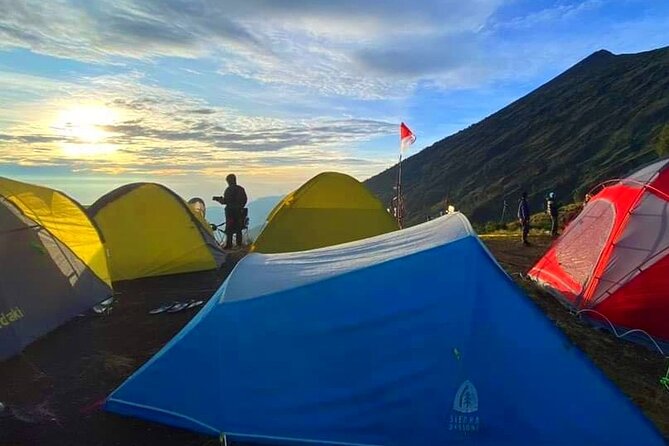
This is the part that most strongly affects your comfort on a multi-day trek, and it’s where the tour description and customer stories line up.
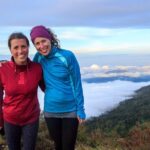
You’ll be handled by a professional team. Guides are described as having communicative language skills, with the team focused on keeping the trekking atmosphere lively. That matters more than people think. A guide who knows how to explain what’s happening, how to pace, and how to read the group’s energy makes the trek feel safer and less exhausting.
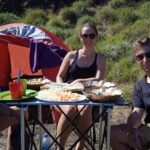
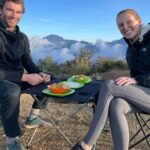
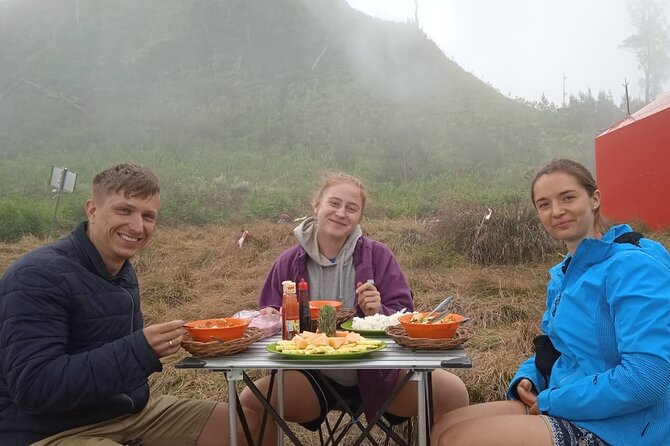
Then there are the porters, who are described as cooking and handling food preparation. One of the commonly loved details in the program’s feedback is that meals are treated as part of the trekking experience, not an afterthought. When you’re at elevation and moving all day, good camp food helps you recover in a way that actually shows up the next morning.
One extra human touch mentioned in Senaru: a warm welcome at the Bas Rinjani office that can include coffee and banana fritters. That’s not essential to summit success, but it’s the kind of small thing that makes the whole trek feel less like an assembly line.
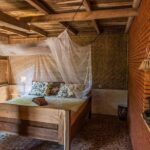
You might also find that the overnight setup can include a guest home called Embun Rinjani, described as tidy in feedback. Since it isn’t spelled out in the day-by-day schedule here, treat that as “possible,” not guaranteed.
Gear and comfort reality check: shoes, gloves, poles matter
The tour does not include trekking shoes, gloves, or trekking poles. That’s a big deal for a summit climb, because your success isn’t just about willpower—it’s about traction and comfort.
- Trekking shoes: You’ll want something with grip for uneven volcanic paths and loose gravel. If you use worn running shoes, don’t be surprised when your feet feel unstable.
- Gloves: Pre-dawn summit conditions can feel colder than daytime hiking. Gloves keep you from spending the trek thinking about numb fingers.
- Trekking poles: Poles can reduce strain on knees, especially on Day 3 descent. Even one good pole helps with rhythm.
If you’re traveling light, you can still pack smarter. Bring what you need, not what looks right in a photo.
Route choice matters: Sembalun, Senaru, and Torean options
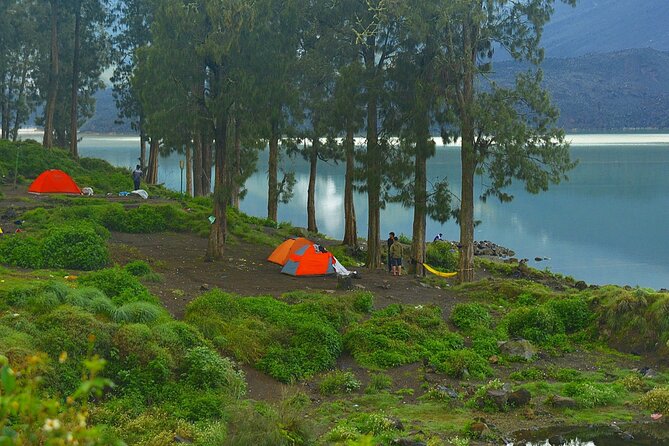
The tour notes that there are multiple route options across the Rinjani area, including Sembalun Route, Senaru Route, and Torean Route, depending on what you want and what’s authorized by the Rinjani National Park hall.
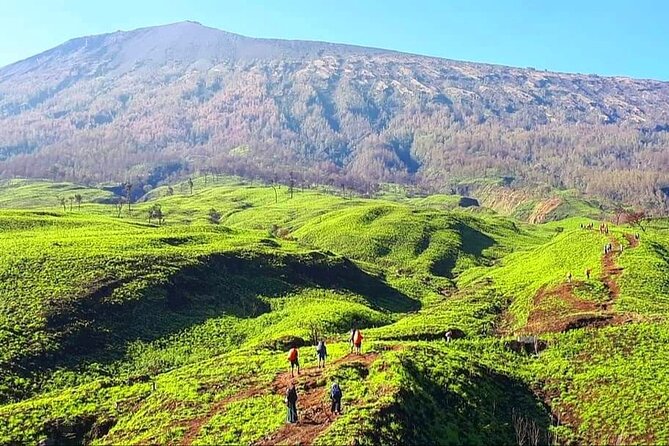
In this specific 3D2N outline, the walking arc described is Sembalun for the ascent portion and Senaru for the descent finish. That combination is popular because it lets you experience different sides of the mountain and avoid repeating the exact same trail segment.
Also, registration and official entry points matter in Rinjani country. Your trip includes entrance fee ticketing and follows the structure needed by the park.
If you’re trying to match your trekking experience to your fitness, you’ll want to ask yourself one question: do you want a more direct feel, or a more varied arc? This tour is built around a full route approach, not a quick in-and-out hike.
Price and value: what $235 actually covers
At $235, the headline value is that you’re not just buying a guide and a plan—you’re also paying for the structure that keeps the trek running.
This price includes:
- entrance fee ticket
- trekking insurance
- 3 breakfasts, 3 lunches, 3 dinners
- the core trekking support that comes with a team and camp rhythm
What’s not included is gear like shoes, gloves, and poles. But considering that the trek includes official entry and multiple days of meals, it’s a reasonable package for a guided, multi-day high-altitude climb.
Here’s the honest way to think about value: the trek is hard and time-sensitive. When you’re paying for something like this, you’re paying for fewer surprises—clear start times, a prepared team, and food taken care of so you can hike.
Also, this activity is described as private for your group, which can matter if you’re traveling as a couple or family and want less pressure from a mixed crowd.
Who this trek suits best (and who should reconsider)
This trek is best for people with moderate physical fitness and the ability to handle early starts and steep segments. The guide team and porters can handle the camp side of things, but your legs still do the work.
It’s especially good for:
- travelers who want a real summit goal at 3,726 m
- hikers who like a structured pace and scheduled breaks
- families or small groups who want a private setting
It might not be ideal if:
- you have knee or ankle issues you haven’t managed
- you don’t feel comfortable with cold pre-dawn starts
- you need a flexible itinerary to suit frequent rest stops
One customer tip that lines up with the reality of this trek: consider your knees, mind, and routine fitness before you commit. Train on hills if you can. And if you can’t, at least plan for conservative pacing and plenty of hydration.
Quick FAQ: what you can count on
FAQ
How long is the Mount Rinjani trek?
The tour is listed as 3 days (about 3D2N).
Where does the trek start and end?
The trek starts from Sembalun Village and finishes with arrival around 13:00 in Senaru, at the Senaru Rinjani Trekking Centre.
What time do you start the summit hike?
You wake at 02:30, have light breakfast, and depart around 03:00 for the summit.
What’s included in the price?
Included are entrance fee ticket, trekking insurance, and meals: 3 breakfasts, 3 lunches, and 3 dinners.
What gear should I bring?
The tour does not include trekking shoes, gloves, or trekking poles, so you should plan to bring those.
Is the tour private?
Yes, it’s described as a private tour/activity, with only your group participating.
Can I cancel for a full refund?
Yes. Free cancellation is available up to 24 hours in advance for a full refund. If you cancel less than 24 hours before the experience starts, the amount is not refunded.
Should you book this 3D2N Rinjani tour?
If you want a guided Mount Rinjani trek that’s organized around a sunrise summit attempt and a finish in Senaru, this one is a solid match. I like that the schedule is specific (especially the 02:30 wake-up and 03:00 departure) and that the package covers the big essentials: entrance, meals, and trekking insurance.
But don’t treat it like a casual hike. If your fitness is only “maybe,” or your knees aren’t reliable on descents, you’ll likely pay for it on Day 3.
If you’re ready for an early start, you pack proper gear, and you’re comfortable with moderate exertion at altitude, this is the kind of Rinjani program that gives you a clear, achievable summit day—and that’s what you’re really booking for.