REVIEW · MARRAKECH
High Atlas Mountains Full Day Trek
Book on Viator →Operated by Authentic Sahara Tours · Bookable on Viator
One long climb can change your whole day. This High Atlas full-day trek takes you out of Marrakech and up into the Toubkal Massif, with guided hiking over mountain villages, high passes, and big views of peaks over 4000m. I really like the hotel-style pickup and private transport, because the morning transfer feels easy and focused. I also love the Berber home lunch, where you actually sit down in local life instead of eating on the road.
Here’s the tradeoff: this is not a walk in the park. You should have strong fitness for a long day and steep altitude, and it can feel hard even if you’re already an active hiker.
In This Review
- Key things to know before you lace up
- Why This High Atlas Day Trek Beats DIY Hiking From Marrakech
- The Morning Ride: Tahnaouet or Asni Market to Imlil (1740m)
- Starting Easy, Then Turning Serious: Walking Toward Tizi Mzik (2480m)
- The Descent With Junipers: Tizioussem Village at 1850m
- Berber Home Lunch: Meeting Locals and Seeing How Life Fits Behind Doors
- Id Issa Views and the Second Big Climb: Tizi Oudid (2200m)
- Final Stretch to Aguersioual (1650m) and the Drive Back to Marrakech
- Price and Logistics: Is $111.58 Worth It?
- How Hard Is This Hike, Really?
- Best-Fit Travelers: Who This Day Trek Works For
- What to Pack for High Atlas Altitude (Practical Checklist)
- Should You Book This High Atlas Full Day Trek?
- FAQ
- What time does pickup start for this High Atlas trek?
- Where does the tour start from in Marrakech?
- How long is the trekking part on foot?
- Is lunch included, and can I request a vegetarian option?
- Are mule rides included?
- How big is the group?
- Is the guide always one language?
- Do I need strong fitness for this trek?
Key things to know before you lace up
- High pass climbs: You’ll get up to Tizi Mzik (2480m) and Tizi Oudid (2200m), with major viewpoints along the way.
- Real village walking: The route links places like Imlil, Tizioussem, Id Issa, Matat, and Aguersioual—more local than scenic-only trails.
- Berber hospitality stop: Lunch happens in a Berber house, and the meal is part of meeting daily mountain life.
- Long walking day: Expect about 6 hours on foot, plus driving time and altitude effort.
- Max group size 12: Small enough for a good pace, but still a group outing.
- No mule ride included: A muleteer is part of the operation, but the tour price does not include riding.
Why This High Atlas Day Trek Beats DIY Hiking From Marrakech
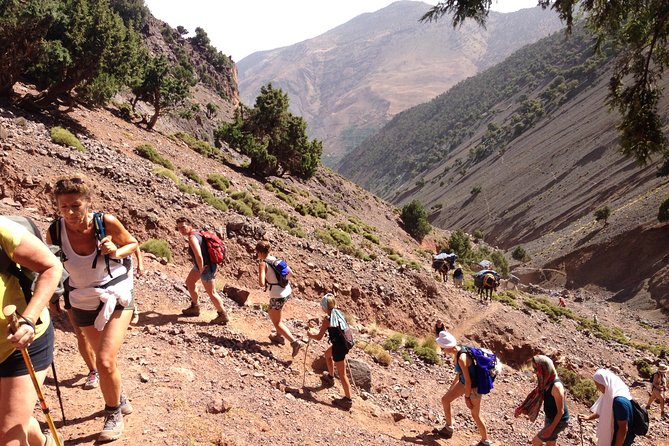
Marrakech is loud, colorful, and full of energy. Then, in one day, you switch gears into mountain rhythm—quiet paths, terraced fields, and sharp air that makes every climb feel more real. What makes this trek work is that you get guided access right from your hotel pickup, so you’re not figuring out routes, timing, and mountain logistics on your own.
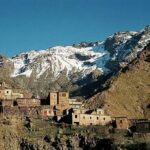
The other big win is how the day is structured. You’re not just hiking for views; you’re moving through the living geography of the High Atlas: valleys, villages, irrigation terraces, orchards, and stone-built homes. That’s why the Berber lunch feels like it belongs—you’ve already been walking through the place, so sitting down in a local house lands differently.
Still, don’t sugarcoat it: this is aimed at experienced hikers. If you’re the type who hates steep switchbacks and long elevation gain, you’ll likely feel it here.
You can also read our reviews of more tours and experiences in Marrakech.
The Morning Ride: Tahnaouet or Asni Market to Imlil (1740m)
Your day starts early in Marrakech, with pickup that gets you out toward the High Atlas. The route has a few moving parts depending on the day you go, and you’ll pass through local stops that break up the drive.
You’ll travel via Tahnaouet, a local market on Tuesdays, or Asni, a market on Saturdays. Those aren’t just names on a map—they’re real community hubs where you can spot how people shop, trade, and live before you head into trekking country. After that, the drive continues through scenery corridors like Valley Ghighaya and the Moulay Brahim gorges, then on toward the Imlil area.
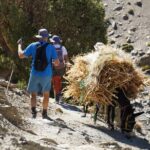
The trek itself begins when you reach Imlil at around 1740m. This is also where you meet the team guide and the muleteer. Even if you’re not riding a mule (that’s not included), the muleteer matters because it keeps the operation running smoothly—gear and supplies can be handled without turning your hiking into a circus of carrying everything yourself.
Practical note: the vehicle ride time is approximate and depends on traffic, but the total distance back to Marrakech is about 60km. So, plan for a full day, not a quick morning excursion.
Starting Easy, Then Turning Serious: Walking Toward Tizi Mzik (2480m)
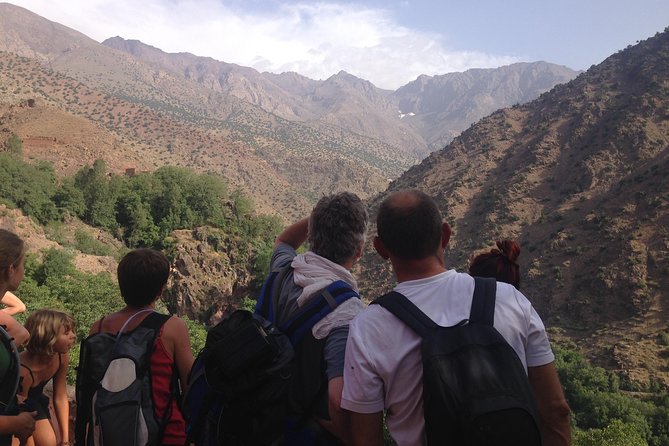
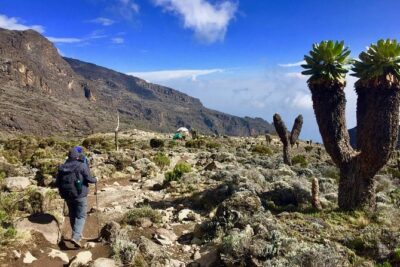
Once you start hiking from the fields near Imlil, you’re stepping into a working landscape. You’ll move between terraced areas of vegetables and fruit trees, and you’ll also see walnut and cherry zones along the way. This matters because it keeps the route varied. You’re not staring at the same view for hours—you’re watching how the mountains are farmed and how people make use of every slope.
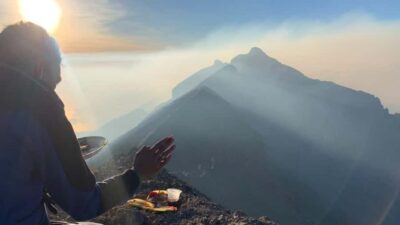
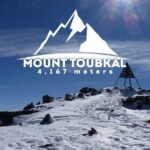
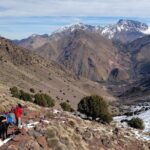
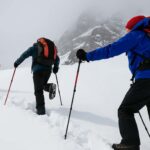
From there, you climb toward Tizi Mzik pass at 2480m. This is your big elevation moment early on. The climb gives you that classic High Atlas payoff: panoramic views over Imlil valley and Azaden Valley, plus the higher Atlas range with peaks over 4000m. On a clear day, the sightline includes Toubkal, which is listed at 4167m.
How to handle this without blowing yourself up:
- Keep your pace controlled on the ascent. Altitude fatigue often hits before your legs complain.
- Take short pauses. A quick breather every few minutes helps more than long stops where you cool down.
- Hydrate even if you don’t feel thirsty. Bottled water is included, but you still need to drink consistently.
If you’re expecting a gentle stroll, this is the first reality check.
The Descent With Junipers: Tizioussem Village at 1850m
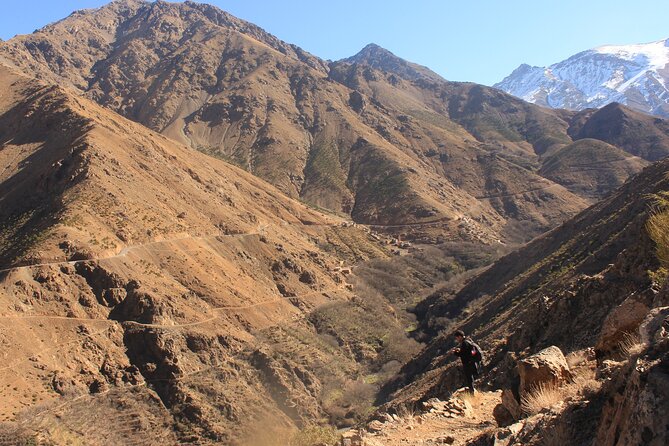
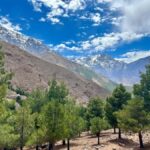
After the pass, the day shifts from climbing effort to “keep moving” walking. You’ll head downhill through a juniper forest toward Tizioussem village at about 1850m. Juniper areas change the feel of a hike fast: the air can be cooler, the light softens, and the route feels more sheltered than open slopes.
This segment is also where the trek becomes about people, not just peaks. The villages you pass give you a sense of where the trails connect: homes, gardens, and daily routines. You’re not just collecting photos—you’re moving through the mountain’s human network.
Then comes a highlight that hikers often remember more than another summit view: lunch in a Berber house.
Berber Home Lunch: Meeting Locals and Seeing How Life Fits Behind Doors
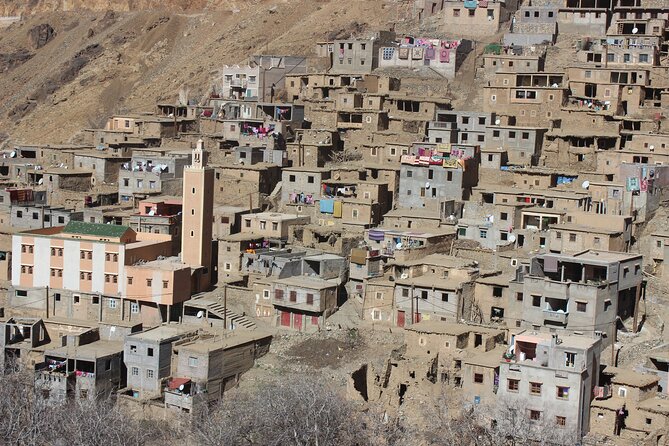
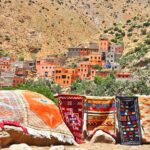
Lunch is served in a Berber home, and the experience is described as more than a meal. You get the chance to discover Berber houses behind doors and meet locals and their lifestyle. That turns lunch into a cultural pause, not an energy pit-stop.
Vegetarian lunch is available if you ask at booking time, so you’re not stuck guessing or eating whatever’s easiest. Coffee and/or tea are also included with lunch.
What this lunch stop gives you, value-wise:
- You don’t spend energy searching for food or trying to negotiate options on the fly.
- You get a structured moment to recover before the next climb.
- You experience mountain hospitality in a way that feels connected to the trek itself.
If you’re the type who likes to talk—ask simple questions about daily life and how the mountain farming works. You’ll often learn more from a calm conversation here than from any printed guide.

Id Issa Views and the Second Big Climb: Tizi Oudid (2200m)
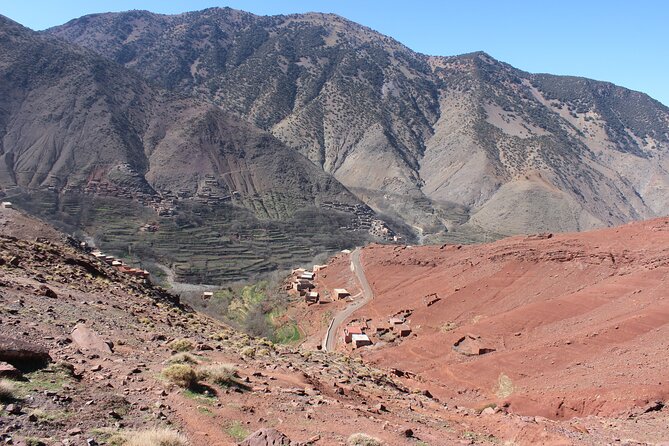
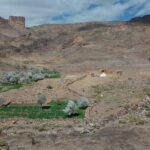
After lunch and the village segment, the route continues down toward Id Issa village at about 1780m. From there, you’re meant to look out over ancient irrigated terraced fields and other villages. The description includes multi-mineral color tones—basically, the landscape shows its geology and farming at the same time.
This part of the hike can feel like a switch: earlier you were climbing into the high zones, and now you’re walking across a mosaic of farms and paths. It’s scenic, but it’s also practical—terraces are how communities manage water and agriculture.
Then comes the second major pass: Tizi Oudid at 2200m. The ascent from the Id Issa side gets you back into altitude effort again. After crossing the pass, you have lunch with views over the valley and the High Atlas Mountains—specifically with emphasis on the backside of Oukiemeden Mountain, where there’s a ski station.
This is a good place to slow down mentally. You’ve been working hard all day, and the pass lunch is where the day’s effort starts to feel justified.
Final Stretch to Aguersioual (1650m) and the Drive Back to Marrakech
Once the second pass is done, the trail becomes descent-and-transitions: continuing down through Matat village, then through terraced fields of fruit trees. The route is designed to keep you moving through the same agricultural world you started seeing near Imlil, just at different elevations.
You eventually arrive at Aguersioual at around 1650m. Then the non-hiking part begins: you’re picked up and driven back to Marrakech. The drive is about 60km.
At this point, your legs will probably be tired, but the day’s structure helps. You’re not just trudging for the sake of trudging. There are clear chapters—pass, village, lunch, pass, descent—so fatigue feels manageable rather than random.
Price and Logistics: Is $111.58 Worth It?
At $111.58 per person, you’re paying for a lot more than a trail. You’re paying for:
- Local guiding
- Transport by private vehicle with Marrakech pickup/drop-off
- Lunch plus coffee/tea
- Bottled water
- A fuel surcharge
The value is strongest if you’d otherwise hesitate to hike independently. Marrakech is easy to explore in the city. But once you’re trying to get a route into the High Atlas, with correct timing and safe navigation through passes and villages, DIY starts to feel like extra stress. This tour removes that stress.
What’s not included: travel insurance and the mule ride. The muleteer is part of the operation, but riding isn’t part of what you’re buying here. If you need a riding option, you’ll want to verify what can be arranged outside the included elements—don’t assume it’s available because a muleteer is present.
Also, keep in mind the walking plan: about 6 hours on foot in total, plus transfer time. If you’re trying to squeeze this into a tight schedule after other Marrakech plans, you’ll likely feel rushed.
How Hard Is This Hike, Really?
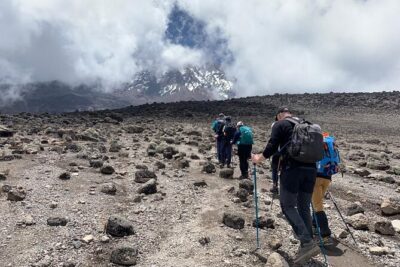
The tour is aimed at people with strong physical fitness, and the walking time is about 6 hours. Add altitude, steep moments, and two pass climbs (2480m and 2200m), and you can see why this is rated as demanding.
One review snippet you might take seriously describes the hike as hard, including mention of a long distance in high altitude. Even if you treat that as an estimate rather than a promise, the shape of the day is still clear: you’re earning your views with sustained effort.
My practical advice:
- If you can handle a tough local hike with elevation gain, you’ll likely do fine with pacing.
- If you’re currently more “flat-walk” than “climb-walk,” you should reconsider or at least prepare with a few weeks of hill work before you go.
- Bring a plan for your breathing. Don’t fight the altitude. Walk slower than you think you should, and you’ll feel more in control.
Best-Fit Travelers: Who This Day Trek Works For
This is a great fit if you:
- Enjoy real trekking (not just a scenic walk)
- Like the mix of mountain views and village life
- Want a structured day with a guide, lunch, and transport handled
It’s also a good option if you’re traveling with moderate experience and want a small group. The group size maxes out at 12, so you’re not lost among dozens of people.
It might be the wrong choice if you:
- Hate steep climbs and want something gentler
- Have mobility limitations that make steep descents hard
- Expect to spend most of the day on easy paths
Children can go, but they must be accompanied by an adult. That’s the only age guidance given, so you’ll want to judge based on your child’s hiking stamina and comfort with altitude.
What to Pack for High Atlas Altitude (Practical Checklist)
This tour includes bottled water and lunch, so you don’t need to plan meals. But for the hike, the mountains still demand your basic field gear.
Bring:
- Good hiking shoes or boots with grip for rocky descents
- Layers (morning air can feel cooler than you expect, and altitude can change how you feel quickly)
- Sun protection (High Atlas sun can be intense, especially at elevation)
- A hat or hood plus a lightweight wind layer if you run cold
If you’re worried about comfort, remember you’ll be walking around 6 hours, and you’re doing it between high elevations where your body can feel more sensitive.
Should You Book This High Atlas Full Day Trek?
Book it if you want an authentic High Atlas day that combines hard hiking, mountain villages, and Berber hospitality—without you needing to figure out the logistics yourself. The guide, private transport, and lunch are doing real work here, and the itinerary’s pass-and-village rhythm keeps the day from feeling monotonous.
Skip it (or choose a gentler option) if you’re not ready for altitude effort and long walking time. This is aimed at people who can handle steep terrain and want to earn the pass views.
If you book, go in with respect for the altitude, pace yourself early, and treat lunch as your reset button. You’ll finish the day tired—but with the kind of mountain memory that actually sticks.
FAQ
What time does pickup start for this High Atlas trek?
Pickup is from a designated meeting point in Marrakech. The listed start time is 8:00 am, and the trip departs Marrakech early morning toward the mountains.
Where does the tour start from in Marrakech?
The tour starts at Hôtel Restaurant Café de France near Jemaa el-Fna (40000, Marrakech).
How long is the trekking part on foot?
Plan on about 6 hours of walking during the day, with additional driving time.
Is lunch included, and can I request a vegetarian option?
Yes. Lunch is included, and a vegetarian option is available if you advise the operator at booking time. Coffee and/or tea are also included.
Are mule rides included?
No. The tour does not include a mule ride, even though a muleteer is part of the operation.
How big is the group?
The maximum group size is 12 travelers.
Is the guide always one language?
The tour may be operated by a multi-lingual guide, depending on availability.
Do I need strong fitness for this trek?
Yes. The activity is described as requiring strong physical fitness, with high-altitude hiking and pass climbs.