REVIEW · AGUAS CALIENTES
Inka Jungle trek to Machu Picchu 3 D/ 2 N
Book on GetYourGuide →Operated by Libertrek Peru Travel Agency · Bookable on GetYourGuide
First comes a jungle ride, then a sunrise at Machu Picchu. This Inka Jungle trek to Machu Picchu strings together biking, a long scenic walk, and a guided visit so you don’t just arrive at the ruins, you earn the view. I especially like the way the route mixes Andes-to-jungle scenery with hands-on wildlife and farm life, plus the early access feeling when you reach Machu Picchu for sunrise.
Two big pluses: you get serious time outdoors (cycling plus the day 2 hike), and you’ll have a real guided walkthrough of key Machu Picchu stops like the Temple of the Condor and Inti Watana. One consideration: parts of this trip are weather-dependent, including rafting in a specific date window, so you should accept that nature can change the plan.
You’re also doing this with a small group capped at 18, which keeps things feeling manageable when the itinerary gets long and early. If you’re ready for hills, uneven trails, and a pack setup that won’t include a big backpack, this is a very solid value for reaching Machu Picchu without a classic-only hike.
In This Review
- Key highlights I’d bet on
- Málaga Pass cycling: the Cusco-to-jungle transition you came for
- Huamanmarca, plants, and family life on the ride
- Santa María to Santa Teresa: where the pace calms down
- Day 2: zip line at Cola de Mono, then the canyon walk
- Hidroeléctrica lunch and the 3-hour walk to Aguas Calientes
- Sunrise Machu Picchu: early entry feel and a guided tour
- What you really pay for: value vs. the extras
- Weather swaps: rafting and how to think about it
- How hard is it, and who should avoid it
- Practical tips: what to bring and how to move smart
- Should you book the Inka Jungle trek to Machu Picchu?
- FAQ
- What is the duration of the Inka Jungle trek to Machu Picchu?
- How much does the trip cost?
- Where does the tour start in Cusco?
- How many people are in the group?
- What languages is the tour guide available in?
- Are meals included?
- Is the Machu Picchu entrance included?
- Is zipline and rafting guaranteed?
Key highlights I’d bet on
- Málaga Pass cycling: a big downhill on a guided route that goes from high country to warmer jungle scenery.
- Huamanmarca archaeological stop: a quick historical pause that helps connect the day to Inca-era places.
- Cola de Mono zip line option: an adrenaline break on day 2 if you feel like it.
- Hidroeléctrica to Aguas Calientes on foot: waterfall canyon vibes plus a train-tracks walk that keeps the pacing steady.
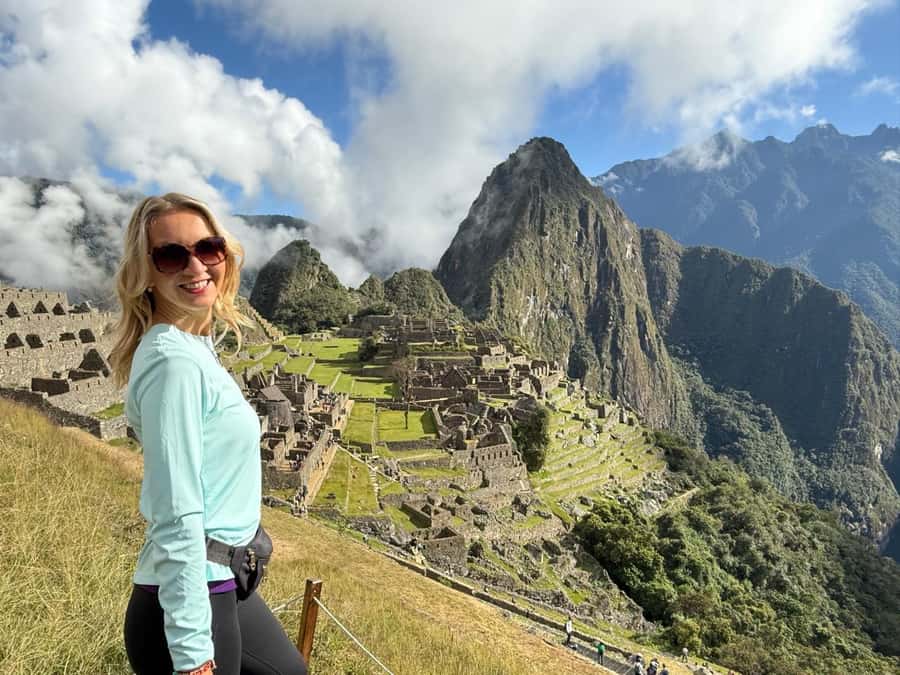
- Machu Picchu sunrise timing: you walk in early enough to be among the first groups, then tour with a guide for about 2.5 hours.
- All meals during the trek portion: 2 breakfasts, 2 lunches, 2 dinners included, so you’re not constantly hunting food.
Málaga Pass cycling: the Cusco-to-jungle transition you came for
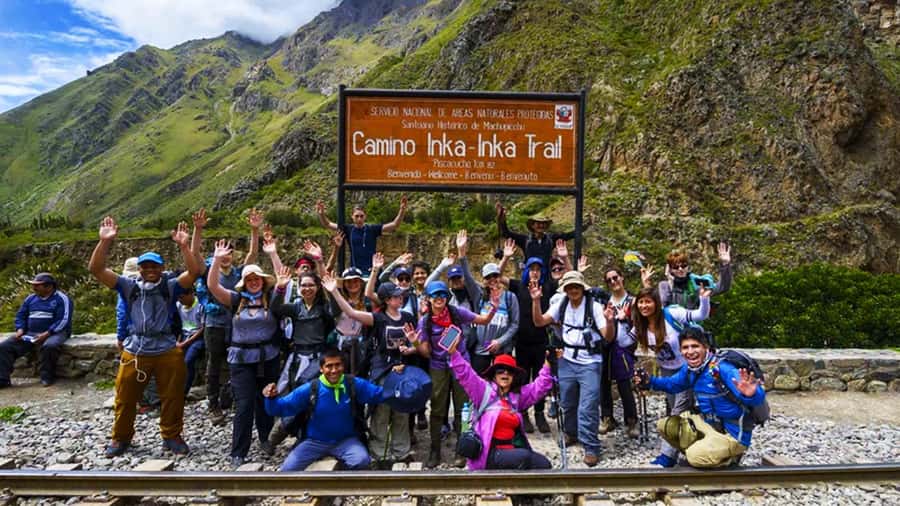
Day 1 starts with an early hotel pickup from Cusco at 06:00. From there, you’ll travel about 4 hours toward Abra Málaga, passing through mountain terrain before the adventure portion begins. This long transfer matters because it sets up the payoff: by the time you’re in gear, you’re ready for a true downhill ride rather than a short warm-up.
Once you hit Abra Málaga, the cycling is the star. You’ll descend for an average of 3 to 4 hours, guided and equipped with proper biking gear: helmet, gloves, and arm protectors and knee pads. That gear choice is a practical detail I like, because it lowers the stress level when you’re riding on a route that can feel both technical and curvy.
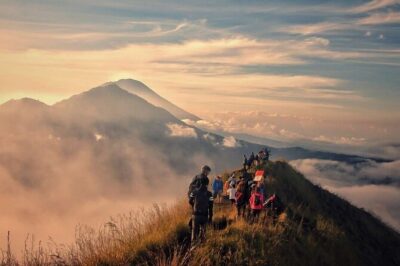
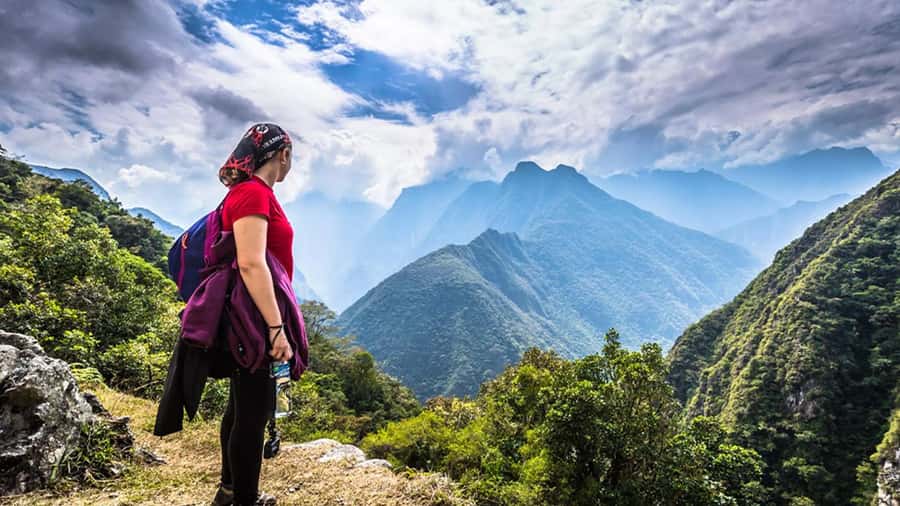
Along the way, you’re not just staring at the road. You’ll stop at the archaeological center of Huamanmarca, which gives you a tangible connection to the region beyond views. Then the scenery shifts in a way that feels like a living map: you move through a mix of mountain and jungle environments, and the guide points out things like jungle birds, medicinal plants, and everyday foods grown along the route.
You can also read our reviews of more tours and experiences in Aguas Calientes.
Huamanmarca, plants, and family life on the ride
Huamanmarca isn’t described as a long museum-style stop; it’s more like a meaningful roadside window. The benefit of that format is time. You’re able to appreciate the site without losing the momentum of a multi-activity day.
The other “hidden in plain sight” value is the guide’s focus on what people actually live with here: medicinal plants and the fruit you’ll see along the corridor, like mango, pineapple, papaya, avocado, and coffee. You’ll also hear about coca leaves as part of local life. Even if you’re not the type to care about botany at home, it’s still useful context because it explains why the vegetation looks the way it does and how it supports daily routines.
The day also includes visits to local families. That kind of stop changes the trek from a sightseeing checklist into a human-scale experience. You’ll still have plenty of nature time, but you’ll also understand you’re walking through an inhabited landscape, not a theme park.
Santa María to Santa Teresa: where the pace calms down
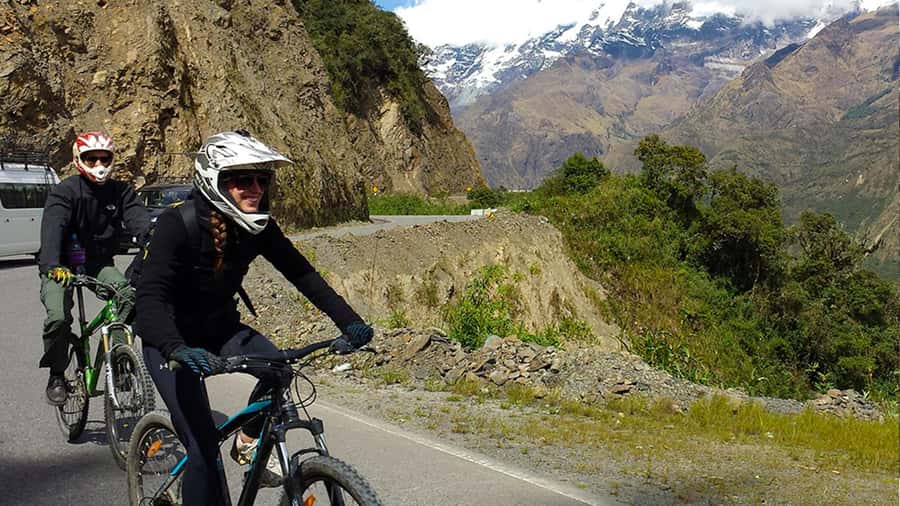
After the cycling descent, the day ends in Santa María. Then in the afternoon you’ll transfer by car to Santa Teresa, where you’ll sleep for the night. This is the moment the itinerary gives your body a breather. You’ll feel that difference between a long riding day and a travel-and-recovery evening.
Santa Teresa also opens up an optional add-on: Cocalmayo hot springs. The entrance isn’t included, so you’d pay if you want it. Still, it’s a smart option if your legs feel cooked. Hot water won’t fix everything, but it can make the next morning hike feel far less dramatic.
In terms of comfort, this overnight matters because day 2 is all walking. You’ll want a decent night’s rest to avoid turning the whole day into a shuffle. Keep expectations realistic: you’re not in a resort schedule. This is adventure trekking with hostel-style accommodations for two nights during the trip.
Day 2: zip line at Cola de Mono, then the canyon walk
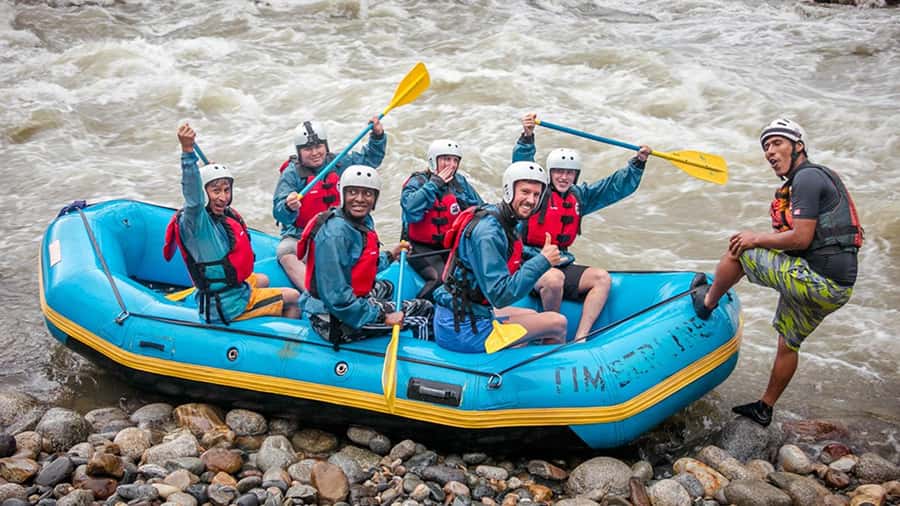
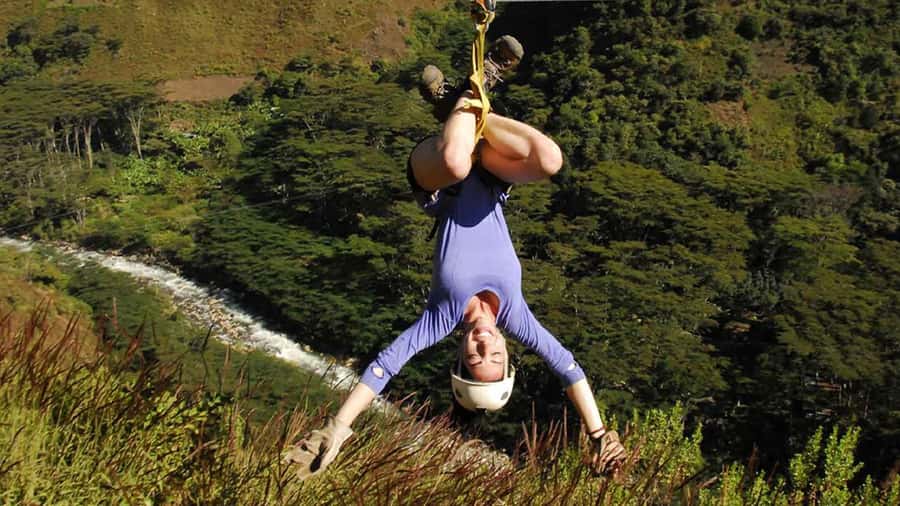
Day 2 begins with another optional adrenaline moment: a zip line at Cola de Mono after breakfast. If you love these short bursts of risk without long planning, this is a fun fit. If you’d rather save your energy for the hike, you can skip it and still have a full day outdoors.
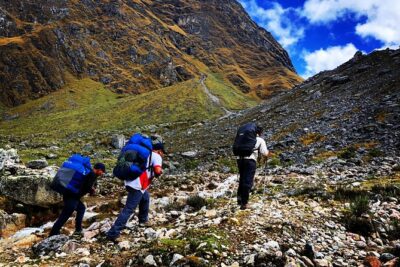
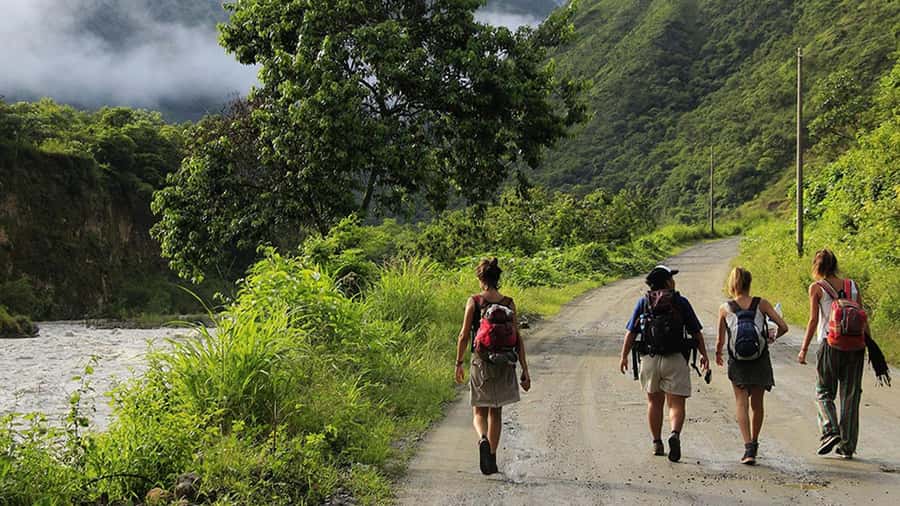
After breakfast, you start walking toward Hidroeléctrica. The route goes through a narrow canyon where the climate stays pleasantly mild. That matters because weather in this part of Peru can swing, and a canyon corridor often changes the feel of the day—more comfortable to move through than exposed sun.
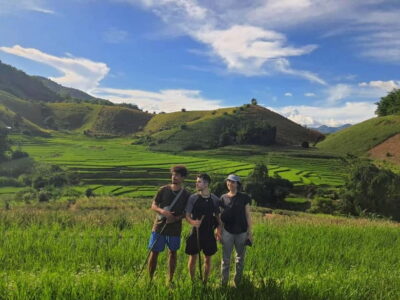
You’ll pass waterfalls and keep seeing vegetation cover the slopes. The route also includes glimpses of plantations—banana, mango, avocado, cocoa, orange, and coca leaves—so the walk feels like an agriculture tour in motion. And yes, you’ll eventually see the mountain of Machu Picchu. That’s one of those moments you can’t really manufacture with photos, because it’s the first time the end goal shows itself in full.
Hidroeléctrica lunch and the 3-hour walk to Aguas Calientes
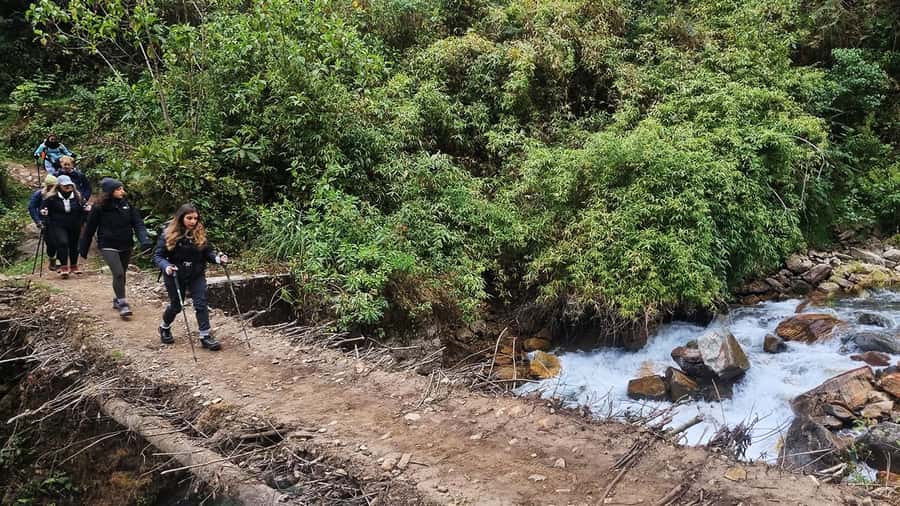
At Hidroeléctrica, you stop for lunch. This is a useful reset point: you get fuel before the longest “moving block” on day 2. After lunch, you continue along the train tracks, walking for about 3 hours to Aguas Calientes.
Walking beside train tracks has a certain rhythm. It’s not the same as a forest trail hike, but it gives you a clear line forward, and the pacing tends to be steady. You also arrive with enough time to handle the evening without rushing.
When you reach Aguas Calientes, you’ll have the option to visit the town’s hot springs. The itinerary says you can do it, but the entrance isn’t listed as included—so plan on paying separately if you want that soak.
That night you’ll stay in Aguas Calientes. This matters for Machu Picchu logistics because it sets up an early start on day 3.
Sunrise Machu Picchu: early entry feel and a guided tour
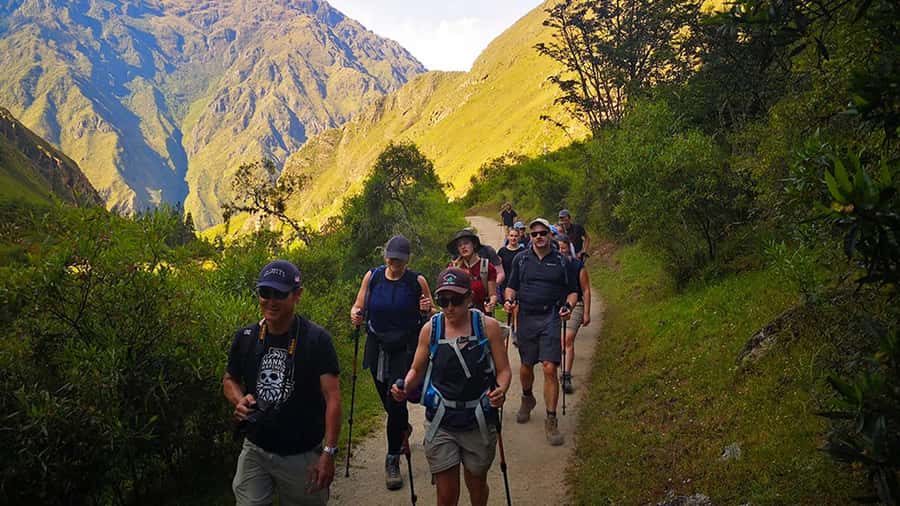
Day 3 is where the whole trip earns its name. You’ll have an early morning start after breakfast and then walk to Machu Picchu. The timing is designed so you can see the sunrise and get the chance to be among the first groups inside the ruins. If you like quieter moments—cool air, shifting light, and fewer bodies right in front of you—this early access is a real advantage.
Once inside, you’ll tour Machu Picchu with a professional guide for about 2.5 hours. The highlights include Inti Watana, the Temple of the Condor, and the sacred rock, along with other major sites. The best part of having a guide here isn’t the facts alone. It’s the way they help you connect the terraces, stone alignments, and viewpoints into one working system.
After the tour, you’ll descend back to Aguas Calientes at the appropriate time. From there, you’ll board the tourist train to Ollantaytambo. A bus will be waiting to take you back to Cusco and your hotel. There’s also an alternative mentioned: you can walk back to the hydroelectric plant to take a car if needed, but the core point is you’re not stuck planning the exit once Machu Picchu is done.
What you really pay for: value vs. the extras
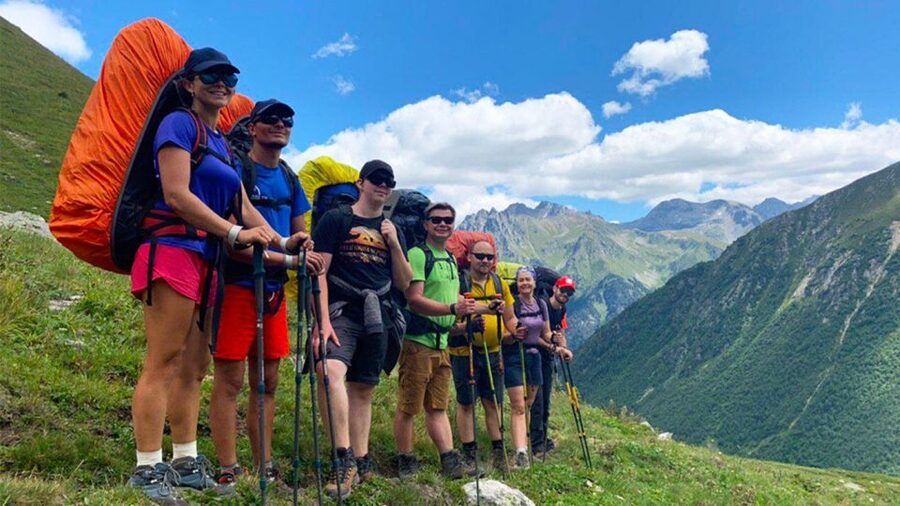
This trip costs $410 per person for a 3-day, 2-night experience. For that money, you get a lot of the big-ticket pieces handled: Machu Picchu entrance, a guided Machu Picchu tour, the train segment from Aguas Calientes to Ollantaytambo, transport back to Cusco, and meals during the trek portion.
Included meals are 2 breakfasts, 2 lunches, and 2 dinners. What’s not included: breakfast on day 1 and lunch in Aguas Calientes. That’s normal for this style of itinerary, but it’s worth planning for if you’re someone who hates skipping the first meal of the day.
You also get 2 nights accommodation in Inka Jungle hostels, plus biking equipment, a first aid kit, and the guided adventure component. The guide role is important here: you’re not only riding and hiking, you’re learning the route through stops, explanations, and safety support.
There are also optional costs. Wayna Picchu is listed as optional for USD 65. The Aguas Calientes bus to and from Machu Picchu isn’t included (USD 24). Hot springs at Santa Teresa are also not included, though you can add them.
One more practical “hidden” value point: the group size is capped at 18. That usually means easier coordination for timing at checkpoints and less scrambling than you’ll see on very large tours.
Weather swaps: rafting and how to think about it
The itinerary mentions rafting, but it comes with a big condition: rafting is only scheduled between January 1st and March 31st, and it’s subject to river conditions. If the river is high on the day of your activity, rafting will not take place and there’s no refund.
That’s not a small detail. If you’re booking partly for rafting, treat it as a possible extra, not a guaranteed core part of the day. The good news is that the cycling and the day 2 walking to Hidroeléctrica and then Aguas Calientes are clearly built into the plan regardless. In other words, even if rafting doesn’t happen, you still have the main arc of the trek.
Zipline also appears as an included activity (subject to conditions), and it’s positioned as optional on day 2. So even if you’d rather avoid it, you can still do the rest of the experience.
How hard is it, and who should avoid it
This trek mixes physical activities: cycling for several hours plus walking for long stretches. It’s not listed as suitable for people with back problems, pregnant women, or wheelchair users. That’s a helpful boundary.
It also matters that you’re not allowed to bring backpacks. Plan around that. You’ll need to carry what you can comfortably manage without a big backpack. Bring a small day kit for water, sunscreen, and snacks, and keep it simple.
I’d also suggest you bring medication you might need, plus cash for optional entrances like hot springs and Wayna Picchu. You’ll want sunglasses and a camera, and sunscreen is non-negotiable in sun-exposed moments.
Altitude is part of the story in Cusco and the trek environment. The trip notes that drinking coca tea before the excursion can help prevent altitude sickness. I’d take that advice seriously as part of your prep.
Practical tips: what to bring and how to move smart
Here’s the gear list that’s explicitly recommended: passport or ID card, sunglasses, camera, snacks, sunscreen, water, cash, and personal medication. For me, that’s the right mix for a trek like this: you’ll be out long enough that you need water and protection, and the day can start early enough that snacks help when meal timing is different than your home routine.
A couple of practical habits help a lot:
- Keep your pace steady on day 2’s long walk. If you rush early, you’ll pay later.
- Protect your legs after cycling. Your day 2 hike is the next load.
- Don’t overpack. You’re not bringing a backpack, and you want to avoid extra weight once you’re already tired.
One more small note: you’ll get pickup service, and you should wait in the hotel lobby about 10 minutes before the scheduled pickup time. Early starts are part of the package, so you’ll want to be ready.
Should you book the Inka Jungle trek to Machu Picchu?
Book it if you want Machu Picchu plus a story of getting there: biking through mountain-to-jungle scenery, learning about plants and local farm life, then hiking into Aguas Calientes before the sunrise entry. The guided Machu Picchu portion is a strong point, especially with named stops like Inti Watana and the Temple of the Condor.
Skip or rethink if you want a fully guaranteed set of adventure activities like rafting. Weather and seasonal river conditions can change that piece, and there’s no refund for a missed rafting day under the stated conditions. Also consider your physical limits and comfort with long walking days. If back issues, pregnancy, or mobility constraints apply, this route isn’t meant for you.
If you’re traveling with a flexible mindset and you like trips that blend adrenaline with real learning stops, this is a good match.
FAQ
What is the duration of the Inka Jungle trek to Machu Picchu?
The tour runs for 3 days.
How much does the trip cost?
The price is $410 per person.
Where does the tour start in Cusco?
You’re picked up from your hotel in Cusco. Pickup is at 06:00 hrs, and you should wait in the hotel lobby about 10 minutes before the scheduled time.
How many people are in the group?
The group is small, limited to 18 participants.
What languages is the tour guide available in?
The tour guide is available in English and Spanish.
Are meals included?
Yes. The itinerary includes 2 breakfasts, 2 lunches, and 2 dinners. Breakfast on the first day and lunch in Aguas Calientes are not included.
Is the Machu Picchu entrance included?
Yes. Entrance to Machu Picchu is included.
Is zipline and rafting guaranteed?
Zipline and rafting are included but rafting is subject to weather conditions between January 1st and March 31st. If the river is high on the day of your activity, rafting will not take place and there will be no refund. Zipline is offered on day 2 as an option.