REVIEW · KATHMANDU
Everest Base Camp Trek
Book on Viator →Operated by Unique Adventure International Pvt. Ltd. · Bookable on Viator
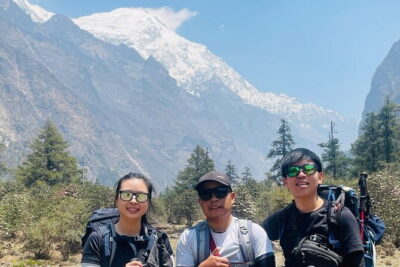
One suitcase. One big mountain dream. Then the air thins fast. This Everest Base Camp trek keeps the planning simple and the focus on the route itself, with all permits and flights built in, plus a licensed English-speaking mountain guide who handles the logistics on the ground. I especially like the acclimatization built into Namche, not just a rushed climb, and the way the team lends you key cold-weather gear (down jacket and sleeping bag). The main drawback to flag: you’re still climbing to high altitude, and the Lukla flying days depend on weather, so you’ll want to be patient if schedules shift.
You also get a more personal feel than many “big trek” setups. In the reviews, the owner Khum and guides such as Ongchhu, Chandra, and Raz/Razz are repeatedly praised for keeping things organized and human, with porters like Locksman mentioned for taking weight off your shoulders. Just know you can’t eliminate hardship here—this is rugged walking, long days, and some rocky footing around the glacial area.
In This Review
- Key things I’d circle before you go
- Kathmandu arrival: an easy start before the climb
- Day 2: Kathmandu to Lukla, then into Sherpa trail life
- Day 3: Monjo permits, then the long pull to Namche Bazaar
- Day 4: Two days in Namche, with options to fit your pace
- Day 5: Tengboche monastery and jaw-dropping Everest views at 3,870m
- Day 6: Pangboche gompa, then Dingboche at 4,360m
- Day 7: Chhukung acclimatization and the wider high-altitude view
- Day 8: Lobuche’s barren stretch and rocky footing
- Day 9: Gorakhshep lunch, then Everest Base Camp area around 5,400m
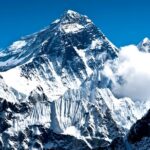
- Day 10: Kala Patthar for the best Everest picture
- Days 11–12: The descent back to Namche and down to Lukla
- Day 13: Fly Lukla to Kathmandu, then recover in comfort
- Day 14: UNESCO heritage day, plus Thamel souvenir time
- Day 15: Departure day that actually feels calm
- Price and what you really get for $1,690
- Gear, food, and the comfort level (it’s practical, not cushy)
- Guides and support: why the team matters on EBC
- Weather reality and the Lukla flying wildcard
- Who this trek suits best
- Should you book this Everest Base Camp trek?
- FAQ
- Is pickup included in Kathmandu?
- What’s the trek start time?
- Does this trek include domestic flights to Lukla?
- Are trekking permits included?
- Are meals and accommodation covered?
- Do I need to bring a sleeping bag and down jacket?
- Can I hire a porter to carry my luggage?
- Is there a vegetarian option?
- Do I need travel insurance?
- What if weather is bad or I need to cancel?
Key things I’d circle before you go
- Lukla flying logistics handled: Kathmandu to Lukla (often via Ramechhap) and the return are included.
- Permits + fees are covered: Sagarmatha National Park entry and required regional fees are included.
- Real acclimatization pacing: two days around Namche Bazaar helps you adjust before going higher.
- Gear loan for cold nights: down jacket and sleeping bag are provided for the trek.
- Comfortable rhythm, not luxury: guesthouses for the trek with full-board meals.
- Support if things go sideways: first-aid kit and oxymeter included, with rescue/evacuation help arranged worst-case.
Kathmandu arrival: an easy start before the climb
Day 1 is all about getting your feet under you in Kathmandu. You meet a representative after landing at Kathmandu International Airport, then get transferred to a hotel. It’s a small thing, but it matters. Trek fatigue starts before the first step—jet lag, paperwork, and getting to the right place can drain you.
If you’ve only got a day to settle in, the benefit here is that you’re not trying to figure out local logistics while you’re still adjusting to altitude and time zones. You also get airport drop-off at the end of the trip, which keeps the final day from turning into a scramble.
You can also read our reviews of more tours and experiences in Kathmandu.
Day 2: Kathmandu to Lukla, then into Sherpa trail life
On Day 2 you connect to a short flight to Lukla (about 30 minutes). From there, the trek begins gently up along the river side. The first walking day is designed to ease you into the rhythm: paved footpaths, teahouses, and views of conifers and Sherpa villages.
You end in Phakding (around 2,610 meters). It’s roughly a 3-hour walk from Lukla, and it’s a great “warm-up” that still feels real—river valleys, small settlements, and the sense that you’re truly leaving the city world behind.
Practical tip: treat this day as practice. Drink water, go slow uphill, and don’t treat the first walk like a training hike. The mountains have a way of correcting your ego.
Day 3: Monjo permits, then the long pull to Namche Bazaar
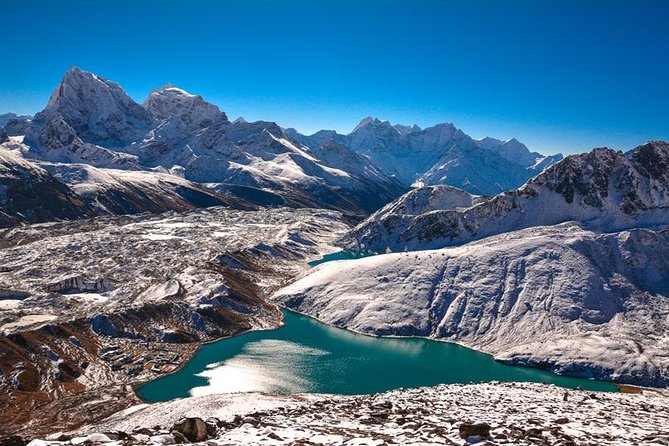
Day 3 is where the trek turns from gentle to serious. You walk to Monjo, a Sherpa settlement on the trek route. Here you handle entry into Sagarmatha National Park: you’ll show your permits (Sagarmatha National Park entry permit and TIMS card).
After Monjo comes the main climb—about 590 meters of uphill, taking around 5 hours. Somewhere halfway up, you get your first strong sight of Everest and Lhotse. As you approach Namche Bazaar, more peaks show themselves on both sides: Thamserku and Kwangde to the east and west, plus Khumbila in the mix.
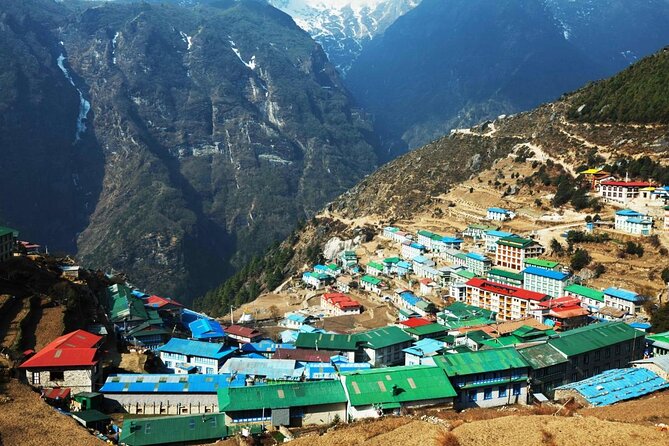
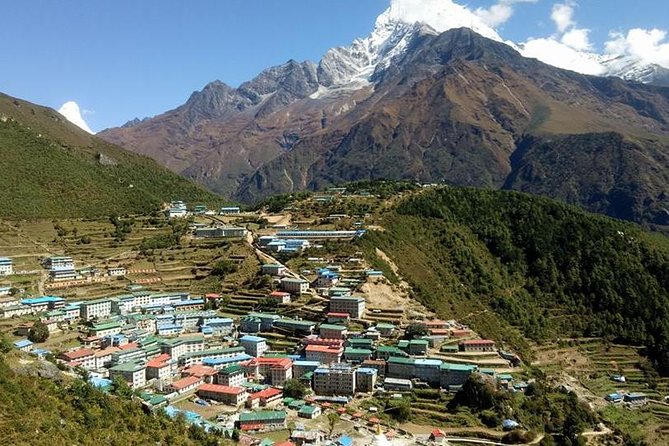
Namche Bazaar sits at the gateway of the Khumbu region, and it’s also the place where the trek becomes culturally rich, not just physically demanding. You’re surrounded by Sherpa life, teahouses, and mountain-focused services. Expect to feel the altitude in small ways—less stamina, more breathing, and a bit less patience with steep sections.
Day 4: Two days in Namche, with options to fit your pace
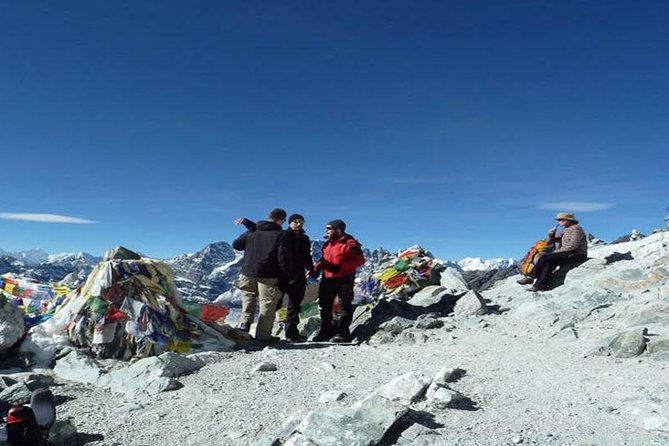
Day 4 is an acclimatization day in Namche Bazaar. Instead of forcing you higher immediately, you get choices. The route can branch out toward Khumjung (with a local school and hospital), Thame village (linked to Sherpa Everest expedition history), or the Shyangboche airstrip area. There’s also mention of the Everest view hotel near that elevation—along with an important note that it was pulled down after altitude issues affected visitors.
What this means for you: acclimatization is not just a box to check. It’s built into the experience, so you can adapt to how your body responds. If you’re feeling good, you can go for a hike. If you’re not, you can stay closer to Namche and still get the benefit of altitude time.
This is one of the best parts of the whole plan, because it reduces the odds of being “behind” on altitude while also making the day feel more flexible and less like a factory schedule.
Day 5: Tengboche monastery and jaw-dropping Everest views at 3,870m
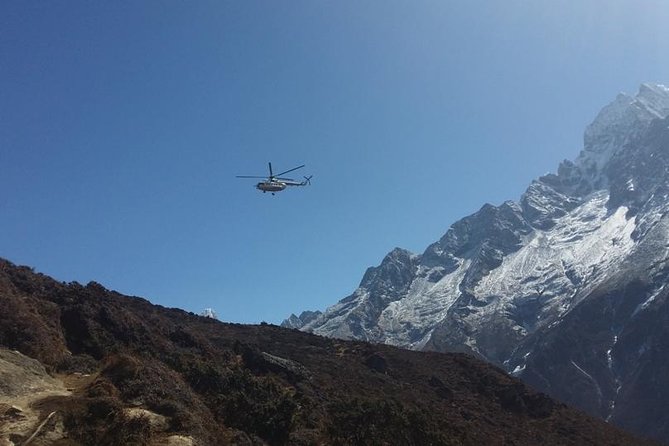
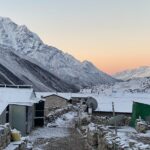
Day 5 takes you to Tengboche area, stopping around Tyangboche (about 3,870 meters), with a walk that includes slight climb, then descent to the Dudh Koshi before ascending again. The views are described as mind-blowing, and this is one of those days where you’ll understand why people dream about Everest even if they’ve never climbed anything before.
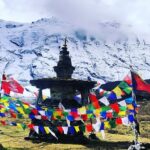
You’ll arrive at a spot built around the main Tibetan monastery in the region. That means chanting, prayer rituals, and a quiet that feels different from teahouse chatter. For many trekkers, this is where the trek becomes spiritual—not in a forced way, but because the mountain scale and the daily routines start to feel connected.
Downside to consider: this is still a long day at higher elevation. Even if it’s scenic, you still need to pace and keep an eye on how you’re breathing.
Day 6: Pangboche gompa, then Dingboche at 4,360m
Day 6 moves along the Imja Khola valley. The terrain shifts from woodsy sections into more dramatic Himalayan views as higher peaks press closer around you. You contour gradually to Pangboche, known for a gompa site and described as the oldest monastery in the region.
Then you climb up to Dingboche (around 4,360 meters). The views here include Amadablam and Island Peak. This is also a day where you might start to feel the “thin air tax” more clearly: slower pace, more breaks, and a stronger need for steady hydration.
Day 7: Chhukung acclimatization and the wider high-altitude view
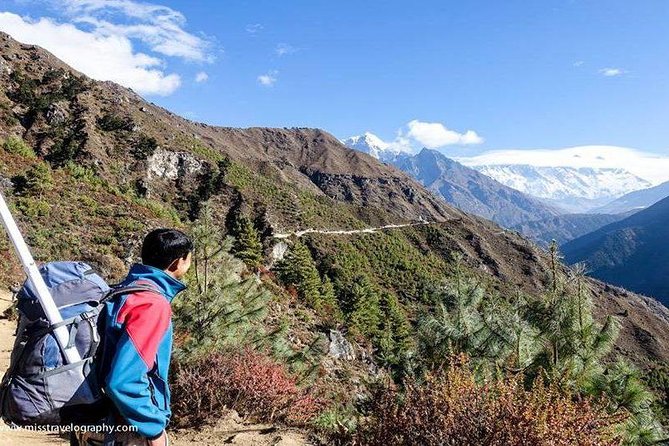
Day 7 is another acclimatization day. You head toward Chhukung, which is known for big views of Makalu, Island Peak, and Peak 38. There’s also an alternative hike toward Nangkartshang Peak if you want a bit more challenge.
This is the kind of day you’ll appreciate if you like “earned views.” You’ll be gaining elevation slowly, not just rushing toward base camp like a movie montage. Even if you don’t go far, being at this altitude gives you a better sense of the Khumbu terrain—glacial valleys, jagged ridgelines, and a horizon that looks too close to be real.
Day 8: Lobuche’s barren stretch and rocky footing
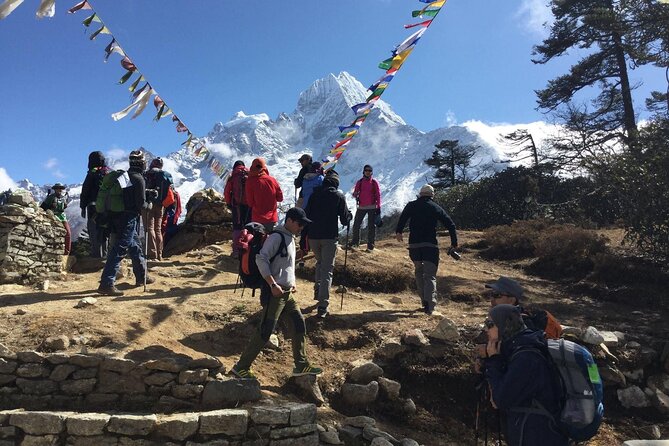
Day 8 brings the valley closer to the glacial world. The walking becomes barren, and the trail gets more attention-demanding. You’ll move toward Lobuche, passing toward Thugla and getting strong views across the valley, including Cholatse. The route can become quite rocky in places, so careful footing matters.
After a steep ascent, Tawache and Nuptse tower nearly 2 kilometers overhead. It’s one of those days where the mountain is less “view” and more “presence.”
Tip: keep your steps short and deliberate. In higher country, quick strides can waste energy without gaining much speed.
Day 9: Gorakhshep lunch, then Everest Base Camp area around 5,400m
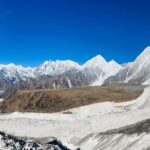
Day 9 is the day most people come for: reaching the Everest Base Camp area at about 5,400 meters. Along the way, the trail goes toward the Khumbu Glacier. You reach Gorakhshep for lunch, then continue to base camp.
One helpful detail: Everest Base Camp can feel like a view rather than a direct “Everest in front of you” moment. The described focus is on Khubutse, Pumori, Changtse, and the Khumbu icefall. That shift is useful. If you arrive expecting Everest to dominate every angle, you might feel slightly let down. If you arrive understanding the whole glacial amphitheater, it hits harder.
Also, base camp days are emotionally intense. The air is thin. Your body is tired. So plan to enjoy the moment, then rest hard on the return.
Day 10: Kala Patthar for the best Everest picture
Day 10 is a sunrise-or-late-morning style push to Kala Patthar, also called Black Rock. This is the classic viewpoint day—the one that tends to earn the most “how is this real” photos.
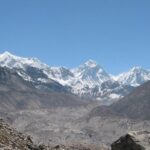
At the top, you get a described 360-degree view of major peaks: Pumori, Everest, Lhotse, Changtse, Nuptse, plus many others. Then you descend and return to Pheriche, retracing steps back toward Lukla.
For many people, this day is the mental payoff. For your body, it’s the hardest “short distance, high effort” day. Keep your pace slow. Don’t sprint for views. Let the views come to you while you conserve energy.
Days 11–12: The descent back to Namche and down to Lukla
Day 11 follows the trail back toward Lukla, stopping along the way in Tengboche via Pangboche. You’ll pass through rhododendron forest, cross the Imja Khola, and meet monasteries along the route. The day transitions into a downhill rhythm toward Phungi Tenga, then across the Dudh Koshi river walking along pine forest, eventually ending at Namche Bazaar.
Day 12 continues the descent. You cross the Tenzing and Hillary suspension bridge and finish the day by reaching Lukla for the overnight stay.
A note on value: the return trek is not “easy mode.” Your knees might protest. Your energy might drop. But the payoff is big: you get to see the same places with more time to notice details—trees, prayer flags, river bends, and the way teahouses fit into daily mountain life.
Day 13: Fly Lukla to Kathmandu, then recover in comfort
Day 13 is an early morning flight from Lukla back to Kathmandu. You’ll fly over clouds for views of the Khumbu region, then land and check into the Kathmandu hotel.
The rest of the day is flexible. You can relax or add light sightseeing depending on how you feel. After trekking at high altitude, the best “activity” is usually sleep, good food, and slow walking.
Day 14: UNESCO heritage day, plus Thamel souvenir time
Day 14 is your choice day in Kathmandu. You can visit UNESCO heritage sites such as Pashupatinath, Swayambhunath, and Bouddhanath, plus Baktapur Durbar Square. Or you can keep it simple: wander Thamel for souvenirs and last-minute shopping.
This day matters because it turns the trek into a full travel story, not just a single intense segment. You’ll likely want something easy and cultural, not physically demanding.
Day 15: Departure day that actually feels calm
Day 15 ends with a representative dropping you off at the airport. That’s the difference between a trek that drains you and a trek that feels like it had a beginning, middle, and end.
Even if you’re still tired, having the airport transfer handled lets you focus on hydration and moving through the airport without stress.
Price and what you really get for $1,690
At $1,690 per person for about 15 days, the key question is value, not just cost. This price includes a lot of the stuff that quietly adds up on your own: the licensed English-speaking guide, your full-board meals during the trek, accommodation in Kathmandu and guesthouses during the trek, and the required trekking permits.
It also includes the domestic flights between Kathmandu and Lukla (via Ramechhap and with transfers and taxes). Those flights aren’t the “fun part,” but they’re expensive and stressful to sort yourself.
On top of that, you get loan gear: a down jacket and sleeping bag for the trek, plus a duffel bag and sleeping bag support from the operator’s gear package. The trek also includes basic high-altitude safety tools like an oxymeter and a first-aid medical kit, plus help with rescue and evacuation arrangements if something truly goes wrong.
What it does not include is also important: your Nepal visa, international flights to and from Nepal, and travel insurance (especially for helicopter evacuation if needed). If you skip insurance, you’re taking on risk that can be financially brutal.
Gear, food, and the comfort level (it’s practical, not cushy)
You’ll stay in guesthouses during the trek and a hotel in Kathmandu. Meals are full board: breakfast, lunch, and dinner during the trek. Vegetarian options are available if you tell the operator in advance, which is a big deal on long trekking routes.
Gear-wise, you’re not on your own for the cold: down jacket and sleeping bag borrowing is part of the package. Still, you’ll want to pack smart for layering, because temple/monastery days and windy ridgelines can feel very different from warm afternoon teahouse breaks.
Porters can be added for an extra cost. That’s helpful if you tend to pack too much or if your strength is solid but your knees don’t love heavy loads. If you don’t add a porter, you’ll want to keep your personal carry light and realistic.
Guides and support: why the team matters on EBC
On Everest Base Camp treks, the guide isn’t just a navigator. They manage permits, pace, route timing, and altitude safety choices like when to rest more. The package includes one professional licensed English-speaking mountain guide, with their food, insurance, and equipment covered.
In the reviews connected to this operator, the owner Khum shows up repeatedly in a supportive way—meeting travelers on arrival and helping iron out details. Guides named in the feedback include Ongchhu, Chandra, Raz/Razz, and Megendra, often described as fun, organized, and quick to help when the plan meets reality.
Also included is an oxymeter to check pulse, heart rate, and oxygen saturation at higher altitude. That doesn’t make altitude safe, but it does give you more information when you and your guide need to decide what to do next.
Weather reality and the Lukla flying wildcard
This trip requires good weather. The region’s flying days can be affected by clouds and conditions. If that happens, the operator notes worst-case help with rescue and evacuation arrangements, and reviews also mention helicopter-related flexibility as a solution when airports were at risk of closure.
What you should take from this: build in patience. Don’t treat the schedule like a train timetable. Your best move is to be mentally ready for wait times, and to keep your packing and documents easy to access.
Who this trek suits best
This is best for fit, adventurous travelers comfortable with high altitude and rugged terrain. The plan includes multiple days with steep or rocky sections and long walking stretches, even though there are acclimatization breaks.
If you’re the kind of traveler who enjoys teahouse culture, monastery stops, and working your way upward slowly toward big views, you’ll likely love the rhythm.
If you want maximum comfort with minimal effort, this isn’t that. But if you want a classic Everest Base Camp experience with logistics handled and safety support built in, it’s a strong fit.
Should you book this Everest Base Camp trek?
I’d book this style of EBC trek if you want a smooth logistics layer: permits and flights handled, a licensed guide leading every step, full-board meals, guesthouse lodging, and cold-weather gear loan so you don’t spend your money replacing equipment you might only use once.
I’d pause and rethink if you’re prone to altitude issues, have knee/foot problems you haven’t managed before, or hate schedule uncertainty from Lukla flying conditions. Also, make sure you have travel insurance that covers helicopter evacuation if needed, since that part is not included.
If your priority is an organized, classic route to Everest Base Camp with thoughtful pacing and Sherpa cultural moments along the way, this one makes a lot of practical sense.
FAQ
Is pickup included in Kathmandu?
Yes. There’s airport pick-up and drop-off in Kathmandu for both arrival and departure.
What’s the trek start time?
The start time is listed as 6:15 am.
Does this trek include domestic flights to Lukla?
Yes. Domestic flights are included between Kathmandu/Ramechhap and Lukla, and the return flight back to Kathmandu/Ramechhap, with taxes and transfers.
Are trekking permits included?
Yes. Permits for Sagarmatha National Park and the Khumbu Pashang Lhamu Rural Municipality fee are included.
Are meals and accommodation covered?
Yes. You get hotel accommodation in Kathmandu and guesthouse accommodation during the trek, with full board meals (breakfast, lunch, and dinner) included during the trek.
Do I need to bring a sleeping bag and down jacket?
No. A down jacket and sleeping bag can be borrowed as part of the package, and related gear is included.
Can I hire a porter to carry my luggage?
Porters can be booked for an extra cost. They are not included automatically.
Is there a vegetarian option?
Yes. A vegetarian option is available if you advise the provider at the time of booking.
Do I need travel insurance?
Travel insurance is not included, and it’s specifically noted as needed for helicopter evacuation if needed while trekking.
What if weather is bad or I need to cancel?
The experience requires good weather. If it’s canceled due to poor weather, you’ll be offered a different date or a full refund. Cancellation is free up to 24 hours in advance for a full refund.