REVIEW · MHAMID
3-day trek – In the shade of palm trees
Book on Viator →Operated by L'oiseau du désert · Bookable on Viator
Palm shade and Sahara stars in three days. This trek from M’Hamid is interesting because you start under palm trees, then walk on to a tribal sanctuary at Marabout Sidi Naji and sleep outdoors with a real desert rhythm. It’s not just scenery; it’s a guided walk that connects you with how people move through this part of the Sahara.
I also really like how the trip is built around people you can actually talk to. You’re with the desert bird team (camel drivers, guides, cooks), and guide names like Hassan, Bachir, Bakar, Ibrahim, and Mohammed show up in accounts of the experience. Expect friendly conversations, a camp that feels warm, and food that’s more than survival calories.
One drawback to plan for: you’ll walk with a moderate physical fitness level expectation, and a sleeping bag is not included (equipment is, but not the bag). If you want comfort in the “hotel” sense, this is not that kind of trip.
In This Review
- Key highlights to know before you go
- Why This “Shade of Palms” Trek Works Better Than a Dune-Only Tour
- Day 1: M’Hamid El Ghizlane, Palm Grove Walking, and Sidi Naji Firelight
- Day 2: Bertham Dunes, Nomad Traces, and Ostrich Plains at Camp
- Day 3: Hamada Stone Desert, Fossils You Might Spot, and Desert Wells
- The Desert Bird Team: Guides, Camel Drivers, and a Real Camp Mood
- Food and Sleep Setup: What’s Included, What’s Not, and What to Plan
- Price Check: Is $424.09 Per Person Good Value?
- How Fit You Need to Be (And How to Prepare Without Overthinking)
- Practical Tips That Make Desert Days Easier
- Should You Book This 3-Day Trek in the Shade of Palms?
- FAQ
- Where does the trek start, and where does it end?
- What time do we start?
- Is this tour private?
- What’s included in the price?
- What is not included?
- What’s the cancellation policy?
Key highlights to know before you go
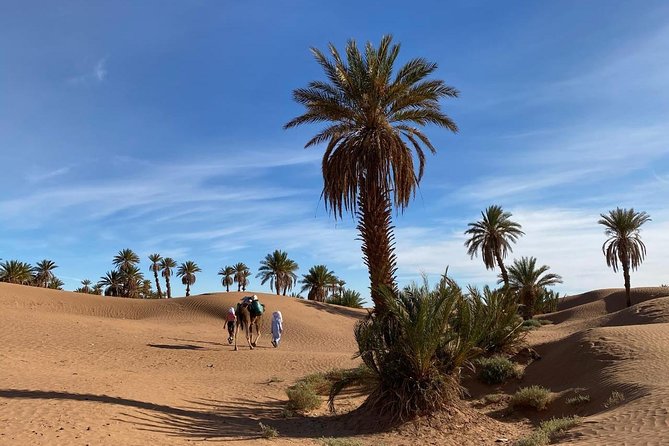
- Palm-grove shade meal at the start, before the dunes fully take over.
- Marabout Sidi Naji for your first night, with time around a fire under open sky.
- Bertham dunes + nomad traces, plus a second bivouac near ostrich plains.
- Hamada stone desert return, where you may spot fossils or desert “treasures” while walking.
- Camp teamwork (camel drivers, guides, cooks) that keeps the day moving and the atmosphere friendly.
Why This “Shade of Palms” Trek Works Better Than a Dune-Only Tour
A lot of Sahara trips feel like sand, sand, sand. This one starts with the quieter side of the desert: palms, village paths, and shade breaks that keep things human-sized. That matters because you’re not just chasing photos. You’re walking through changing terrain and shifting light, from green-ish palm shade to pale dunes and then to hard, stony hamada.
The other big win is how the days are paced. You get a structured route, but it still feels like a caravan-style outing with time to pause: meal breaks, a sanctuary stop, and two nights in bivouac. At a price of $424.09 per person, the value comes from what’s included: meals across multiple days plus eating and sleeping equipment. You’re paying for logistics so you don’t have to build a desert setup from scratch.
You can also read our reviews of more tours and experiences in MHamid.

Day 1: M’Hamid El Ghizlane, Palm Grove Walking, and Sidi Naji Firelight
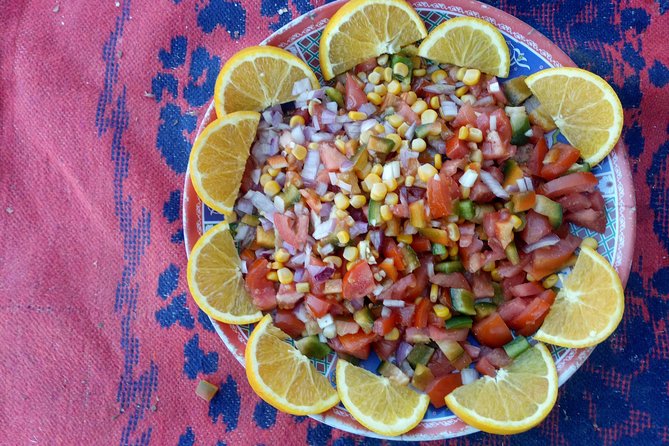
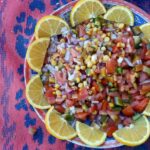
Your morning starts at 8:00 am in M’Hamid, Morocco, with the caravan leaving from M’Hamid El Ghizlane. The first stretch matters because it sets the tone: you cross the palm grove of the village, and you stop for a meal in the shade of palm trees. Even if you’ve seen palm photos before, shade changes the whole feel of the desert. It’s cooler, it smells different, and you’re not rushing into heat.
From there, the walk continues until Marabout Sidi Naji, described as a sanctuary linked to the ancestor of the Nouajis tribe. This is one of the most meaningful parts of the itinerary because it adds a human thread to the trip. You’re not treating the Sahara like a theme park—you’re stepping toward a place that has local importance.
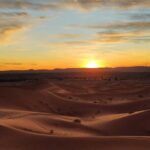
After you reach the area, you install the bivouac for the night. The evening is spent around the fire with the starry sky above. If you care about “why people do these trips,” this is where it clicks: the temperature drops, the light shifts, and the camp becomes the center of the world. One extra note for your expectations: your first night will be outdoors, so bring yourself fully into that mode.
Day 2: Bertham Dunes, Nomad Traces, and Ostrich Plains at Camp
After breakfast, the trek turns toward the magnificent dunes of Bertham. This day is the classic “desert walking” phase: sand underfoot, open air, and the feeling of moving through a place that doesn’t need buildings to feel complete.
You’ll also see traces of the nomads and their herds that once lived there. Even without a speech full of facts, that kind of detail makes the walk more than a workout. It helps you understand how people used this space, not just how it looks on a clear day.
Your second bivouac is set not far from the plains of ostriches, where nomads still keep their flocks. That proximity to living activity (instead of only empty dunes) is a nice balance. It keeps the day from becoming only about the past. And since the atmosphere is camp-based, it’s a good day to take your time—watch light change, listen, and let the setting sink in.
Day 3: Hamada Stone Desert, Fossils You Might Spot, and Desert Wells
On the return, you go through the hamada, the stone desert. This is a different walking experience than sand dunes. Stones mean less soft footing and more texture under your feet. It also changes the way you see the desert: fewer smooth curves, more stark edges.
This stop includes a “you might find” element. In the hamada, it’s noted that it’s not uncommon to find fossils or other treasures. Don’t expect a guaranteed “treasure hunt” moment, but do keep your eyes open. Walking slower for a fossil-like shape can be part of the fun, as long as you don’t lose track of where you’re stepping.
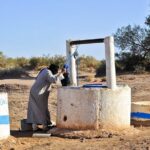
Before the goodbye, there’s a visit to the wells. In desert areas, wells are practical infrastructure and also social hubs—real meeting places. That’s valuable because it closes the trip with a sense of community, not just emptiness.
When you finish, the activity ends back at the meeting point in M’Hamid. You’re not left stranded in the desert with the “now what?” feeling. The route is built to bring you back to where the adventure started.
The Desert Bird Team: Guides, Camel Drivers, and a Real Camp Mood
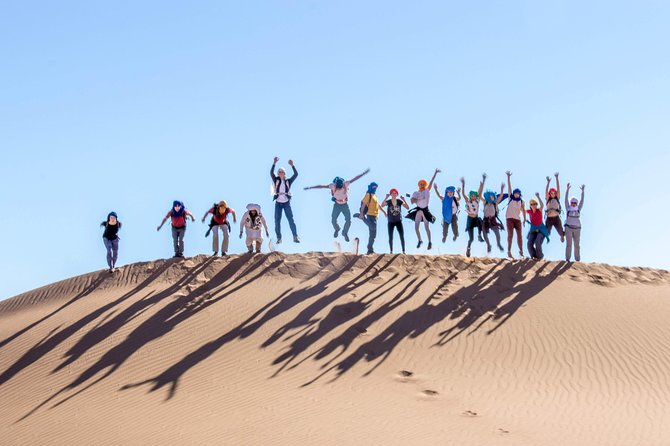
This trek is private, which means only your group participates. That’s a comfort factor if you like quieter conversations, or if you don’t want to feel like you’re waiting your turn behind a big crowd.
The trip runs with a team: camel drivers, guides, and cooks. In accounts of the experience, the tone is consistently warm and friendly. Names like Hassan, Bachir, Bakar, Ibrahim, and Mohammed come up in descriptions of guiding styles, and that tells me something practical: the experience depends on people who know the terrain and keep the camp running smoothly.
You can also expect family-style camp energy—time around the fire, shared moments, and discussions that don’t feel forced. Some accounts mention music as part of the camp atmosphere, including around sunset. Even if music isn’t central to every night, the point is you’ll likely be more involved than just “walk, eat, sleep, repeat.”

Food and Sleep Setup: What’s Included, What’s Not, and What to Plan
Food is a major part of the value here. Meals included cover lunch (3), breakfast (2), and dinner (2), plus eating and sleeping equipment. That’s important because on a trek like this, the most common problem is underestimating how much you’ll need reliable calories and basic comfort.
At the same time, you still need to bring a sleeping bag. Sleeping bag is explicitly not included, even though sleeping equipment is. So plan for cold nights. Even in a desert, nighttime temperatures can dip, and your comfort depends on your own bag.
Another practical detail: since you’re walking and sleeping outdoors, you’ll want to think about small desert gear. Some accounts mention buying desert-adapted items like a cheche (scarf) and sandals for the trip. If you don’t already have them, you might want to plan to grab essentials before you go.
Price Check: Is $424.09 Per Person Good Value?
At $424.09 per person for a ~3-day trek, the math makes sense because you’re not paying separately for the main camp logistics. Included are:
- Eating and sleeping equipment
- All fees and taxes
- Lunches, breakfasts, and dinners across the days
And you’re also paying for guiding through desert terrain, plus the work of camel drivers and cooks who keep everything moving. For a desert trek, that’s real cost—not an optional extra.
What’s not included is private transportation and a sleeping bag. So your main cost planning should be:
- How you’ll get to the start point area (pickup is offered)
- Your sleeping bag
If you’re the type who likes to travel light and avoid building a DIY camp, the included equipment and meals are the big reason this price can feel fair. If you already own a solid sleeping bag and are only adding the trekking service, the value is even clearer.
How Fit You Need to Be (And How to Prepare Without Overthinking)
The trip lists a moderate physical fitness level requirement. That’s your key clue. You’re on foot for multiple days, including stretches through dunes and then stone desert on day three.
What you can do to prepare:
- Build a bit of leg stamina before you arrive (short walks with hills help).
- Wear shoes you trust on uneven ground.
- Expect long daylight effort, then a calm outdoor evening.
If you want a strictly easy stroll with lots of breaks and no real walking time, this probably won’t feel right. But if you can handle a few hours of steady movement and you’re comfortable sleeping outside, it’s a solid match.
Practical Tips That Make Desert Days Easier
The Sahara is not hard because it’s dangerous. It’s hard because it’s dry, bright, and you’re moving with limited “civilization help” nearby. So focus on basics.
- Bring sun protection and cover. A cheche or scarf style setup is commonly used for dust and sun comfort.
- Wear footwear you can walk in for hours on changing ground (sand one day, stones the next).
- Pack for the cold night. Even if the day feels warm, the night can surprise you.
- Keep a flexible attitude. This is a caravan-style trek with a camp schedule, not a timed city tour.
And one more practical note: because the tour starts at 8:00 am, you’ll want a clear morning routine. Getting yourself sorted the night before helps you actually enjoy the first palm-grove meal instead of being cranky from logistics.
Should You Book This 3-Day Trek in the Shade of Palms?
Book it if you want more than dunes and sunset photos. The combination of palm grove shade, a sanctuary stop at Marabout Sidi Naji, and a return walk through hamada stone desert gives you variety in a short time. Add the included meals and camp setup, and you get a trip that’s designed to feel complete without requiring you to plan every step.
Skip it (or ask more questions) if sleeping outside is a deal-breaker, or if you hate any walking-based itinerary. Also, if you don’t already have a sleeping bag, factor that into your prep so you’re not stuck shopping last minute.
If you like a warm camp mood, small-group privacy, and a route with real cultural anchors—not just empty scenery—this one fits.
FAQ
Where does the trek start, and where does it end?
It starts in M’Hamid, Morocco, and it ends back at the same meeting point.
What time do we start?
The start time is 8:00 am.
Is this tour private?
Yes. It’s listed as a private tour/activity, and only your group will participate.
What’s included in the price?
Included are eating and sleeping equipment, all fees and taxes, plus lunch (3), breakfast (2), and dinner (2).
What is not included?
A sleeping bag and private transportation are not included.
What’s the cancellation policy?
You can cancel up to 6 days in advance for a full refund. If you cancel 2–6 days before, you get a 50% refund. Canceling less than 2 days before doesn’t get refunded.