REVIEW · MHAMID
2-day trek – In the footsteps of beetles
Book on Viator →Operated by L'oiseau du désert · Bookable on Viator
Starry night starts before your first step. This 2-day trek from M’Hamid turns the Sahara into a living path, where you walk in the wake of desert animals and hardy plants. I love the way the trip moves like a real caravan day: on foot, with the dromedary team and guides and cooks working around you, not just for you.
My other big favorite is the evening rhythm. You sleep in a bivouac near the ostrich plain, then spend time around the fire under the star vault, with the kind of relaxed warmth you see when guides and cooks like Bachir, Hassan, Bakar, Zacky, Mohammed, and Baccarat (the cook) treat the night like home.
One drawback to plan for: the trek includes eating and sleeping equipment, but it does not include a sleeping bag. If you do not already have one, you’ll need to sort that before you go.
In This Review
- Key Highlights You’ll Feel Quickly
- Why This 2-Day Trek in M’Hamid Feels Grounded, Not Staged
- The 8:00 Start and Getting Set Up Without Stress
- Day 1: From M’Hamid Toward Bertham Dunes and a Fire-Vigil Night
- Day 2: Mazwrya Caravan Lands, Midday Break, and Walking Back to M’Hamid
- Meals, Equipment, and What’s Included (So You Can Pack Smart)
- Price and Value: Is $319.52 a Good Deal for Two Days?
- What to Bring (Without Turning This Into a Packing Project)
- Who This Trek Suits Best (and Who Should Reconsider)
- Should You Book This Trek?
- FAQ
- FAQ
- What time does the trek start, and where does it begin?
- Is pickup included?
- What is included in the trek price?
- Do I need to bring a sleeping bag?
- What fitness level do I need?
- Can I get a refund if I cancel?
Key Highlights You’ll Feel Quickly
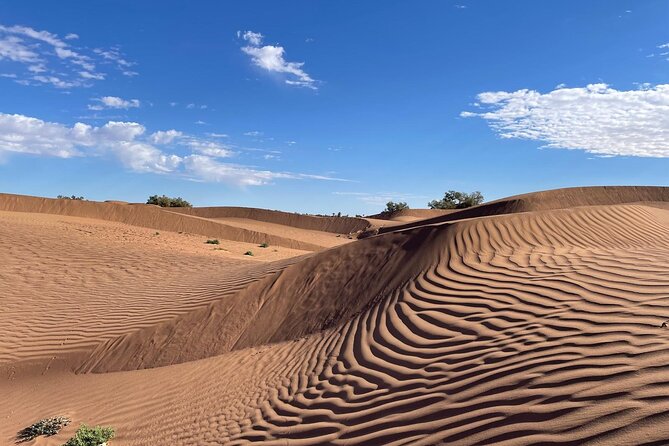
- Caravan energy, but on foot: leave M’Hamid on a morning walk, traveling with camel drivers and the desert team.
- Bertham dunes + ostrich plain: dunes on Day 1, then a camp location linked to desert wildlife.
- Firelight vigil under stars: evenings are built around warmth, shared meals, and time by the flames.
- Mazwrya meeting place for Timbuktu caravans: Day 2 connects you to older caravan routes.
- Nomad-life intro, not a photo-only walk: you’re guided through desert habits, not just scenic stops.
Why This 2-Day Trek in M’Hamid Feels Grounded, Not Staged
A short Sahara trek can go two ways. It can be a scenic walk with a big van parked nearby, or it can feel like you’re actually living the day’s rhythm. This one leans hard toward rhythm. You start in the M’Hamid area, then you move on foot from place to place as a camel caravan supports the group. It gives the trip a sense of time passing the way nomads would measure it: by walking, resting, eating, and the slow evening shift toward darkness.
The title hints at something you’ll likely notice while walking: more than just sand. The walk is framed as following life through the desert’s door, which means the focus is on desert-adapted plants and the animal world that exists in that harsh space. Even if you’re not a tracker by training, a good guide helps you see small details you’d otherwise miss, like signs in the ground or how plants survive where they shouldn’t.
And you don’t just “arrive” at camp. You join the process. The team includes camel drivers, guides, and cooks, and that matters because it changes the vibe from tourist activity to shared work. When the cook is as praised as Baccarat, you can expect meals that are part of the experience, not a rushed afterthought.
You can also read our reviews of more tours and experiences in MHamid.

The 8:00 Start and Getting Set Up Without Stress
This trek starts at 8:00 am in Mhamid, Morocco, and it ends back near the meeting point. The company offers pickup (when available), and the activity is described as near public transportation, which is helpful if you’re not traveling with a private driver.
Here’s the practical truth: a desert trek that begins early means you should treat the morning like a mission. Plan to be ready before the 8:00 start so you’re not rushing water, shoes, or layers. You’ll also want a clear plan for how you’ll get back. Since the trek ends where it begins, you’re not stuck wondering how to reach your next booking.
It’s also a private tour/activity, meaning you’re not blended into a huge group. That usually makes a difference in how the walking pace feels and how often you can ask questions.
Day 1: From M’Hamid Toward Bertham Dunes and a Fire-Vigil Night
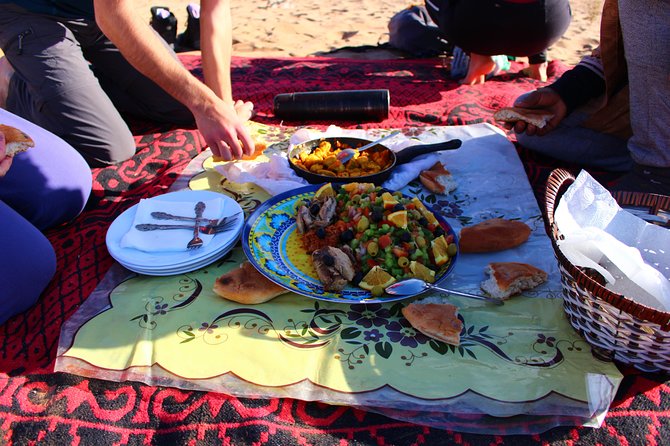
Day 1 is built around movement. You leave in the morning on foot from M’Hamid El Ghizlane, traveling alongside the caravan of dromedaries. The “desert bird team” includes the camel drivers and the guides and cooks. That mix matters: the caravan is not just transportation. It’s the backbone that makes the camp possible.
Next comes Bertham’s dunes. This area is described as a place where nomads once lived with their dromedary herds. You’re not just looking at sand shapes. You’re walking into a zone with a long association to desert living. If you like context, you’ll get more than postcard scenery because your guide is there to explain how people used these routes and spaces.
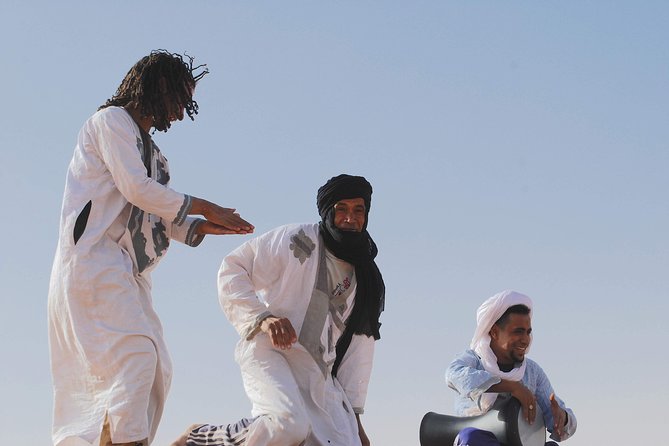
Then you settle in toward the plain of the ostriches, which sets the scene for the night. A camp in the open desert works because you get that big-sky feeling fast. You install the bivouac, then the day flows into a vigil around the fire. This is where the experience becomes emotional in a good way. Multiple people describe shared moments around candles and the fire, with music or quiet time depending on the mood. It’s not a theme park show. It’s the kind of night that makes you notice your own breathing and how quickly the stars appear once the light drops.
One more Day 1 detail that affects comfort: you’ll need to be ready for sand and wind. You’ll be walking in the morning, then spending hours outside at night. That’s normal for the desert, but it’s still something you should plan for with layers and protection.
Day 2: Mazwrya Caravan Lands, Midday Break, and Walking Back to M’Hamid
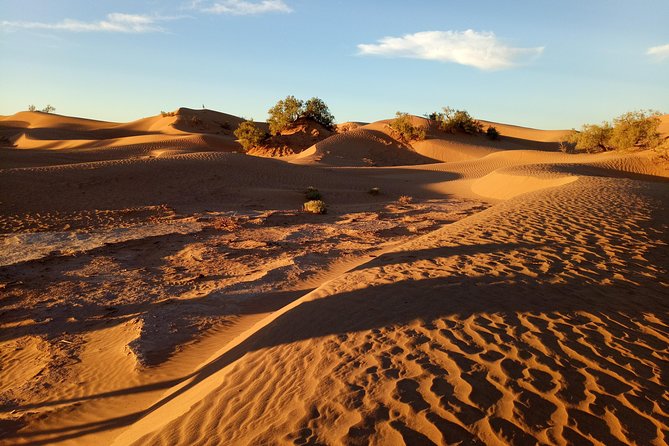
After breakfast, Day 2 shifts from settling into camp to moving again. You walk toward Mazwrya, described as a meeting place for caravans coming from Timbuktu. That detail matters because it changes how you experience the walk. Instead of thinking only about the dunes in front of you, you also start imagining the older flow of people and goods across desert routes.
The trek includes a midday meal at Mazwrya, then it’s time to take over the direction of M’Hamid. You leave the caravan after that break, which gives the day a natural ending shape: you slow down, eat, then head back with less of the caravan pace.
Two things make this Day 2 section satisfying. First, you’ve already earned the second day. Day 1’s firelight and camp help you understand why the morning matters. Second, the Timbuktu connection gives the desert a human storyline. Even if you’ve never studied Saharan trade routes, the idea of a caravan meeting point makes the desert feel less empty.
Meals, Equipment, and What’s Included (So You Can Pack Smart)
This trek includes breakfast, two lunches, and two dinners, plus all fees and taxes. You also get eating and sleeping equipment. That bundle is part of why the price makes sense: a short desert trip can cost more than people expect if you have to rent everything separately.
But there’s one clear gap: sleeping bag is not included. That’s the main thing to take seriously before you go. If the temperature drops at night where you’re camping (common in the desert), a sleeping bag can make the difference between “nice experience” and “I’m counting minutes until morning.”
Also, private transportation is not included. Even though pickup may be offered, don’t assume you’re being whisked from Marrakech or elsewhere. The meeting point is in Mhamid, and the start time is early, so you should plan to be there.
One subtle comfort tip: because equipment is provided for sleeping and eating, you should still bring your own basic personal comfort items. Think small and practical, not bulky.

Price and Value: Is $319.52 a Good Deal for Two Days?
At $319.52 per person for about two days, the price is not just for walking. You’re paying for the whole support system: the desert team, the camel caravan logistics, and the full cycle of meals across two days. In practical terms, you get fewer decision points once you’re there. Food is handled. Camp setup is handled. Your job is mainly to show up, walk, and stay comfortable.
This is also why the included equipment matters. If you were forced to arrange cooking gear and bedding separately, the “cheap” option often turns expensive fast. Here, at least the major pieces are included, and that reduces friction.
Would I say it’s a bargain? That depends on your priorities. If you’re the type who wants a simple, guided desert experience with meals cooked for you and a real evening camp vibe, the value is easier to see. If you’re traveling ultra-light and like total independence, you might prefer something more flexible. But for many people, the all-in support is the point.
What to Bring (Without Turning This Into a Packing Project)
Because a sleeping bag isn’t included, start with that. If you need to buy or rent one, do it early. Don’t leave that to the last minute.
Beyond that, pack for a desert day with big swings between bright sun and evening chill. You might want:
- A light layer system you can add/remove quickly
- Something to protect your face from sun and grit
- Water and simple snacks if you tend to get hungry between meals (even though lunches and dinners are provided)
- Comfortable walking shoes that can handle sand
Also remember: this trek is for people with moderate physical fitness. You don’t need to be an athlete, but you do need to be able to walk for extended stretches.
If you’re doing this as a solo trip, it’s helpful to know that people describe the team as warm and secure, which usually means you can focus on the walk instead of worrying about logistics.
Who This Trek Suits Best (and Who Should Reconsider)
This is a great fit if you want:
- A short Sahara trek that still includes a real night under the stars
- A guided experience with a team that handles camp and cooking
- A desert story tied to nomadic life and caravan routes
It’s also a strong choice for first-timers. Several people highlight how easy it felt to experience the Sahara the right way, with attentive care and a sense of safety.
You might reconsider if:
- You cannot do a moderate walking pace
- You are not willing to bring or source a sleeping bag
- You dislike the rhythm of group travel and prefer to go completely independent
Should You Book This Trek?
If you want a two-day Sahara intro that feels human and lived-in, I’d book it. The combination of on-foot caravan walking, the Bertham dunes setting, and the fire-vigil night near the ostrich plain creates a full mini-world in a short time. Add to that the Mazwrya connection to Timbuktu caravans, and the desert stops feeling like a blank page.
My decision tip is simple. Before you book, check two things: can you handle moderate walking, and will you have a sleeping bag ready. If yes, this trek is very likely to reward you with the kind of quiet memories that don’t need a hundred photos to make sense.
FAQ
FAQ
What time does the trek start, and where does it begin?
The trek starts at 8:00 am in Mhamid, Morocco, and it ends back at the meeting point.
Is pickup included?
Pickup is offered, but private transportation is not included.
What is included in the trek price?
Meals are included (breakfast, lunches, dinners), along with eating and sleeping equipment, all fees and taxes, and a mobile ticket.
Do I need to bring a sleeping bag?
Yes. A sleeping bag is not included.
What fitness level do I need?
The trek is for travelers with a moderate physical fitness level.
Can I get a refund if I cancel?
Yes. You can cancel up to 6 days in advance for a full refund, cancel 2–6 days in advance for a 50% refund, and cancellations less than 2 days before the start are not refunded.