REVIEW · KATHMANDU
Ghorepani Ghandruk Trek ( Poon Hill circuit, Annapurna sunrise view trek)
Book on Viator →Operated by Nepal Trekking Routes Pvt. Ltd · Bookable on Viator
A good sunrise can make you forget the steps. This trek pairs Poon Hill early-morning drama with a gentle-to-moderate route through oak and rhododendron forest, Gurung and Magar villages, and big views of the Annapurna and Dhaulagiri ranges. It’s built as a short, friendly introduction to the Annapurna region rather than a hardcore, high-altitude grind.
I really like the way this trip blends scenery with people. You’re not just hiking past hills—you’re walking through village life at places like Ulleri and Ghandruk, where you can see how Magar and Gurung communities live and work in the Annapurna area. I also appreciate the support side: the operator arranges a local guide, pickup/transfer, and a Kathmandu start with a welcome dinner, and that kind of organization matters when you’re adjusting to Nepal time.
One drawback to plan for is the early start and the leg work. The route includes 3,000+ stone staircases and you’ll be up early for the Poon Hill sunrise, so if you’re nursing knees or you hate waking before your alarm, this is the part to prepare for.
In This Review
- Key things you’ll remember most
- Annapurna in 11 days: why this Poon Hill circuit fits real schedules
- Kathmandu warm-up: temples, a stupa, and an easy landing day
- Getting to Pokhara: road views on the Prithvi Highway or a faster flight
- Nayapul to Ulleri: stone staircases and the start of forest walking
- Ghorepani: the rhododendron forest moment you’ll understand later
- Poon Hill sunrise: the moment that makes the whole circuit click
- Tadapani to Chhomrong to Jhinu Danda: views, villages, and a hot-spring payoff
- Landruk, Tolka, and the Gurung and Magar villages you actually pass through
- Tolka to Phedi and back to Nayapul: finishing the loop without feeling chopped
- Price and service reality check: is $590 worth it here?
- Who this trek fits best, and who should rethink it
- Should you book the Ghorepani–Ghandruk Poon Hill circuit?
- FAQ
- What is the duration of the Ghorepani Ghandruk trek?
- Where does the tour start?
- What is the key highlight of the route?
- How do you get from Kathmandu to Pokhara?
- What trekking areas and villages does the itinerary include?
- Is a hot spring included?
- What’s included in the price?
- Does the company offer vegetarian meals?
Key things you’ll remember most
- Poon Hill sunrise at 3,210 m with sweeping views of Annapurna and Dhaulagiri
- Rhododendron forest highlights (including a note about 8 of Nepal’s 32 species)
- Village walking that actually feels local in Ulleri, Ghorepani, Ghandruk, Landruk, and Tolka
- A real hot-spring reset at Jhinu Danda after a hiking day
- Small group size (max 10) with a local guide for route and timing help
- Solid pre-trip communication praised in past experiences, including WhatsApp Q&A
Annapurna in 11 days: why this Poon Hill circuit fits real schedules
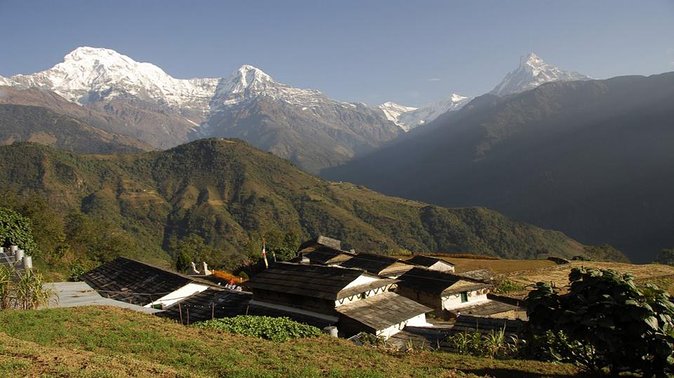
This is the kind of Annapurna trek that works when you have limited time but still want the classic highlights. You get a full loop through the foothills—no technical gear, no extreme altitude acclimation described in the plan—yet you still reach the famous viewpoints that most trekkers picture when they think of Annapurna.
The biggest value is pacing. You’re hiking most days, but the itinerary keeps key moments spaced out: forest walking, village days, then that one morning when the sky does its best impersonation of a spotlight. For many people, that’s the sweet spot: enough challenge to feel like a trek, enough comfort to keep enjoying the views instead of just surviving them.
Also, the trek is designed for a small group (up to 10). That matters on a trail like this because you’re less likely to feel lost in a crowd, and the guide can actually manage timing—especially for sunrise logistics.
You can also read our reviews of more tours and experiences in Kathmandu.
Kathmandu warm-up: temples, a stupa, and an easy landing day
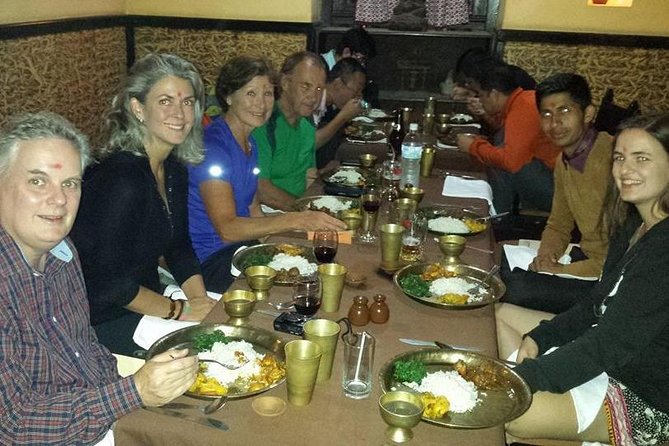
Before you touch the trail, you’ll get a Kathmandu orientation that’s practical, not just sightseeing. Day 1 is straightforward: a representative meets you at TIA, then you get escorted to your hotel to rest, followed by a welcome dinner at a Nepali restaurant. Day 1 is also your buffer day. Kathmandu can feel busy and sensory-heavy, so having time to reset helps you hike better later.
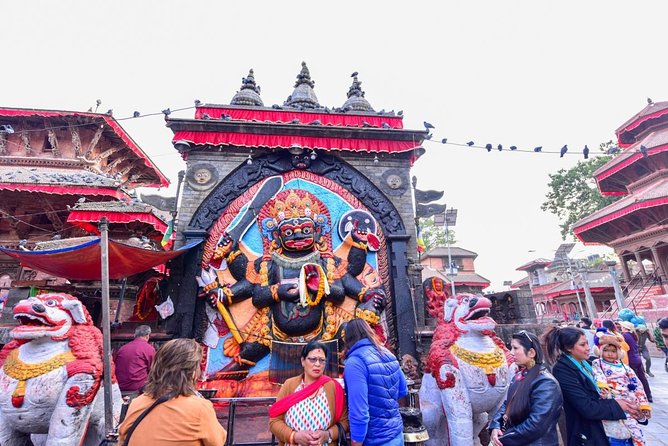
Day 2 focuses on UNESCO World Heritage Sites in the Kathmandu Valley: Pashupatinath Temple, Bouddhanath Stupa, Swayambhunath (Monkey Temple), and Patan Durbar Square. What I like here is the variety. You’re moving between sacred temples, a massive stupa complex, a hilltop viewpoint temple, and a royal-square atmosphere.
A heads-up: these sites involve walking and stairs too. They’re not as long as trek days, but if you arrive exhausted, go a little slow, drink water, and don’t treat Day 2 like a marathon of selfies.
Getting to Pokhara: road views on the Prithvi Highway or a faster flight
Day 3 gets you from Kathmandu into the Annapurna region’s travel base—Pokhara. The plan gives you a choice: drive or fly. Flying is faster and can include aerial views, which many people enjoy if they’re short on time. Driving is slower, but it’s also part of the experience because the route follows the Trishuli River and Marsyangdi River along the Prithvi Highway.
If you’re the type who likes to feel the scenery “arriving,” the drive makes sense. The description calls out views of mountain ridges like Langtang, Ganesh Himal, Manaslu, and Annapurna ridges, so you’ll see the region before you start hiking. If you prefer comfort and speed, take the flight and spend your energy on the trek.
In Pokhara, you’ll check in to your hotel and have free time. This is where you can keep the trip feeling like a journey instead of a schedule. A simple wander around the lake area can make the next hiking days feel more rewarding.
Nayapul to Ulleri: stone staircases and the start of forest walking
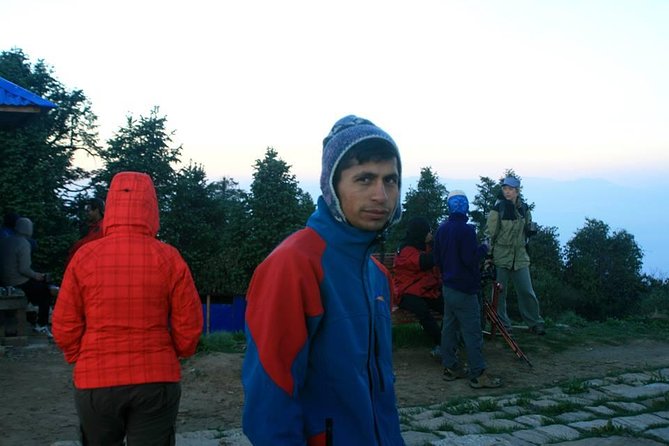
On Day 4, you head to Nayapul, the gateway into the Annapurna Sunrise View trek. From there, you begin along the Modi Khola banks, and the trail transitions into rhododendron and oak forest. Even though the path is described as easy, you’ll still feel it in your legs because the route includes a long stretch of stone steps—3,000+ staircases—before reaching Ulleri.
I like Ulleri as a first village “taste” of the trek’s rhythm. It’s described as a large Magar village, and the idea isn’t just photos. You get a sense of everyday life in the Annapurna region, and there’s a good chance to hear local stories and village history from people you meet along the way.
Possible drawback: stair-heavy starts can feel awkward if you’re not used to descending early. Take it slow uphill, and when you get the chance, stretch calves and thighs in every short rest.
Ghorepani: the rhododendron forest moment you’ll understand later
Day 5 is where the trip leans into what many people come for: forest, birds, and those mountain silhouettes that start teasing you before the big sunrise. After breakfast, you’ll walk past hamlets and rivulets, with dense rhododendron and oak forest within the ACAP area (as referenced in the trek description).
One detail I find genuinely useful: Ghorepani is described as having the largest rhododendron forest in the world, with 8 of Nepal’s 32 rhododendron species. Whether every species is obvious on the day you’re there or not, it signals something important: this is not random greenery. The area is known for serious seasonal color and forest variety.
You’ll stop in Ghorepani Village, one of the larger Gurung villages. That village setting makes the trek feel more grounded. It’s not just hiking; it’s hiking through a living cultural landscape, with Annapurna and Dhaulagiri views from around the settlement.
If you’re photographing, this is also a good day to practice “horizon discipline.” Early light can flatten mountains, so watch for subtle changes in contrast around sunrise and late afternoon.
Poon Hill sunrise: the moment that makes the whole circuit click
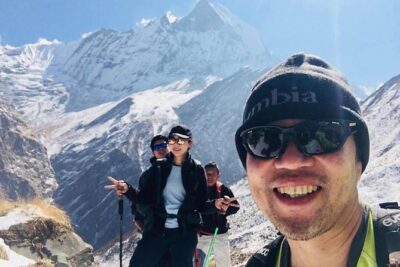
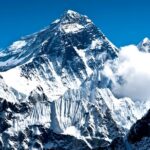
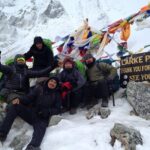
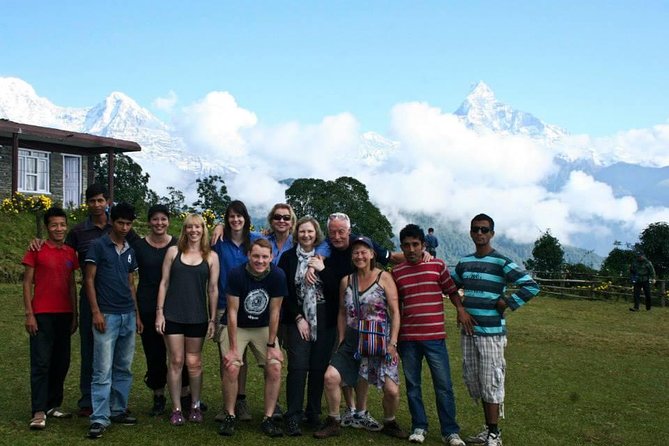
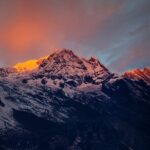
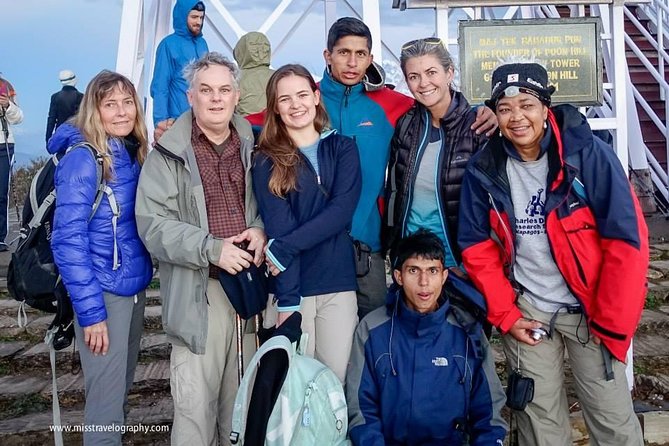
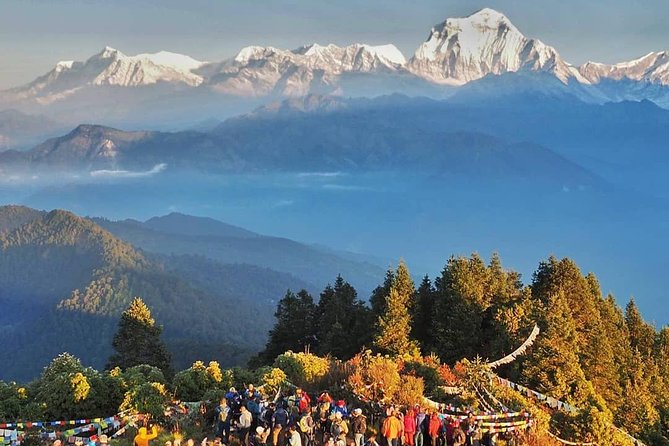
Day 6 is the headline. You’ll wake early and head to Poon Hill (3,210 m), taking about an hour from Ghorepani. From there, the plan calls out views of Dhaulagiri, Annapurna, and Mt. Fishtail (Machhapuchhre area is also referenced elsewhere)—with the classic reward being snow sparkling in the first sun rays.
This is the kind of viewpoint that rewards patience. Even if clouds roll in, you’ll still see the way the sky reveals layers of mountains one by one. And when the light hits, you’ll understand why people plan their treks around this specific morning.
After sunrise, you return for breakfast at your hotel and continue trekking, following terraced farmlands and lush rhododendron forests to Tadapani. Tadapani is smaller and quieter than some of the bigger stops, which can be a relief after a big sunrise morning. It’s also a good “reset” point before the downhill/uphill rhythm of the following days.
Tadapani to Chhomrong to Jhinu Danda: views, villages, and a hot-spring payoff
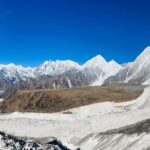
Day 7 starts with a breakfast plus views of the Annapurna region, then it becomes a mix of downhill and uphill toward Chhomrong Village. Chhomrong is one of those names trekkers learn early because the setting works for both scenery and walking. The route description emphasizes heart-touching views of the Annapurna Massif plus rhododendron forest along the way.
Then you reach Jhinu Danda, where the big practical win is the hot spring. Jhinu Danda is known in the plan as having a natural hot spring, and taking a bath there is described as an ultimate way to shake off fatigue and stress. I love this kind of “recovery station” in trekking itineraries because it turns a tiring day into something memorable beyond the miles.
There’s also an alternative mentioned: you can trek to Ghandruk from Tadapani in about 3–4 hours if you want the route shifted toward Ghandruk sooner. If you prefer fewer stops and more time in one main village, this option could be appealing, especially if you like staying put and enjoying a place.
Landruk, Tolka, and the Gurung and Magar villages you actually pass through
By Day 8, you’re descending toward Komrong Khola, then continuing along lush forest, crossing a bridge and later passing a waterfall in Himalpani before reaching Landruk, described as a Gurung village. From there, you continue to Tolka, described as a Magar village.
This day matters because it adds culture to the walking. You’re not only moving between viewpoints. You’re spending time in villages that reflect the region’s ethnic mix—Gurung and Magar—each with its own feel, home rhythms, and local landscapes.
The itinerary also mentions an option about where you sleep, including time spent in Ghandruk Village and then continuing along the Modi River banks toward Landruk and Tolka. The detail that “distance to Ghandruk from Tadapani is shorter than to Jhinu Danda” (as described) is a hint that the route can be adjusted based on energy levels and what kind of experience you want more.
If your legs are feeling good, you may enjoy the flexibility. If you want everything to feel predictable, stick to the core sequence and don’t over-optimize the day-to-day.
Tolka to Phedi and back to Nayapul: finishing the loop without feeling chopped
Day 9 is your return leg toward the highway zone. After breakfast in Tolka, the plan provides two options: trek to Nayapul via Deurali, or return to Phedi via Pothana. Both routes connect you back to the road that leads to Pokhara.
This is one of those days where mindset helps. It’s easy to feel tired because you’re going “back,” but the hike is still part of the circuit. I’d treat it like the payoff phase: keep a steady pace, enjoy the village names passing by, and don’t rush just because you’re near the end.
Day 10 then brings you to Pokhara-to-Kathmandu, again with two options: morning flight or a scenic highway drive. The flight is about time. The drive is about views and slowing down to let the trip sink in.
Overnight in Kathmandu on Day 10 keeps your final day from feeling stressful, and your last day is handled by an airport representative based on your departure time.
Price and service reality check: is $590 worth it here?
At $590 per person for an 11-day itinerary, the value depends on what you care about and what you would otherwise manage yourself. What you’re getting here (based on the tour info) includes a local guide, private tour elements, accommodations according to the itinerary, a welcome dinner, and round-trip shared transfers. There’s also pickup offered and a mobile ticket system mentioned.
That’s the big benefit: you’re not coordinating transfers, guide, and the key movement links between Kathmandu and Pokhara, and between trail access points. For many people, that coordination effort is the hidden cost of DIY.
Also, past experiences with this operator highlight responsiveness and support in real life situations. For example, one review response references Shailesh making contact weeks before the tour and sending regular updates, while another highlights asking questions via WhatsApp and getting personal answers on route and conditions. While your experience will still depend on your exact guide and dates, it’s a good sign when a company is praised for communication before you ever leave home.
What isn’t included matters too. Alcoholic drinks and “food and drinks” are not included, so you’ll still budget for meals and snacks during the trek days and drinks when you want them. Also, you only have breakfast listed as included for two days in the included section, so treat most other meals as your own budget line.
Bottom line: this price feels most fair if you want organized logistics, a guide who helps with day-to-day decisions, and a route that hits the Annapurna sunrise highlights without eating up your entire vacation.
Who this trek fits best, and who should rethink it
This trek fits best if you want a classic Annapurna introduction with a strong sunrise viewpoint, village culture stops, and a natural hot-spring break. It also suits you if you prefer guided structure and small-group pacing, with someone to manage timing for the early Poon Hill start.
It may not be the best fit if you’re sensitive to stairs and early mornings. The route begins with serious stair climbing (3,000+ steps mentioned), and sunrise day requires waking up very early. If that kind of exertion frustrates you, ask your guide about pace options and confirm you can adjust breaks.
It also helps if you like moving through different cultural settings. Ulleri, Ghorepani, Ghandruk (via options), Landruk, and Tolka are all part of the story here, and the trek description leans into ethnic village life rather than treating settlements as just rest stops.
Should you book the Ghorepani–Ghandruk Poon Hill circuit?
Yes, I think you should book it if you want the Annapurna region’s famous sunrise experience with a route that stays approachable and organized. The combination of Poon Hill views, rhododendron forest walking, Gurung and Magar village days, and the hot spring at Jhinu Danda gives you a lot of variety for one trip.
I’d only hesitate if your biggest priority is avoiding early wake-ups and step-heavy hiking. If that’s you, build in extra recovery time and talk to the guide about pace. Otherwise, this circuit is a smart way to get the Annapurna feel—without turning the whole vacation into one long endurance test.
FAQ
What is the duration of the Ghorepani Ghandruk trek?
The trek is listed as 11 days (approx.).
Where does the tour start?
The start is in Kathmandu, with the meeting point listed as Tribhuvan Airport, Kathmandu Nepal.
What is the key highlight of the route?
The itinerary includes an early morning visit to Poon Hill for sunrise views of the Annapurna region.
How do you get from Kathmandu to Pokhara?
You can travel by either driving or flying, depending on what you agree on while booking.
What trekking areas and villages does the itinerary include?
The trek route references Nayapul, Ulleri, Ghorepani, Poon Hill, Tadapani, Chhomrong, Jhinu Danda, Ghandruk (as an option), Landruk, Tolka, Phedi, and Deurali on the way back.
Is a hot spring included?
Yes. The itinerary includes Jhinu Danda, noted for a natural hot spring where you can take a bath.
What’s included in the price?
Included items listed are dinner, accommodations as per itinerary, a local guide, private tour, round-trip shared transfer, and breakfast (2).
Does the company offer vegetarian meals?
A vegetarian option is available. You need to advise at the time of booking if you require it.