REVIEW · MHAMID
6 days trekking To The heart of Desert
Book on Viator →Operated by Desertbrise Travel · Bookable on Viator
The Sahara edits your calendar fast. This is a 6-day walk through southern Morocco’s big dunes, guided by a nomadic specialist and supported by a camel caravan, with your days set by sun, shade, and silence. You’ll also pass through classic Morocco road-trip highlights like the Tichka Pass and Ait Benhaddou before you trade traffic for dunes.
What I like most is the mix of real walking and real desert calm. You’re not just transported from viewpoint to viewpoint; you hike in chunks and still get camp time to actually watch the light change across the sand. I also like the Erg Zahar focus: sunrise, sunset dune time, and camp activities like sandbread and tajin make evenings feel like you’re living the rhythm, not rushing past it.
One consideration: the trip includes serious travel days. Day 1 is a long drive from Marrakech through high mountain passes, and Day 6 is a 15-hour return to Marrakech, so if you’re sensitive to long rides, plan for it and pack for comfort. Also, the route includes sand and plateau sections, so bring good shoes and don’t expect this to be a stroll.
In This Review
- Key highlights
- Marrakech to the desert: High Atlas passes, Ait Benhaddou, and Zagora dates
- Day 2 in M’Hamid: Palm grove shade, tea breaks, and Sidi Naji
- Erg Zahar day: 4 hours of walking split morning and evening
- Day 4: Kraat jamal, Lahdybat tamarisk roads, and a wild-camels night
- Day 5: 3-hour walk back to M’Hamid, with shower time
- Day 6: The 15-hour return to Marrakech
- Camp life and what the package really includes
- How much walking are you really signing up for?
- Price and value: what $999.74 buys in the real world
- Who should book this trek (and who should think twice)
- Should you book Desertbrise Travel’s 6-day heart-of-the-desert trek?
- FAQ
- FAQ
- What time does the tour start in Marrakech?
- How long is the trek and how many nights will I sleep in the desert?
- Where does the tour start and where does it end?
- Do I walk every day?
- Is there camel support for luggage?
- What kind of shoes should I bring?
- What meals are included?
- What kind of accommodation should I expect?
- Is this a private tour?
- Can I cancel for free?
Key highlights
- Camel caravan support for luggage, with nomadic guide and camel drivers running the show
- Erg Zahar dune time with sunset moments and a view toward the Algerian border
- Tamarisk shade breaks (tea and lunch) built into the walking schedule
- Sidi Naji sanctuary visit linked to local oral tradition
- Last desert night near wild camels, then a return walk to M’Hamid
- Meals and water handled with bottled water plus coffee/tea included
Marrakech to the desert: High Atlas passes, Ait Benhaddou, and Zagora dates
Day 1 starts early from your hotel/riad area in Marrakech at 8:00am. You’ll head through the High Atlas Mountains via the Tichka Pass (2260 m), Morocco’s highest road pass, known for dramatic mountain panoramas and the slow, winding feel of the route.
Along the way, you’ll stop to see kasbahs including Tamnougalte and Ait Benhaddou. Ait Benhaddou is a 16th-century UNESCO site and one of the most recognizable kasbahs in Morocco, famous for being used as a film setting. Even if you’re not a movie buff, it’s an easy place to connect Morocco’s desert-edge architecture to the people who lived and traded through these corridors.
After that, the drive continues down into the Draa River valley, with palm-lined stretches and Berber village life visible from the road. You’ll reach Zagora, the capital of dates, before pushing onward to the desert gate area near M’Hamid. The day ends with dinner and a night in a nomadic standard camp—your first taste of staying overnight in a very different rhythm than Marrakech.
Practical note: Day 1 is long and mostly road travel. If you’re prone to motion sickness, bring what works for you. And if you’re the type who likes good photos, daylight on the mountain pass is your best friend, so don’t sleep through the early start.
You can also read our reviews of more tours and experiences in MHamid.
Day 2 in M’Hamid: Palm grove shade, tea breaks, and Sidi Naji
Once you wake up in camp, Day 2 shifts you from driving to walking. After breakfast, you leave from M’Hamid on foot with your guide and the camel caravan for support. Your route heads toward a palm grove, where the pace feels more connected to the ground under your feet than the vehicle behind you.
Tea and lunch are served in the shade of tamaris (tamarisk trees), which matters more than it sounds. These shade stops are part of how the itinerary adapts to sun intensity—exactly the point of this trek. You’re learning the rhythm of walking when the desert is friendly, resting when it isn’t.
After lunch and a break, you head to the sanctuary of Sidi Naji. Oral tradition connects the marabout who lived there to 18 grandfathers, and the stop is designed as a pause for local custom and storytelling. Then the day ends with a bivouac set at the foot of the sand dunes—one of those simple changes that makes everything feel more real: you’re not “camping,” you’re placed by the dunes and expected to slow down.
Why this day is valuable: It’s not only physical. You get a gentle transition—walking, shade, local meaning, then sleep under sky. It helps the desert experience land, instead of feeling like a quick sightseeing stop.
Erg Zahar day: 4 hours of walking split morning and evening
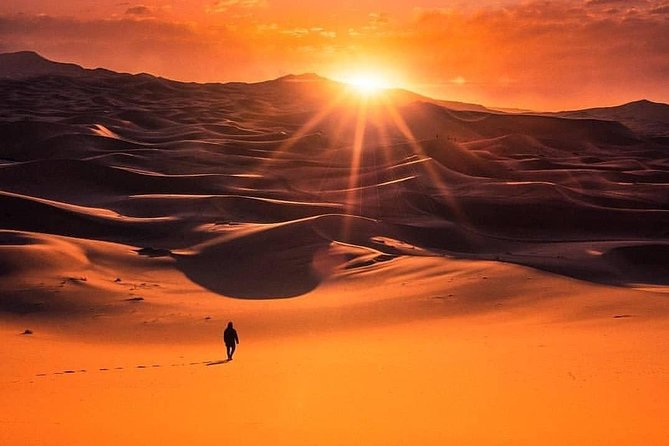
Day 3 is built around Erg Zahar, described as the third biggest dune in the M’Hamid desert. You’ll walk about 4 hours total, split into two segments: 2 hours in the morning and 2 hours in the evening. This split isn’t just for logistics. It helps you avoid walking at the harshest part of the day and gives you a calmer window for actually paying attention to what your body is doing.
The walking is a mix of plateau and sand. That’s why you’re told to bring good shoes for tracking across mixed surfaces. If your feet aren’t used to sand, the plateau sections help you get your footing before the dunes take over.
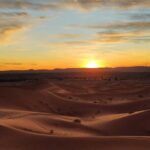
You’ll stop for lunch under tamarisk shade and take a nap—again, sun rhythm is the theme. After the rest, you continue toward the erg where your camp is set. Then comes a signature desert moment: riding the dunes for sunset and watching the light change across sand. You’ll also have a view toward the Algerian border area, assuming clear conditions.
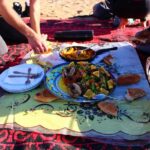
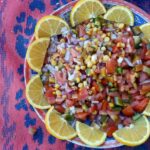
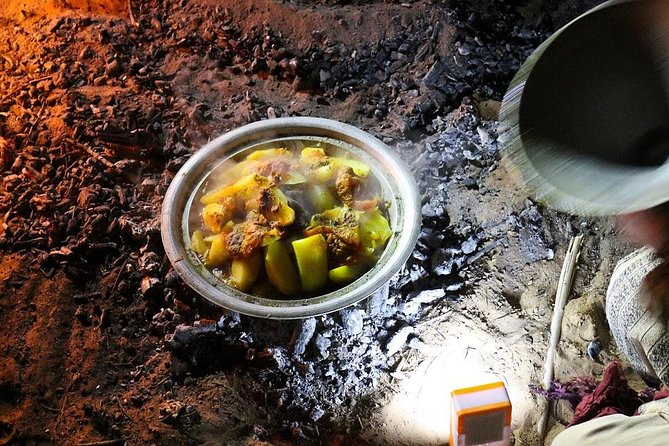
Camp time also includes hands-on desert food activities like making sandbread and preparing tajin. Even if you don’t want to be “the chef,” this kind of simple cooking around camp tends to create the best conversations: people learn, laugh, and share stories by firelight instead of talking logistics.
Possible drawback: because you’re walking in sand, you’ll feel it later that day or the next morning. Bring blister-planning supplies if you need them and don’t underestimate the warm-dust effect on skin and eyes.
Day 4: Kraat jamal, Lahdybat tamarisk roads, and a wild-camels night
Day 4 keeps you moving through desert edges and palm-tamarisk corridors. You’ll head toward Kraat jamal, traveling across Lahdybat. Lunch is served along the way, and the road is described as full of tamaris, which means the day still contains breaks where you can step out of full sun.
From there, you cross the Draa Valley again, then spend your last night in the desert in a place described as full of wild camels. That final-night setting is one of the reasons people like longer desert treks: the experience doesn’t flip from adventure to routine. Instead, the itinerary builds toward your last night with a nature moment.
What to expect emotionally: by Day 4, you’ve likely stopped checking the clock every hour. The quiet starts to feel normal. That’s when camp evenings can become the most memorable part—because you’re not recovering from Day 1 travel yet, and you’re not rushing toward the return yet.
Day 5: 3-hour walk back to M’Hamid, with shower time
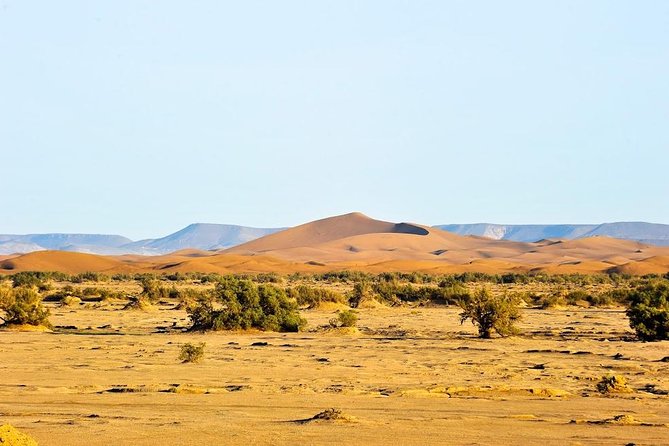
Day 5 is a return day, but it’s not a day to do nothing. With the breeze of morning, you start walking back toward M’Hamid for around 3 hours. Your goal is to reach the camp where you can shower and have lunch.
That shower detail is not small. After days of sun, sand, and dust, having hygiene time makes the transition back to “real life” smoother, and it can help you enjoy the final evening instead of feeling gritty and tired.
After lunch, you spend the night in M’Hamid. This gives you a buffer before the long drive back to Marrakech the next day, and it often makes the return feel less abrupt.


Day 6: The 15-hour return to Marrakech
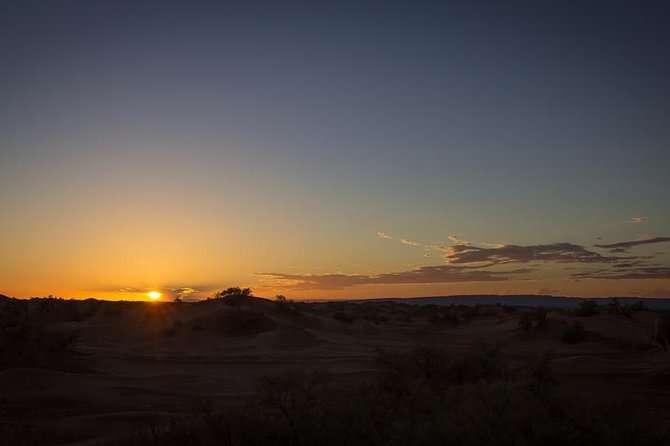
On the last day, you leave early from your guest-house and retrace the journey north toward Marrakech, basically following the path from Day 1. The drive time is listed as about 15 hours, and you should expect arrival late afternoon back at your Marrakech area hotel/riad meeting point.
This day is mostly about endurance and perspective. You’ve spent multiple nights sleeping near dunes; now you’ll return to roads, cities, and food that feels easy compared to camp routines. If you want one takeaway from this trek, it’s often how quickly you notice the contrast between speed and slowness.
Practical tip: bring something to keep you comfortable in the long ride—water is handled as part of the trek, but your personal comfort gear is on you.
Camp life and what the package really includes
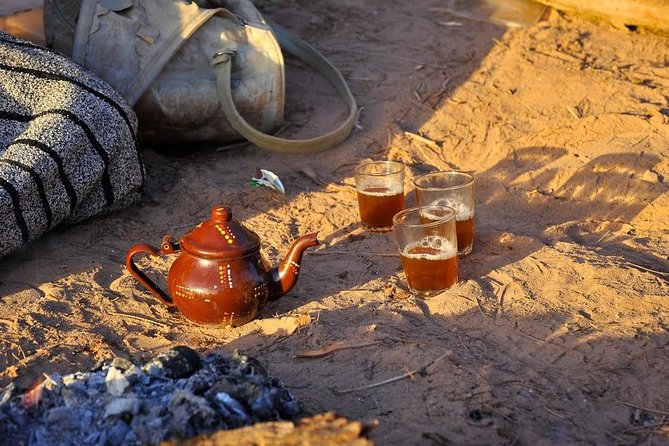
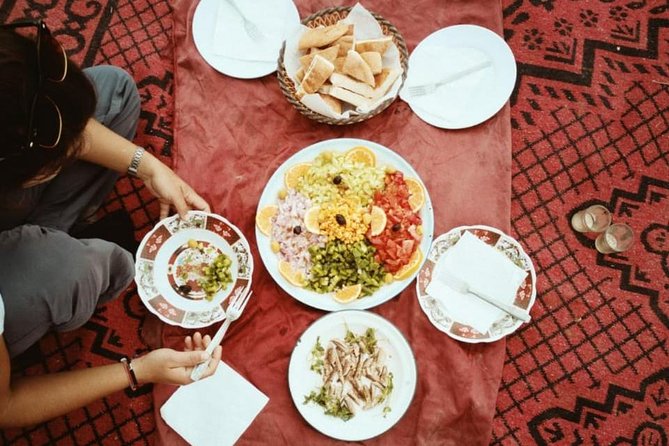
This trek is built around 5 nights accommodation across a mix of nomadic standard camp and desert bivouacs. You’ll also get a full meal plan: 6 breakfasts, 5 lunches, and 6 dinners, plus bottled water and coffee and/or tea.
That’s a key value point. Desert trekking gets expensive fast if you’re trying to source food daily, and it gets stressful if you’re calculating meals while managing heat. Here, you’re freed from that—your guide and team manage the rhythm.
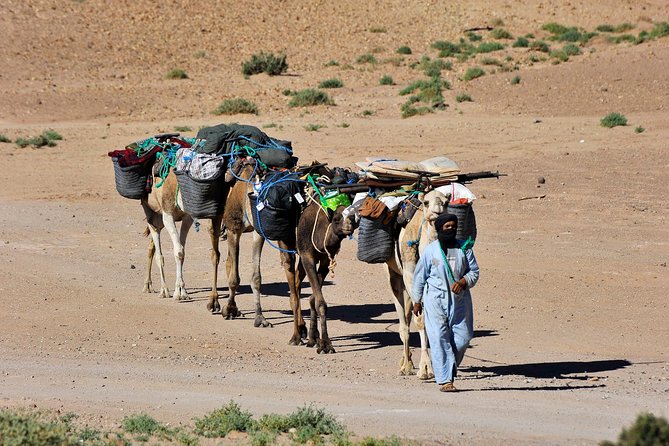
You’re also traveling with a professional nomadic guide and camel drivers, and the luggage is carried by camel caravan. That’s what keeps the walking manageable for most people with “moderate physical fitness.” You’re walking, but you’re not hauling everything on your back.
What’s not included is listed as food and drinks generally, which can feel confusing next to the meal counts. The clean way to think of it: the plan includes the meals and drinks specified above, and anything extra beyond that is not part of the package.
How much walking are you really signing up for?
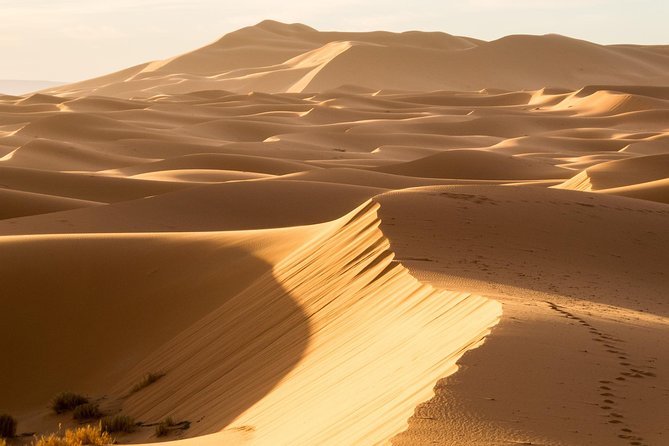
The itinerary describes walking time in a way that’s easier than it sounds on paper:
- Day 2 includes a desert walk from M’Hamid to the palm grove and onward to Sidi Naji
- Day 3 is the clearest: about 4 hours total, split morning/evening
- Day 5 is about 3 hours returning to M’Hamid
- Day 1 and Day 6 are mostly travel time rather than hiking time
So the walking rhythm is more “short-to-mid length days” than brutal all-day trekking. Still, it’s desert walking, meaning sand effort and dust fatigue. The tour explicitly calls for moderate physical fitness, so if you can handle a few hours of walking on mixed ground, you’re likely a fit.
Price and value: what $999.74 buys in the real world
At $999.74 per person, this trek costs a chunk of money. The question is: what are you paying for?
You’re paying for the full operating machine that makes a desert trek work:
- transport between Marrakech and the desert gate areas
- a desert guide plus camel drivers
- camel support for luggage (so you walk without heavy hauling)
- 5 nights of accommodation in camp/bivouac style settings
- a planned meal schedule (breakfasts/lunches/dinners)
- bottled water and coffee/tea
- local taxes
When you price those components separately—especially the guide time and the logistics of sleeping in remote areas—the package math starts to make sense. And because the trek is private (“only your group will participate”), you’re paying for a more controlled experience than standard large-group departures.
The best value comes if you want a full, structured desert experience without spending your trip time solving logistics.
Who should book this trek (and who should think twice)
This is a great fit if you want:
- desert quiet with sunrise and unforgettable sunsets as part of the schedule
- a guided experience that includes cultural stops like Sidi Naji
- hands-on camp moments like sandbread and tajin
- a trek that’s demanding enough to feel real, but not a multi-day death-march
It’s a tougher fit if:
- you dislike long road days (Day 1 and the 15-hour return Day 6)
- you expect zero walking or minimal sand time
- you’re not comfortable with moderate physical effort on mixed terrain
Should you book Desertbrise Travel’s 6-day heart-of-the-desert trek?
I’d recommend booking if you’re craving a Morocco trip that feels like it slows down your thinking. The itinerary is designed around shade breaks, short-to-mid walking blocks, and camp nights where the day’s effort turns into sky-watching and desert food.
I’d hesitate if you’re mainly chasing a quick highlight photo. This trek works best when you show up ready to walk, rest, eat well, and accept that the desert pace is the point.
If you book, do it with the right expectations: you’re buying time in the Sahara, not just a drive-through tour. And if you’re prepared for sun, sand, and long rides, this one can stick in your memory for a long time.
FAQ
FAQ
What time does the tour start in Marrakech?
The meeting point is at Hôtel Restaurant Café de France near Jamaa el-fna, and the tour start time is 8:00am.
How long is the trek and how many nights will I sleep in the desert?
The experience is 6 days (approx.) and includes 5 nights of accommodation.
Where does the tour start and where does it end?
It starts at Hôtel Restaurant Café de France in Marrakech and ends back at the same meeting point area.
Do I walk every day?
You’ll walk on the desert days, including Day 2, Day 3 (about 4 hours total), and Day 5 (about 3 hours). Day 1 and Day 6 include long travel by road.
Is there camel support for luggage?
Yes. A camel caravan carries the luggage, and there are camel drivers as part of the team.
What kind of shoes should I bring?
You should bring good shoes for walking on mixed plateau and sand sections.
What meals are included?
The package includes breakfast (6), lunch (5), dinner (6), plus bottled water and coffee and/or tea.
What kind of accommodation should I expect?
You’ll have 5 nights of accommodation as per the itinerary, including nomadic standard camp and a bivouac set at the foot of sand dunes.
Is this a private tour?
Yes. It’s listed as private, so only your group participates.
Can I cancel for free?
Free cancellation is offered up to 24 hours in advance of the experience start time for a full refund.