REVIEW · AREQUIPA
From Arequipa: 2-Day Colca Canyon Trekking Tour
Book on GetYourGuide →Operated by Best Trips Peru · Bookable on GetYourGuide
That early pickup is no joke. The reward is Colca Canyon from the bottom up.
I like how this trek mixes big-time scenery with practical guide time—you learn local plants and animals while you’re actually walking, not just stopping for photos. I also like the feel of small-group hiking (up to 11 people), with guides who keep the pace moving and help when feet or shoes act up. The main drawback is the physical side: it’s a serious descent and then a tough climb back out, so you’ll want a solid fitness base before you say yes.
You’ll start in the dark from Arequipa, chase Andean condors at Cruz del Cóndor, hike down toward the San Juan area, and spend the night at Sangalle oasis. Day two is the grind: a very early ascent to Cabanaconde, then a bus day with viewpoints, Chacapi hot springs, and stops where you might spot llamas, alpacas, and vicuñas.
In This Review
- Key points before you commit
- Why Colca Canyon Condor Viewing Starts So Early
- The 3 a.m. hotel pickup, bus ride, and Cruz del Cóndor stops
- Day one: descending toward the San Juan area and reaching Sangalle oasis
- Sangalle oasis: where the canyon turns from hard to human
- Day two: the 3-hour ascent to Cabanaconde and the return viewpoints
- The guides: friendly, funny, and practical on the trail
- Price and value: what the $30 booking doesn’t cover
- Difficulty level: 24 km of walking and an uphill day two
- What to pack (so you don’t suffer for stupid reasons)
- Who this Colca Canyon trek is best for
- Should you book the 2-Day Colca Canyon Trek from Arequipa?
- FAQ
- What time do you get picked up in Arequipa?
- How long is the Colca Canyon 2-day trekking tour?
- What’s the group size?
- What language is the guide?
- Is transportation included?
- What extra costs should I expect besides the $30 booking?
- Where do you see the Andean condors?
- Do you stay overnight during the trek?
- Is hot springs included?
- Is this trek suitable for everyone?
Key points before you commit
- 3:00–3:30 a.m. pickup from your Arequipa hotel and a long scenic bus ride to start
- Andean condor viewing at Cruz del Cóndor (best with clear timing and patience)
- Overnight at Sangalle oasis with pool time and a real chance to slow down at day’s end
- Day two climbs hard (around 3 hours uphill) before breakfast and the return drive
- Hot springs reset at Chacapi so your legs don’t feel destroyed forever
- Bring cash / plan for extra fees for meals and entrance costs on top of the booking price
Why Colca Canyon Condor Viewing Starts So Early
Colca Canyon is famous for the Andean condor, and this tour is built around getting to Cruz del Cóndor at the right time. You’re leaving Arequipa between 3:00 and 3:30 a.m., which means the canyon isn’t just something you glance at. You’re there early enough that you have a real shot at seeing condors ride the updrafts.
The best part for me is the way the morning fits the goal. Breakfast happens on the way, then you’re rolling straight toward Cruz del Cóndor without wasting daylight. If you’re the type who hates rushing, you’ll still have to handle the early start—but once you’re at the viewpoint, the wait for birds feels more civilized because you’re already set up for it.
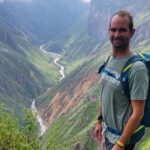
One more thing: Cruz del Cóndor is also a great orientation stop. You can look down the canyon and get a sense of how far you’re going to walk later.
You can also read our reviews of more tours and experiences in Arequipa.
The 3 a.m. hotel pickup, bus ride, and Cruz del Cóndor stops
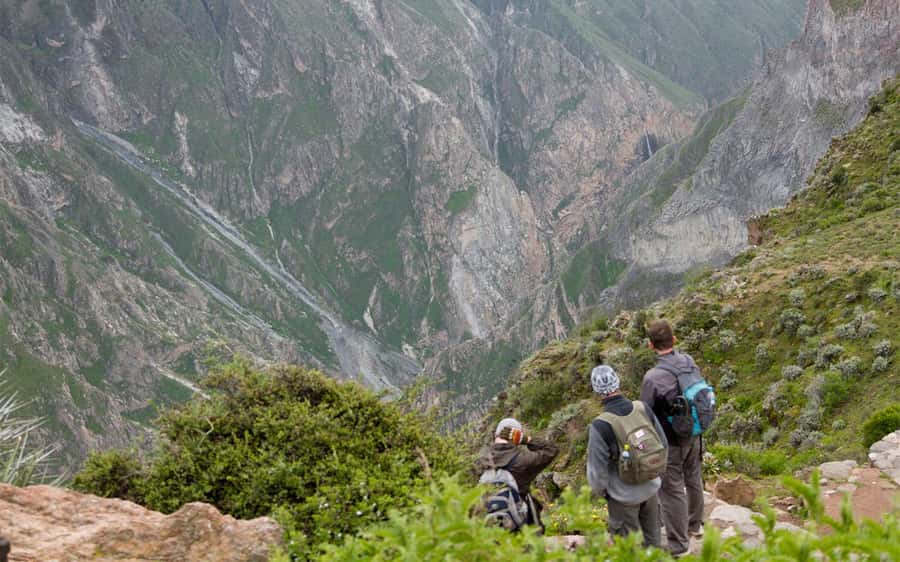
This is a bus-and-then-a-hike kind of day. You meet your guide at your hotel lobby in Arequipa, then get onto a tourist bus for roughly 3.5 hours. There’s a breakfast stop en route, so you’re not staring at a sunrise with only nerves.
Cruz del Cóndor is your first big viewpoint moment. You’re stopping for a guided visit and time to look around, take photos, and watch for condors. People have been lucky enough to see several condors there, which makes sense: birds and updrafts are a timing game. Even if you don’t get a sky full of them, the canyon view alone is worth the effort.
After that, you keep moving by bus until you reach the start of the walk. This matters because the tour isn’t pretending you can “arrive and start hiking” like a local. They transport you to the correct trail area so day one actually feels like a hike, not a long travel scramble.
Day one: descending toward the San Juan area and reaching Sangalle oasis
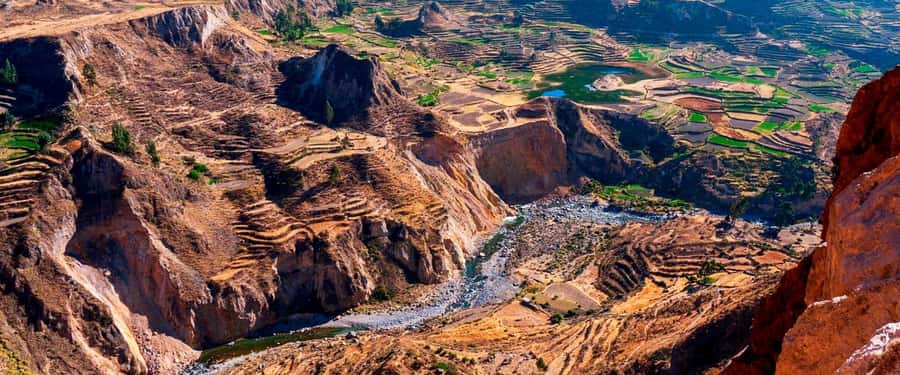
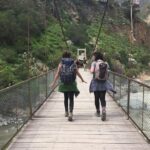
Day one is the long descent into the Colca story. You start walking around late morning, after a bus transfer to the trailhead. The timing given is specific: the descent begins at 9:39 a.m., and then you gradually work your way toward the San Juan area along the banks of the Colca River.
The first major chunk is downhill, which is great for legs that can handle steady effort. You’ll walk for about 3 hours before reaching the San Juan valley area. This is where the tour slows down for a lunch break and scenery time. It’s also a moment to catch your breath before the next push.
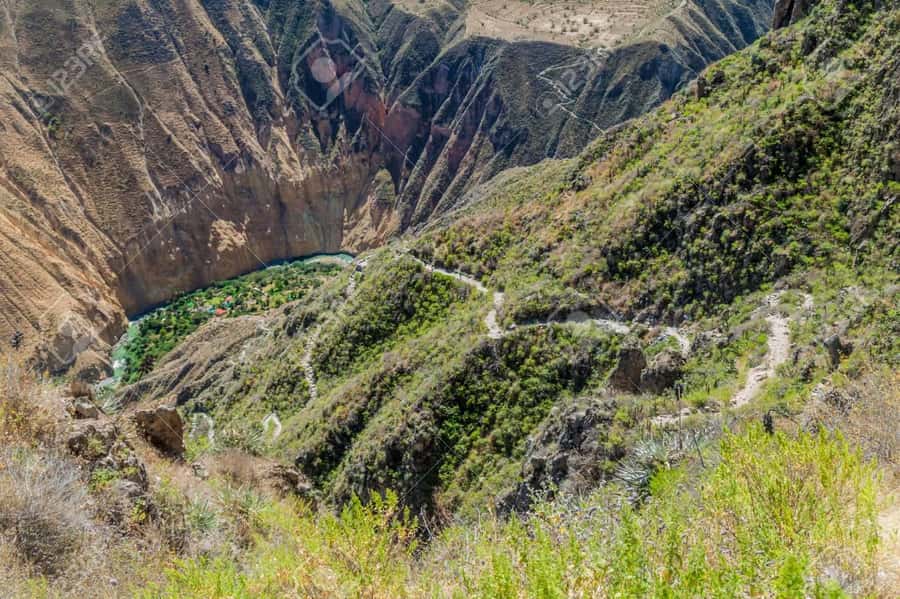
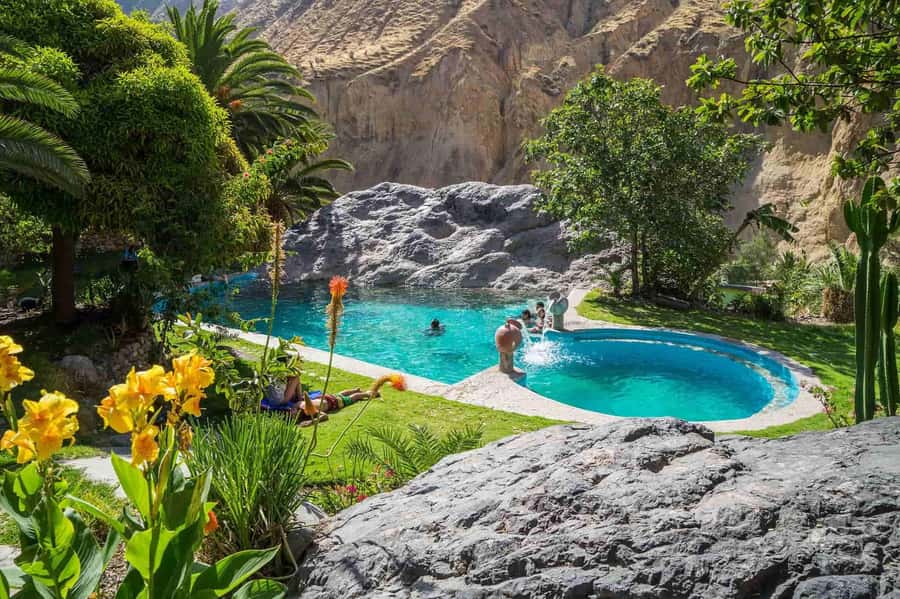
Then you continue deeper into the canyon for about 3 more hours until you reach Sangalle oasis. The best use of this day isn’t just “get to the bottom.” It’s what happens when you finally do: you stop fighting altitude and start enjoying the place.
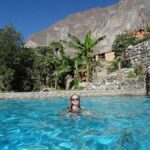
At Sangalle oasis, you get the kind of end-of-day reset that’s hard to find on day trips. The tour includes accommodation, dinner, and time around the oasis itself. Some groups also get access to a pool and a bar vibe to unwind. Reviews vary on shower comfort and water temperature, so plan for simple facilities and bring a towel.
One practical tip that comes up a lot: you’re tired by the time you arrive, so you’ll appreciate anything that helps you feel clean and comfortable—extra layers for evening, and a towel if you want a real shower experience rather than a quick rinse.
Sangalle oasis: where the canyon turns from hard to human
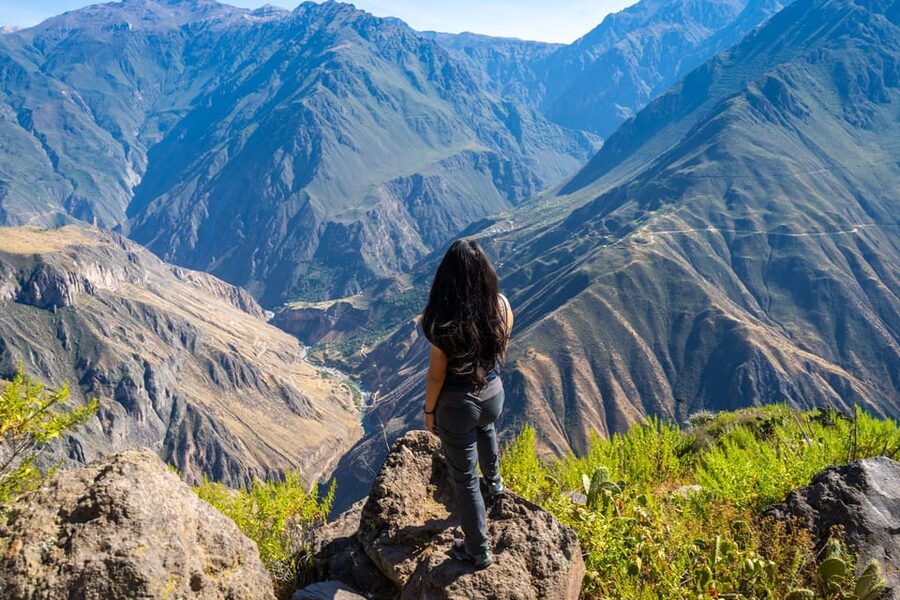
Sangalle oasis is the “why” of this being a two-day trek. One-day versions can give you views. Two days gives you the bottom-of-the-canyon rhythm: arrive, eat, and then actually have time for the place to sink in.
The setting is often described like a mini paradise compared to the canyon’s stark edges, and that’s believable. When you’re tired, “beautiful” becomes more than a camera word. It becomes a feeling: shade, open air, a place to sit, and a meal that tastes better because you earned it.
You’ll also have downtime that feels rare in Peru trekking. Dinner is part of the plan, and the tour includes guided time on arrival plus free time. Some people note Wi-Fi and a bar, which can be handy if you want to let the day drain out of your body before you try to sleep.
Accommodation style seems to fall into two realities: some rooms have private bathroom setups and even hot water, while other experiences note basics missing or rooms needing more care. So I’d pack like this is a place where comfort is “good enough,” not “hotel perfect.” Bring toilet paper if you’re picky, and don’t assume towels are waiting for you.
And yes—after that second-day climb, people really value having this oasis night as a buffer. It’s one of the biggest reasons this trek feels like a journey rather than punishment.
Day two: the 3-hour ascent to Cabanaconde and the return viewpoints
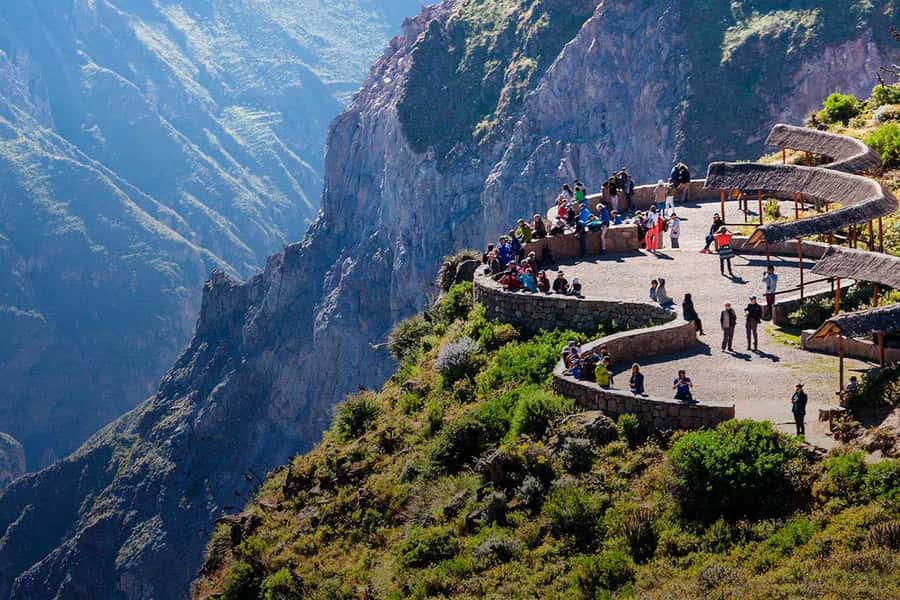
Day two starts very early, while it’s still dark for a lot of hikers. The tour notes an early start from Sangalle to Cabanaconde, and the hike portion is around 3 hours uphill. People often describe it as challenging because you’re not just “walking up.” You’re climbing.
One useful detail from past experiences: a flashlight helps a lot. If you don’t have one, you can use your phone light, but it’s a hassle and not ideal in the dark. If you want your brain to work faster and your footing to feel safer, pack a small headlamp.
The climb gets you back to Cabanaconde for breakfast. From there, the tour switches into bus mode for the rest of the day. The return route isn’t just driving; it’s broken up with stops that make the journey more interesting than a straight shot back to Arequipa.
Here’s what you’ll do on the return:
- Antahuilque viewpoint: a look at pre-Inca terrace patterns in the Colca Valley. This is where you can see how people shaped agriculture on steep ground.
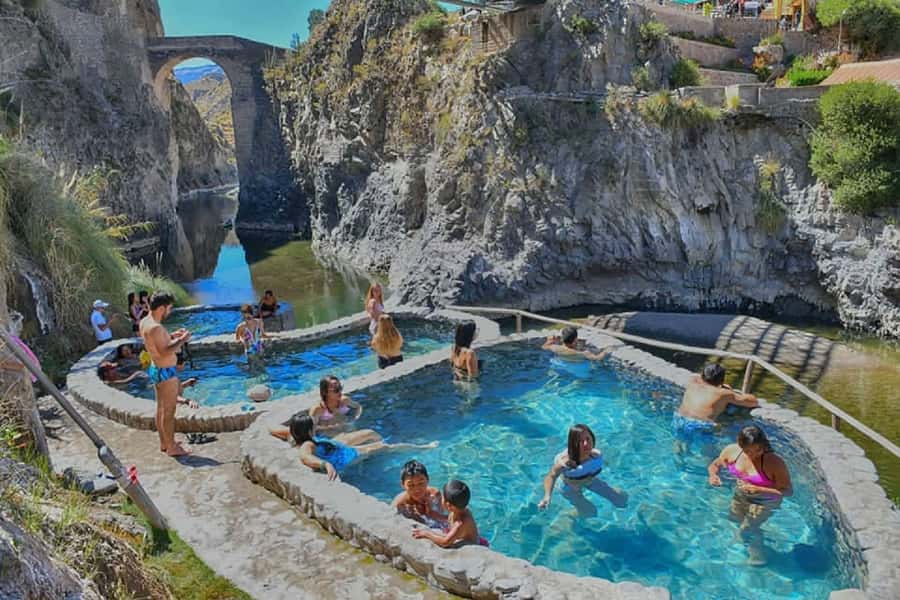
- Chacapi hot springs: this is your leg reset. If day two wrecked you, this stop is the part that makes you believe hiking can be fair.
- Chivay lunch stop: food and regroup time.
- Volcano viewpoint and more high points: quick photo stops that give you a sense of the volcanic region around Arequipa.
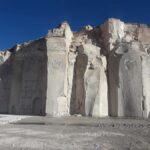
- Salt flats and Aguada Blanca reserve: this is where you might spot South American camelids like llamas, alpacas, and vicuñas.
You finish back in Arequipa around 5:30 p.m., ending close to the Plaza de Arequipa area.
The guides: friendly, funny, and practical on the trail
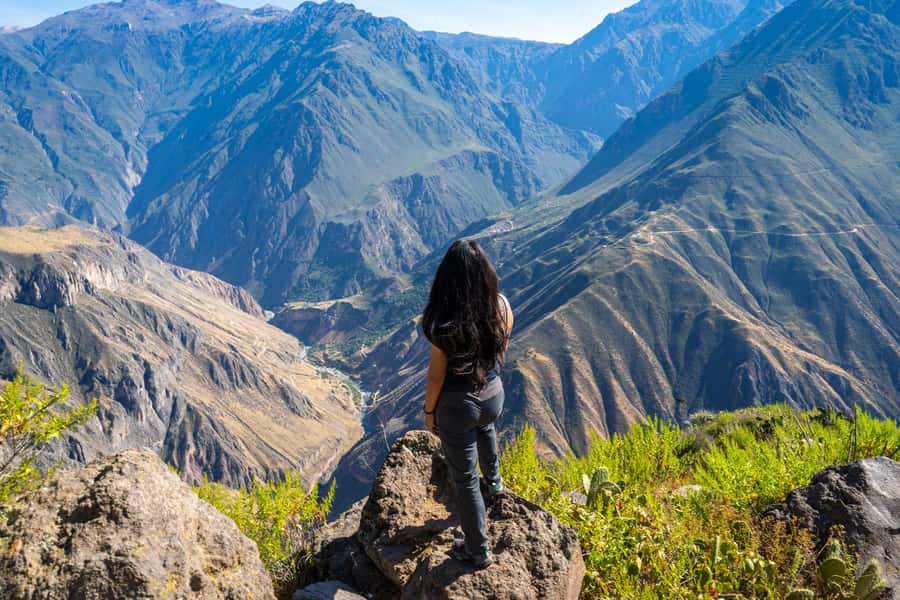
The guide experience can make or break a hike like this. What I love here is that the job isn’t only “lead group.” Your guide is also teaching the canyon in a way that helps you notice things while you walk.
Several guides have led this route—people mention names like Tonny, Franco, Fernando, Luigi Ormachea, Rafael, Alex, Carlos, Jorge, and Willy—and what they have in common is engagement. They share local facts about plants and animals, and they keep morale up when the climb hurts.
You’ll also get hands-on help when needed. People have been assisted with shoe issues, and in tough stretches one guide even lent his trekking poles to someone struggling. That’s not a small detail. When the ground is uneven and the slope is steep, the difference between “I manage” and “I suffer” can be a pole in the right hand.
One more value point: many guides do a lot of encouragement without turning the trek into a pep rally. It feels like friendly work—humor, pacing, and real care for safety.
Price and value: what the $30 booking doesn’t cover
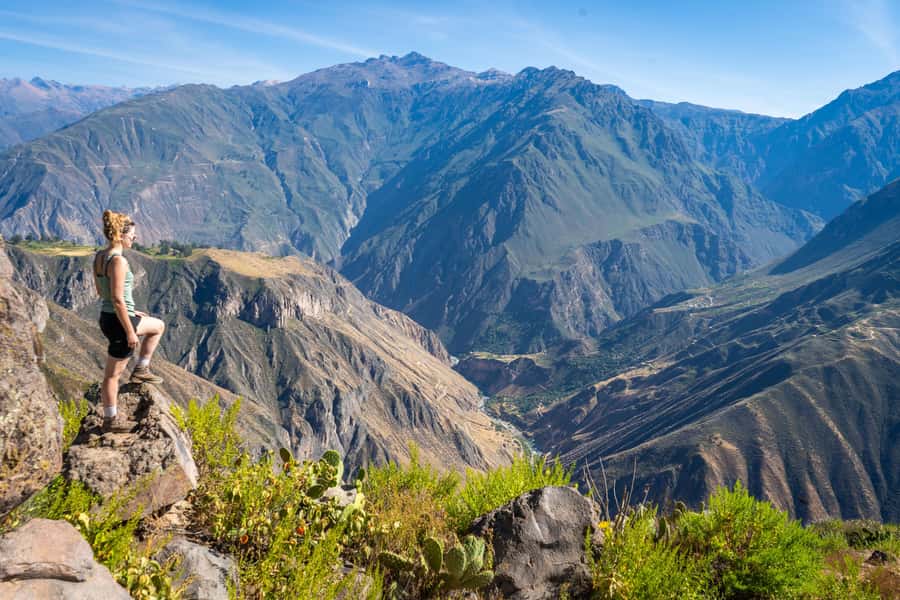
The listing price shows $30 per person, but the tour information also states that you pay an additional amount to the guide on the spot to cover key items like meals, Colca Canyon entrance, and hot springs. The exact figure described is around $95–$100 (350 soles), and it needs to be paid in cash (soles or dollars).
Some people report being told a different amount (for example 195 soles) ahead of time through messages. So here’s the practical move: don’t assume the online price is the full amount. Confirm the expected cash payment amount directly with the operator before you go.
Why this matters for value: trekking tours can look cheap until you add food and entrance fees. Here, once the full payments are handled, the experience becomes a true two-day program: transportation, guide time, overnight at Sangalle oasis, and the canyon/hot springs costs. If you budget properly and bring cash, this feels like a fair way to do one of Peru’s signature canyon treks without DIY headaches.
Still, if you want a smooth, predictable budget, you’ll feel better when you know the exact amount before pickup.
Difficulty level: 24 km of walking and an uphill day two
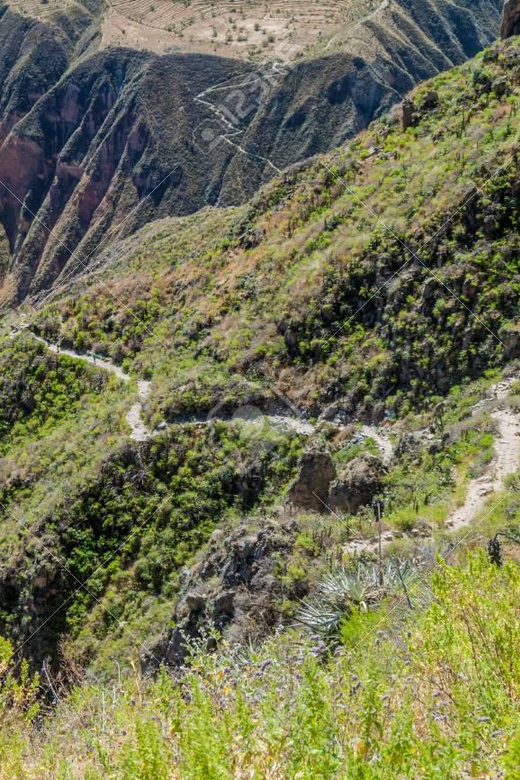
This is not a casual hike. The tour says you’ll walk about 24 kilometers up and downhill and that you need good physical condition.
The split matters. Day one is mostly downhill (easier on knees in some ways, tough in different ways if your calves get overworked). Day two is the opposite: a hard climb that can be close to “straight uphill” for long stretches.
Elevation and exertion are the reasons this trek has a strict health filter. It’s not suitable for people with heart problems, high blood pressure, vertigo, wheelchair users, or anyone who is prone to altitude sickness. Age and fitness also matter: it lists people over 55, and those with low fitness, as not suitable.
So be honest with yourself. If you’re regularly active, can handle long walking days, and you’re ready for an early start and steep climb, you’ll likely find it doable. If stairs and hills wipe you out in daily life, this will feel like a mismatch.
A good gear strategy can help a lot. People suggest bringing or renting bamboo sticks/trekking poles, and one tip shared is that you can rent them early (some mention 5 soles per stick). If you don’t have poles, you can sometimes buy or improvise with local options, but poles are an easy upgrade for safety and comfort.
What to pack (so you don’t suffer for stupid reasons)
This hike is short in days but heavy in effort. Pack for function, not just photos.
What I’d bring based on what people run into:
- A headlamp or small flashlight for the early start on day two
- Trekking poles if you have them (or rent poles in the area if available)
- A towel (some accommodation setups don’t provide one)
- Toilet paper (someone specifically called out needing it)
- Cash for the on-the-spot payment for meals/entrances
- A plan for layers: it’s cool early morning and warm during the day
Also, don’t wait until you reach the canyon to figure out your shoes. This trek punishes poor footwear. If you’re on the fence, err on the side of already-broken-in hiking shoes.
Who this Colca Canyon trek is best for
This tour shines for hikers who want more than a single photo stop at Colca. You’re getting a guided experience focused on nature—flora and fauna—plus multiple viewpoint moments and a real overnight at Sangalle oasis.
It’s especially a good match if you:
- like structured hikes with a guide who shares local context
- want condor viewing at Cruz del Cóndor as part of your plan
- can handle early mornings and a steep day two climb
- prefer a small group rather than a huge crowd operation
It’s not a good match if you’re sensitive to altitude, have mobility or health limitations listed by the tour, or you need a low-effort day.
Should you book the 2-Day Colca Canyon Trek from Arequipa?
If you’re fit enough for steep hiking and you want an experience that goes beyond quick canyon overlooks, I’d book it. The combination of condor viewing, a guided nature-focused walk, and the overnight at Sangalle oasis makes this feel like the real Colca Canyon—walk to the bottom, then climb back with hot springs waiting for your legs.
But if your fitness is shaky or you dread early starts, be cautious. Day two is the make-or-break moment, and the tour isn’t shy about that. Confirm the extra cash payment amount up front, bring a flashlight for day two, and consider poles. Do that, and you’ll turn a hard trek into a memorable two-day Peru highlight rather than a long struggle.
FAQ
What time do you get picked up in Arequipa?
Pickup is from your hotel between 3:00 and 3:30 in the morning.
How long is the Colca Canyon 2-day trekking tour?
It runs for 2 days.
What’s the group size?
It’s a small group limited to 11 participants.
What language is the guide?
The guide is listed as English and Spanish.
Is transportation included?
Pickup from your hotel is included. The rest of the transportation is described as booked, but entrance tickets and round-trip transportation are also listed as not included, so you should confirm what’s covered by your payment.
What extra costs should I expect besides the $30 booking?
The information states the guide will collect an additional cash payment (around $95–$100 or 350 soles) to cover meals and entrance tickets for the Colca Canyon and hot springs.
Where do you see the Andean condors?
You visit Mirador Cruz del Cóndor for a guided stop and photo time.
Do you stay overnight during the trek?
Yes. You spend the night at Sangalle oasis.
Is hot springs included?
You stop at Chacapi hot springs on the return route, and entrance is described as covered by the extra cash payment.
Is this trek suitable for everyone?
No. It’s not suitable for children under 15, people with heart problems, wheelchair users, people with vertigo, visually impaired people, people with altitude sickness, people with high blood pressure, or people with low fitness (and it lists people over 55 as not suitable).