REVIEW · SRINAGAR
Kolahoi Glacier Trek
Book on Viator →Operated by Kashmir Treks · Bookable on Viator
A trek like this lives for the passes. Kolahoi Glacier Trek links Sind Valley to Lidder Valley via Basmai Pass (4300m) and high alpine lakes near Mount Kolahoi (5425m), with day-by-day camping that feels classic Kashmir. You’ll also get real contrast: pine and meadow walking early, then steep altitude climbing, then glacier country.
What I like most is the mix of goals and scenery: crossing meadows, lakes, and forest stretches while working toward the glacier and the big mountain views. Second, the setup looks practical for a paid trek—camping gear, meals, private transport, and horses for offloading are included, so you’re not spending half the trip hunting for logistics.
One thing to consider: this is altitude trekking with a steep Basmai Pass day, and weather can change fast. If conditions turn rough, your pace and comfort can take a hit.
In This Review
- Kolahoi Glacier Trek: quick hits before you pack
- From Srinagar to Sonamarg: the trek’s easy start
- Day 2-3: pine, meadows, and the Basmai Pass reality check
- Kolahoi Glacier country: meadows to glacier exploration
- Under Kolahoi Peak: the Lidderwat night
- Day 6 return: Aru Valley calm along the Lidder River
- The camping setup: what you’re paying for (and why it’s worth it)
- Guide, group, and timing: how the trek actually runs
- Price and logistics: $349 per person, but what does it cover
- What to bring (based on what the trek depends on)
- Who this trek fits best
- Should you book Kolahoi Glacier Trek?
- FAQ
- How long is the Kolahoi Glacier Trek?
- What are the key high-altitude points on the trek?
- Where do you stay in Srinagar?
- What’s included in the price?
- Do I need travel insurance?
- Is the trek for beginners?
Kolahoi Glacier Trek: quick hits before you pack
- Basmai Pass at 4300m makes the trek feel like it has a real goal, not just walking for walking’s sake
- Kolahoi Glacier exploration and alpine lakes near Mount Kolahoi (5425m) are the main payoff days
- Private, group-only trek means the schedule stays tailored to your group rather than a long cattle-train pace
- Horses offload your load starting from the trek entry keeps you from hauling everything on steep bits
- Camping with included gear and meals gives you less to manage and more time to focus on the trail
- Return through Aru Valley and Lidder River adds a calmer finish after the high point effort
From Srinagar to Sonamarg: the trek’s easy start
Most trekking programs in the Kashmir region begin with a scramble. This one starts with a plan. On arrival at Srinagar airport or bus station, you meet a representative and get transferred to a houseboat on Dal Lake or a hotel for an overnight stay. It’s a nice soft landing after travel, and it helps you feel rested before the first day of hiking.
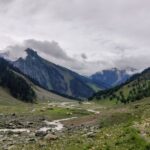
Then day two kicks in with a drive from Srinagar to Gagangir, Sonamarg. You pack your load and backpack for the trail and start moving through pine forest and meadows. One practical detail that matters: your camp kit is handled by horses for offloading, so you carry what you need for the day instead of wrestling a full load on mountain switchbacks.
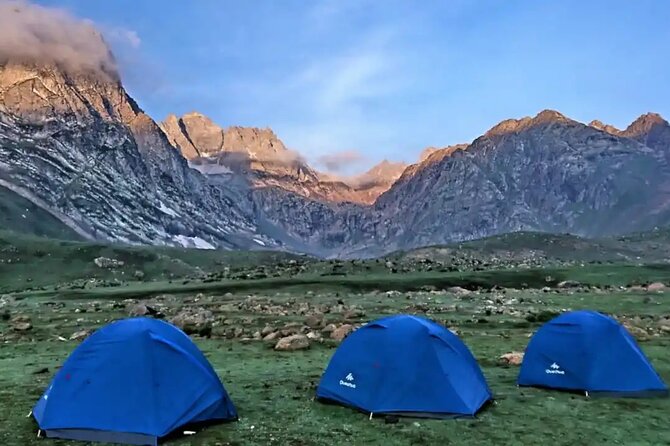
You finish day two camping at Basmai Meadow. This is a good first-night camp because the walking is still about rhythm—forest to open areas, gentle transitions, and getting your legs used to the altitude before the real work begins. If you’re the type who likes to mentally preview the next day’s climb, you’ll appreciate how day two sets you up for it.
You can also read our reviews of more tours and experiences in Srinagar.
Day 2-3: pine, meadows, and the Basmai Pass reality check
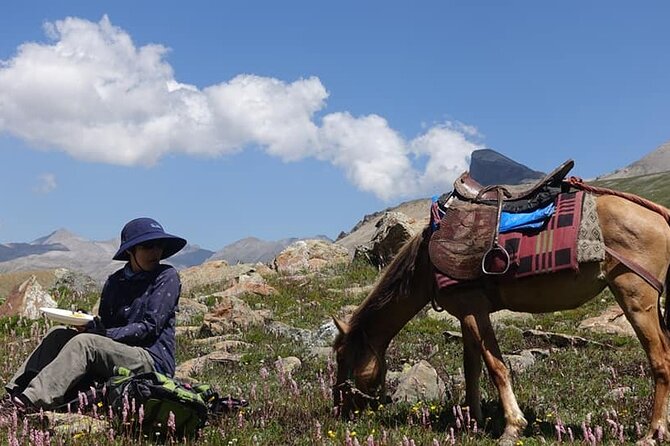
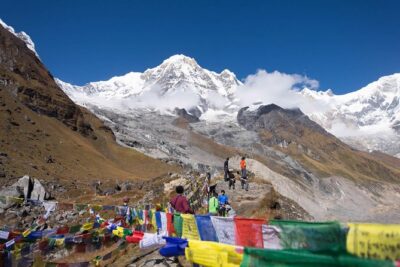
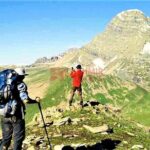
Basmai Pass is the highest point of the route at 4300m, and day three is where the trek stops being casual. You start ascending and then descend toward the Basmai Lake, where you camp overnight.
If you’re planning this trek and wondering whether you need to train, this is the day that answers it. It’s not just altitude in numbers; it’s the kind of climb where your breathing changes and your pace gets slower no matter how confident you feel at ground level. The route profile you’ve been given is short on details like step count, but it’s very clear on intent: you’re going up to the top and then coming down to a lake camp.
In a year where weather cooperates, this part can be dramatic in a good way. In rough weather, it can become the day you feel it the most. One of the most important practical lessons from experience on this kind of trek: bring a flexible mindset. Your goal is the safe, steady climb—not beating an imaginary clock.
That said, camping at Basmai Lake after the pass is exactly what makes the effort feel worth it. High altitude lakes give you that “we’re really in the mountains now” feeling fast.
Kolahoi Glacier country: meadows to glacier exploration
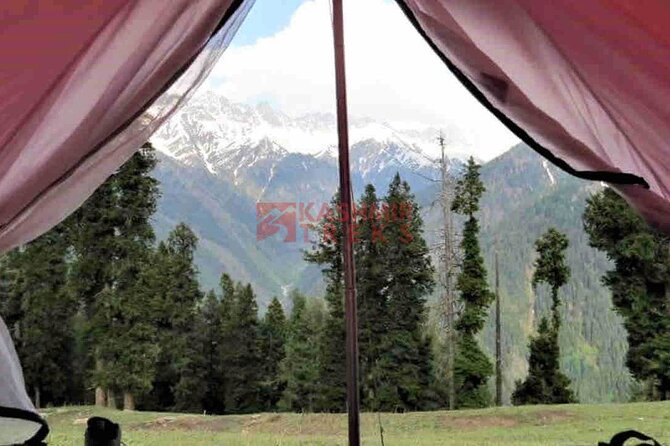
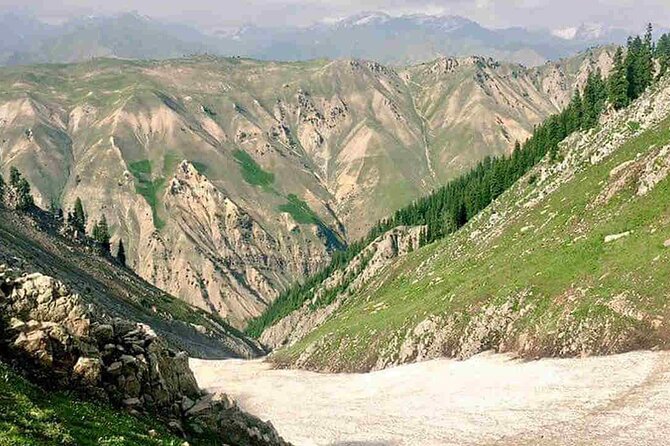
Day four shifts into a different gear. You trek through meadows, then get to explore the Kolahoi Glacier, and finally head down to camp at Satlanjan Meadow.
This is the day most people are picturing when they hear Kolahoi Glacier Trek. A glacier isn’t just a view—it changes the way the whole valley looks and feels. You’ll likely notice the cooler air, the way water gathers and moves, and the overall shift in terrain once glacier country becomes part of your trail picture.
The route also keeps moving through colorful, open areas. That matters because long treks can become one-note if every day is only rocky hiking. Here, your day blends openness with a specific glacier target, then finishes with a meadow camp that gives you space to breathe and recover.
One caution: glacier days can be sensitive to weather and ground conditions. Even when the trek is planned, the exact comfort and pace depend on what the mountains are doing that morning. If you’re going for the glacier experience, treat the day as your priority and plan your energy accordingly.
Under Kolahoi Peak: the Lidderwat night
Day five climbs into the “big mountain wall” feeling. You trek toward Lidderwat, under the towering heights associated with Kolahoi Peak (5425m), passing through meadows on the way, then camp at Lidderwat for the night.
This portion of the route is the kind of day that makes you look up more than you’d expect. You’re not only chasing a destination; you’re walking with the sense that the mountain is close and dominant. When you combine that with meadow walking, it becomes less about exhaustion and more about presence.
Camping at Lidderwat overnight is part of the value here. You’re not just passing through and leaving; you’re giving the mountain time to sink in. When the light changes in high regions, the scenery can shift in ways that feel different from what you see at home—bright, sharp, and sometimes surprisingly dramatic.
Day 6 return: Aru Valley calm along the Lidder River
Day six is the reward day after altitude effort. You trek down to Aru Valley following the Lidder River, moving through pine and birch forests, then you take a car drive back to Srinagar via Pahalgam, finishing with another overnight stay at a houseboat or hotel.
This is a smart sequence. After a pass and glacier-focused days, you need an easier mental rhythm. River walks and forest descents tend to feel more continuous and less steeply demanding, which can make your legs feel human again.
The Aru Valley part also gives you a different kind of Kashmir scenery—still mountainous, still scenic, but with more tree cover and movement tied to the river. It’s a good way to end a trek that starts in pine meadows, hits altitude peaks, and then returns through a gentler natural system.
The camping setup: what you’re paying for (and why it’s worth it)
For a $349 per person price, the value case here is mainly the package approach. Your included items cover the heavy trip basics:
- All camping gear
- Breakfast, lunch, and dinner (breakfast 6, lunch 5, dinner 6)
- Bottled water
- Coffee and/or tea
- First aid
- Private transportation
- Offloading by horses
- Pickup offered and a mobile ticket
If you’ve priced treks before, you know the “cheap” options often hide costs in gear rental, extra meals, local transport, or luggage handling. This setup pushes those basics into the price, which reduces surprises. You still need personal clothing and trekking equipment, but the core camp operation is taken care of.
Quality notes from real-world experience point to this being more than just survival camping. People mention spacious, clean tents, good food, and overall comfort in the camp routine. That matters because in a multi-day trek, camp quality affects your recovery, not just your comfort.
Guide quality also seems to be a big deal. Feedback names guides such as Habib and Mustafa, and the common thread is planning that makes you feel safe and supported on the trail. On a trek with altitude and changing conditions, that human factor is not fluff.
Guide, group, and timing: how the trek actually runs
This is a private tour/activity, meaning only your group participates. For some people, that’s a major comfort upgrade. Your pace can match your group’s needs more closely, and you’re less likely to get stuck behind a mismatch of walking speeds.
The trek may be operated by a multi-lingual guide, and that matters in Kashmir treks because you want to understand safety guidance, weather notes, and pacing recommendations clearly.
Timing-wise, this experience is listed to run within a seasonal window: 06/21/2025 to 09/30/2025, with the meeting hours shown as 8:00 AM to 2:00 PM (Monday through Sunday). You’ll want to plan your travel to Srinagar so you arrive in that time band, or at least close enough that your start day still feels smooth.
Price and logistics: $349 per person, but what does it cover
At $349 per person, the headline number is only part of the story. The real value comes from what’s bundled. You’re paying for:
- private transport around the trek region,
- camp gear and cooking setup,
- meals for most of the days,
- bottled water,
- and horse offloading (a big deal when you want to keep your backpack manageable).
If you’re the kind of traveler who wants to show up with a prepared body and a small personal kit, this kind of package often saves you both money and mental load. If you prefer to manage everything yourself—your own camp kit, your own guides, your own meal planning—you may find less value here because a package like this is designed to remove decision fatigue.
Either way, read the inclusions carefully. Travel insurance is not included, and personal clothing and equipment are not included. Those two items are worth planning early so you’re not rushed into buying gear at the last moment.
What to bring (based on what the trek depends on)
You’ll be provided camping gear, meals, water, and first aid coverage. That means you’re not responsible for the big camp logistics, but you are still responsible for being comfortable and safe on your feet.
Plan for the realities of 4300m pass trekking and high altitude camps near mountain terrain. You should bring your own personal gear and clothing for cold nights and active hiking days, plus whatever footwear and daypack system works for you.
Dietary needs: you’re asked to advise specific dietary requirements at booking. If you have allergies or strict preferences, don’t wait. This is the kind of trek where meal planning is a core part of the schedule.
And one last practical note: weather can spoil a trail. That doesn’t mean the trip is a gamble, but it does mean packing for changing conditions and keeping expectations flexible is the smart play.
Who this trek fits best
This is best for you if:
- you have moderate physical fitness and can handle a steep climb day,
- you like off-the-beaten-path hiking in Kashmir with real mountain objectives,
- you want a glacier-adjacent experience rather than only scenic valley walks,
- and you appreciate organized camp logistics so you can focus on the trail.
It may not be the best fit if you expect an easy stroll, because the route includes serious altitude effort, a high pass day, and glacier-area terrain.
Should you book Kolahoi Glacier Trek?
Yes, if you want a properly structured Kashmir trek that focuses on the real points of the route: Basmai Pass, alpine lakes, meadows, and the Kolahoi Glacier. The package value is strong because camping gear, meals, and camp operations are covered, and the route design gives you variety instead of repeating the same type of trail all week.
I’d think twice if you’re very sensitive to altitude or you’re not comfortable with steep days and weather-dependent conditions. In those cases, you might still be able to go, but you’ll want to confirm your fit carefully and be honest about your limits.
FAQ
How long is the Kolahoi Glacier Trek?
The trek runs for about 7 days.
What are the key high-altitude points on the trek?
The route includes Basmai Pass (4300m) and trekking near Mount Kolahoi (5425m), with high altitude alpine lakes along the way.
Where do you stay in Srinagar?
You stay at a houseboat on Dal Lake or a hotel for an overnight stay after arrival, and again after the return trip on day six.
What’s included in the price?
Included items are private transportation, pickup offered, all camping gear, offloading by horses, first aid, bottled water, coffee and/or tea, and meals (breakfast 6, lunch 5, dinner 6).
Do I need travel insurance?
Travel insurance is not included, so you’ll need to arrange it separately.
Is the trek for beginners?
The trek is listed as requiring moderate physical fitness, and there’s a minimum age of 18. If you’re unsure, consider whether you can handle a steep ascent to a high pass.
If you tell me your fitness level and travel month, I can suggest what to prioritize for your specific comfort and packing plan.