REVIEW · SAPA
Muong Hoa Valley Trek & Homestay Experience – 4D3N
Book on Viator →Operated by Trekking Tour Sapa · Bookable on Viator
Five villages, one valley, and real village life. This 4D3N trek in Sapa takes you through Muong Hoa Valley with visits to Hmong, Giay, and Red Dao communities, plus a homestay night. You’ll walk between villages, look out over major rice-terrace scenes, and learn how daily work and traditions fit into the mountains.
I really like the way the day-to-day schedule mixes scenery with human details. In village time, your guide talks about customs and practical skills, from house building techniques to rice-field work and even Hmong marriage traditions. The possible drawback? It’s a trekking route with moderate physical fitness needed, and conditions can swing with weather and heat—especially in the valley.
In This Review
- Key highlights to know before you go
- Muong Hoa Valley: why this 4D3N trek feels different
- Price and value: what the $190 covers (and what it doesn’t)
- Day 1 from Y Linh Ho to Ta Van Village: terraces and first contact
- Day 2 uphill to Giang Ta Chai waterfalls and the Red Dao area
- Day 3 Ban Ho to Nam Toong: Red Dao life explained through everyday routines
- Day 4 along the Muong Hoa River: the scenic finish you’ll remember
- Homestay night in Sapa: how to make it meaningful
- Small-group trekking (max 15): why it matters in villages
- Weather and season tip: June heat in the valley
- What to expect on the cultural side (Hmong, Giay, and Red Dao)
- Who should book this trek (and who should skip it)
- Should you book the Muong Hoa Valley Trek & Homestay?
- FAQ
- Where does the trek start and what time?
- How long is the trek and how many nights are included?
- What villages are included?
- What’s included in the price?
- Is pickup available?
- What fitness level do I need?
- How does the tour handle weather issues?
Key highlights to know before you go
- Small-group feel (max 15 travelers) for easier questions and a less rushed vibe in villages
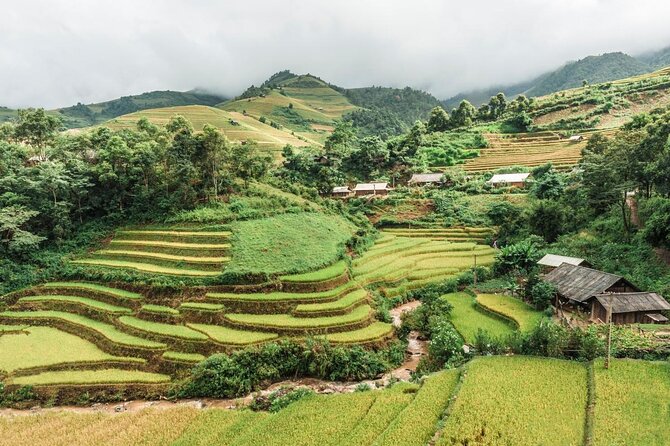
- Two big rice-terrace viewpoints: Y Linh Ho area and Ta Van Village set the tone fast
- Giang Ta Chai waterfalls + Red Dao area learning on Day 2 gives culture stops a clear place in the walk
- Red Dao focus from Ban Ho to Nam Toong makes the cultural education feel more than a quick photo stop
- Muong Hoa River walk on Day 4 helps you finish with a scenic wind-down rather than ending abruptly
Muong Hoa Valley: why this 4D3N trek feels different
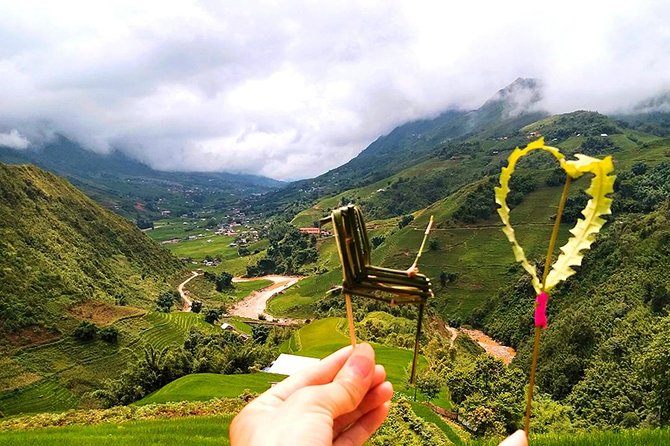
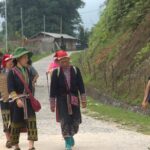
This trek is built around the idea that Sapa is more than postcard views. Yes, you get major rice terraces and big mountain looks, but the core of the experience is meeting three ethnic minority groups—Hmong, Giay, and Red Dao—and seeing how life works in these places. That means you’re not just looking at the countryside; you’re walking into communities.
The itinerary also keeps a good rhythm. Morning starts get you moving while the light is fresh, then you transition into village time where you’ll learn what people actually do—farming, building, and celebrating traditions. It’s a nice balance for anyone who worries trekking tours can turn into one long “walk, look, leave.”
You’ll also see Sapa’s biggest river and valley, which is a big deal because it frames the whole trek. The Muong Hoa area isn’t just pretty—it explains why people build, grow, and travel the way they do.
Price and value: what the $190 covers (and what it doesn’t)
At $190 per person, this trek isn’t a bargain price, but it also doesn’t feel overpriced once you count what’s included. You get village entry fees handled, a local guide, and meals across multiple days: 3 breakfasts, 4 lunches, and 3 dinners. On top of that, there’s one night in a homestay, plus transport back to Sapa after the trek ends in the villages.
That matters because village fees and guided routing can add up quickly if you plan it yourself. And the homestay is part of the value equation, since it changes the experience from “see villages briefly” into “spend the evening among families.”
What’s not included is also worth noting. You’ll want personal travel insurance, and you should budget for extra drinks at the homestay and tips. Since water is included as one big bottle per person, I’d still plan on bringing your own small bottle or using your water wisely—but don’t assume unlimited drinks are part of the package.
Day 1 from Y Linh Ho to Ta Van Village: terraces and first contact
Day 1 starts at 9:00 am in the Sapa area, with the meeting point at Sapa Church (P. Hàm Rồng, TT. Sa Pa, Lào Cai, Vietnam). Pickup is offered, so if your hotel is set up for it, you may not have to travel far before you meet the group. Either way, the start time is early enough that you’ll get into the walking mood without the day slipping away.
The trek begins with a short intro, then you’re guided down toward Y Linh Ho, starting roughly from the Cat Cat road direction. Y Linh Ho is a strong first stop because it gives you that immediate “this is Sapa” feeling—mountain air, village paths, and a sense of how the community connects to the valley.
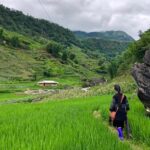
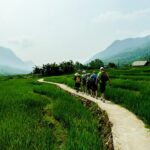
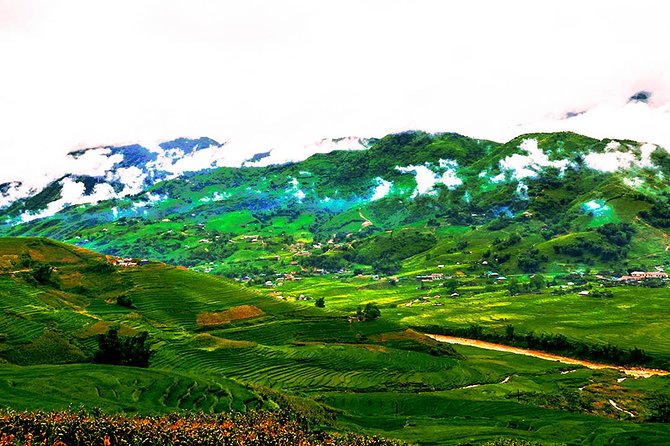
Then you shift toward Ta Van Village, and this is where you really start noticing the rice terraces. You get chances to admire some of the biggest and most beautiful terrace views, plus mountain sightlines toward Hoàng Liên mountain. Ta Van also helps with orientation: you’ll see how people live with the terrain rather than fighting it.
The main trade-off on Day 1 is pacing. You’re starting with movement and switching into village time, so if you’re prone to overheating early, bring light sun protection and drink water even if you don’t feel thirsty yet.
Day 2 uphill to Giang Ta Chai waterfalls and the Red Dao area
After breakfast, Day 2 moves into the more demanding part of the route. You’ll go uphill into the Giang Ta Chai area and connect with the waterfalls there. This section is valuable because waterfalls give you a natural endpoint for your walk—your legs get work, then you get an obvious place to stop and reset.
From there, you enter the Red Dao area. This is where the cultural side turns from general introductions into more focused learning. Your guide will help you understand their culture and customs in more detail, and this is also where the trip’s ethnic-minority theme feels most intentional rather than random.
One practical consideration: Day 2 includes both climbing and village time, so you’ll want to keep your energy steady. Don’t sprint the uphill segments. Save it for when you’ll actually be listening and asking questions in the village.
Also, since this trek depends on good weather, a misty or rainy day can change the feel of the route. If conditions are wet, you’ll likely want to take your time on footing, especially if the trail gets slick.
Day 3 Ban Ho to Nam Toong: Red Dao life explained through everyday routines
Day 3 begins with breakfast in Ban Ho Village, then the trek continues to Nam Toong, about 3 km away. This is a smart way to structure the day because it gives you a clear walk segment, but it doesn’t stretch your energy too thin.
Nam Toong is where you’ll learn more specifically about the Red Dao minority living there. The best part of this day isn’t only what you learn, but how it’s tied to the place itself. When someone explains village work, farming patterns, or community routines in the exact setting where people do those tasks, it sticks.
Ban Ho to Nam Toong is also a day that can feel calmer than the full-on uphill stretches. You’ll still be walking, but you’re not only climbing. Instead, you’re moving through spaces where you can notice daily life: paths, fields, and the way households sit in relation to the terrain.
If you’re the kind of person who asks a lot of questions, this is a good day for you. Village learning works best when you have time to slow down and listen, not just snap a picture and move on.
Day 4 along the Muong Hoa River: the scenic finish you’ll remember
Day 4 is designed as a wind-down. You start with a filling breakfast in Ban Ho, then walk from Thanh Phu back to Ban Ho via a different route following the Muong Hoa River. This is an easy but beautiful walk, and it gives you a sense of how the river shapes the villages.
What I like about this kind of ending is that it feels like a real conclusion. You’re not finishing with a tough climb or a long travel scramble. Instead, you get a scenic return that helps your body recover while your eyes keep taking in the valley.
By the time you reach the end, you’ll have transport back to Sapa. That matters because Sapa itself is where you’ll want your time after the trek—getting a warm shower, eating something you actually want without sharing it with a tour group, and sorting through your photos while the memories are still fresh.
Homestay night in Sapa: how to make it meaningful
This tour includes one night in a homestay, which is a major part of why it feels authentic. Even without overpromising what the night will be like, you should expect a simple, family-focused setup. The key is mindset: you’re there to connect, not to judge.
A practical note: extra drinks are not included, so if you want soda, beer, or anything beyond what’s provided, plan for that. Since one big bottle of water per person is included, use it thoughtfully and refill where you can.
To get the most from the homestay, be ready for conversation. Your guide will help translate and connect you with what’s happening around you. If you ask about work in the rice fields, house building, or daily routines, you’ll get a better experience than just asking for selfies and quick answers.
Small-group trekking (max 15): why it matters in villages
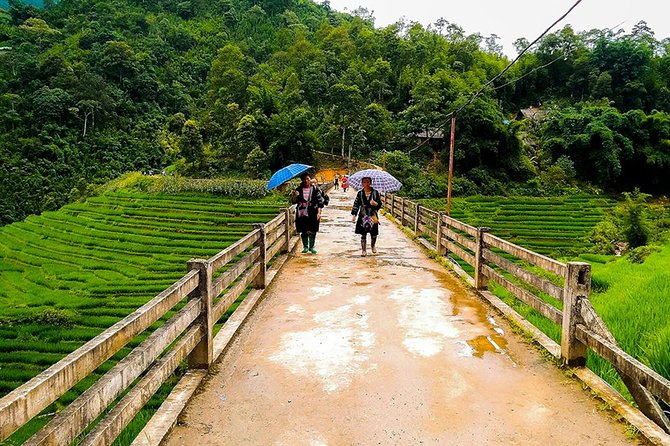
A limit of 15 travelers sounds like a minor detail, but it changes the feel. In villages, space is limited. When you have a large group, you end up waiting your turn and rushing through. With a smaller group, you can actually speak with your guide, and people have time to respond.
It also affects the learning part. Talking about marriage traditions, house construction techniques, and rice-field work is easier when the group isn’t constantly in motion. You’re more likely to ask follow-up questions instead of feeling like you’re holding up a conga line.
If you like an experience that feels personal without being stiff, this group size is a big reason to consider booking.
Weather and season tip: June heat in the valley
One of the most helpful lessons for this trek comes from June conditions. Even when Sapa stays around 23°C, the valley route can feel much warmer, around 31–32°C. That’s a big swing, and it happens because you’re moving through the lower terrain where heat collects.
So pack for heat even if the town feels mild. Also, wet season is part of the story. This tour requires good weather, and if it’s canceled due to poor conditions you should expect a different date or a full refund. That’s reassuring, but it also means you should avoid booking the trek as the one rigid plan in a packed schedule.
If rain happens while you’re walking, it can make trails slower. If it’s dry, the same route can feel pleasantly energetic. Either way, slow and steady is your friend.
What to expect on the cultural side (Hmong, Giay, and Red Dao)
This tour doesn’t just list ethnic groups; it connects them to places you visit. You’ll see villages tied to Hmong, Giay, and Red Dao communities, and you’ll learn about culture and customs in context.
A few themes you should be ready for:
- Marriage traditions shared through Hmong cultural explanation
- Rice-field work and how people manage farming in mountain conditions
- Work and house building techniques, discussed as part of everyday living
- Village routines and customs that help you understand why traditions exist beyond just ceremonies
The practical value of this is simple: it turns your photos into something more. When you know what you’re looking at—why terraces exist, how houses relate to the terrain, why routines follow seasons—you’ll understand Sapa in a deeper, less touristy way.
Who should book this trek (and who should skip it)
This trek fits best if you:
- Want village learning plus real walking, not just a short sightseeing loop
- Like guided conversation and cultural context, including how people work the land
- Have moderate fitness and can handle trekking days with some uphill segments
- Prefer a small group where questions are welcome
You might think twice if you:
- Want a fully flat route (there’s uphill walking on Day 2)
- Get uncomfortable with heat swings between town and valley
- Need guaranteed shelter from rain every hour (the experience depends on weather)
If you’re flexible and ready to move at a steady pace, you’ll likely love it.
Should you book the Muong Hoa Valley Trek & Homestay?
I think it’s a great booking if your priority is real village time—not only mountain views. The mix of five village visits, a homestay night, and meals handled makes it good value for the price, and the small-group size makes the cultural parts feel less rushed.
Book it if you’re the type of traveler who enjoys learning how people live and works best with a guide who can explain what you’re seeing. Skip it if you want a purely scenic trek with minimal community interaction or if moderate fitness doesn’t describe you right now.
If you do book, plan ahead. This tour is commonly reserved far in advance, so waiting too long can limit your dates.
FAQ
Where does the trek start and what time?
The tour starts at 9:00 am at Sapa Church (P. Hàm Rồng, TT. Sa Pa, Sa Pa, Lào Cai 333100, Vietnam). Pickup is also offered.
How long is the trek and how many nights are included?
It’s a 4-day trip (about 4 days) with 3 nights total, and the homestay includes 1 night.
What villages are included?
You’ll visit Y Linh Ho, Ta Van Village, Giang Ta Chai, Ban Ho Village, and Nam Toong.
What’s included in the price?
Included items are village entry fees, a homestay (1 night), transport back to Sapa after the trek ends, a local guide, 1 big bottle of water per person, and meals: 3 breakfasts, 4 lunches, and 3 dinners.
Is pickup available?
Yes, pickup is offered.
What fitness level do I need?
The tour is designed for travelers with moderate physical fitness.
How does the tour handle weather issues?
The experience requires good weather. If it’s canceled due to poor weather, you’ll be offered a different date or a full refund.