REVIEW · SAPA
Sapa private: One day of funny Buffalo Ride & Trekking Tour
Book on Viator →Operated by Vietnam Nomad Trails · Bookable on Viator
A buffalo ride on a mountain trail sounds like a storybook day, but it’s also a practical way to see Sapa beyond the town. This private tour blends a guided hike through rice fields and villages with a fun buffalo ride, plus real stops with local life. I love the mix of panoramic farming views and culture stops, and I also like that lunch is included so you’re not hunting for food mid-trek. The main drawback to plan for is the day depends on weather and you’ll do a moderate amount of walking.
If you’re craving something more human than scenic-only, this tour leans into the villages: Suoi Ho, Lu Khau, and Xa Xeng, home to Black Hmong and Red Dao communities. Guides matter a lot here, and names like Chai and Zozo show up in positive feedback as especially upbeat and fun, which is exactly the right energy for a day that’s part walking, part animal ride, and part conversation. You should also be ready for a schedule that feels lively and full, not a slow, sit-and-stare outing.
In This Review
- Key highlights to know before you go
- How the buffalo-and-trek day actually plays out in Sapa
- Starting point and first hike: Suoi Ho, rice fields, and hidden village paths
- Ta Phin Village route: school visit, Lu Khau lunch, and cultural time
- The buffalo ride: funny, gentle, and very much the point
- Xa Xeng and Red Dao village time before heading back
- Price and value: why $80 can be fair here
- Weather, clothing, and fitness: the stuff that determines your enjoyment
- Guides and the tone of the day: why the right person matters
- Who should book this buffalo ride and trekking tour?
- Should you book this one-day buffalo ride and trekking tour?
- FAQ
- How long is the Sapa private buffalo ride and trekking tour?
- Where do we meet for the tour?
- What time does the tour start?
- Is lunch included?
- What’s included in the price?
- Is this a private tour?
- Is there a fitness requirement?
- Is travel insurance included?
- What happens if the weather is bad?
- What is the cancellation policy?
Key highlights to know before you go
- Black Hmong village trekking and school stop: You’ll walk through gardens and rice fields and include a visit to a local school.
- Lu Khau lunch at a local restaurant: You get a proper meal without derailing the route.
- Buffalo ride as a real village experience: You won’t just pose for photos; you ride along the village path.
- Red Dao community time in Xa Xeng: Your afternoon turns toward another minority village and cultural rhythm.
- Private group only: It’s just your group, so the pacing can feel more natural.
How the buffalo-and-trek day actually plays out in Sapa
This is a one-day, roughly 5-hour experience built around movement and conversation. You’ll start in Sapa and spend the morning hiking along rural paths—think rice fields, gardens, and mountain views—before the day shifts into a slower, more playful phase with the buffalo ride. Then you keep walking again, finishing with more village time before returning to the meeting point.
The private format matters more than you might expect. When it’s only your group, your guide can keep you together, slow down when needed, and explain things at a pace that works for you—whether you want more detail or just want to soak in what you see.
One more thing: this tour is listed as needing good weather. Sapa can be foggy and rainy, and those conditions change visibility fast. If you want the best views of terraced fields and valley scenery, you’ll care about the weather days.
Starting point and first hike: Suoi Ho, rice fields, and hidden village paths
You meet at 13 Tuệ Tĩnh, TT. Sa Pa, Sa Pa, Lào Cai, Vietnam. The schedule is listed with a morning meetup around 8:30 am, with the start time shown as 9:00 am, so I’d plan to arrive a bit early and avoid rushing.
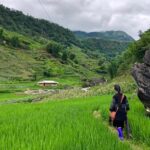
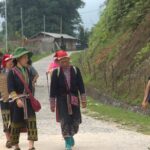
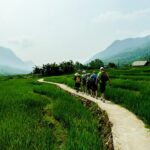
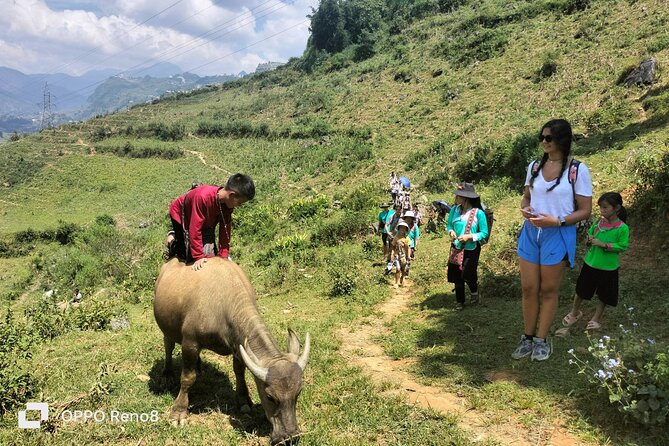
From there, the day kicks off with a hike through gardens and rice fields. It’s the kind of walking that feels like you’re stepping away from the town right away, without needing a long multi-day trek. The route also takes you into the Black Hmong ethnic village of Suoi Ho, described as small and tucked away from the main flow of civilization.
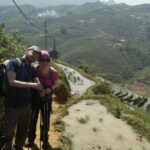
What I like about starting this way is that your first reward is visual, not forced. Before you even get to the main village stops, you’re building a sense of place: terraced patterns in the distance, the texture of farm paths underfoot, and that clean mountain air. It’s not about one single viewpoint—it’s about steadily widening your view as you climb and turn.
The hiking phase is also where you’ll feel the day’s pace. You should be comfortable with uneven ground and a moderate fitness level. Nothing here screams extreme, but it’s not a flat stroll either. If you’re prone to sore knees or you don’t handle hills well, this is the part to take seriously.
Ta Phin Village route: school visit, Lu Khau lunch, and cultural time
As the morning continues, your guide plans several culture-focused moments. You’ll make a short stop to visit a local school, then continue onward toward Lu Khau village, where Black Hmong and Red Dao minorities live side by side.
That school stop is small time-wise, but it changes the feel of the day. Instead of only seeing homes and scenery, you get a glimpse into how education fits into community life. It’s also one of those moments that makes a guided tour worth it—your guide can frame what you’re seeing and keep it respectful, rather than you guessing at what you’re looking at.
Lunch comes next, and it’s an included part of the experience: you enjoy lunch at a local restaurant in Lu Khau village. I always value meals that are built into a route like this. You avoid the scramble for food later, and you get something closer to how the area actually eats rather than a generic tourist meal option.
The cultural part here matters because it’s not one museum stop. You’re walking through village life, watching daily rhythms, and spending time in a place where multiple communities share space and influence. If you’re the type who likes learning as you go—rather than reading after the fact—this section is where the day clicks.
The buffalo ride: funny, gentle, and very much the point
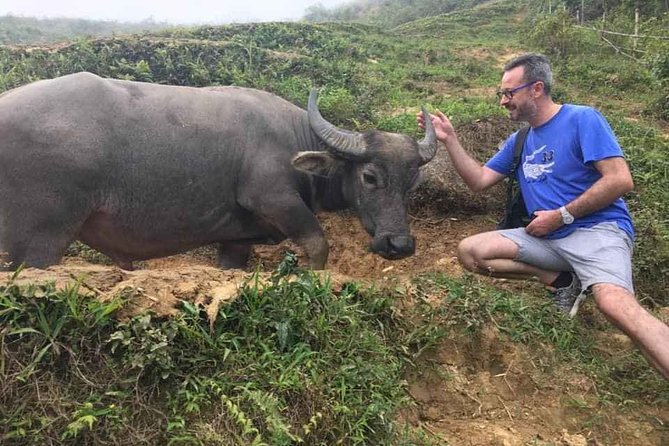
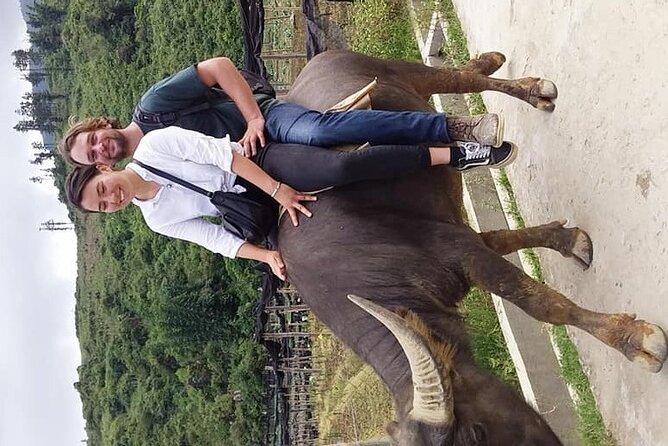
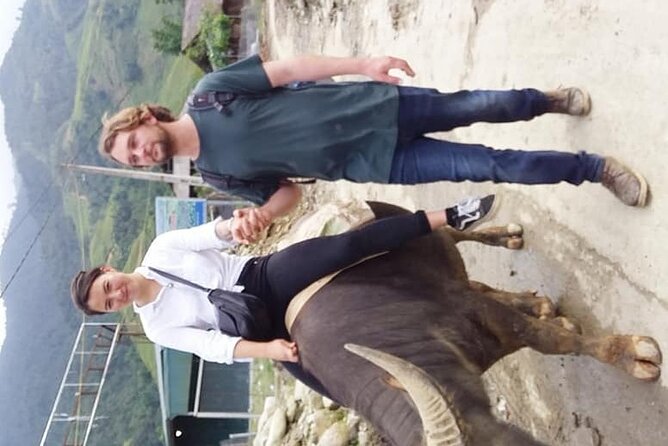
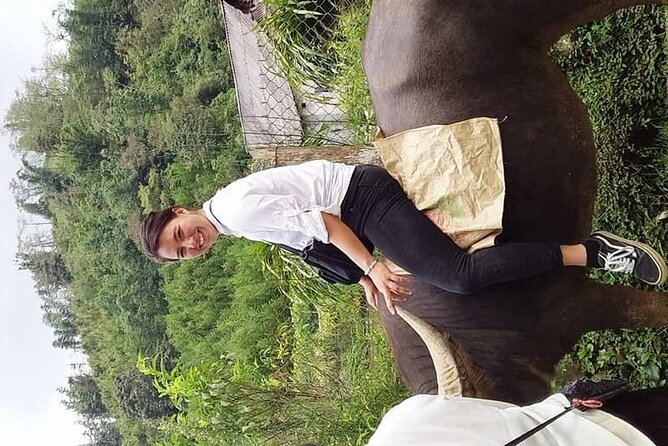
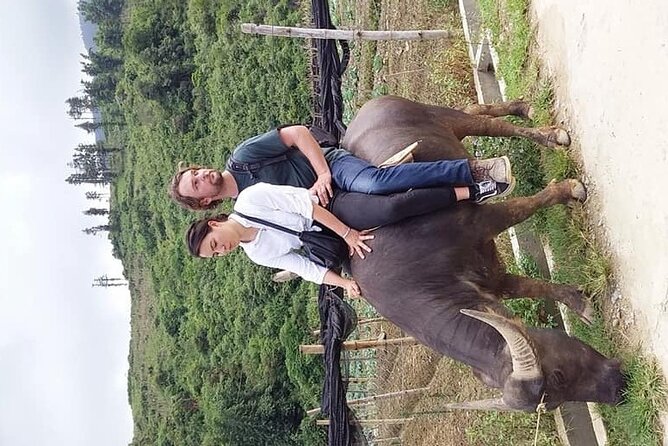
After lunch, the itinerary shifts into the signature moment: a buffalo ride through the village area. It’s described as a funny trip riding a buffalo along the village path, and that phrasing fits what the experience is meant to be.
Here’s how I’d frame it for you: this isn’t a distant, staged animal show. It’s tied to the same rural setting you hiked through earlier, so you’re not just changing activities—you’re staying in the same world. The ride gives your legs a break while still keeping you close to the village environment and its routes.
A practical note: you should approach the ride with curiosity and a calm attitude. Animal experiences depend on local handling and the exact setup that day. Listen to your guide, hold on securely, and don’t treat it as a “do a quick selfie and leave” moment. The best buffalo moments are the ones where you slow down and notice the surroundings while you’re moving.
Also, since this is a private tour, the buffalo ride tends to feel less crowded and more personal. You’ll still want to think of it as part of the day’s schedule, not something you can linger on forever.
Xa Xeng and Red Dao village time before heading back
After the buffalo ride, you keep going toward Xa Xeng village, home to the Red Dao minority. This portion is where the route makes a clear cultural shift: you’ve spent time in Black Hmong village areas, then you move into another community context as the afternoon builds.
Even without overcomplicating it, this matters. Sapa’s diversity is one of its big attractions, but diversity only becomes real when your day is structured around it. Reaching Xa Xeng gives you a stronger sense that these communities have their own identities, rhythms, and landscapes shaping daily life.
You’ll finish the tour back at the meeting point, wrapping up a full arc: rural hike, school visit and lunch, buffalo ride, then more village time. It’s the kind of route that’s not perfect for long naps, but great for people who want one strong day of “this is what Sapa feels like” instead of a checklist of sights.
Price and value: why $80 can be fair here
At $80.00 per person, the real question isn’t whether it’s cheap. It’s whether what you get is worth your time and energy. In this case, it’s easier to see the value because several key items are included:
- Lunch
- Bottled water
- Air-conditioned vehicle
- Permission and sightseeing fees
Those inclusions matter on a half-day to full-day trip because hidden costs pile up fast in Sapa. If you had to pay for transportation, entry/fees, and a meal separately, your day could become more expensive than it looks at first glance. Here, you’re paying for an organized flow: transport plus a guided route plus a set meal.
The tour also has group discounts and uses a mobile ticket, which can simplify planning. Private tours are often priced higher than group tours, but the private format is especially useful for a day that mixes walking with a buffalo ride—things that feel better when your group is only your group.
My practical advice: this tour is best value when you treat it as a full day package. If you’re the kind of traveler who already plans to do a self-guided hike plus eat out plus hire transport separately, then the value could feel less obvious. But if you want everything lined up—meal, vehicle, village route, and fees—this pricing is pretty reasonable.
Weather, clothing, and fitness: the stuff that determines your enjoyment
This experience requires good weather. That’s not just a “nice to have.” It affects the walking paths, the views of rice fields, and how comfortable the day feels overall. If it’s foggy or rainy, your visibility and photo results may drop, and your footing can be trickier.
Plan for moderate physical fitness. You’re hiking through gardens, rice fields, and village routes, including a longer rural stretch before lunch and another after. Comfortable shoes are non-negotiable. You want something with grip that can handle uneven paths.
For clothing, dress in layers. Sapa’s weather can shift, and even in a “good weather” day, mountain air can feel cooler during hikes. Bring a light rain layer just in case—even when you’re not expecting rain.
If you’re sensitive to animal experiences, consider that the buffalo ride is a core activity. You don’t need to love animals, but you should be comfortable with the reality that this is hands-on and weather-dependent.
Guides and the tone of the day: why the right person matters
This kind of tour goes far beyond logistics. A good guide makes the walking feel smoother and the village stops feel more respectful and meaningful. The tone matters during the buffalo ride too; if your guide stays calm and cheerful, the ride feels more like part of the day than a stress checkpoint.
In the feedback I saw, guides like Chai and Zozo get described as fun and enthusiastic, with plenty of explanations and a strong sense of humor. You don’t need jokes to enjoy Sapa, but you do need someone who can keep your group engaged while moving at a walking pace that works.
There’s also a helpful-services angle. One person thanked Miss Su for being responsive and for arranging their stay and booking other activities, which suggests the operator’s support can extend beyond the walk itself. If you want help stitching together multiple Sapa experiences, that’s a nice bonus.
Who should book this buffalo ride and trekking tour?
Book this if you want a single-day experience that mixes scenic walking with cultural village time and a buffalo ride. It’s a strong match for:
- First-time visitors who want more than just town views
- Travelers who like village encounters but want a structured, guided route
- People who enjoy guided explanations during hikes and cultural stops
- Anyone who’s comfortable with moderate walking and uneven paths
Skip it if you’re looking for an all-relaxed day with minimal walking, or if you know you’ll be miserable in cooler, changeable mountain weather.
Should you book this one-day buffalo ride and trekking tour?
Yes, if you want a day that feels earned: you walk through rice fields, you get lunch in the rhythm of the village, and you end up on a buffalo ride that ties the whole story together. The value makes sense because key costs—like lunch, bottled water, air-conditioned transport, and sightseeing/permission fees—are included.
You should think twice if weather is your biggest priority and you can’t be flexible. Since the experience depends on good weather, be ready to take a different date if conditions aren’t right.
If you book, show up early, wear good shoes, and go with a curious attitude. This is the kind of tour where the best moments come from paying attention, not rushing to the next photo.
FAQ
How long is the Sapa private buffalo ride and trekking tour?
It lasts about 5 hours.
Where do we meet for the tour?
The meeting point is at 13 Tuệ Tĩnh, TT. Sa Pa, Sa Pa, Lào Cai, Vietnam.
What time does the tour start?
The information lists a morning pickup/meeting around 8:30 am, and the activity start time is shown as 9:00 am.
Is lunch included?
Yes. Lunch is included in the tour price.
What’s included in the price?
Included items are lunch, bottled water, an air-conditioned vehicle, and permission and sightseeing fees.
Is this a private tour?
Yes. It’s private, and only your group will participate.
Is there a fitness requirement?
Yes. You should have a moderate physical fitness level.
Is travel insurance included?
No. Travel insurance is not included.
What happens if the weather is bad?
This experience requires good weather. If it’s canceled due to poor weather, you’ll be offered a different date or a full refund.
What is the cancellation policy?
You can cancel for a full refund up to 24 hours in advance. If you cancel less than 24 hours before the start time, no refund is provided.