REVIEW · MARRAKECH
Marrakech: 2-Day Atlas Mountains Trek with Village Stay
Book on Viator →Operated by Quad Africa Maroc · Bookable on Viator
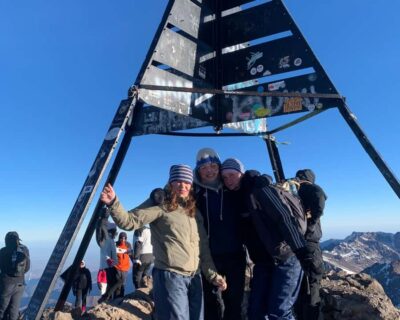
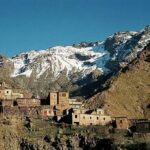
Atlas mornings beat city plans fast. This 2-day trek swaps Marrakech traffic for High Atlas trails, mountain villages, and big scenery framed by Berber life and a possible look at Mount Toubkal. You’ll hike with local guides and spend the night as a guest in the village area, which is the real reason this itinerary feels more personal than a bus-and-photo stop.
I especially like the human touches built into the day: mint tea on arrival in Imlil, then village time that’s more about meeting people than chasing landmarks. I also like how the walking is structured around passes and scenery checkpoints, including time at Tizi Mzik and a second-day lunch in a walnut grove setting near water.
One consideration: you’ll be walking for about 5–6 hours a day, and the tour doesn’t include equipment. If you show up in city shoes, your feet will file a complaint before the views do.
In This Review
- Key highlights you’ll actually feel
- Leaving Marrakech for the High Atlas: the ride that sets your expectations
- Imlil start: meeting your trekking crew and the first taste of the mountains
- Tizi Mzik pass to Tizi Oussem: juniper forest walking and village arrival
- Night in the village area: why the “stay” matters more than the bed
- Day 2 setup at Azzaden: breakfast and a route built for variety
- The second-day trek: Id Issa, Matat, and Tizi Oudid pass
- Walnut grove lunch by the river, then back to Marrakech
- Price and value: what $291 really covers (and what it doesn’t)
- Included meals and drinks: practical comfort on a long trail
- Guides, languages, and group size: how to get the best experience
- Weather and pace: the two things that can change your day
- Who this trek suits best (and who should skip it)
- Should you book this Marrakech 2-day Atlas trek?
- FAQ
- FAQ
- What’s the duration of the Marrakech to Atlas Mountains trek?
- Where does the trek start and when?
- What’s included in the price?
- Do I need to bring trekking equipment?
- How long do I hike each day?
- What group size should I expect?
- Is pickup included from Marrakech hotels?
- What happens if the weather is bad?
- Is free cancellation available?
Key highlights you’ll actually feel
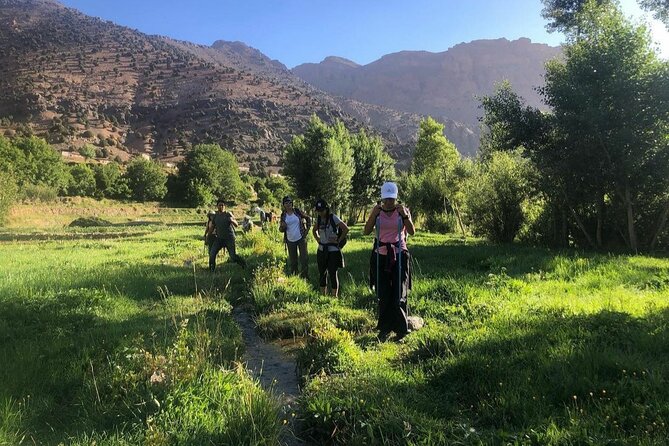
- Imlil mint tea welcome sets a calm tone before the first hike
- Tizi Mzik pass viewpoint puts you up above the valley for lunch
- Village stay gives you a different rhythm than a hotel night
- Second-day trek via Id Issa, Matat, and Tizi Oudid keeps the route varied
- Walnut grove lunch by a river breaks up the long hiking day
- Small group size (up to 12) makes the experience easier to manage
Leaving Marrakech for the High Atlas: the ride that sets your expectations
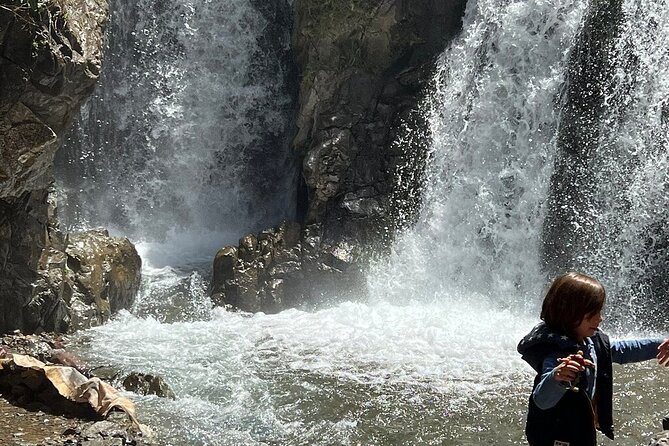
This trek starts with pickup in Marrakech, with the meeting point listed at Hôtel Tazi79 (near Prince Moulay Rachid). The start time is 8:40am, so treat it like a full day outing, not a late-morning stroll.
You’ll travel by air-conditioned vehicle, heading toward the High Atlas via Tahnnaout, Oued Ghighaya, and Asni. Even before you start hiking, that drive matters: it’s where you transition from city bustle to valley life, and it gives you an easier mental shift from Morocco’s medina energy to mountain walking time.
If you hate early starts, plan to go to bed sooner the night before. The mountains don’t care about your vacation sleep schedule.
You can also read our reviews of more tours and experiences in Marrakech.



Imlil start: meeting your trekking crew and the first taste of the mountains
Imlil is your jumping-off point, where you meet your trekking crew and settle into the day with mint tea. That little pause is more than tradition—it helps you get oriented, meet your guide, and figure out how your group will move together on the trail.
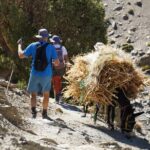
From Imlil, the route pushes you toward the Azzaden Valley via Tizi Mzik pass. This is also where you start noticing what kind of “hike” this is: it’s not technical climbing, but it does involve sustained uphill-and-downhill trail walking that feels long if you’re not used to mountain paths.
Lunch is planned around the pass, so you’re not just grinding uphill and hoping for a meal later. You’ll eat while you’re still up where the valley views open up.
Tizi Mzik pass to Tizi Oussem: juniper forest walking and village arrival
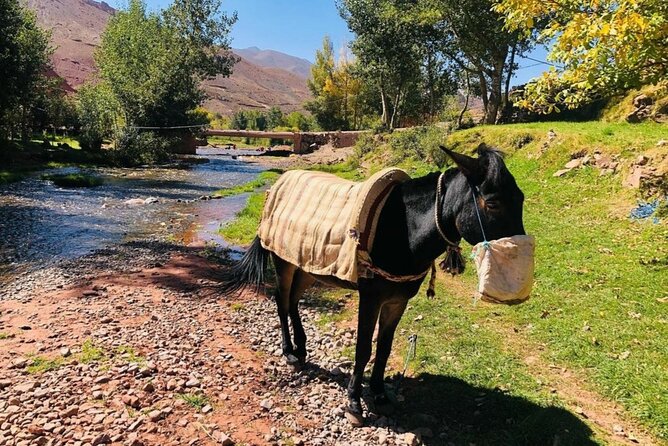
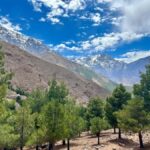
The walking day is about getting height, then moving back down. After time around Tizi Mzik, you continue down the valley through a juniper forest, which is a nice change from the rocky open areas.
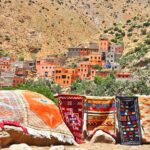
Then you reach Tizi Oussem village, where the day transitions from trail time to village time. This is the part I think most people remember: you’re no longer just looking at the Atlas—you’re in the living spaces that shaped the culture you came to see.
What to keep in mind: the trail can feel more “work” at the end of the day, because your legs are already tired when you arrive. If you pace yourself early and don’t sprint downhill, you’ll enjoy the village arrival more.
Night in the village area: why the “stay” matters more than the bed
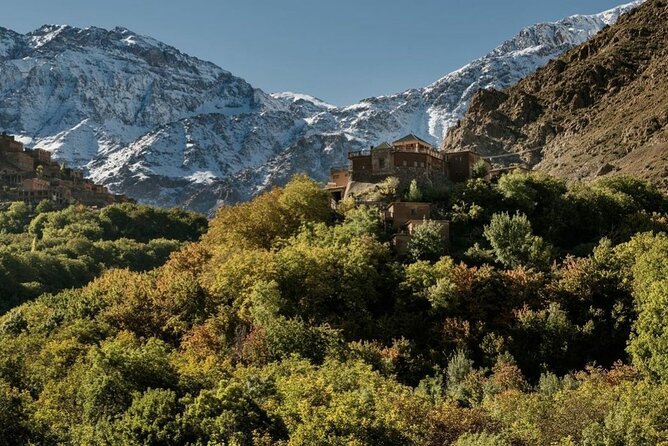
Your tour includes the village overnight experience, with the overall structure making it clear that you’re not doing this as a day hike and back-to-Marrakech trip. The most practical value here is that it lets you experience the mountains beyond daylight snapshots.
You’ll see Azzaden referenced around the second day, which signals that your overnight base is in that mountain area rather than somewhere far removed. That means you wake up in the same region where you walked yesterday, and you don’t lose the mountain day to transport.
One more thing: village stays vary. The tour data confirms the experience includes the basics (like meals), but it doesn’t promise modern comforts. If you come ready for simple, you’ll get more out of the night than if you judge it like a city hotel.
Day 2 setup at Azzaden: breakfast and a route built for variety
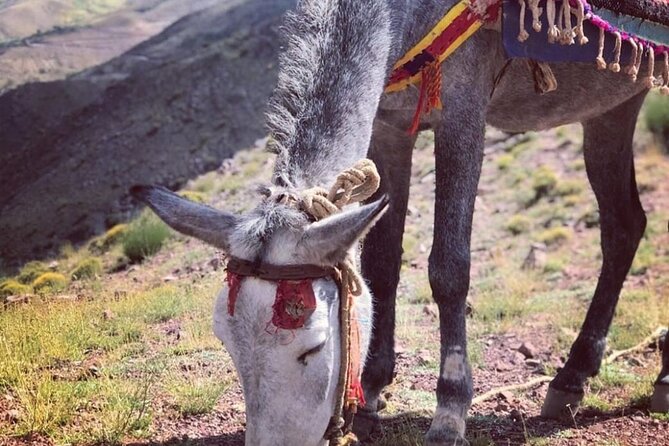
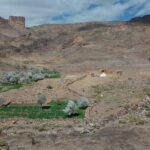
Day 2 begins after breakfast in the Azzaden area, and you head toward Id Issa village. This portion is about mixing community time with trail time, so you’re not only hiking to a viewpoint and then calling it a day.
Then the trek continues toward Tizi Oudid mountain pass, and you’ll walk through Matat village along the way. Routes like this often feel better than a straight out-and-back because you’re constantly adjusting to new angles, new paths, and new places to pass through.
This second day also includes another planned meal break: lunch is at a walnut grove next to the river. That matters for your comfort, because it’s a chance to sit and reset before the final return transfer to Marrakech.


The second-day trek: Id Issa, Matat, and Tizi Oudid pass
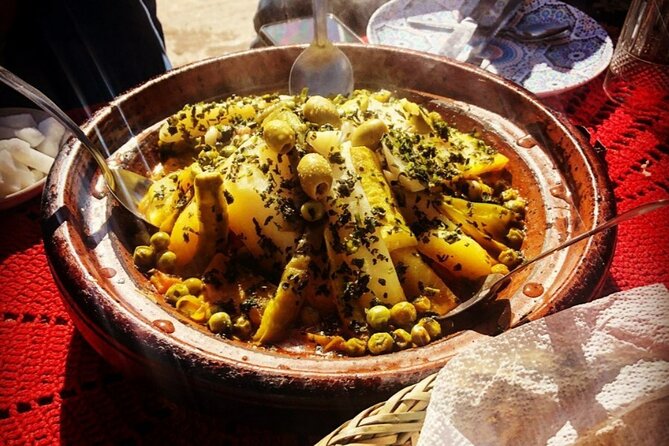
Id Issa is your first stop on day two, and it’s a straightforward addition to keep the day human-scale. Spending time exploring a village along the way is one of the best ways to understand how daily life continues in mountain regions—beyond what you see from a roadside viewpoint.
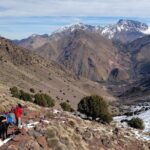
As you move through Matat and toward Tizi Oudid, the hiking gets its “choose-your-own pace” feeling. Some sections will be easier, some will ask for concentration, and the pass crossing tends to be the moment where you feel the altitude and the effort.
I’d suggest you watch your energy: don’t overtake your whole group early. In mountain treks, arriving together keeps the day calmer, and it helps with the overall rhythm when you reach lunch and later the return.
Walnut grove lunch by the river, then back to Marrakech
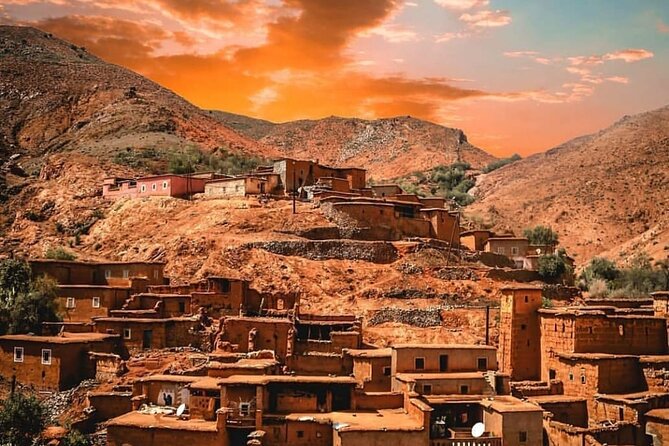
After reaching the walnut grove area, you’ll have lunch next to the river. It’s a simple detail, but it’s exactly the kind of reset that turns a long hike into a satisfying day. If you’re the type who gets cranky after hours of walking, this is where your mood usually comes back online.
From there, you return to Marrakech around 5:00pm. Ending in the afternoon is great because it keeps you from losing your whole evening to fatigue. You can shower, eat something warm, and still enjoy your night in the city.
Price and value: what $291 really covers (and what it doesn’t)
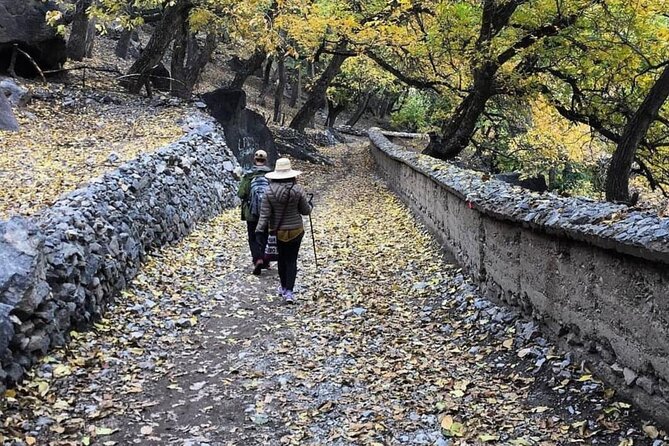
At $291 for roughly 2 days, the value comes from the mix: transport, a guide, included meals, and the mountain overnight experience. A lot of cheaper trips try to save money by cutting the meals or the guiding time. Here, you’re covered for breakfast plus lunch (2), along with mint tea/coffee and bottled water.
You also get an air-conditioned vehicle, which is a real quality-of-life upgrade on the long transfer legs. And the group size is capped at 12 travelers, which is small enough that your guide can stay tuned to the pace.
What isn’t included: equipment. That’s the big catch. If you don’t have proper hiking shoes or at least grippy footwear, you’ll feel it on the downhills and uneven paths. I’d treat equipment as part of your pre-trip checklist, even though it’s not part of the tour price.
Included meals and drinks: practical comfort on a long trail
This itinerary is built around food breaks that fit mountain rhythm. You’ll get mint tea on arrival in Imlil, then lunches timed to the scenery and walking schedule.
Because the tour includes bottled water and mineral water, you’re less likely to spend the hike worrying about hydration. Still, I’d keep an eye on your personal needs—mountain days can trick you with how fast you sweat, even when the air doesn’t feel hot.
Also note: the tour explicitly includes lunch twice and breakfast once. That structure helps you avoid the most common trekking problem—showing up hungry and “saving” calories for later that never comes.
Guides, languages, and group size: how to get the best experience
Local guides are included, with language options listed as English, French, or Spanish. That’s useful because it can change how much you understand about village life, trail rules, and the meaning behind what you’re seeing.
One thing I take from the way the operator handles concerns (including a clarification response signed by Mostafa) is that timing and language expectations need to be clear. If you booked English, make sure your communication is consistent before pickup. If the pickup location feels unclear, it helps to confirm where your driver will wait and how you’ll recognize each other.
With a maximum of 12 people, you’re more likely to get a smoother day than on a big group outing. Smaller groups also make it easier to pause briefly for photos or questions without turning it into a traffic jam on the trail.
Weather and pace: the two things that can change your day
The trek requires good weather. That’s not just marketing language. In the Atlas, bad conditions can change trail safety and comfort, so it’s smart to be flexible with your expectations.
As for pace, the itinerary describes about 5–6 hours of hiking each day, with overall day length around 7–8 hours. That’s doable for many people, but only if you pace yourself and don’t turn the hike into a race.
If you get easily tired on stairs or uneven ground, consider this a “moderate hike” and prepare accordingly. Pack layers for temperature changes, because mountain mornings can feel different from the warmer feel you may associate with Marrakech.
Who this trek suits best (and who should skip it)
This is a good match if you want:
- Mountain villages and real local interaction, not just a viewpoint hunt
- A guided trek with included meals
- A compact 2-day plan that still feels like you left Marrakech for good reasons
It’s less ideal if:
- You need a guaranteed hotel-style comfort level for the night
- You’re not comfortable walking multiple hours daily
- You don’t have suitable footwear and don’t want to buy or rent it before you go
Also, if you’re extremely dependent on perfect timing and zero miscommunication, confirm your pickup and language details early. That’s the one area where things can go sideways if expectations aren’t aligned.
Should you book this Marrakech 2-day Atlas trek?
I’d book it if you’re aiming for an honest Atlas experience: passes, village life, and a guided rhythm that gets you out of the city and into Morocco’s mountain culture in just two days. The best value is in what’s included—guide, transport, meals, and the village overnight—plus the small group size that keeps the day manageable.
Skip it or reconsider if you’re not ready for hours of walking and you don’t plan to show up with proper footwear or basic trek gear. Also, if you’re very strict about meeting times and language matching, do your part: confirm pickup details and make sure the guide language matches what you booked.
If those boxes are checked, this is the kind of trip that leaves you with more than photos. You come home with a sense of how the Atlas people live, right down to the tea and the trail pace.
FAQ
FAQ
What’s the duration of the Marrakech to Atlas Mountains trek?
It runs for about 2 days.
Where does the trek start and when?
It starts at Hôtel Tazi79 near Prince Moulay Rachid in Marrakech, with the listed start time of 8:40am.
What’s included in the price?
The tour includes pickup by air-conditioned vehicle, a local guide (English/French/Spanish), bottled water, mint tea/coffee, breakfast, and two lunches.
Do I need to bring trekking equipment?
Yes. The tour data says equipment is not included, so you should plan to bring what you need for hiking.
How long do I hike each day?
You can expect about 5 to 6 hours of hiking each day, with the overall days running longer.
What group size should I expect?
The maximum group size is 12 travelers.
Is pickup included from Marrakech hotels?
Pickup is offered, and the tour ends back at the meeting point in Marrakech.
What happens if the weather is bad?
The experience requires good weather. If it’s canceled due to poor weather, you’ll be offered a different date or a full refund.
Is free cancellation available?
Yes. You can cancel up to 24 hours in advance for a full refund. Canceling less than 24 hours before the start time isn’t refunded.