REVIEW · MARRAKECH
3 Days Desert Tour From Marrakech To Merzouga dunes & camel trek
Book on Viator →Operated by ADVENTURE MOROCCO TRIPS · Bookable on Viator
The Sahara starts fast from Marrakech. This 3-day trip threads Tizi n’Tichka views and the UNESCO kasbah of Aït Benhaddou into a real desert experience, with a camel trek into the dunes near Merzouga. You also get Todra Gorge along the way, plus one night in a Berber-style campsite that’s timed for sunset and sunrise photos.
My favorite parts are simple: the drive through the High Atlas (especially the pass) and the sense you really reached the edge of the world by late day. One drawback to watch for: the first-night hotel can be different from what you might assume, so confirm the exact hotel name before you pay your final balance.
In This Review
- Key highlights worth marking on your map
- Day 1: 7:00 a.m. departure, Tizi n’Tichka pass, and Aït Benhaddou lunch
- Day 1 Hotel reality: Tinghir vs Dades expectations
- Day 2: Todra Gorge to Merzouga and the camel trek that makes the trip
- The Merzouga hotel + luggage system
- Sunset and sunrise camel rides: plan around the timing
- Night in the desert: bivouac comfort and how the meals work
- What’s not included (and where people get surprised)
- Day 3: Long return drive through the High Atlas
- Price and value: what $117.25 buys, and what to add in your budget
- What you should budget extra
- Comfort, group size, and pickup/drop-off: the stuff that can make or break it
- Pickup details: expect a meeting point, not a perfect door-to-door
- Who this tour is best for (and who should think twice)
- Weather matters more here than you think
- Should you book this Marrakech to Merzouga 3-day tour?
- FAQ
- How long is the 3 Days Desert Tour from Marrakech to Merzouga?
- What’s included in the tour price?
- Where do you meet in Marrakech?
- Is the camel ride for sunset and sunrise, or just one time?
- What group size should I expect?
- What happens if weather is bad?
Key highlights worth marking on your map
- Tizi n’Tichka overpass scenery on the way from Marrakech toward the desert
- Aït Benhaddou UNESCO kasbah visit with a proper stop for lunch
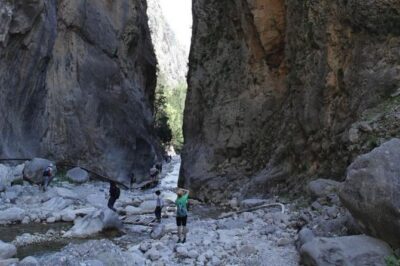
- Todra Gorge and oasis stops as you slide from mountains into palm country
- Erg Chebbi dunes camel trek with a sunset and sunrise option
- Berber-style bivouac night in the desert, with dinners and breakfasts included
- Air-conditioned vehicle transport across long road stretches
Day 1: 7:00 a.m. departure, Tizi n’Tichka pass, and Aït Benhaddou lunch
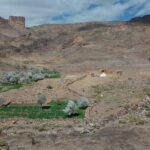
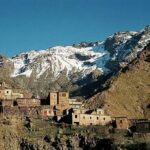
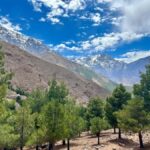
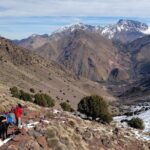
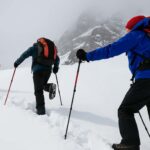
Day 1 starts early. Pickup is listed around 7h00 from your accommodation or a nearby meeting point area in Marrakech, then you head out toward Tinghir across the High Atlas. The big star here is Tizi n’Tichka pass, with wide views and classic High Atlas villages sliding by as you climb.
Next up is Aït Benhaddou, the UNESCO World Heritage kasbah. This stop matters because it’s not just a quick photo stop: you’ll also have lunch in Aït Benhaddou. I like this structure because it gives you time to look closely at how the clay architecture holds shape in a dramatic setting.
After lunch, the route continues with a stop in Ouarzazate for a super market pause, then you continue to Tinghir through Dades Valley. The itinerary mentions roses along the way, which fits the vibe of this region: not only big scenery, but also small details when the road drops into valley life. You finish the day in a hotel in the Tinghir/Dades area (often listed as Hôtel Saghro), so you’re rested for the bigger desert day.
What to know: you’re still doing a long day of driving. Pack the usual road-trip basics: a light layer for the cooler pass morning, water, and something to snack on between stops since lunches and drinks are not included.
You can also read our reviews of more tours and experiences in Marrakech.
Day 1 Hotel reality: Tinghir vs Dades expectations
One theme that shows up in feedback is that the hotel you get the first night may not match what people expected. Your trip notes a stay at Hotel Saghro in the Dades/Tinghir area, but some bookings report getting a different property in the Dades region rather than Tinghir or something similar.
So I’d treat the first-night accommodation as a “verify it” item. Ask the operator (or check what you receive at confirmation) for the exact hotel name and address for your specific dates. It takes one email and saves stress later.
Day 2: Todra Gorge to Merzouga and the camel trek that makes the trip
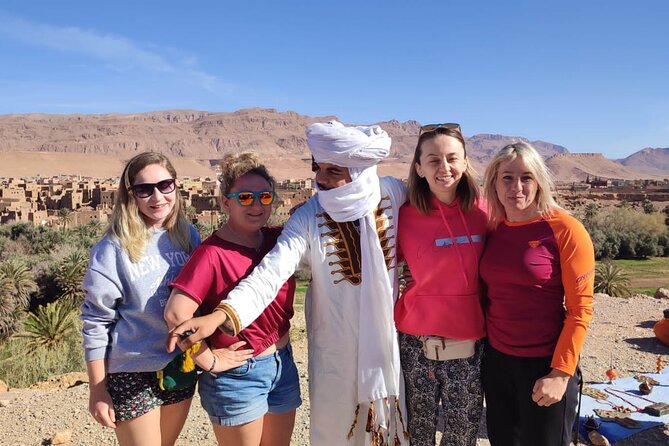
Day 2 is where the mountains start giving way to desert life. After breakfast, you head to Erg Chebbi in Merzouga, and the route includes a chain of places that show how Saharan trade routes and oasis towns work.
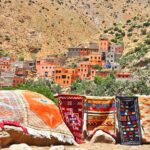
You pass through Todra Gorges, then continue through oasis areas and towns including Tinjdad, Jorf, and Erfoud. This is one of the best parts of a guided tour: it’s hard to stitch together these stops on your own in a short time, and the drive gives context for why the desert has towns at all.
As you get closer to Merzouga, the itinerary references the Tafilalet oasis start. That’s your shift point—from rock valleys and clay kasbahs into palm-and-sand country.
The Merzouga hotel + luggage system
When you arrive in Merzouga, you’ll have time to relax briefly. Then you move your luggage: you take what you need for the night in the desert in a smaller bag, while the rest stays at the hotel. This is practical, and it keeps the camel trek from turning into a full-on porter situation.
Sunset and sunrise camel rides: plan around the timing
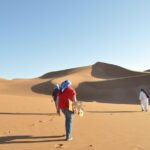
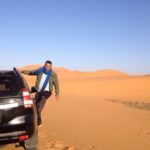
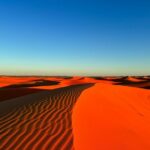
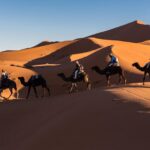
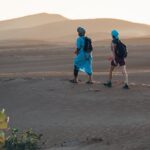
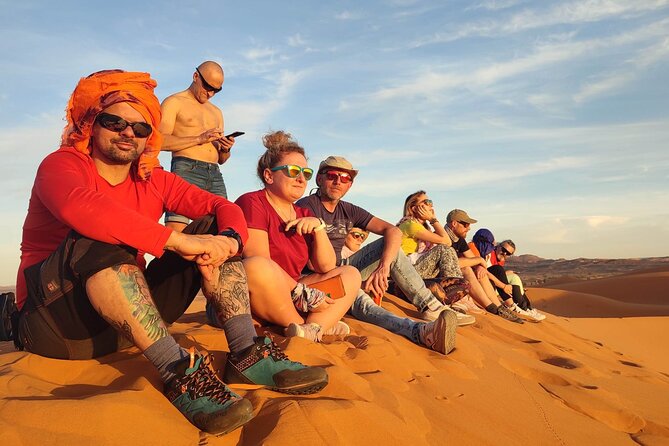
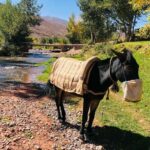
You then ride camels across the Erg Chebbi dunes. The itinerary frames it as a chance to catch great photos at sunset and sunrise, which usually means the camel portion is timed with the light.
Here’s how to make this work for you:
- Wear something with layers. Desert wind can bite when the sun drops.
- Bring a scarf or buff for sand in hair and eyes.
- Keep your phone/camera accessible, but not in a bag that’s hard to open while riding.
The ride to camp is often the part people remember most, because it changes the pace. You stop moving like city traffic and start moving like the desert does—slow, steady, and oddly calming once you’re out there.
Night in the desert: bivouac comfort and how the meals work
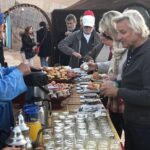
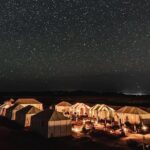
Your tour includes a bivouac (desert campsite). You’ll also have dinners (2) and breakfasts (2) included across the trip. That’s a solid deal for a three-day format because it reduces the number of cash transactions you have to manage while you’re tired.
At the same time, it’s smart to expect some variations in how meals are handled. Some bookings mention that meals can be set up by the guide at specific places, and the prices may be higher than what you’d pay if you ate more independently. That doesn’t ruin the trip, but it means you should budget for lunch and drinks separately.
What’s not included (and where people get surprised)
Lunches and drinks are not included. Tips and gratuities are also not included. On top of that, at least one past booking reported an extra charge for sand boarding (100 DHS) even when it wasn’t clearly included in the trip price.
My advice is simple: before you arrive at Merzouga, ask what activities cost extra on the spot. If sandboarding interests you, confirm the price and whether it’s mandatory. Otherwise you’ll feel the “surprise fee” fatigue right when the dunes are already working their magic.
Day 3: Long return drive through the High Atlas
Day 3 is mostly travel time back toward Marrakech. The itinerary notes High Atlas Mountains for the day and gives a total drive time of around 11 hours on the day.
This matters more than it sounds. After two nights of moving (hotel the first night, bivouac the second), you’ll be glad the transport is set up with an air-conditioned vehicle. The trip is built as a guided loop, so you’re not navigating roads or figuring out bus connections at the end of the adventure.
Your day ends back at the meeting point area in Marrakech—listed as the same start point location (Hôtel Restaurant Café de France area in the J2G7+G2G Jamaa el-fnna neighborhood). The trip also indicates it accepts a small group size, so it’s not a huge coach circus.
Practical tip: this is not the day to plan a big shopping mission after the tour. Keep your evening free. Your legs will feel it.
Price and value: what $117.25 buys, and what to add in your budget
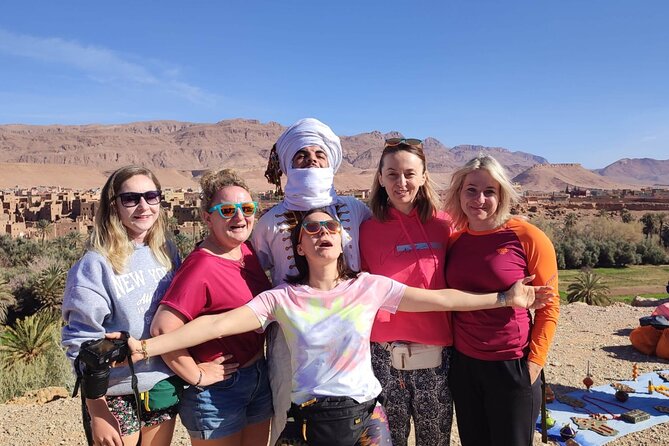
At $117.25 per person, this tour is priced like a standard guided desert package: transport, desert night setup, and key meals. Here’s what you actually get based on the included list:
- Air-conditioned vehicle transport
- Bivouac in the desert
- Camel ride
- Dinner x2 and Breakfast x2
That’s good value for a short 3-day window because you’re covering a lot of ground: Marrakech → Atlas → UNESCO kasbah → Dades/Tinghir area → Merzouga → dunes → return.
What you should budget extra
Not included:
- Lunches and drinks
- Tips and gratuities
And from real-world feedback, you should also expect possible add-ons like sandboarding. One booking reported paying 100 DHS for sand boarding. Even if you don’t plan to do it, this is a great reminder to carry some cash and not assume every activity is included.
If you want the cleanest budget, do this: decide your must-dos (camel trek, desert night, kasbah, Todra Gorge). Then treat everything else—like sand activities and extra meals—as optional.
Comfort, group size, and pickup/drop-off: the stuff that can make or break it
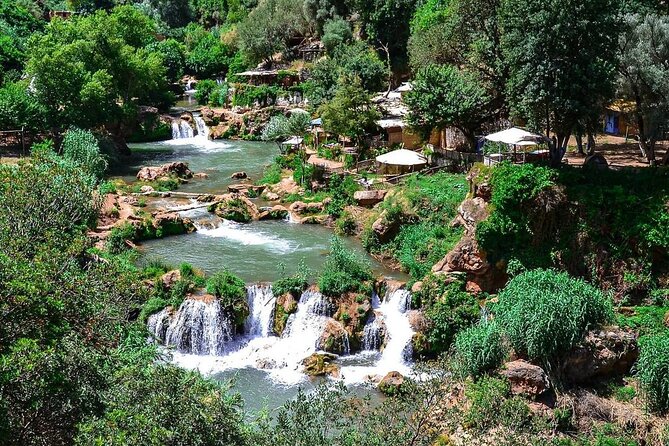
This tour is listed for a small group. One note says up to 18 travelers maximum, while another says the activity will have a maximum of 15 travelers. Either way, you should expect a smaller group than the big mega tours.
Comfort is supported by the air-conditioned vehicle. That’s key on a route that includes long road days and mountain passes.
Pickup details: expect a meeting point, not a perfect door-to-door
The meeting point is the Café de France area near Jamaa el-fnna. Pickup is described as being offered from your accommodation or a nearby place for transport from Marrakech. Some bookings describe smooth handoffs, while others report pickup and drop-off problems.
So I’d handle it like this:
- Confirm your pickup location in writing the day before.
- If you’re staying far from the center, ask where the vehicle will stop.
- If you have a tight schedule, don’t leave the hotel without checking the pickup time again.
A good driver makes the whole trip feel easier. One driver name that appears in feedback is Abdul Ghadi, described as friendly and helpful—those small touches matter when you’re traveling long hours.
Who this tour is best for (and who should think twice)
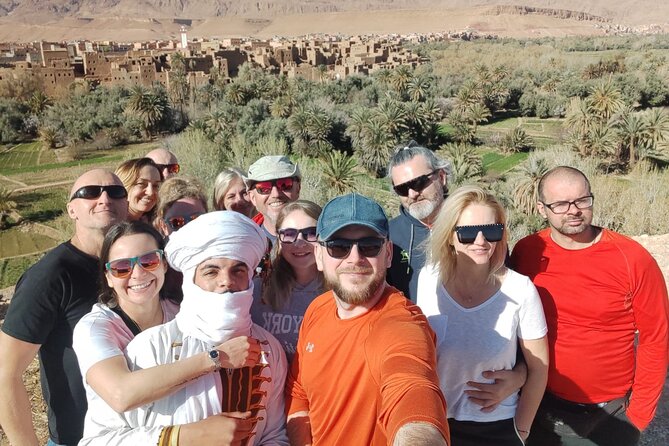
This tour is a great fit if you:
- Want a guided, short-format route to Merzouga without figuring out logistics
- Enjoy scenic drives and stopovers like Tizi n’Tichka and Aït Benhaddou
- Like the idea of a camel trek plus a desert bivouac night
It may be less ideal if you:
- Are very picky about exact hotel standards on the first night and hate surprises
- Want every activity (like sandboarding) included with no extra fees
- Don’t want meals arranged by the guide at set places where prices might be higher
Weather matters more here than you think
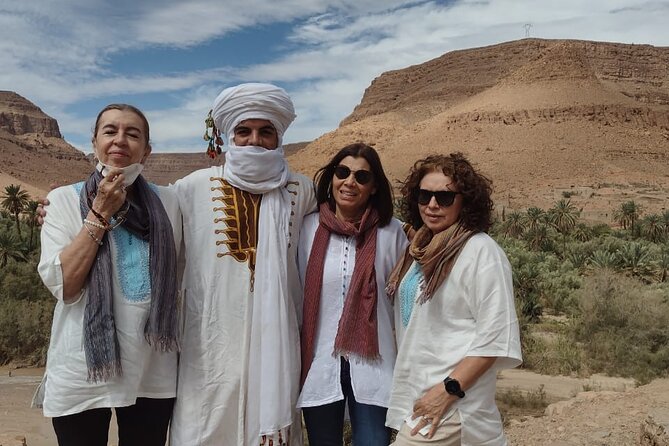
This experience requires clément weather (good weather). If it’s canceled due to poor conditions, you’ll be offered another date or a full refund. That’s not just fine print; it directly affects whether the desert part can happen safely and comfortably.
If you’re traveling in a season where weather can shift fast, keep your schedule flexible. If you’re dead-set on a specific week, consider booking early enough to get the option to move dates if needed.
Should you book this Marrakech to Merzouga 3-day tour?
Yes—if you want a classic Marrakech-to-Sahara route with the big stops (Aït Benhaddou, Todra Gorge), plus the main event (Erg Chebbi dunes and camel trek). The included transport, camel trek, bivouac, and the two dinners/two breakfasts make it a fair value for the time you’re spending.
Hold off or ask more questions if hotel details and add-on activities matter a lot to you. Confirm the first-night hotel name, ask whether sandboarding is included or costs extra, and make sure you understand where lunch and drinks fit into your budget.
If you do that homework, this is the kind of trip where the days feel full, the scenery changes fast, and the desert night stays in your memory for a long time.
FAQ
How long is the 3 Days Desert Tour from Marrakech to Merzouga?
It runs for about 3 days.
What’s included in the tour price?
The tour includes air-conditioned transport, a bivouac (desert camp setup), camel ride, and meals: two breakfasts and two dinners. Lunches and drinks are not included.
Where do you meet in Marrakech?
The start point is listed at Hôtel Restaurant Café de France in the Jamaa el-fnna area of Marrakech. The activity ends back at the meeting point.
Is the camel ride for sunset and sunrise, or just one time?
The description notes an opportunity for a sunset or sunrise camel ride in the desert experience, depending on timing.
What group size should I expect?
The tour is listed with a small group size: it mentions a maximum of 15 travelers, and another note says it accepts up to 18 travelers maximum.
What happens if weather is bad?
If the trip is canceled due to poor weather, you’ll be offered another date or a full refund.