REVIEW · MARRAKECH
Morocco desert trek (8 days)
Book on Viator →Operated by Wandern Marokko Fahim · Bookable on Viator
Dunes, oases, and kasbahs in one trek. This 8-day route stitches together High Atlas roads, desert walking over Erg Chigaga, and iconic stops like Aït Ben Haddou before you return to Marrakech.
I like the setup a lot: you travel with a cook and escort team, plus tents, mats, kitchen gear, and water filters, so your job is basically to hike and enjoy the changing scenery. I also like the pacing marked as easy, with 4 days of walking on manageable stages and plenty of time for lunch stops and camp downtime. The main consideration: even with an easy label, you’re still crossing sand and long tracks, so plan on real effort and pack the right shoes.
In This Review
- Key things that make this trek worth your time
- High Atlas morning to Ouarzazate: Kasbahs, Tizi n’Tichka, and Aït Ben Haddou
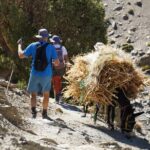
- Drâa Valley to M’hamid: where the dromedaries join your plan
- Erg Chigaga: dunes, a small oasis, and the camp near Sidi Naji
- Erg Zeher to the Drâa riverbed: Erg Smer and Chegaga camp days
- Back toward civilization: jeep to Foum Zguid, then Ouarzazate to Marrakech
- Camps, tents, and the food that actually fuels hiking
- Price and value: what $1,156.92 covers (and what it doesn’t)
- Difficulty level: why easy still means smart prep
- Who this trek is perfect for (and who should think twice)
- The quick call: should you book this Morocco desert trek?
- FAQ
- What time does the trek start?
- Where do I meet the group in Marrakech?
- How long is the trek and how much time is spent hiking?
- What’s included in the price for the trek itself?
- What should I bring since a sleeping bag isn’t included?
- Are tips included?
- Can I cancel and get a full refund?
Key things that make this trek worth your time
- Dromedaries handle the heavy lifting, so you hike with less to carry.
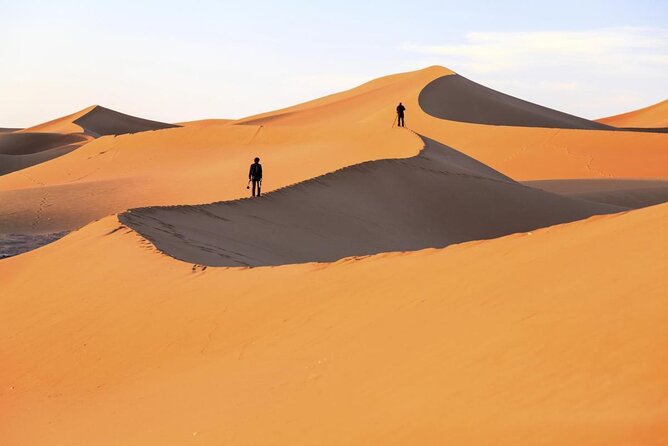
- You get real desert variety, from dunes to dry plains to riverbed walking.
- Aït Ben Haddou and Telouet break up the desert beat, so the trip never feels one-note.
- Erg Zeher and Erg Chigaga are the big dune moments, not just a quick photo stop.
- Camp life is organized, with included tents and a dedicated cook and escort team.
- Guiding goes beyond scenery, with Hassan known for clear culture, history, and nature talk.
High Atlas morning to Ouarzazate: Kasbahs, Tizi n’Tichka, and Aït Ben Haddou
Day 1 starts early (around 8:00am) with a minibus ride out of Marrakech. You’ll climb into the High Atlas foothills and cross the winding Tizi n’Tichka pass area, which is a great warm-up before the desert days.
The first real cultural stop is the Museum-Theatre, Memory of Ouarzazate. After that, you swing through Telouet for a visit to Kasbah El Glaoui, followed by a picnic. If you care about how Morocco’s interior was shaped by trade and power, this is a smart way to set the stage before the trek turns sandy.
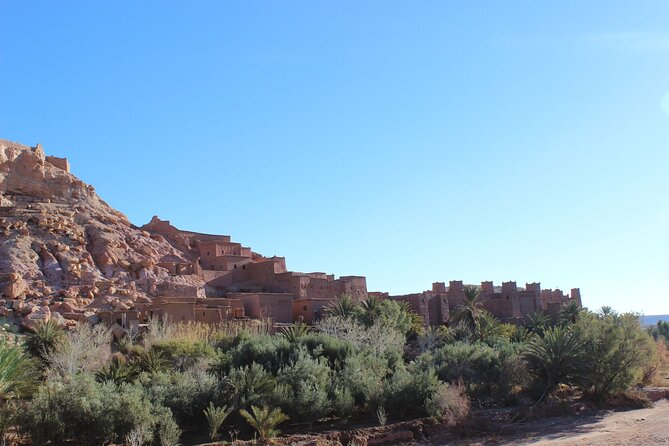
Later, you reach Aït Ben Haddou (ancient Ksar). This is where the trip starts looking like the Morocco you dream about—mud-brick geometry, caravan-era energy, and a place that makes the desert feel connected, not random.
Overnight on Day 1 is in Ouarzazate at an inn. It’s a practical landing point: you’re close to services and it helps you shift gears from road travel into hiking mode.
You can also read our reviews of more tours and experiences in Marrakech.
Drâa Valley to M’hamid: where the dromedaries join your plan
Day 2 is all about transition. You head south through the Drâa Valley, past older villages and through stretches of palm groves until you reach the desert edge at M’hamid—the meeting point for dromedaries and the escort team.
After you load up the dromedaries, you do a short hike of about an hour to Rass Enakhl, where you sleep for the first night in camp. This first hiking day matters even if you’re “easy difficulty” confident—sand walking feels different once your feet adapt, and that hour is a gentle start.
What I like here is the rhythm: you don’t just get dumped into dunes. You spend the morning cruising valleys, then you slowly shift into the kind of walking where wind direction and soft ground become part of the experience.
Erg Chigaga: dunes, a small oasis, and the camp near Sidi Naji
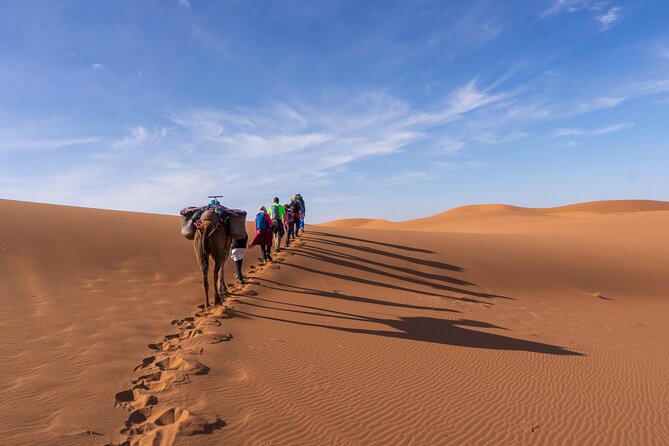
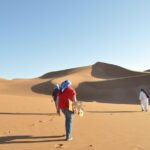
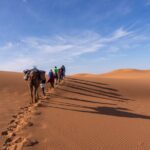
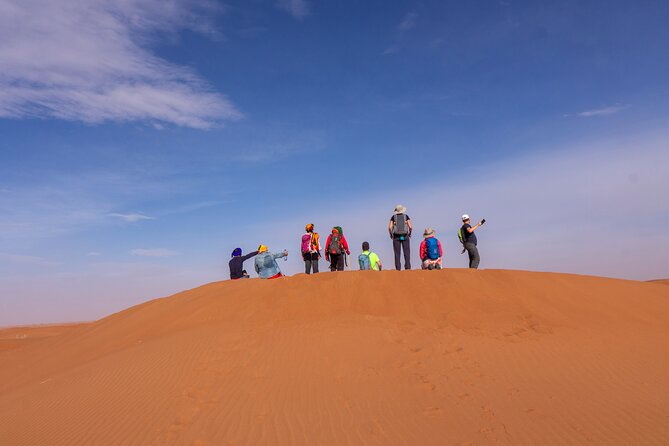
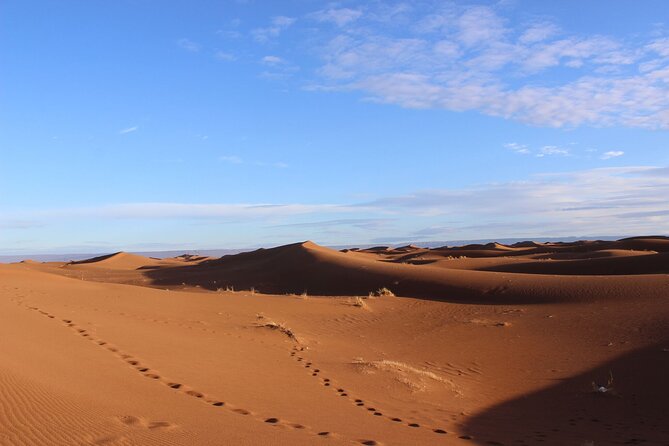
Days 3 and 4 are your core desert walking days, anchored around Erg Chigaga. Expect dunes at the start, a small oasis moment, and then stretches that swing between dry plain and dune sections.
On Day 3, the hike is listed around 5 hours, and it includes that early mix—sand dunes, a small oasis, then more dry ground before reaching camp at an old caravanserai near Marabout Sidi Naji. Lunch happens at camp, and the afternoon is intentionally loose. That’s the desert’s best trick: you can slow down, watch light change on sand, and enjoy the fact that your day isn’t packed with constant logistics.
Day 4 ramps it up a bit. You start with a long dune section, then move across a vast dry plain and pass the ruins of an ancient souk. Lunch is on the way, and you finish the day hiking to camp near the large Erg Zeher dune.
This is one of those days where “easy” still means effort. The trail can feel never-ending because the horizon stays wide and the sand doesn’t always cooperate like a paved path. The payoff is that you’re walking through the actual texture of the desert, not just skimming it.
Erg Zeher to the Drâa riverbed: Erg Smer and Chegaga camp days
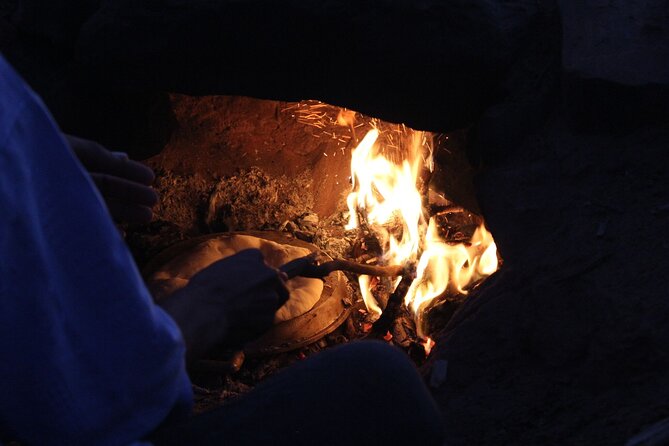
Days 5 and 6 focus on variety—dunes, dry plains, and riverbed walking—not repeating the same dune loop every day.
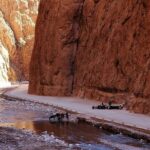
Day 5 takes you across Erg Zeher, then over a dry plain and more dunes before you reach the Drâa riverbed. From there, you hike along the riverbed to camp at Erg Smer. It’s listed at roughly 4.5 hours of hiking, with lunch at camp and a free afternoon.
Day 6 begins with crossing the Drâa riverbed again, then walking through what feels like an endless dry plain before dunes return in the afternoon. You finish at camp in Chegaga. This pattern—plain, then dunes—helps you build comfort without turning the trek into one long slog of only sand.
A small but useful tip: on riverbed and dry plain sections, try to keep a steady pace and don’t overstride. Soft sand can hide under hard-looking ground, and your legs will thank you later.
Back toward civilization: jeep to Foum Zguid, then Ouarzazate to Marrakech
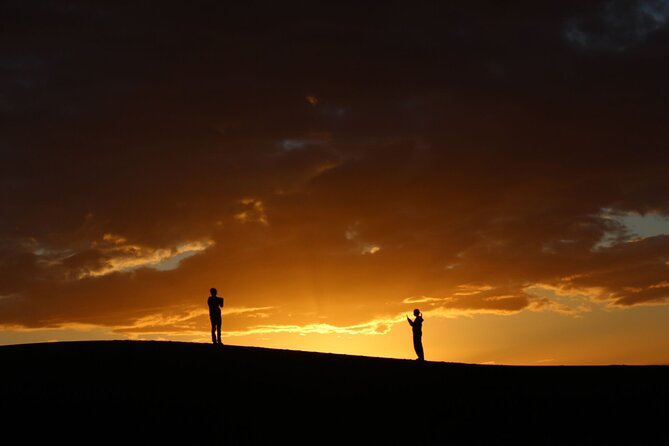
Day 7 changes the vibe. Instead of hiking, a jeep takes you to Foum Zguid, and then you ride by minibus to Ouarzazate (or Aït Ben Haddou, depending on arrangements) for the night in a hostel. Travel time is about 6–7 hours.
It’s a good day for thinking back without rushing your body. You’ve done the desert’s work; now you move on roads and rest your feet.
On Day 8, you head back to Marrakech via the Ounila Valley and back through Telouet. The ride is about 4 hours. Overnight stay in Marrakech isn’t included, so plan your end-of-trek logistics accordingly.
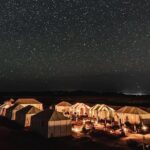
Camps, tents, and the food that actually fuels hiking
The trekking setup is included in a way that makes a real difference. You get tents, mats, and kitchen utensils, plus water filters to keep hydration practical. That’s not a small thing on sand days, when you want to focus on walking and not on camp chores.
From past trips, I’ve seen the camp approach described as comfortable enough for real rest—especially with new tents sized for one person. Translation: you’re not sleeping in a cramped shared space where everyone’s movements wake everyone else.
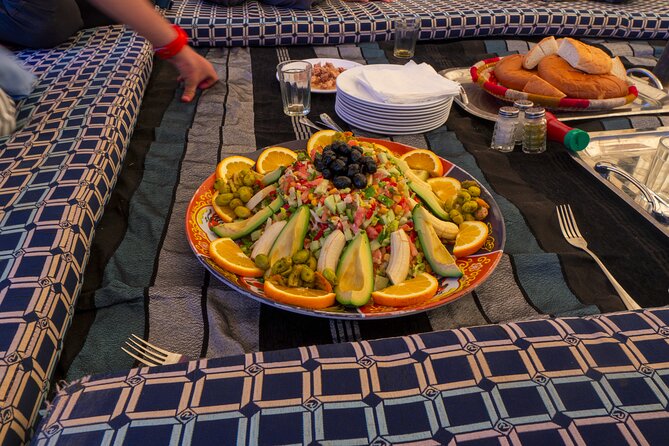
Food is another strong point. The meals included cover breakfasts (7), lunches (8), and dinners (7), and the cooking gets described as authentic and very tasty. If you’ve ever done a desert hike where the food is an afterthought, this stands out because it’s treated like part of the experience, not just fuel.
One more detail I like: having a cook and escort team means you’re not managing water, utensils, or setup after a long walk. That keeps the trip feeling like trekking, not camping project work.
Price and value: what $1,156.92 covers (and what it doesn’t)
At $1,156.92 per person for an 8-day trek, the value comes from the “all the moving parts” package. You’re paying for organized transport from Marrakech into the desert, a dedicated trekking cook and escort team, dromedaries for gear, and the camp infrastructure (tents/mats/kitchen) plus meal coverage for almost the whole trip.
You also get the big named route highlights worked in: High Atlas pass driving, Kasbah El Glaoui, Aït Ben Haddou, and the desert sequence centered on Erg Chigaga and Erg Zeher. That reduces your need to plan separate excursions.
What’s not included matters for budgeting:
- Sleeping bag (comfort temperature 0°C)
- Tips for guide, escort team, and driver (given as 110 Euro)
- Entrances/main meals in Marrakech
- Flights and travel insurance
If you’re the type who likes predictable logistics and doesn’t want to piece together camel hire, camp gear, and route timing yourself, the price is easier to justify. If you already own the right sleeping bag and you want to customize everything, you might compare alternatives—but you’ll spend more time coordinating.
Difficulty level: why easy still means smart prep
The trip is labeled easy, with 4 days of hiking. The hiking hours are fairly moderate on paper (some stages around 4–5 hours, one closer to 6.5 hours), and the route is built for manageable stages.
Still, desert hiking doesn’t care about difficulty labels. Sand changes your stride, wind can mess with pacing, and you’ll feel it in your calves and feet even on “easy” days. You’ll want:
- Good hiking shoes (not fashion sneakers)
- Socks you trust in sand
- A plan for sun protection (hat, sunscreen, sunglasses)
Also, because you’re in a group with min/max size (min 2, max 12), you’ll likely be moving at a shared pace. That’s usually a plus for safety and flow, and it keeps the day from feeling chaotic.
Who this trek is perfect for (and who should think twice)
This is a great fit if you want a desert trek that’s scenic and structured without being technical. The easy pacing and camp support work well for mixed ages—one group in the past included men aged 50 to 70 who found the day trips manageable.
You’ll also enjoy it if you like learning while you walk. The guide named Hassan is described as a patient narrator about culture and history, and also about local animals and plants. That kind of storytelling makes camp evenings and quiet minutes more meaningful.
You might think twice if you have low tolerance for sand walking or you expect a mostly flat hike. Even the best route has dunes, dry plains, and long “slow” stretches.
The quick call: should you book this Morocco desert trek?
If you want a well-run desert experience with 4 hiking days, dromedaries handling gear, and high-impact sights like Aït Ben Haddou plus the Erg Chigaga/Erg Zeher dune area, I’d book it. It’s the kind of itinerary that feels full but not frantic, and the included camp setup takes a lot off your plate.
Just budget for the items not included—especially a sleeping bag rated for 0°C comfort—and pack for real sand work. Do that, and you’ll spend 8 days moving through some of Morocco’s most memorable textures.
FAQ
What time does the trek start?
It starts at 8:00am at the meeting point in Marrakech.
Where do I meet the group in Marrakech?
The meeting point is Hôtel Restaurant Café de France, at J2G7+G2G jamaa el-fnna, Rue des Banques, Marrakech 40000, Morocco.
How long is the trek and how much time is spent hiking?
The duration is about 8 days, with 4 days of hiking.
What’s included in the price for the trek itself?
Included are the trekking cook and escort team with dromedaries, tents/mats/kitchen utensils, water filters, tour organization, and meals (dinners, breakfasts, and lunches as listed).
What should I bring since a sleeping bag isn’t included?
You’ll need your own sleeping bag with a comfort temperature of 0°C.
Are tips included?
Tips are not included. The guide, escort team, and driver tips are given as 110 Euro.
Can I cancel and get a full refund?
You can cancel up to 3 days in advance for a full refund. If you cancel less than 3 full days before the start time, the amount you paid will not be refunded.