REVIEW · MARRAKECH
Day Trekking Atlas Mountains
Book on Viator →Operated by ATLAS VERTICAL TRAVEL · Bookable on Viator
Atlas mountains call for a good day outdoors. This trek into Morocco’s Toubkal Valley pairs real trail time with tea with a local Berber family and big mountain views. I especially like that the day feels structured but not stiff, with time to stop, look, and learn what you’re seeing.
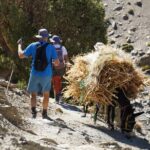
Second, I like the mix of walking and animals. You’re not stuck doing the same thing the whole time—expect hiking through valley paths plus camel and mule rides that add variety and help you get different angles of the Atlas. The one consideration: you’re doing a full half-day in mountain conditions, and the operator says the outing needs good weather, so plan for the possibility of a change if conditions are off.
If you like guided moments that explain local life—while still getting your legs moving—this is a strong value day trip from Marrakech.
In This Review
- Key highlights you’ll feel on the trail
- Why the Toubkal Valley day trek feels like more than a drive
- Morning setup: private AC transport from Marrakech
- Tahanaout: market-town stop and the Azrou old village link
- Asni and Moulay Ibrahim Valley: camel moment at the gate of the Atlas
- Imlil: where your hike turns into the real Atlas experience
- Tea with a Berber family and lunch: the part that slows time
- Camel and mule rides: fun additions with real trade-offs
- Timing, group size, and what to pack for mountain weather
- Price and value: what $67.58 covers (and what it doesn’t)
- Who this trek suits best (and who might want to adjust expectations)
- Should you book Atlas Vertical Travel’s Atlas day trek?
- FAQ
- What time does the trekking day start?
- How long is the experience?
- Is pickup available from Marrakech?
- Is lunch included?
- Are camel rides included?
- What does the tour include besides the hike?
- What happens if weather is bad?
Key highlights you’ll feel on the trail
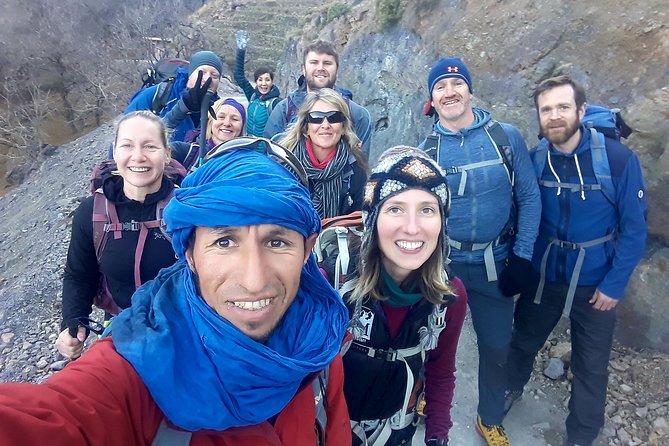
- Toubkal Valley hike time with a circular walk that connects Berber villages and a waterfall area
- Mint tea with a local family, plus conversation that turns scenery into context
- Camel and mule rides that break up the hiking and add classic Atlas rhythm
- Small group size (up to 15) with private air-conditioned transport
- Stops at Tahanaout and Asni for village flavor and gate-of-the-Atlas views
- Homemade lunch available at a local family house (7€ not included)
Why the Toubkal Valley day trek feels like more than a drive
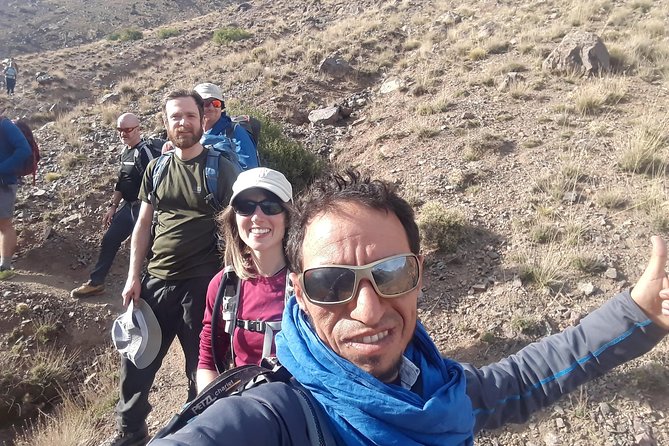
This kind of Atlas trip works best when it balances two things: movement and human contact. Here, you get a guided hike through the Toubkal Valley area, but you also get pauses where local life is the point, not just the background.
What makes it stand out for me is the flow. You start with low-key town stops—Tahanaout and Asni—then you move to the Imlil area, which is the main start point for many hikes into the Atlas. That gives you a sense of where hikers come from, and why Imlil is busy in the right way: it’s a practical base for mountain days.
The other reason this trek works is the storytelling layer. One guide named Mohammed was praised for answering questions about the Atlas, the villages in the valley, and Berber community life. Even if your guide isn’t Mohammed, this is clearly the style of guiding you should expect: clear explanations tied directly to what you see as you walk.
You can also read our reviews of more tours and experiences in Marrakech.

Morning setup: private AC transport from Marrakech
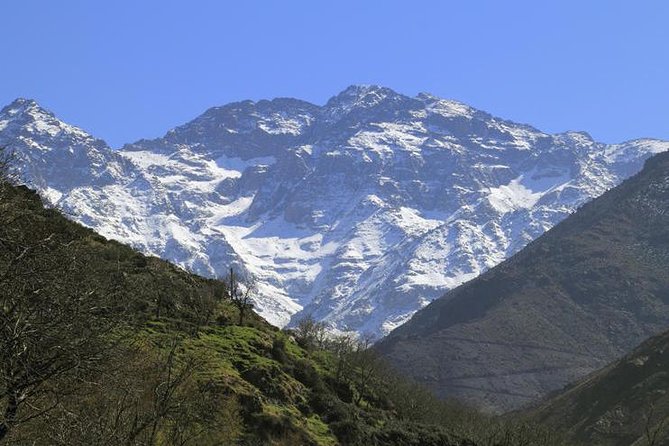
You’ll start at 9:00 am, and pickup is offered. That matters because the Atlas mountains can start feeling real fast once you get out of Marrakech. Having private air-conditioned transport means the long road doesn’t drain all your energy before you even start walking.
The transfer times are approximate and depend on traffic. So I treat this as a day trip where you relax into the schedule. The operator keeps the pace manageable, and since the maximum group size is 15, you won’t feel like you’re in a rolling bus line.
You’ll also have a mobile ticket, and you’ll get confirmation at booking. For me, that’s one less thing to worry about on the morning—especially if you’re trying to coordinate hotel pickup and still eat breakfast without rushing.
Tahanaout: market-town stop and the Azrou old village link
Your first meaningful stop is Tahanaout, a small town with a weekly market that takes place every Thursday. Even if your day doesn’t land on market day, it’s the kind of place where you can sense how the week rhythm works—locals passing through, vendors set up, and the town moving at its own pace.
Tahanaout is also tied to Azrou, an old village described here as recently classified by UNESCO. The stop is short—about 15 minutes—so this isn’t a deep history session. Instead, it’s a quick way to orient yourself: you’re not only going to the mountains, you’re also passing through communities that have long been part of the Atlas story.
A practical tip: since this is brief, don’t plan on squeezing in extra shopping or photo stops. Use the time for a few photos, then mentally shift to the mountain day ahead.
Asni and Moulay Ibrahim Valley: camel moment at the gate of the Atlas
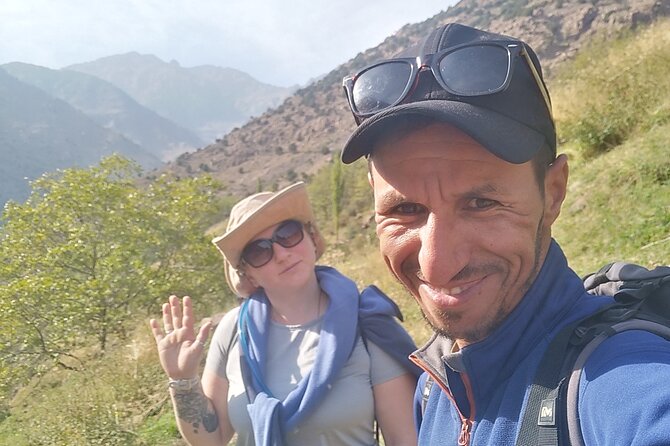
Next up: Asni with a stop in Moulay Ibrahim Valley. This is a smart placement in the itinerary. Asni is near the point where you start picturing the Atlas as more than a backdrop.
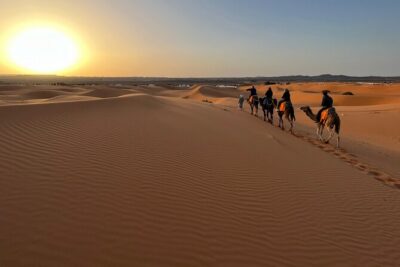
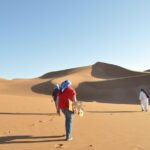
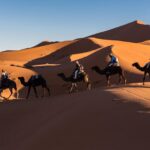
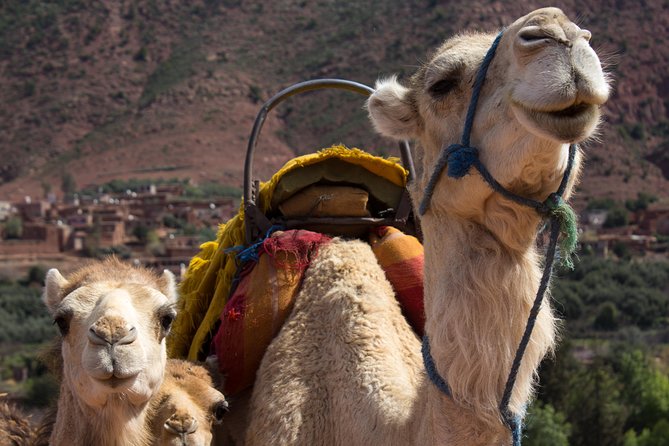
Here, you get a short camel ride and a chance to take photos at the gate of the Atlas. The ride is brief (about 30 minutes total here), but the value is in the timing. You’re not doing a long, exhausting animal segment before your hike. You’re just getting that classic Atlas experience while the scenery is opening up.
One drawback to consider: camel rides are optional and short, and they can be bumpy. If you’re sensitive to uneven ground or prefer to keep things steady, stick close to the group and only do the ride if it feels right that day.
Imlil: where your hike turns into the real Atlas experience
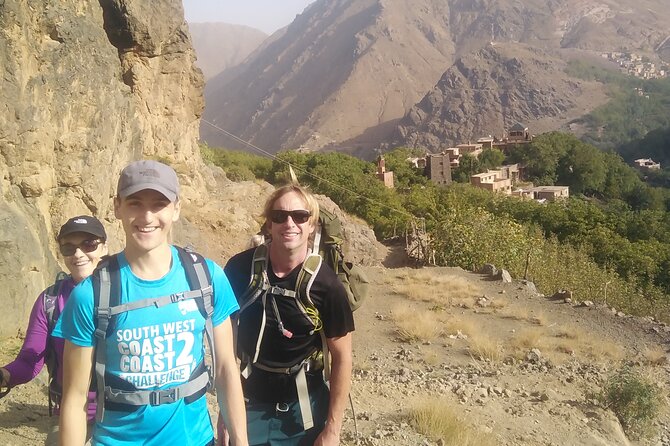
This is the main act. Imlil is described as the main start point for many treks and hikes in the Atlas Mountains. So when you arrive here, you’re entering a working trail hub, not a random roadside viewpoint.
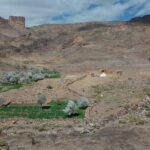
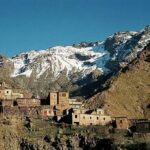
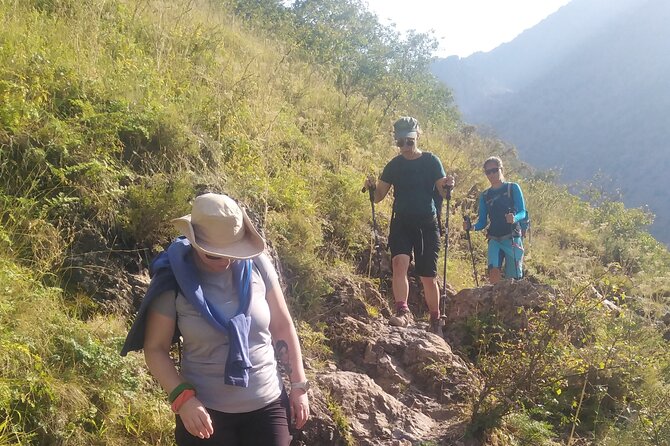
From Imlil, you’ll do a hike that crosses Berber villages and includes time near a waterfall in the Toubkal Valley. The itinerary lists this portion as about 3 hours, and the pacing is built to keep you moving without turning the day into an all-day grind.
What I like about the circular approach is that it reduces decision fatigue. Instead of hiking to a far endpoint and waiting forever, you do a circular walk back to the main center of Imlil, then you reconnect with your driver to return to Marrakech.
If you want the most out of this section:
- Walk with an eye for doorways, terraces, and farm plots you pass along the way.
- Pause when the guide points out a village path or route—those little direction changes explain how people actually move through the valley.
The one consideration here is simply trail comfort. The day is said to work for most people, but you still want good footwear. A sturdy shoe with grip matters more than fashion.

Tea with a Berber family and lunch: the part that slows time
The day includes tea with locals, and this is usually where the whole trek shifts from scenery to culture. You’re not just tasting mint tea—you’re doing it in a context that gives the drink meaning. In Morocco, tea is hospitality in liquid form, and a guided day like this uses that moment to put faces and names to the valley.
After your hike, lunch is included as an optional add-on: local meal 7€. The lunch is described as being served at a local family house after the walk. A past highlight from the guide style was that the lunch served in a local setting was delicious—so if you’re on the fence, I treat this as one of the smarter extras to pay for.
Here’s how to think about that cost. You’re paying for a homemade meal experience in the valley, not a cafeteria stop. And because you’re already in mountain terrain, the alternative is often grabbing food later in a town that doesn’t feel connected to the walk you just did.
If you’re vegetarian or have dietary limits, you should ask before committing to the meal option, since the menu isn’t described here in detail.
Camel and mule rides: fun additions with real trade-offs
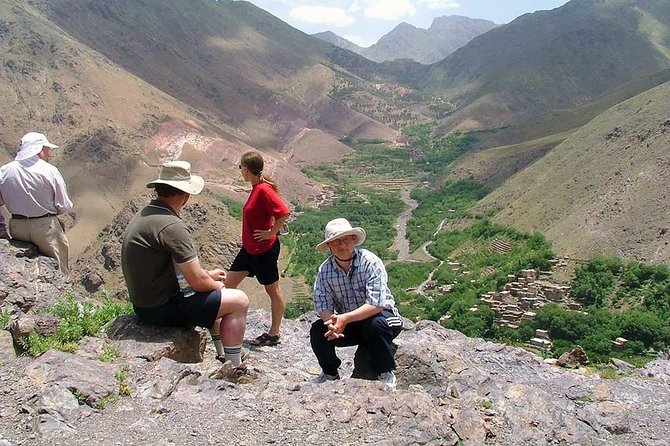
The experience mentions camel and mule rides in the mountains, which is a classic Atlas add-on. The key is to remember that these rides are there to make the day more varied, not to replace your hiking.
How you should weigh it:
- If you want a quick taste of traditional mountain travel, take the camel or mule moment when offered.
- If you’re uncomfortable around animals or have balance issues, consider skipping the ride and focus on the trail and views instead.
From the itinerary, you’ll definitely see an animal component around the Asni stop (short camel ride). The overview also includes mule riding as part of the day’s mix. So expect some time where you’re off your feet, even if your main effort is hiking.
Bring a practical mindset. Cameras are great, but keep one hand ready if you’re on a ride. And if the animal segment happens before lunch, you might feel less hungry afterward—so don’t plan a massive snack immediately after.
Timing, group size, and what to pack for mountain weather
Start time is 9:00 am, and the overall duration is about 6 hours. That’s a realistic half-day format that usually works well when you still want an evening in Marrakech.
The tour is capped at 15 travelers. In plain terms, that helps a lot. Smaller groups mean fewer long waits at each stop and a better chance to ask questions without shouting over a crowd.
The operator also requires good weather. If weather is poor, the experience may be canceled, and you’ll be offered a different date or a full refund. That means you should keep your other Marrakech plans flexible that day. Mountain days can turn fast when clouds roll in.
What to pack (based on how this day is structured):
- Comfortable hiking shoes with grip
- A light layer for cooler mountain air
- Sun protection (even in higher areas)
- Refillable water bottle if you like, though bottled water is included
If you’re prone to motion sickness, consider skipping animal rides or bringing something you trust—mountain terrain is bumpy by nature.
Price and value: what $67.58 covers (and what it doesn’t)
The price is $67.58 per person for a guided day that includes a lot of the hard-to-organize pieces in one package.
What’s included:
- Private air-conditioned transport
- An English-speaking guide
- Tea with locals
- Bottled water
What’s not included:
- Tips
- Lunch (7€) as a local meal option
- Camel ride (5€) as an optional add-on
To judge value, don’t only look at the dollar amount. Think about what you’d otherwise pay separately in Morocco: transportation out of Marrakech, a guide for the valley routes, and the cultural stops that turn the day from photos-only into a meaningful walk. Those are the expensive parts, time-wise, if you try to DIY.
At $67.58, you’re paying for convenience plus guidance. The lunch and camel ride are affordable add-ons, and they likely make sense if you want the full Atlas feel rather than just the trail.
Who this trek suits best (and who might want to adjust expectations)
This day trek is a great match if you:
- Want a guided hike without the pressure of multi-day trekking
- Enjoy meeting locals and hearing how valley life works
- Like a schedule that includes both movement and breaks for tea and food
It’s also a good option if you’re traveling with limited time. Six hours is long enough to feel you went somewhere real, but short enough to still enjoy Marrakech later.
What might not fit as well:
- If you hate any walking at all, this may feel like too much
- If you’re fragile in bad weather, remember the operator says the day depends on good conditions
- If you prefer fully detailed itineraries with exact trail names and distances, you might wish for more trail specifics than what’s listed here
Should you book Atlas Vertical Travel’s Atlas day trek?
I’d book it if you want an Atlas day that mixes trail time with real people. The standout ingredient is the combination of a guided hike in the Toubkal Valley plus a cultural pause for tea, and the way guides are described as willing to answer questions—especially around Berber village life. Add in the small group size and private AC transport, and you get something that feels organized without feeling sterile.
I’d only hesitate if your schedule is rigid and you can’t tolerate a weather-based change. Since the day depends on good conditions, keep one backup plan in Marrakech.
If your goal is a day that’s genuinely practical—shoe-ready, guide-led, and worth the drive—this is a solid choice.
FAQ
What time does the trekking day start?
It starts at 9:00 am.
How long is the experience?
The duration is listed as about 6 hours.
Is pickup available from Marrakech?
Yes. Pickup is offered, and you travel in private air-conditioned transport.
Is lunch included?
Lunch is not included in the base price. A local meal is listed at 7€.
Are camel rides included?
A camel ride is optional and listed at 5€.
What does the tour include besides the hike?
You get an English-speaking guide, tea with locals, and bottled water, plus private AC transportation.
What happens if weather is bad?
The experience requires good weather. If it’s canceled due to poor weather, you’ll be offered a different date or a full refund. Free cancellation is available up to 24 hours before the start time for a full refund.