REVIEW · MARRAKECH
The secret of the camel trekking desert
Book on Viator →Operated by Vision Berbere · Bookable on Viator
That Sahara quiet hits fast. This camel-trekking week pairs proper desert time with a friendly, safety-first camp setup and a genuine Marrakech landing.
I love how the trip keeps you in a small group (max 15), so the guide and camp team can actually help. I also like that your days are built around memorable desert moments: dune walks, starry-sky bivouacs, and evenings around the fire.
One possible drawback: the walking blocks can run about 4 to 4.5 hours on several days, so you’ll want decent stamina and a plan for heat, sand, and sore legs.
In This Review
- Key things to know before you go
- From Ouarzazate to the Sahara: why this route works
- Day-by-day: what you do (and why each day feels different)
- Day 1: Arrive in Ouarzazate, then settle in
- Day 2: Ouarzazate → M’hamid → Ras N’Khal (first desert night)
- Day 3: Ras N’Khal → Erg Aït Ounir (longer dunes, deeper quiet)
- Day 4: Erg Aït Ounir → Erg Zaher (a change of feel)
- Day 5: Erg Ezzahar → Sidi Naji dunes (classic dune time)
- Day 6: Sidi Naji → Ras N’hkal → Ouled Driss (final dune day, then people again)
- Day 7: Ouled Driss → Ouarzazate → Marrakech (sleep like a human)
- Day 8: Ouarzazate → airport transfer
- Bivouacs, firelight, and why the evenings matter
- The guide setup: safety, culture, and a crew that knows the job
- Marrakech payoff: the red city as your reward zone
- Price and value: what $1,018.99 buys you in the real world
- What to pack and how to plan your body for dune walking
- Who this desert trek is best for
- Should you book Secret of the Camel Trekking Desert?
- FAQ
- How long is the camel trekking desert experience?
- Where does the trip start and how does it end?
- Is pickup offered?
- What meals are included?
- What’s the group size?
- What fitness level do I need?
- Is the cost all-inclusive?
- What if the trip is canceled due to weather?
- Do I get confirmation when I book?
Key things to know before you go
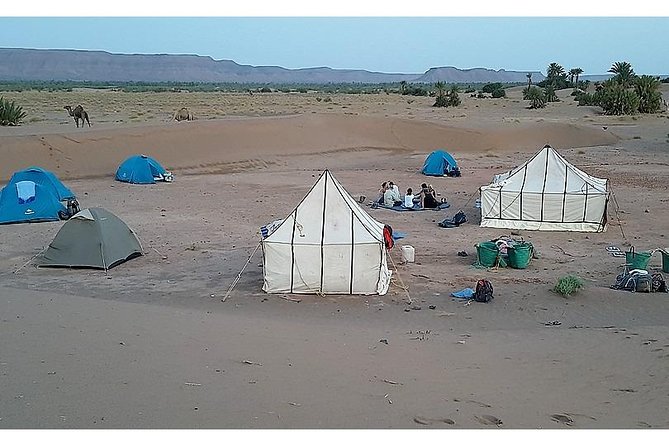
- Small group rhythm (15 max) keeps the pace human and the camp experience calmer.
- Mustapha and a full working team (camel drivers, cooks, equipment managers) is repeatedly praised for safety and organization.
- Dune variety, not just one spot: Ras N’Khal, Erg Aït Ounir, Erg Zaher, Erg Ezzahar, Sidi Naji dunes.
- Bivouacs under the stars are a highlight, with fire-time downtime built into the evenings.
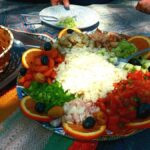
- Meals are handled for you (breakfast 6, lunch 6, dinner 5), so you spend less energy thinking and more energy looking up.
- You get Marrakech afterward with a hotel or riad stay in a real “end of trip” vibe.
From Ouarzazate to the Sahara: why this route works
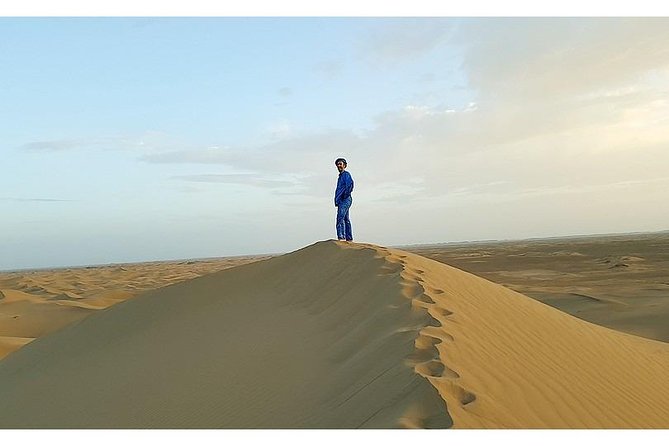
Most Sahara trips either feel rushed or stop being fun halfway through. This one is built like a slow ignition.
You start in Ouarzazate, with an airport arrival transfer to your accommodation and a night that includes breakfast. That first night matters. It gives you time to reset and sleep before you go full “noisy world, far away” mode. Ouarzazate also acts like a practical gateway: you’re not just jumping straight into the dunes with jet lag and zero water strategy.
The next day, you head toward M’hamid and then on to Ras N’Khal. Right away, the trip shifts from roads to sand, with a first walking segment (about 1h30). It’s a gentler ramp-up so you can get a feel for the terrain before longer dune days. Think of it as your body learning the rules: your footing, the pace, the rhythm of camel-supported movement, and how quickly sand turns into workout mode.
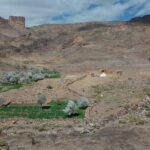
If you care about authenticity, this route has a nice balance. You’re not only seeing the dunes—you’re also passing through places that feel lived in, with friendly local encounters that show up again and again in people’s comments about the week.
You can also read our reviews of more tours and experiences in Marrakech.
Day-by-day: what you do (and why each day feels different)
This isn’t a “walk one big track and sleep” situation. Each day has its own feel, mostly driven by which dunes/ergs you move through and how long you’re on your feet.
Day 1: Arrive in Ouarzazate, then settle in
After you land, you get reception and a transfer to your accommodation. Your night is in a hotel with breakfast included. The practical win here is simple: you sleep somewhere comfortable first, not somewhere you can’t find again at night.
Day 2: Ouarzazate → M’hamid → Ras N’Khal (first desert night)
You travel to M’hamid and continue toward Ras N’Khal, with about 1h30 of walking along the way. Then you’re in a bivouac. This day is about transition—going from everyday Morocco into Sahara routine.
What I like about this setup: it lowers the “shock factor.” You’ll still feel the heat and the openness fast, but your body isn’t punished right away.
Day 3: Ras N’Khal → Erg Aït Ounir (longer dunes, deeper quiet)
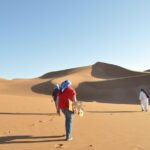
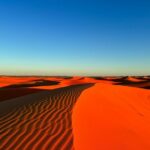
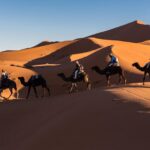
Today is one of the main physical days: around 4h30 of walking, and then another bivouac night. Erg Aït Ounir is where the Sahara starts to feel cinematic—big distances, long shadows, and that sense that sound travels farther than you expect.
Expect this to be a day where pacing matters. Go steady early, because the sand doesn’t reward ego.

Day 4: Erg Aït Ounir → Erg Zaher (a change of feel)
Another 4h30 walk takes you from Erg Aït Ounir toward Erg Zaher. This stretch keeps the momentum going while still changing the visual texture of the desert.
If you’re the type who loves small differences—how dunes shift, how wind sculpts surfaces—days like this are a treat. If you just want maximum comfort, you’ll want to manage expectations: these are walking days in a desert.
Day 5: Erg Ezzahar → Sidi Naji dunes (classic dune time)
You continue with another 4h30 walk, now heading toward Sidi Naji dunes. Then you sleep in the bivouac again.
Sidi Naji is a name that shows up as a highlight in desert memories, mostly for the vibe: open sky, dramatic light, and the kind of sunset that makes you stop checking your phone for no reason.
Day 6: Sidi Naji → Ras N’hkal → Ouled Driss (final dune day, then people again)
Today is about 4 hours walking, moving from the dunes area toward Ras N’hkal and then Ouled Driss for the night in the camp setup.
This day can feel like two worlds. You still get that Sahara quiet, but you’re closer to the point where the trip starts giving you back more “civilization cues” in your schedule.
Day 7: Ouled Driss → Ouarzazate → Marrakech (sleep like a human)
Now you break out of the desert routine: you head to Ouarzazate, then on to Marrakech. Your night is in a hotel or riad, including breakfast.
For me, the Marrakech piece is not a random add-on. It’s your reward for finishing strong. You go from sand-sky silence to souk energy, narrow streets, and the joy of a proper bed.
Day 8: Ouarzazate → airport transfer
You get transfer to the airport based on your departure time. You meet the group at the hotel reception 2 hours before take-off. The day is short and straightforward—no last-minute chaos, which is exactly what you want after a trek week.
Bivouacs, firelight, and why the evenings matter
People talk about the desert like it’s just daytime beauty. The truth is, the best part often shows up after sunset.
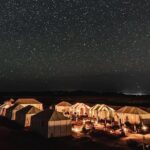
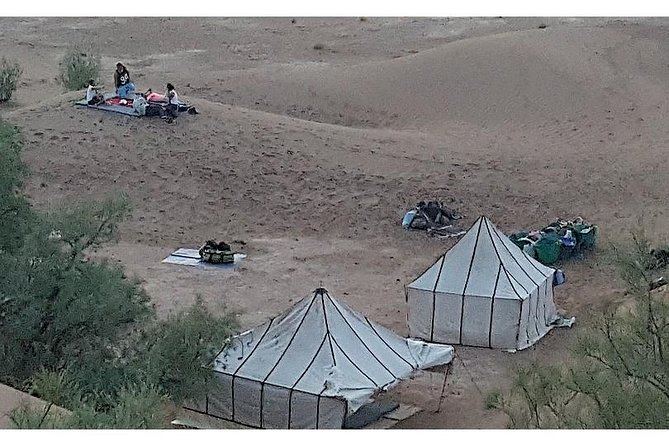
Your nights are spent in bivouacs, and the camps are built around a simple routine: you walk, you arrive, you eat, and then you slow down. The overview also calls out relaxing around the fire—and that theme matches what people consistently praise: warmth, camp atmosphere, and the way the sky turns into a whole other planet.
Two practical notes I’d give you:
- Bring a flexible mindset. The camp setup is functional and part of the experience, not a luxury hotel replacement.
- Plan to enjoy the quiet. Star time is not just for photos; it’s for letting your brain shut off.
From the comments, the camp vibe is also tied to the human team: camel drivers, cooks, and a guide who keeps things safe and moving. Even when the day is long, people remember the evening as the moment they felt cared for.
The guide setup: safety, culture, and a crew that knows the job
This is one of those trips where the difference between good and great is mostly the people behind the scenes.
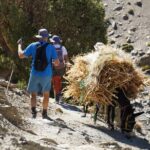
The experience is led by Mustapha, and the feedback is strong on the same themes: he’s attentive, experienced, and focused on safety. People also mention he works with a professional team—camel drivers and cooks—plus equipment management that keeps logistics from turning into stress.
Why that matters to you:
- In desert conditions, “I’ll handle it” is not a slogan. You need someone who can read the terrain, manage pacing, and keep the group together.
- Food and timing matter more than you’d think. When the meals are well done, you recover better and you’ll enjoy the next day more.
One of the more interesting additions from feedback: there’s mention of a yoga teacher and yoga sessions that can work for different levels. That may be a small thread in your week, but it fits the broader pattern: the trip isn’t just about pushing through; it’s also about letting your body and mind come back online.
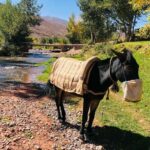
And yes, there are fun camp details too. Mule drivers setting a mood with Berber music comes up in the comments—so the week can have both calm and celebration, depending on the moment.
Marrakech payoff: the red city as your reward zone
Finishing in Marrakech is the smartest part of the pacing. You spend days learning the desert. Then you land in a place that feels busy in a totally different way.
You’ll stay either in a hotel or a riad (with breakfast), and the trip description points to classic Marrakech experiences: narrow souks streets, romantic and lively atmosphere.
Practical thought: don’t plan a rushed second-day itinerary in Marrakech if you can help it. After sand, you’ll want a slower morning, maybe a walk through the souks when your energy returns. Marrakech will still be there, and you’ll experience it better when you’re not running on trek-day fatigue.
Price and value: what $1,018.99 buys you in the real world
Let’s talk money without magic.
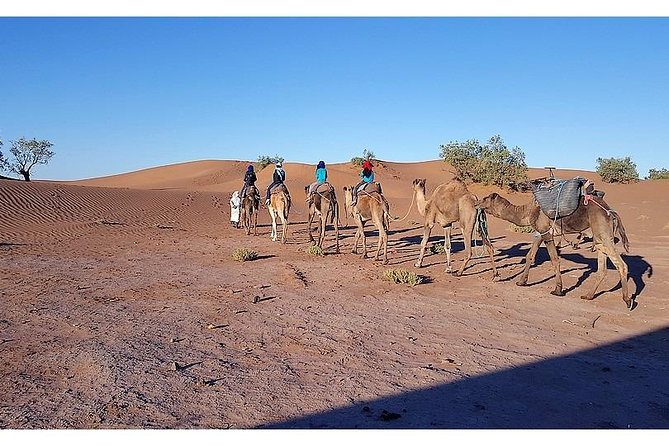
At $1,018.99 per person for an ~8-day trip, you’re paying for a lot of what can be expensive in Morocco: guided desert movement, a professional team, camel support, multiple camp nights, and the full meal plan (breakfast 6, lunch 6, dinner 5). You also get transportation support that stitches together Ouarzazate, M’hamid/Ras N’Khal, the dune section, and then Marrakech.
If you compare this to building a desert trek yourself, the value mostly comes from how many moving parts are handled:
- logistics across several locations,
- consistent meals,
- and a guide who keeps the group safe.
The main downside on cost is also the simplest: you still need personal judgment. Desert trekking is not a “sit back and float” holiday. You’ll get more value if you truly want walking time, camp evenings, and that starry-sky quiet.
Also, keep one small thing in mind: repatriation insurance isn’t included. That’s one of those line items people forget—until they really need it. If you’re comfortable handling insurance separately, the trip value looks stronger.
What to pack and how to plan your body for dune walking
The trip is labeled easy and asks for moderate physical fitness, but don’t let “easy” fool you. Easy for this route means guided pacing and manageable day structure, not that sand is soft.
Pack priorities:
- Shoes you trust on uneven ground and sand.
- Sunglasses and sun protection. Heat is explicitly part of the experience.
- Layers for the temperature swings. Desert evenings can feel very different from daytime.
- A water and salt strategy you follow every day (your guide team will help, but you should still take responsibility).
Body strategy:
- Walk consistently rather than hero-fast.
- Take your breaks even when you feel fine. That’s how you keep the next day enjoyable.
- Expect some stiffness. If you’re hoping for a trek where you feel like a showroom model afterward, this trip may disappoint you.
Who this desert trek is best for
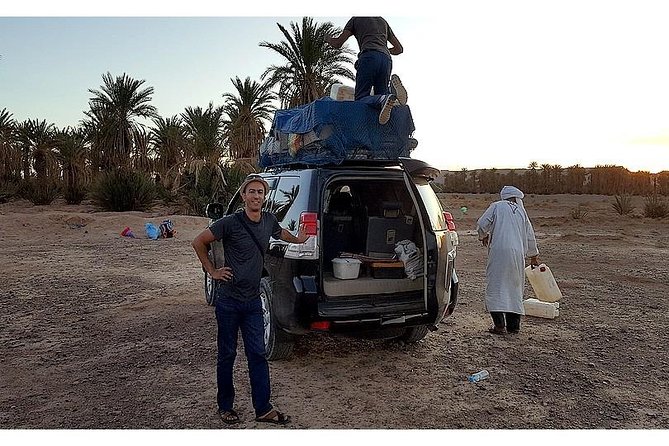
This works especially well if you:
- want a classic Sahara camel trekking experience with real time in the dunes,
- like small-group travel and don’t want to feel like a number,
- enjoy camp evenings and don’t mind basic-but-comfortable bivouac life,
- want a guided trip that mixes safety with genuine cultural human contact.
It might not be ideal if you:
- need a lot of downtime in the middle of the day,
- are sensitive to walking 4 hours-plus on several days,
- or prefer fully private travel.
Should you book Secret of the Camel Trekking Desert?
Yes, if you want the best parts of Morocco packed into one week: desert silence, dune walks that feel earned, camp nights that get you looking up, and then Marrakech to bring you back into the world with style.
If you’re deciding last-minute, here’s the quick checklist I’d use:
- You’re okay with daily walking for a multi-day trek.
- You like small-group experiences (max 15).
- You’re happy to trade hotel comfort for a star-filled night and fire-time calm.
- You can arrange repatriation insurance on your own.
If those boxes fit, this trip is the kind that can stick with you for a long time—because the desert doesn’t just show up on your camera roll. It changes your pace for the rest of the year.
FAQ
How long is the camel trekking desert experience?
It’s listed as about 8 days.
Where does the trip start and how does it end?
It starts in Marrakech, with the itinerary running through Ouarzazate and the Sahara, and it finishes with a return to Ouarzazate for the airport transfer.
Is pickup offered?
Yes, pickup is offered.
What meals are included?
Breakfast is included for 6 days, lunch for 6 days, and dinner for 5 days.
What’s the group size?
The tour has a maximum of 15 travelers.
What fitness level do I need?
The experience is described as easy and requiring moderate physical fitness.
Is the cost all-inclusive?
The price includes the meals listed above, but repatriation insurance is not included.
What if the trip is canceled due to weather?
The experience requires good weather. If it’s canceled due to poor weather, you’ll be offered a different date or a full refund.
Do I get confirmation when I book?
Confirmation is received at the time of booking.