REVIEW · MARRAKECH
Toubkal Trekking 2 Days
Book on Viator →Operated by Morocco Tours With Locals · Bookable on Viator
There’s something about a summit you can see coming. This two-day Toubkal trek takes you from the Imlil valley up to the Toubkal refuge, then on to Jbel Toubkal’s 4,167m summit with a guide and group the whole way. I like that the walking is tough-but-manageable rather than “mountaineering only,” and I especially like the steady, practical guidance from experienced local leaders such as Ibrahim and Mohammed.
Two things also stand out for me as a traveler: the air-conditioned vehicle that gets you to the trail area and back, and the fact you sleep in a local refuge—so you don’t have to lug camping gear. The main drawback to plan around is effort and timing: day two is a long day (about 10–12 hours on foot), and altitude effects are possible even if the pace is controlled.
In This Review
- Key Points Before You Go
- Toubkal in Two Days: What This Trip Is Really About
- Marrakech to Imlil: The Comfort Start That Matters
- Day 1 Trail from Imlil to the Refuge Night (1,740m → 3,207m)
- The Refuge Overnight: Sleeping at Altitude Without Camping
- Day 2 Summit Push to 4,167m and the Long Descent
- Food, Breaks, and Why the Guide Really Controls the Experience
- Price and Value: Is $210.53 a Good Deal for a 2-Day Summit?
- Who This Trek Is Best For (and Who Should Think Twice)
- Should You Book This Two-Day Toubkal Hike?
- FAQ
- Where does the trek start and end?
- How long is the tour?
- Do I need camping gear?
- Do I need mountaineering experience?
- What fitness level do I need?
- Is pickup included?
- Is it private or shared?
- Is the tour weather dependent, and what happens if it’s canceled?
- FAQ
- Is there free cancellation?
- Does the tour include a mobile ticket?
Key Points Before You Go
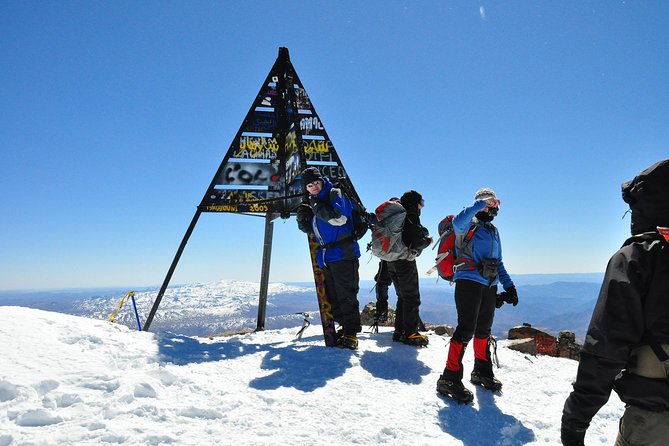
- Refuge sleep, not camping: You overnight at the Toubkal refuge, so you can travel lighter.
- Real guide time, all the way up: You’re kept moving safely with a guide staying with the group.
- Day 2 is the marathon: Expect roughly 10–12 hours of walking after an early start.
- Food and breaks are part of the plan: Past hikers highlight hearty, well-managed meals and quick stops for coffee or orange juice.
- Safety advice is taken seriously: A common emphasis is pacing to avoid altitude stress and avoiding unsafe water sources near the top.
Toubkal in Two Days: What This Trip Is Really About
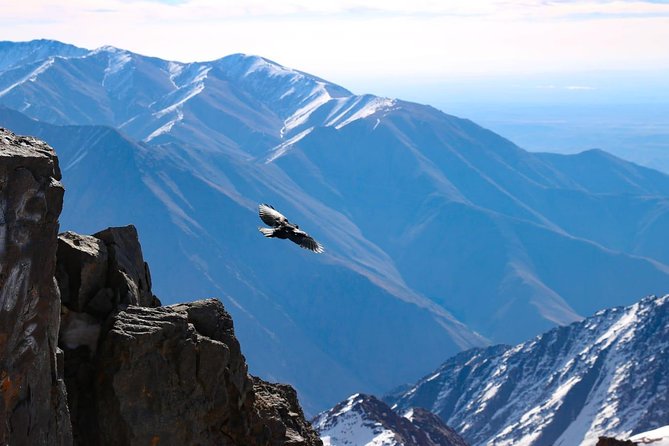
This trek is built for people who want a big achievement in a short time, without needing ropes, crampons, or prior climbing skills. In plain terms: you’ll walk a lot, you’ll climb steep sections, and you’ll spend the night at altitude in a refuge before going for the summit the next day.
What makes it a good “starter summit” is that the route is structured around common mountain-day logic: day one builds you up into the right altitude zone and rhythm, day two starts early so you’re not rushing the summit in the heat or light. And because you go as a group, you’re less likely to get separated or overextend yourself too early.
The flip side is that two days still means you don’t get many “recovery buffers.” If you’re the type who loves slow travel and long lunches, this will feel like work. If you like purpose-built hikes—walk, refuel, keep moving—this fits well.
You can also read our reviews of more tours and experiences in Marrakech.


Marrakech to Imlil: The Comfort Start That Matters
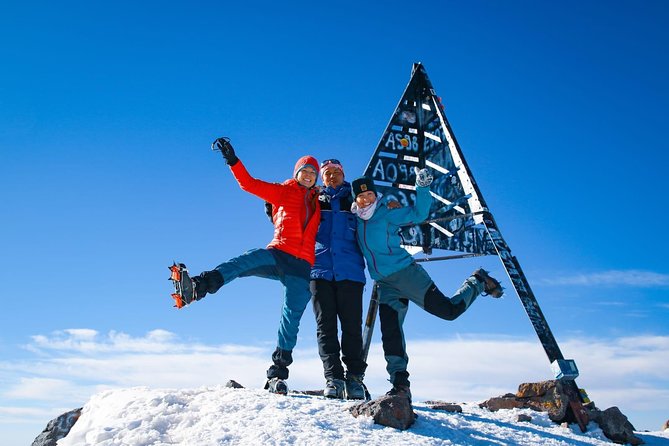
You start from Marrakech, with pickup offered from your accommodation. The trip includes a drive by air-conditioned vehicle, and that matters more than it sounds when you’re about to do hours of uphill hiking.
Here’s the practical value: the AC ride helps you arrive less sweaty and less exhausted than you might if you had to rely on open-air transit in warm weather. It also tends to cut down “start-time chaos.” When your body is preparing for altitude and effort, it helps to begin the day feeling like you still have energy left.
Your first hike begins at Imlil (starting point at about 1,740m). From there, the group meets the local team, and you’re set for a steady climb into the Atlas Mountains area.
Day 1 Trail from Imlil to the Refuge Night (1,740m → 3,207m)
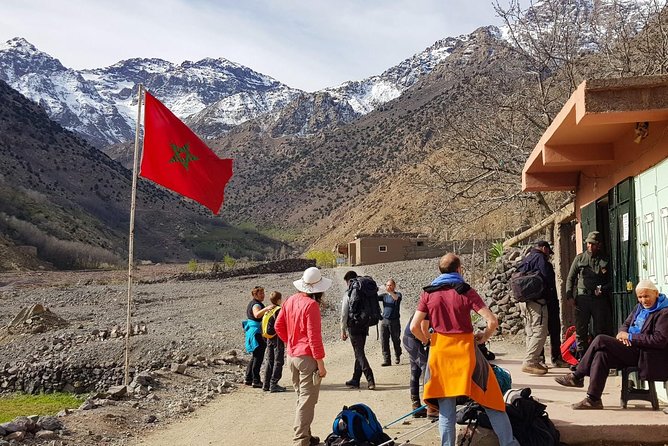
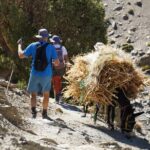
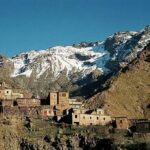
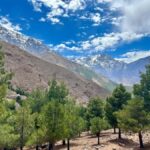
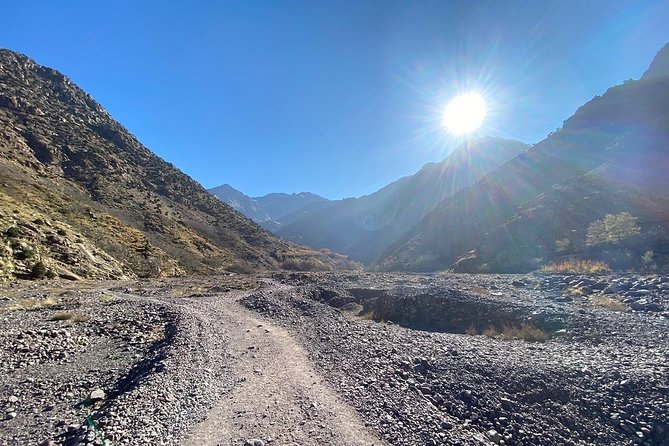
Day one is the “get yourself into it” day: about 4–5 hours of walking, not counting stops. You’ll go through the Aït Mizane valley toward local villages and landmarks, then keep climbing to the Toubkal refuge.
What you’re walking through
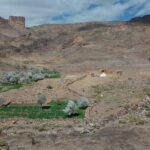
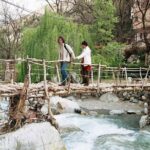
- You trek through the valley of Aït Mizane, moving from the lower valley setting up toward mountain life.
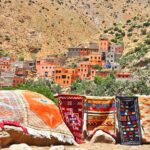
- You pass by the village of Aremd.
- You visit the sanctuary of Sidi Chamarouch, which breaks up the climb with a real sense of place rather than only trail and switchbacks.
- The route also includes a nearby waterfall, adding a sensory pause during the ascent.
Why this day is valuable
This first day isn’t just altitude for altitude’s sake. It’s where you learn the pace your body can handle. A recurring theme in how guides lead this trek is controlling speed to reduce altitude stress. It’s the difference between feeling okay at hour three versus feeling rough at hour four.
Possible drawback
Day one is still a climb with steep paths. Even if you don’t need mountaineering experience, your legs will feel it. If you go out too fast, day two won’t be fun. The best match is a steady, slightly conservative pace from the start.
The Refuge Overnight: Sleeping at Altitude Without Camping
Night one is at the Toubkal refuge (around 3,207m). This is one of the most travel-friendly parts of the trip: you don’t need camping gear. You’re not wrestling with tents, sleeping mats, or bulky equipment.
Why staying in a refuge helps
- You can keep your pack lighter and less complicated.
- You’re not taking on extra logistics at a remote point. The guide and team handle the structure.
- It sets you up for an early summit attempt the next day.
What to keep in mind
Refuge nights are typically simple by design. This is a mountain hike experience, not a resort. Plan for basic comfort and focus on sleep quality rather than expecting hotel-level amenities.
Day 2 Summit Push to 4,167m and the Long Descent
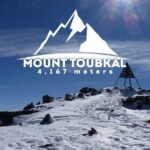
Day two starts early to reach the summit of Jbel Toubkal (highest point in North Africa at 4,167m). After that, you return through the refuge area and down to Imlil and then Marrakech.
How the walking feels
- The total hike time is about 10–12 hours on foot.
- You’ll cross streams and move through rocky sections on the route toward the summit.
- After reaching the summit, you start the descent gently at first, then continue down to the bottom.
Why the summit moment lands
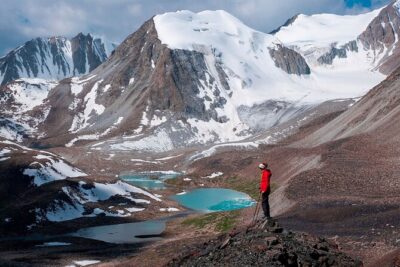
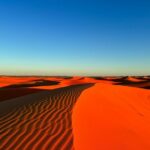
When you hit the plateau and look out, the views are the big reward: you can see the plain of Marrakesh and the High Atlas to the north, and the Anti-Atlas and the Sahara to the south. It’s the kind of wide, “I can’t believe my legs got me here” view that makes the early start worth it.
The practical tip that keeps people safer
Guides often stress two things that make a difference on summit days:
- Pace matters—slow down so your body handles the altitude better.
- Water choices matter—even when water looks clear, you should follow your guide’s advice and not drink it if they tell you not to.
After the summit, you’re not done. The best advice I can give is to mentally accept that the descent is still work. Your body often feels it in the knees and thighs, and that long day is part of the package.

Food, Breaks, and Why the Guide Really Controls the Experience
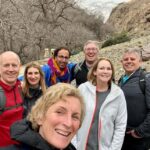
This is where a lot of “great trek” stories are made. The tour includes a team that runs the pacing and support while you hike, and guides like Ibrahim, Mohammed, and Rashid are repeatedly highlighted for calm competence and staying with the group.
What you can expect from the way they lead
- A guide stays with you the entire time, which reduces the chance of getting lost or stuck.
- The pace is often adjusted to avoid altitude problems, including advice to slow down when needed.
- Stops aren’t random. They help you reset before the next steep section.
Hikers also talk about food in a genuinely useful way: meals are described as tasty and filling, and the cook’s work gets specific praise. You’ll need that energy. Day two is long enough that you don’t want your fuel to be an afterthought.
Small, practical safety points from the field
One repeated point is safety around clear water near the top. The mountains can look clean and inviting. Your guide’s rules are the ones to follow.
Price and Value: Is $210.53 a Good Deal for a 2-Day Summit?
At $210.53 per person, this trip isn’t cheap, but it’s also not trying to be luxury. The value comes from what’s included and what’s avoided.
What you’re paying for (and it matters)
- Air-conditioned transportation to and from the trail area.
- A full guide-led experience with safety and pacing support.
- An overnight at a local refuge, which removes the need for camping gear and extra gear decisions.
- A structured route that saves you from having to figure out logistics on your own.
If you compare the cost to doing something similar independently, the biggest savings usually aren’t money—they’re time and uncertainty. The guide and team handle local coordination so you can focus on hiking.
Also, there are group discounts listed. If you’re traveling with friends, you may be able to improve value further. And with advance booking being common (about 76 days on average), it’s worth locking it in early rather than hoping the dates line up last minute.
My honest take: this price is reasonable if you want a real, guided summit effort without extra hassle.
Who This Trek Is Best For (and Who Should Think Twice)
Best fit
- You have moderate physical fitness and you’re comfortable with steep walking.
- You want a summit goal without prior mountaineering experience.
- You like structured adventure—walk, rest, eat, hike again—rather than total self-planning.
Think twice if
- You’re not ready for a very long day on day two (10–12 hours walking).
- You dislike hiking in altitude conditions where slow pacing might be needed.
- You want a more relaxed travel style with lots of downtime.
One nice aspect is that this is described as challenging but not technical. So the skills barrier is mostly endurance and stamina, not climbing technique.
Should You Book This Two-Day Toubkal Hike?
I’d book it if you want a serious hike with a clear goal: walk from Imlil up to the refuge, sleep at altitude, then go for the Toubkal summit with an experienced guide and a team that keeps you safe and moving.
I’d skip or switch tours if you’re unsure about long walking days or you’re looking for a gentler itinerary. Day two is the dealbreaker for many people—if that feels heavy, you’ll feel it.
If you do book, treat it like a training day for patience. Go out at a steady pace, respect altitude advice, and listen to your guide about things like water safety. You’ll earn those wide summit views the right way.
FAQ
Where does the trek start and end?
It starts in Imlil, Morocco and ends back at the meeting point (the activity finishes at the start point location).
How long is the tour?
The duration is listed as approximately 2 days. Walking time is described as about 4–5 hours on day one and about 10–12 hours on day two, plus about 1.5 hours of driving.
Do I need camping gear?
No. You sleep in a local refuge, so camping gear is not required.
Do I need mountaineering experience?
No. The trek is challenging but described as not requiring mountaineering experience.
What fitness level do I need?
You should have moderate physical fitness.
Is pickup included?
Yes. Pickup is offered, and the trip includes an air-conditioned vehicle for driving to and from the trekking trails.
Is it private or shared?
This is listed as a private tour/activity, so only your group participates.
Is the tour weather dependent, and what happens if it’s canceled?
Yes, it requires good weather. If canceled due to poor weather, you’ll be offered a different date or a full refund.
FAQ
Is there free cancellation?
Yes. You can cancel up to 24 hours in advance for a full refund.
Does the tour include a mobile ticket?
A mobile ticket is listed as a feature for the experience.