REVIEW · MARRAKECH
Atlas Mountains Valley Trek – 3 Days
Book on Viator →Operated by Toubkal Guide · Bookable on Viator
Atlas valley walking beats city wandering any day. This 3-day trek from Marrakech takes you into the Atlas Mountains valleys around Imlil, with streams, cherry and walnut groves, and Berber culture explained by your guide. I also like that it’s run as a small-group hike (max 15), which keeps things friendly instead of chaotic.
The big practical win is that most of the heavy lifting is handled: round-trip transport from Jemaa el-Fna, accommodation in local gites, meals, mule support, and even entrance fees. The one drawback to plan around is that this is real hiking at mountain altitude, with walking times around 4 hours on day one, 6–7 hours on day two, and passes reaching roughly 2,279–2,400 meters—plus you’ll need to bring your own sleeping bag.
In This Review
- Key Things To Know Before You Go
- Getting From Jemaa el-Fna to Imlil Without Stress
- Day 1: Imlil to Tinerhourhine via Tizi ’n Tamatert (and a real col)
- Sleeping in a Local Gite: what that means on the Atlas trek
- Day 2: Imnane Valley, Ikkiss, and the climb toward Tizi n’Aguersioual
- Day 3: Back through Tizi Oussem and Tizi Mzik to Imlil
- The Included Stuff That Actually Matters
- Transport round-trip from Marrakech
- Meals: more than just convenience
- Mule help and a cook
- Entrance fees are handled
- Price and value: what $255.52 buys you in real mountain terms
- What to Pack (So You Don’t Hate the Trek)
- Who This Trek Suits Best
- Should You Book This Atlas Mountains Valley Trek?
- FAQ
- Where is the meeting point in Marrakech?
- How many people are in the group?
- How long is the walking each day?
- What meals are included?
- Is accommodation included?
- Do I need a sleeping bag?
- What is the cancellation policy?
Key Things To Know Before You Go
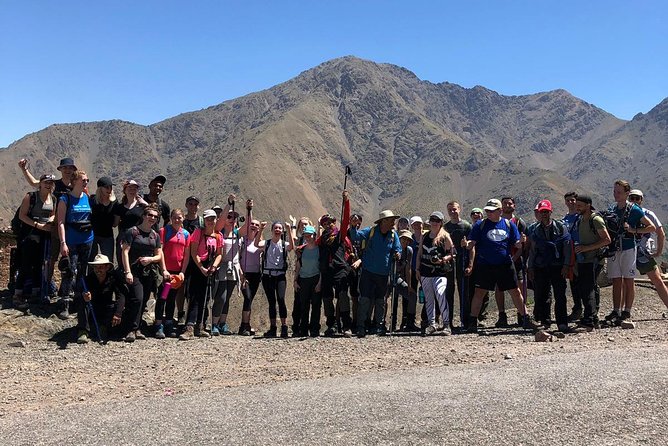
- Small-group pace (max 15): you get space to ask questions and adjust to the group rhythm
- Mountain passes at altitude: expect cooler air up high and a steady, uphill feel
- Food and logistics handled: meals, guide, mule, cook, accommodation, and entrance fees are included
- Berber villages along the way: you’ll pass through places like Ikkiss, plus smaller village stops
- Meet in central Marrakech: pickup is at Jemaa el-Fna at 9:00 am, so you’ll start the day quickly
Getting From Jemaa el-Fna to Imlil Without Stress
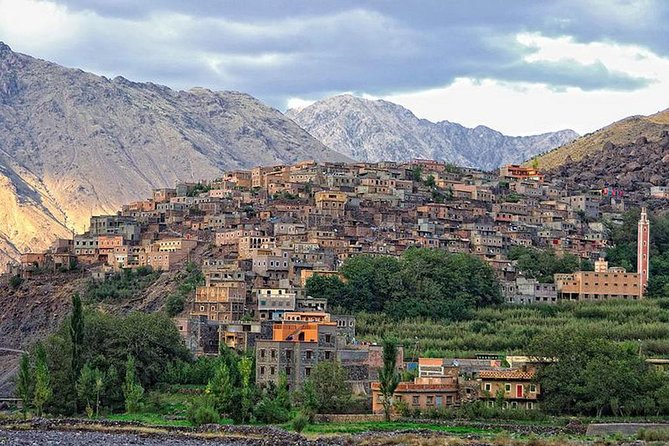
The tour starts where most people’s Morocco trip starts: Jemaa el-Fna in Marrakech. Pickup is at 9:00 am in front of the big post office at the square, then you transfer about 1.5 hours to the village of Imlil (around 1,740 meters). That transfer time matters because it lets you begin the hike fresh, not drained from figuring out local transport.
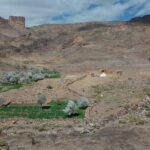
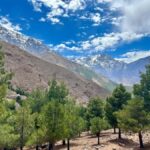
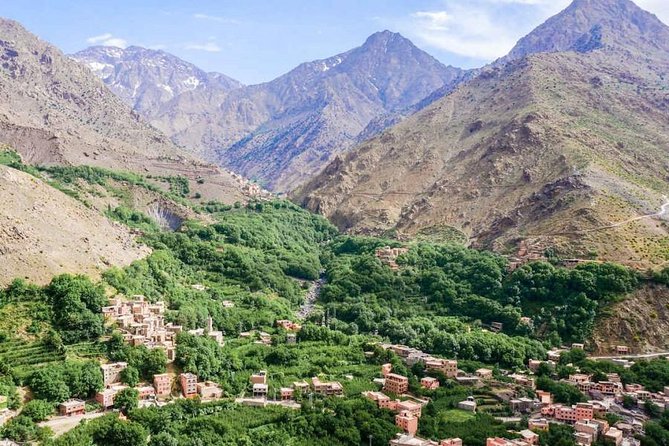
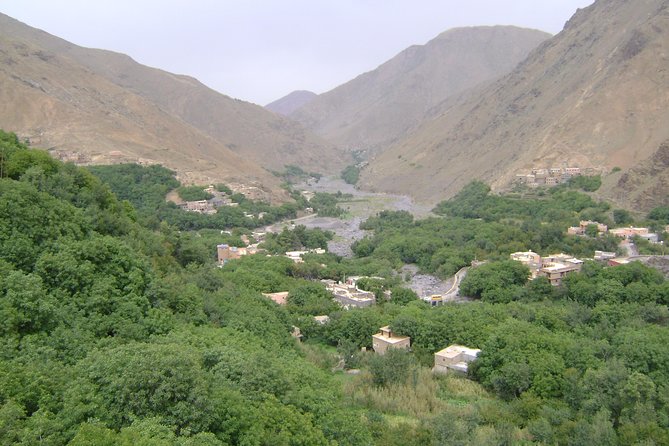
After you’re dropped near Imlil, the trek shifts gears into slow mountain living. You’re not bouncing from viewpoint to viewpoint; you’re walking valley routes with changing scenery—groves, water nearby, then villages, then higher ground. It’s the kind of trip where the day’s route feels planned, even if the mountains keep their own schedule.
You can also read our reviews of more tours and experiences in Marrakech.

Day 1: Imlil to Tinerhourhine via Tizi ’n Tamatert (and a real col)
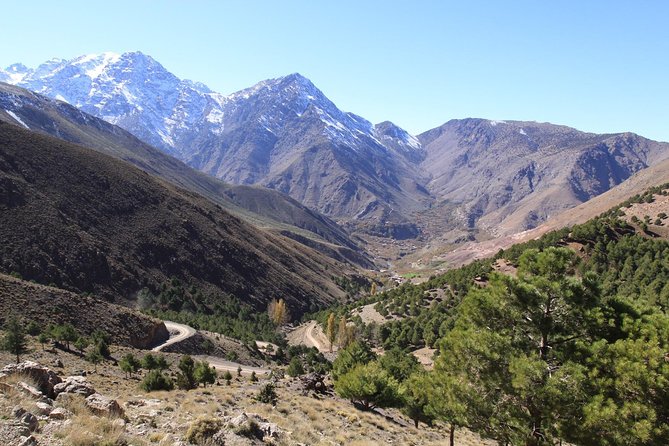
Day one is a classic “warm up with altitude” day. You start at Imlil (1,740m) and trek toward Tinerhourhine, passing through Tamatert along the way. This stretch includes some climbs that make you pay attention to breath and footing, not just views.
The highlight is lunch at the col of Tizi ’n Tamatert (2,279m). Eating up there changes the whole day: you pause at a high point, then you continue walking as the terrain lowers again. The itinerary then continues toward Ouanesekra–Tamguist before you arrive at Tinerhourhine (1,600m) for the night.
Why this day works: you get a full hike (about 4 hours walking) plus a meaningful lunch at elevation, so you feel like you’ve done something, not just “walked a little and called it a trek.” The possible catch is simple: day one can feel steeper than you expect once you’re above the valley floor.
Sleeping in a Local Gite: what that means on the Atlas trek
On day one, and again day two, you sleep in a local gite. That’s part of the point: it’s not a lodge-hotel version of the Atlas. Meals are included, and you’re supported by the cook and mule team, so you’re not stuck doing camp logistics.
Just remember what’s not included: sleeping bags. If you run cold at night, you’ll want to pack accordingly (even if you think you’ll be fine). Mountain nights can get cool fast once you’re away from the valley heat.
Day 2: Imnane Valley, Ikkiss, and the climb toward Tizi n’Aguersioual
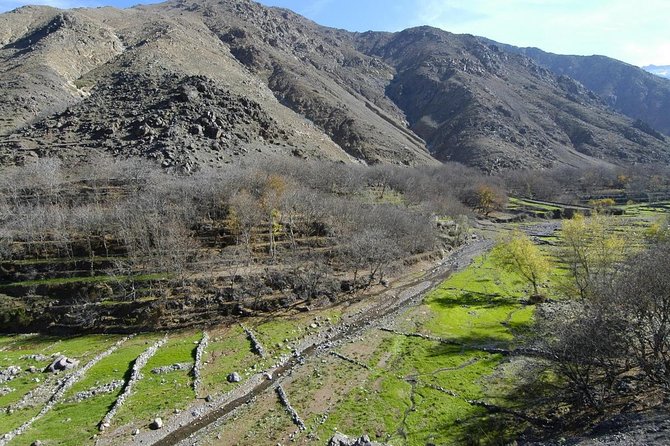
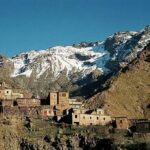
Day two is the longest hiking day, around 6 to 7 hours walking. You depart Tinerhourhine and head along the Imnane Valley. One of the best parts of this day is the sequence of human-scale village life: you pass the Berber village of Ikkiss (around 1,700m) and keep going toward higher passes.
Then you reach Tizi n’Aguersioual (about 2,000m). Lunch happens at Matate (2,000m), which is a nice midpoint rhythm: you get a planned break at elevation, refuel, and then continue without guessing where the next stop will be.
Later, you overnight in a local gite in Aït Aïssa (around 1,800m). Compared with day one, you’re spending more time moving through mixed terrain—valley walk, village pass-throughs, then a sustained effort as you gain and lose altitude.
Cultural payoff on day two
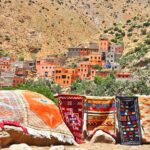
This is where the Berber-culture angle becomes more than a brochure line. You’re not just looking at villages; you’re passing through areas where daily life is built around the geography. Your guide helps connect what you’re seeing—customs, how people live here, and how the valley routes shape routines.
Guides often make or break a trek, and reviews mention names like Hassan, Mohammad Sarcosi, and Lahcen, plus the cook Muhammed. Even if you don’t get the same person, this is clearly a team that knows the area and can explain it in human terms.
Day 3: Back through Tizi Oussem and Tizi Mzik to Imlil
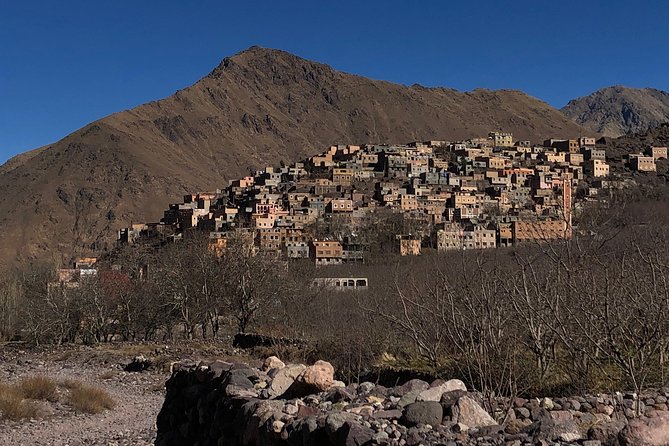
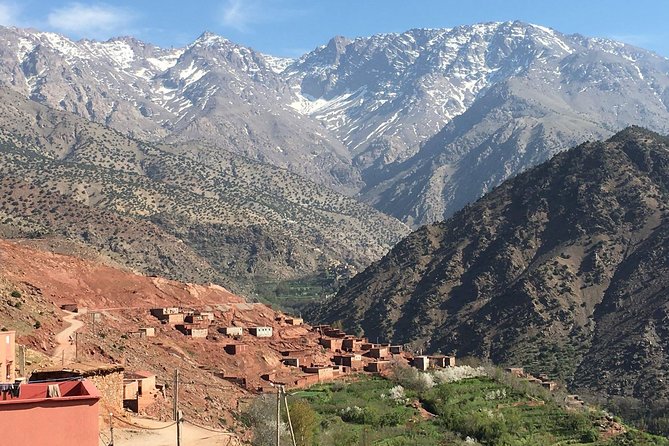
Day three is a satisfying finish: about 4 hours walking, with the route bringing you back toward Imlil. You leave Aït Aïssa and walk toward Tizi Oussem (about 1,900m). Then you pass Tizi Mzik (around 2,400m), plus the village of Mzik, before arriving back in Imlil.
Even though day three is shorter on paper, the presence of Tizi Mzik at roughly 2,400m means you still feel the altitude. It’s a good “one last effort” day. If day two wore you down, day three can feel like a controlled sprint: push steady, take breaks when offered, and keep your eyes on the next village stop rather than the summit line you’re not climbing.
After you return to Imlil, you transfer back to Marrakech and get dropped at the same location where you were picked up near Jemaa el-Fna.

The Included Stuff That Actually Matters
Tours often list items like “meals included” and hope you nod without reading. Here’s why the included parts are genuinely valuable.
Transport round-trip from Marrakech
You avoid the usual headaches of getting to the mountains. Round-trip transport from Marrakech to Imlil and back is included, which means you don’t burn time negotiating rides or figuring out transfers the morning you’re supposed to hike.
Meals: more than just convenience
The tour includes 3 lunches, 2 breakfasts, and 2 dinners. That’s perfect for a 3-day trek because you’re never tempted to buy snacks at random points where prices can be unpredictable. Also, having meals planned means the day’s pace stays steady—eat, walk, rest, repeat.
Mule help and a cook
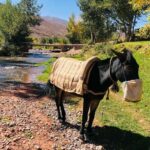
A mule and a cook are included. That matters because it reduces how much weight ends up on you. You’re still hiking, but you’re hiking as a person, not a moving storage unit.
Entrance fees are handled
Entrance fees are taken care of, so you don’t need to pay on the spot while you’re trying to keep moving. It also reduces friction if you’re carrying cash or trying to translate in the middle of the day.
Price and value: what $255.52 buys you in real mountain terms
At $255.52 per person, the value isn’t just the “price tag.” You’re paying for the fact that the trek runs like a system: transport, guide, local gite lodging, meals, mule support, and entrance fees are bundled. That’s a lot of moving pieces for a 3-day trip, especially when you’re away from the comfort of Marrakech.
A good way to judge value: compare what you’d pay if you tried to DIY it—transport to Imlil, arranging lodging in gites, finding a guide you can trust, coordinating meals, and handling park or site fees. Even if you find individual components cheaper, the time and stress savings are what you’re really buying here.
One more value factor: the average booking is about 17 days in advance. That suggests this isn’t a last-minute scramble trip. If you book with some lead time, you’re more likely to get your dates and a smooth start.
What to Pack (So You Don’t Hate the Trek)
The tour tells you what’s not included, and that’s your clue. Bring what your comfort depends on:
- A sleeping bag (explicitly not included)
- Sturdy shoes with grip for rocky paths
- A small daypack for water and layers
- Sunscreen and sun protection (altitude + sun is a thing)
- A light warm layer for higher points and gite evenings
Also, accept that the route includes long walking blocks. Even if you’re fit, it helps to move at a steady pace and not sprint on climbs just because the views look close.
Who This Trek Suits Best
This trek fits you if you want:
- A small-group Atlas Mountains experience with a real guide and culture context
- A route that balances valleys, passes, and village life over 3 days
- The relief of knowing meals, lodging, and fees are handled
It may be less ideal if you want a short stroll, or if steep climbs and altitude make you anxious. Walking times go up to around 6–7 hours, and day three includes Tizi Mzik at about 2,400m.
Should You Book This Atlas Mountains Valley Trek?
If you’re weighing an Atlas trek from Marrakech, I’d book this one when you want a well-run package that still feels authentic. The best reasons: the hike is structured with passes and village stops, and the tour handles the practical stuff that can derail a mountain trip—transport, gites, meals, a mule, and entrance fees.
Don’t book it if you’re hoping to avoid real walking or if you’re not ready for sleeping in basic gites without bringing your own sleeping bag. But if you’re game for steady effort and want a guide-connected view of Berber valley life, this is a strong match.
FAQ
Where is the meeting point in Marrakech?
You meet at Jemaa el-Fna square in front of the big post office. Pickup starts at 9:00 am.
How many people are in the group?
The group is limited to a maximum of 15 travelers.
How long is the walking each day?
Day 1 is about 4 hours walking, day 2 is about 6 to 7 hours walking, and day 3 is about 4 hours walking.
What meals are included?
Lunch is included for 3 days, dinner for 2 days, and breakfast for 2 days.
Is accommodation included?
Yes. The tour includes accommodation in local gites for the nights during the trek.
Do I need a sleeping bag?
Yes. Sleeping bags are not included, so you should bring your own.
What is the cancellation policy?
You can cancel for a full refund up to 24 hours before the experience’s start time. If you cancel less than 24 hours before, you won’t receive a refund.