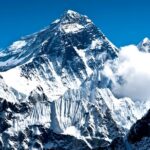
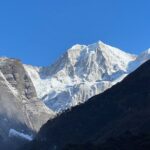
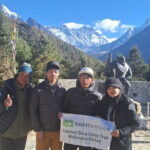
Everest feels close after a bumpy Lukla landing. This Everest Base Camp trek puts you right into the Khumbu region, chasing big viewpoints like Kalapatthar and the iconic scenery around the icefall, all with cozy lodge nights along the way.
I especially like two things: the acclimatization structure (you rest in Namche before going higher), and the way the operator plans for real-world mountain problems like flight delays with a flexible, English-speaking team led by Babu and guides such as Ishwor, Suresh, Shyam, and Ambar.
One consideration: this is serious altitude trekking. Even with support like an oxygen saturation meter and medical supplies, you still need a slow pace mindset, and you should be ready for hard days like the climb into Gorakshep and the push to Kalapatthar.
In This Review
- Key things that make this trek worth it
- Price and logistics: what $1,350 really buys
- Day 1: Kathmandu to Lukla by air, then Phakding by foot
- Day 2: Pine and rhododendron trails, Sagarmatha National Park, and a hard climb to Namche
- Day 3: Namche acclimatization day with optional Everest View Hotel and Sherpa culture stops
- Day 4: Tengboche monastery day—forests, steep sections, and big spiritual atmosphere
- Day 5: Pangboche and Shomare—last permanent village vibes before the higher huts
- Day 6: Thugla (Dugla) ridge—memorials and a strong ridge view day
- Day 7: Gorakshep and Everest Base Camp—moraine walking and the icefall in view
- Day 8: Kalapatthar (5,545 m)—the signature Everest viewpoint day
- Day 9: Pheriche to Namche—downhill energy with still-serious elevation changes
- Day 10: Namche to Lukla—Dudh Kosi walking and a last uphill finale
- Day 11: Lukla to Kathmandu—early flight timing and weather realism
- Lodges, meals, and day-to-day comfort (the stuff you’ll actually notice)
- Guides and support: why the team matters when Everest turns messy
- Who this trek fits best, and who should think twice
- Should you book this Everest Base Camp trek with Unique Path Trekking Expedition?
- FAQ
- How long is the Everest Base Camp trek?
- What flights are included in the price?
- Are meals included during the trek?
- What gear does the tour provide?
- Is altitude health monitoring included?
- What permits are included for the trek?
- Is a porter included?
Key things that make this trek worth it
- Domestic flights (Kathmandu–Lukla–Kathmandu) are included, saving you time and planning stress
- Namche is built in as an acclimatization stop, not just a pass-through
- Lodges with meals and comfortable rooms make the long trekking days feel manageable
- Kalapatthar is the signature viewpoint at 5,545 m, with Everest’s south face in reach (on clear days)
- Monitoring and support gear are included, including an ox meter, first aid kit, and emergency helicopter arrangement via insurance
- Small group cap of 25 travelers helps the trek feel organized without feeling crowded
Price and logistics: what $1,350 really buys
At $1,350 per person for an 11-day trek, the value here comes from what’s bundled, not just the headline cost. You’re getting three meals a day in the trekking section (breakfast, lunch, dinner) and twin-sharing private rooms in lodges. On top of that, the price includes both ways domestic flights from Kathmandu to Lukla and back, along with airport tax.
That matters because Lukla logistics can be a headache. Adding the flights into the package reduces the chance you’ll scramble for an extra ticket if weather changes the schedule. It also keeps your budget simpler.
A few items to note so there are no surprises: Kathmandu hotel and meals are not included, and drinks in the mountains are not included. Also, international airfare and travel/rescue insurance are not included in the price. The trek includes an emergency helicopter arrangement, but it’s tied to your insurance company.
You can also read our reviews of more tours and experiences in Kathmandu.
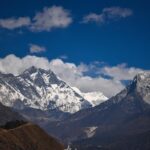
Day 1: Kathmandu to Lukla by air, then Phakding by foot
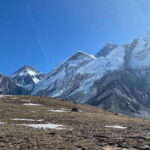
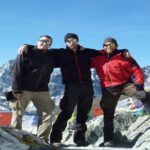
Your adventure starts with ground transport in Kathmandu, then a short scenic flight of about 35 minutes to Lukla, the gateway to the Khumbu. From there, you meet the guide, trekking staff, and porters, then begin walking past Lukla town on an easy path.
This first trekking day is a confidence-builder. You move past Muse and Chowri Kharka, follow the Dudh Kosi River, and pass villages like Choplung and Ghat before reaching Phakding for overnight. You’ll get views of Kwangde peak, and the overall rhythm stays friendly: you’re building altitude without feeling slammed.
The one drawback on Day 1 is that Lukla is weather-sensitive. If flights don’t cooperate, you may spend extra time in the Lukla area. The good news: the team’s past support has focused on staying responsive and finding solutions.
Day 2: Pine and rhododendron trails, Sagarmatha National Park, and a hard climb to Namche
Day 2 takes you from Phakding to Monjo, then into Sagarmatha National Park territory (you enter after Monjo/Jorsalle). The trail winds through woodland with pines and rhododendron, plus bridges over the Dudh Kosi.
A key detail here: you cross and move with the river systems, including a bridge over Imjatse and Bhote Kosi. This kind of routing is not just scenic—it also helps break up the day visually, so the miles don’t feel like one long grind.
Then comes the main effort: after a lunch break, you begin a long winding uphill climb. On a clear day, you can see Everest, Lhotse, and Nuptse. By the time you reach Namche Bazaar, you’re ready to cash out on what Namche does best: acclimatization and decompression.
Day 3: Namche acclimatization day with optional Everest View Hotel and Sherpa culture stops
This is one of the best-designed days on the trek because it’s a true rest day. You check into a designated lodge in Namche and take the time to browse shops or just recover.
You can also choose optional hikes:
- A short hike to a viewpoint plus a museum focused on flora, fauna, geography, and Sherpa history and culture
- Another half-day option toward Khumjung and Khunde, including a monastery visit
- Or go higher via the Everest View Hotel area at 3,880 m (via the Syangboche old airstrip)
These options matter because they support acclimatization without adding extra “must-do” pressure. You get views of Everest, Lhotse, Nuptse, Ama Dablam, Thermasarku, Kwangde, and Khumbi-la, plus gorge and valley perspectives that make the mountains feel real instead of abstract.
If you’re the type who gets restless sitting still, this is your compromise day: you move a bit, but you’re not forced to climb to exhaustion.
Day 4: Tengboche monastery day—forests, steep sections, and big spiritual atmosphere
After Namche, you start moving again on a scenic trail with views of Ama Dablam and other peaks. You’ll walk downhill to Phungetenga for lunch, then work through a steep uphill segment through forest.
The payoff is Tengboche, home to a monastery and one of the trek’s most memorable stops. You arrive with awesome views of surrounding peaks including Everest and Ama Dablam. If timing allows, you visit the monastery where you can observe monks and priests during prayer time.
The practical drawback: this is a day where your legs feel the elevation changes. Lodges feel easier than the trail, and you’ll likely crave a hot shower (not included as a standard expectation, so plan for simple comforts).
Still, for many people, Tengboche is where the trek starts to feel deeply personal—partly because of the setting, and partly because the climbs start to make you pay attention to your pace.
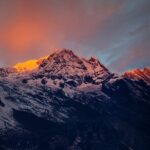
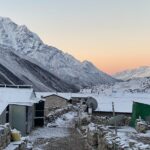
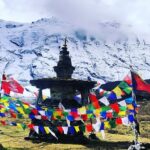
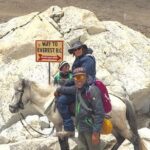
Day 5: Pangboche and Shomare—last permanent village vibes before the higher huts
Leaving Tengboche, the trail runs downhill through woodland toward Deuboche and bridges over the Imjatse River gorge. After crossing into the more open high-route rhythm, you see prayer and mani walls and stupas as you travel.
You reach Pangboche, described as the last permanent village on the route toward Everest Base Camp and other high areas. That “last village” feeling is real: it’s a mental milestone.
Then you tackle a short steep climb to Shomare, a temporary village where lodges and teahouses operate. It’s a popular lunch stop on the way, with close views of Ama Dablam. This is also where the trek’s temperature and wind feel more dramatic, even if the day’s mileage looks moderate.
Day 6: Thugla (Dugla) ridge—memorials and a strong ridge view day
Day 6 starts with a slow climb to a ridge with prayer flags and Buddhist monuments. From there, you’ll enjoy gradual up-and-down walking along trails near raging streams fed by the Khumbu glacier.
You reach Thugla (Dugla) for lunch. Then comes a steep climb of less than an hour to the top ridge, with great views of Ama Dablam’s north face, plus Tawache and Cholatse. It’s also a poignant spot with memorials of mountaineers who died climbing Everest, Lhotse, Pumori, and other peaks.
This is one of those days where the itinerary gives you a mix: exertion, scenery, and a reality check that Everest is not a postcard project.
Then you continue toward Lobuche, where you’ll sleep in a lodge after a full day.
Day 7: Gorakshep and Everest Base Camp—moraine walking and the icefall in view
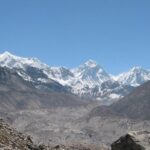
Today is one of the core challenges: altitude gain plus a tougher feel as you head toward Gorakshep via moraine and icy paths. The trail is described as hard due to altitude, but you’re rewarded with tremendous views of Pumori, Lingtrin, Khumbutse, and Everest itself.
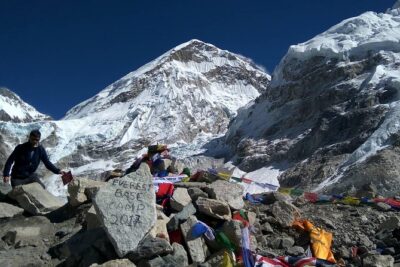
Gorakshep sits as the last lodge cluster before Base Camp. You’ll find multiple lodges there, then walk onward along moraine and icefall-view terrain to reach Everest Base Camp at 5,364 m.
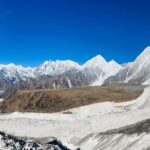
This is where all the earlier days click. Base Camp isn’t just a dot on a map. You’re surrounded by ice and glaciers, and views extend toward the Khumbu Icefall—a surreal, shifting-looking feature even when you’re only seeing it from a distance.
After spending time at the base camp, you return to Gorakshep for overnight. The return is part of the experience: it gives your body time to absorb what you just saw while still moving.
Day 8: Kalapatthar (5,545 m)—the signature Everest viewpoint day
The morning climb to Kalapatthar is short-ish but steep, and it’s described as the most fantastic view day. At 5,545 m, the viewpoint is built for the kind of perspective people dream about: the south face of Everest plus surrounding high peaks stretching along the southeast horizon.
From Kalapatthar, you get that full-scale look at the mountain mass. It’s the highest point of the trek, so you’ll feel the altitude directly—no shortcuts, just your breathing and your focus.
After the moment, you hike downhill back to Gorakshep, then continue toward Thugla after Lobuche and finally reach Pheriche for overnight. Pheriche has a temporary high-village feel with many lodges and clear views toward Taboche, Cholatse, Ama Dablam, and even Cho-Oyu in the distance.
Day 9: Pheriche to Namche—downhill energy with still-serious elevation changes
Day 9 turns the corner from ascent to descent. You leave Pherbuche/Pheriche area heading downhill toward Panbuche valley, with superb views of Ama Dablam, Nuptse wall, and Lhotse.
Then you move toward Tengboche again, cross Panbuche bridge, and continue down to Phungtenga. From there, you climb up toward Luvisa and Shanasa villages, then work back into Namche Bazaar for overnight.
This day’s trick is that “downhill” doesn’t always feel easy at altitude. Your knees will still feel busy, but the trail can feel more relaxed because the big objective days are behind you.
Day 10: Namche to Lukla—Dudh Kosi walking and a last uphill finale
Day 10 is described as a leisure and easy last day walk back toward Lukla. You follow the Dudh Kosi for a while, passing villages like Benkar, Tuc Tuc, and Phakding.
You reach Choplung, where the trail from Jiri and Lukla joins. Then it’s the last 50 minutes climb to Lukla. This final climb can feel like a formality, but it’s also a reminder: you didn’t “stop hiking” after base camp. You just changed from mountain climbing to finishing the job.
Day 11: Lukla to Kathmandu—early flight timing and weather realism
Your last morning includes flight back from Lukla to Kathmandu. The schedule can shift due to bad weather, so plan for uncertainty.
When you land in Kathmandu, you’ll get a transfer back to hotels around the Thamel area hub. This is a nice way to end: you’re not stuck navigating the city right after a high-altitude trek.
Lodges, meals, and day-to-day comfort (the stuff you’ll actually notice)
The trek is built around comfortable lodges in the trekking section. The idea is simple: eat well, sleep somewhere warm enough for the night, and keep energy for the next day’s climbing.
Meals include breakfast, lunch, and dinner during the trek. Drinks in the mountains aren’t included, so budget for that if you rely on hot beverages to feel human again.
Comfort also comes from included gear: the operator provides a four-season sleeping bag and down jackets to use if necessary. That’s a big deal because it reduces what you need to carry, and it helps you deal with cold nights without relying on luck.
Guides and support: why the team matters when Everest turns messy
Everest planning isn’t just about the walking route. It’s about what happens when weather impacts flights, and when your body throws curveballs.
Unique Path Trekking Expedition has a reputation for close communication and responsiveness from the start, with Babu at the center of pre-trip planning. On the trail, guides you might encounter include Ishwor, Suresh, Shyam, and Ambar—people known for being helpful and professional in day-to-day decision-making.
This also shows up in their operational flexibility. Past trek groups described changes to routes and plans as needed, with the team handling logistics on the fly. In real life, that’s what you want: someone who can adjust quickly without you feeling abandoned.
Also, there’s practical altitude support included: an ox meter to check pulse, heart rate, and oxygen saturation, plus a first aid medical kit. On paper, that sounds clinical. On the mountain, it’s reassuring, because it turns vague worries into measured information.
One note: mountain porter service is not listed as included in the package price. If you want porter support, you’ll need to confirm it or budget for it separately.
Who this trek fits best, and who should think twice
This trek suits you if:
- You have moderate physical fitness
- You want a structured acclimatization day in Namche
- You like the idea of cozy lodge nights instead of camping systems
You should think twice if:
- You’re not comfortable committing to long uphill days at altitude
- You’re sensitive to flight uncertainty (Lukla can be delayed)
- You’re expecting drinks in the mountains or Kathmandu lodging to be included
Should you book this Everest Base Camp trek with Unique Path Trekking Expedition?
I’d book it if you want a well-paced Everest Base Camp route with built-in acclimatization, included domestic flights, and support tools like the oxygen saturation meter and an established guide team. The price looks fair for what you’re getting, especially the domestic flights and the trekking-section meals and lodge stays.
I’d hesitate only if you’re trying to keep your budget extremely tight for extras. Drinks during the trek aren’t included, porter support isn’t included, and Kathmandu costs (hotel and meals) are on you. Also, altitude is non-negotiable here, so be honest about your fitness and your willingness to move slowly.
If you want, tell me your travel month and your fitness background. I can help you estimate a realistic difficulty level and what to prioritize so you enjoy the views instead of just surviving the trail.
FAQ
How long is the Everest Base Camp trek?
The trek is listed as 11 days approximately.
What flights are included in the price?
Both ways domestic flight tickets are included for Kathmandu to Lukla and back to Kathmandu, including airport tax.
Are meals included during the trek?
Yes. Meals are included three times a day during the trekking portion: breakfast, lunch, and dinner.
What gear does the tour provide?
A four-season sleeping bag and down jackets are provided for use if necessary.
Is altitude health monitoring included?
Yes. The package includes an ox meter to check pulse, heart rate, and oxygen saturation at higher altitude, plus a first aid medical kit.
What permits are included for the trek?
The price includes a Pasang Lamu rural municipality entry permit, TIMS, and the necessary Everest national park entry permits and paper works.
Is a porter included?
A mountain porter is listed as not included. Tips for trekking staff and driver are expected.