REVIEW · HANOI
From Hanoi: 2 Days Luxury Sapa Trek & Fansipan Peak with Dcar
Book on Viator →Operated by SST TRAVEL · Bookable on Viator
Sapa mountain air hits fast. This 2-day trip combines easy logistics from Hanoi with real walking through Muong Hoa Valley villages and Black H’mong culture. You’ll start in Sapa town, trek down to Cat Cat, then head toward Ham Rong Mountain or Fansipan on day two.
I especially like two things: the English-speaking guide keeps the experience understandable, and the pace is designed for comfort—hike in the afternoon on day one, rest in the evening, then another morning of walking or a ride up toward the big views.
One thing to plan for: weather can change everything, especially for Fansipan. If it’s rainy or cloudy, you may see less from the peak even though the trekking and village moments stay worthwhile.
In This Review
- Key things you’ll notice right away
- Hanoi to Sapa: where the comfort is real, not marketing
- Day 1: Cat Cat Village, waterfall views, and Black H’mong daily life
- Day 2: Ham Rong Mountain or Fansipan, and how to read the weather
- The village route: why Cat Cat, Lao Chai, and Ta Van are more than stamps
- Guides, service, and the small details that make it feel easy
- Price and value: what you’re paying for in plain terms
- Who should book this Sapa trek (and who might want longer)
- Should you book From Hanoi: 2 Days Luxury Sapa Trek & Fansipan Peak with Dcar?
- FAQ
- Is pickup included, and where does the tour start in Hanoi?
- How much does this 2-day tour cost?
- How long is the experience?
- What’s included in the price?
- Is Fansipan cable car included?
- What villages and stops are included?
- Is hotel accommodation included?
- What level of fitness do I need?
- How many people are in the group?
- What’s the cancellation rule if I change my mind?
Key things you’ll notice right away
- Dcar limousine round-trip between Hanoi and Sapa, with pickup from Hanoi Opera House
- Small group size (max 10) for a calmer, easier day on the trail
- Cat Cat to Lao Chai trekking through Muong Hoa Valley with major photo-and-views moments
- Village culture stops tied to daily life: stilt houses, weaving, embroidering, drying clothes
- Day 2 flexibility: Ham Rong (Dragon’s Jaw) hike or a Fansipan option by train/cable car (not included)
- Meals and hotel included (breakfast plus 2 lunches, plus 3-star/5-star hotel options)
Hanoi to Sapa: where the comfort is real, not marketing
This trip is built around one simple goal: get you from Hanoi to Sapa without turning the whole trip into a travel headache. The meeting point is Hanoi Opera House (1 Tràng Tiền, Hoàn Kiếm) with a start time of 6:30am, and you’re picked up for the included Dcar Limousine ride.
The drive is long—one review calls it about 5 hours—but it’s done in an air-conditioned vehicle, so you’re not baked in transit. That matters because Sapa trekking starts the same day you arrive. If you’re the type who wants to be useful on day one, this setup helps you avoid arriving, waiting around, and losing half your daylight.
At Sapa, you check into a hotel for an overnight stay. Your day one schedule has a clear rhythm: lunch, check-in, afternoon trek, then back for rest. This is a “two days, not a week” tour, so the timing is tight—but it still gives you a proper stop-and-recover break, rather than pushing nonstop walking.
You can also read our reviews of more tours and experiences in Hanoi.



Day 1: Cat Cat Village, waterfall views, and Black H’mong daily life
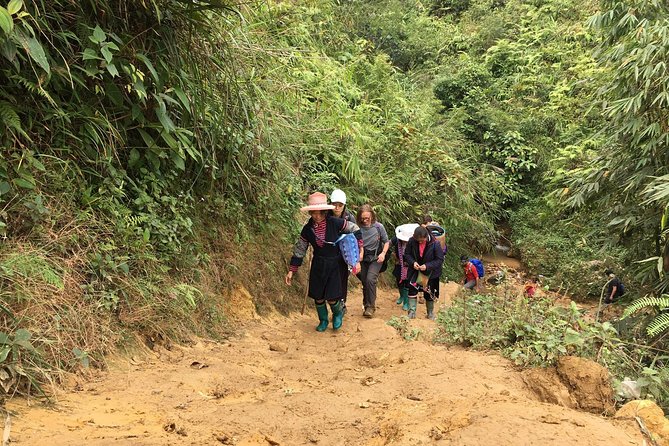
Day one starts with you arriving in Sapa town around 1:00pm, then lunch and check-in by about 3:00pm. After that, you begin trekking at 2:30pm toward Cat Cat Village—downhill access at the bottom of Muong Hoa Valley.
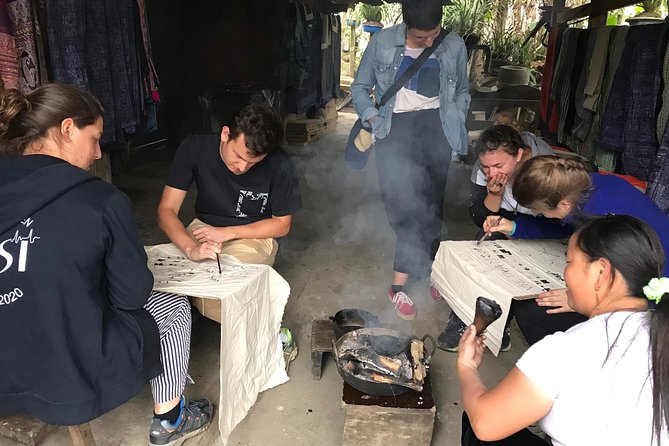
What I like about this first trekking day is that it’s not just scenery. You’re walking into village life. In Cat Cat, you get chances to see Black H’mong traditional stilt houses, plus daily details like people weaving, embroidering, and drying their clothes. Those aren’t “check-a-box” activities. They’re the visual proof that this is an inhabited community, not a theme park.
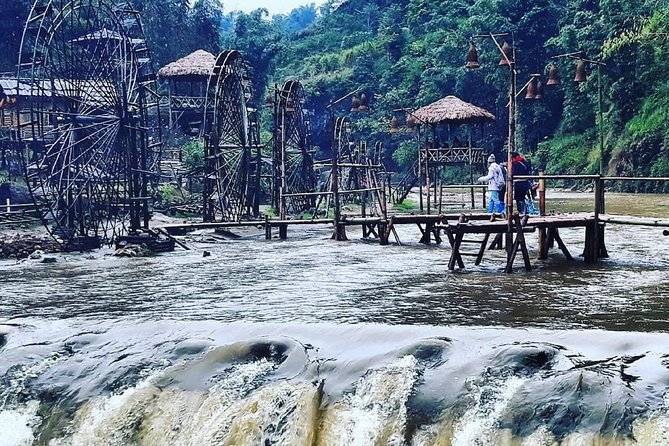
Then you continue to Cat Cat Waterfall. This is one of those places where weather affects the drama level—mist and cloud can soften everything, but it also makes the waterfall feel more present. Either way, it gives you a payoff at the end of the downhill day.
By 5:00pm, you’re back at the hotel for downtime. That’s a smart move for a 2-day schedule. Your legs get used to the paths, but you’re not asked to keep climbing until night.
How it feels on the ground: downhill walking can be deceiving. It feels easier at first, but you still use your quads. If your knees are sensitive, consider trekking poles or just slow your pace early.
Day 2: Ham Rong Mountain or Fansipan, and how to read the weather
Day two begins with breakfast at 7:00am–8:30am, then checkout at 9:00am. From there, you have two approaches:
1) Trek up Ham Rong (Dragon’s Jaw) Mountain, or
2) Take a travel option by train and cable car to Fansipan (Fansipan cable car is explicitly not included).
This is a big deal for how you should choose. If your top goal is classic mountain views and you want a more direct route, the Fansipan option makes sense. But you should also know the trade-off: the tour may still be limited by conditions at altitude. One review specifically noted that on a rainy/cloudy day, they didn’t see much from Fansipan—understandable, since visibility can vanish quickly.
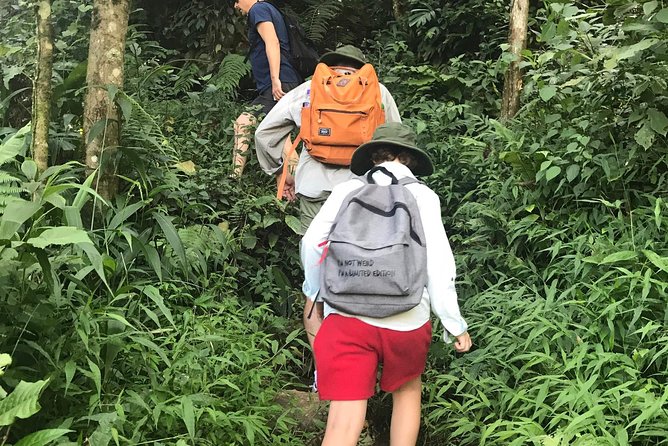
If you choose Ham Rong, you’re going to experience more gradual movement and a stronger sense of “walking through Sapa,” with fewer reliance points on cable car timing. It’s also a good option if you’re trying to keep the day flexible, because trekking gives you something to do regardless of whether the peak is hidden.
Either way, the tour is designed to stay within a short 2-day window. That’s why day two has fewer scattered stops than day one. You’re focused on one main direction up.
One practical tip: plan to pack for changing temps. Even when it looks clear at town level, higher elevations can feel like a different season.
The village route: why Cat Cat, Lao Chai, and Ta Van are more than stamps
This tour threads together multiple ethnic minority communities in and around Sapa. You’ll start with H’mong and Black H’mong presence in and around Cat Cat. Then you move toward Lao Chai, and later to Ta Van for Tay minority culture with a noted Chinese cultural influence.
Here’s what makes this route valuable: each place isn’t just a photo stop. You see different kinds of everyday work—stitching, weaving, drying clothes—and you walk paths that connect villages along the valley.
In Lao Chai, the tour emphasizes lush rice terraces and the daily life and traditional culture of the Black H’mong. That matters because Sapa tourism can sometimes flatten things into performances. This route keeps leaning back toward daily routine: where people live, how they work, what they carry, and how they use the valley.
In Ta Van, you’re in Tay territory. The mention of Chinese cultural influence is a clue to look for cultural blending in local styles and customs. Even if you don’t know the specifics ahead of time, the difference from Black H’mong areas is usually obvious in clothing, language sounds, and household details.
Reality check: you’re still on a guided program, so there’s a limit to how much free time you get. But for a 2-day trip, this is a solid way to cover multiple communities without turning the trip into a logistics puzzle.
Guides, service, and the small details that make it feel easy

A luxury label is always tricky. But in this case, the “luxury” part seems to show up most in the friction-free handling: hotel pickup, English-speaking guide support, bottled water, entrance fees, and the included transportation plan.
I also noticed a theme in service praise: support staff who helped make sense of options and timing. One review credits Khanan/Khanh for excellent planning and punctual drivers. Another review highlights Mikey as extremely helpful before the trip, especially when details felt unclear on their own. There’s also a mention of Kate and Mia connected to making parts of the experience run smoothly.
You should take that as a signal: the operation seems to care about how your day flows, not just what the schedule says. If you like clear communication and getting answers fast, that’s where you’ll feel it.




Price and value: what you’re paying for in plain terms
The price is $110 per person for a roughly 2-day experience, booked on average about 52 days in advance. On paper, the cost looks low for Sapa, especially because it includes:
- Round-trip Dcar Limousine (Hanoi ↔ Sapa)
- Breakfast and 2 lunches
- English-speaking guide
- Bottled water and entrance fees
- Hotel stay (with 3-star or 5-star options)
So where’s the value? You’re paying for the heavy parts: transport across distance, coordination between stops, and meals. That’s what keeps a short trip from becoming stressful.
What to watch: Fansipan cable car is not included, and if you want a 5-star single room there’s a single surcharge noted in the details. Also, there can be a holiday surcharge. None of that changes the core trip, but it can shift your final total.
If you’re traveling as a couple and can share a room, the hotel surcharge risk drops. If you’re traveling solo, it’s worth checking your hotel choice early so there are no surprises at payment time.
Who should book this Sapa trek (and who might want longer)
This works best for you if:
- You want a short, guided Sapa experience with village trekking
- You prefer comfort on transfers (air-conditioned vehicle) and clear pacing
- You’re okay with moderate physical fitness needs
- You like cultural walking routes more than a quick stop-and-shop day
It may not be the best fit if:
- You’re hoping for reliable top-peak views at Fansipan. Weather can shut that down.
- You dislike downhill or mixed footing. Even “moderate” trekking asks you to stay careful on paths.
If you have more time than two days, you’ll probably want it. Sapa deserves slow time: extra valley walks, more village conversation, more time in town. But if your schedule is tight, this tour hits a lot of the right notes without wasting your day.
Should you book From Hanoi: 2 Days Luxury Sapa Trek & Fansipan Peak with Dcar?
If your priority is a hassle-free Hanoi-to-Sapa plan with a real trekking day and meaningful village stops, I’d say yes. The included transport, meals, and English-speaking guide make it easier to get value out of just 2 days.
Before you book, do two quick checks:
- Are you willing to be flexible on Fansipan visibility if clouds or rain roll in?
- Are you comfortable with moderate trekking and the downhill feel on day one?
If both answers are yes, you’ll likely enjoy how this trip balances movement, rest, and culture without making you wrestle with logistics.
FAQ
Is pickup included, and where does the tour start in Hanoi?
Yes. Pickup is offered from the Hanoi Opera House at 1 Tràng Tiền, Phan Chu Trinh, Hoàn Kiếm, Hà Nội. The listed start time is 6:30am.
How much does this 2-day tour cost?
The tour price is $110.00 per person.
How long is the experience?
It runs for about 2 days (approx.).
What’s included in the price?
Included are breakfast, air-conditioned vehicle, an English-speaking guide, bottled water, entrance fees, round-trip Dcar limousine Hanoi–Sapa–Hanoi, hotel accommodation (3-star or 5-star optional), and lunch (2).
Is Fansipan cable car included?
No. Fansipan cable car is listed as not included.
What villages and stops are included?
The tour includes Cat Cat Village (plus Cat Cat Waterfall), and trekking areas that include Lao Chai village and Ta Van village.
Is hotel accommodation included?
Yes. Accommodation is included as a 3-star or 5-star hotel option (your choice).
What level of fitness do I need?
The tour notes that you should have a moderate physical fitness level.
How many people are in the group?
The tour has a maximum of 10 travelers.
What’s the cancellation rule if I change my mind?
Free cancellation is available. You can cancel up to 24 hours in advance for a full refund. If you cancel less than 24 hours before the start time, the amount paid will not be refunded.