REVIEW · RISHIKESH
9 Days Bali Pass Trek
Book on Viator →Operated by Himalaya Shelter · Bookable on Viator
That hard day at the top is planned well.
The Bali Pass trek (66 km, with a 4,900m pass) is the kind of Himalaya challenge that feels fair because the support team is built for real people: clear guidance, practical camp setup, and food that keeps you moving. My favorite part is how the trek balances technical altitude work with genuine comfort at camp, from A-shaped/dome tents to regular tea and snacks. The one drawback to think about early: the pass climbs to 16,080 feet, so this is not a casual hike—you’ll want solid fitness and smart pacing from day one.
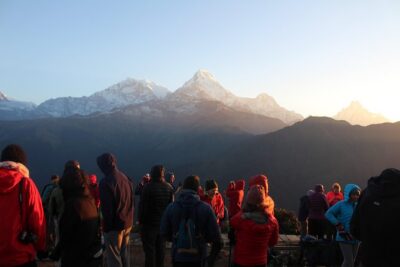
You also get a lot more than a single summit moment. This route puts you close to the Swargarohini and Bandarpunch ranges, and you’ll see peaks like Kalanag (Black Peak) and Swargarohini from the trail. A full day by Ruinsara Lake plus walking across the Devsu Thatch and Thanga meadows gives you those slow, wide-open hours before the tougher sections. If you’re the type who hates cold mornings or breathlessness with zero forgiveness, you should factor that in now—not later.
In This Review
- Key highlights you’ll care about
- Bali Pass in plain numbers: altitude and why it feels difficult
- Taluka to Janki Chatti: what the 9 days actually mean on the ground
- Ruinsara Lake and the meadow day: where the trek turns from grind to breath
- Bali Pass approach and crossing: micro spikes, steady pace, and the summit feel
- Swargarohini, Bandarpunch, and Kalanag: the peaks you keep meeting
- Yamunotri temple: the spiritual finish with a practical payoff
- Camp life with Himalaya Shelter: tents, tea breaks, and a crew that actually matters
- Guides, chefs, and the human factor: Rana, Suresh Chauhan, and Ustad Vijay
- Value check: is $374 per person a fair deal?
- Who should book Bali Pass, and who should reconsider?
- Should you book this trek?
- FAQ
- How high does Bali Pass climb?
- How long is the trek, and how many days will I walk?
- What elevation gain should I expect?
- What meals are included, and what’s not included?
- Is trekking gear like micro spikes provided?
- Do porters carry my personal luggage?
- Is insurance included in the price?
- What is the cancellation policy if weather turns bad?
Key highlights you’ll care about
- 4,900m max height on the Bali Pass, with a real net climb of 2,820m over about five walking days
- 66 km total from Taluka to Janki Chatti, usually averaging around 10 km/day
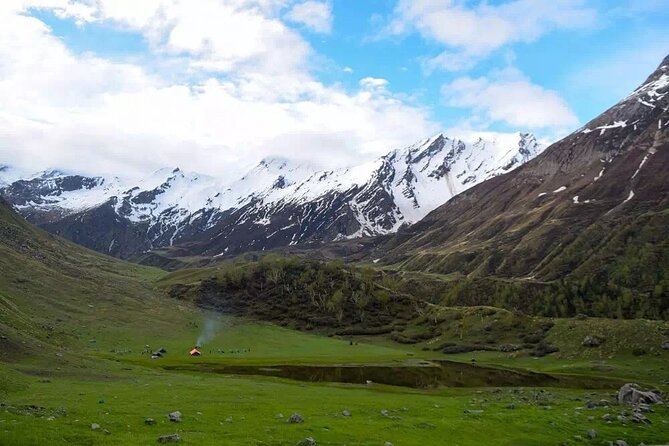
- Ruinsara Lake day plus the Devsu Thatch and Thanga meadows for big scenic payoff
- Micro Spikes + gaiters included, useful for icy/steep ground near the pass
- A small group (max 11 travelers), which usually means a calmer trek day and easier logistics
- Yamunotri temple visit opportunity near the end of the trek
Bali Pass in plain numbers: altitude and why it feels difficult
Bali Pass is categorized as a Difficult trek, and the numbers explain why. The pass reaches a maximum height of 16,080 feet (4,900 meters). You start at Taluka at about 6,825 feet (2,080 meters), so over roughly five days you’re gaining 9,250 feet (2,820 meters). That works out to an average climb of about 550 meters per day—a serious rate for trekkers.
Distance alone doesn’t tell the whole story. Yes, the total route is about 66 km, and walking days average around 10 km/day. But this is steep altitude walking where 1 km can feel like 3 when the air thins and your legs get that slow burn. The “technical pass crossing” piece matters too: Bali Pass isn’t described like a gentle saddle. It rises like a peak, so you feel that summit push rather than a flat crossing.
You can also read our reviews of more tours and experiences in Rishikesh.
Taluka to Janki Chatti: what the 9 days actually mean on the ground
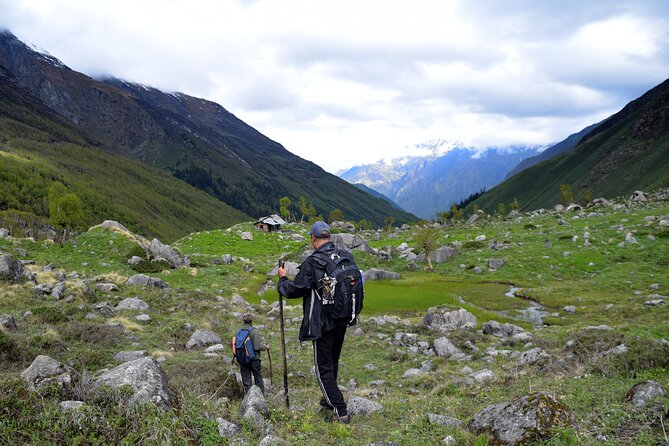
You meet at Dehradun Train Station, Lakkhi Bagh with a start time of 7:00 am. The trek runs for around 9 days, ending back at the same meeting point. The core trek-on-foot time is typically 6 to 7 days, meaning you’ll likely spend one or two days on the travel rhythm and the rest in hiking/camp mode.
The route moves from Taluka to Janki Chatti. The emphasis here is that the itinerary is built around elevation progress and camp logistics, not just clocking kilometers. Since your average walking distance is around 10 km, the pacing is more about steady effort than speed.
A practical note for your planning: the trek uses double/triple sharing tents from the first day through the second last day. That means you’ll likely be living outdoors for most of the journey, so treat this like a proper trekking holiday, not a day trip with a hotel upgrade.
Ruinsara Lake and the meadow day: where the trek turns from grind to breath
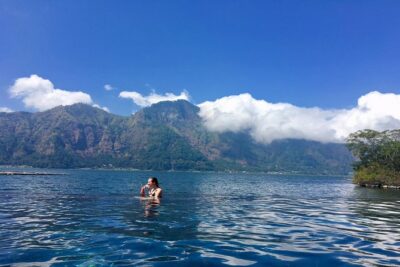
Mid-trek, you get something many high passes lack: a full day by Ruinsara Lake. This is valuable because it breaks the mental loop. After several days of altitude effort, a lake day gives you a reason to slow down, soak in the mountain views, and reset your energy before the pass push.
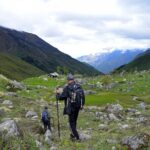
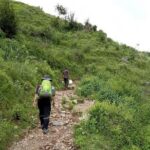
Then comes the meadow walking: Devsu Thatch and Thanga. Meadows in this region are not just pretty grass patches—they’re a rhythm shift. Your steps often feel less punishing than on steep forest or rocky climbs, and you can see more of what you’re working toward: the looming ridges and the way the air changes as you gain height.
What I like about this setup is that it creates variety. You’re not just climbing, then climbing again, then another climb. You get lake calm and meadow spaciousness, and that helps when you need motivation on hard days.
Bali Pass approach and crossing: micro spikes, steady pace, and the summit feel
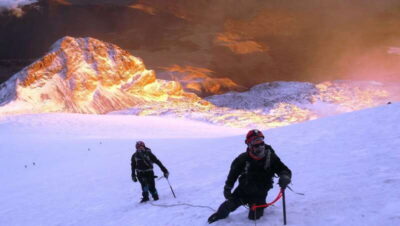
The defining feature is the Bali Pass itself. It’s not described as a classic pass saddle. Instead, the route rises like a peak, so when you reach the top stretch you get a more summit-style effort. That matters because your mind reads a “pass” as lower drama. Here, the pass behaves like a mini-mountain.
Gear support is a big part of making the crossing realistic. The trek includes gaiters and micro spikes, which is a clear clue that the conditions can be icy or slippery. You also get a guide and a support team, which is important when terrain steepens and footing gets less forgiving.
Pacing is everything on a pass climb at 4,900m. With an average net gain of 2,820m over about five days, you’ll want to keep your pace controlled—even if you feel good at the start of the day. “Fast” at altitude often turns into “spent” by afternoon. I’d plan on patience as your main strategy, not willpower.
Swargarohini, Bandarpunch, and Kalanag: the peaks you keep meeting
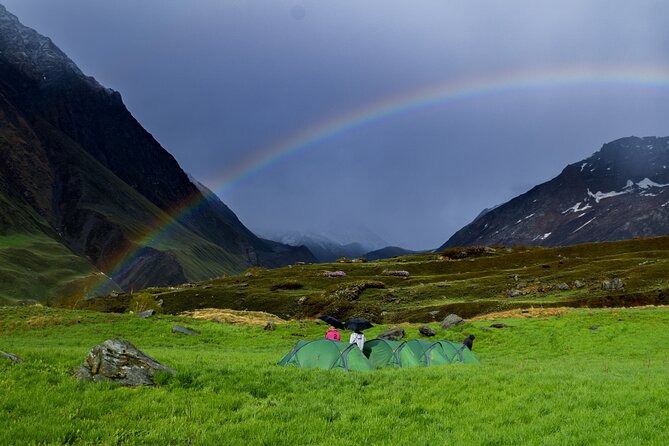
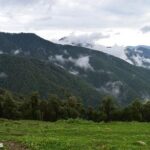
One of the nicest parts of this trek is how often you’re surrounded by the big names of the region. You’re described as being near the Swargarohini or Bandarpunch ranges for much of the journey. That’s not just scenery marketing. When you’re walking in mountain terrain for days, the ability to track ridgelines and understand the direction you’re going helps you feel less lost and more in control.
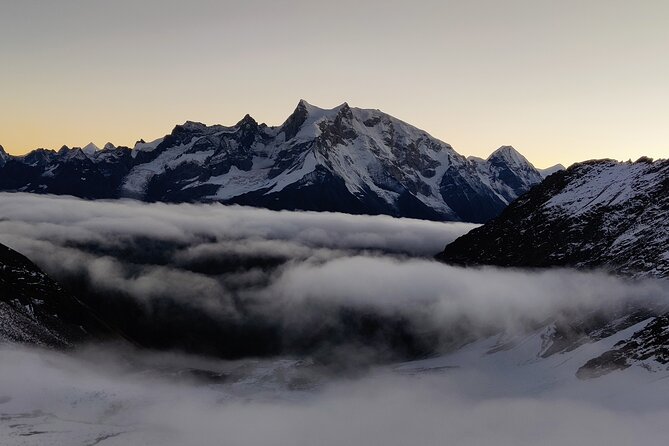
You also get close views of Kalanag (Black Peak) and Swargarohini Peak. Kalanag is listed as the highest peak in this region at 6,387 meters, and it’s a special hook for trekkers who like dramatic high-mountain faces. You’ll also see the Bandarpunch Glacier and Saptrishi Kund toward the later stage of the trek, which gives the end of the hike a strong “we’re really in the high country” feeling.
Even the way the route is described adds context for mountain-minded trekkers. Near Ruinsara Lake, the trail to Bali Pass turns southward toward Yamunotri, while the eastward route continues toward Dhumdhar Kandi and connects toward Harsil. You don’t have to go off-route to appreciate what that means: the area is a hub of different high terrain lines, and you’re walking through a region with multiple routes and changing mountain moods.

Yamunotri temple: the spiritual finish with a practical payoff
Near the end, you have the chance to visit the holy Yamunotri temple. This is more than a box to check. For many hikers, the temple stop gives a grounded cultural moment after several days of working through weather, altitude, and fatigue.
It also fits the route logic: the trek turns toward Yamunotri as it moves beyond the Ruinsara area on the Bali Pass line. So you get that transition from peak effort back to human scale—something you’ll probably appreciate when you’re tired and just want your mind to rest.
Camp life with Himalaya Shelter: tents, tea breaks, and a crew that actually matters
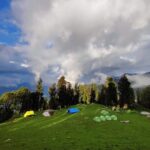
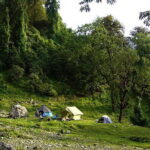
This trek is built around camp comfort that’s practical, not fancy. You get clean sleeping bags and mats, plus good quality A-shaped or dome tents. There’s also a kitchen tent and dining tent, along with camping stools, which adds up to less scrambling and more time to eat, hydrate, and recover.
Meals are structured for trekking days: 8 breakfasts, 7 lunches, 8 dinners, and 8 tea & snacks. One useful detail for planning: breakfast + lunch on Day 1 are not included, and lunch + dinner on Day 9 are not included. That means you should expect at least one early-day meal gap at the start and a shorter final day food plan at the end.
If you’re sensitive to being cold at camp, this is the kind of trek where camp setup timing can make a difference. The included tea and snacks aren’t just comfort—they help you keep calories and warmth steady before you call it for the night.
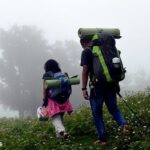
And yes, you should pack light for your own carry. Porter and mule support are provided to carry camping equipment, not personal luggage. So plan on carrying your personal essentials daypack-style (layers, water, snacks, and what you need in the hours you’re hiking). If you show up with a huge bag, you’ll feel it.
Guides, chefs, and the human factor: Rana, Suresh Chauhan, and Ustad Vijay
In the feedback, the most praised element is the team. Names keep coming up: Bachan Rana, Suresh Chauhan, Subodh (team leader), plus support guides Surendra and Sumit. What you can take from that is simple: this trek leans on people who know how to manage both safety and morale.
Food also gets specific credit. The chef Ustad Vijay is called out as exceptional. That matters on a high-altitude trek. When altitude steals appetite, good cooking becomes fuel, not just a perk. Also, you’re not eating random sandwiches in the middle of nowhere—you’re in a camp system with a cook and a dining setup.
The overall vibe from the team is also described as attentive and flexible. That’s not fluff for me. On a trek with altitude, the small moments—help with pacing, reassurance on steep ground, keeping the camp rhythm smooth—are the difference between a stressful experience and a tough-but-manageable one.
Value check: is $374 per person a fair deal?
At $374 per person for about 9 days, this trek can be good value if you’re realistic about difficulty and what’s included. You’re paying for more than a guide’s presence. You get camp infrastructure (tents, kitchen/dining tents), bedding (sleeping bags and mats), trekking support (professional guide, cook, support staff), and safety gear (micro spikes and gaiters). You also get help transporting camping equipment via porter and mule.
There are a few common extras to budget for:
- Insurance is compulsory: INR 1,050 per person
- Forest entry charges are included for Indian nationals; for non-Indian nationals it’s INR 1,000
- If you need extra time, a buffer day (if used) costs INR 2,000 per person
- There are possible personal baggage offload charges: INR 450 per bag per day for bags up to 12 kg
- Any extra costs due to unforeseen events like bad weather or roadblocks can apply
Even with those add-ons, I’d call the value solid if you want a guided, organized high pass trek with real camp support. If you’re the kind of trekker who already brings your own full gear and prefers total independence, then organized hikes may feel pricier. But if you want the pass experience without DIY camp logistics, the package makes sense.
Who should book Bali Pass, and who should reconsider?
This trek fits you best if:
- you have a strong fitness base and can handle 4,900m
- you’re willing to prepare for it—at least one month of training
- you want a guided high pass with camp comfort and included safety gear
It’s a tough match if:
- you hate altitude challenges or get nervous on steep, slippery terrain
- you’re not ready for the daily rhythm of cold mornings, consistent walking, and limited room for mistakes
The trek is also small-group (max 11 travelers). That’s a plus for many people because it reduces crowding and helps guides manage pacing. Still, small groups can feel tight if you want lots of solitude. If you crave quiet time on trail, choose your pace and don’t compare yourself to others.
Should you book this trek?
If your goal is a real Himalayan challenge—one that climbs high, includes a pass crossing that feels more summit-like than casual—you’ll likely love the structure here. The combination of a knowledgeable team (Rana, Suresh Chauhan, and others), practical gear (micro spikes and gaiters), and camp systems (tents, sleeping gear, dining setup, regular tea/snacks) makes the difficult part more manageable.
I’d book if you’re training, you’re ready for the height, and you want your days to include both hard walking and meaningful scenic breaks like Ruinsara Lake and those meadow hours. Skip this only if your fitness isn’t there yet or if a 4,900m pass is beyond what you’re willing to work toward.
FAQ
How high does Bali Pass climb?
Bali Pass reaches a maximum height of 16,080 feet (4,900 meters).
How long is the trek, and how many days will I walk?
The trek distance is about 66 km total. It takes about 6 to 7 days to complete on foot, with roughly 10 km of walking on average each day.
What elevation gain should I expect?
The trek starts at Taluka, about 6,825 feet (2,080 meters). The net altitude gain is about 9,250 feet (2,820 meters) over about five days, averaging around 550 meters per day.
What meals are included, and what’s not included?
Meals included are 8 breakfasts, 7 lunches, 8 dinners, plus 8 tea and snacks. Breakfast and lunch on Day 1 are not included, and lunch and dinner on Day 9 are not included.
Is trekking gear like micro spikes provided?
Yes. The trek includes gaiters and micro spikes, along with clean sleeping bags and mats, and A-shaped or dome tents.
Do porters carry my personal luggage?
Porter and mule support carries camping equipment only. They do not carry personal luggage.
Is insurance included in the price?
No. Insurance is compulsory and costs INR 1,050 per person.
What is the cancellation policy if weather turns bad?
You can cancel for a full refund up to 24 hours before the start time. If the trek is canceled due to poor weather, you’ll be offered a different date or a full refund.
![Private Seoul Wall Trekking [Inwangsan, Bugaksan, Naksan Park, N-Seoul Tower] - Inwangsan: Where the City Looks Big and You Earn It](https://8.trekkingtravelguide.com/wp-content/uploads/private-seoul-wall-trekking-inwangsan-bugaksan-naksan-park-n-seoul-tower-400x267.jpg)