REVIEW · KATHMANDU
Manaslu circuit trek and side trips
Book on Viator →Operated by Nepal Trek Ways Pvt. Ltd. · Bookable on Viator
Some treks feel famous. This one still feels wild.
This Manaslu Circuit route threads through off-the-map villages, working prayer flags and Mani walls into daily hiking, with a serious mountain payoff centered on Manaslu. I like how the itinerary mixes hard walking with real acclimatization time, especially around Samagaon and the Larkya area. You also get thoughtful side-trip options, including visits to Tibetan gompas like Prok.
Two things I especially like: the route repeatedly changes scenery—pine, birch, bamboo, rhododendron forests to high yak country—without turning into one long sameness slog. And I like that the trip is run as a managed package with an English-speaking guide and public transport connections, not just a vague ticket and good luck. A possible drawback to plan for: the itinerary days can run long (many days list 15 hours of hiking/transfer time), and the package doesn’t include porter service, so you’ll want to carry your own load or budget extra help.
In This Review
- Key things I’d bookmark before you go
- Why Manaslu still feels special on foot
- Price and value: what $600 gets you (and what to double-check)
- Kathmandu: the meeting point and how your trek day starts
- Day 1 to Machhakhola: the long road into the mountains
- Days 2 to 4: bridges, hot springs, and the Budhi Gandaki valley rhythm
- Day 2 to Jagat (with Tatopan hot spring)
- Day 3 to Deng (hanging bridge and Gurung villages)
- Day 4 to Ghap (forests, Mani walls, and Prok gompas as a side trip)
- Days 5 to 7: Namru checkpoint to Samagaon acclimatization
- Day 5 to Lho (check posts and big views tightening around you)
- Day 6 to Samagaun (panoramas and the Sama monastery)
- Day 7 at Samagaon (full acclimatization day and Pung-gyen Gompa)
- Days 8 to 10: Manaslu Glacier foot to Larkya La Pass
- Day 8 to Samdo (the Manaslu Base Camp branch, then onward)
- Day 9 to Larkya Phedi (Larkya Glacier appears)
- Day 10 to Larkya La Pass and Bimtang (moraines and peak sightings)
- Day 11 to Day 12: Dharapani to Kathmandu, with stone villages and big road views
- Day 11 to Dharapani (Tilije, Thonje, and the Dudh Khola crossings)
- Day 12 back to Kathmandu (jeep to Beshisahar, then bus)
- Lodging, food, and the porter question that matters
- Permits and altitude: the two things you should respect most
- Trek quality and organization: what stands out from real feedback
- Should you book this Manaslu Circuit trek?
- FAQ
- How long is the Manaslu Circuit trek?
- Where does the trek start in Kathmandu, and what time?
- Is this a private tour?
- What transport do you use during the trek and transfers?
- What permits do you need for this trek?
- Are there side trips included during the trek?
- What fitness level do I need?
- What’s included in the price, and what’s not?
- Where does the tour end?
Key things I’d bookmark before you go
- Manaslu is restricted territory (since 1991 opening): you’re hiking a protected region, not a totally overrun one.
- Tibetan-Nepalese culture on the trail: Mani walls, chortens, and monasteries show up often, not as a one-off stop.
- Samagaon includes acclimatization time: a full day to adjust and explore before higher passes.
- Larkya La pass is the visual headline: views reach multiple peaks, with moraines on the walk in.
- Side options like Prok and Pung-gyen Gompa: you can add small cultural detours without breaking the whole plan.
- Long days plus self-carrying: tea-house fees and porter absence mean you’ll plan your load carefully.
Why Manaslu still feels special on foot
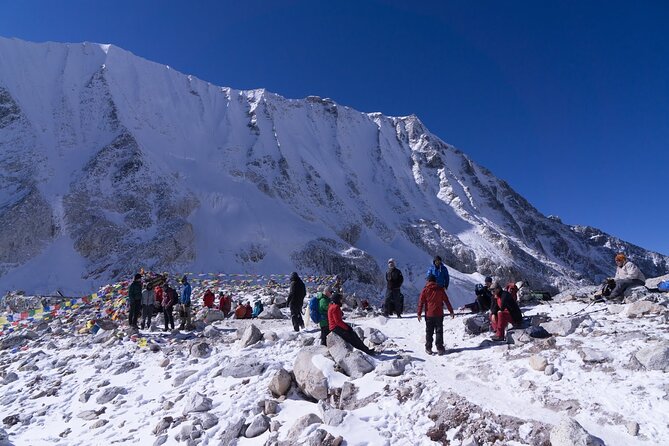
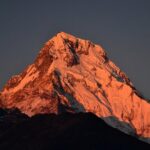
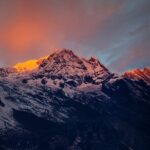
Manaslu (8163) sits right in the Nepal Himalayas, and that geography does something good to this trek: the views keep stacking. You don’t just see one big mountain either. Expect multiple peak silhouettes showing up on either side—Manaslu’s neighbors like Himal Chuli, Peak 29 (Ngadi Chuli), Saula Himal, Dwijen Himal, plus later the pass-day lineup (Cho Danda, Larkya Peak, Himlung Himal, Cheo Himal, Kangguru, and Annapurna II).
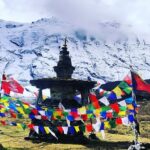
The other reason this circuit feels different is how cultural details blend into the hike itself. You’re walking past prayer walls and chortens day after day, and you’ll see Tibetan-influenced villages along the way. Since the area opened to trekkers in 1991, the route has stayed more distinct than trails that exploded earlier. You get the sense you’re moving through living communities, not just photo stops.
For me, the best part is the rhythm. Low valleys to forested slopes to glacier country. Then the pass. Then down again through stone-paved villages back toward the big road. That arc makes the 12 days feel like a real mountain journey instead of a checklist of names.
You can also read our reviews of more tours and experiences in Kathmandu.
Price and value: what $600 gets you (and what to double-check)
At $600 per person for about 12 days, the value is mainly in three buckets: guidance, transport/route management, and the required permits. This trip lists an English-speaking trekking guide, food and accommodation, insurance, public transportation, and the permits/entrance fees for Manaslu restricted area plus Manaslu and Annapurna conservation.
But I want you to read this part carefully because the info provided has contradictions you should clarify before paying anything extra. The package says food and accommodation are included, yet it also says all food and beverages are not included and that tea-house accommodation fees during the trek are not included. In plain terms: ask exactly what meals are covered each day and how lodging is handled on the trek. If you end up paying tea-house rates daily, it changes the real total cost.
Same story with insurance: it’s listed in included items, but “travel insurance” is listed as not included. Clarify whether the trip’s insurance is sufficient for your needs (especially medical evacuation) and whether you should carry your own policy anyway.
Also note what’s not included: gratuities (tips) for guides, beverages, tea-house accommodation fees, and porter service to carry your trekking belongings. If you’re used to hiring help, this is one place where you may feel the difference.
Kathmandu: the meeting point and how your trek day starts
Your day starts early in Kathmandu, with a 7:15 am start time at Hotel Moonlight on Paknajol Marg. From there, the trek begins with a long transfer out to the western mountains.
What I like about this setup is that you’re not wasting the first half-day trying to figure out local transport. Reviews also mention airport pick-up and organized time in and around Kathmandu, which matters if you arrive tired or just want the city handled efficiently. In one case, the communication in Germany was handled by Bikash, who responded quickly and helped keep expectations clear before the trek.
Day 1 to Machhakhola: the long road into the mountains
Day 1 is a grind in the best way. You’re putting off early and heading for Machha Khola via a paved stretch from Kathmandu to Dhading Bensi, then switching to a partly bumpy dirt road for around 30 km.
This day is less about views you can control and more about what it sets up: it positions you for the real trekking start and gives you time to acclimate to the idea of slow, mountain driving. If you’re prone to motion sickness, pack something for that. And if you’re hoping to “save energy” by sleeping through the day, do it. This is a transport day first.
Days 2 to 4: bridges, hot springs, and the Budhi Gandaki valley rhythm
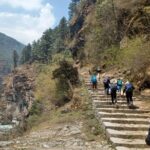
These first trekking days teach you the circuit’s style: lots of stream crossings, suspension bridges, and stair climbs that look steep on paper and feel steeper in boots.
Day 2 to Jagat (with Tatopan hot spring)
You start walking through undulating ground and cross streams and rocky ravines. You’ll reach Khorla Besi, then have a short visit to a small hot spring in Tatopan. After that, a suspension bridge takes you to the eastern bank, and you climb a wide staircase up to Dobhan.
The day continues with steep, rocky terrain skirting landslips, plus another suspension bridge over Yaru Khola. You climb again to Thado Bharyang, cross toward the west bank of Budhi Gandaki, then finish in the village of Jagat.
What to watch: you’ll spend a lot of time on your feet, but the terrain isn’t pure “up, up, up.” It’s up-and-down, which is good training for later higher sections.
Day 3 to Deng (hanging bridge and Gurung villages)
Day 3 has a nice mix of ridges and valleys. You ascend over a rocky ridge to Salleri, descend toward Setibas, then continue to Ghatta Khola. Here you cross a hanging bridge and reach the Gurung village of Philim.
From there, you pass millet fields to Ekle Bhatti, then enter a steep, uninhabited gorge. After that, the valley widens and you walk through bamboo forests toward Deng Khola. You cross and reach Deng for the night.
The practical takeaway: this day feels more remote once you enter that uninhabited gorge section. Keep your pace steady and don’t burn energy trying to “race the emptiness.”
Day 4 to Ghap (forests, Mani walls, and Prok gompas as a side trip)
Day 4 is framed around Namrung, but the end is an overnight at Ghap. You’ll cross Budhi Gandaki, climb toward Rana, and work your way up the Budhi Gandaki valley.
You cross streams and rivers, traverse forests and Mani walls, and that’s where your day turns from valley travel into more classic trekking scenery. There’s also an optional side trip to visit Tibetan gompas at Prok.
If you like culture as much as the mountain views, this is the kind of addition that doesn’t hijack the trek. It stays small and situational: a detour, not a new expedition.
Days 5 to 7: Namru checkpoint to Samagaon acclimatization
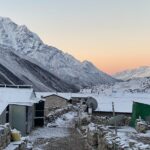
This stretch is where the trek starts feeling more like “Himalaya travel” than just “hiking through Nepal.” You’ll move through forested sections—pine and birch—then shift into higher-altitude villages with bigger mountain silhouettes.
Day 5 to Lho (check posts and big views tightening around you)
The trail climbs through dense forest, crosses a roaring river in a narrow gorge, and continues via a narrow forest path toward Namru, which includes a check post. From there, you pass Tibetan villages toward Lihi.
A chorten welcomes you near Sho, with clusters of stone houses, and as the altitude increases, the views sharpen fast. Manaslu and other peaks rise on both sides as you head toward the village of Lho to sleep.
What you’ll feel here: the air usually turns drier. Your breath works harder. If you’ve been moving quickly on previous days, this is a good time to slow down and let the altitude do its thing gently.
Day 6 to Samagaun (panoramas and the Sama monastery)
Day 6 drops you into Thusang Khola crossings and a steep descent over a rock-strewn torrent. Then you walk through fir forest and climb to Shyala on a plateau before continuing onward.
You reach Samagaun (Samagoan), with panoramic views of Himal Chuli, Peak 29, Manaslu, and Ganesh Himal. The village is also known for a monastery called Sama.
This day is a reminder that the circuit doesn’t just “go up.” It goes up while constantly reshaping your effort through descents, river crossings, and forest changes.
Day 7 at Samagaon (full acclimatization day and Pung-gyen Gompa)
Day 7 is intentionally a rest/acclimatization day. You stay in Samagaon and can walk to Pung-gyen Gompa, where views include a glacier perspective.
This is the day that makes the rest of the itinerary safer and more enjoyable. If you’ve ever rushed acclimatization before, you’ll appreciate why a full day here matters. One review specifically praised the itinerary’s rest/acclimatization time as important for altitude sickness prevention.
Days 8 to 10: Manaslu Glacier foot to Larkya La Pass
Now you’re in the highest drama. The trail feels more “edge of the world,” with fewer layers of forest and more exposure to weather and big terrain.
Day 8 to Samdo (the Manaslu Base Camp branch, then onward)
You start from Sama and walk along the foot of the great Manaslu Glacier. The trail branches off toward Manaslu Base Camp, but this itinerary continues toward Larkya La.
You’ll pass Mani walls as the valley widens, enter forests of birch, juniper, and rhododendron, cross a wooden bridge, then climb onto a promontory between two river forks to reach Samdo for the night.
Expect this day to feel like it’s turning colder, even if temperatures don’t drop much on paper. The glacier proximity changes how wind feels.
Day 9 to Larkya Phedi (Larkya Glacier appears)
Day 9 begins with crossing a wooden bridge over the Budhi Gandaki River. After a couple of stream crossings, the Larkya Glacier appears on the opposite bank.
You climb steadily, skirting around Sarka Khola, until you reach the stone guest house called Dharmashala at Larkya Phedi.
This is where your feet start noticing the day-after-day pattern. Take short breaks. Don’t treat “steep but steady” as a dare.
Day 10 to Larkya La Pass and Bimtang (moraines and peak sightings)
You make a short ascent to a valley north of the Larkya Glaciers. Views stretch to Cho Danda and Larkya Peak. Then you walk across moraines with a gradual climb to the pass.
At the top of Larkya La, the views are the headline: Himlung Himal, Cheo Himal, Kangguru, and Annapurna II. After savoring the view, you walk onto yak pastures and continue toward Bimtang, where evening mist is part of the vibe.
If you’re the type who gets anxious about passes, remind yourself that this itinerary builds in the prior acclimatization day at Samagaon and includes time at Larkya Phedi. Still, you’ll want to move patiently up to the pass and keep layers ready. High passes don’t ask permission from your comfort level.
Day 11 to Day 12: Dharapani to Kathmandu, with stone villages and big road views
After the pass, the trek turns practical: you’re walking down toward civilization, with the scenery changing again as altitude drops.
Day 11 to Dharapani (Tilije, Thonje, and the Dudh Khola crossings)
You start from Bimtang to Dharapani, passing through the village of Tilije with stone-paved streets. You cross the Dudh Khola and continue along the river bank, then cross back over a wooden bridge to the northern side.
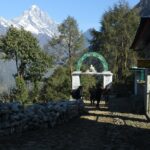
You pass a chorten shaped arch and Mani Wall at Thonje, then continue onward to Dharapani for the night.
This day often feels like mental momentum. Keep it steady so your legs don’t get too sore too soon.
Day 12 back to Kathmandu (jeep to Beshisahar, then bus)
On Day 12, you drive down all the way to Beshisahar by local sharing jeep (about 4–5 hours). Then you continue by bus along the Prithivi Highway.
If your plan is Kathmandu, it’s 7–8 hours along the banks of the Marsyangdi and Trishuli rivers. If your plan is Pokhara, it’s 5–6 hours. The trip offers a bus drop to either, depending on your next step. In the end, this activity returns you back to the meeting point in Kathmandu.
If you’re sensitive to long road hours after a trekking week, plan for a slow evening. You’ll sleep well even if you don’t do much.
Lodging, food, and the porter question that matters
Your trek includes accommodation, and the package lists food as included, but the details also say tea house accommodation fees are not included and that all food and beverages are not included. That combination makes it essential to confirm what you’ll pay for once you’re in the villages.
Also, porter service is not included. So you should expect to manage your own belongings on the trail. If you usually travel with a heavy pack, this is the one place where you can make the trek feel either comfortable or annoying.
What I like about the way this trek is structured is that it gives you fewer logistical decisions once you’re moving. But what you carry is still on you. Build your system around that.
Permits and altitude: the two things you should respect most
This route requires special permits: a Manaslu restricted-area permit plus Manaslu and Annapurna conservation permits. It’s included in the package, which is helpful, but you should still keep your paperwork clean and ready.
For altitude, the itinerary clearly supports acclimatization. The key day is Samagaon, where you have an extra day for adjustment and optional gompa walking. Then you approach Larkya with at least one higher staging night at Larkya Phedi.
You’ll still need to behave like an adult around altitude: slow your pace, drink water, and don’t treat “15 hours” as a challenge to win. The pass day will be hard enough without turning it into a race.
Trek quality and organization: what stands out from real feedback
From the reviews, the most repeated strength is organization that actually works in the field. People highlighted smooth planning, quick communication before departure, and friendly help from the team behind the scenes.
One review thanked the organizer in Germany, Bikash, for fast answers and clear coordination. Others praised Hari and his team for good Kathmandu handling like airport pick-up and local excursions. The same set of reviews also mentioned a final celebratory beer after the circuit, which sounds like a small thing until you’ve been hiking for days and someone finally treats you like a human again.
If you want a trek where you can focus on walking and views—not constant problem-solving—this is a strong fit.
Should you book this Manaslu Circuit trek?
Book this trek if you want a less-crowded feeling Manaslu Circuit with lots of cultural texture (gompas, Mani walls, villages) and if you value an itinerary that includes real acclimatization time at Samagaon. It also fits well if you like the idea of a guided, structured trek with public transport connections built in, so you spend your energy on the trail.
Think twice (or at least plan carefully) if you’re expecting a “light pack, zero stress” experience. With no porter service included and with possible tea-house fees and meal details that need confirmation, you’ll want to be organized before you leave Kathmandu.
If you’re unsure, ask the operator to clarify meal coverage, tea-house lodging costs, and what insurance they provide. Then you’ll be making a clear decision, not a guess.
FAQ
How long is the Manaslu Circuit trek?
The tour runs for 12 days (approx.).
Where does the trek start in Kathmandu, and what time?
It starts at Hotel Moonlight, Paknajol Marg, Kathmandu 44600, Nepal, at 7:15 am.
Is this a private tour?
Yes. It’s listed as a private tour/activity, with only your group participating.
What transport do you use during the trek and transfers?
The trip uses public deluxe bus and jeep. On Day 1 you drive from Kathmandu into the western mountains, and on Day 12 you take a local sharing jeep to Beshisahar and then a bus back to Kathmandu (or Pokhara, depending on your plan).
What permits do you need for this trek?
You need a special trekking permit for the Manaslu restricted area, plus Manaslu and Annapurna conservation permits.
Are there side trips included during the trek?
The itinerary includes a possible side-trip to Tibetan gompas at Prok (Day 4). It also notes you can walk to Pung-gyen Gompa from Samagaun (Day 7).
What fitness level do I need?
The trip says travelers should have a moderate physical fitness level.
What’s included in the price, and what’s not?
Included: an English-speaking trekking guide, food, accommodation and insurance, public transportation, and entrance fees/permits. Not included: gratuities, all food and beverages, travel insurance, tea house accommodation fees during the trek, and porter service to carry your belongings. The info lists some items both ways, so it’s smart to ask exactly what’s covered day by day.
Where does the tour end?
It ends back at the meeting point in Kathmandu (the same Hotel Moonlight location).